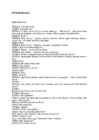
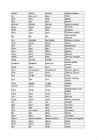
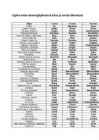
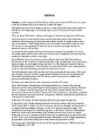
do did done draw drew drawn dream dreamed/dreamt dreamed/dreamt drive drove driven drink drank drunk eat ate eaten fall fell fallen feed fed fed feel felt felt fight fought fought find found found fit fit fit flee fled fled fling flung flung fly flew flown forbid forbade forbidden forget forgot forgotten forego (forgo) forewent foregone forgive forgave forgiven forsake forsook forsaken freeze froze frozen get got gotten give gave given
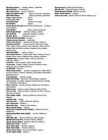
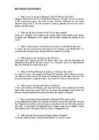
Burst burst burst - lõhkema,puhkema, pakatama Wear wore worn kandma (rõivaid, ehteid, soengut jms) Choose chose chosen - valima Come came come - tulema Deal dealt dealt - tegelema, äri ajama Do did done - tegema Dream dream dreamt(dreamed) dreamt(dreamed) unistama; (unes) nägema Feed fed fed - toitma, söötma, karjatama Fight fought fought - võitlema, kaklema, sõdima Flee fled fled - põgenema, haihtuma, kaduma Fly flew flown - lendama, sööstma forbid forbade forbidden - keelama Forgive forgave forgiven - andestama Freeze froze frozen - külmuma, külmetama, tarduma Have/has had had - omama, kogema, läbi elama; (toitu, jooki) võtma, sööma, jooma; saama, hankima, ostma; laskma (midagi teha smth done); pidama, sunnitud olema (midagi tegema to do) Hide hid hidden - peitma, varjama Know knew known - teadma; teada saama; tuttavaks saama;
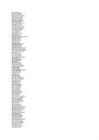
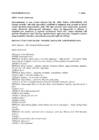
Burst,burst,burst-lõhkema Buy,bought,bought-ostma Can,could,(been able to)-oskama Catch,caught,caught-püüdma Choose,chose,chosen-valima Come,came,come-tulema Cost,cost,cost-maksma Cut,cut,cut-lõikama Deal,dealt,dealt-nr. valima Dig,dug,dug-kaevama Do,did,done-tegema Dream,dreamt(dreamed),-II- -unistama Drink,drank,drunk-jooma Eat,ate,eaten-sööma Fall,fell,fallen-kukkuma Feed,fed,fed-toitma Feel,felt,felt-tundma Fight,fought,fought-kaklema Find,found,found-leidma Flee,fled,fled-põgenema Fly,flew,flown-lendama Forbid,forbade,forbidden-keelama Forget,forgot,forgotten-unustama Forgive,forgave,forgiven-andestama Freeze,froze,frozen-külmuma Get,got,got-saama Give,gave,given-andma Go,went,gone-minema Grow,grew,grown-kasvama Hang,hung(hanged),-II- -riputama Have,had,had-olnud Hear,heard,heard-kuulma Hide,hid,hidden-peitma Hit,hit,hit-lööma Hold,held,held-hoidma Hurt,hurt,hurt-vigastama Keep,kept,kept-endale hoidma Know,knew,known-teadma Lay,laid,laid-lesima
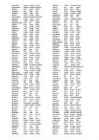
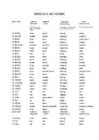
hellitama spoil spoilt spoilt pistma thrust thrust thrust hiilima creep crept crept poetama shed shed shed hoidma hold held held poolitama split split split hoidma keep kept kept puhkema burst burst burst hääldama spell spelt spelt puhuma blow blew blown hüppama leap leapt leapt põgenema flee fled fled istuma sit sat sat põhja vajuma sink sank sunk jagama deal dealt dealt põletama burn burnt burnt jooma drink drank drunk põlvitama kneel knelt knelt joonistama draw drew drawn pügama shear sheared shorn juhtima lead led led pühkima sweep swept swept kaevama dig dug dug püüdlema swear swore sworn
Irregular verbs! First rida: teadma, hiilima, peitma, kannatlik olema... ANDRUS: Ei jõua! ÕPETAJA: Keep smiling! ...nägema, näitama, laimama, müüma, tagasi tõmbuma, magama. Second rida: osa võtma, võistlema, vigastama... GUIDO: Vissi! ÕPETAJA: Keep silence! ...kukkuma, roomama, verd jooksma, taluma... GUIDO: Mina ei saa mitte midagi aru... TOOMAS: Taluma – see on sama mis elama. ÕPETAJA: Stop talking! ...murduma, kaotama, põgenema... TOOMAS: Aa! Kas see põgenema peab olema flee-fled-fled või fly-flew-flown? ÕPETAJA: Seitsmendas klassis on fly-flew-flown ainult lendama! Speedily, speedily,muidu ei jõua! GUIDO: Vissi! ANDRUS: Ma ei jõua endagi oma! GUIDO: Saad kolaka! ANDRUS: Mul on juba üks neli! GUIDO: Sõber! ANDRUS: Guits! GUIDO: Ise tead! ÕPETAJA: Stop talking! Igaüks vaatab ainult oma row ja oma paper! ... Keep smiling! Keep silence. Koolikell. ÕPETAJA: Kes jõudis, saab five! Kes ei jõudnud, saab one! Toomas toob tööd õpetajate cabinet! (Lahkub.)
Irregular verbs! First rida: teadma, hiilima, peitma, kannatlik olema... ANDRUS: Ei jõua! ÕPETAJA: Keep smiling! ...nägema, näitama, laimama, müüma, tagasi tõmbuma, magama. Second rida: osa võtma, võistlema, vigastama... GUIDO: Vissi! ÕPETAJA: Keep silence! ...kukkuma, roomama, verd jooksma, taluma... GUIDO: Mina ei saa mitte midagi aru... TOOMAS: Taluma see on sama mis elama. ÕPETAJA: Stop talking! ...murduma, kaotama, põgenema... TOOMAS: Aa! Kas see põgenema peab olema flee-fled-fled või fly-flew-flown? ÕPETAJA: Seitsmendas klassis on fly-flew-flown ainult lendama! Speedily, speedily,muidu ei jõua! GUIDO: Vissi! ANDRUS: Ma ei jõua endagi oma! GUIDO: Saad kolaka! ANDRUS: Mul on juba üks neli! GUIDO: Sõber! ANDRUS: Guits! GUIDO: Ise tead! ÕPETAJA: Stop talking! Igaüks vaatab ainult oma row ja oma paper! ... Keep smiling! Keep silence. Koolikell. ÕPETAJA: Kes jõudis, saab five! Kes ei jõudnud, saab one! Toomas toob tööd õpetajate cabinet! (Lahkub.)
dream dreamed, dreamt dreamed, dreamt drink drank drunk drive drove driven dwell dwelt dwelt eat ate eaten fall fell fallen feed fed fed feel felt felt fight fought fought find found found flee fled fled fling flung flung fly flew flown forbear forbore forborne forbid forbade, forbad forbidden forecast forecast, forecasted forecast, forecasted foresee foresaw foreseen foretell foretold foretold forget forgot forgotten forgive forgave forgiven forsake forsook forsaken
TO EAT eat ate eating eaten TO FALL fall fell falling fallen TO FEED feed fed feeding fed TO FEEL feel felt feeling felt TO FIGHT fight fought fighting fought TO FIND find found finding found TO FLEE flee fled fleeing fled TO FLY fly flew flying flown TO FORGET forget forgot forgetting forgotten TO FORGIVE forgive forgave forgiving forgiven TO FREEZE freeze froze freezing frozen TO GET get got getting gotten TO GIVE give gave giving given TO GO go went going gone
drink drank drunk Jooma eat ate eaten Sööma fall fell fallen kukkuma feed fed fed söötma feel felt felt tundma fight fought fought Kaklema find found found Otsima, leidma fit fit fit sobima flee fled fled põgenema fling flung flung Paiskama, tormama fly flew flown Lendama forbid forbade forbidden keelama forget forgot forgotten Unustama forego (forgo) forewent foregone Eelnema forgive forgave forgiven Andestama forsake forsook forsaken hülgama
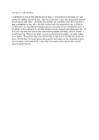
I chose this movie because I am currently reading the book and I like the book very much. So I wanted to know if the movie is also good. The book was written by Sue Monk Kidd and the movie was a adapted version of it. As well as the book the synopsis is set in 1964 in South Carolina. The movie is mostly about a 14 year-old girl named Lily who is haunted by the memory of her late mother. And to escape the lonely and sad life that she has with her father she flees with Rosaleen and they fled to a town in South Carolina. There they start to work in the honey industry. Lily also meets Zach there. The movie was very interesting to me and a bit different form the book. I think that the casting was done great and many of the characters were exactly how I imagined them to be. The movie was really good and I would recommend it highly.
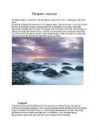
cracking to form the tall columns that make up the causeway. Legend: Legend has it that the Finn McCool built the causeway to walk to Scotland to fight his Scottish counterpart Benandonner. One version of the legend tells that Fionn fell asleep before he got to Scotland. To protect Fionn, his wife Oonagh laid a blanket over him so he could pretend that he was actually their baby son. In a variation, Fionn fled after seeing Benandonner's great bulk, and asked his wife to disguise him as the baby.
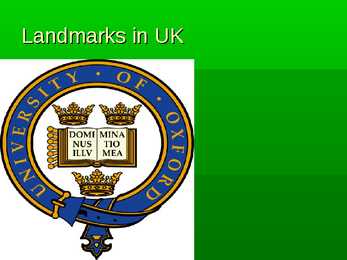
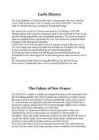
University of Oxford University of Oxford is located in the city of Oxford, Oxfordshire, England. Oxford is the oldest university in the English-speaking world. It is also one of the world's leading academic institutions. Oxford has 38 independent colleges. History The university was built in the end of 12th century, although the exact date remains unclear. After a dispute between students and townsfolk broke out in 1209, some of the academics at Oxford fled north-east to the town of Cambridge, where the University of Cambridge was founded. The two universities have since had a long history of competition with each other. Interesting to know Oxford is consistently ranked in the world's top 10 universities. Oxford's motto is Dominus Illuminatio Mea (Latin). Motto in English: "The Lord is my Light". More than a hundred and thirty nationalities are represented among a student population of over eighteen thousand.
It was the second tragedy to hit the city in the space of 12 months. The fire started in Pudding Lane. The fire started in a baker's shop owned by Thomas Farriner who was the king's baker. His maid failed to put out the ovens at the end of the night. Once it started, the fire spread quickly. The city was basically made out of wood and with September following on from the summer, the city was very dry. Strong winds fanned the flames. In 1665, during the plague, the king, Charles II, had fled in London. His plan, in 1666 (he stayed in London and took charge of the operation to save the city) was to create fire-breaks. The heat created by the fire was so great that the lead roof on the old St Paul's Cathedral melted. The actual human casualty rate was remarkably small with possibly only 5 people dying in this fire. The wind that had helped the fire spread, turned on itself and drove the flames back into what had already been burned
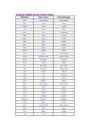
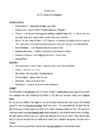
III vorm - Driven III vorm - Eaten Kukkuma = Fall Toitma = Feed I vorm Fall I vorm Feed II vorm Fell II vorm Fed III vorm - Fallen III vorm - Fed Tundma = Feel Võitlema = Fight I vorm Feel I vorm Fight II vorm Felt II vorm Fought III vorm - Felt III vorm - Fought Leidma = Find Põgenema = Flee I vorm Find I vorm Flee II vorm Found II vorm Fled III vorm - Found III vorm - Fled Lendama = Fly Unustama = Forget I vorm Fly I vorm Forget II vorm Flew II vorm Forgot III vorm - Flown III vorm - Forgotten Saama = Get Andma = Give I vorm Get I vorm Give II vorm Got II vorm Gave III vorm - Got III vorm - Given Minema = Go Kasvama, kasvatama = Grow I vorm Go I vorm Grow
Elama Dwell Dwelt Dwelt Sööma Eat Ate Eaten Kukkuma, langema Fall Fell Fallen Toitma, toituma Feed Fed Fed Tundma Feel Felt Felt Võitlema, kaklema Fight Fought Fought Leidma Find Found Found Põgenema Flee Fled Fled Virutama, paiskama Fling Flung Flung Lendama Fly Flew Flown Kannatlik olema Forbear Forbore Forborne Keelama Forbid Forbad/-e Forbidden Ennustama Forecast Forecast/-ed Forecast/-ed Ette nägema Foresee Foresaw Foreseen Ette kuulutama Foretell Foretell Foretell
its mysterious quality brought about perhaps by the fact that the artist has subtly shadowed the corners of the mouth and eyes so that the exact nature of the smile cannot be determined. The shadowy quality for which the work is renowned came to be called Leonardo's Smoke. During his lifetime Leonardo was valued as an engineer. In a letter to Ludovico il Moro he claimed to be able to create all sorts of machines both for the protection of a city and for siege. When he fled to Venice in 1499 he found employment as an engineer and devised a system of moveable barricades to protect the city from attack. He also had a scheme for diverting the flow of the Arno River in order to flood Pisa. Within Leonardo's own lifetime his fame was such that the King of France carried him away like a trophy, and was claimed to have supported him in his old age and held him in his arms as he died. The interest in
A perfect murder One friday evening, at a Palmstreet, took place a stark murder. Karl and his father had secret relationship and he knew that if this will became public, his life is through. He went to pub where a friend of his father, John, drank himself drunk and tried to forget about he and his friend's son relationship. Karl took a knife and stabbed John. He fled to his home and put the door lock and waited morning. But the night lingered. Finally, he fell asleep. In the morning, he awoke with a large headache. He went to the police, and he wanted to give himself up because remorses were too high. He however said that the murderer has been found. He did not belived it, and after a few days, he went to prison, to see the killer. For surprise, she was a woman. He did not know that woman, but he
Goggles Kaitseprillid. Participants Osalejad. Bog Raba/soo. Flippers Ujumislestad. Snorkel Hingamistoru. Trench - Kraav PANCAKE RACING Olney's famous race is run every Shrove Tuesday, featuring women who have lived in the town for more than 6 months. It dates back to 1445 and it is believed all began with a townswoman late for the Shriving service at the Olney parish church. She heard the church bells ring out for the service and she fled her house fearful of being late. She ran the distance down the High Street to make it to the parish church - still clutching her frying pan and wearing an apron. The Olney residents (women) compete in traditional apron, cap, and holding a fying pan with a real pancake. They must toss their pancake once at the start and once at the finish. For the fastest Olney runner, there's a prize - but there are prizes too for the oldest participant and the one who raises the most for charity.
fish, dog, rabbit, monkey and cat. The last was his favorite pet. Pluto followed everywhere where man went. Once when man was drunk, he saw that Pluto kept away from him. Man took him up and cat immediately created his teeth in man's hands. The fury of a demon instantly possessed him. He took from his waistcoat-pocket a pen-knife, opened it, grasped the poor beast by the throat, and deliberately cut one of its eyes from the socket! In the meantime the cat slowly recovered. The cat fled when he saw man at all times. One day the man hung up the cat onto the tree branches. This day night was a fire in man's house. Next day while man went to the ruins of house, he saw hanged cat shadow. He had a conscience torture because that what he did the cat was terrible. One abandoned place man saw one eyed cat like Pluto. The cat came home with him. Man's wife liked this cat. But the man don't like cat. When a man had to go to the basement his wife went too. The cat ran down the
Mary died at the age of 42 from cancer. She was succeeded by her half-sister Elizabeth I, who quickly undid many of Mary's changes, and returned England to its former Protestant-friendly environment. Most of Mary's bishops were loyal to her and refused to conform to the restored Protestantism. They died under house arrest. The new queen enabled the English refugees who had fled to Switzerland to eventually come home and begin printing the Protestant Geneva Bible in England.
Endianism), in the episcopalian form of the Church of England. At the same time, revolution and reform in Scotland (1560) had also converted that country to Presbyterian Protestantism, which led to fresh difficulties when England and Scotland were united under one ruler, James I (16031625). Religiously inspired revolts and rebellions followed, in which, indeed, one king, Charles I (16251649) lost his life, and his son James II lost his crown and fled to France (16851688). Some of these conflicts were between Protestants and Catholics; others were between different branches of Protestantism. Swift does not clearly distinguish between these different kinds of religious strife. Swift has his Lilliputian informant blame the "civil commotions" on the propaganda of the Emperor of Blefuscu, i.e. the King of France; this primarily reflects the encouragement given by King Louis XIV of
Elizabeth paid a visit to a fine country cottage alongside with her aunt where Darsy lived. Elizabeth realized, that Darsy was actually very kind and hospitable and fell in love with him. Greaf in the Bennets family A grief had some to the Bennets one of the daughters, Lidya had fled away with the officer Wickham. The whole family was in panic since such a deed at the time was a shame. Without telling anyone Darsy had paid all the Wickham´s bills for the well being of Elizabeth. The end of film Mr. Bingly had come to propose Jane who was awaiting it for a long time. Elizabeth was grateful fot Darsy´s benevolence.
would describe Wilde's sexual encounters in open court. Oscar lost the libel case against Queensberry and was arrested by the crown. With essentially no credible defence against charges of homosexual conduct, he was convicted and sentenced to two years hard labour, the latter part in Reading Gaol. Unreformed Dickensian prison conditions caused a calamitous series of illnesses and brought him to death's door. Constance fled the country with their children and changed the family name, always hoping that Oscar would return to his family and give up Bosie, now also living in exile. When Oscar was released from prison in 1897, he tried to comply with Constance's wishes, sending Bosie a deeply moving epic letter, "De Profundis", explaining why he could never see him again. Love, passion, obsession and loneliness combined however to defeat prudence and discretion
They ran a touring theatre company. His stepfather, Julian's first "real dad", described Julian as "a very sharp kid" with "a keen sense of right and wrong". "He always stood up for the underdog... he was always very angry about people ganging up on other people." · Step-father belonged to a New Age group called Santiniketan Park Association couple had a son, but broke up in 1982 and engaged in a custody struggle for Assange's half-brother. His divorced mother fled her boyfriend across Australia, taking both children into hiding for the next five years. moved 30 times before he turned 14 · after turning 16, Assange began hacking under the name "Mendax" - Group International Subversives. Assange wrote down the early rules of the subculture: "Don't damage computer systems you break into (including crashing them); don't change the information in those systems (except for altering logs to cover your tracks); and share information"
the tour group. NOT AGREE to stop being part of a group because you begin to disagree with them: Some members of the British Labour Party broke away to form the Social Democratic Party. Break out START If something dangerous or unpleasant breaks out, it suddenly starts: War broke out in 1914. Fighting has broken out all over the city. ESCAPE to escape from prison: They broke out of prison and fled the country. Break down MACHINE If a machine or vehicle breaks down, it stops working: Our car broke down and we had to push it off the road. COMMUNICATION If a system, relationship or discussion breaks down, it fails because there is a problem or disagreement. CRY to be unable to control your feelings and to start to cry: When we gave her the bad news, she broke down and cried. Break up
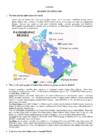
The following spring they also conquered Montreal. The British renamed the new French-speaking region Quebec. They allowed the French to keep their Roman Catholic religion, civil law system and language, so that they would not try to break away from Britain. From 1775 to 1784, many British came to the former New France area from south. The people in American colonies were fighting for independence and those people who fled north were the one who wanted to remain loyal to Britain (United Empire Loyalists). Britain created two new colonies: New Brunswick and Upper Canada. New Brunswick was created in 1784. Upper Canada became part of Quebec in 1791. Upper Canada was the English-speaking colony and Lower Canada was the French-speaking colony. They were reunited in 1841, called Canada West and Canada East and the capital of them was Montreal. They become provinces of Ontario and Quebec in 1867.
Furthermore, Tibet was not recognized by any country as a de jure independent nation. As a measure of the power that regents must have wielded, it is important to note that only three of the fourteen Dalai Lamas have actually ruled Tibet; regents ruled during 77 percent of the period from 1751 until 1960.The Communist Party of China gained control of central and western Tibet after a decisive military victory at Chamdo in 1950. The 14th Dalai Lama fled to India in 1959. Today, Tibet is part of the People's Republic of China (PRC) in reality and claimed by the Republic of China (ROC) in its constitution , while a small part, according to the PRC and the ROC, is controlled by India. Both sides of Chinese government regard Tibet as part of China. Currently, Beijing and the Government of Tibet in Exile disagree over when Tibet became a part of China, and whether the incorporation into China of Tibet is legitimate according to international law
55. eat ate eaten sööma 56. fall fell fallen kukkuma, langema 57. feed fed fed toitma, söötma 58. feel felt felt tundma, katsuma, puudutama, kompima 59. fight fought fought võitlema, kaklema 60. find found found leidma; otsima; avastama; 61. flee fled fled põgenema, pagema 62. fling flung flung paiskama, viskama, heitma, virutama; pilduma, loopima 63. fly flew flown lendama, tormama, lennates mööduma 64. forbid forbad(e) forbidden keelama, mitte lubama 65. forecast forecast forecast ette arvama, ennustama, prognoosima 66
It is a highly important holiday in Estonia. At first it was merely a decision on paper. True independence was fought for in the following years, in the War of Liberation. Independence lasted until 1939 when a pact between Nazi Germany and the Soviet Union was signed. Following the Soviet occupation in 1940, Estonia was occupied by Nazi Germany from 1942 to 1944. The Soviet Union incorporated Estonia in the autumn of 1944. A large proportion of the population fled abroad. Many others were arrested and deported to Siberia. Estonia regained independence by the way of the Singing Revolution of 1988 and has been fully independent since 1991. In 2004, Estonia became a NATO member state and an EU state. The legislative power in Estonia belongs to the Parliament (Riigikogu), which is elected for four years by the citizens of Estonia and consists of 101 members. Parliament regulates taxation and adopts the State budget.
since England doesn't really have much snow, they have other activities. 26. Write about the Scots' struggle for independence in the 14th century. England wanted to add Scotland to themselves, so the Scots had to fight them. William Wallace ("Braveheart") and king Robert the Bruce fought them off. In 1328 England acknowledged Scotland's independence. 27. How come that there are so many Irish people in the United States today? During the "potato famine" a lot of Irish people fled to America, because otherwise they might have died from hunger. 28. What do you know about the City of London? It has its own major, is a part of London, not the whole city. St. Paul's Cathedral is also located in the City. 29. Explain the difference between these terms: England, the United Kingdom, Great Britain, the British Isles. England is one part of the United Kingdom which includes of 4 countries. Great
They sent a translator to help him out, his dripping papers were examined and he was told that as long as he didn't set door on a French ship he was safe – Freedom! He was crying when he told him that. He start living the life: he cooked, taught French, swept streets, worked in the gold mines, starved, and then travelled to New Guinea. In New Guinea he was a king of a wild tribe. But eventually he came into collison with the British, and he fled the country and started life once more. He came to own a fleet of pearling luggers on Thursday Island. He was happy and old and wealthy. A hurricane destoryed his boats and he was too old to recover from that. He accepted the hospital's shelter. He didn't go back to France or Corsica even though the amnesty was granted to the communists a quater of a century ago, because it was nothing to him after 50 years, also a cousin of him seized his
When the British took over they didn't change much in French traditions. They allowed the French peole to keep their religion, civil law system and language. The British didn't want any French people to try to break away from Britain. From 1775 to 1784 many British came to Canada from American colonies. It was so because of the American Revolution. Americans were fighting for their independence from Britain. So the British people fled from America to the north were was Canada. With so many new settlers Britain had to create two new colonies: New Brunswick nad Upper Canada. There was also an act in 1791 that divided Quebec into Upper and Lower Canada. They were reunited in 1841. Upper Canada became Canada West and Lower Canada became Canada East. They would eventually become the provinces of Ontario and Quebec in 1867. Regions in Canada Canada is divided into five major regions. The Pacific Region
People have been coming to settle in Britain for centuries from many parts of the world. Some came because of political or religious reasons, others to find a better way of life or an escape from poverty. Britain's predominant historical stock is called Anglo Saxons. They arrived in Britain in massive numbers between the 5th and the 7th century. These people tended to be tall, bland and blue eyed. Native Britons fought the great flood of Germanic people and many Britons who survived fled west to the hill country. The refugees were called Celts. Celts tended to be shorter than Anglo Saxons and they had rounder heads. Most had dark hair, but high percentage of Celts had red hair. A big number of Scandinavians raided and settled in Great Britain and Ireland during the 9th century. In 1066 the Normans, French speaking invaders conquered England, adding another ethnic component. The Normans were the last major group to add their stock to the British population.
Ray and Carrie Rivers Cash. Johnny and his family lived In Kingsland until he was at the age of three, where they then moved to Dyess, Arkansas; a Colony in Northeast Arkansas. The Cash family farmed nearly 20 acres filled of cotton, there Ray, Kerry and all seven of their children worked side by side in the crops; including little Johnny. Johnny as a Kid... Cash spent his childhood in Guns & Girls Dyess Colony until he graduated high school in 1950, where he then fled off to D e t r o i t in search of work only to find himself in Pontiac, Michigan working in the automotive business. However, Cash soon after enlisted in the U.S. Air Force and was sent off to basic training in Te x a s . While in Texas Cash accidentally stumbled upon love and met his first wife Vivian Liberto, than was almost immediately shipped off to Landsberg, Germany. Cash started his first band in the military named The
Father of us all, and we are all Brethren". Douglass' work spanned the years prior to and during the Civil War. He was acquainted with the radical abolitionist Captain John Brown but did not approve of Brown's plan to start an armed slave revolt. However, Brown visited Douglass' home for several days shortly before the Harpers Ferry incident, in which Brown attacked the federal Arsenal there. After the incident, Douglass fled for a time to Canada, fearing he might be arrested 4 as a co-conspirator. Douglass believed that the attack on federal property would enrage the American public. Douglass would later share a stage in Harpers Ferry with Andrew Hunter, the prosecutor who successfully convicted Brown. Douglass conferred with President Abraham Lincoln in 1863 on the treatment of black
Charles I was defeated and executed and Cromwell took up rule of the country, which became a republic. After Cromwell's death, the Stuarts returned to the throne. The House of Hanoverians (1714-1901): George I was a controversial king who left the country in care of the Cabinet. This was eventually headed by Sir Robert Walpole, Britain's first Prime Minister. The single greatest threat to George I came with the Scottish Jacobite Rebellions. However James Stuart was easily defeated and fled to Rome. During the reign of George III, Britain lost its American colonies and the United States was born. Arthur Wellesley, Duke of Wellington, ended Napoleon Bonaparte's dream of world dominance in the Battle of Waterloo, Belgium, in 1783. Captain James Cook, a navigator and explorer, changed the map of the world and established footholds for British expansion and empire building during the 18th and 19th centuries. Britain exported coal, cloth, guns and other manufactured products
potemkin". . attempted to start a career in hollywood, continued his career in Soviet Union. Russian cinema before the october revolution before WWI more than 90 % films were imported. Cinema not as popular as in other countries. The revolution and the end of the 1st world war lead to an economic crisis. During the war/beginning of the revolution: 1919 nationalisation of the major film companies. Most of the pre-war filmmakers and producers fled??. Lack of film stck due to important embargos. Soviet cinema after the october revolution: 1919 the first film school: bring the cinema to the countryside. Agit trains-theatergroup performing a pie ce of communism. New generation of filmmakers start to create avant-grade: verto, kuleshov, pudovkin dovzheno, eisenstein The age of soviet montage cinema: the classical perion 1920s. The idea behind montage cinema: · promotion of communist ideals via the means of film
This was eventually headed by Sir Robert Walpole, Britain's first Prime Minister and the first to live at 10 Downing Street. During the reigns of George I and George II, Parliament assumed almost absolute responsibility for running the country. Large areas of Canada and India were colonized at the expense of the French. The single greatest threat to George I came with the Scottish Jacobite Rebellions of 1715 and 1719. However, James Stuart, their leader, was easily defeated and fled to Rome. His son tried to claim the British throne twice, but he was soon forced to retreat. On 16 April 1746, English army met the Jacobites in a moor at Culloden. 2000 of the Jacobites died, which ended Stuart pretensions to the crown. The British ensured British rule at the French fort at Quebec. During the reign of George III, Britain lost its American colonies and the United States was born. Britain recognised its independence in September 1783.
14 1795-1813 - France captured Amsterdam and occupied the Netherlands during the Napoleonic Wars. 1815 - The Netherlands became an independent kingdom united with Belgium. 1830 - Belgium seceded from the Netherlands and became an independent nation. 1914-1918 - The Netherlands stayed neutral during World War I, but the country suffered as the war hindered Dutch trade. 1940 - Germany invaded and conquered the Netherlands. The government fled to London, and the country suffered under Nazi rule during World War II (1939-1945). 1949 - After four years of fighting, the Netherlands recognized the independence of its former colony of Indonesia. 1954 - Suriname and the Netherlands Antilles became equal members of the Kingdom of the Netherlands. 1957 - The Netherlands became a founding member of the European Economic Community (now the European Union).
In How to Marry a Millionaire, Monroe was teamed up with Lauren Bacall and Betty Grable. She played a short-sighted dumb blonde, and though the role was stereotypical, critics took note of her comedic timing.[28] Her next two films, the western River of No Return and the musical There's No Business Like Show Business, were not successful. Monroe eventually got tired of the roles that Zanuck assigned her. After completing work on The Seven Year Itch in early 1955, she broke her contract and fled Hollywood to study acting with Lee Strasberg at the Actors Studio in New York.[5] Fox would not accede to her contract demands and insisted she return to work on productions she considered inappropriate, such as The Girl in Pink Tights (which was never filmed), The Girl in the Red Velvet Swing, and How to Be Very, Very Popular. Marilyn Monroe Productions Main article: Marilyn Monroe filmography Once in New York Monroe set up her own production company, Marilyn Monroe Productions, with
· Different developments in the North and South All over the country School system Women rights South Agriculture: tobacco, rice, cotton (export to England) Cotton gin (1793) Slave labor (economics of south are based on slaves work) · Abolitionist movement Antislavery movement in 1800s Send free slaves to Liberia Help slaves flee their masters · Missouri compromise 5 Forbid slavery above 36°30' latitude Except Missouri · Fugitive Slave Act Fugitive- slave who has fled his master Free citizens should assist the return of fugitive slaves to their masters Result: Mexican American war · Underground Railroad Network of people who helped slaves escape south Hundreds of slaves each year used railroad terminology · Dred Scott case A black man who tried to sue for his freedom 1857 he lost the case Overall, the Dred Scott decision had the effect of widening the political and social gap between
the Canadian landscape, and initiated the first major Canadian national art movement. Konrad Mägi. Norwegian Landscape with a Pine. Nikolai Triik. Finnish Landscape. 29. During which period did most Estonian immigrants arrive in Canada? What were the reasons for migrating to Canada? From 1900 to 1944, fewer than 3000 Estonians immigrated to Canada. Approximately 72 000 Estonian political refugees fled to Sweden and Germany in 1944 to escape Russian communism. Of these, nearly 14 000 immigrated to Canada between 1946 and 1955. More than 9,000 came to Canada from West Germany, about 4,000 from Sweden. Balts, mostly Estonians, were among the first displaced persons selected by Canadian immigration during WWII. In Germany, Estonians lived in refugee camps without gainful employment and were ready to be resettled to any other Western country
and its hinterland. In addition, there were increasing numbers of Africans entering the south, as a result of the slave trade, and this dramatically increased in the eighteenth century: a population of little more than 2,500 black slaves in 1700 had become about 100,000 by 1775, far out-numbering the southern whites. [3, p.35] The nineteenth century saw a massive increase in American immigration, as people fled the results of revolution, poverty, and famine in Europe. Large numbers of Irish came following the potato famine in Ireland in the 1840s. Germans and Italians came, escaping the consequences of the failed 1848 revolutions. And, as the century wore on, there were increasing numbers of Central European Jews, especially fleeing from the pogroms of the 1880s. In the first two decades of the twentieth century, immigrants were entering the USA at an average of three-quarters of a million a year
deploying the army, and he has sent thousands of soldiers into Juárez. The assault has eliminated some drug lords, but that has in turn encouraged turf and succession struggles, making for increasingly bloody upheaval. The conflict has claimed some 40,000 lives in Mexico since it began, and Juárez has seen a tenfold increase in its murder rate, reaching more than 3,000 homicides last year. El Paso, by contrast, had only five murders. It is estimated that some 230,000 Mexicans have fled the violence, about half of them to the United States. Since 2009 the El Paso metropolitan area's population has grown to around 800,000 residents, up by 50,000, an undetermined but significant percentage of them coming from Juárez. El Paso has been among the nation's best economic performers through the recession -- its gains coming, in part, because of Mexico's losses. There has been a positive influx of capital, people and money into El Paso. El Paso's population is 80 percent Hispanic. No
soldiers. Special punitive troops, aided and abetted by the Baltic German landlords, shot over 300 hundred people in 1906; without trial or inquest. The court martial additionally condemned about 300 persons to death. About 600 received corporal punishment; hundreds were imprisoned and sent to Siberia. More than a half of all those executed in the Russian Empire, were inhabitants of Estonia and Latvia. Fearing the repressions, a great part of Estonian political leaders fled abroad. Besides other reactionary punitive measures, the central government vetoed the left-wing parties and organisations, and closed down the trade unions and progressive newspapers. The revolution in the Baltic countries and its brutal suppression attracted attention throughout Europe and brought the situation and problems of the Estonians and Latvians into the limelight. The revolution also diminished the Baltic German trust towards the Russian authorities. The
After finding out he was ill, Oliver's father wrote a letter to Agnes that told her of his marriage. It also stated his intentions for the inheritance. If the child were a girl, the money would go to her unconditionally, and if it were a boy, it would receive it as long as it did not commit an illegal act. Monks and his mother burned the letter along with the will. After hearing about his daughter's shame, the military man changed his name and took the girls to Wales. Agnes however, fled her father and walked to London. The military man soon died leaving the other girl child to a poor family there. This child was Rose. Monks and his mother tried to find Agnes but only found Rose in the hands of sick paupers. They gave them a little money to keep the child safe, but soon Mrs. Maylie came along and feeling sorry for her, adopted her. When Oliver realized that Rose was his aunt, he happily threw himself into her arms. Harry entered, having overheard the story, and again posed his
This period was characterized by social turmoil and power disputes between left- and right-wing political forces. The retreat from the overseas territories and the acceptance of its independence terms by Portuguese head representatives for overseas negotiations, which would create independent states in 1975, prompted a mass exodus of Portuguese citizens from Portugal's African territories (mostly from Portuguese Angola and Mozambique). Over one million Portuguese refugees fled the former Portuguese provinces. Mário Soares and António de Almeida Santos were charged with organising the independence of Portugal's overseas territories. By 1975, all the Portuguese African territories were independent and Portugal held its first democratic elections in 50 years. The country continued to be governed by a Junta de Salvação Nacional until the Portuguese legislative election of 1976. It was won by the Portuguese Socialist Party (PS) and Mário
Their supporters were Royalists, Cavalier genrty, monarchy and its alliance wih the Anglican Church and rural masses The Glorious Revolution 1688 It replaced the reigning king, James II with Mary and her dutch husband, William of Orange James was chatolic. Whigs rose up against him, they made a contact with Orange which dashed the hopes of Mary´s son passing a throne. James agreed on Williams demand to call a free parliament. He himself fled to France. The revolution limited royal authority, established the supremacy of parliament over the crown. The Bill of Rights 1689, The Act of Settlement 1701 The Bill of rights was the constitutional outcome of the Glorious Revolution, which established that only a protestant could become a king. Political, civil rights to people. It was supplemented by The Act of Settlement. Which provided that should William III and
45 William kept the Anglo-Saxon system of sheriffs, and used these as a balance to local nobles. He kept a fifth of the farmland to himself. As a result, England, unlike France, had only one powerful family (Look at the map). Most of the Norman nobles had land on both sides of the English Channel, in England and in Normandy. A very small number of Saxon lords kept their lands. All the others lost everything. Many of them fled to lowland Scotland. After each English rebellion there was more land to give away. Over 4,000 English landlords were replaced by 200 Norman ones. By 1086, only two of the greater landlords and only two bishops were English. In 1086, William’s officials surveyed much of England to record the ownership, size and value of each manor. Their records formed the Domesday Book which provided information for William’s tax officers.
3 capsule 7 gravity fictional planted the bomb. 4 meteor 8 galaxy 2 adapted 5 broadcast 5 Five people are now known to 6 crater 9 supernova 3 captured 6 fled have died in the accident. 2 1 space shuttle 8 astronauts 2 1 near Smolensk in 1920 6 The car is reported to have been 2 launched 9 space shuttle 2 eleven stolen last night. 3 crew 10 re-entered 3 1992
 annaabi.ee