 Tasuta
Faili alla laadimine on tasuta
Tasuta
Faili alla laadimine on tasuta
 ~ 1 leht
Lehekülgede arv dokumendis
~ 1 leht
Lehekülgede arv dokumendis
 2015-10-07
Kuupäev, millal dokument üles laeti
2015-10-07
Kuupäev, millal dokument üles laeti
 1 laadimist
Kokku alla laetud
1 laadimist
Kokku alla laetud
 0 arvamust
Teiste kasutajate poolt lisatud kommentaarid
0 arvamust
Teiste kasutajate poolt lisatud kommentaarid
 VaikoVaher
Õppematerjali autor
VaikoVaher
Õppematerjali autor
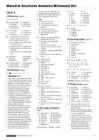
Maturita Solutions Advanced Workbook Key stand bananas and coffee! It's a bit 3 1 to 8 of Unit 1 uncanny really. Is it something she's 2 about 9 century passed on to me genetically, or is it 3 like 10 assumed / 1A Memories page 3 learned behaviour? Who knows? 4 of thought / 1 See exercise 2 2 5 6 any fought
Color-- -1- -2- -3- -4- -5- -6- -7- -8- -9- Text Size-- 10-- 11-- 12-- 13-- 14-- 15-- 16-- 17-- 18-- 19-- 20-- 21-- 22-- 23-- 24 TWILIGHT By Stephenie Meyer Contents PREFACE 1. FIRST SIGHT 2. OPEN BOOK 3. PHENOMENON 4. INVITATIONS 5. BLOOD TYPE 6. SCARY STORIES 7. NIGHTMARE 8. PORT ANGELES 9. THEORY 10. INTERROGATIONS 11. COMPLICATIONS 12. BALANCING 13. CONFESSIONS 14. MIND OVER MATTER 15. THE CULLENS 16. CARLISLE 17. THE GAME 18. THE HUNT 19. GOODBYES 20. IMPATIENCE 21. PHONE CALL 22. HIDE-AND-SEEK 23. THE ANGEL 24. AN IMPASSE EPILOGUE: AN OCCASION twilight STEPHENIE MEYER LITTLE, BROWN AND COMPANY New York Boston Text copyright © 2005 by Stephenie Meyer All rights reserved. Little, Brown and Company Time Warner Book Group 1271 Avenue of the Americas, New York, NY 10020 Visit our Web site at www.lb-teens.com First Edition: September 2005 The characters and events portrayed in this book are fictitious. Any similarity to real persons, living or dead, is coincidental and not intende
Ameerika Kirjandus 30.01.13 Naturalism · France, Emile Zola · Put down his theory in 1879: Le Roman Experimental, attempt to explain the development of human society throuch biological laws · Outlook is deterministic, pessimistic, fatalistic (fate or biology) · Man as an animal-clever than other beasts, still explainable within the framework · Man is not a free agent, is govern by something · Unable to determine his own faith · Hereditary · Naturalists tried to apply in fiction the processes of natural sciences · Writers task is to record facts, systems of behaviour, living conditions, never revealing any natural unbiased (completely natural) · Point of view: amoral-outside the category of morality, neither good or bad · Naturalist find it absurd to blame the wicked. These criminals are doing what nature, environment, their unconscious tells them to do. Naturalists do not judge their characters, they sim
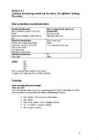
MODULE 1 Greeting. Introducing oneself and the others. The alphabet. Spelling. The tenses. How to introduce yourself and others Formal introductions How to respond and reply to an May I introduce myself? I am John introduction Smith. How do you do. Allow me to introduce John Smith to Pleased to meet you. you. Standard introduction Nice to meet you. I'd like you to meet John Smith. Hello. I want you to meet John Smith. I'm so pleased to meet you. This is Jane Smith. I'm Jane Smith. My name's John Smith. Informal introduction Hi. John. Jane. Hello. Titles: Mr Mrs Miss Ms Ms is a modern form of address for women. It replaces the traditional forms of Mrs and Miss. Greetings Good morning/afternoon/evening! 'How are you?' Very often people expect you to s
"Anna Karenina" Lev Tolstoi Part 1 The novel opens with a scene introducing Prince Stepan Arkadyevitch Oblonsky, "Stiva", a Moscow aristocrat and civil servant who has been unfaithful to his wife Darya Alexandrovna, nicknamed "Dolly". Dolly has discovered his affair - with the family's governess - and the house and family are in turmoil. Stiva's affair and his reaction to his wife's distress shows an amorous personality that he cannot seem to suppress. In the midst of the turmoil, Stiva reminds the household that his married sister, Anna Arkadyevna Karenina is coming to visit from Saint Petersburg. Meanwhile, Stiva's childhood friend Konstantin Dmitrievich Levin ("Kostya") arrives in Moscow with the aim of proposing to Dolly's youngest sister Princess Ekaterina Alexandrovna Shcherbatskaya, "Kitty". Levin is a passionate, restless but shy aristocratic landowner who, unlike his Moscow friends, chooses to live in the country on his large estate. He discovers that Kitty is also be
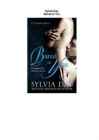
Sylvia Day Bared to You Sylvia Day Bared to You The first book in the Crossfire series, 2012 This one is for Dr. David Allen Goodwin. My love and gratitude are boundless. Thank you, Dave. You saved my life. Acknowledgments My deepest gratitude to my editor, Hilary Sares, who really dug into this story and made me work for it. Basically, she kicked my ass. By not pulling her punches or letting me shortchange the details, she made me work harder and because of that, this story is a much, much better book. BARED TO YOU wouldn't be what it is without you, Hilary. Thank you so much! To Martha Trachtenberg, copy editor extraordinaire. This book is an important one for me and she treated it that way. Thank you, Martha! To Victoria Colotta, for all her hard work on the i
Golden Grammar rules 1. Don't use an with own. Sue needs her own room. (NOT Sue needs an own room.) I'd like a phone line of my own. (NOT ... an own phone line.) 2. Use or rather to correct yourself. She's German or rather, Austrian. (NOT She's German or better, Austrian.) I'll see you on Friday or rather, Saturday. 3. Use the simple present play(s), rain(s) etc to talk about habits and repeated actions. I play tennis every Saturday. (NOT I am playing tennis every Saturday.) It usually rains a lot in November. 4. Use will ..., not the present, for offers and promises. I'll cook you supper this evening. (NOT I cook you supper this evening.) I promise I'll phone you tomorrow. (NOT I promise I phone you tomorrow.) 5. Don't drop prepositions with passive verbs. I don't like to be shouted at. (NOT I don't like to be shouted.) This needs to be thought about some more. (NOT This needs to be thought some more.) 6. Don't use a present tense after It's time. It's t
1) INDIAN ROCK ART: A NATIONAL TREASURE IN DANGER Unrecognized, unprotected, this priceless legacy of primitive art has endured the ravages of nature only to fall victim to wanton destruction by ,,civilized" man. Like the huge stone statues of Easter Island and prehistoric cave paintings of Altamira and Lascaux, North American Indian rock art is surrounded by an atmosphere of mystery. Although examples of rock art exist at some 15000 sites in canyons, deserts, caves and river gorges. Nowadays, however, primitive rock art in the United States has become a new field of scientific study. Klaus F Wellmann wrote two books about rock art. He is a professor of medicine. Rock art represents the history of aboriginal Americans. In the most cases the art is an expression of ideas and way of life, ritual ceremonies, hunting, fighting. The pictures of people and animals are often strikingly lifelike and artistic. Many of these ancient relics have been destroyed by the ravages of nature and of man
 annaabi.ee




Kõik kommentaarid