Leidsid 33 sarnast õppematerjali, mis on seotud failiga "Conditional sentences and tags". Need materjalid aitavad sul teemat sügavamalt mõista.
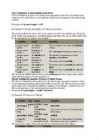
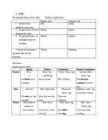
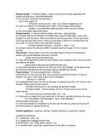
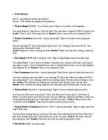
condition, conditional, sent, there, possible, address, invitation, likely, simple, send, found, going, aren, present, find, infinitive, refers, perfect, posted, letters, haven, forget, check, emails, leave, tennis, usually, plays, doesn, nothing, wrong, werenFirst Conditional: A real possibility in the future A First Conditional sentence is for future actions dependent on the result of another future action or event, where there is a reasonable possibility of the conditions for the action being satisfied. Formation: if + present simple, + will For example: If she gets good grades, she will go to university. We are talking about the future, but we use a present tense for the condition and will for the result. In this case, the person is sure about going to university. We can use other modal verbs in the result part of the sentence. For example: I Condition Result Possibility F she gets good she will go to If the condition is met, then she definitely If grades, university. will go he gets good he may go to
Conditionals Sentences with if are used to express possibilities. 0 Zero conditional If-clause present (past) simple Main clause present (past) simple Sometimes sentences with if express certainty rather than possibility. The zero conditional is used to talk about sth. that is always true (such as a scientific fact), or that was always true in the past. In this type of conditional we can use when instead of if. E.g., If/When you mix blue and red, you get purple. If/When you don't water flowers, they die. (present simple in both parts of the sentence) If/When I asked her to come with us, she always said no. (past simple in both parts of the sentence) 1 First conditional If-clause present simple; Main clause future tense (or: can, must, may, etc., + bare infinitive) Used to talk about the consequences of a possible action (a real or very probable situation in the
you. Standard introduction Nice to meet you. I'd like you to meet John Smith. Hello. I want you to meet John Smith. I'm so pleased to meet you. This is Jane Smith. I'm Jane Smith. My name's John Smith. Informal introduction Hi. John. Jane. Hello. Titles: Mr Mrs Miss Ms Ms is a modern form of address for women. It replaces the traditional forms of Mrs and Miss. Greetings Good morning/afternoon/evening! 'How are you?' Very often people expect you to say something positive. Here's a breakdown of how you can express how you really are without complaining too much. · Fine, thanks. / On top of the world, thanks. · OK, thanks · Not so bad, thanks. / Can't complain, thanks. · So so, thanks. / So and so, thanks.
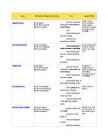
certain time in the past actions taking place at the same time action in the past that is interrupted by another action Present Perfect Simple A: He has spoken. already, ever, just, putting emphasis on N: He has not spoken. never, not yet, so Q: Has he spoken? the result far, till now, up to
sentences. All students of English, be they native speakers or those who are studying English as a second language, will profit from the fundamental introduction and review of grammar provided by SADDLEBACK'S BASIC ENGLISH GRAMMAR 1 and 2. Helpful marginal notes throughout the books have been provided to reinforce existing skills and call attention to common problem areas. We wish you every success in your pursuit of English proficiency. 1 What is Grammar? 5 The Simple Past Tense 98 Regular and Irregular Verbs 99 Was and Were 104 2 The Capital Letter 6 The Past Progressive Tense 106 The Future Tense 108 Can and Could 112
Conditionals Table of Contents Conditionals ......................................................................... 2 A. Real Conditionals ............................................................. 2 B. Unreal Conditionals ......................................................... 3 Linking words used in Conditionals ...................................... 4 Conditionals Conditions deal with imagined situations: some are possible, some are unlikely, some are impossible. A. Real Conditionals Real Conditionals refer to situations that are true, have happened, generally happen or are likely to happen. The First Conditional expresses a possible condition and a probable result: If I have time, I will help you. In the if-clause we use the Present Simple, in the main clause will + the verb. We can also use the Present Continuous or Perfect in the if-clause and a Modal Verb in the main clause.
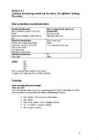
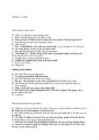
· Where are the extracts from? · What is the purpose of each letter? · How do they differ? · Which extracts are examples of formal letters? · How is the reader addressed in a formal letter? · What are the closing remarks for formal letters? · What is the salutation in a friendly letter? · How would you end extracts 1,2,3 ? · How would you begin the extracts 4 and 5? 1. Dear Mr Miller, I received your kind invitation to the reception. Unfortunately, owing to other commitments. I will be unable to attend ... 2. Dear Ralph, l just got your invitation to the company's event. l `m afraid I can't make it because I've a/ready made plans which l can "t change ... 3. Dear Sirs, I am writing to complain about the poor quality of the items which I received from your company. I have no other alternative but to cancel the order which 1 placed earlier this week ... 4. ..
1. the base form Talk Speak üldoleviku tüvivorm 2. the past form/ -ed form Talked Spoke üldmineviku vorm 3. the past participle (-ed Talked Spoken participle) mineviku kesksõna 4. the present participle (- Talking Speaking ing participle) oleviku kesksõna The tenses: Expressing the future: Simple Perfect Continuous Perfect Continuous Present Base Have / has + to be + base+ ing has/ have been +s + pariticiple base+ -ing He drinks tea at I have walked She is talking She has been breakfast. waiting for you all
· Sammy was waiting for us when we got off the plane. · While I was writing the email, the computer suddenly went off. · A: What were you doing when you broke your leg? B: I was snowboarding. USE 2 Specific Time as an Interruption Examples: · Last night at 6 PM, I was eating dinner. · At midnight, we were still driving through the desert. · Yesterday at this time, I was sitting at my desk at work. IMPORTANT In the Simple Past, a specific time is used to show when an action began or finished. In the Past Continuous, a specific time only interrupts the action. Examples: · Last night at 6 PM, I ate dinner. I started eating at 6 PM. · Last night at 6 PM, I was eating dinner. I started earlier; and at 6 PM, I was in the process of eating dinner. USE 3 Parallel Actions Examples: · I was studying while he was making dinner.
already are related to each other: the participle* action which had already happened He had He hadn't Had he Simple Past is put into past perfect, the other worked. worked. worked? just Perfect action into simple past *(infinitive + -ed) or never (3rd column of table I had gone. I hadn't gone. Had I gone? of irregular verbs) the past of the Present Perfect
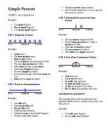
AJAD Simple Present: (olevik. Kui midagi toimub iga päev. every day.) EXAMPLES: I play tennis. She does not play tennis. The train leaves every morning at 8 am. The train does not leave at 9am. She always forgets her purse. (Ta alati unustab oma koti) He never forgets his wallet. Every twelve months, the Earth circles the sun. The sun does not circle the Earth. Past Simple: (midagi on tehtud. Tegusõna tuleb panna minevikku ehk II põhivormi. Seda aega tuleb kasutada siis, kui lause väljendab tegevust, mis minevikus tehti ja ka ära lõpetati!) EXAMPLES: I saw a movie yesterday. (Ma nägin eile filmi. Nägin filmi lõpuni.) I didn't see a movie yesterday. Last year, I traveled to Japan. (Sõitsin Jaapanini välja, mitte ei jäänud reisi peal kuhugi toppama) Last year, I didn't travel to Japan. She washed her car. (Ta pesi auto ära
CONDITIONALS 0 or 1? TYPE 0 ZERO CONDITIONAL In 'zero' conditional sentences, the tense in both parts of the sentence is the simple 'IF' CLAUSE (CONDITION present: ZERO CONDITIONAL (TYPE 0) 'IF' CLAUSE MAIN CLAUSE (CONDITION) (RESULT) If + simple present If + simple present If you heat ice, it melts. If it rains, you get wet TYPE 0 'IF' CLAUSE MAIN CLAUSE (CONDITION) (RESULT) If + simple present If + simple present If plants don't get they die. enough water, If you mix red and blue, you get purple Make sentences (type 0) Heat water/ boil Mix yellow and red/get orange Conditional Type 1 · First Conditional: real possibility · We are talking about the future. We are thinking about a particular condition or situation in the future, and the result of this condition. There is a real possibility that this condition will happen.
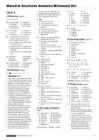
3 1 was getting, arrived Challenge! 2 It's a mixed class of girls and boys. 2 was preparing, cut Students' own answers 3 It's difficult to tell what kind of 3 discovered, were building 1E Past perfect simple and lesson their in. 4 started, was talking 4 It could be that they're in a maths 5 found, was living continuous page 8 lesson. 4 1 has/had just arrived 1 1 had been having hits since 1992
CONDITIONALS ZERO CONDITIONAL If you don't water flowers, they die. If you have a headache, stop watching TV. If clause: Main clause: PRESENT SIMPLE PRESENT SIMPLE or IMPERATIVE With zero conditional we express a general truth or we give advice. FIRST CONDITIONAL If the weather is nice, we will go for a walk. If you don't apologize, she will never trust you again. If clause: Main clause: PRESENT SIMPLE FUTURE SIMPLE The first conditional refers to the present and future. It expresses a possible condition and its probable result in the future. SECOND CONDITIONAL Jack wants to buy a house but he can't do this because he doesn't have any money. If I had a lo t o f m o ne y,
Reported speech is often also called indirect speech. When we use reported speech, we are usually talking about the past (because obviously the person who spoke originally spoke in the past). The verbs therefore usually have to be in the past too. For example: "I'm going to the cinema". He said he was going to the cinema. Basic tense chart The tenses generally move backwards in this way (the tense on the left changes to the tense on the right): present simple past simple I'm a teacher. He said he was a teacher past continuous. present continuous He said he was having lunch with his I'm having lunch with my parents. parents. past perfect simple
Golden Grammar rules 1. Don't use an with own. Sue needs her own room. (NOT Sue needs an own room.) I'd like a phone line of my own. (NOT ... an own phone line.) 2. Use or rather to correct yourself. She's German or rather, Austrian. (NOT She's German or better, Austrian.) I'll see you on Friday or rather, Saturday. 3. Use the simple present play(s), rain(s) etc to talk about habits and repeated actions. I play tennis every Saturday. (NOT I am playing tennis every Saturday.) It usually rains a lot in November. 4. Use will ..., not the present, for offers and promises. I'll cook you supper this evening. (NOT I cook you supper this evening.) I promise I'll phone you tomorrow. (NOT I promise I phone you tomorrow.) 5. Don't drop prepositions with passive verbs. I don't like to be shouted at
Tests Superstar 1 Luke Prodromou Test 1 Name____________________ Class_______ Use your English 1 Complete these sentences using the correct form (present simple or present continuous) of the verb in brackets. _ 1 She is in a band and she _________________________________ (record) a CD at the moment. _ 2 She is an actress and often _________________________________ (appear) on television. _ 3 At the moment she _________________________________ (have) a rest because she is tired. _ 4 Mike is a doctor and he _________________________________ (live) in Manchester. _ 5 I _________________________________ (start) work at 8.30 every morning.
Grammar point Made by Nikolai Hodosevich Conditional mood The conditional mood is the form of the verb used in conditional sentences to refer to a hypothetical state of affairs. Conditional verb forms can also have temporal uses, often for expressing "future in the past" tense. Condition sentences are often entered with conjunction IF Real events Structure: Additional clause Present Indefinite Main clause Future Indefinite If I have a lot of money, I will buy a car ,
Sentences are not simply random strings of words; they conform to specific patterns determined by the syntactic rules of the language. The syntactic rules in a grammar must account for the grammaticality of sentences, word order, structural ambiguity, the meaning relations between words in a sentence, the similarity of meaning of sentences with different structures, the speaker's creative ability to produce and understand any of an infinite set of possible sentences. Notes: Proto-Germanic » Northwest Germanic » West Germanic » North Sea Germanic » Anglo Frisian » English 2. How to classify words into different word classes? (definition is that enough?, morphology, distribution and function tests); Grammatical categories for nominals, verbs, adjectives. "A set of words like dog, child, cat, man, bird where the individual words are mutually substitutable is known as a word class..." Definitions
frequency(kordumine ) adverbs(määrsõna) N: Do you go to school by car every day ? I don't often watch TV. 2)Present continuousbe + verb + ing. Actions happening now N; Look! It's snowing. I'm meeting Jane tonight. You're always losing things. 3)keep + ingto describe habitual actions which may be irritating. N: my uncle keeps making silly jokes. Present perfect: 1) Present perfect simple: have/has + past participle. N: I've been here for ten minutes .The phone has rung ten times today. Look at this cheque,'I've won first prize. They have made a new star wars film. I've just got home. How long have you been here ? Have you ever been to Paris? It's the best book I've ever read. It's the first time I have ever been abroad. 2)Present perfect continious : have/has + been + ing. N:I've been living in this flat since 2000. I've been waiting for ages
english-4u.de/a_an_some_ex6.htm eagles We us the • when we talk about a specific thing. • when it is clear which thing or person we mean. A – AN - THE • when there is only one of something. Examples: What is the highest building in the world? Washington is the capital of the United States.
H: - But, you know, I'd like to receive money order for my sister. How do I go about it? J: - Your identity card and letter of attorney, please. H: - Here you are. J: - Well...Unfortunately, I can't cash your money order your signature is not witnessed. H: - Ok. Than, please, I'd like to cash my money order. J: - Take this form and fill it in. May I see your passport? H: - Yes. Please. So...Should I write my full name, my passport number and the sum of money that has been sent to me, right? J: - Certainly. How would you like the money? H: - I prefer one hundred rouble notes, if you don't mind. J: - Here is your money. H: - Thank you Getting a post-restante. H: - Hi, Julia! What are you doing here? J: - I'm getting post restante letter from Boris... H: -Ah, yeah, remember him. What is he saying? J: - Oh, well...He is asking to come to him, and, besides, here is the money-order... H: - Oh! Would you like to cash money-order? Have you got your passport with you?
say that they can see a strong family coat. 4 mistake for 8 come up with resemblance between my dad and me. I can't see it myself, not facially anyway 3 Well, she would keep driving too 2 1 bring about 5 go ahead although there are certain similarities fast in the town. 2 fall through 6 go down with in our physical build. I also seem to 4 Well, he would keep misbehaving 3 tip off 7 come to have inherited his big feet, unluckily in class. 4 come up with 8 mistake for for me. It was the first thing my parents 5 Well, you would keep eating too noticed when I was born
Will you give me a hand? 5.In the same way as the future continuous, but with state verbs: I'll be at the station when you arrive. 'Shall' is used mainly in the forms 'shall I ?' and 'shall we?' in British English. These forms are used when you want to get someone's opinion, especially for offers and suggestions: •Shall I open the window? (=do you want me to open the window). •Where shall we go tonight? (=what's your opinion?). PRESENT CONTINUOUS PRESENT SIMPLE AM/IS/ARE + ING (AM INFINITIVE (WORK;WORKS) WORKING) We talk about things that we have We talk about events in the future already arranged to do in the which are 'timetabled'. future. •My plane leaves at 6 in the •I've got my ticket. I'm leaving on morning. Thursday. •The shop opens at 9.30. •I'm seeing Julie at 5 and then I'm
1. Active/Passive Active - the professor teaches the students. Passive - The students are taught by the professor 2. Present Simple [VERB] + s/es in third person. Tegevus on korduv või tavapärane. You speak English. I play tennis. Cats like milk. The train leaves tonight at 6 PM. I am here now. Active= Once a week, Tom cleans the car. Passive= Once a week, the car is cleaned by Tom. 3. Present Continuous [am/is/are + present participle]. Tegevus toimub/ei toimu praegusel hetkel. You are watching TV. You are learning English now. I am studying to become a doctor. I am meeting some friends after work.
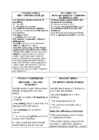
Conditional sentences tingiv kõneviis Type 0 (the zero conditional, the present condition) Kasutatakse selleks, et väljendada üldist tõde või teaduslikku fakti. Nende lausete puhul on võimalik kasutada sõna 'if' asemel sõna 'when.' If-clause main clause If /When + present simple, present simple If/ When you drop an egg, it breaks. Kui sa pillad muna maha, läheb see katki. If my sister eats too much, she gets fat. (See juhtub alati.) Kui mu õde sööb liiga palju, läheb ta paksuks. Type 1 (the first conditional, the will-condition) Kasutatakse selleks, et rääkida tõelisest või väga tõenäolisest olukorrast olevikus või tulevikus. If-cl main cl If + present simple, future simple, imperative, can/must/may etc + bare infinitive (verb)
4. Give the comparative and the superlative of the following adjectives: ( 5 points ) e.g. tall taller the tallest lucky difficult soft good interesting 5. Put these sentences into the Reported Speech. ( 5 points ) e.g. She said:"I will call you from London." She said that she would call me from London. 1) Eric said:"Jack has gone out." 2) Frank said:"The car is waiting at the front door." 3) Tommy asked:"Is there anybody at home?" 4) I asked my friend:"Why do you come so late?" 5) Jane said:"Think before you answer!" 6. Use the correct Prepositions. ( 20 points ) 1) Jane started learning English two years........ 2) ........Monday Steve asked me to dine with him 3) Mary was born........the second of May........1964. 4) We worked........ ten hours without stopping. 5) They left........seven o`clock........the evening. 6) The castle was built........the 16th century.
· And when you begin to miss me, dont forget it was you who let me go. · There is an end to things no matter how much we want to hold into them. · Otsisin keset seda pimedust, sind ja loodetud vabadust,kui mu käed su poole, tegid alguse loole, printsessist ja printsist, ühest kaunist kandist, kus oleme meie kaks, kus lõbutseme, kuni otsas jaks. Sa ei pea muinasmaad looma, sa ei pea tähti taevast tooma. Ole vaid minu kõrval, kui tõuseb päike. Ole vaid mu kõrval kui mind piinab meeleheide. Ole mu kõrval, kui kumab kuu, kui su nime
Forks. I loved Phoenix. I loved the sun and the blistering heat. I loved the vigorous, sprawling city. "Bella," my mom said to me -- the last of a thousand times -- before I got on the plane. "You don't have to do this." My mom looks like me, except with short hair and laugh lines. I felt a spasm of panic as I stared at her wide, childlike eyes. How could I leave my loving, erratic, harebrained mother to fend for herself? Of course she had Phil now, so the bills would probably get paid, there would be food in the refrigerator, gas in her car, and someone to call when she got lost, but still... "I want to go," I lied. I'd always been a bad liar, but I'd been saying this lie so frequently lately that it sounded almost convincing now. "Tell Charlie I said hi." "I will." "I'll see you soon," she insisted. "You can come home whenever you want -- I'll come right back as soon as you need me." But I could see the sacrifice in her eyes behind the promise. "Don't worry about me," I urged
Opening objections 36 Searle's Cluster Theory 38 Kripke's critique 39 Summary 43 Questions 43 Further reading 44 vi Contents 4 Proper names: Direct Reference and the CausalHistorical Theory 45 Overview 45 Possible worlds 46 Rigidity and proper names 47 Direct Reference 49 The CausalHistorical Theory 53 Problems for the CausalHistorical Theory 55 Natural-kind terms and "Twin Earth" 58 Summary 60 Questions 61 Further reading 61
Conditionals: II and III II CONDITIONAL • to imagine a different reality • An unreal situation • If I were a parent, I would give candy to my kids every day. • If he won the lottery, he would quit his job. • If I had wings, I would fly to Africa. How to use it? • IF + PAST SIMPLE, + WOULD + VERB • If I were a parent, I would give candy to my kids every day. • If he won the lottery, he would quit his job. • If I had wings, I would fly to Africa. • NB! The verb „be“ is always „were“ with this conditional. • If I were you,... • If he were here,... Wou can also turn it around: The result first and then the condition. • WOULD + VERB+ IF +PAST SIMPLE • Note: There is no comma when the „IF“ is between the two clauses.
INGLISE KEELE KORDAMINE TIME CLAUSES Present Simple · Permanent states, facts (Tom works..) · Repeated and habitual actions, routines (She usually goes..) · Laws of nature and general truths (The sun sets in the west) · Timetables and programmes · Sporting commentaries, rewiews (Beckham wins the ball, crosses and Owen scores) · Feelings and emotions (I love Tallinn..) TIME EXPRESSIONS USED WITH PRESENT SIMPLE: usually, often, always, every day/week etc, in the morning/evening
He's on the plane at the moment. 5 I ... (read) an interesting book. It's a collection of memories. 6 Leo was late again. He ... (step) out of his father's car when the bell rang. 7 Helen ... (lie) on the sofa when an ambulance stopped in front of the house. 8 I ... (give) this report from inside the school radio studio. Right now, the two teams ... (take) their places on the football field. 9 Mrs Watson ... (make) her speech when the girls rushed in. --- 4 2. Write the verbs in the past simple, the future simple, or the present perfect tense. Do you remember? I started I'll start I've started / she's started I'm not interested in sport, but lots of my classmates are. Some of them ... (1 do) great things in sport. Lisa ... (2 win) nine swimming competitions since she was 13. John ... (3 be) the school's top runner for the last two years. Next spring he ... (4 run) the London Marathon. But my friend Kelly is the best. She ... (5 start) skating when she was four. She ... (6 have)
 annaabi.ee