Leidsid 33 sarnast õppematerjali, mis on seotud failiga "Black Beauty". Need materjalid aitavad sul teemat sügavamalt mõista.
black, beauty, farm, good, horse, chapters, farmer, horses, gordon, other, ginger, hard, became, look, legs, jerry, mother, grey, gave, advice, work, stable, accident, lord, earl, women, spent, told, best, follow, first, went, live, friends, cared, never, wife, learnt, carry, rider, pull, nearby, trained, drove, nearly, thanks, clever, broken, bridgeIt is a story told by a horse, in his own words. It's about how he was treated and taught when he was a young and healthy horse and how he fell into illness and was treated badly. The Black Beauty didn't remember everything when he was small, but he remembered some very important advice from his mother. She told him that the better he behaved, the better was he treated and he always had to do best of him to his master. One day a man took him with him to the Birtwick Park. There lived other horses and the Beauty became friends with the others. The Black Beauty was a good horse and everyone loved him. One morning a master Gordon had to go to the city with Beauty. When they arrived to the hotel the master put the horse to the stable and went to bed. But suddenly the Black Beauty woke up and smelt smoke. The stable was on fire. Luckily everything went good and nobody got hurt. When they arrived to the Birtwick then everything went like always. The Black Beauty did work and got groomed.
Anna Sewell (1820-1878) wrote only one novel during her lifetime, a book describing the life of a beautiful, black horse, Black Beauty. Sewell was very concerned about animals and used the book to write about the terrible treatment of horses in England at the time. The book is written from the point of view of the horse, which helps us to understand the influence that good and bad treatment had on the horses in the story. Black Beauty spent his early years in a picturesque, green field with his mother and some other young colts. When it was time for him to be trained to serve men, he was gently and patiently broken in by his master. He learned to wear a saddle and bridle, and carry a human quietly on his back. Black Beauty learnt about the way horses can suffer because of men very early in life. He witnessed a hunting expedition in which a horse was pushed too hard and fast by an inexperienced and overconfident rider
Ameerika Kirjandus 30.01.13 Naturalism · France, Emile Zola · Put down his theory in 1879: Le Roman Experimental, attempt to explain the development of human society throuch biological laws · Outlook is deterministic, pessimistic, fatalistic (fate or biology) · Man as an animal-clever than other beasts, still explainable within the framework · Man is not a free agent, is govern by something · Unable to determine his own faith · Hereditary · Naturalists tried to apply in fiction the processes of natural sciences · Writers task is to record facts, systems of behaviour, living conditions, never revealing any natural unbiased (completely natural) · Point of view: amoral-outside the category of morality, neither good or bad
husband still loves her, despite his infidelity. Dolly is moved by Anna's speeches and decides to forgive Stiva. Dolly's youngest sister, Kitty, comes to visit her sister and Anna. Kitty, just 18, is in her first season as a debutante and is expected to make an excellent match with a man of her social standing. Vronsky has been paying her considerable attention, and she expects to dance with him at a ball that evening. Kitty is very struck by Anna's beauty and personality and is infatuated with her. When Levin proposes to Kitty at her home, she clumsily turns him down, because she believes she is in love with Vronsky and that he will propose to her. At the ball, Vronsky pays Anna considerable attention, and dances with her, choosing her as a partner instead of Kitty, who is shocked and heartbroken. Kitty realises that Vronsky has fallen in love with Anna, and that despite his overt flirtations with her he has no intention of marrying her and in
Chapter 17 Chapter 38 Chapter 58 Chapter 18 Chapter 39 Chapter 59 Chapter 19 Chapter 40 Chapter 60 Chapter 20 Chapter 41 Chapter 61 Chapter 21 Chapter 42 Chapter 1 It is a truth universally acknowledged, that a single man in possession of a good fortune, must be in want of a wife. However little known the feelings or views of such a man may be on his first entering a neighbourhood, this truth is so well fixed in the minds of the surrounding families, that he is considered the rightful property of some one or other of their daughters. "My dear Mr. Bennet," said his lady to him one day, "have you heard that Netherfield Park is let at last?" Mr. Bennet replied that he had not. "But it is," returned she; "for Mrs
Henry himself made a pilgrimage to Canterbury, walked barefoot through the town and was flogged by bishops at his request. In the end Henry quarrelled with his beautiful & powerful wife, his sons took Eleanor's side. In 1189 Henry died a broken man, disappointed & defeated by his sons and the French king. He was followed by his rebellious son, Richard. Although he spent little time in England (6 months of his 10-year reign), he was one of England's most popular kings. He was brave, a good soldier, but his nickname ,,lion-heart" shows that his culture was French. He died in 1199. He had no son. His brother John followed. King John is often regarded as the worst king England has ever had (unpopular, greedy). He wanted himself to choose archbishops, the pope didn't allow & from 1208-1213 King John locked the churches. In 1204 John lost his lands in France. He tried to recapture Normandy. As the cost of War had risen, he raised the taxes, the barons didn't like it
During this period a new class called bourgeoeisie came into being. This is the period when monarchies based on nationality were estabilished. The Renaessance started in Italy In the 14th century. Then it spread all over Europe, reached England in 16th century. The struggle for power culminated in a war called The War of Roses. It was a civil war between two dynasties, families. They had different emblems on one side the Yorks (white rose) other Lancasters (red). They couldn't decide who gets the throne. War ended 1485. A new dynasty came to throne, Tudor, the first king in this dynasty was Henry Vll. When he came to throne a period of stability followed because he built a nation based state. He was good at diplomacy.He could avoid quarrels and wars with neigbouring countries. France, Spain - greatest enemies.So he could save much money and thus laid a good economic basis for his state. Besides that he built a
per month than most people made in a year. The doorman tipped his hat to me. "Good evening, Miss Tramell. Will you need a cab this evening?" "No thanks, Paul." I rocked onto the rounded heels of my fitness shoes. "I'll be walking." He smiled. "It's cooled down from this afternoon. Should be nice." "I've been told I should enjoy the June weather before it gets wicked hot." "Very good advice, Miss Tramell." Stepping out from under the modern glass entrance overhang that somehow meshed with the age of the building and its neighbors, I enjoyed the relative quiet of my tree-lined street before I reached the bustle and flow of traffic on Broadway. One day soon, I hoped to blend right in, but for now I still felt like a fraudulent New Yorker. I had the address and the job, but I was still wary of the subway and had trouble hailing cabs
When the lights went off, Alice and Sheila went to the performers hall. If was full of people, students mostly, but some grown-ups were at present as well. "Oh, there's Mat! My brother! I must go now" said Alice and ran off. Sheila waved and went to her band the Space Dolls. Matrix was standing, not even noticing Alice. When she was close enough, she jumped and climbed onto Mat's neck, so he automatically hugged her. When he realized what he was doing he laughed. So did the other Ravens, Daemon even clapping his hands. "Well, you two sure are close!" commented Faith, the drummer and the second vocalist. Alice let go of her brother and hugged one by one every band member, finishing with Daemon. Yet, his hug was the warmest, since she considered him her brother as well. Daemon, however, didn't feel the same...His feelings were deeper that is the reason why he hadn't chosen a girlfriend, even thought he was 22 and quite handsome: light-
And the paintings and carvings are increaslibly falling victim to vandalism: they have been painted over, spoilt with knives, even used for target practice. The American Rock Art Research Association protects rock-art sites. 2) THE FAVOURITE SPORT IN BRITAIN The most popular sport is probably football. Two kinds of football is played in Great Britain. One of them, which is called association football, is played all over Europe. The other kind: rugby football is also very popular in New Zealand, France, and some other European countries. English boys play it at school, and in public parks. When they grow up, they play as members of important amateur teams or as a professional in teams competing in football ,,leagues". Professional football is as much a business as a sport. Rugby football was first played in 1823. In rugby every player is allowed to carry the ball. The ball is oval, not round. Each team contains 15 players
The making of a new nation. The Enlightenment in America. The emergence of the notion of the American Dream. The great Enlighteners: Crèvecoeur, Jefferson, Paine, Franklin. The American Enlightenment is the intellectual thriving period in the United States in the midtolate 18th century (17151789), especially as it relates to American Revolution on the one hand and the European Enlightenment on the other. Influenced by the scientific revolution of the 17th century and the humanist period during the Renaissance, the Enlightenment took scientific reasoning and applied it to human nature, society, and religion. American Enlightenment a gradual but powerful awakening that established the ideals of democracy, liberty, and religious tolerance in the people of America.
But it is used with a suitable irony; and, after all, this long tale, though it may deal with folk in frock coats, furbelows, and a gilt- edged period, is not devoid of the essential heat of conflict. Discounting for the gigantic stature and blood-thirstiness of old days, as they have come down to us in fairy-tale and legend, the folk of the old Sagas were Forsytes, assuredly, in their possessive instincts, and as little proof against the inroads of beauty and passion as Swithin, Soames, or even Young Jolyon. And if heroic figures, in days that never were, seem to startle out from their surroundings in fashion unbecoming to a Forsyte of the Victorian era, we may be sure that tribal instinct was even then the prime force, and that "family" and the sense of home and property counted as they do to this day, for all the recent efforts to "talk them out."
she meets an exquisitely handsome boy at school for whom she feels an overwhelming attraction and who she comes to realize is not wholly human. ISBN 0-316-16017-2 [1. Vampires -- Fiction. 2. High schools -- Fiction. 3. Schools -- Fiction. 4. Washington (State) -- Fiction.] I. Title. PZ7.M57188Tw2005 [Fic] --dc22 2004024730 Printed in the United States of America For my big sister, Emily, without whose enthusiasm this story might still be unfinished. But of the tree of the knowledge of good and evil, thou shalt not eat of it: for in the day that thou eatest thereof thou shalt surely die. Genesis 2:17 PREFACE I'd never given much thought to how I would die -- though I'd had reason enough in the last few months -- but even if I had, I would not have imagined it like this. I stared without breathing across the long room, into the dark eyes of the hunter, and he looked pleasantly back at me. Surely it was a good way to die, in the place of someone else, someone I loved. Noble, even
09.10.09 "You can never go home again" "Lord of the flies" The quote "You can never go home again" is related to "Lord of the flies" in both literal and metaphorical sense. Luckily most of the boys could go home in a literal sense but unfortunately some of them were dead by the time rescuers came to save them. When boys were left on the island alone the savages inside them started to appear and there were few quite good reasons for that. The experience on the island changed all of them and when they were finally rescued everyone went home as sort of different persons. In the beginning when boys had just discovered that they are alone in this paradise island they were all innocent and longed for rescue but towards the end they gradually turned into savages who painted their faces, hunted and were willing to kill each other. For example in
Frederick Douglas Frederick Douglass (February 17, 1818 February 20, 1895) was an American abolitionist, editor, orator, author, statesman and reformer. Called "The Sage of Anacostia" and "The Lion of Anacostia," Douglass was one of the most prominent figures of African American history during the 1800s, and one of the most influential lecturers and authors in American history. Douglass was a firm believer in the equality of all people, whether black, female, American Indian, or recent immigrant. He spent his entire life advocating the brotherhood of all humankind. One of his favorite quotations was: "I would unite with anybody to do right and with nobody to do wrong." Life as a slave Frederick Augustus Washington Bailey, who later became known as Frederick Douglass, was born a slave in Talbot County, Maryland near Hillsboro. He was separated from his mother, Harriet Bailey, when he was still an infant. She died when Douglass was about 7.
By then, Ghana the former Gold Coast had been independent for three years under the great Osagyefo Kwame Nkumah. It was a time for celebrating Africa’s coming of age, as more and more African countries received their independence either from Britain or France. It was especially a poignant time for Africa, as then British Prime Minister Harold McMillan articulated his now famous “winds of change” sweeping Africa. We had high hopes for Africa, for the Black race, that the insidious imposition of foreign rule on us, the looting of Africa’s natural resources by our colonial masters accorded us would be things of history. That is more than forty years ago. Unfortunately, the promise of independence has not been fulfilled. Today, Africa has become more desolate; there is more starvation, diseases and non-provision of essential services than when we got our independence. There are all kinds of wars in Africa than the rest of world put together.
You do the opposite of my instructions; You've no respect for anything; each one Must have his say; it's perfect pandemonium. DORINE If . . . MADAME PERNELLE You're a servant wench, my girl, and much Too full of gab, and too impertinent And free with your advice on all occasions. DAMIS But . . . MADAME PERNELLE You're a fool, my boy--f, o, o, l Just spells your name. Let grandma tell you that I've said a hundred times to my poor son, Your father, that you'd never come to good Or give him anything but plague and torment. MARIANE I think . . . MADAME PERNELLE O dearie me, his little sister! You're all demureness, butter wouldn't melt In your mouth, one would think to look at you. Still waters, though, they say . . . you know the proverb; And I don't like your doings on the sly. ELMIRE But, mother . . . MADAME PERNELLE Daughter, by your leave, your conduct In everything is altogether wrong; You ought to set a good example for 'em;
The woman, without a word of who she was, died and left her new born boy, Oliver, to the drunken nurse that stood by. Chapter2: The State gave Oliver to Mrs. Mann who housed a number of orphaned children. Mrs. Mann took a large portion of the money given to her by the authorities for each child's food so Oliver grew up small and malnourished. On his ninth birthday, the town beadle, Mr. Bumble, came to collect Oliver and take him to the board for an interview. They told him he was to live with other wards of the state to become educated and learn a trade. Oliver did not mind this, but soon after he arrived, the state decided to implement a plan that would save money by feeding the people very little. After a time on this diet, the boys at the table chose Oliver to go ask the head cook for more gruel. Oliver did this, and was taken away. A flyer was then posted that said the state would give five pounds for someone to take young Oliver off their hands.
local churh. Optimistic period wrote two long poems, ,,Venus and Adonis", ,,Lucrece", 154 sonnets, bright comedies, ,,Romeo and Juliet" and his historical plays. Sonnets the genre was developed in Italy, perfected by Petrarch, Shakespeare and Milton. In his poems there are the characters The Dark Lady, the Young Friend, the author. In his sonnets he criticizes human vices. Shakespeares ideal beauty differed greatly from the traditional beauty of the time. The Earl of Southampton was his friend. Comedies The Taming of the Shrew, A Mid-Summer Night's Dream, The Twelth Night, Much Ado About Nothing, The Merchant of Venice, The Merry Wives of Windsor, The Two Gentlemen of Verona, As You Like It. Although the comedies take place in Italy, they reflect Renaissance England and the characters are men and women whose raison d'etre is enjoying life.
............................................................................................. ...................................................................................................... ............................................................................. 1.2 Read the text and strike though words that don't suit. She stood and watched on/the darkening autumn sky. It was cold. So cold, that the little girl could/might not even cry. She was/is scared, but having no other choice, she stood/stands still until it started to rain. Then, finally, a/an older woman spotted the shaking creature, and called her in for/due to a cup of hot chocolate. The little girl had been/was really happy and followed the kind woman. They became good friends and in/at the evening the woman said that/if the girl could stay as long as she wanted/had wanted. And so it was decided that the girl would/will/is going to/was going to stay with her new stepmother. Happy end 1
Henry Wotton (Harry) finds great intrest in Dorian. Lord Henry Wotton wants to buy the picture, and moreover, he wants to meet the boy in the picture himself. Unfortunately, Dorian is an innocent and a pure child, this is why Hallward doesn't find the idea of these two men meeting, because he is afraid that Dorian won't find his relationship with Basil intesting and exciting anymore. Basil fell in love with Dorian while painting his picture. Basil also treated him good, kept his self- esteem and spirit up by saying all the great things about him, of how good he looks and how much he as an artist likes him, etc. Everything that Dorian did later in his life selling his soul to the Devil in order to remain picturesquely and breath-takingly beautiful (Dorian wanted the picture to get older in time, not he himself.) was in my opinion actually a favour from Basil Hallward, because he was the one who told all those nice things to him
Main article: Marilyn Monroe filmography Once in New York Monroe set up her own production company, Marilyn Monroe Productions, with fashion photographer Milton H. Greene. As The Seven Year Itch raced to the top of the box office in the summer of 1955, and with Fox starlets Jayne Mansfield and Sheree North failing to click with audiences, Zanuck admitted defeat and Monroe returned to Hollywood. A new contract was drawn up, giving Monroe approval of the director as well as the option to act in other studios' projects. The first film to be made under the contract and production company was Bus Stop, directed by Joshua Logan. She played Chérie,[29] a saloon bar singer who falls in love with a cowboy. Monroe deliberately appeared badly made-up and unglamorous. She was nominated for a Golden Globe for the performance and was praised by critics.[15] Bosley Crowther of The New York Times proclaimed: "Hold on to your chairs, everybody, and get set for a rattling surprise
and clear, sharp language. Modernist writers embraced the unconscious fears of a darker humanity. Sub movements: surrealism, formalism, avant-garde, symbolism, imagism Structuralism: Writers used myth and music as a part of the books structure. J. Joyce "Ulysses". Deep structure is the same as in "odyssey" and T.S. Elliot "the fisher king"-more complicated experiment. Aldous Huxley ,,point counter point"-builds his chapters on principles of music. R. Aldington ,,death of a hero"-a jazz novel. Polyphony-harmony. Cacophony Virginia Woolf ,,the waves"-symphony. Psychoanalysis: The greatest influence of psychoanalysis on literary production has probably been to add legitimacy to the already-existing trends towards greater psychological introspection and towards more prominent and franker discussions of sexuality. Main characteristic features of Modernism: Characteristics of Modernism Formal characteristics(11)
Brett's personal search is perhaps symbolic of the entire Lost Generation's search for the shattered prewar values of love and romance. Robert Cohn Cohn has spent his entire life feeling like an outsider because he is Jewish. While at Princeton, he took up boxing to combat his feelings of shyness and inferiority. Although his confidence has grown with his literary success, his anxiety about being different or considered not good enough persists. These feelings of otherness and inadequacy may explain his irrational attachment to Brett--he is so terrified of rejection that, when it happens, he refuses to accept it. The individuals with whom Cohn travels to Spain only compound his insecurities. Not only is he the only Jew among them, but he is also the only nonveteran. Jake and his friends seize on these differences and take out their own personal insecurities on Cohn
Source: Feedbooks 1 About Shakespeare: William Shakespeare (baptised 26 April 1564 – died 23 April 1616) was an English poet and playwright, widely regarded as the greatest writer in the English language and the world's pre-eminent dramatist. He is often called England's national poet and the "Bard of Avon" (or simply "The Bard"). His surviv- ing works consist of 38 plays, 154 sonnets, two long narrative poems, and several other poems. His plays have been trans- lated into every major living language, and are performed more often than those of any other playwright. Shakespeare was born and raised in Stratford-upon-Avon. At the age of 18 he married Anne Hathaway, who bore him three children: Susanna, and twins Hamnet and Judith. Between 1585 and 1592 he began a successful career in London as an actor, writer, and part owner of the playing company the Lord Chamberlain's Men, later known as the King's Men. He ap-
Chapter Two, marks the reader's first encounter with the meaninglessness of death and the cheapness of life in the war. Joseph Behm - The first of Paul's classmates to die in the war. Behm did not want to enlist, but he caved under the pressure of the schoolmaster, Kantorek. His ugly, painful death shatters his classmates' trust in the authorities who convinced them to take part in the war. Detering - One of Paul's close friends in the Second Company. Detering is a young man with a wife and a farm at home; he is constantly homesick for his farm and family. Gérard Duval - A French soldier whom Paul kills in No Man's Land. Duval is a printer with a wife and child at home. He is the first person that Paul kills in hand-to-hand combat, one of Paul's most traumatic experiences in the war. Leer - One of Paul's classmates and close friends during the war. Leer serves with Paul in the Second Company. He was the first in Paul's class to lose his virginity.
Tallinna Inglise Kolledz THE HORSE WHISPERER BOOK REPORT Alice Tärk, 9b. Title: The Horse Whisperer Author: Nicholas Evans Publisher: Transworld Publishers Ltd Year: 1991 Number of pages: 97 Genre: fiction The setting: Takes place in Montana The Time Period: 1995 Goal: Some are going to be okay, some are not. The main character is Grace, who is thirteen years old and lives with her mother and father in New York. She is a usual teenager until she loses her leg and her best friend in a serious riding accident. After that she is sad
I promise! So don't punish me, okay?" The man stood up and walked slowly towards the girl. "I promised your mother to take care of you, yet, if you are useless in even collecting money from the rich, I can't help you! This is the end, Heartless! Go to the dorms, pack your things and leave my orphanage at once! You are no longer welcome here!" Heartless tried to protest, but the man hit her, so there she was now lying helplessly on the floor. Suddenly, someone else knocked on the door and two other girls and an older boy came in. They saw Heartless, yet knew that they had no allowance to help her. The man asked them what had they brought and after taking all the money they showed away, he said, "Well, Heartless, you should've done as well as Loveless' s team. Then you'd still be one of us!" But the little girl grinned and said proudly, "I prefer keeping my honor rather than stealing from the old and sick like all your puppets do!"
[2] His posthumous compilation album Legend (1984) is the best-selling reggae album ever, with sales of more than 12 million copies.[2] Early life and career Marley was born in the small village of Nine Mile in Saint Ann Parish, Jamaica. His father, Norval Sinclair Marley, (born in 1895), was a Jamaican of English descent, with parents from Sussex. Norval was a Marine officer and captain, as well as a plantation overseer, when he married Cedella Booker, a black Jamaican then eighteen years old. Norval provided financial support for his wife and child, but seldom saw them, as he was often away on trips. Marley was ten years old when his father died of a heart attack in 1955 at age 60. Marley suffered racial prejudice as a youth, because of his mixed racial origins,[3] and faced questions about his own racial identity throughout his life. He once reflected: I don't have prejudice against myself. My father was a white and my mother was black. Them
Catherine Morland My name is Catherine Morland. I would like to tell you a bit about myself. To begin with, I am seventeen years old and grew up in a countryside in a small town named Fullerton with my parents and nine siblings. As a child I was interested in many things like drawing, sports and music. I was very lively and cheerful, enjoyed cricket, horse riding and just hated cleanliness and restriction. As I grew up, I chose reading over sports and all of the wild games I used to like. Undoubtedly, I would now describe myself with the word naivety. I am very naïve and do not notice the most obvious things happening around me. I really hope that it is caused by the lack of experience and will eventually pass. In addition, I find myself a kind and caring person because I always want and agree to help people when needed.
It 15 insisted looks as if one of them is asleep. summit. It's clear that the girl in the front Challenge! 5 She hadn't got to know the other desk isn't interested in the lesson Students' own answers climbers in the group. or perhaps she doesn't understand 6 She had spent a week at high
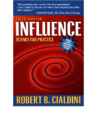
do it, enabled us to make significant changes. His work has enabled us to gain significant competitive differentiation and advantage" -LAURENCE HOF, Vice President, Relationship Consulting, Advanta Corporation "This will help executives make better decisions and use their influence wisely ... Robert Cialdini has had a greater impact on my thinking on this topic than any other scientist." -CHARLES T. MUNGER, Vice Chairman, Berkshire Hathaway, Inc. If you're wondering why of Latin America, the Far East, and Central Europe. you should buy this new edition of Influence: o More neuroscience evidence of how the influence process works is inte-
The capital letter is also called a big letter or upper- case letter, or sometimes just a capital. A B C D E F G H I J K L M N O P Q R S T U V W X Y Z When do you use a capital letter? 4Use a capital letter for the first letter in a sentence: The dog is barking. Come here! 4Always use a capital letter for the word I : I am eight years old. Tom and I are good friends. 4Use a capital letter for the names of people: Alice, Tom, James, Kim, Snow White 4Use a capital letter for the names of places: National Museum, Bronx Zoo, London, Sacramento 4Use a capital letter for festivals, holidays, days of the week, months of the year: New Year's Day, Christmas, Labor Day, Mother's Day, Sunday, Monday, Friday, January, May, July, October Exercise 1 Circle the letters that should be CAPITALS. Then write
 annaabi.ee