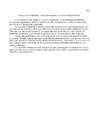
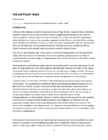
If I had known h is num b e r, I would have phoned h im . if-clause: main clause: PAST PERFECT SIMPLE PAST CONDITIONAL would + have + past participle The third conditional refers to the past and it is not based on facts. It expresses the a situation which is contrary to reality in the past. SECOND v. THIRD CONDITIONAL If I saw a car accident, I would call an ambulance. But I don't see an accident now. This is unlikely to happen. If I had seen a car accident, I would have called an ambulance. But I didn't see an accident yesterday. This is contrary to the fact in the past. THE DIFFERENCE: SECOND and THIRD CONDITIONAL The difference is about time. Second conditional: refers to the present and future Third conditional: refers to the past situations
Plot Overview Lieutenant Frederic Henry is a young American ambulance driver serving in the Italian army during World War I. At the beginning of the novel, the war is winding down with the onset of winter, and Henry arranges to tour Italy. The following spring, upon his return to the front, Henry meets Catherine Barkley, an English nurse's aide at the nearby British hospital and the love interest of his friend Rinaldi. Rinaldi, however, quickly fades from the picture as Catherine and Henry become involved in an elaborate game of seduction
One day, about 11 years ago I was home with my family. My mother was cooking a delicious fish for me and for my brother . We were hungry. I went to the kitchen and I saw a cooked fish, and I just wanted to eat it all. But then a fishbone got stuck inside of my throat. I was crying because it hurt me very badly. Then my mother asked me: "Oh my god! What is it, dear son?" then she saw a fish on the ground. My mother called ambulance and we went to the car right after. When we arrived to the hospital, then some nurses came to me and put me on a wheeled bed. They rolled me to the room where they took the bone out of my throat. I was so shocked that they had to give me a tranquilizer. Doctors kept my family informed what was happening with me. I was in hospital for 2 days before I got back home. That is a small story about my childhood, when I was about 3 year's old kid.
My mother works in a hospital. She's a nurse of extraordinary medicine. She loves her job, because she thinks it's interesting to help all these people. She has also worked in a bank and when she was younger she was a secretary. When she graduated high school she wanted to become a stewardess, but life went the other way. My father works in Finland. He is a builder. Sometimes he is abroad for several months. He worked couple of years ago at the same hospital where my mother works. He was an ambulance driver. i can't say that some jobs are unnecessary or pointless, but i can say what jobs i don't like. I think i don't want to become a doctor or even a nurse, because i don't stand blood. In the future i want to become a teacher. I want to teach Estionian language or literature to high school students. To become a good teacher, i have to go to high school and graduate it with good results. Then i want to go to university.
For and Against Mobile Phones Mobile phones have become a essential part of people's lives. Almost everybody has a mobile phone. This essay will deal advantages and disadvantages of using mobile phones. Nowadays mobile phones have internet. It is very useful and it guarantees a quick access to the information one need. Furthermore, why mobile phones are important is that one can call help. For example when there has been an accident , one can call quickly the ambulance. Also mobile phones are very handy because one can use it almost everywhere. Whether one is in a forest or in a big city, one can call or use the internet. But mobile phones have their downsides too. Firstly, buying a good mobile phone which has internet access, GPS and other useful applications is quite expensive. Secondly, mobile phones have made people lazy. Hardly no-one goes to knock on a door to ask a friend out. Instead they call or send a text message
The poles that were holding the fence up were holo inside and the bees thought that it was a great place to make a hive in. I can’t remeber why, but my brother for some reason leaned over the fence pole and looked into it. That’s when my brother got stung near to his eyes. He immediately yelled at me that he can’t see and wanted my help, there was nobody else outside at that moment. So I ran to him and helped him to the house. Where our parents took him over and called the ambulance. In my mind I saved his life because I was the only one who could have helped him to the house, that’s because we were the only ones outside. I’m really proud of what I did and without him my life would not have been the same.
neighbours are far away. Also you lots of garden room and a lot more privacy than in the city. On the other hand living in the countryside can be hard. You have to do most of the chores by yourself. Secondly schools and stores are far. Driving back and forward every day may drive you crazy. Also you may start feeling lonely and that will make you sad. Also living in the countryside is more expensive than living in the city. In case of an emergency, firefighters and ambulance can´t reach you that easy. Living in the countryside can be good and also bad. Some people love being surrounded by nature, some people are more comfortable with a city life. At the end it is every persons own choice where he or she wants to live.
A Palestinian bulldozer driver rammed a police car in Jerusalem, injuring two police officers, and then hit a bus before he was shot, officials said today. Israeli police said they regarded the incident as a terrorist attack. The driver of the bulldozer was shot several times and taken by ambulance to hospital with severe injuries. There were conflicting reports about whether he had been killed. The two policemen suffered slight injuries. Uzi Mahatabi, 32, a taxi driver who witnessed the incident said: "When I saw the bulldozer throw the squad car up and down in the air with an officer inside, I realised it was a terror attack." Mahatabi said he got out of his cab, and fired two or three bullets, hitting the attacker in the stomach after police had already shot the man.
journalist. He was born in 21 July 1899. He was the second of six children. His family was very strict and religious. His father taught his children a love of nature and the outdoor life. His mother taught him a love of music and art. At the school he wrote for school newspaper. He didn't do to college. He worked for the Star newspaper in Kansas City. Hemingway was fascinated by war. He had wanted to become a soldier but couldn't because he had poor eyesight. He became ana ambulance driver and was sent to Italy, where he was wounded. In the 1930s he became a war correspondent in the World War II. Many of his books were about war. His best book , For Whom the Bell Tolls, was written in 1940. Hemingway success in writing but not very successed by personal happiness. He married 4 times. In 1928 his father committed suicide. Hemingway's health was not good and he had many accidents. He was awarded the Nobel Prize for literature.
wanted to go to the Ghent. Suddenly Arabella saw that busdriver's driving had become rather erratic ; he wasn't on the right side of the road. Arabella was beside a strangely sagging busdriver by now, applying the hand-brake and switching off the ignition. The bus came to a lop-sidedhalt on the wrong side of the road, on a narrow grass slope leading to a small waterway. The bus landed on its side quite gently and lay rocking. She heard the squeal of brakes and saw a good looking man. He called ambulance and all were taken to the hospital. The children were sent back to Wickham to their families. Only two of them stayed with Arabella in hospital. Man who resqued the bus crew was a local doctor. He liked Arabella and Arabella liked him too. Doctor asked Arabella to move in his house, because of the children who can forget the accident there. Arabella agreed and she met with his sister and mother. Finally Arabella with two children moved to doctor's house.
I think many people have suffered much more and would deserve much more. But that all concludes in people's ego. It's the side that people get greedy. At that moment lawyers step into play. They have helped create a world in which dissatisfaction leads to blame. Most victims of legal harassment will settle with money in order to avoid a lengthy and expensive trial. The defendant, however vast they may become, will be carried by his or her lawyer, working for a share of the profits. The ,,ambulance chasing" lawyers who are involved in this sort of legal chicanery get rich because when they win they can win simply billions. Innocent defendants know that they have a choice: they either spend years fighting the case or else they settle out of court. Many small businessmen have gone bust because they cannot afford the premiums they've been expected to pay. Public services have deteriorated still further as central and local governments are forced to spend an increasing amount of
unruly logging town in the hinterland, far away from the colony's main cities, Quebec City and Montreal in Canada East, and Kingston and Toronto in Canada West. Ottawa is governed by a 24-member city council consisting of 23 councillors each representing one ward and the mayor, currently Larry O'Brien, elected in a citywide vote. As a single tier municipality, Ottawa has responsibility for all municipal services, including fire, ambulance, police, parks, roads, sidewalks, public transit, drinking water, stormwater, sanitary sewage and solid waste. Calgary Calgary is the largest city in the Province of Alberta, Canada.It's population is about 1 065 000 people. It is located in the south of the province, in an area of foothills and high plains, approximately 80 km east of the front ranges of the Canadian Rockies. The city is located in the Grassland region of Alberta. Calgary is the third largest civic
............ f) I never wear a watch because I don't like the weight on............. my g) One of the boxers punched the other on the............. and knocked him out. h) When Diane was a baby, she used to suck her ............. i) I've lost a lot of weight, especially around the ............. j) Norma wears a heart on a gold chain around her ............. 4) Complete each sentence (a-j) with a suitable ending (1-10). Use each ending once. a) I think we should send for an ambulance 3 1 to have that bad tooth of yours taken out. b) Some people go jogging every morning 2 to check whether it had recovered from its accident. c) It would be a good idea for you to go to the dentist's 3 to take old Mrs Jones to hospital. d) The doctor gave Andy an injection 4 to put on my sunburnt arms and legs. e) I'm going into hospital tomorrow 5 to get rid of her headache.
make medicine properly. But if you don't cure them well, they might turn into a worse disease. Cold, for example, can develop into sinusitis (põsekoopapõletik), cough into pneumonia(kopsupõletik) or asthma. Besides falling ill with one of these diseases you may hurt yourself in many other ways. You may sprain your ankle, break your leg or cut your finger. If you cut your finger you must stop the bleeding by putting a handage on it. In serous cases of accidents you must ring for an ambulance. Some diseases are infectious. For example infectious diseases are most common children's diseases such as measles, mumps, scarlet fever and chicken pox. Some diseases can be vaccinated against. Not all diseases are infectious. A very widely spread present-day trouble is allergy. It means that people are over-sensitive to certain things. Many people suffer from heart diseases. It is not rare that a person has a heart attack or a stroke. Another very serious problem is cancer
The driver and Dodi died immediately. The second bodyguard was in critical position and unconscious. Diana made rowing movements with her arms, when injured people do this, it means that they are not receiving enough oxygen. On the second carriageway was driving a doctor Frederic Maillez. When he saw the accident, he stopped his car, took his emergency bag and ran to help the victims. He gave bodyguard medical attention and went to Diana. He laid oxygen mask to Diana's mouth. The ambulance was meanwhile underway. It took almost an hour until the victims could be taken out of the wreck. The car had to be first cut open using metal shears. Diana was taken to hospital and she had massive inner bleeding. Doctors managed to close it, but suddenly Diana's heart stopped working. Doctors tried to bring the Princess back using heart massage, but they couldn't. Diana was dead. The Princess of Wales died on 31st August 1997 at 3.57 am. After The Accident
Drugs help patients fight diseases or relieve pain, such as aspirin and ibuprofen. 5. First aid Most accidents happen at home. Many people die because their family doesn't know how to help them. So everyone should learn the basic things about first aid. Many poisonous things can be found in our bathrooms and under the kitchen sinks. If we have children at home it would be better to put dangerous things out of their reach. If still and accident has happened we must call for an ambulance. We must tell what has happened to the person, tell the person's age, home address. In case of poisoning we must save the bottle, tell the person's age and weight. 6. Medicine and elements of medical care Medicine is the science and art of healing. It is a since because it's based on knowledge gained through careful study and experimentation. It is an art because it depends on how skilfully doctors and other medical workers apply this knowledge when dealing with patients
(such as Peter Temin and Barry Eichengreen) point to Britain's decision to return to the Gold Standard at pre-World War I parities. Ernest Miller Hemingway Ernest Hemingway (1899-1961), born in Oak Park, Illinois, started his career as a writer in a newspaper office in Kansas City at the age of seventeen. After the United States entered the First World War, he joined a volunteer ambulance unit in the Italian army. Serving at the front, he was wounded, was decorated by the Italian Government, and spent considerable time in hospitals. After his return to the United States, he became a reporter for Canadian and American newspapers and was soon sent back to Europe to cover such events as the Greek Revolution. During the twenties, Hemingway became a member of the group of expatriate Americans in Paris, which he described in his first important work, The Sun Also Rises (1926)
The tiger lives in Asia. when we are talking about a thing in general. • when we refer to a system or service. Examples: When does the train arrive? We should call the ambulance. Example: I need a new laptop. Hand me a pencil, please. • with adjectives like rich, poor, or unemployed to talk about with professions. groups of people. Example: He is a postman.
Then turn left/right into Silver Street. Then take the first/second/third turning on the left. Then turn left, then right. And it's at the end of the road, on the left/right. e) How to give an idea of distance It's not very far. Only about (5 minutes) from here. Quite near here. It won't take you very long to get there. It'll only take about (10 minutes) to get there. Means of transport ambulance fire engine pick-up truck sports car bicycle (bike) hatchback police car taxi bus lorry (truck) saloon car van coach motorbike scooter ship horse and cart liner speedboat canoe hot-air balloon motor boat train car ferry helicopter plane tram
was were verb -ing 1 Sorry. I ... (write) a report at the moment. I can't come with you. 2 When Peter arrived, his friends ... (play) football. 3 I ... (sleep) when the alarm went off in my sister's room. 4 Dad's mobile phone is switched off because he ... (fly) to Paris. He's on the plane at the moment. 5 I ... (read) an interesting book. It's a collection of memories. 6 Leo was late again. He ... (step) out of his father's car when the bell rang. 7 Helen ... (lie) on the sofa when an ambulance stopped in front of the house. 8 I ... (give) this report from inside the school radio studio. Right now, the two teams ... (take) their places on the football field. 9 Mrs Watson ... (make) her speech when the girls rushed in. --- 4 2. Write the verbs in the past simple, the future simple, or the present perfect tense. Do you remember? I started I'll start I've started / she's started I'm not interested in sport, but lots of my classmates are. Some of them ... (1 do) great things in sport
They drink coffee and begin eating again before they end the night with cognac. They even feed a stray cat. The richness of the meal after such long deprivation causes them to suffer bouts of diarrhea all night. For three weeks, the men live a "charmed life" before they are moved again. They take the bed, two armchairs, and the cat with them. While they are evacuating another village, Kropp and Paul are wounded by a falling shell. They find an ambulance wagon after struggling out of the zone of the shelling. Kropp has been wounded very close to his knee. He resolves to commit suicide if they amputate his leg. Paul's leg is broken and his arm is wounded. He and Kropp travel to the hospital in the same train car after bribing a sergeant-major with cigars. Kropp develops a fever and must stop at the Catholic hospital nearby. Paul fakes an illness to go with him. Kropp's fever does not improve, so his leg has to be amputated from the thigh.
,,1919" study of American society during the WWI. It's tone is sharper, represents the obscenety of war. We get a glimpse of war thorugh camera eye. John Reed-famous american journalist who travels to Moscow, he is fascinated by the revolution, writes a famous book about it. Only american who is buried in the Kreml, the communist's loved him. Novel describes the horrors of war, lice, starvation, bed bugs, machine fire and two horrible deseases-typhus and cholera. Ambulance corps, gets a high position in there, makes a huge profit out of war while other people suffer. ,,Big Money" shows the development of American society after the war. The tone here is much more optimistic. The war is over but people are not happy, the central figure is Charlie Anderson, who comes back from war as an aviation ace. Very good pilot, has killed many enemies. He starts aviation company and suddenly becomes rich but doesn't know what to do with his money
force majeure. Distress and necessity 2 criteria should be followed here: 1) by your action you should prevent more serious harm which you caused by your violation, 2) there shouldn't any other legal alternatives to your behaviour. National law example: you're a doctor, walking by the pharmacy; see a guy lying on the ground having a heart attack. You can save him by doing an injection, you have one minute. An ambulance won't come to the place in time. So you break the window of the pharmacy and take the medicine and save the man. International example: you're in a boat on international waters, boat starts sinking of something is wrong (military ship) and you need help so you enter to the territorial waters of another country without permission to save yourself and your boat. Only if you have no alternatives.
The skull fracture and the concussion I got when I jumped out the window of my dormitory when it caught on fire shortly after my arrival here is pretty well healed now. lonly spent two weeks in the hospital and now I can see almost normally and only get those sick headaches once a day. Fortunately, the fire in the dormitory, and my jump, was witnessed by an attendant at the gas station near the dorm, and he was the one who called the Fire Department and the ambulance. He also vis- ited me in the hospital and since I had nowhere to live because of the burnt-out dormitory, he was kind enough to invite me to share his apartment with him. It's really a basement room, but it it's kind of cute. He is a very fine boy, and we have fallen deeply in love and are planning to get married. We haven't set the exact date yet, but it will be before my pregnancy begins to show. Yes, Mother and Dad, I am pregnant
making factories for fighter-and/or bombing-jets, no helmet making factories for our soldiers to wear, no binoculars to spy on our enemies, no walky-talkies to communicate with our own people, no water water/food producing factories to produce the containers to carry foods/water for our soldiers, no factories to produce the medicine, the bandages, the syringes or any of the first-aid materials to treat our wounded soldiers; no factories to produce motorized ambulance equipment, or the army helicopters to carry our injured to safety. If there were a continental war, Africa would come to a screeching halt today if Europeans, actually if Caucasians, decided to withdraw all their services from Africa. We would not be able to communicate with one another because our telephone systems are maintained for us by our former colonial masters. It is more than 40 years since the first African country,
punktist A punkti B; lennuinfo avalik Air charter is the business of renting an entire aircraft as opposed to individual aircraft seats (i.e., purchasing a ticket through a traditionalairline). While the airlines specialize in selling transportation by the seat, air charter companies focus on individual private aircraft and itineraries, urgent or time sensitive cargo, air ambulance and any other form of ad hoc air transportation. tsarter ehk tellimuslennud (charter flights) NB! Ei tähenda tingimata vahemaandumiseta lende. Ei ole avalikult müüdavad, kuid neile saab läbi RB osta pileteid. 123. Majutusasutuste liigid Hotell on kõrgetasemeline vähemalt 10 majutustoaga toitlustusteenust pakkuv majutusettevõte. Motell on maantee läheduses paiknev eeskätt mootorsõidukitega külastajate
" "Fine," he snapped, abruptly exasperated. "Fine," I repeated angrily. It took six EMTs and two teachers -- Mr. Varner and Coach Clapp -- to shift the van far enough away from us to bring the stretchers in. Edward vehemently refused his, and I tried to do the same, but the traitor told them I'd hit my head and probably had a concussion. I almost died of humiliation when they put on the neck brace. It looked like the entire school was there, watching soberly as they loaded me in the back of the ambulance. Edward got to ride in the front. It was maddening. To make matters worse, Chief Swan arrived before they could get me safely away. "Bella!" he yelled in panic when he recognized me on the stretcher. "I'm completely fine, Char -- Dad," I sighed. "There's nothing wrong with me." He turned to the closest EMT for a second opinion. I tuned him out to consider the jumble of inexplicable images churning chaotically in my head. When they'd lifted me away from the car, I had seen the deep
eest tegelikkuses. Seepärast on iga erakorralise meditsiini tehniku koolituse lahutamatu osa liikluskoolitus, harjutamine libedal rajal, pidurdamise ja kõrvalepõikamise harjutused, neid ei asenda ükski teoreetiline kursus. Kiirabis kasutatavad autod Kiirabis kasutatavate autode suuruse ja varustuse määrab Euroopa Liidu standard, mis eristab kolme tüüpi kiirabiautosid. Tüüp A: haigete inimeste transpordiks mõeldud kiirabiauto (ambulance). Mõeldud haigete veoks, kes pole tervisliku seisundi mõttes erakorralised, mistõttu ei kanna need autod ka kiirabivarustust. Transpordiautosid on olemas kahte tüüpi: o Tüüp A 1: sobib ühe patsiendi transportimiseks. o Tüüp A 2: sobib ühe või mitme patsiendi transportimiseks (kanderaamil või istmel). Tüüp B: kiirabiauto erakorraliste väljakutsete teenindamiseks (emergency ambulance).
hard. There was just so much to see and experience. The sensory input was astonishing-the smell of vehicle exhaust mixed with food from vendor carts, the shouts of hawkers blended with music from street entertainers, the awe-inspiring range of faces and styles and accents, the gorgeous architectural wonders...And the cars. Jesus Christ. The frenetic flow of tightly packed cars was unlike anything I'd ever seen anywhere. There was always an ambulance, patrol car, or fire engine trying to part the flood of yellow taxis with the electronic wail of ear-splitting sirens. I was in awe of the lumbering garbage trucks that navigated tiny one-way streets and the package delivery drivers who braved the bumper-to-bumper traffic while facing rigid deadlines. Real New Yorkers cruised right through it all, their love for the city as comfortable and familiar as a favorite pair of shoes
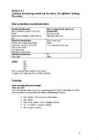
passes an Play accrdent') Ask Ss to try to think caror an ambulance .otpur" the two countries thecassette55||stenandmarkdownhowtheyfee|a the sounds
passes an Play accrdent') Ask Ss to try to think caror an ambulance .otpur" the two countries thecassette55||stenandmarkdownhowtheyfee|a the sounds
passes an Play accrdent') Ask Ss to try to think caror an ambulance .otpur" the two countries thecassette55||stenandmarkdownhowtheyfee|a the sounds
passes an Play accrdent') Ask Ss to try to think caror an ambulance .otpur" the two countries thecassette55||stenandmarkdownhowtheyfee|a the sounds
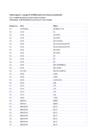
N1 VOLKSWAGEN TRANSPORTER SHUTTLE N1 VOLKSWAGEN TRANSPORTER SHUTTLE N1 VOLKSWAGEN TYP 2 N1 VOLKSWAGEN TYP 2 N1 VOLKSWAGEN UP! N1 VOLKSWAGEN UP! N1 VOLKSWAGEN SOMMER PANELVAN N1 VOLKSWAGEN TISCHER 1120 N1 VOLKSWAGEN/PONY AUTO CRAFTER N1 VOLVO 21124 N1 VOLVO 245 N1 VOLVO 245 N1 VOLVO 245 N1 VOLVO 245 N1 VOLVO 264 AMBULANCE N1 VOLVO 740 N1 VOLVO 740 N1 VOLVO 760 N1 VOLVO 940 N1 VOLVO 940 N1 VOLVO C303 N1 VOLVO C303 N1 VOLVO C303 N1 VOLVO C303 N1 VOLVO DV445C N1 VOLVO L3314 N1 VOLVO L3314 N1 VOLVO L3314 N1 VOLVO L3314
 annaabi.ee