Leidsid 33 sarnast õppematerjali, mis on seotud failiga "Aegade töö inglise keeles". Need materjalid aitavad sul teemat sügavamalt mõista.
year, yesterday, garden, come, years, hear, before, party, tomorrow, summer, drink, mother, dinner, night, sing, correct, tense, aunt, live, child, crying, bite, good, english, know, scotland, there, noon, charlie, room, johnny, reading, books, usually, sail, africa, asia, visit, cook, bark, never, freeze, plant, passed, ground, clock, order, henryrecording, or by any information storage and retrieval system, without the written permission of the publisher. ISBN 1-59905-201-6 Printed in the United States of America 13 12 11 10 09 08 07 9 8 7 6 5 4 3 2 1 Introduction Grammar is a very old field of study. Did you know that the sentence was first divided into subject and verb by Plato, the famed philosopher from ancient Greece? That was about 2,400 years ago! Ever since then, students all over the world have found it worthwhile to study the structure of words and sentences. Why? Because skill in speaking and writing is the hallmark of all educated people. Lesson by lesson, this book provides basic instruction in the eight parts of speech--nouns, pronouns, verbs, adjectives, adverbs, prepositions, conjunctions, and interjections--as well as the standard patterns of English sentences. All students of English, be they native speakers or those
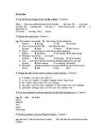
Juhendaja: Toomas Rähn Final Test Form 7 Name................. 1. Use the right tense. (15 p) 1) Look! She....................................(carry) a heavy bag. 2) Mrs. Brown...................................(play) the piano at the concert next week. 3) Mary is a good girl. My mother............................(meet) her every day since she and her father moved here. 4) Yesterday at two o`clock Tom ..............................(sing) and his sister ........................... (draw) a pictuture in the living room. 5) The wind ........................(be) very strong some days ago. 6) Where are the children? They ...................................... (play) with their ball in the garden. 7) He...............................(go) to work every day. 8) Mary................................(arrive) tomorrow. 9) Last year she...........................
_ 3 At the moment she _________________________________ (have) a rest because she is tired. _ 4 Mike is a doctor and he _________________________________ (live) in Manchester. _ 5 I _________________________________ (start) work at 8.30 every morning. _ 6 He is a good cook but she _________________________________ (prefer) to eat out. _ 7 English tests _________________________________ (get) more and more interesting. _ 8 They _________________________________ (have) a party because it's her birthday. _ 9 I sometimes _________________________________ (ride) my bicycle to school. 10_ She usually _________________________________ (go) to the gym on Friday evenings. Marks: /10 2 Choose the correct tense (present simple or present continuous) in these sentences. 1 How do you usually start/are you usually starting your day
/ On top of the world, thanks. · OK, thanks · Not so bad, thanks. / Can't complain, thanks. · So so, thanks. / So and so, thanks. · Not so good, actually 1 The English alphabet Spelling Work with your partner and spell out first your name and then some names of places. Write down each letter as you hear it, and then say the word. The English alphabet on the phone: You might find the following alphabet (used by international airlines) useful when trying to spell a word on the telephone. A Alpha O Oscar Ä Alpha-Echo Ö Oscar-Echo B Bravo P Papa C Charlie Q Quebec D Delta R Romeo
he does he goes he misses he watches he mixes · Verbid, mis lõpevad yga, mille ees on konsonant, muudavad y iks enne es lisamist. fly he flies carry he carries Võrdle: say he says Lihtolevik väljendab: · Antud momendil toimuvat tegevust, mis ei väljenda kestvat aega, näiteks see, hear, know. I see that man who you are pointing at. · Üldist, kogu aeg toimuvat või korduvat tegevust, pole oluline, kas tegevus toimub rääkimise hetkel. Teachers teach in schools. He usually goes to gym on Monday. · Tegevust mingil ajal. I go to school at 8 o´clock. You have to pay taxes once a month. · Kõigile tuntud fakte. Life passes by quickly. Present Continuous Kestva oleviku moodustamine
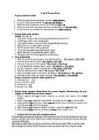
She arrived in spring. 9. We met on Sunday afternoon last week. 10. Do you drive at night? 11. It's Bruce's birthday next Wednesday. 12. Dick and Mary got married in 1993 on the 10th of July. 13. At midnight we heard footsteps. 14. In the morning we went to school as usual. 15. This castle was built in the 15th century. 16. My brother is taking his driving test at 2 o'clock on the 4th of October. 17. Mr Froster doesn't go to office on Saturdays. 18. We'll see Ken tomorrow evening. 19. It happened last week. 20. Can you come to see me on Friday morning? 21. Ron and Laura were in Italy in winter. 22. They go to the country at weekends. 23. School starts in September. 24. They will leave on Monday night. 25. The boys came home at Easter. 26. The first man landed on the Moon in 1969. 27. Alice came to see us in the afternoon. 28. They arrived at six o'clock in the morning. Moodusta: Present Simple (lihtolevik) eitav lause küsimus
USE 1 Repeated Actions Examples: · The train leaves tonight at 6 PM. · The bus does not arrive at 11 AM, it arrives at 11 PM. · When do we board the plane? Examples: · The party starts at 8 o'clock. · When does class begin tomorrow? · I play tennis. · She does not play tennis. USE 4 Now (Non-Continuous Verbs) · Does he play tennis? · The train leaves every morning at 8 AM. · The train does not leave at 9 AM. · When does the train usually leave? · She always forgets her purse. · He never forgets his wallet. Examples:
A – AN - THE Time Expressions • we don't use an article: at night, at noon, every We don't usually use an article week, every day, every night, last morning, last • to talk about things in general. • before the names of countries, cities, towns and villages. week, all night, all day, tomorrow, yesterday,... • with plural nouns and uncountable nouns when talking about them • use the with in the morning, in the afternoon, generally. during the night, the winter, the summer, the day Examples: She has got long hair
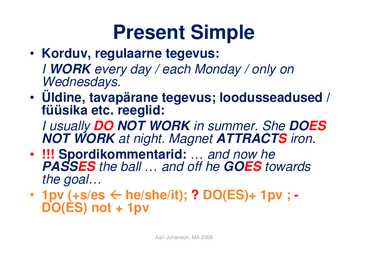
Present Simple · Korduv, regulaarne tegevus: I WORK every day / each Monday / only on Wednesdays. · Üldine, tavapärane tegevus; loodusseadused / füüsika etc. reeglid: I usually DO NOT WORK in summer. She DOES NOT WORK at night. Magnet ATTRACTS iron. · !!! Spordikommentarid: ... and now he PASSES the ball ... and off he GOES towards the goal... · 1pv (+s/es Å he/she/it); ? DO(ES)+ 1pv ; - DO(ES) not + 1pv Aari Juhanson, MA 2008 Present Progressive · Hetkel toimuv, pooleliolev tegevus: S/he IS TALKing on the phone now. I AM READing an interesting book. · Ajutine, regulaarsele ja tavapärasele vastanduv tegevus (tulevikku viitav):
She's German or rather, Austrian. (NOT She's German or better, Austrian.) I'll see you on Friday or rather, Saturday. 3. Use the simple present play(s), rain(s) etc to talk about habits and repeated actions. I play tennis every Saturday. (NOT I am playing tennis every Saturday.) It usually rains a lot in November. 4. Use will ..., not the present, for offers and promises. I'll cook you supper this evening. (NOT I cook you supper this evening.) I promise I'll phone you tomorrow. (NOT I promise I phone you tomorrow.) 5. Don't drop prepositions with passive verbs. I don't like to be shouted at. (NOT I don't like to be shouted.) This needs to be thought about some more. (NOT This needs to be thought some more.) 6. Don't use a present tense after It's time. It's time you went home. (NOT It's time you go home.) It's time we invited Bill and Sonia. (NOT It's time we invite Bill and Sonia.) 7. Use was/were born to give dates of birth. I was born in 1975
.......blue eyes and blond hair, but her brother ........dark hair. He ........in his late twenties. He........married and........two sons. I........short, but my sister........tall. We........a dog and a cat. Our uncle........two dogs. They........brown. 2. Choose the correct item. ( 5 points ) e.g. The residents were made...D....their homes by the authorities. A leave B leaving C left D to leave 1) Ann is my best friend! We........each other for years A know B knew C knows D have known 2) Nicky........to San Francisco when the accident happened. A flies B has flown C was flying D has been flying 3) Why don`t you let her........her story? A finish B to finish C finishing D have finished 4) Tim........in a cafe at present, but he has already applied for a new job A work B have worked C is working D worked
now then /at that time /immediately at that moment today / tonight that day /that night here there this / these that / those tomorrow the following day /the next day the day after next week the following week /the next week the week after yesterday the previous day /the day before last week the previous week /the week before (a year) ago (a year) before /earlier the day before yesterday two days before /earlier the day after tomorrow in two days' time come go Direct Speech Indirect/Reported Speech I he, she you I, she, he, we, they we they me him, her you him, her, us, them us them
..................................................................16 2 Ajavormid Tense vorms Lihtolevik The present simple Korduv, harjumuspärane tegevus. Every day, twice a week, usually, sometimes, often, always. 1. pv (-s) do/does + 1. pv I get up at 7 every day. He always works hard. What time do you go to school? Lihtminevik The past simple Minevikus toimunud tegevus. Yesterday, last week, two das ago, last year, in 1999. 2. pv / -ed did + 1. pv I got up at nine last Saturday. Yesterday he worked much. What time did you go to school yesterday? Lihttulevik The future simple Tulevikus toimuv tegevus, mis ei sõltu meie tahtest või mille suhtes teeme otsuse kõnelemise momendil. Next week, tomorrow, in two years time, in 2020. will + 1. pv (will not = won't) Maria will be thirteen next year. Maybe I won't go to the party tomorrow, I'm too tired.
Tingimuslaused 16 2 Ajavormid Tense vorms Lihtolevik The present simple Korduv, harjumuspärane tegevus. Every day, twice a week, usually, sometimes, often, always. 1. pv (-s) do/does + 1. pv I get up at 7 every day. He always works hard. What time do you go to school? Lihtminevik The past simple Minevikus toimunud tegevus. Yesterday, last week, two das ago, last year, in 1999. 2. pv / -ed did + 1. pv I got up at nine last Saturday. Yesterday he worked much. What time did you go to school yesterday? Lihttulevik The future simple Tulevikus toimuv tegevus, mis ei sõltu meie tahtest või mille suhtes teeme otsuse kõnelemise momendil. Next week, tomorrow, in two years time, in 2020. will + 1. pv (will not = won't) Maria will be thirteen next year. Maybe I won't go to the party tomorrow, I'm too tired. Will you help me with my homework tonight?
3. When you give somebody a present, you need to wrap it up. 4. When you put bowls,cups, forks and knives on the table, you lay the table . 5. Of you want to say something to many people, you make a speech. 2. Kirjuta lünka sobiv eessõna. Vali siit : in / on / at 1. Why didn´t we go to the swimming pool on Tuesday afternoon ? 2. Little Peggy didn´t sleep well at night. 3. The pupils of class 6 went on a class trip on Monday morning. 4. Please come to my place in the evening. 5. All the animals had a meeting at noon. 6. They had a big garden party on Saturday night . 7. In the afternoon the headmaster made a speech. 8. My parents left for Helsinki on Thursday afternoon . 3. Vasta küsimustele. 1. Will you invite all your friends to yuor birthday party ? No, I won´t / Yes, I will 2. Did you sleep well last night ? No, I didn´t / Yes, I did 3. Are you sitting next to the window ? No, I aren´ t / Yes, I am 4
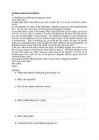
Kordamine inglise keele eksamiks A 1.1 Read the text and answer the questions below. Dear Mary-Alice, It's been ages since I last wrote to you, isn't it weird? Yes, so it is, but, I do have a certain reason. Do you remember Sir Thom of the Minquettes'? That fine young man with fascinating blue eyes... Oh, my sweet Mary, you will never guess what happened yesterday! It was about seven o'clock in the evening when Lillian called me out for a walk you know I can't say `no' to my little sis. Anyway we went to the forest near the Swan Lake and, believe it or not, got lost! Awful! I was so scared... We walked and walked, not even knowing the direction we were heading to, until we reached a huge mansion. And the garden around it was so extraordinary... That is something you just must see! But neither the trees nor flowers
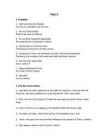
1 Translate. 1 Meie kool asub jõe lähedal. Ou school is situated near the river. 2 Mis on Eesti pindala? What is the area of Estonia? 3 Me uurisime maakohta jalgratastel. We explored the countryside on bikes. 4 Need poisid on oma kooli hirm. These boys are the terror of their school. 5 Samsung on firma, mis valmistab ja müüb elektroonilisi seadmeid. Samsung is a company, that makes and sells electronic devices. 6 Kas ma tohin sisse tulla? May I come in? 7 kõige tavalisemad nimed the most common names 8 internetis on the Internet 2 Use the correct tense. 1 Last week my sister asked me to look after her dog Roy. I was worried first because I had never walked such a big dog before. (ask; never walk) 2 Whe I met her at the party on Friday she was wearing a black dress. (meet; wear) 3 Larry's not here, he is digging in the garden behind the house. (dig) 4 It's really hot today, I think there will be a thunderstorm soon. (be)
eyelet lace; I was wearing it as a farewell gesture. My carry-on item was a parka. In the Olympic Peninsula of northwest Washington State, a small town named Forks exists under a near-constant cover of clouds. It rains on this inconsequential town more than any other place in the United States of America. It was from this town and its gloomy, omnipresent shade that my mother escaped with me when I was only a few months old. It was in this town that I'd been compelled to spend a month every summer until I was fourteen. That was the year I finally put my foot down; these past three summers, my dad, Charlie, vacationed with me in California for two weeks instead. It was to Forks that I now exiled myself-- an action that I took with great horror. I detested Forks. I loved Phoenix. I loved the sun and the blistering heat. I loved the vigorous, sprawling city. "Bella," my mom said to me -- the last of a thousand times -- before I got on the plane. "You don't have to do this."
Töövihik on kooskõlas 2009. a uuendatud õppekomplektiga I Love English 6. Tartu, 2014 ISBN 978-9949-436-59-0 Kirjastus Studium Riia 15b, Tartu 51010 www.studium.ee Trükitud OÜ Greif trükikojas Lohkva, Luunja vald Tartumaa 62207 --- 3 xxx 1. The Big Apple 1. Write the verbs in the present continuous or the past continuous tense. Do you remember? am is are was were verb -ing 1 Sorry. I ... (write) a report at the moment. I can't come with you. 2 When Peter arrived, his friends ... (play) football. 3 I ... (sleep) when the alarm went off in my sister's room. 4 Dad's mobile phone is switched off because he ... (fly) to Paris. He's on the plane at the moment. 5 I ... (read) an interesting book. It's a collection of memories. 6 Leo was late again. He ... (step) out of his father's car when the bell rang. 7 Helen ... (lie) on the sofa when an ambulance stopped in front of the house. 8 I ..
He/she it works he/she/it doesn't works does he/she/it work We work we don't work do we work You work you don't work do you work? They work they don't work do they work? Unit 6 / Present Continuous be- verb-ing / kestev olevik + - ? I am crying I'm not crying am I crying? You are having a party you aren't crying are you crying? He/she/it is crying he/she/it isn't crying is he/she/it crying? We are having a party. We aren't crying are we crying? You are crying you aren't crying are you crying? They are crying they aren't crying are they crying? Present simple or Present continuous Present Simple Present Continuous
Age 15 is legally a "young person" not a "child". Age 16 is a school leaving age. They can leave home, drive a moped, marry with "parents' consent" buy beer. Age 17 can drive a car. Age 18 can vote, get married, drink in pubs. Education is a very important part in the life of British youth. One can't become an independent person without it. When time comes to enter a college a young Englishman chooses one far away from home. It is a necessary part of becoming adult. During the last 30 years there were a lot of different trends in youth movements. All of them were characterized by their own philosophy, way of life, style of dressing. Each tendency was born by the influence of economic and political changes in the society. Those trends are known as the "hippies" the "punks" the "rockers". But certainly there are different traditional youth organizations in Great Britain. Among them -- the Scout Association, the Girl Guides Association, the National Union of
On your handout, write one sentence that reflects SIMPLE PRESENT: something you do often, sometimes, never, seldom The Simple Present Tense This tense also expresses general truths or facts that are timeless. Snow falls in the December in Minnesota. Water boils at 100 degrees Celsius. The Present Continuous This tense is used to describe an action that is occurring right now (at this moment, today, this year, etc.). The action has begun and is still in progress. It can be occuring now, but is temporary Formed by adding Is/are before the verb and ing to the verb She is typing a paper for her class. He can't talk. He is fixing the sink right now. On your handout, write one sentence that reflects
I will not you the story at Tomorro tell school w. Subordinate Clauses conjunction subject verb(s) Indirec Direct place time t object object I will you the story at school tomorrow. tell because I don´t time now. have Questions interrogative auxiliary subject other indirect direct place time verb verb(s) object object What would you like to me
you to discuss employment opportunities. Yours faithfully, Nicole Porter Paragraph Plan for Letters · salutation · Paragraph 1 reasons for writing · Paragraphs 2, 3 development · Final paragraph closing remarks · Name · Letters are divided into two categories, formal and informal. There are various types of formal and informal letters . · It is important to think about the person who you are writing to before you begin writing a letter. If the wrong style is used, the letter will look impolite, silly or odd. For example, if you used formal language to write to a close friend, the letter would look odd, or if you used informal language to write a letter to a company, the letter would look impolite. · There are certain characteristics which allow us to distinguish between formal and informal letters. These are: ~ The salutation (e.g. Dear Sir/Madam, Dear Bill)
I You work here. ... do not (don't) work ... We They Do you work here? Yes, I do. / No, I don't. He She works here. ... does not (doesn't) work ... It Does she / he work here? Yes, she / he does. / No, she / he doesn't. Time expressions always often not often never usually normally rarely sometimes occasionally hardly ever when after before unless in case as soon as until Uses - for permanent facts - for actions and situations which are generally true - for habits and routines PRESENT CONTINUOUS bebe++ ing ing I am (I'm) You are (you're) She/He/It is (she's/he's/it's) (not) + working here. We are (we're) They are (they're) Are you working here? Yes, I am. / No, I'm not.
she treated it that way. Thank you, Martha! To Victoria Colotta, for all her hard work on the interior design and typesetting. She took my plain text and made it gorgeous. Thank you, Victoria! To Tera Kleinfelter, who read the first half of Bared to You and told me she loved it. Thank you, Tera! To all girls who were at Cross Creek at some point in your adolescence: May all your dreams come true. You deserve it. And to Alistair and Jessica, from Seven Years to Sin , who inspired me to write Gideon and Eva's story. I'm so glad the inspiration struck twice! 1 "We should head to a bar and celebrate." I wasn't surprised by my roommate's emphatic pronouncement. Cary Taylor found excuses to celebrate, no matter how small and inconsequential. I'd always considered it part of his charm. "I'm sure drinking the night before starting a new job is a bad idea." "Come on, Eva
...........the same time 16. The puppy is .................. the trash can. 17. .................. midnight 18. We are going .................. holiday next week. 19. There is a bridge .................. the river. 20. Would you like to go .................. the cinema tonight? 21. The woman's bag is .................. the table. 22. The woman is sitting .................. a table. 23. Some kinds .................. plants 24.To be caused .................. something 25.To last .................. years 26. .................. the stairs 27.I can depend .................. my best friend Paul. 28. Stop! Wait .................. me 29.The letter was written ..................my pen friend in Scotland. 30. Benjamin is really interested ..................history. 31.We were talking ..................you. 32. The girl is standing ..................the two boys. 33. The boy with the green shirt is ..................the right. 34. ..................the picture, there are three kids. 35. He has a gamboy
"Do you not want to know who has taken it?" cried his wife impatiently. "You want to tell me, and I have no objection to hearing it." This was invitation enough. "Why, my dear, you must know, Mrs. Long says that Netherfield is taken by a young man of large fortune from the north of England; that he came down on Monday in a chaise and four to see the place, and was so much delighted with it, that he agreed with Mr. Morris immediately; that he is to take possession before Michaelmas, and some of his servants are to be in the house by the end of next week." "What is his name?" "Bingley." "Is he married or single?" "Oh! Single, my dear, to be sure! A single man of large fortune; four or five thousand a year. What a fine thing for our girls!" "How so? How can it affect them?" "My dear Mr. Bennet," replied his wife, "how can you be so tiresome! You must know that I am thinking of his marrying one of them." "Is that his design in settling here?"
2.Past (minevik) 3.Future (tulevik) 4.Future in the past (kaudne tulevik) Iga aeg võib esineda neljas eri rühmas 1.IndefiniteTenses (üldajad) 2.Continious Tenses (kestvad ajad) 3.Perfect Tenses (perfekti ajad) 4.Perfect Continious Tenses (perfekti kestvad ajad) Indefinite Tenses (üldajad) used to describe actions but do not state whether the action is completed or on- going märgivad tegevuse sooritamise fakti Peter visits us every day. Peter visited us yesterday. Peter will visit us tomorrow. Continuous Tenses (kestvad ajad) are used when talking about a particular point in time · We were sleeping when the storm began. What were you doing at five o'clock? When I came, the children were sleeping. Perfect Tenses are used when an action or situation in the present is linked to a moment in the past often used to show things that have happened up to now but aren't finished yet
Test 2 1 Translate. 1 Küll on kahju, et sa ei saanud tulla. What a pity that you couldn´t came. 2 Mitte keegi ei olnud närvis. Nobody was nervous. 3 Klass oli täis juttu ja naeru. The classroom was full of laughter and talk. 4 Õpilased tervitasid oma õpetajat rõõmsalt. The students greeted their teacher cheerfully. 5 Ma õppisin selle luuletuse pähe. I learned this poem by heart. 6 Lapsed olid enne pidu ootusärevil. The children were excited before the party. 7 osasid vahetama swap the role 8 kahe nädala pärast in two time a week 2 Complete the sentences with the correct verb form 1 Did you meet Ann at the party last night? (meet) 2 Do you think our team will win the football match tomorrow? (win) 3 I can´t go out because I haven´t done my homework yet. (not do) 4 Somebody has broken the lock. I can´t get in. (break) 5 Next year Mary will spend two weeks in Liverpool. (spend)
more often than those of any other playwright. Shakespeare was born and raised in Stratford-upon-Avon. At the age of 18 he married Anne Hathaway, who bore him three children: Susanna, and twins Hamnet and Judith. Between 1585 and 1592 he began a successful career in London as an actor, writer, and part owner of the playing company the Lord Chamberlain's Men, later known as the King's Men. He ap- pears to have retired to Stratford around 1613, where he died three years later. Few records of Shakespeare's private life survive, and there has been considerable speculation about such matters as his sexuality, religious beliefs, and whether the works attributed to him were written by others. Shakespeare produced most of his known work between 1590 and 1613. His early plays were mainly comedies and histories, genres he raised to the peak of sophistication and artistry by the end of the sixteenth century. Next he wrote mainly tragedies until
If you want me, just call c) Ajamääruslausetes I shall speak to him when he comes. 2. Spordireportaazid, arvustused. Lepp passes the ball to Kask. Gibson acts well in "Braveheart". 3. Seisundiverbidega (state verbs) verbid, mida tavaliselt ei kasutata kestvates aegades, sest nad kirjeldavad seisundit, mitte tegevust Need on verbid, mis väljendavad: a) meeltetaju (see, hear, feel, smell, taste, look, sound ). Kui meeltetaju verbidega tahetakse väljendada hetkel toimuvat tegevust, kasutatakse tihti modaale can või could Jim must be at home . I can see his car parked outside. b) meeldimist või mittemeeldimist (like, love, dislike, hate, enjoy, prefer, adore) c) psüühilist tegevust (know, understand, believe, realize, remember, forget, notice, recognize, think, seem, expect)
3. Present Continuous [am/is/are + present participle]. Tegevus toimub/ei toimu praegusel hetkel. You are watching TV. You are learning English now. I am studying to become a doctor. I am meeting some friends after work. Active= Right now, Tom is writing the letter. Passive= Right now, the letter is being written by Tom. 4. Past Simple [VERB+ed] or irregular verbs. Tegevus algas/lõppes minevikus täpsel ajal. . You called Debbie. I saw a movie yesterday. I finished work, walked to the beach, and found a nice place to swim. I lived in Brazil for two years. I studied French when I was a child. Active = Tom repaired the car. Passive= The car was repaired by Tom. 5. Past Continuous [was/were + present participle]. Pikalt kestev tegevus katkestati minevikus. You were studying when she called. I was watching TV when she called. Last night at 6 PM, I was eating dinner. I was studying while he was making dinner. She was always coming to class late
 annaabi.ee