ENGLISH IN MY LIFE The British, defeated Bonaparte at the battle of Waterloo and peace settled across Europe after many years of war, the defeat of France saw the rise of Britain upon the world stage and the beginnings of the wholesale export of the English language across the globe, in the last century Britain an America again defeated tyranny in Europe the English language has evolved through popular culture , movies, music , sport , business and especially with the shrinking of the world through use of the internet to become what it is now a truly international language. Here in Estonia with our history of domination by foreign powers the last being the former soviet union an having our own language suppressed an languages imposed on us , it is a relief to see the
democracy really deserve the reputation that it has? (Wolff, 1996) The word of (citicens) means that democracy is internal. The word by means that in is collective (selfgovernment). The word for means that there should be public interest about political power. Three theories Firstly, Plato Statesman: He divides forms of government into good-ones (rule of law) and bad-ones (lawless rule). So, when one person rules de jure it is called Monarchy, but if he or she rules illegally, it is called Tyranny. When a few people rules de jure it is called Aristocracy and when they do not have the legal right to rule, it is called Oligarchy. If many people rule de jure it is called Good- or The Real - Democracy, but if they rule illegally, it is called "Bad" Democracy. (McLaughlin, 2010) Secondly, Aristotle Politics: His dividing is the same as Plato's, but there are one little difference. If Plato divided good- and bad-ones considering law, then Aristotle considers
Animal farm by George Orwell About One night, all the animals at Mr. Jones Manor Farm assemble in a barn to hear old Major describe a dream he had about a world where all animals live free from the tyranny of their human masters. old Major dies soon after the meeting, but the animals got inspired by his philosophy of Animalism. They plot a rebellion against Jones. Two pigs, Snowball and Napoleon, prove themselves important figures and planners of this dangerous enterprise. When Jones forgets to feed the animals, the revolution occurs, and Jones and his men are chased off the farm. Manor Farm is renamed Animal Farm, and the Seven Commandments of Animalism are painted on the barn wall.
He continues his affair with her after she marries, and he becomes a high-ranking ecclesiastic and an admired preacher. The death of their child and then of Clélia herself causes Fabrice to retire to the Carthusian monastery, or charterhouse, of Parma, where he dies. The incongruous yet always harmonious combination of lyricism and high comedy, of realism and dreamlike atmosphere, of The Charterhouse of Parma allows the author to caricaturize the petty tyranny of post-Napoleonic Europe, to question public morality, and to assert the prerogatives of love's follies. There are subtly drawn portraits of the naive and idealistic young Fabrice del Dongo (notably at the Battle of Waterloo); of his courageous and passionate aunt, the Duchess de Sanseverina; of her lover, the benevolent Machiavellian statesman Count Mosca; and of the young and innocent Clélia Conti, the daughter of Fabrice's jailer, who falls in love with the handsome prisoner.
core of Locke's argument for legitimising government, it becomes apparent that it can only address certain interests, inevitably lead to further inequality. For example Marx and Engels (1978, p. 15) argue that the executive of the modern state is but a committee for managing the common affairs of the bourgeoisie. Locke's prerogative is that absolute government of the kind advocated by Hobbes is unjust because it is not in the interest or will of the majority and can easily lead to tyranny. Locke's theory of limited government is more progressive, as opposed to Hobbes account, as it is the majority will that is the supreme power, but it is important to ask who the majority is as this remains a valid question. Around the time of Locke's major works only certain groups within British society were allowed to take part in the democratic process, these were male landowners and men who could afford to rent property over a certain rateable value.
U.S., not only as a nation, state, government, and set of policies, but also as an ideology and set of ideals. The Statue of Liberty is a huge sculpture that is located on Liberty Island in New York Harbor. This monument was a gift to the USA from the people of France in recognition of the French-American alliance during the American Revolution. The formal name of the statue is "Liberty Enlightening the World." It pictures a woman who has escaping the chains of tyranny. Liberty's right hand holds a torch that is a symbol of liberty. Liberty was designed by the French sculptor Frederic Auguste Bartholdi. The hollow copper statue was built in France - it was finished in July, 1884. It was brought to the USA in 350 3 pieces on a French ship called the "Isere". The statue was re-assembled in the USA and was completed on October 28, 1886.
The American Flag is also called "Stars and Stripes". The Statue of Liberty is located in the harbour of New York on Liberty Island. The statue, the island and the nearby Ellis Island were declared a national monument in 1924. The statue symbolizing liberty is in the form of a woman wearing flowing robes and a spiked crown holding a torch in her right hand and carries a book inscribed "July 4, 1776 in her left. Broken chains, symbolizing the overthrow of tyranny, lie at her feet. The Statue was given by France to the United States to commemorate the century of U.S. independence in 1876. The statue is one of the largest in the world and is 93.5m tall. The statue has become a global symbol of freedom, marking the arrival of millions of immigrants to the U.S. 10 Materials http://www.photius.com/wfb1999/united_states/united_states_geography.html http://www.kidport.com/RefLib/UsaHistory/UsaHistoryIndex
Charles I 17 C Charles II 17 C James II 17 C William III & Mary II 17C William III alone 17-18 C Anne 18 C The Stuart ,,devine right of kings" The doctrine according to what a monarch has a divine right to the throne and a rebellion against him is sin. King is next in the line after God. He derives his authority directly from God and is aserable to Him alone. The theory came to the fore during the reign of king James I Charles I´s tyranny 1629-1640 The Personal Rule, ,,Eleven Years Tyranny" King Charles I of England, Scotland and Ireland ruled without recourse to parliament.. His actions caused discontent among the ruling classes, where more popular among common people Arcbishop William Laud´s controversial church reforms A right-wing Anglican religious adviser to King Charles I. He imposed religious uniformity, tried to impose Anglican practises on Scots.
What is required is systematic acts of kindness. 96. The New Age movement is a support group for liars; there's a conspiracy not to point out one another's bullshit. 97. They say there's a New Age, and they're right it's the Kali Yuga! 98. Wishing makes it so what. 99. You're imperfect just the way you are. 100. Government always has a "good reason" for withholding the worst from the public and it's always wrong. 101. How smart is too smart to put up with tyranny? Pretty damn smart. 102. If you have to ask for it nicely, it's not a right. 103. I'm not a control freak; I'm a not-being-controlled freak. 3 104. It is demeaning to submit outwardly to unjust authority, but one sometimes has no choice. It is doubly demeaning to submit inwardly to unjust authority, and here one sometimes does have a choice; it is necessary to seize these moments. 105
as Jim's moral unsoundness, comes to befriend him, for he is "one of us". Marlow later finds Jim work as a ship chandler's clerk. Jim tries to remain incognito, but whenever the opprobrium of the Patna incident catches up with him, he abandons his place and moves further east. Nostromo (1904)- Nostromo is set in the South American country of Costaguana (a fictional nation, though its geography as described in the book closely matches real-life Colombia). Costaguana has a long history of tyranny, revolution and warfare, but has recently experienced a period of stability under the dictator Ribiera. Charles Gould is a native Costaguanero of English descent who owns an important silver-mining concession near the key port of Sulaco. He is tired of the political instability in Costaguana and its concomitant corruption, and uses his wealth to support Ribiera's government, which he believes will
However the Stuart kings stretched every letter of these prerogatives and had a different opinion of these "absolute powers." James Stuart was a Scottish Catholic who believed in the "Divine Right" to rule as he pleased. In the Trew Law, he sets out the divine right of kings, explaining that for Biblical reasons kings are higher beings than other men. The document proposes an absolutist theory of monarchy, by which a king may impose new laws by royal prerogative. *Charles I's 'tyranny' The Personal Rule (also known as the Eleven Years' Tyranny) was the period when King Charles I of England, Scotland and Ireland ruled without recourse to Parliament. He was entitled to do this under the Royal Prerogative, but his actions caused discontent among those who provided the ruling classes. Parliament began to criticise the king more harshly than before. Charles then realised that, as long as he could avoid war, he could rule without parliament
Brought to novels vivid narrative technique and wide knowledge of the ways of the world. Paints mid-Georgian society. Laurence Sterne: A sentimental Journey – fictionalised account od Sterne’s travels in Italy and France. Tristram Shandy – a gloriously chaotic yet great comic work with a mastery of the realistic presentation of fleeting thoughts, feelings and gestures, flexible handling of time which prefigures the break with the tyranny of chronology which came in the 20th C. Tobias Smollett: wrote seemingly traditional novels. Concentrated on picaresque novels, low-born character would go through endless series of adventures. The Adventures of Ferdinand Count Fanthom, The Adventures of Roderick Random. Goldsmith: In one generation novel from being a narrative of adventure to exploring man’s inner life. 26. Augustan patriotism and a drive to forge an authentic English national culture
Charles I kehtestada makse parlamendist mööda minnes. Parlament omakorda käsitles esinduskogu heakskiiduta kehtestatud maksude nõudmist või maksmist riigivastase tegevusena. Pinged teravnesid, kui 1628. aastal tapeti Stuartite soosik Buckinghami hertsog, keda rahvas vihkas. Järgmisel aastal saatis kuningas parlamendi laiali. Järgnevat ühteist aastat (1629–1640), mil kuningas valitses ilma parlamendita, nimetab inglise ajalookirjutus türannia aastateks (ingl Eleven Years Tyranny). Absolutistlikku võimustruktuuri Inglismaal luua ei õnnestunudki. Nagu oma eelkäijad, toetas ka Charles I anglikaani kirikut, soovides laiendada selle mõju ka tema valitsemise all olevale Šotimaale. Anglikaani liturgia kehtestamise katse vallandas 1638. aastal šotlaste mässu, mille järel puhkes kodusõda ka Inglismaal. Kodusõda, selle usulised motiivid. Kodusõja sündmused vallandusid 1640. aastal, mil Šoti
- Sisepoliitika: Absolutismi pooldaja. Areneb avalik konflikt parlamendiga: vajas raha prantuse hugenotide toetamiseks. Areneb avalik konflikt parlamendiga: - 1628 Petition of Rights (Õiguste Petitsioon): · Kinnitas vanad, magna Chartas (suures vabaduskirjas) 1215 kinnitatud kuningavõimu piirangud: 1. Kuningal pole õigust määrata uusi makse ilma parlamendi nõusolekuta 2. Meelevaldsed vangistamised on keelatud - ,,Eleven years tyranny" (1629-40): Parlament laiali, ebaseaduslikud maksud - Nõunik Straffordi Earl leidis kaubseid teid uute maksude määramiseks (hukati 1641) 1635 Ship Money (Laevaraha) - Usupoliitika: Toetas anglikaani kirikut, puritaanide tagakiusamine (Independentid =sõltumatud), Sotimaa prebüterlaste mäss 1638, peapiiskop William Laud (hukati 1645) - ,,Lühike parlament" (1640) Ei andnud kuningale lisaraha. - ,,Pikk parlament" (1640-53) - John Pym, puritaanide juht parlamendis. - 1641 Aasta seadus: 1
which they are constituted, and are to govern, and the conditions under which they enter upon their authority, be what they will, and their engagements to observe them never so well ratified by solemn oaths and promises. To make way for this doctrine, they have denied mankind a right to natural freedom; whereby they have not only, as much as in them lies, exposed all subjects to the utmost misery of tyranny and oppression, but have also unsettled the titles, and shaken the thrones of princes: (for they too, by these mens system, except only one, are all born slaves, and by divine right are subjects to Adam's right heir;) as if they had designed to make war upon all government, and subvert the very foundations of human society, to serve their present turn. However we must believe them upon their own bare words, when they tell us,
parlamendist mööda minnes. Parlament asus nüüd omakorda tema poolt heakskiitmata maksude nõudmist või maksmist käsitlema riigivastase tegevusena. Pinged teravnesid, kui 1628. aastal tapeti Stuartite soosik Buckinghami hertsog, keda rahvas vihkas. Järgmisel aastal saatis kuningas parlamendi laiali. Järgnevat ühteist aastat (162940), mil kuningas valitses ilma parlamendita, nimetab inglise ajalookirjutus türannia aastateks (Eleven Years Tyranny). Absolutistlikku võimustruktuuri luua Inglismaal ei õnnestunudki. Nagu oma eelkäijad, toetas ka Charles I anglikaani kirikut, soovides laiendada selle mõju ka tema valitsemise all olevale Sotimaale. Anglikaani liturgia kehtestamise katse vallandas 1638. aastal sotlaste mässu, millele järgnes kodusõja puhkemine ka Inglismaal. Kodusõja vallandumine Kodusõja sündmused vallandusid 1640. aastal, mil soti mässulistest vaevatud kuningas Charles I oli
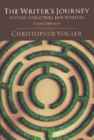
tinuing visual thread. She is elegantly dressed but feels a prisoner, as O l d Rose tells us in voice-over. She is a H E R O on a journey, but at this moment wears the mask of the V I C T I M archetype, a damsel in distress, beautiful but powerless. Cal represents the arrogance and bigotry of his class and also the dark, S h a d o w side o f m a n h o o d and m a r r i a g e . H e is at one extreme of a P O L A R I T Y , representing repression a n d tyranny, w i t h Jack as his polar opposite representing liberation and love. A l t h o u g h the T i t a n i c is a great feat of the imagination, built by honest laboring men, it has deep, fatal flaws, the fault of arrogant men like Cal. H e has bought into and identified w i t h the hubristic aspects of the T i t a n i c , believing fully that it is unsinkable because it was created by men of Cal's exalted class, by "gentlemen." H e claims that "not even God himself could sink her." In
The Fourth Symphony is an ecstatic vision of the beautiful, an enrapturing fullness of sound, of joy in this world, of nature and nation. First of all one feels that the sublime breath of a powerful creative spirit is living in this work, of an artist who is creating by inner compulsion. 4 In the autumn of 1944, Tubin and nearly 70,000 Estonians left their homeland and fled to the West, most of them compelled by the desire to be free from Soviet tyranny. This was the greatest emigration in the nation’s history. It not only weakened the vital forces of the nation, it undermined the foundations of intellectual society. Here is but a short list of émigrés. Among the academics and scientists: Karl Schlossmann (1885-1969), microbiologist and President of the Estonian Academy of Sciences; Julius Mark (1890-1959), philologist and Vice-President of the Academy of 1
methods that conceal the very fact that a message is being sent. He seeks to communicate unnoticed. And to block this very attempt and root out the enemy within, governments erect great filters at their mail and cable ports of entry to prevent and detect these clandestine communications. These sieves, which let innocent messages flow through, are the censorship organizations. Descended in a sense from the black chambers of the 1700s, they are creatures of war in democracies and of tyranny in dictatorships. Censorship first sprang up on a major scale in World War I, and the lessons that Britain learned then she put to good use twenty years later when S, SCRAMBLERS, AND SPIES 275 she again filtered communications. Even before the United States entered the war, British censorship had caught two major German spies in the United States and its protectorate of Cuba. In December, 1940, one of the 1,200 examiners that British
 annaabi.ee