Leidsid 33 sarnast õppematerjali, mis on seotud failiga "Tundra loomad". Need materjalid aitavad sul teemat sügavamalt mõista.
ears, bear, male, bears, polar, deer, female, snow, year, them, reindeer, birth, winter, summer, feet, musk, males, other, years, animal, live, than, rabbit, swim, tundra, animals, north, lower, rate, there, plants, often, reach, predator, look, hair, almost, ground, first, later, although, both, single, species, looks, until, grounds, calf, walk, killHowever, these plants and microorganisms become dormant during the cold winter months. Soil is formed slowly. The constant freezing and thawing in the tundra helps to break the rocks into smaller pieces. Permafrost consists mostly of gravel and finer material. The arctic tundra is also a windy place and winds can blow between 48 to 97 kilometres. The tundra is basically like a desert when it comes to precipitation. Only about 150-250 millimetres of precipitation (mostly snow) fall each year. When water saturates the upper surface, bogs and ponds may form, providing moisture for plants, and breeding thousands of insects that attract many migrating birds. Animals are adapted to handle cold winters and to breed and raise young quickly in the very short and cool summers. Some animals have grown thick fur that turns white in the winter. Others find a place to hibernate during the winter months. Many plants have dark red leaves that allow the plant to absorb more heat from
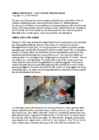
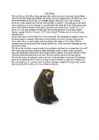
Polar bear Ursus maritimus or the "sea bear." Polar bears live near the circumpolar at north in areas where they can hunt seals at open leads. Scientists estimate that there are between 22000 to 27000 polar bears. Its closest relative is the brown bear. Adult male polar bears are 2,5 to 3 meters tall. They weigh 250 to 770 kilograms. Adult female bears are smaller. They are about 1,8 to 2,5 meters tall and weigh 90 to 320 kilograms. Polar bears usually eat seals usually the ringed seasl, but sometimes the bearded seals. When hunting is good, polar bears will typically eat only the fat and leave the rest of the carcass for scavengers including arctic foxes, ravens, and younger bears. Polar bears also sometimes kill and eat both walrus and beluga whales. They have even hunted short-legged reindeer and sometimes even birds and bird eggs
There are two different types of grasslands; tall-grass, which are humid and very wet, and short-grass, which are dry, with hotter summers and colder winters than the tall-grass prairie. In the winter, grassland temperatures can be as low as -40° F, and in the summer it can be as high 70° F. There are two real seasons: a growing season and a dormant season. Deciduos forest The average annual temperature in a deciduous forest is 50° F. The average rainfall is 30 to 60 inches a year. In deciduous forests there are five different zones. The deciduous forest has four distinct seasons, spring, summer, autumn, and winter. In the autumn the leaves change color. During the winter months the trees lose their leaves. The animals adapt to the climate by hibernating in the winter and living off the land in the other three seasons. DesertDeserts cover about one fifth of the Earth's land surface. Deserts temperature ranges from 20 to 25° C. The extreme maximum temperature
151,480 miles of coastline. Most of Canada's human population lives along its southern border. 3. Relief Canada's geography is very diverse. It has huge lakes, evergreen forests, prairies, meadows and beautiful mountains. There are thousands of miles of coastline with beaches, fjords and wild rivers flowing to the oceans. Canada is a country of wide open spaces and beautiful landscape where traveling visitors can unexpectedly bump into wild animals like bears or be struck by unusual sight like the scarecrows on the Cabot Trail. Canada is rich in natural wonders, one of them, the Niagara Falls between lakes Erie and Ontario, which is the second biggest waterfall in the world is one of the greatest attractions in the world. About twelve million tourists come to see the beauty of the falling waters on the border between the United States of America and Canada
Most of Canada's human population lives along its southern border. Geographical facts. Canada's geography is very diverse. It has huge lakes, evergreen forests, prairies, meadows and beautiful mountains. There are thousands of miles of coastline with beaches, fjords and wild rivers flowing to the oceans. Canada is a country of wide open spaces and beautiful landscape where traveling visitors can unexpectedly bump into wild animals like bears or be struck by unusual sight like the scarecrows on the Cabot Trail. Canada is rich in natural wonders, one of them, the Niagara Falls between lakes Erie and Ontario, which is the second biggest waterfall in the world is one of the greatest attractions in the world. About twelve million tourists come to see the beauty of the falling waters on the border between the United States of America and Canada.
Inuit Culture, Traditions, and History Traditional Inuit way of life was influenced by the harsh climate and stark landscapes of the Arctic tundra from beliefs inspired by stories of the aurora to practicalities like homes made of snow. Inuit invented tools, gear, and methods to help them survive in this environment. Read on to learn more about traditional Inuit ways of life, and how Inuit culture has been changed over the past century. Geography Inuit communities are found in the Arctic, in the Northwest Territories, Labrador and Quebec in Canada, above tree line in Alaska (where people are called the Inupiat and Yupik), and in Russia (where people are called the Yupik people). In some areas, Inuit people are called "Eskimos" however many Inuit find this term offensive
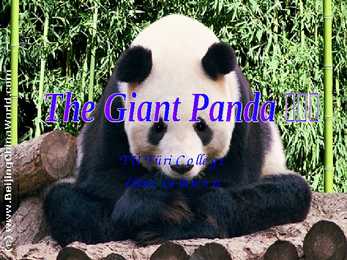
T Ü T üri C o lle g e Liina Le inm e ts Introduction · Panda (Ailuropoda melanoleuca) is a mammal classified in the bear family, native to centralwestern and southwestern China. It is easily recognized by its large, distinctive black patches around the eyes, over the ears, and across its round body. · The Giant Panda lives in a few mountain ranges in central China. · It once lived in lowland areas, but farming, forest clearing, and other development now restrict the Giant Panda to the mountains. In the wild · The Giant Panda is a · Pandas communicate terrestrial animal and through vocalization primarily spends its life and scent marking such roaming and feeding in as clawing trees or
Males and females interact for breeding when females are about 2 1/2 years old. Giving birth throughout the year, females can have litters of up to four kittens, but usually only one or two survive. Born spotted, the kittens stay with their mothers for about 18 months, after which time they will leave in search of their own home range. The Mountain Lion is capable stalk-and-ambush predator; the cougar pursues a wide variety of prey. Primary food sources include ungulates such as deer and bighorn sheep, but it hunts species as small as insects and rodents The Cougar prefers habitats with dense underbrush and rocky areas for stalking, but it can live in open areas. The cougar is territorial and persists at low population densities. Individual territory sizes depend on terrain, vegetation, and abundance of prey. A single male lion may require up to 175 square miles of territory for its home range. They prefer wild areas frequented by deer
olar bear communication P Polar bear v The polar bear or the sea/ice bear are the world's largest land predators. They can be found in the Artic, Canada, Russia, Denmark (Greenland), and Norway. v In the wild polar bears live up to age 25. v Polar bears have been known to swim 100 miles at a stretch. v Polar bears primarily eat seals. Communication v When a Polar bear wants to play, he communicates this to another bear by wagging his head from side to side. Such play sessions involve ritualised fighting or mock battles. v A mother Polar bear can comfort, protect, or punish her cubs by using her body, muzzle, or paws and scold her cubs with a low growl or a soft cuff. Communication v Among Polar bears, hissing, snorting and a lowered head signifies aggression. An attacking Polar bear will charge forward with head down and ears laid back.
mountains. Valleys in the region are important farming areas producing fruit, vegetables and dairy products. Canada's North includes the Yukon Territory and the Northwest Territories along with all of Canada's Arctic islands. To most canadians this region is quite remote since 75 % of the population lives within 300 km of the US border. The North is home to over 85 000 people, and a great variety of wildlife. It's so cold that the earth is frozen for most of the year and never thaws more than a metre from the surface. This permanently frozen layer of earth is called permafrost. Canada's two million lakes cover about 7,6 % of Canada's land. Canada has very famous lakes called the Great Lakes which includes seven lakes: Lake Huron (which is also the biggest lake of Canada), Lake Great Bear, Lake Superior, Lake Great Slave (also the deepest lake, with a depth of 614 m), Lake Winnipeg, Lake Erie and Lake Ontario. They are also the
Wildlife of Alaska. Triin Õismaa Brown bear. Most widely distributed. Cubs birth. Extremely fast. Range in colours. Cubs can climb. Male bear's heavier. Poor eyesight. Black bear. Seen in different shades. Shy, easy to frighten, curious. Good climbers and swimmers. Live over 25 years. Good hearing, sense of smell. Polar bear. Only humans prey or hunt. Fur is not white. Tend to overheat more. Can swim up to 100 miles (161 km). Cubs learn to freeze. Caribou. Covered with winter coat. Wear antlers. Releases special scent when faced with danger. Live about 4,5 years. Very fast. Moose. Largest members of the deer family. Good sense of smell and hearing. Lives about 1525 years. "Twig eater." Can run up to 56 km. Very good swimmers. Mountain goat. Goatantelopes. Thick white fur (double coat)
masters of the new land. In 1759 the English captured the French fortress of Louisbourg. Then Quebec lay unprotected. After the winning of Quebec they conquered Montreal and the French rule came to an end. The English allowed the French to keep their Roman Catholic religion, civil law system and language so they would not try to break away from Britain. After the American War of Independence immigrants from Britain began to arrive, among them there were also poor Irishmen and Scotsmen. Indeed, all the Canadians except the Indians and Eskimos, are really immigrants or their descendants. Canada is politically a young country. In 1967 the people celebrated its first century of independence. It was on the first of July, 1967, that four provinces of British North America joined together and formed the Dominion of Canada. Geographical facts. Canada occupies the northern portion of North America.
The dominant version of the gene produces normal black pigment in the coat while the recessive version produces red pigment. The name comes from the effect of black or brown pigment not being extended throughout the whole coat, but being restricted to the skin of the extremities and to the eyes (for example in bay horses). This Norwegian Forest Cat was bred by Yve Hamilton Bruce from a silver mackerel tabby female (imported from Denmark) and a classic red tabby and white male. The result was 1 silver tabbies and 2 silver tabbies with white. At just over 3 months old, this silver and white tabby male developed a large patch of bright red hair on his back which continued to spread. Eventually the whole fur will become amber. The effect of amber during the colour-change stage depends on the original colour - solid black or blue, bicolour or tabby. The cat pictured is not a typical amber as it has the silver gene so the amber effect is overlaid on silver.
This replaced the "God Save the Queen" as Australia's national anthem in 1984. Aboriginal art uses Earth Colours(white, red, orange, brown). These are the colours of the desert. Aboriginal artists made their paints from natural materials. Aboriginal paintings also use lots of dots. They used their fingers or sticks. There weren't any art shops where they could buy brushes. Aboriginal art includes lots of symbols for the natural things around them. Australia got its independence in 1st Jan 1901. The Commonwealth of Australia is a constitutional monarchy, in practise a parliamentary democracy. The head of state is the Queen of the United Kingdom. Governor-General Michael Jeffery, performs her functions in Queen's absence. The parliament consists the Senate and the House of the Reprentativer. The head of the government is the prime minister. The Prime Minister is elected by the House of Representatives and the Cabinet. The Prime
migration patterns. During the day, herds often rest in sheltered areas. A gregarious species, Giant Eland herds usually consist of twenty or more animals and do not disband during the wet season, suggesting that social rather than ecological factors are responsible for herding. There is no evidence of territoriality, and males rarely display aggression, even during the breeding season. Giant Eland are alert and wary, making them difficult to approach and observe. They move quickly, running at over 70 km/h (42 mph), and despite their size are exceptional jumpers, easily clearing heights of 1.5 m (5 ft). Giant Eland live in open forest and savannah where they eat grass, leaves, and branches. Their primary predators are the Lion and Spotted Hyena. Broad-leafed savanna and glades in two isolated pockets in central and western Africa. It is estimated that only 2500 Western giant elands remain in the wild today
EurasiaSteppe, North America-Prairie, South AmericaPampa, South AfricaVeldt 3. Using the climate diagram describe the climate of the region. Temperate deciduous forest -Well-defined seasons with a distinct winter characterize this forest biome. Moderate climate and a growing season of 140-200 days during 4-6 frost-free months distinguish temperate forests. Temperature varies from -15° C to 25° C. Precipitation (750-1500 mm) is distributed evenly throughout the year. Temperate grassland- Semiarid, continental climates of the middle latitudes typically have between 25 cm and 50 cm of precipitation a year. Much of this falls as snow, serving as reservoir of moisture for the beginning of the growing season. Warm to hot summers are experienced, depending on latitude. In the winter, grassland temperatures can be as low as -40° C, and in the summer it can be as high 20° C. There are two real seasons: a growing season and a dormant season
A B C D E F G H I J K L M N O P Q R S T U V W X Y Z When do you use a capital letter? 4Use a capital letter for the first letter in a sentence: The dog is barking. Come here! 4Always use a capital letter for the word I : I am eight years old. Tom and I are good friends. 4Use a capital letter for the names of people: Alice, Tom, James, Kim, Snow White 4Use a capital letter for the names of places: National Museum, Bronx Zoo, London, Sacramento 4Use a capital letter for festivals, holidays, days of the week, months of the year: New Year's Day, Christmas, Labor Day, Mother's Day, Sunday, Monday, Friday, January, May, July, October Exercise 1 Circle the letters that should be CAPITALS. Then write the correct letter in the space above them. 1 peter and i are good friends.
It is three kilometers long and 348 metres high. There is another 2000 meters under the ground. Uluru is 600 000 000 years old and it is the largest rock in the world. The Great Barrier Reef. One of the natural wonders of the modern world is the Great Barrier Reef. It is located off the northeast coast of Australia. It is the biggest coral reef in the world extending 2000 kilometers along the coast of Queensland. It consists of more than 600 coral islands. Some of them are true coral islands, other are the tops of submerged mountain ranges covered with lush tropical growth. Most of the islands are inhabited and many of them have been developed as tourist resorts. Scientists estimate that the reef is more than thirty million years old. It had its beginning as a tiny animal known as the polyp. It protects itself by forming an external skeleton of lime. When it dies its shell hardens. It has been growing for thirty million years. There are more
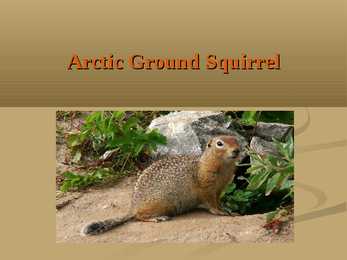
Arctic Ground Squirrel Geographic range The Arctic Ground Squirrel can be found in regions of Northern Canada ranging from the Arctic Circle to northern British Columbia, and down to the southern border of the Northwest Territories, as well as Alaska and Siberia. Physical description A beige and tan coat with a white-spotted back. A short face, small ears, a dark tail and white markings around its eyes. Strong front paws that are well adapted for digging and burrowing. Average length of an Arctic Ground Squirrel is approximately 39 cm. The average mass 750 g. However, males generally are around 100 g heavier than females. Diet Herbivore. Eats a wide variety of plants including seeds, berries, willow leaves, mushrooms, grasses and flowers.
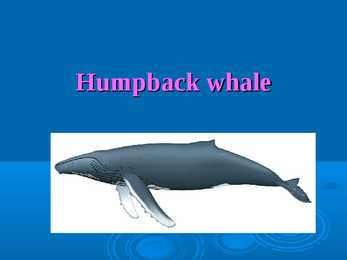
The flukes, which can be 5.5 m wide, is serrated and pointed at the tips. Adult males measure 12.2-14.6 m, adult females measure 13.7-15.2 m. They weigh 25 to 40 tons. Feeding Feed on krill, small shrimp-like crustaceans, and various kinds of small fish. Each whale eats up to 1 and 1/2 tons of food a day. Mating and breeding Humpback whales reach sexual maturity at 6- 10 years of age or when males reach the length of 11.6 m and females reach 12 m. Each female typically bears a calf every 2-3 years and the gestation period is 12 months. The calf is between 3-4.5 m long at birth, and weighs up to 907 kg. Distribution and migration Is found in all the world's oceans. Most populations of humpback whales follow a regular migration route. They are summering in temperate and polar waters for feeding. They are wintering in tropical waters for mating and calving. Status Because their feeding, mating, and calving
Humpback whales, minke whales, narwhales, beluga or white whales, sperm whales, pilot whales and Greenland whales are among the other species here. At sea you'll also see seals. An estimated two million seals live in Greenlandic waters. Walruses are primarily seen in north and east Greenland. Your first encounter with large animals in Greenland usually takes place very soon after arrival. More than 3,000 musk oxen live in the area around Kangerlussuaq Airport and some of them can be seen in the immediate surroundings. A one-hour guided tour of the area will most likely include an encounter with these large, sedate animals. Reindeer live all over the ice-free parts of Greenland, and you may be lucky to see a herd. Reindeer hide is very insulating, and if you decide to go on a dog- sledge tour you will have the chance to dress in clothes made from reindeer hide. Polar bears live predominantly in north and east Greenland but also come to
● Lenght – 140 to 165 cm ● Deep honking call and powerfull fliers ● Require large areas to live in ● Adult birds – feathers entirely white, black feet, mostly black bill ● Pens (females) – slightly smaller than cobs (males) ● Immatures – white mixed with some dull grey feathering; bills – black, large dirty-pink patch ● In Estonia first nesting - 1979 Whooper swan Behaviour of whooper swan ● Pair for life, cygnets stay with them all the winter ● Breffered breeding habitat – wetlands ● Both build the nest ● Male will stand guard over the nest while female incubates ● 4 to 7 eggs Influence of whooper swan ● Much admired in Europe ● National bird of Finland ● Protected species in Estonia Spread Bewick´s swan (väikeluik) ● Lenght 115 to 140 cm ● Adults – white all over ● Young birds – greyish with a pinkish bill
Kolmas tase o They have red and black fur. Neljas tase Viies tase o Red pandas have long, bushy tails. o On their heads are two large white and black ears. o The muzzle area around the nose is also covered in white fur. Ha b i t a t o Red Pandas live in Nepal, Burma, southern China and surrounding areas. o They live in Himalaya forests and in mountains, bamboo forests and thickets. Live in trees. o Be h a v i o r Red pandas are fast climbers and will use their tails to balance o when running in trees. Red panda sleeps during the day. o
The national language is English. The official name of it is the Commonwealth of Australia. It's divided into six states and two territories: New South Wales, Queensland, South Australia, Western Australia, Tasmania, Victoria, Australian Capital Territory (ACT) and Northern Territory. Symbols: Australia had the British flag as their official flag until 1901, when the Commonwealth of Australia was formed. Over 30 000 entries attracted the official competition. Five of them, which contained almost identical designs, were placed equally first. The Australian flag symbolises Australia's historical links with Britain, because it has British flag on it, and Australia's location in the southern hemisphere, because it has stars of the Southern Cross on it. The large seven-pointed star represents the six original states and the territories of Commonwealth. There is also the Indigenous Australian flag, which represents the Aboriginal Australians
Canada's highest peak is Mount Logan (5,959 m) in Yukon Territory. 4. Rivers, lakes With less than 1 percent of the world's population, Canada has some one-seventh of the world's supply of accessible fresh water. Much of this water is stored in lakes and wetlands that cover about one-fifth of Canada's total area. The Great Lakes--the world's largest surface of fresh water--are shared with the United States and form part of the international border. Other large lakes include Great Bear and Great Slave lakes in the Northwest Territories and Lakes Manitoba and Winnipeg in Manitoba. Mackenzie River is Canada's longest river, which flows 4,241 km from its source to its mouth. With its many tributaries, it drains 1,800,000 square km. The St. Lawrence is the largest river flowing into the Atlantic Ocean. Its drainage basin includes the Great Lakes, forming an inland navigable waterway extending some 3,765 km into the heart of the continent
Sun Bear The Sun Bear is 120-150 cm long, making it the smallest member in the bear family. Males tend to be 10-45% larger than females the former normally weigh between 30 and 70 kg , and the latter between 20 and 40 kg. The shoulder height is about 60-72cm .The Sun Bear possesses sickle-shaped claws that are relatively light in weight. It has large paws with naked soles, probably to assist in climbing. Its inward-turned feet make the bear's walk pigeon toed, but it is an excellent climber. It has small, round ears and a stout snout. The tail is 1.2-2.8 inches (3-7 cm) long. Despite its small size, the Sun Bear possesses a very long, slender tongue, ranging from 8 to 10 inches (20-25 cm) in length. The bear uses it to extract honey from beehives.
Iguanas on the Galapagos are either land or marine iguanas. Both are about the same size, growing up to about 1.5m, have stocky heads, a ridge of spiny scales along the neck and backbones. Land iguanas are lighter in color, tan to dark brown, and have shorter scales on the backbone. Land iguanas are inland, lesser in number, and feed on cactus . There are 11 remaining races of the Galapagos Giant Tortoises. They eat grasse, cacti, and other vegetation. They can go for more than a year without drinking or eating. The most famous tortoise from Galapagos is the Lonesome George who was found in 1971 on the island of Pinta. He is the sole survivor of his race. There are four forms of sea turtles living in the Galapagos. Their front legs have modified into flippers for the water. They breathe air, but can stay submerged for a long time. Depending on their form, they feed on bottom algae, seagrasses, jellyfish, bottom sponges, crabs and mollusks.
I'd like to present the main issues of our planet and today i'll name 5 of them. These are air pollution, water pollution, endangered animals, deforestation and rubbish. Air pollution Firstly, lets talk about air pollution, which endangeres our life in cities and also the forests near by. Cars and factories blow poisoned gas in the air and it mixes with the oxygen, so the air that we breathe, becomes dangerous to our health
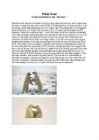
Polar Bear Kristjan Paal 6.c The polar bear (Ursus maritimus) is a bear native largely within the Arctic Circle encompassing the Arctic Ocean, its surrounding seas and surrounding land masses. It is the world's largest land carnivore and also the largest bear, together with the omnivorous Kodiak bear, which is approximately the same size. A boar (adult male) weighs around 350 700 kg (7701,500 l while a sow (adult female) is about half that size. Although it is closely related to the brown bear, it has evolved to occupy a narrower ecological niche, with many body characteristics adapted for cold temperatures, for moving across snow, ice, and open water, and for hunting the seals which make up most of its diet. Although most polar bears are born on land, they spend most
position of the islands in the temperate belt; the fact that the prevailing winds blow from the west and south-west and the warm current -- the Gulf Stream that flows from the Gulf of Mexico along the western shores of England. All these features make the climate more moderate, without striking difference between seasons. It is not very cold in winter and never very hot in summer. So, the British ports are ice-free and its rivers are not frozen throughout the year. The weather on the British Isles has a bad reputation. It is very changeable and fickle. The British say that there is a climate in other countries, but we have just weather. If you don't like the weather in England, just wait a few minutes. It rains very often in all seasons in Great Britain. Autumn and winter are the wettest. The sky is usually grey and cold winds blow. On the average, Britain has more than 200 rainy days a year
The northern part of the country, with a tropical climate, has vegetation consisting of rainforest, woodland, grassland, mangrove swamps and desert. Climate is highly influenced by ocean currents, including the El Niño southern oscillation. 4. Land regions Mountains The Great Dividing Range runs along the Pacific ocean. These mountains are very old and much of worn down but the Australian Alps are the highest of them. The highest top Mount Kosciusko is 2228 metres above sea level. It was named by the Polish explorer Count Paul Strzelecki in 1840 in honour of the Polish national hero General Tadeusz Kociuszko. Like many of Australia's highest peaks, Mount Kosciuszko is not particularly difficult to climb. There is a road to Charlotte Pass, from which it is a seven kilometre walk up a path to the summit. Anybody with a modest level of fitness should be able to climb it
In fact, almost all are raised on commercial farms. Of all the big cats, cheetahs have the least strength. As a result, cheetah cubs are killed by larger predators like the lion and hyena. Up to 80% of the cubs are killed by lions. The cheetah compensates for this by having many offspring. For the cubs that survive, the life span is up to 12 years. Female cheetahs typically live alone and are not territorial. Males form coalitions of 2 to 4 members. This helps them defend territories for hunting and mating. Fierce fights can occur between rival coalitions as a result of a territorial dispute. Young cubs stay with their mother, who raises them by herself for the first 18 months. She then leaves the cubs, which stay together for about 6 more months before breaking up. Male siblings will stay together for life. Cheetahs do not roar like lions and tigers. Instead, they make chirping sounds and hiss when angered or threatened. When alarmed, they whine or growl
million years old. Australia is often called `Down Under', because it lies in the Southern Hemisphere. As a result, its seasons are the opposite of ours. Australia, Tasmania and a number of smaller islands form the Commonwealth of Australia. Because of the country's great size, the climate in Australia ranges from tropical regions of the Northern Territory to the cool temperate conditions in the southeast and Tasmania, where it often snows in winter. In the north, half the year is `wet' and half is `dry'. From November to April heavy rain fills the rivers and makes enormous lakes where thousands of birds come for the summer. From May to October it is often sunny and dry for weeks, and it is a popular place for winter holidays in the sun. In the hot, flat centre of Australia, there is an area called the `outback'. It covers more than two-thirds of Australia, but its population is less than 100,000. In some places, it doesn't rain for years
 annaabi.ee