Leidsid 33 sarnast õppematerjali, mis on seotud failiga "Trafalgar Square". Need materjalid aitavad sul teemat sügavamalt mõista.
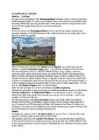
square, statue, north, four, plinth, trafalgar, south, cross, road, east, west, fourth, part, gallery, nelson, column, mall, arch, done, place, work, tourist, centre, lion, political, british, original, king, northern, strand, year, surrounded, traffic, canada, admiral, lord, them, could, there, late, heart, famous, display, including, changing, southernSquares of London Trafalgar Square Trafalgar Square is a public space and tourist attraction in central London, England, United Kingdom. At its centre is Nelson's Column, which is guarded by four lion statues at its base. There are a number of statues and sculptures in the square, with one plinth displaying changing pieces of contemporary art. The square is also used for political demonstrations and community gatherings, such as the celebration of New Year's Eve. The name commemorates the Battle of Trafalgar (1805), a British naval victory of the Napoleonic Wars over France. The original name was to have been "King William the Fourth's Square", but George Ledwell Taylor suggested the name "Trafalgar Square" Leicester Square Leicester Square is a pedestrianised square in the West End of London, England. The Square
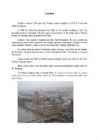
Trafalgar Square is over 160 years old... By the Middle Ages, it was known as Charing, by now name charing wears only the hotel next to the square Trafalgar Square is the largest square in London, it .is one of Britain's great tourist attractions. it's located at the heart of London, and it has been a central meeting place, place for new year receptions and Demostrations, since the Middle Ages. In the center of the square is the tall Nelson's Column. It was named in honour of Lord Nelson's victory at the Battle of Trafalgar square in 1805. Nelson was a much loved military hero in his day. The square is surrounded by many great buildings. There is also two famous fountains where y ou can take a dip in hot days. On the north side is the National Gallery. It houses a collection of more than 2300 paintings. National Gallery it is in fact one of the first permanent police boxes too
London History The Romans AD 43- AD 410 The Romans finally invaded Britain in AD 43 from Kent. The Romans lead by Julius Caesar attempted to invade Britain twice before that in 55 and 54 BC but the invasions were unsuccessful. They made their way to the river Thames and sailed up it. The Romans knew it was important to control a crossing point at the river Thames, so they decided to build a settlement on the north bank. Although small settlements had been built on the banks of the Thames, the Romans were the ones who built the first city. They called their city Londinium. The Roman engineers noticed that the point where the swampy river narrowed would make an ideal crossing point, they built London Bridge. Less than 20 years later the native Iceni tribe, led by Queen Boudicca, rose up against the Romans in revenge for mistreatment and burnt Londinium to the ground
The park is divided in two by the Serpentine. The park is contiguous with Kensington Gardens; although often still assumed to be part of Hyde Park, Kensington Gardens has been technically separate since 1728, when Queen Caroline made a division between the two. THE TOWER OF LONDON: Her Majesty's Royal Palace and Fortress, more commonly known as the Tower of London (and historically as The Tower), is a historic fortress and scheduled monument in central London, England, on the north bank of the River Thames. It is located within the London Borough of Tower Hamlets and is separated from the eastern edge of the City of London by the open space known as Tower Hill. It is the oldest building used by the British government. [1] TOWER BRIDGE: Tower Bridge is a combined bascule and suspension bridge in London, England, over the River Thames. It is close to the Tower of London, which gives it its name.It has become an iconic symbol of London.
London important sights guide Roman period 20th century · Big Ben is the nickname for the great bell of the clock at the north end of the Palace of Westminster in London and is often extended to refer to the clock or the clock tower as well. It is the largest four-faced chiming clock and the third-tallest free-standing clock tower in the world. The clock first ticked on 31 May 1859. The pendulum is installed within an enclosed windproof box sunk beneath the clockroom. It is 3
boundaries, but the name "London" has long applied more to the whole metropolis that has grown up around it. London has been an important settlement for over two millenniums. It is also one of the world's leading business, financial and cultural centres and its influence in politics, education, entertainment and even fashion contribute to its status as a major global city. London is a major tourist attraction with four world heritage sites, several royal parks and numerous iconic landmarks such as the Houses of Parliament, Towe Bridge, the Tower of London, Westminster Abbey and the London Eye. 2. History Although there is some evidence of a permanent settlement before the Romans came in 43 A.D., it is more accepted by historians that the Romans were the first. The settlement was called Londinium. The first London lasted for just seventeen years, for around AD 61, a tribe of Celts led by
The City of London History The City of London occupies one square mile in the middle of the capital. It once made up the entire town of London, surrounded by the wall first built by the Romans. The Roman Londinium grew up on the northern side of the "London Bridge" in the past. Products such as olive oil, wines and fruit were brought by ships from different parts of the Roman Empire and unloaded onto wooden quays along the river. In AD 61 the native Celtic Iceni tribe, led by Queen Boudicca, rose up against The Romans
initiated the construction of the Tower. Hyde Park 1. Who opened the park to the general public?- Charles I opened the park to the general public. 2. Name one famous landmark.- In example the Serpentine Lake/ Speakers' Corner/ the Diana, Princess of Wales Memorial Fountain. 3. For what is it famous for?- It's famous for its Speakers' Corner. Piccadilly Circus 1.When was it built?- It was built in 1819. 2. What is in the centre of the junction?- In the centre of the junction is a statue called Eros. 3. Name one tourist attraction near it.- In example the Shaftesbury Memorial/ Criterion Theatre/ London Pavilion. Trafalgar square 1. How many lion statues are guarding Nelson's Column?- 4 lion statues are guarding Nelson's Column. 2. When was it opened to the public?- It was opened to the public on 1 May 1844. 3. After who/what was it named for?- It was named in honour of Lord Nelson's victory at the Battle of Trafalgar. Covent Garden 1
THE CITY OF LONDON History The City of London occupies one square mile in the middle of the capital. It once made up entire town of London, surrounded by the wall first built by Romans. The Romans also built a bridge over the Thames and there has been one in the same area ever since. The Roman Londinium grew up on the northern side of the bridge. In AD 61 the native Celtic tribe, led by Queen Boudicca, rose up against the Romans. They burnt down Londinium to the ground and killed most of its inhabitants
war with each other. In AD 43 Britain was made a Roman province. The romans stayed there for three hundred years. After the romans left came the Angles, Saxons and Jutes. Angles gave England its name. The population nowadays is about 60 million people UK lies off the north-west coast of mainland Europe. The climate in UK is generally mild and temperate. The climate is greatly influenced by the surroundig days. It is said you can experience four seasons in one day. The longest river is The Severn which is 240 miles long. The most famous English river The Thames is 215 miles long. Lakes can be found in the north of England, in and Area called Lake District. The most beautiful lakes are in Scotland. British mountains are low. The highest peak Ben Nevis is 4.406 feet. The biggest towns are London, Birmingham, Leeds, Glasgow, Sheffield, manchester and Liverpool. The United Kingdom is a constitutional monarchy
While on the way, follow the map so that you would not get lost and so that you could eventually get streetwise in London. Take the following questions with you, find answers to them and put them down for yourself in this MSWord document. Don’t forget to “take” photos - you are supposed to recognise the landmarks later on! At the end of the tour send the worksheet to yourself so that you could use it again. Good luck with exploring the city! DAY 1. The route: The Buckingham Palace – Trafalgar Square – National Gallery – Piccadilly Circus – The British Museum – Madame Tussauds – Oxford Street – Hyde Park – Harrods Destination 1: The Buckingham Palace What is its function? - Buckingham Palace has served as the official London residence of Britain's sovereigns since 1837 and today is the administrative headquarters of the Monarch. When was it built? 1703 Who was the first monarch to live there? Queen Victoria Is it open to public
London London is almost 2,000 years old. Romans came to England in 43 AD. It was first called Londinium. In 1666 the Great Fire destroyed four fifths of the wooden buildings in the City including St Paul`s Cathedral. The fire began in the kitchen of the King`s baker Thomas Farriner in Pudding Lane and lasted for five days. London is the capital of England and the United Kingdom. By now London has swallowed up many of the small towns and villages that once surrounded it. London is on the same latitude as Warsaw. London is a city were more than 7 million inhabitants live.
The United Kingdom The United Kingdom consists of England, Scotland, Wales and North Ireland and it is situated in the Atlantic Ocean near the mainland of Europe. The population of the UK is 58.6 million and area is 244,110 sq km. Britain has a temperate humid climate. Its characteristic features are mild winters, warm summer, no temperature extremes, abundant rain all year round and frequent changes of weather. The mild climate is partly due to the warm Gulf Stream and partly to the south westerly winds. Occasional winds from the east in winter may
o Defeated the english in the battle of Hastings in 1066(14 oct) o Was crowned king of England Oliver Cromwell o Leader of the parliamentary party in the Civil War o After the victory of the parilamentary forces became `Lord Protector' o Military government, puritan ethics(all amusement was banned) Admiral Nelson o Commander of the British fleet o Defeated Napoleon's French fleet in the Battle of trafalgar o Nelson's Column in Trafalgar Square in London commemorates the national hero who died during the battle Winston Churchill o politcian and statesman known for his leadership of the United Kingdom during the Second World War o PM 2 times Sir Francis Drake o an English sea captain, privateer, navigator, slaver, a renowned pirate, and a politician of the Elizabethan era. o He was second-in-command of the English fleet against the Spanish Armada in 1588. Dates 1066- Battle of Hastings
VIII. She began to undertake public duties during the Second World War, in which she served in the Auxiliary Territorial Service. On the death of her father in 1952, she became Head of the Commonwealth and queen regnant of seven independent Commonwealth countries: the United Kingdom, Canada, Australia, New Zealand, South Africa, Pakistan, and Ceylon. Her coronation service in 1953 was the first to be televised. Between 1956 and 1992, the number of her realms varied as territories gained independence and some realms became republics. Today, in addition to the first four aforementioned countries, Elizabeth is Queen of Jamaica, Barbados, the Bahamas, Grenada, Papua New Guinea, the Solomon Islands, Tuvalu, Saint Lucia, Saint Vincent and the Grenadines, Belize, Antigua and Barbuda, and Saint Kitts and Nevis.
Tallinn English College English Sergo Vainumäe 9A TALLINN Report Supervisor: Inge Välja Tallinn 2006 Order of contents: 1.Introduction 2.Toompea 3.Lower Town 4.Kadriorg and Pirita 5.Museums 1. Introduction Tallinn, the capital of Estonia, lies on the Baltic Sea. It is on almost the same latitude east St. Petersburg in Russia, Stockholm in Sweden and Stavanger in Norway, and covers 158 sq km. Tallinn was first marked on a map of the world by the Arab geographer al-Idrisi in 1154, its name then being Kolyvan (probably derived from the name Kalev). In the 13th-century Chronicle of Henricus de Lettis the town was called Lyndanise. Later came Reval (presumably after the old county of Rävala), the name used by the Germans who ruled the country for seven centuries. Russians then
✿ inhabitants of the highlands were killed or sent away from Britain and the wearing of highland dress (the tartan kilt) was banned. ✿ It was a cultural change that was most marked in this century ✿ Britain expanded its empire in the Americas, along the west African coast, and in India. ✿ Industrial Revolution ✿ Hundreds of thousands of people moved from rural areas into new towns and cities. Most of these new towns and cities were in the north of England, where the raw materials for the industry were available. ✿ In the south of England, London came to dominate, not as an industrial centre but as a business and trading centre. By the end of the century, it had a population of close to a million. ✿ More than a thousand mansions were built in the eighteenth century. 1746 At the Battle of Culloden, a government army of English and lowland Scots defeats
aristocrats, poets, priests, heroes and villains are all part of the church's fascinating history. Many of whom were buried at the Abbey including Charles Dickens, Geoffrey Chaucer, Dr. Samuel Johnson and Charles Darwin. There is a special Scientists corner at the church which is home to a memorial for Isaac Newton. On top of all this rich history, Westminster Abbey is a truly stunning building and the exterior offers visitors plenty of photo opportunites. We will also see the Parlament Square which is situated nearby. After that will will spent a lot of time in the famous Londons Aquarium. Certainly we would like to have an overview of London and therefore we will visit the British Airways London Eye or Millennium Wheel, as it is also known which is the largest observation wheel in the world. On a clear day you can see as far as 25 miles which is far enough to see the sea in the east. We will end our day in the Tower of London which is one of the world's most famous
festivals take place in Tallinn. The yachting regatta of the 1980 Moscow Olympic Games was held at Pirita. History Tallinn means in English "Danish town". The place is believed to have been settled by Finno-Ugric people about 2500 BC. It was first marked on a map of the world by the Arab geographer al-Idrisi in 1154. The Estonians were the first to build a stronghold on the spot of the Toompea Hill, but the real Tallinn was built by the Danes who conquered the north of Estonia in 1219. Legend has it that one day, when the Danes were about to lose a bloody battle, the sky suddenly opened and a red flag with a white cross on it dropped down upon them from the heaven. This is how the Danes obtained their national flag. In 1346 the Danish king sold his Estonian lands to the Teutonic Order, who a year later resold them to the Livonian Order. The Germans renamed Tallinn and called it Reval. Toompea became the seat of the German-born gentry
The West End Trafalgar Square is called the heart of London because it connects the political area of Westminster to the rest of West London. Lord Nelson's column stands in the center of the beautiful square. Horatio Nelson was a great British commander who defeated Napoleon in the Battle of Trafalgar but unfortunately he himself was killed. To the north and west from the Trafalgar Square is the West End, which is London's main shopping and entertainment area. Most of London's best residential and commercial areas are in the West End. You can find there expensive shops, restaurants, hotels, museums and many art galleries. Great Britain's biggest department store is in Knightsbridge. It was founded in 1834 by Charles Henry Harrod. Harrods is also the world's first building with an escalator. Today Harrods is an amazing place with over 330 shops, which
griefstricken when his third wife died during the birth of their fourteenth child. In her dying breath, his wife urged him to build a mausoleum for her that the world has never seen before. Shah Jahan granted his wife's wish and the constructions started one year after her death with the principal mausoleum completed in 1648. The surrounding buildings and garden were finished five years later. Architecture The focus of the Taj Mahal is the white marble tomb, which stands on a square plinth consisting of a symmetrical building with an iwan, an arch-shaped doorway, topped by a large dome. The base structure is a large, multi-chambered structure. The base is essentially a cube with chamfered edges and is roughly 55 meters on each side (see floor plan, right). On the long sides, a massive pishtaq, or vaulted archway, frames the iwan with a similar arch-shaped balcony. The main dome is crowned by a gilded spire or finial. The finial, made of gold until the early
It appears to function as a kind on astronomical clock and we know it was used by the Druids for ceremonies marking the passing of the seasons. It appears in number of novels. These days it is not only the interest of tourists but is also a gathering point of certain minority groups. It is now fenced off to protect it from damage. 3. The Roman conquest Julius Caesar's first raid was in 55 BC but the romans left. Ad 43- the Romans came to stay. The army established Roman rule in the south and SW of the country. The Romans started to introduce their laws to a new province of the Roman Empire and started to build good roads. Officials were appointed (governors, procurators to collect taxes, look after the estates and mines and se that the gold, silver, iron and lead were exported back to Rome). Introduced schools,a new language Latin, large farms (villas), baths. In AD 410 they had to leave . roman occupation lasted nearly 400 years. They left behind very little.
Rome, Madrid and Berlin.[20] Prague suffered considerably less damage during World War II than some other major cities in the region, allowing most of its historic architecture to stay true to form. It contains one of the world's most pristine and varied collections of architecture, from Art Nouveau to Baroque, Renaissance, Cubist, Gothic, Neo-Classical and ultra-modern. Some popular sights include: · Old Town (Staré Msto) with its Old Town Square. 10 · The Astronomical Clock (Orloj) on Old Town Square. · The picturesque Charles Bridge (Karlv Most). · The vaulted Gothic Old New Synagogue (Staronová Synagoga) of 1270. · New Town (Nové msto) with its busy and historic Wenceslas Square. · Malá Strana (Lesser Quarter) with its Infant Jesus of Prague.
Tallinn English College Topic The United States of America Form Tallinn 2005 Introduction The United States of America is a very big country. Its territory is about 9.4 million square kilometres and its population is more than 260 million people, 12% of them are the Afro-Americans. It is the world's third-largest country by size and by population. The population density is about 27 people per square kilometre. Most of the people live in towns. There are 50 states in America. The biggest of the state is Texas, next by size are California, Alaska and Montana. Six states - Maine, Vermont, New Hampshire, Connecticut ,Rhode Island and Massachusetts are called New England
other rites of prehistoric people. It appears to function as a kind of astronomical clock. Conceivable reports and implications about a secret government conspiracy, which seeks to hide the irrefutable evidence of extraterrestrial origins. 8. The Roman Conquest. Julius Caesar’s first raid was 55 BC. In 43 the Emperor Claudius launched a full- scale invasion, army of 40,000 men. Permanent Roman rule was established in south and south-west of the country as a consequence. Forts were built in Wales, but the local tribes were difficult to subdue. Hadrian ordered to build the Hadrian’s Wall in 121 or 122, a 117km wall from sea to sea, to protect their territory from the Scots. The Roman rule was more of a colonial control rather than a large-scale settlement. They left very little behind. 9. The Anglo-Saxon Invasion.
Nordic peoples started. The Angles, Saxons and Jutes began to settle from the sixth to the eighth centuries, and the Angles gave England its name. These invaders introduced a new culture to Britain, and even today British customs and habits are described as 'Anglo-Saxon'. Anglo-Saxon England was one of the most civilised countries in Europe, with organised systems of agriculture and trade. The Vikings ca me from Scandinavia in the tenth eentury; they settled in the north and made the town of York the capital of their kingdom. The last successful invasion of Britain was in 1066, which is an important date in history books in British schools. Duke William of Normandy (William the Conqueror) defeated the English at the Battle of Hastings, and the Normans and the French settled in Britain over the next three centuries. French became the language of the nobility and, with Latin, the language of the legal system and of government. POPULATION
and unexplained happenings. Fearing he had offended the dead woman, the Laird of the castle had the skeleton exhumed and replaced behind the bedroom wall, at which the haunting ceased.Today, the castle is open to tourists during the summer months. Crookston Castle is located in the Crookston area of south-west Glasgow, Scotland. The castle is located some 5 miles (8 km) south-west of the city centre, and 3 miles (5 km) east of Paisley, overlooking the Levern Water, just before its confluence with the White Cart Water.Crookston is surrounded by a defensive ring-ditch that dates back to the 12th century when Sir Robert de Croc, built a timber and earth castle. Remains of a chapel founded by de Croc in 1180 have been uncovered. Evidence of an even earlier fortification on the same site has also been found. The lands of Crookston were bought by Sir Alan
Alberta The capital of Alberta is Edmonton. The population is 3.7 million people and there are many nationalities. Besides English and French there are also immigrants from Scotland, Ireland, Wales, Germany, Ukraine and Scandinavia. In Edmonton and Calgary there are also historic Chinatowns, and Calgary has Canada's third largest Chinese community. Geographical features Alberta covers an area of 661,848 square kilometres, an area about 5% smaller than Texas or 20% larger than France. This makes it the fourth largest province after Quebec, Ontario, and British Columbia. To the south, the province borders on the 49th parallel north, separating it from the U.S. state of Montana, while on the north the 60th parallel north divides it from the Northwest Territories. To the east the 110th meridian west separates it from the province of
London - The City and Beyond The statue of a bronze dragon on Fleet Street is the entrance to the City of London. This is where the Romans founded Londinium almost two thousand years ago. The City covers about 2,6 square km (1 square mile) and is often called the Square Mile. Today, the City of London is one of the world's most important business and financial centres, with over 500 banks. Over 400 000 people work within the Square Mile during weekdays and it is a crowded and noisy place. The Barbican Centre is a very big complex of buildings, towers, garages and walkways. It was built in the 70s and most Londoners don't like the way it looks. It is the largest performing arts centre in Europe and home to two
with annual expenditure by tourists of around £15 billion. London hosted the 1908 and 1948 Summer Olympic Games and will host the 2012 Summer Olympic Games. Samuel Johnson, author of the first complete dictionary, famously wrote about the city, citing "You find no man, at all intellectual, who is willing to leave London. No, Sir, when a man is tired of London, he is tired of life; for there is in London all that life can afford." Greater London contains four World Heritage Sites: the Tower of London; the historic settlement of Greenwich; the Royal Botanic Gardens, Kew; and the site comprising the Palace of Westminster, Westminster Abbey and St. Margaret's Church. London's population draws from a wide range of peoples, cultures, and religions, and over 300 languages are spoken within the city. As of July 2007, it had an official population of 7,556,900 within the boundaries of Greater London making it the most populous municipality in the European
Reval - comes from the German words “REH” and “FALL”, meaning the falling of the deer; could be deers trying to escape from the Danes, running down the Toompea hill Tallinn - the word origins from estonian language, could mean “taani-linn”, “tali-linn” or “talu- linn”; Reval was replaced when Estonia became independent Symbols Flag - blue black white tricolor; blue represents sky, black the soil, and white our freedom. Danneborg - red flag with a white cross fell from the sky during the battle in 1219. It is also set into the small coat of arms of Tallinn. Great coat of arms - three lions, a knight, and Danish queen; leaves around Old Thomas - quardian of Tallinn, put on top of the spire of Tallinn Town Hall in 1530; boy that excelled springtime contests thrown by Baltic German elite, because of his low-born status was unable to receive a prize, therefore was granted the position of town guard. Right now
Since 1965 Greater London has been divided into 32 London boroughs. However, it is a city that is surprisingly easy to get around, with the comprehensive and easily navigated London Underground or `Tube'. London's population was 7,172,000 on the latest Census Day of April 2001. This is 14.6 per cent of the total population of Britain. The people of London have great love for theatre, opera, films, music, sports, and arts. Most of the London films are premiered at Leicester Square. The love for literature has made London the setting for many dramas, plays, novels, and short stories. Charles Dickens, William Shakespeare, Arthur Conan Doyle, are just a few names to mention among the many littérateurs. London's climate is among the mildest in England, with damp but mild winters and moderate summers. January is the coolest month, July being the warmest. It very rarely freezes in London.
CANADA Geography Canada is the world's second largest country in total area after Russia , since it covers nearly 10 million square kilometres, but is one of the most sparsely populated, with only about 34 million inhabitants. The majority of them live within 300 kilometres of Canada's southern border. Much of the rest of Canada is uninhabited or thinly populated, because the country has a rugged terrain and severe climate. Canada extends across the continent of North America, from Newfoundland on the Atlantic coast to British Columbia on the Pacific coast and northward into the Arctic Ocean. Canada
 annaabi.ee