Leidsid 33 sarnast õppematerjali, mis on seotud failiga "The Patriot". Need materjalid aitavad sul teemat sügavamalt mõista.
british, kill, join, again, father, burnt, patriot, took, children, bothides, killedons, brutal, heldoldier, charlotte, defeat, harry, french, however, fight, facehot, ground, turnedwordtephen, place, 18th, century, raisedeven, oldest, wanted, forces, without, permission, participate, wishes, years, night, between, woke, gave, morningReview The Patriot is a historical war film directed by Roland Emmerich, starring Mel Gibson. Story is about grieving father who gets revenge for his murdered son at the war field. Near Benjamin Martin (Mel Gibson) mansion was a battle, after which Benjamin decided to take care of wounded (Americans and British). One of the wounded was his eldest son Gabriel who was messenger. Later that day British army visited his house, took their men and killed all Americans except for Gabriel. Gabriel was caught; his brother tried to save him and got killed. Colonel William Tavington ordered his men to burn mansion, Benjamin in anger took his war equipment and with his two sons attacked group which transported Gabriel. After saving son, he entered army and started annihilating British army. In this film you can see Mel Gibson in his best act ever. This movie has many
Chapter1: An unknown woman was found lying in the street and brought into the workhouse. She delivered a sickly child who had trouble breathing. The woman, without a word of who she was, died and left her new born boy, Oliver, to the drunken nurse that stood by. Chapter2: The State gave Oliver to Mrs. Mann who housed a number of orphaned children. Mrs. Mann took a large portion of the money given to her by the authorities for each child's food so Oliver grew up small and malnourished. On his ninth birthday, the town beadle, Mr. Bumble, came to collect Oliver and take him to the board for an interview. They told him he was to live with other wards of the state to become educated and learn a trade. Oliver did not mind this, but soon after he arrived, the state
feelings, keeping his emotions at bay in order to preserve his sanity and survive. As a result, the compassionate young man becomes unable to mourn his dead comrades, unable to feel at home among his family, unable to express his feelings about the war or even talk about his experiences, unable to remember the past fully, and unable to conceive of a future without war. He also becomes a "human animal," capable of relying on animal instinct to kill and survive in battle. But because Paul is extremely sensitive, he is somewhat less able than many of the other soldiers to detach himself completely from his feelings, and there are several moments in the book (Kemmerich's death, Kat's death, the time that he spends with his ill mother) when he feels himself pulled down by emotion. These surging feelings indicate the extent to which war has programmed Paul to cut himself off from feeling, as when he
the Act of Supremacy (1534). His Reformation led to the creation of the religiously distinct Anglican Church. The dissolution of the monasteries provided Henry with much needed wealth. The reign of Elizabeth I was called the Golden Age of English history, because it produced poets like Shakespeare and Spenser and prosperity for the entire nation. She also restored national unity and made England Protestant again. The discovery of America placed Britain in the centre of the world's trading routes and brilliant naval commanders (Sir Francis Drake, Sir Walter Raleigh) enabled England to dominate these trade routes. Sir Walter Raleigh is known for being the person who first brought potatoes and tobacco to Britain. The Stuarts In 1602 the Pilgrim fathers left England on Mayflower because of religious reasons and established colonies in America.
flogged Boudicca and raped her daughters 60-62 AD Iceni rebelled, Boudicca´s warriors defeated Roman Ninth Legion, destroied capital-Colchester Finally Boudicca was defetated, she poisoned herself to avoid capture Hadrian´s wall A defensive barrier builtin 122 AD by Roman emperor Hadrian to guard the northern part of Britain against barbarian invaders Most imposing frontier of Roman Empire, controlling peoples mobements Building took several years, builders kept changing minds about the size 119 km lenght, 5m high, 3m deep The Picts, Caledonia The painted ones, northern tribes, part of the Scots Inhabited an area known as eastern and th western Scotland, until 10 c Mysteriously disappeared Constantly fought with Romans Teir country- Caledonia- Pictland The Scots, Hibernia Raiders, Celts living in Ireland/Hibernia Migrated to Scotland
banned until late in the fourth century. *Boadicea/Boudica At his death bed, Boudica's husband left half his possession to the emperor, expecting that this would protect his family. However, his property was confiscated. When Boudica, the queen of the Celts, protested, she was flogged and her daughters were raped. She swept trough Southern Britain with her tribe and tortured every Roman she met. A women having power seemed unnatural to the Romans. She fought back for 2 years, but finally took poison and died. *Hadrian's Wall It was built by the emperor Hadrian and it marked the Northen border of the Roman empire. Hadrian's Wall was built, beginning in 122, to keep Roman Britain safe from hostile attacks from the Picts. The wall stretched from the North Sea to the Irish Sea. In addition to the wall, the Romans built a system of small forts called milecastles. Sixteen larger forts holding from 500 to 1000 troops were built into the wall, with large gates on the north face
nobility · What were the reasons behind upward mobility? New public schools for poorer people; S. Smile "Self Help"; questioning the social status of the nobility · Reasons behind the rise of literacy 1850 Libraries Act, the Sixpenny novels (people could by cheap books- T. Malory "Morte d'Arthur", W. Scott historical novels- most popular was "Ivanhoe"; new schools for middle class- public schools; not so rich people got some education; the Penny Magazine · Key words of the British national identity: 1852- the Great Exhibition; Gothic revival Architectures; the Battle of the Styles; The Tower of London, Hampton Court were opened to public · Why were the Brits obsessed with the middle ages? People were afraid of new things, they didn't feel comfortable in new and fast-moving world; people wanted security and they found it in old things; Middle ages became popular, "Morte d'Arthur" by Thomas Malory 2) Ruskin and the medieval revival
They had real knowledge & experience of the law which became known as ,,common law", based on custom, comparison, previous cases & decisions. It was unlike in the rest of Europe. In England trial by ,,ordeal" was replaced with trial by jury. The work of juries gradually changed from giving evidence to judging evidence of others. Now the king's laws were in force everywhere. In 1157 he forced Malcolm IV of Scotland to give up border regions to England. In 1171 he went to Ireland, took it under his rule & made his son John, Lord of Ireland. When he got the throne there had been a civil war between his mother Matilda & uncle Stephen. There was also Church who had become too powerful. The Church wanted the kings of Europe to accept its authority over both spiritual & earthy affairs. Conflict between Henry & Church. He chose his trusted adviser, Thomas Becket, to become archbishop in 1162, but he began to defend the Church. Henry saw him as a traitor, lost his temper
Next wife was Anne Bolyn, daughter of a knight. They had daughter called Elizabeth l. Time went by and Henry had to get rid of Anne, she was sent to tower accused of treason (riigi reetmine) and executed. Henry was free, needed another wife. Had six wives together. 1 died, 1 survived, 2 divorced, 2 killed. Henry had a son, was a king Edward Vl, died very young. Henry was a talented musican and scholar, spent much money on it. Soon he had spent all savings his father had collected, he needed money. He understood that monasteries had become useless. So he closed them, took away the riches dissolution of monasteries. When henry quarreled with the Pope, made England independent of Rome. Beginning of the Anglican church. Henry died 1547, only son came to throne Edward Vll, was too young to rule alone. There was acouncil of nobles who did it for him. Unfortunately he died at the age of 16 There was a great problem with finding new king. His
soon reached a wooden door. After knocking twice a voice from inside called "Enter!" and the child went in. The room was filled with the smoke of numberless cigarettes. The girl, however, made no emotion and came closer to the old and ugly man sitting behind the table. "I wasn't lucky today, Grandpa," whispered the child and her light blue eyes filled with tears as she talked. The man smoked soundlessly, not even glancing at the girl. "But I'll go again, tomorrow, and bring you twice the money! I promise! So don't punish me, okay?" The man stood up and walked slowly towards the girl. "I promised your mother to take care of you, yet, if you are useless in even collecting money from the rich, I can't help you! This is the end, Heartless! Go to the dorms, pack your things and leave my orphanage at once! You are no longer welcome here!" Heartless tried to protest, but the man hit her, so there she was now lying helplessly on the floor.
They lived in the Sarah Dessert and traveled by Camelot. The climate of the Sarah is such that the inhabitants have to live elsewhere, so certain areas of the dessert are cul- tivated by irritation. The Egyptians built the Pyramids in the shape of a huge triangular cube. The Pramids are a range of mountains between France and Spain. The Bible is full of interesting caricatures. In the first book of the Bible, Guinesses, Adam and Eve were created from an apple tree. One of their children, Cain, asked "Am I my brother's son?" God asked Abraham to sacrifice Issac on Mount Montezuma. Jacob, son of Issac, stole his brother's birthmark. Jacob was a partiarch who brought up his twelve sons to be partiarchs, but they did not take to it. One of Jacob's sons, Joseph, gave refuse to the Israelites. Pharaoh forced the Hebrew slaves to make bread without straw. Moses led them to the Red Sea, where they made unleavened bread, which is bread made without any ingredients
The Beatles have had more number one albums on the UK charts, and held down the top spot longer, than any other musical act. According to RIAA certifications, they have sold more albums in the US than any other artist. In 2008, Billboard magazine released a list of the all-time top-selling Hot 100 artists to celebrate the US singles chart's fiftieth anniversary, with The Beatles at number one. They have been honoured with 7 Grammy Awards, and they have received 15 Ivor Novello Awards from the British Academy of Songwriters, Composers and Authors. The Beatles were collectively included in Time magazine's compilation of the 20th century's 100 most important and influential people. The Who are an English rock band which was formed in 1964: vocalist Roger Daltrey, guitarist Pete Townshend, bassist John Entwistle, and drummer Keith Moon. They became known for energetic live performances which often included instrument destruction. The Who
ENGLISH LITERATURE Ancient Britain Lived on the British Isles in the 1st millenium. They most probably came from Eastern Europe and belonged to the Celtic race and also spoke Celtic. They were primitive hunters- gatherers, farmers. Some Celtic words are still used in modern English, however they are used mostly in place names. For example: · avon river · cumb valley · ford shallow place in the river Ancient Britons had their own religion and priests or druids and temples.
" "I desire you will do no such thing. Lizzy is not a bit better than the others; and I am sure she is not half so handsome as Jane, nor half so good-humoured as Lydia. But you are always giving her the preference." "They have none of them much to recommend them," replied he; "they are all silly and ignorant like other girls; but Lizzy has something more of quickness than her sisters." "Mr. Bennet, how can you abuse your own children in such a way? You take delight in vexing me. You have no compassion for my poor nerves." "You mistake me, my dear. I have a high respect for your nerves. They are my old friends. I have heard you mention them with consideration these last twenty years at least." "Ah, you do not know what I suffer." "But I hope you will get over it, and live to see many young men of four thousand a year come into the neighbourhood."
Duke, refuting the Senator’s claims that Othello bewitched his daughter, and that their marriage was true. After Othello claims that he wooed her with his adventurous stories, Desdemona herself testifies that she fell honestly in love with the Moor and freely married him. Following their clearance of wrongdoing, Othello is immediately sent to defend against the Turks in Cyrpus. Taking Desdemona with him, Othello sets out for the island with Iago and his wife Emilia in tow. Again displaying his deceitful nature, Iago manages to convince Roderigo to follow along for when Desdemona tires of her new husband. When the Venetians arrive in Cyprus, Iago immediately goes about planting doubt in Othello’s mind as to how loyal his wife is. A carefully planned fight between Roderigo and Cassio, the man who was promoted above Iago, results in Cassio’s demotion. Taking advantage of his saddened state, Iago advises Cassio to seek out Desdemona’s favor to speak on his behalf.
Lamb to the Slaughter by Roald Dahl (1916-1990) The room was warm and clean, the curtains drawn, the two table lamps alight - hers and the one by the empty chair opposite. On the sideboard behind her, two tall glasses, soda water, whiskey. Fresh ice cubes in the Thermos bucket. Mary Maloney was waiting for her husband to come him (correction: home) from work. Now and again she would glance up at the clock, but without anxiety, merely to please herself with the thought that each minute gone by made it nearer the time when he would come. There was a slow smiling air about her, and about everything she did. The drop of a head as she bent over her sewing was curiously tranquil. Her skin - for this was her sixth month with child - had acquired a wonderful translucent quality, the mouth was soft, and the eyes, with their new placid look, seemed larger darker than before
and pottery designer, was the principal and professor of architectural sculpture at the newly- founded Sir Jamsetjee Jeejeebhoy School of Art and Industry in Bombay. Later in life Kipling illustrated many of Rudyard Kipling's books, and other works. Kipling also remained editor of the Journal of Indian Art and Industry, which carried drawing works from the students of the Mayo School. COUPLE named their son after the place they had first met Rudyard Lake. Alice Kipling Fleming - Sister of British author Rudyard Kipling who became a well-known psychic, producing automatic writing under the name "Mrs. Holland." Born June 11, 1868, Alice Kipling was privately educated. She went to India at age 16 and married British army officer John Fleming. While in India she wrote a number of poems, and in 1893 initially experimented with automatic writing. After a long illness she returned to England in 1902 and in the following year read the classic study Human
The emergence of the notion of the American Dream. The great Enlighteners: Crèvecoeur, Jefferson, Paine, Franklin. The American Enlightenment is the intellectual thriving period in the United States in the midtolate 18th century (17151789), especially as it relates to American Revolution on the one hand and the European Enlightenment on the other. Influenced by the scientific revolution of the 17th century and the humanist period during the Renaissance, the Enlightenment took scientific reasoning and applied it to human nature, society, and religion. American Enlightenment a gradual but powerful awakening that established the ideals of democracy, liberty, and religious tolerance in the people of America. If there were just one development that directly caused the American Revolution and uplifted the intellectual culture of the continent while it was only a British colony, it would be the American Enlightenment
the early years of the Colony they founded. Written between 1620 and 1647, the journal describes the story of the Pilgrims from 1608, when they settled in the Netherlands, through the 1620 Mayflower voyage, until the year 1647. The book ends with a list, written in 1650, of Mayflower passengers and what happened to them. The Age of Reason The Age of Reason: Being an Investigation of True and Fabulous Theology , a deistic treatise written by eighteenth-century British radical and American revolutionary Thomas Paine, critiques institutionalized religion and challenges the inerrancy of the Bible. Published in three parts in 1794, 1795, and 1807, it was a bestseller in America, where it caused a short- lived deistic revival. British audiences, however, fearing increased political radicalism as a result of the French revolution, received it with more hostility. The Age of Reason presents
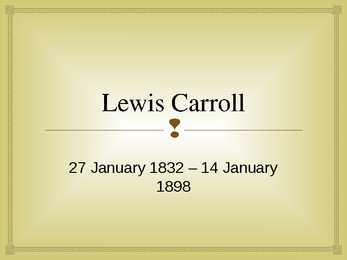
officers or Church of England clergymen. His greatgrandfather, also Charles Dodgson, had risen through the ranks of the church to become a bishop. His grandfather, another Charles, had been an army captain, killed in action in Ireland in 1803, when his two sons were hardly more than babies. His mother's name was Frances Jane Lutwidge. The elder of these sons yet another Charles was Carroll's father. He reverted to the other family business and took holy orders. He went to Rugby School, and thence to Christ Church, Oxford. He was mathematically gifted and won a double first degree, which could have been the prelude to a brilliant academic career. Instead he married his first cousin in 1827 and became a country parson. Young Charles' father was an active and highly conservative clergyman of the
Tristan & Isolde is set in Britain and Ireland, in the Early Middle Ages, after the fall of the Roman Empire in the 5th century. The scattered British settlements are in the process of becoming unified under Lord Marke (Rufus Sewell), who wishes to fortify England against attacks by the Irish king Donnchadh (David O'Hara). The Cornish knight Tristan of Aerygone (James Franco) engages in combat with Morholt, leader of Donnchadh's army and to whom Princess Isolde (Sophia Myles) has been promised in marriage. Though he kills Morholt and Donnchadh's army is overrun,
He spent his entire life advocating the brotherhood of all humankind. One of his favorite quotations was: "I would unite with anybody to do right and with nobody to do wrong." Life as a slave Frederick Augustus Washington Bailey, who later became known as Frederick Douglass, was born a slave in Talbot County, Maryland near Hillsboro. He was separated from his mother, Harriet Bailey, when he was still an infant. She died when Douglass was about 7. The identity of Douglass' father is obscure; Douglass originally stated that his father was a white man, perhaps his master, Captain Aaron Anthony, but later said he knew nothing of his father's identity. When Anthony died, Douglass was given to Mrs. Lucretia Auld, wife of Captain Thomas Auld. Mrs. Auld then sent Douglass to Baltimore to serve the Captain's brother, Hugh Auld. Early education When Douglass was 12 years old, Hugh Auld's wife, Sophia, broke the law by teaching him some letters of the alphabet
complete by the mid 8th century. Throughout the 7th and 8th centuries, power fluctuated between the larger kingdoms. Bede records Aethelbert of Kent as being dominant at the close of the 6th century, but power seems to have shifted northwards to the kingdoms of Mercia and Northumbria. Aethelbert and some of the later kings of the other kingdoms were recognised by their fellow kings as Bretwalda. The so-called 'Mercian Supremacy' dominated the 8th century, though again it was not constant. Aethelbald and Offa, the two most powerful kings, achieved high status. This period has been described as the Heptarchy, though this term has now fallen out of academic use. The word arose on the basis that the seven kingdoms of Northumbria, Mercia, Kent, East Anglia, Essex, Sussex and Wessex were the main polities of south Britain. More recent scholarship has shown that theories of the 'heptarchy' are not grounded in evidence, and it
1271 Avenue of the Americas, New York, NY 10020 Visit our Web site at www.lb-teens.com First Edition: September 2005 The characters and events portrayed in this book are fictitious. Any similarity to real persons, living or dead, is coincidental and not intended by the author. Library of Congress Cataloging-in-Publication Data Meyer, Stephanie, 1973-- Twilight : a novel / by Stephanie Meyer. -- 1st ed. p. cm. Summary: When seventeen-year-old Bella leaves Phoenix to live with her father in Forks, Washington, she meets an exquisitely handsome boy at school for whom she feels an overwhelming attraction and who she comes to realize is not wholly human. ISBN 0-316-16017-2 [1. Vampires -- Fiction. 2. High schools -- Fiction. 3. Schools -- Fiction. 4. Washington (State) -- Fiction.] I. Title. PZ7.M57188Tw2005 [Fic] --dc22 2004024730 Printed in the United States of America For my big sister, Emily, without whose enthusiasm this story might still be unfinished.
Arthur Conan Doyle Life Arthur Conan Doyle was born on 22 May 1859, in Edinburgh, Scotland, to an English father, Charles Altamont Doyle, and an Irish mother, Mary Foley, who had married in 1855.] Although he is now referred to as "Conan Doyle", the origin of this compound surname is uncertain. Conan Doyle's father was an artist, as were his paternal uncles (one of whom was Richard Doyle), and his paternal grandfather John Doyle. Conan Doyle was sent to the Roman Catholic Jesuit preparatory school St. Mary's Hall, Stonyhurst, at the age of eight. He then went on to Stonyhurst College, but by the time he left the school in 1875, he had rejected Christianity to become an agnostic. From 1876 to 1881 he studied medicine at the University of Edinburgh, including a
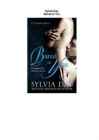
Basically, she kicked my ass. By not pulling her punches or letting me shortchange the details, she made me work harder and because of that, this story is a much, much better book. BARED TO YOU wouldn't be what it is without you, Hilary. Thank you so much! To Martha Trachtenberg, copy editor extraordinaire. This book is an important one for me and she treated it that way. Thank you, Martha! To Victoria Colotta, for all her hard work on the interior design and typesetting. She took my plain text and made it gorgeous. Thank you, Victoria! To Tera Kleinfelter, who read the first half of Bared to You and told me she loved it. Thank you, Tera! To all girls who were at Cross Creek at some point in your adolescence: May all your dreams come true. You deserve it. And to Alistair and Jessica, from Seven Years to Sin , who inspired me to write Gideon and Eva's story. I'm so glad the inspiration struck twice! 1
The Saxons & Vikings Fragmentary knowledge of England in the 5th & 6th centuries comes from the British writer Gildas, the Anglo-Saxon Chronicle, saints' lives, poetry, archaelogical findings and place- name studies. British landlords ruled small, unstable kingdoms and continued some Roman traditions of governance. In the mid-5th cent, Vertigern, a British leader, hired Germanic mercenaries to help defend against peoples of the north (Picts & Scots). In the end they revolted & the process of invasion and settlement began. The first Saxon ,,kings" were Hengist & Horsa in Kent, Aelle in Sussex, Cerdic / Cynric in Wessex. So the first ,,English" became mainly from Northern Germany & Denmark. The resistance of the Celts was long. They were free at the time, not like other Roman provinces on the Continent.
It has small narrow corridors and the walls of the rooms were carpeted as floors. The importance of the shuttle is that Ender learned something about orientation in zero gravity and that knowledge helped him a lot later. Most of the time passes in Battle School, which is composed of army barracks with rows of bunk beds; dining halls one for soldiers and one for commanders, with scoreboards decorating both; the game room, with various video games for the children to play; battlerooms, where the children have practice and battles in zero gravity; and a gym with shower rooms, where Ender and Bonzo fight. There is also an area for teachers' quarters, which the children never go to, but it is presumably in this vicinity where the conversations between Graff and other adults takes place. After Battle School he returns to Earth before going to Command School. There in the wilderness is a large house, overlooking lakes on either side. Although there are wasps that
Seems to be against all forms of governments, comes to conclusion that the republicans way is the best. He finds communism helpful. The question is wheter bloodshed is justified and humane. Unlike earlier hemingway heroes Jordan is an intellectual. Jordan is against suicide, which is major theme in the novel, because Jordan's father commited suicide. Falls in love with Maria, daughter of republican mayor. Three days of love bring him back to life. Maria was raped by facists and her father was killed by facists, disturbed girl. Secondary characters are rememorable. Men and women act differently to war. Men are carried away by war propaganda, women are shown to be wised and appreciate life more than political parties. Men think on taking sides but women value life more. Jordan is an idealist. He is willing to give his life for this cause. But Maria's first loyalty is to her lover, jordan. She places love above war, politics. Pablo is another type, he is a moral coward, he is
society are present. Vronsky begs her not to go, but is unable to bring himself to explain to her why she cannot go. At the theatre, Anna is openly snubbed by her former friends, one of whom makes a deliberate scene and leaves the theatre. Anna is devastated. Unable to find a place for themselves in Petersburg, Anna and Vronsky leave for Vronsky's country estate. Part 6 Dolly, her mother the Princess Scherbatskaya, and Dolly's children spend the summer with Levin and Kitty on the Levin country estate. The Levins' life is simple and unaffected, although Levin is uneasy at the "invasion" of so many Scherbatskys. He is able to cope until he is consumed with an intense jealousy when one of the visitors, Veslovsky, flirts openly with the pregnant Kitty. Levin tries to overcome his jealousy but eventually succumbs to it and in an embarrassing scene evicts Veslovsky from his house.
The early middle ages The Norman Conquest Since William was crowned king, there were many rebellions against the Normans. A small Norman army marched from village to village and destroyed the ones it couldn't control. The Normans took away the Saxon lords' land. Only a few Saxons who supported William could keep their land. Feudalism William gave parts of his conquered land to his captains around the country to avoid rebellions and uprisings. He also kept some land to himself to make sure his was much stronger than his nobles. Of all the farmland half went to his nobles, quarter to church and fifth he kept to himself. William organised the English kingdom according to feudal system. The main purpose of
The main activity happens in 1930.-1940. Egipt and during the last days of World War II in one Italy nunnery which was changed after the war to sickbay. · Almásy is not English. He is Hungarian by birth. Almásy's manner is knowledgeable and reflective. Almásy is not a highly dynamic character, he is intriguing and mysterious figure. He is portrayed in a sympathetic light. He was part of a British archaeological group and also as afterwards reveals a spy. · Hana was a twenty-year-old Canadian Army nurse. She put all of her energy into caring for the English Patient. When the hospital was abandoned, Hana refused to leave and instead stayed with her patient. She sees Almásy as saint like and with the "hipbones of Christ". She falls in love with the English Patient in a purely non-sexual way. She also cut off her hair and she didn't look anymore to mirrors.
As long as only one cipher alphabet is in use, as above, the system is called monoalpbabetic. When, however, two or more cipher alphabets are employed in some kind of prearranged pattern, the system becomes polyalphabetic. A simple form of polyalphabetic substitution would be to add another cipher alphabet under the one given above and then to use the two in rotation, the first alphabet for the first plaintext letter, the second for the second, the first again for the third plaintext letter, the second for the fourth, and so on. Modern cipher machines produce polyalphabetic ciphers that employ millions of cipher alphabets. Among the systems of substitution, code is distinguished from cipher. A code consists of thousands of words, phrases, letters, and syllables with the codewords or code-numbers (or, more generally, the codegroups) that replace these plaintext elements. plaintext codeword emplacing DVAP employ DVBO
 annaabi.ee