Leidsid 33 sarnast õppematerjali, mis on seotud failiga "The landlady worksheet 1". Need materjalid aitavad sul teemat sügavamalt mõista.
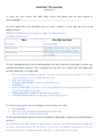
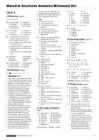
bill, place, strange, dragon, weather, full, travelling, scary, pretty, fact, breakfast, elements, roald, clock, disadvantages, boarding, filled, powerful, smell, decent, cheap, beer, started, notice, ?bed, looks, plant, green, bright, carpet, grand, several, seem, synonyms, comparisonsRoald Dahl “The Landlady” Worksheet 2 13. Billy has now entered the B&B. What rooms and places does he find himself in, chronologically? …………………………………………………………………………………….. 14. Find information about the B&B: price of a room, number of floors, who was there at the different floors? PRICE OF A ROOM: Five and sixpence a night, including breakfast NUMBER OF FLOORS: 3 floor who/what was there First floor Was landladys Second floor Was Billys; there were rooms, where the Billy and the other two dead men were Ground floor Was sitting�
British Cuisine Some people criticize English food. They say it's unimaginable, boring, tasteless, it's chips with everything and totally overcooked vegetables. The basic ingredients, when fresh, are so full of flavour that British haven't had to invent sauces to disguise their natural taste. What can compare with fresh pees or new potatoes just boiled and served with butter? Why drown spring lamb in wine or cream and spices, when with just one or two herbs it is absolutely delicious? If you ask foreigners to name some typically English dishes, they will probably say "Fish and chips" then stop. It is disappointing, but true that, there is no tradition in England
Oliver swore to his innocence but was not believe and a police officer came and dragged Oliver away. Chapter 11: The policeman searched Oliver, locked him up, and then dragged him before the local drunken magistrate. The gentlemen, Mr. Brownlow, began an argument with the magistrate and tried to explain that he was not sure if Oliver committed the crime. He also thought that Oliver's face looked familiar to him but he couldn't place it. The magistrate tried to question Oliver but he couldn't speak, and finally fainted. The magistrate began to sentence him to three months of heavy labor, when a winded man ran into the office and demanded to speak. He was the bookseller that Mr. Brownlow had been shopping with when the robbery had occurred. The bookseller had seen the whole robbery and testified that Oliver had not committed the crime. The magistrate releases Oliver and Mr.
american-spanish war-to 1927, the execution of Sacco and Vanzetti. He shows history as a great operative force, wants to recreate history, wants to show that the causes of what is happening now has to be found somewhere in the history. Unlike other modernists Dos Passos is interested in the average man, more than other modernist authors. Geography of the novel extends from east coast to west coast. It is also international because part of it takes place in france. Organization of LEIVA??, industrial interest, war and ??, art, expluatation, standardisation, dehumanistaion, degradation of ethical and cultural values. He is fascinated with outcasts, the alienated, the outsiders, people who have been beated with life, the descenters-those who don't agree with the majority are the descenters, they are interested in those people. The book follows the lives of nine characters. All aspects of the lives are
6 went five years The second photo also shows 7 hasn't had 5 had been running his own record students in a classroom. I reckon 8 Did she meet label since 2004 they are about 17 years old. It's a 9 was travelling 2 1 She had completed a physical mixed class of boys and girls. It's 10 was working training regime. difficult to tell what kind of lesson 11 started 2 She hadn't studied basic Nepalese. they're in. Their teacher is handing 12 had lived 3 She had obtained long-term a paper to one student. It could be
5 The story wasn't true but it _______ them in completely. A took B had C put D carried 6 Nobody _______ the thief as he went into the house. A looked B spotted C accused D knew 7 Can you give any _______ for being late? A reason B explanation C meaning D account 8 The audience burst into _______. A noise B clapping C applause D scream 9 The show took place in the _______ air. A outside B country C free D open 10 What a _______ trick! It must be magic! A creative B clever C astonish D unusual Marks: /10 Total marks: /50
Hmm. That's a very interesting question 11 didn't / didn't use to 4 subterfuge 8 surge ... Well, physically, I take after my mum, 12 say 13 don't / won't Challenge! Students' own answers I suppose. Our facial features are pretty similar same eyes, same-shaped 14 borrowed forehead. I've seen photos of her when 1E Phrasal verbs page 8 5 (possible answers) she was my age and apart from the 1 1 go ahead 5 come to
The Present Perfect Tense 96 Apostrophe 153 1 What is Grammar? Here's an old children's rhyme about the eight parts of speech of English grammar. It gives you an idea of what grammar is about. Read and remember it. Every name is called a noun, Pronoun As field and fountain, street and town. Noun In place of noun the pronoun stands, As he and she can clap their hands. The adjective describes a thing, As magic wand or bridal ring. Adjective Most verbs mean action, something done, Verb To read and write, to jump and run. How things are done the adverbs tell,
5 STOW 13 SCHWUNG 6 KALEV 14 MAIASMOKK 7 YAMAHA 15 ISKU 8 ESTRAVEL 2 Affirmative tense Use Signal Words Negative/Questions · action in the present taking always, Present Simple A: He speaks. place once, never or several every ..., N: He does not speak. normally, often, Q: Does he speak? times seldom, · facts sometimes, · action set by a timetable or usually
" What does she mean by that? Nowadays, the archaic second person singular ,,thou" and its forms such as (thee, thy, thine, thyself) may be used in poetry where they create elevated high-flow colouring. In prose, they may may create geographical or historical background. Geographical background: Hemingway render the speeech of a spanyard (spanish) by using thou in his dialogue to imply his non-english nationality. Strangely, he doesn't make speaker use spanish words, in fact. Third person singular he/she may be used in personification (The moon smiled her faint smile.). It, when used about people, turns them into a class of objects. The result is usually irony, humor, contempt or negative attitude. e.g The woman went a longer road. Then it (ought to be she) stopped and grinned. The pronoun ,,we", according to the english norm, may imply only the speaker. We have 2 kinds of uses: 1 The Majestic Plural (kings, queens, manifestos)
unannounced and uninvited on his birthday, but is discovered by Karenin. Anna, desperate to resume at least in part her former position in Society, attends a show at the theatre at which all of Petersburg's high society are present. Vronsky begs her not to go, but is unable to bring himself to explain to her why she cannot go. At the theatre, Anna is openly snubbed by her former friends, one of whom makes a deliberate scene and leaves the theatre. Anna is devastated. Unable to find a place for themselves in Petersburg, Anna and Vronsky leave for Vronsky's country estate. Part 6 Dolly, her mother the Princess Scherbatskaya, and Dolly's children spend the summer with Levin and Kitty on the Levin country estate. The Levins' life is simple and unaffected, although Levin is uneasy at the "invasion" of so many Scherbatskys. He is able to cope until he is consumed with an intense jealousy when one of the visitors, Veslovsky, flirts openly with the pregnant Kitty
Duval is a printer with a wife and child at home. He is the first person that Paul kills in hand-to-hand combat, one of Paul's most traumatic experiences in the war. Leer - One of Paul's classmates and close friends during the war. Leer serves with Paul in the Second Company. He was the first in Paul's class to lose his virginity. Haie Westhus - One of Paul's friends in the Second Company. A gigantic, burly man, Westhus was a peat-digger before the war. He plans to serve a full term in the army after the war ends, since he finds peat-digging so unpleasant. Kindervater - A soldier in a neighboring unit. Kindervater is a bed wetter like Tjaden. Lewandowski - A patient in the Catholic hospital where Paul and Kropp recuperate from their wounds. Lewandowski desperately wants to have sex with his visiting wife but is confined to bed because of a minor fever. Mittelstaedt - One of Paul's classmates. Mittelstaedt becomes a training officer and enjoys
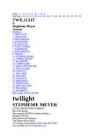
Color-- -1- -2- -3- -4- -5- -6- -7- -8- -9- Text Size-- 10-- 11-- 12-- 13-- 14-- 15-- 16-- 17-- 18-- 19-- 20-- 21-- 22-- 23-- 24 TWILIGHT By Stephenie Meyer Contents PREFACE 1. FIRST SIGHT 2. OPEN BOOK 3. PHENOMENON 4. INVITATIONS 5. BLOOD TYPE 6. SCARY STORIES 7. NIGHTMARE 8. PORT ANGELES 9. THEORY 10. INTERROGATIONS 11. COMPLICATIONS 12. BALANCING 13. CONFESSIONS 14. MIND OVER MATTER 15. THE CULLENS 16. CARLISLE 17. THE GAME 18. THE HUNT 19. GOODBYES 20. IMPATIENCE 21. PHONE CALL 22. HIDE-AND-SEEK 23. THE ANGEL 24. AN IMPASSE EPILOGUE: AN OCCASION twilight STEPHENIE MEYER LITTLE, BROWN AND COMPANY New York Boston Text copyright © 2005 by Stephenie Meyer All rights reserved. Little, Brown and Company Time Warner Book Group
Youthful Emma Woodhouse, whose long-time governess and friend Miss Taylor has just married Mr. Weston, takes some solace in being left alone with her aging father by claiming that she made the match herself. An old friend of the family, Mr. George Knightley, does not believe her, but in her certainty she decides that she must also marry off the young rector, Mr. Elton. Among her friends and acquaintances in the large and populous village of Highbury, she begins to notice young Harriet Smith, the pretty illegitimate seventeen-year-old who lives at Mrs. Goddard's boarding school. Determining first to improve Harriet, Emma discourages her interest in worthy Robert Martin of Abbey-Mill Farm, declares that Harriet must be from more genteel parents than his, and fixes upon Harriet as Mr. Elton's future wife. In bringing the two together socially, Emma does a drawing of Harriet which Mr. Elton admires and takes off to London to be framed. This appears so promising to Emma that,
.. many tears .... she could. 25) Billy took ..... guitar and played a few chords. 26) The telephone rang ..... a funny way. 27) Samantha locked .... the lambs and hurried .... to find the pigs, too. 28) Harry took Hermione's petite hand ..... and smiled. 1.2 Read the text and answer the questions below. /.../ 22 May, Tuesday It's cold, probably too cold to maintain any hope, yet, we have survived two storms, so why not overlive this one as well? /.../ Kaoru said the weather will be better tomorrow, but sooner or later we'll face the same problem again we have no food. / .../ The only thing to do now is to pray and hope that tomorrow will start. The nights are really dark in the north so the sun is as a new flow of life every day. 23 May, Wednesday Nothing's changed we're dying. /.../ The food is at its end and water, too, is `mysteriously' disappearing. The fact is that team A is stealing it Joshua found
, thank you for your generosity. 10 I am very sorry but unfortunately you won't be able to use my summer house during the first week of August. 11 I'm so happy for you! Write back soon and tell me all about your new job. 12 Hope this advice helps. Informal (friendly) letters Giving News TASK 6 Read the following questions then listen to the dialogue and answer them. a) Why hasn't Steve written earlier? b) What does he think of Hong Kong? c) What is the weather like? d) What happened to him recently? e) What does he say about his new colleagues? f) Is his new job easier than the one he had in London? g) How does the writer feel about his new situation? Informal (friendly) letters are normally written to relatives, friends or other people we know very well. A good informal letter should be divided into paragraphs. Each paragraph should deal with one aspect of the subject and start with a topic
Phonetic SD Aposiopesis Spondee Onomatopoeia Nominative sent. Pyrrhic Alliteration Asyndeton Rhythmic invers. Assonance Apokoinu Run-on line Rhyme: Gap-sentence link Stanza: Full Framing Heroic couplet Incomplete Anadiplosis Ballad stanza Vowel Tautology Spenserian stanza Consonant Polysyndeton Ottava rima Compound Inversion Sonnet:
"But it is," returned she; "for Mrs. Long has just been here, and she told me all about it." Mr. Bennet made no answer. "Do you not want to know who has taken it?" cried his wife impatiently. "You want to tell me, and I have no objection to hearing it." This was invitation enough. "Why, my dear, you must know, Mrs. Long says that Netherfield is taken by a young man of large fortune from the north of England; that he came down on Monday in a chaise and four to see the place, and was so much delighted with it, that he agreed with Mr. Morris immediately; that he is to take possession before Michaelmas, and some of his servants are to be in the house by the end of next week." "What is his name?" "Bingley." "Is he married or single?" "Oh! Single, my dear, to be sure! A single man of large fortune; four or five thousand a year. What a fine thing for our girls!" "How so? How can it affect them?" "My dear Mr
Pygmalion act 3 Where does the action take place in Act III? Name the places. At Mrs. Higgins's home Why is Mrs. Higgins not happy to see her son? Because Higgins offended all her friends and she wasn't happy about it. Why has Higgins invited Eliza to his mother's place? She wants to present her to her mother and the Who had Mrs Higgins invited to visit her? Miss Eynsford Hill, Mrs. Eynsford Hill, Freddy, Colonel Pickering. How does Higgins use the word ,,dickens". Quote his use of the word in different sentences and explain it's meaning. He uses the word in sentences like "Cynical! Who the dickens said it was cynical? I mean it wouldn't be decent." and ,,What the dickens has happened to you?" He uses the word instead of a swearing word.
..................................................................................................... ... B 2.1 Read the text ("The Girl from the Darkness" by C.Blossom) and answer the questions below. /.../Barely able to stand still, she left the crime scene and moved towards nothingness, since white fog had swollen all muddy streets of the sleeping capital. She walked and walked, until she found herself in a park or was it a garden? Creepy bare trees surrounded her sight, leaving scary shadows all over the dark grass; the moonlight was weak nothing much could be seen. In the distance, there was probably a nice house with a warm heat burning in the fireplace and a table filled with all kinds of dishes yes, the girl could almost feel the warmth and she closed her eyes to keep the illusion. However, the feeling didn't disappear even after her consciousness returned. Slowly she opened her pitch black sad eyes and saw that someone was holding her; someone so strong
. all the waste paper into the fire when I ... about the tickets in the envelope. (throw; remember) 7 David ... his girlfriend three messages before she ... him a reply. (send, give) 8 Tom ... an hour before the alarm ... off. (wake; go) 3. Complete the sentences with the prepositions. by for in of on out to up 1 We've run ... of time. The show starts ... ten minutes. 2 The pegs were ... a string hanging next ... the washing line. 3 Why do you insist ... us wearing wellies? According ... the weather forecast, it'll be fine today. 4 You've been rude ... your sister. Why don't you apologize ... her? --- 10 5 Let's have a walk ... the riverside. I want to take some photos ... the houseboats. 6 We met ... accident at the station when queuing ... tickets. 7 You've wasted a lot of money ... stuff you really don't need. Why don't you save ... for a new mobile phone? 8 Instead ... waiting ... his dad, Eddie left ... school ... bus. 4. Complete the sentences with have to in the correct form.
I read Agatha Christie's "The Body in the Library". The story was 130 pages long. The book was first published in 1942 but my version was published in 1983 by Moscow Vyssaja Skola. The genre of the book is mystery novel. The story takes placed in an imaginary English village St Mary Mead where the body was found and the fashionable seaside resort Danemouth because most of the suspects were staying there at the Majestic Hotel. St Mary Mead seems to be a nice quiet village where strange things happen once in a while. Very different people live there from different social standings. And Miss Marple knows them all very well, like it's usual for a small village. The story takes place in the 1940's I think. The date is not mentioned in the book but I assume it is around 40's because of the description and the book was published in 1942. There is a murder in St Mary Mead and it's a hard one to solve but
I'll cook you supper this evening. (NOT I cook you supper this evening.) I promise I'll phone you tomorrow. (NOT I promise I phone you tomorrow.) 5. Don't drop prepositions with passive verbs. I don't like to be shouted at. (NOT I don't like to be shouted.) This needs to be thought about some more. (NOT This needs to be thought some more.) 6. Don't use a present tense after It's time. It's time you went home. (NOT It's time you go home.) It's time we invited Bill and Sonia. (NOT It's time we invite Bill and Sonia.) 7. Use was/were born to give dates of birth. I was born in 1975. (NOT I am born in 1975.) Shakespeare was born in 1564. 8. Police is a plural noun. The police are looking for him. (NOT The police is looking for him.) I called the police, but they were too busy to come. 9. Don't use the to talk about things in general. Books are expensive. (NOT The books are expensive.) I love music. (NOT I love the music.) 10
The definite article the is the most frequent word in English. We use the definite article in front of a noun when we believe the hearer/reader knows exactly what we are referring to. • because there is only one: The Pope is visiting Russia. The moon is very bright tonight. The Shah of Iran was deposed in 1979. This is why we use the definite article with a superlative adjective: He is the tallest boy in the class. It is the oldest building in the town. • because there is only one in that place or in those surroundings: We live in a small village next to the church. (the church in our village) = Dad, can I borrow the car? = (the car that belongs to our family) When we stayed at my grandmother’s house we went to the (the beach near my grandmother’s beach every day. = house) Look at the boy in the blue shirt over there
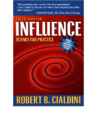
Making Friends to Influence People 144 Why Do I Like You? Let Me List the Reasons 146 Physical Attractiveness 146 Similarity 148 Compliments 149 Contact and Cooperation 151 Off to Camp 154" Back to School 156 Conditioning and Association 159 Does the Name Pavlov Ring a Bell? 163 From the News and Weather to the Sports 166 CONTENTS _ Defense 170 Summary 172 Study Questions 172 CHAPTER 6 Authority: Directed Deference 174 The Power of Authority Pressure 176 The Allures and Dangers of Blind Obedience 180 Connotation Not Content 184 Titles 184 Clothes 186 Trappings 190
Published in three parts in 1794, 1795, and 1807, it was a bestseller in America, where it caused a short- lived deistic revival. British audiences, however, fearing increased political radicalism as a result of the French revolution, received it with more hostility. The Age of Reason presents common deistic arguments; for example, it highlights the corruption of the Christian Church and criticizes its efforts to acquire political power. Paine advocates reason in the place of revelation, leading him to reject miracles and to view the Bible as an ordinary piece of literature rather than as a divinely inspired text. The Age of Reason is not atheistic, but deistic: it promotes natural religion and argues for a creator-God. Benjamin Franklin Benjamin Franklin (January 17, 1706 April 17, 1790) was one of the Founding Fathers of the United States of America. A noted polymath, Franklin was a leading author and printer,
); other: -happy (e.g. car-happy), -dog (e.g. handsome-dog), -ola (e.g. chair chairola). Their effect is often irony or contempt. There are affixes that are negative, indicating the absence of some quality, they are very expressive (e.g. "motherless / fatherless" are more expressive than "orphan"). Their expressiveness is based on the fact that negation shows that ties between elements are possible yet do not exist. Diminutive suffixes either express the small size or add a positive, humorous and sometimes a contemptuous colouring: -let- (e.g. starlet, chicklet, etc.); -kin- (e.g. lambkin, etc.); -ling- (e.g. weakling, etc.); -ette- (e.g. kitchenette, etc.); -y / ie-(e.g. daddy, etc.).
had no direct experience of World War I and because he is Jewish. He holds on to the romantic prewar ideals of love and fair play, yet, against the backdrop of the devastating legacy of World War I, these values seem tragically absurd. As a Jew and a nonveteran, Cohn is a convenient target for the cruel and petty antagonism of Jake and his friends. Read an in-depth analysis of Robert Cohn. Bill Gorton - Like Jake, a heavy-drinking war veteran, though not an expatriate. Bill uses humor to deal with the emotional and psychological fallout of World War I. He and Jake, as American veterans, share a strong bond, and their friendship is one of the few genuine emotional connections in the novel. However, Bill is not immune to the petty cruelty that characterizes Jake and Jake's circle of friends. Mike Campbell - A constantly drunk, bankrupt Scottish war veteran. Mike has a terrible temper, which most
Sister Sandrine calls the emergency phone numbers, but they don't answer. Silas came to her chamber. He demands that she tell him where the keystone is. She doesn't know. Silas beats her to death with the candle stand. Sophie tries to see whether her grandfather left her any messages in invisible ink by the Mona Lisa. He asks Sophie if the initials P.S. mean anything to her aside from Princesse Sophie. When she was younger, she saw a strange key in her grandfather's closet decorated with the initials P.S. Saunière never explained what the key was for, but he said if she kept the secret, the key would one day be hers. Langdon says that Saunière was a member of the Priory of Sion. The Priory has had many prominent members, among them Leonardo Da Vinci. It is known as the protector of a huge secret. Meanwhile, police had stop the truck and discover the bar of soap with the GPS tracker in it.
environment. Or: One other problem is the pollution the factory causes to the environment. 2 The Definite Article – the, can be used with both singular and plural countable and uncountable nouns. By the time we got to the bus stop, the bus had already left. The children I saw in the playground were my brother's friends. The weather is awful today! Another general rule about the use of the Indefinite and Definite Article is that the Indefinite Article is used when mentioning someone or something for the first time and the Definite Article is used when referring to someone/something that has been mentioned before. We passed a beautiful house on our way to Birmingham. – Was the house for sale? I saw a man standing near the house. The man was well-dressed
Notes: Proto-Germanic » Northwest Germanic » West Germanic » North Sea Germanic » Anglo Frisian » English 2. How to classify words into different word classes? (definition is that enough?, morphology, distribution and function tests); Grammatical categories for nominals, verbs, adjectives. "A set of words like dog, child, cat, man, bird where the individual words are mutually substitutable is known as a word class..." Definitions a) A noun is the name of a person, place or thing. b) A verb expresses an action, process or state. c) An adjective is a describing word which modifies a noun. "Although such definitions will identify many members of a word class, linguists generally agree that they need to be supplemented by formal tests. e.g. sincerity Sincerity can be frightening misery Lee is misery itself. Such miseries are uncommon Distribution: - a distribution test
unusual in the way that they also appeal to adults. Each of the six books covers about a year in Harry's life as he grows from a boy into a teenager. At the start of the first book we learn that he is an orphan who lives with his horrible aunt and uncle, the Dursleys. On his eleventh birthday he discovers he is a wizard, and soon afterwards goes off to study at Hogwarts School of Witchcraft and Wizardry, which is where most of the action in the six books takes place. Hogwarts is part of a magical world that is invisible to people without magical powers, who are known as `Muggles'. Harry is the hero of all the stories, though there are many other likeable characters such as his friends Ron and Hermione, and the powerful wizard Albus Dumbledore. The main villain is the evil wizard Lord Voldemort, who killed Harry's parents. The stories are full of things that appeal to imagination of readers of all ages. One of them is the
· The possessive case when applied to concrete object makes the noun more prominent (Hollywood's studios) · The suffix `s may be added to a phrase or a sentence the result being humour or colloquial touch. (She is the boy I used to go with's mother) · The ending of the plural may be added to a sentence with the same effect (one I'm-sorry-for-you is worse than twenty I-told-you-sos) · Abstract nouns when used in the plural become expressive (Life is full of the injustices, the incruelties and the meanesses) Pronouns: · Speaker or writer: the use of "one" or "you" when the speaker means himself reveals him as a reserved person. "You" and "one" instead of "I" creates a close contact with a reader or listener. In colloquial speech, same function is performed by "a man, a chap, a fellow" (A man knows how much to pay) · The speaker or writer may use "he" or "she" meaning himself. Then the person
 annaabi.ee