Leidsid 33 sarnast õppematerjali, mis on seotud failiga "Tallinn". Need materjalid aitavad sul teemat sügavamalt mõista.
jane, jaakson, aulik, secondary, location, county, near, finland, south, helsinki, east, west, petersburg, estonians, finns, others, tourism, museums, hobby, schools, symbols, coat, toompeaTallinn, general overview Prepared: Hanna Bergmann 16.04.2011 Tallinn's Old Town is in the list of UNESCO World Heritage Sites. Tallinn is ranked as a global city and has been listed among the top 10 digital cities in the world. Tallinn is a European Capital of Culture for 2011, along with Turku, Finland. Location Tallinn is situated on the northern coast of the country, on the banks of the Gulf of Finland, 80 km south of Helsinki, east of Stockholm and west of Saint Petersburg. Tallinn is situated on the southern coast of the Gulf of Finland, in north-western Estonia. Tallinn Population The registered population of Tallinn is 412,341 (as of 1 Dec 2010). According to Eurostat, in 2004 Tallinn had the largest number of non-EU nationals of all EU member states' capital cities.As of 2009 around 22% of its population are not EU citizens.
2008 1. Introduction Estonia is a small country about the size of Switzerland, or New Hampshire and Massachussetts combined. Estonia is named after the people called "Ests" who lived in the region in the 1 st century AD. The Republic of Estonia is one of the three countries commonly known as the "Baltic States". The other Baltic States are Latvia and Lithuania. 2. Geographical position Estonia is situated in northeastern Europe. Estonia is bounded on the north by the Gulf of Finland, on the east by Russia, on the south by Latvia and on the west by the Baltic Sea. In the north it borders on Finland. The coastline of the Baltic Sea in Estonia is characterized by numerous gulfs and bays, the biggest of them being the Gulf of Finland, the Gulf of Riga and the Gulf of Pärnu. Bays include the Narva Bay, Matsalu Bay, Kolga Bay, Kunda Bay, Tallinn Bay etc. Estonia has over 1500 islands, the largest being Saaremaa and Hiiumaa, Muhu and Vormsi.
Introduction of Estonia The Republic of Estonia is beautiful country which is located in northeastern Europe, bordering the Baltic Sea on the west, the Gulf of Finland on the north, Latvia on the south, and Russia on the east. Estonia is the smallest of the Baltic countries. Administrative division: Estonia has an area of 45,226 square kilometers and Estonia is administratively divided into counties. There are 15 counties in Estonia. The capital is Tallinn which is located in Harjumaa. Counties are divided into 194 rural municipalities. Population: The population of Estonia was estimated at 1.34 million in January 2011, with a density of 30 persons per square kilometer
Introduction Tallinn, the capital of Estonia, lies on the Baltic Sea. It is on almost the same latitude east St. Petersburg in Russia, Stockholm in Sweden and Stavanger in Norway, and covers 158 sq km. Tallinn was first marked on a map of the world by the Arab geographer al-Idrisi in 1154, its name then being Kolyvan (probably derived from the name Kalev). In the 13th-century Chronicle of Henricus de Lettis the town was called Lyndanise. Later came Reval (presumably after the old county of Rävala), the name used by the Germans who ruled the country for seven centuries. Russians then modified Reval to Revel. For Estonians, the town came to be called Tallinn from Taanilinn (Danish town) after Danish conquest in the 13th century. Over the course of time, Taanilinn was shortened to Tallinn The place is believed to have been settled by Finno-Ugric peoples about 2500 BC. The Danes, led by King Valdemar II, conquered northern Estonia in 1219. Legend has it that one
Võnnu Keskkool ESTONIA Referaat Autor: Klass : 9 Juhendaja: Võnnu 2013 Estonia officially the Republic of Estonia, is a state in the Baltic region of Northern Europe It is bordered to the north by the Gulf of Finland, to the west by the Baltic Sea, to the south by Latvia and to the east by Lake Peipus and Russia.Across the Baltic Sealies Sweden in the west and Finland in the north. The territory of Estonia covers 45,227km2 The Estonian climate resembles that of other countries on the Baltic littoral. On account of the country's proximity to the sea, the skies are often cloudy, and rain often falls in the spring and autumn, in the winter the rain turns to snow. The highest point in Estonia is Suur Munamäg It is in fact the highest point in the Baltic region Forest cover over one half of Estonia. The most common types of tree are pine, spruce and birch
Capital: Tallinn Language: Estonian Currency: Eesti kroon (EEK) Main religion: Lutheran National holiday: 24 February (anniversary of the republic) National flower: Cornflower National bird: Barn Swallow National stone: Limestone LOCATION The Republic of Estonia is the northernmost and smallest of the three Baltic States. It is located on the eastern shores of the Baltic Sea in the north east of Europe. To the east the country borders Russia. Latvia is the countries neighbour to the south. From the west the coast of Estonia is washed by the Baltic Sea and from the north by the Gulf of Finland. The length of the coastline is approximately 3 800 km. The longest distance from east to west is 350 km, while north to south Estonia stretches 240 km. THE NAME The name EESTI was apparently derived from the word AISTI, the name given by ancient Germans to the peoples living northeast of the Vistula River
2 Towns (Upper & Lower Town) Tallinn used to be divided into 2 parts - Upper Town where lived the aristocracy, gentry and the clergy; and Lower Town with traders, craftsmen and merchants. Legend says the Toompea Hill is actually the tumulus mound of the great Kalev. Linda carried rocks to his grave. It is a naturally- formed limestone hill. Lower Town was a merchantile centre, Tallinn also belonged to the Hansaetic League (1285). It is often referred to as the town of citizens. Any grown-up, married and economically independent person, born in a legal marriage between two free people and having lived in the town for at least 3 months, could apply to the Magistracy for citizenship. Serfs could escape from serdom after having successfully hidden in town for a year and a day. Two parts remained separated until the end of the 19th century. Four Names Lyndanise - mentioned by Henricus de Lettis in his Chronicle; derives from the name Linda - the wife of Kalev and mother of Kalevipoeg Kol
Estonia Estonia, officially the Republic of Estonia, is a state in the Baltic region of Northern Europe. It is bordered to the north by the Gulf of Finland, to the west by the Baltic Sea, to the south by Latvia, and to the east by Lake Peipus and Russia. Across the Baltic Sea lies Sweden in the west and Finland in the north. The territory of Estonia covers 45,227 km 2, and is influenced by a humid continental climate. The Estonians are a Finnic people, and the official language, Estonian, is a Finno-Ugric language closely related to Finnish, and distantly to Hungarian and to the Sami languages. The population of Estonia is 1.5 million. Of this number 62 per cent are Estonians. The geography of the land is surprisingly varied. Islands make up 9,2 per cent of Estonian’s total
Introduction Tallinn, the capital city of the Republic of Estonia and of the Harju county, is a town in North Estonia on the coast of the Gulf of Finland. It has nearly half a million inhabitants and covers an area of almost 160 sqkm. It is also an important economic and cultural centre and one of the main ports in the Baltic States. Tallinn is one of the oldest cities on the Baltic Sea. It is unique for its well-preserved architecture from the 13-15 centuries. In contrast to the ancient town-walls and towers, Tallinn of today offers modern hotels, restaurants, sport and cultural centres. Every five years national song and folk dance
Tallinn is one of the oldest cities in the Baltic Sea region. Tallinn was first mentioned in written sources of the 1154th, when the Arabian geographer Al Idris took a world map the city 'Kaleveny "/ Kolõvan. Through the years, the city of Tallinn had several names: Lindanisa, Kolõvan, Reval and eventually Tallinn. Tallinn was granted the Lübeck law in 1248 and became the member of the Hanseatic League in 1285. General Data l Country - Estonia l County - Harju County l First appeared on map - 1154 l Town rights - 1248 l Mayor - Edgar Savisaar l Aera - Total 159.2 km2 (61.5 sq mi) l Population - (1 Mar 2012) Total - 416,470 Denisty - 2,614.0/km2(6,766.6/sq mi) Tallinn Coat of arms Flag Top 5 Attractions 1. Kiek in de Kök Visitors to the museum will see examples of Medieval firepower, displays detailing how the city's system of walls and towers developed through the centuries and an exhibit on crime and punishment in Old
Kildu Basic School Viljandi by Eisi Kõiv Supervisor: Margit Kirss Kildu 2008 Our 700 years old Viljandi Viljandi is a town (24,000 inhabitants) in Estonia, 160 km south of the capital Tallinn. The town is the administrative capital of the county with the same name as the town. In Viljandi there is theater Ugala, cinema Rubiin, museum, art gallery. Give a concert in Culture centre, Jaani- and Pauluse church, but in Cultureacatemy, too. Folk Summer in Viljandi culminates with the annual folk music festival. The Viljandi Folk Music Festival is a music festival in Estonia with a central focus on European folk music.In the year 2006, over 24,000 people attended the concerts, but many more just came to take part in the festivities
Introduction Like most cities with an eight-hundred-year-old past, Tallinn is a patchwork of historic areas. The city's pride and joy is without a doubt its Medieval Old Town, but equally enchanting is the Kadriorg district, a throwback to the time when Estonia was ruled by the Russian Tsars. Tallinn is the capital and largest city of Estonia. It occupies an area of 159.2 km2 with a population of 416,470. It is situated on the northern coast of the country, on the shore of the Gulf of Finland, 80 km south of Helsinki, east of Stockholm and west of Saint Petersburg. Tallinn's Old Town is in the list of UNESCO World Heritage Sites. It is ranked as a global city and has been listed among the top 10 digital cities in the world.The city was a European Capital of Culture for 2011, along with urku, Finland.Tallinn is the oldest capital inNorthern Europe. The city was known as Reval from the 13th century until the 1920s. http://en.wikipedia.org/wiki/Tallinn Old Tallinn
*Estonians conquered by the crusaders 1208 *Reformation 16th century establishments of new school, Estonians first book appeared in 1525 *Tartu University 1632 founded by King Gustavus II Adolphus, classical university, member of the Coimbra group *Abolition of serfdom 1816 *Song festival 1869 in Tartu, an organiser was J.V.Jannsen, 822 singers, men only *Declaration of independence 24th February 1918 *War of independence 1918-1920 during the Russian Civil War, resulted in a victory for Estonia *Deportation 1949 *Estonia becomes independent 20th August 1991 *Joining EU 1st May 2004 Language: Estonian language, belongs to the Balti-Finnic group of the Finno-Ugric languages, closely realted to Finnish and rather remotely to Hungarian; Latin alphabet with 32 letters , 5 of which occur only in foreign words, the phenomes include 9 vowels and 18 consonants; words are borrowed from Latin, Greek, English etc.; since 1995 the 14th of March is celebrat
Topic Estonia, Tallinn The Republic of Estonia is the northernmost of the three Baltic States on the eastern shore of the Baltic Sea. To the east Estonia borders on Russia and Lake Peipsi and on the south on Latvia. The area of Estonia is 45 100km2, its coastline is 774km long. The geography of the land is surprisingly varied. Islands make up 9,2 per cent of Estonian's total territory, the largest islands are Saaremaa, Hiiumaa and Vormsi. The highest point is Suur Munamägi, which is 317m high. Estonia has a surprisingly mild climate for an area so far north. Sea winds keep the weather from becoming very cold or hot. The population of Estonia is 1.5 million
The current coat of arms of Estonia is a golden shield which includes three slim, blue leopards (or lions) in the middle, with oak branches along the side of the shield. It originates from Denmark. It was officially adopted in 1925. Geography Estonia is the northernmost of the three Baltic States. It is located on the northern hemisphere on the eastern shores of the Baltic Sea in the north-east of Europe. It has land contact with Russia from the east and Latvia from the south. In the north The Gulf of Finland separates Estonia from Finland. The Gulf of Riga is situated to the south-west. Estonia has more than 1500 islands. The biggest ones are located to the west. The four biggest islands are Saaremaa, Hiiumaa, Vormsi and Muhu. The highest point in Estonia and also in the Baltic region is Suur Munamägi. It is 318. above sea level. Estonia is a country of a thousand lakes. The Largest one is Lake Peipsi which is also the fourth biggest freshwater lake in Europe
Estonia. Estonia, officially the Republic of Estonia is a country in Northern Europe. It is the smallest of the three Baltic countries. Estonia has land borders with Latvia (339 km) to the south and Russia (229 km) to the east. It is separated from Finland in the north by the narrow Gulf of Finland and from Sweden in the west by the Baltic Sea. Estonia has been a member of the European Union since May 1, 2004 and of the NATO since March 29, 2004. The area of Estonia is about 45000 square kilometres and the population is about 1.4 million people. The capital of Estonia is Tallinn and the official language is Estonian. The currency is Eesti kroon. The main religion is Lutheran. Anniversary of the republic is celebrated on February 20. The national flower is cornflower, national
and continued until the early 20th century. Serfdom and the intensifying manorial economy The impact of the Swedish social order in Estonia continued under the Russian Empire. Although the Northern War meant a severe setback to the development of schools, the Swedish church and school systems remained practically unchanged. Most peasants learned to read at home, though the level of literacy in North Estonia was 40%, in South Estonia 55% and in Saaremaa Island 62%. The 1739 declaration of Otto Fabian von Rosen, a Livonian district magistrate, postulated the landlords' limitless right of ownership over the entire property and person of a peasant. It can be regarded as the ideal legislative model expressing the supremacy of the nobility. But everyday life during the serfdom period, which in Estonia has been researched even less than
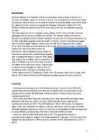
In the Middle Ages, it was the place where the bishops and the nobility resided. Here the landed gentry built their beautiful town houses. Most of the remaining buildings were erected after the big fire on Toompea in 1684. Historically, the fortress on Toompea consisted of two parts: the small fortress (today's Toompea Castle) and the big fortress (the rest of Toompea). The hill, with an area of 8 hectares, was the perfect location for a fort where people could find shelter in case of danger or war. Today Toompea attracts many visitors who come here to admire the panorama of Tallinn. Tall Hermann is in the Upper Town. It is the best-known corner tower among the three surviving ones of Toompea Castle. It is 46 metres high and serves as one of Estonia's landmarks. Tall Hermann was a traditional name given to the main towers of German castles. After the 50-year-long Soviet occupation, the Estonian blue-black-
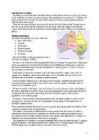
Topic Australia Introduction Many people know Australia as the land down under because it is the only continent except for Antarctica that is all on the southern hemisphere. Its name means ,,Southland". The official name of the country is the Commonwealth of Australia. It's capital is Canberra. Australia is the sixth largest country in the world but the smallest continent. Australia has 6 states and 2 territories (New South Wales, Victoria, Tasmania, Queensland, Western Australia , South Australia, The Australian Capital Territory and the Northern Territory). The Australian people are culturally the same as the Anglo Americans. There also live aborigines. Aborigines are the ancestors of the people. Like the US and Canada, Australia was an English speaking colony of Great Britain. Today Australia is a modern developed country with a diversified economy. Australia is an island continent of 7.7 million square kilometres, which makes it a little smaller than the USA.
It made its first broadcast on 19 July 1955 and moved into color television in 1970s. Tallinn's botanygarden created in 01.12.1961, but opened for public in 1970. In 1972 was builded Tallinn first skyscraper ,,Viru Hotel" what is 74m high and located in centre of Tallinn. The Tallinn TV Tower (Tallinna teletorn) is a free-standing structure with an observation deck, built to provide better telecommunication services for the 1980 Moscow Summer Olympics regatta event. It is located near Pirita, six km north-east of the Tallinn centre. The tower has a specified height of 314 m (1030.2 ft). On 26-28 August 1988, the Rock Summer Festival was held, and patriotic songs, composed by Alo Mattiisen, were played. On 11 September 1988, a massive song festival, called "Song of Estonia", was held at the Tallinn Song Festival Arena. This time nearly 300,000 people came together, more than a quarter of all Estonians. On
TartuWaldorf School FINLAND Report Johan Mähar Tartu 2008 Contents p. 1. Introduction.........................................................................................
The country borders Poland to the northeast, Germany to the west and northwest, Austria to the south and Slovakia to the east. The Czech Republic has been a member of NATO since 1999 and of the European Union since 2004. The Czech Republic is also a member of the Organization for Security and Cooperation in Europe (OSCE). As an OSCE participating State, the Czech Republic's international commitments are subject to monitoring under the mandate of the U.S. Helsinki Commission. From 1 January 2009 to 1 July 2009, the Czech Republic held the Presidency of the Council of the European Union. The Czech Republic is a pluralist multi-party parliamentary representative democracy. President Václav Klaus is the current head of state. The Prime Minister is the head of government (currently Jan Fischer). The Parliament has two chambers: the Chamber of Deputies and the Senate. It is also a member of the Organisation for Economic Co-operation
The U.S has several long rivers, mostly located in the eastern part of the country. The longest is the Missouri (~4,000 km), a tributary of the Mississippi. The tributaries of Mississippi-the Ohio and the Tennessee are also very long. Climate Every type of climate can be found in the United States due to the tremendous size of the North American landmass. Most of the country has a humid continental climate with hot summers and cold winters. Because of the lack of the natural barriers in south and north, dry air flows south from Canada, and warm, humid air north from the Gulf of Mexico. The Great Plains and Midwest have spectacular weather, with hot and humid summers. The rainfall decreases to the west due to rain shadow caused by Sierra Nevada. The southwest part of the Great Plains is the hottest and driest region of the U.S. The Pacific coast is almost rainless in the summer, but having often fog. IN the winter there is frequent drizzle, but the climate is still, warm. The
.............................. 9 References.................................................................................................................................10 2 Introduction I choose this topic because I want to get know more about local Theatres I hoped to get more information about their location, for whom each theatre is designed and a little overview about their history. The history of Estonian theatre does not differ much from that of the neighbor countries. The first play was performed in the 16th century at the Tallinn Town Hall. The town school children, who were Germans, staged Terence's The Andria in Latin. The first theatre house in Tallinn was mentioned in written materials which date from the late 17th century; the house was used by travelling theatre groups
professional German City Theatre. The famous German writer August von Kotzebue (1761-1819), the life and soul of the theatre, lived in Tallinn for several long periods. (Otto von Kotzebue, the son of August von Kotzebue, accompanied explorer Adam Johann von Krusenstern on his Journey around the World of 18031806.) Estonian was heard from a theatre stage for the first time. Early in the 19th century city architect Carl Ludwig Engel (helped rebuild Helsinki and also built the palace at 8 Kohtu Street on Toompea) designed a sumptuous hall for the theatre, but it was destroyed in a fire. Another fire devastated the theatre in 1902, after which it moved out from Old Town. The premises came into the possession of the Puppet Theatre in 1955. In 1991, the whole building was given to the theatre. Renovation works took place in 2001-03. 5 17 Lai Street Lai 17, so-called Menshikov House was completed about 1685 in the Dutch Baroque style
music and culture. Its aim is to bring together all the traditional songs and singers from across the country, as well as guest singers from other countries. The first AllEstonian Song Festival was held in 1869 in the town of Tartu , near the centre of Estonia. Around 870 singers took part, along with 76 musicians. Things have changed a lot, and today, the average festival gathering involves 25,000 participants, including large, joint choirs from all over Estonia. Festivals often close with choirs of around 25,000 taking part in an electrifying finale, in front of an openair audience of about 100,000.
Introduction Estonia, officially the Republic of Estonia (Estonian: Eesti or Eesti Vabariik) is a country in the Baltic region of Northern Europe. It is bordered to the north by Finland across the Gulf of Finland, to the west by Sweden across the Baltic Sea, to the south by Latvia (343 km), and to the east by the Russian Federation (338,6 km). The territory of Estonia covers 45,227 km² and is influenced by a temperate seasonal climate. The Estonians are a Finnic people closely related to the Finns, with the Estonian language sharing many similarities to Finnish. The modern name of Estonia is thought to originate from the Roman historian Tacitus, who in his book Germania (ca. AD 98) described a people called the Aestii. Similarly, ancient Scandinavian sagas
Australia Australia is a country and also a continent. If someone wants to make clear, that he is speaking of the country, he may call it by its full name of Commonwealth of Australia. Australia's name means "southland."It is south of the equator. Sometimes it is also called the island continent because it is an island. There are about twenty million people in Australia.It is 1,800 miles from the mainland of Asia and almost half way round the world from Europe. More than 600 miles of ocean separate it from Americas. Since Australia is south of the equator, its seasons are just the opposite of ours. It has summer while we have winter, and the other way round. States and Territories.
It is the only country in the world that occupies an entire continent. The mainland covers an area of 7.7 million km² and it is about 3700 km from the most northern point to its most southern point and about 4000 km from east to west. There are also many different seas around Australia, like the Coral and the Tasman Seas in the west or the Timor and the Arafura Seas in the north, where the Indian and the Pacific Oceans meet. Because all seas and oceans near Australia are warm, surfing is a very popular hobby. Political subdivision Australia is divided into six states, which are: · New South Wales · Victoria · Queensland · South Australia · Western Australia · Tasmania New South Wales is the most populous state in Australia. Its capital is Sydney. Victoria is one of the most densely populated states in Australia. Its capital city is Melbourne and it was named after the British Prime Minister Lord Melbourne
Project ESTONIA MAP OF ESTONIA Southern Viljandimaa The southern part of Viljandi county catches the eye with its sublime scenery. The area today lies in the very heart of the historical Mulgimaa the home of hills, deep valleys and lakes brought together by a beauty spot Halliste primeval valley. According to several folk tales, it is also in these valleys, woods and bogs that Old Nick found refuge.The great variety displayed in the nature is also reflected in the local cultural heritage. At the beginning of the 19th century growing linen spread and became the basis
continent and very big for an island. There are only five countries bigger than Australia in the World. There are five states in the mainland. Tasmania is also considered as a state so there are six states. The Northern Territory and Canberra are also independent but they are not states. Canberra is the capital of Australia and it is situated between Sydney and Melbourne because both of these cities wanted to be the capital. The population is about 19 million people and growing. New South Wales is the most populated state and Victoria is the most densely populated state. The national language is English. It is English because British settlers came to live in Australia in the past and they brought convicts with them who were also British. Symbols. The Australian Flag came into being after the federation of the Australian States into the Commonwealth of Australian on the first January, 1901. The Commonwealth Blue Ensign was selected as a result of a public competition
Main Sights England is known for its many world-famous sightseeings and people all around the world come to see them. Some of them are even like symbols of England. The most famous ones are: Stonehenge is one of the greatest national icons of Britain. That prehistoric monument is located in the plain of Salisbury, in the county of Wiltshire in the south-west of England. It is built of 150 enormous stones which are set in a purposive circular pattern. Stonehenge was probably built to mark the longest and shortest day of the year because it lies on the line of the midsummer sunrise and the midsummer sunset. That would have enabled people to keep a record of changing of seasons. Although it is still unclear who built it. Hadrian’s Wall is an ancient wall which was built in 2nd century by Hadrian, the emperor of
12. Describe Ireland.- N I is famous for the Giant's causeway. Anthem God save the queen, 13. What is the approximate population of the 4 constituent countries? 62 million. England- 51,4 million, Scotland- 5,1 , Wales 2,9 m , Northern Ireland 1,8 million. 14. How did the Anglo-Saxons influence Britain? Language, first settlers on British Isles 15. Name some countries where English is used as the first language. -The UK; USA; Australia; New Zealand; South Africa 16. Which languages have influenced English most? Latin (technical and biological words, like butter, wine, sponsor), German (angst, kindergarten), French(cricket, blonde), Greek(crisis, ) 17. Describe England.- England is the biggest country in the UK English is the official language of the UK.. Nearly 84% of the population of the UK lives in England, mainly in the major cities and metropolitan areas. The south of England is
 annaabi.ee