Leidsid 33 sarnast õppematerjali, mis on seotud failiga "Saaremaa esitlus - inglisekeelne". Need materjalid aitavad sul teemat sügavamalt mõista.
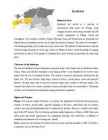
sight, sights, biggest, island, castle, known, unique, events, days, tour, located, baltic, 2673, 35000, density, year, exciting, good, place, nature, retained, location, insulation, famous, local, beer, considered, symbols, among, several, calling, special, attention, angla, hill, mustjala, cliff, manor, loona, ruins, order, mihkli, farm, museum, vikiThe county of Saaremaa Siiri Tabri Kaia Vask Saaremaa - an exciting island Saaremaa - the biggest island of Estonia is known as a good recreation place with unique nature and a lot of sights. Saaremaa has retained its uniqueness due to its location and insulation. Junipers, dolomite, windmills and the famous local home- brewed beer are considered the symbols of Saaremaa. Rich nature. Because of its mild maritime climate and soil rich in lime, Saaremaa has very rich flora and fauna. In Saaremaa a great number of Roman snails, rare butterflies and beautiful orchids can be found. Each year hundreds of thousands of migratory birds visit
international trade routes for Vikings. Long struggle of power with foreign intruders has left ancient strongholds in Valjala, Lihula and Soontagana. The churches in Muhu, Valjala, Mustjala, Karja and Kihelkonna are honorable and elderly because Straitland was the one to bring Christianity to Estonia. The castle of Kuressaare is still standing proudly, but in Lihula only ruins can be seen. The patterns of national dresses and the churches bring memories of secret sign cultures of Medieval Times. Good knowledge of singing and facility of speech of the people of Straitland have given Estonia a big number of writers and poets. Character of the landscape The area of Straitland contains Pärnumaa county and some of the islands such as Saaremaa, Muhu, Kihnu, Ruhnu and Abruka
Hiiumaa and Saaremaa Hiiumaa is the second biggest island belonging to Estonia. Its largest town is kärdla. Hiiumaa arose from the water about 455 million years ago as a result of a meteorite impact. It is one of the oldest islands in the world. Around the island there are more than 200 islands and islets that have just risen from the water. Hiiumaa is a very beautiful place with kind and friendly people. The landscape on one end of the island is completely different from the landscape the other. In many languages the island is called ,,Day island". The best known sight on Hiiumaa is the Kõpu lighthouse. It's located on the Kõpu peninsula. It is the oldest lighthouse in the Baltics and the second or third oldest lighthouse in the world that has had the light continuously burning. The other big island that belongs to Estonia is Saaremaa. Saaremaa is approximately as big as Tenerife in Spain
· Suuremõisa Castle. Suuremõisa Castle was built in the second half of the 18th century on the initiative of Countess EbbaMargaretha Stenbock (17041776). The wings are erected in 1772. There are 64 rooms in the Castle. 6 ponds were dug in the grounds of the Castle and a park and a garden established. In 1796 the Castle was sold to Baron UngernSternberg. The attic of the Castle has doubleceiling, where the Baron used to hide the treasures stolen from ships that had sunk in the Näkimadalad. On 19 October 1802 the Baron killed Karl Johannes Malm, the Captain (of Swedish origin) of his ship "Brig Morian", in this Castle. For this the baron was deported to Siberia. There are currently two schools in the Castle: Suuremõisa Gymnasium and Suuremõisa Technical School. In the latter one can also study how to become a ship's captain.
... Gümnaasium English Project Sights of Estonia Student: .............................. Class: 6 ... Teacher: ............... Harjumaa 2011 1 1. Steamer-icebreaker Suur Tõll The ship was built in 1914 in Stettin (Szczecin) by Vulkan-Werke A. G. Suur Tll is the only pre-war steam ship of the Republic of Estonia remained up to now and, at the same time, the biggest icebreaker in the world preserved through two world wars. All the 3 original steam engines as well as most of the original arrangement of space and late Jugendstil interior of the officers' rooms are preserved. In 1914 the first home port of the ship was Tallinn. The ship ensured a regular winter sea navigation for Tallinn up to the end of the independency period. 2. The Tallinn Song Festival Grounds The Tallinn Song Stage was built in 1959 for arranging the Song Festivals. The stage
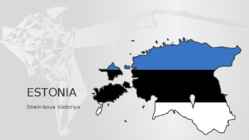
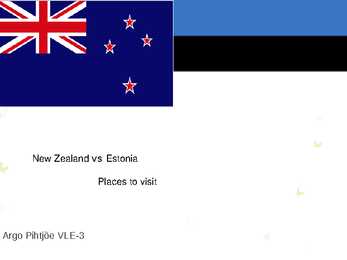
The longest distance from east to west is 350 km, while north to south Estonia stretches 240 km. THE NAME The name EESTI was apparently derived from the word AISTI, the name given by ancient Germans to the peoples living northeast of the Vistula River. Tacitius, the Roman historian, was the first one to mention it (AESTI), while the Arab scholar alIdrisi was the first one to mark it on a map (as ASTLANDA). To the ancient Scandinavians the land was known as EISTLAND; to modern Scandinavians it is known as ESTLAND. Most contemporary languages use the Latin name ESTONIA. FLAG The Estonian blueblackandwhite national flag was originally the flag of the Estonian Student's Society, consecrated in Otepää Church in 1884. today there is a memorial plaque on the church wall commemorating the event. The Flag Museum attracts tourists who take an interest in the history of the flag.
magnificent and dizzying views of Old Town, Toompea hill and the port. 5.Kumu Art Museum A must-see for culture creatures, Kumu, the main building of Art Museum of Estonia, serves both as Estonia's national gallery and as a centre for contemporary art. The complex itself is a work of art - it was opened in 2006 after nearly a decade of planning and construction, and is considered a modern architectural masterpiece. Tallinn Old Town Tallinn's medieval Old Town is known around the world for its well- preserved completeness and authentic Hanseatic architecture. Enchanting atmosphere, rich cultural scene, beautiful surroundings and plenty of galleries, cafes and restaurants to choose from: there is something for everyone in Tallinn. Whether you have only few hours to spare or few days to walk around: Tallinn's Old Town is beautiful and enchanting during all seasons. Be sure to enjoy the outdoor cafés during summer and
Tartu - 103 300 Narva - 65 900 Kohtla-Järve - 44 500 Pärnu - 44 000 PAIDE TOWN IS THE HEART OF ESTONIA Paide town is located right in the centre of Estonia, earning it the nickname of “the Heart of Estonia”. A long historic background, beautiful surroundings, a colourful fair and festival life and an unique relationship with the limestone – come and experience the cosy feel of Paide. Paide town was named after the limestone (“paekivi” and “paas” in the Estonian language) and the town celebrates its special relationship with limestone through unique lime stone sculptures: • The best known limestone sculptures in Paide are “hitchhiker” (“hääletaja”) located in the town
even so much money that for the first time in history Estonian farmers became owners of mansions. The wealthy mulk were the first of Estonian farmers to build manses, until then the farmers all over Estonia lived in farmhouses that included a barn so that people and animals lived under one roof. The old farmhouses and mansions can still be seen in many places in Southern Viljandimaa. As a result of the hard work and the tenacity of the local inhabitants, Mulgimaa developed into an area known as prosperous and rich by its cultural heritage. The masters working in the villages played an important role in the development. The local foods such as sauerkraut stew, curd cake and ,,kama" (a meal made with sour milk and a mixture of ground grains) are popular even nowadays. There is even a song that says: "It is good to live in Mulgimaa / The nature is beautiful and the land is fructuous/ There are glorious groves and large wealthy Estonian farms". As for
In the middle of the 14th century Denmark sold its possessions in Estonia to the German Teutonic Order. Toompea became the seat of the German-born gentry. A wall was built to separate the Upper Town and the Lower Town. In 1285 Tallinn joined the Hanseatic league and became a junction of trade between East and West. Tallinn is said to be built on salt, as it was an important trading commodity. In the 16th century Tallinn had a population of about 7,000 8,000 making it one of the biggest cities in northern Europe. In 1629 Sweden took control of the whole of Estonia. Though hard times continued, the period that followed is known as the "good old Swedish era": foundations were laid for the Estonian school system, the privileges of the nobility were curtailed, local peasants were granted the right to own property, and so on. Peter the Great wanted to open a window onto Europe for Russia so he started the Northern War in 1700
These beautiful waterfalls are called Niagara Falls of the Baltic. Jägala Falls are about 8 meters high. Valaste Waterfall is the highest waterfall in Estonia, located on Valaste stream near the Baltic coast. Waterfall Valaste is 30.5m high since 1996, declared as a cultural heritage and national symbol of Estonia. Valaste Waterfall is a popular tourist destination in the summer but also in winter, when nature creates the ice kingdom. Sights If you are coming to Estonia, you need to visit: Old Town of Tallinn Kaali Meteorite Craters Jägala waterfall Kumu art museum Kadriorg palace People Estonians are a Finnic people closely related to the Finns and inhabiting, primarily, the country of Estonia. They speak a Finnic language known as Estonian. Although Estonia is traditionally grouped as one of the Baltic countries, Estonians are ethnically and linguistically unrelated to the Baltic peoples
Tallinn English College Topic Estonia Tallinn 2008 1. Introduction Estonia is a small country about the size of Switzerland, or New Hampshire and Massachussetts combined. Estonia is named after the people called "Ests" who lived in the region in the 1 st century AD. The Republic of Estonia is one of the three countries commonly known as the "Baltic States". The other Baltic States are Latvia and Lithuania. 2. Geographical position Estonia is situated in northeastern Europe. Estonia is bounded on the north by the Gulf of Finland, on the east by Russia, on the south by Latvia and on the west by the Baltic Sea. In the north it borders on Finland. The coastline of the Baltic Sea in Estonia is characterized by numerous gulfs and bays, the biggest of them being the Gulf of Finland, the Gulf of Riga and the Gulf of Pärnu
Jõgeva maakond Endla nature reserve It is located on the borderline of Järva, Jõgeva and West-Viru counties. It is mostly known for various marshes, fens, quaking bogs, lakes, canebrakes, wellsprings, rivers, fen forests, fens and mesotrophic mires, marsh forests, meadows, diverse flora and fauna. Jõgeva town The small town of Jõgeva town is located on the eastern side of Middle-Estonia. You won't find large buildings or breathtaking architecture here, but an overwhelming sense of togetherness and plenty of cultural events, the majority of them geared towards younger people.
Holidays, Festivals, Cultural events TALLINN - If you're looking for entertainment in Estonia this summer, you are really spoiled for choice. Festivals and events dedicated to the consumption of beer are a lot of fun, but if you want to get the true feel of the country, you need something a little more ethnic. Like a town fair. Just as July becomes August, the seaside town of Haapsalu will host a grand spectacle of rural Estonian entertainment. The White Lady Days is a summer celebration filled with amusement for all the family. Held in and around the remains of the Teutonic-knights-era castles, the fair combines enchanting medieval legends with modern countryside charm to create a comprehensive experience of Estonia beyond the big cities. But the legend of the White Lady of Haapsalu, which is at the heart of the festival, is perhaps the most famous tall tale of the many that are so abundant in Estonia's folklore.
before each service. http://www.tourism.tallinn.ee/eng/fpage/explore/churches#!p_307 Old Town Twisting cobblestone lanes and iron street lamps. Gothic spires and medieval markets. Cappuccino and Wi-Fi. This is the city's famous Old Town. If you're looking for that mix of historic ambience and cutting-edge culture that defines Tallinn, you'll find it here. Built up from the 13th to 16th centuries, when Tallinn or Reval as it was known then was a thriving member of the Hanseatic trade league, this enclosed neighbourhood of colourful, gabled houses, half-hidden courtyards and grandiose churches is, quite rightly, the city's biggest tourist draw. And the fact that it's all neatly packaged within a mostly-intact city wall and dotted with guard towers gives it an extra dose of fairytale charm. http://www.tourism.tallinn.ee/eng/fpage/explore/attractions/old_town Kiek in de Kök
The largest of these is Saaremaa,. Saaremaa is followed in size by Hiiumaa, Muhu and Vormsi. The islands and the coastal areas of the mainland are interesting owing to the fact that they are on the migratory route for waterfowl. Twice a year - in the spring and autumn - several hundreds of thousands of birds are visitors in Estonia. The barnacle goose, the swan, the eider plus many more are protected species. The mild sea climate and the rather level landscape of the island, makes Saaremaa an area abundant in flora and fauna. Rare and beautiful species of orchids can be found in many places, and a large number of rare animals including seals live there. Tallinnis the capital and largest city of Estonia. Tallinn is the oldest capital city in Northern Europe Tartu is the second largest city of Estonia. Tartu is often considered the intellectual and cultural hub, especially since it is home to Estonia's oldest and most renowned university .
vacationing, research travel for gathering information, for holiday to visit people, volunteer travel for charity, migration to begin life somewhere else, religious pilgrimages and mission trips, business travel, trade, commuting, and other reason, such as to obtain health care or fleeing war or for the enjoyment of traveling. World's best places to visit: Paris and Barcelona Why go: Year after year, the Why go: Known around the world magnetic City of Lights draws new for its legendary football team, travelers to its Eiffel Barcelona is known much more than Tower, Louvre and Notre Dame, but just athletic talent. Touring the city is Paris also keeps experienced a feast for the eyes: Visitors walk travelers coming back for more. past medieval architecture in
Gümnaasium Prague referaat Autor: Klass: Juhendaja: 2010 CONTENTS 1. Contents 2. Introduction 3. Compendium about Prague 4. Important about Czech Republic and Prague 5.-7. History 8. Independence 9. Main sights 10. the Czech Republic 11. List of famous people from Prague 12. Geography 13. Weather and climate 14. Population 15. Culture 2 INTRODUCTION The Czech Republic lies at the heart of Central Europe and at its center is the beautiful and historic city of Prague. With a population of some 1.3 million residents, the city lies on either side of the
Tallinn grew rapidly and had developed into a well-known trading centre by the 15th, century. A century later its population of 7,000-8,000 made it one of the biggest cities in northern Europe. Unfortunately, prosperity did not last long due to the weakening of the Hanseatic League, epidemics, hunger and wars. Sweden finally managed to take control of the whole of Estonia in 1629. Though hard times continued, the period that followed is known as the good old Swedish era': foundations were laid for the Estonian school system, the privileges of the nobility were curtailed, local peasants were granted the right to own property, and so on. Meanwhile, different countries fought for domination in the Baltic region. Russia started the Northern War in 1700. Peter the Great had made it his aim to conquer Estonia and `open a window onto Europe' Together with the Russian troops, the plague came again and thousands of people died
areas. The average annual temperature in Estonia is 4.5 degrees Celsius. The average temperature in February, the coldest month of the year, is negative 5.2 degrees Celsius. The average temperature in July, which is considered the warmest month of the year, is 17 degrees Celsius. Estonia is located in a humid zone in which the amount of precipitation outnumbers total evaporation. There are about 160 to 180 rainy days a year, and average precipitation is biggest on the western slopes of the Sakala and Haanja Uplands. Snow cover, which is deepest in the south-eastern part of Estonia, usually lasts from mid-December to late March. Flora and fauna. Estonia is a small country and areas of unspoiled nature are very rare. Our plants and animals have been developing only for 10000 years, since the last Ice Age, and they are not represented in a great variety. Once Estonia was almost totally covered with forests. In the middle of the 20 th
Weather in Sidney Sydney's climate is pleasantly temperate all year round with more than 340 sunny days a year. In summer (December to February), average maximum temperatures in Sydney are around 26°C. It can also be humid at this time with an average humidity of 65 per cent. Average maximum temperatures in the winter (June-August) are around 16°C. Sydney's rainfall is highest between March and June. Appealling climate - Australian seasons are the opposite to the Northern Hemisphere, summer starts in December, autumn in March, winter in June and spring in September. Australian seasons
whales, penguins and dolphins. Mt Cook National Park Mt Cook and surrounding area is an alpine park within the South Westland World Heritage area. Mt Cook, Mt Tasman and Mt Sefton. This glacier is New Zealand's longest and it has one of longest ski runs in the world. Top ten places to visit in New Zealand Westland National Park Famous for its two glaciers, Franz Josef and Fox glaciers. They are unique as they are the closest glaciers to the coastline of any in the world outside of the polar regions. Mountain range bigger in area than the European Alps. Tongariro National Park The park contains 3 active volcanos that are situated in a desert like landscape. Mt Ruapehu is the largest volcano and last erupted in 1995 and 1996. A conical volcano called Mt Ngauruhoe is located next to Ruapehu and is the location for the Tongariro Crossing.
reduction of soil erosion. Across the province, the once common grain elevator is slowly being lost as rail lines are decreasing; farmers typically truck the grain to central points. Alberta is the leading beekeeping province of Canada, with some beekeepers wintering hives indoors in specially designed barns in southern Alberta, then migrating north during the summer into the Peace River valley where the season is short but the working days are long for honeybees to produce honey from clover and fireweed. Industry Alberta is the largest producer of conventional crude oil, synthetic crude, natural gas and gas products in the country. Alberta is the world's 2nd largest exporter of natural gas and the 4th largest producer. Two of the largest producers of petrochemicals in North America are located in central and north central Alberta. In both Red Deer and Edmonton, world class polyethylene and
It originates from Denmark. It was officially adopted in 1925. Geography Estonia is the northernmost of the three Baltic States. It is located on the northern hemisphere on the eastern shores of the Baltic Sea in the north-east of Europe. It has land contact with Russia from the east and Latvia from the south. In the north The Gulf of Finland separates Estonia from Finland. The Gulf of Riga is situated to the south-west. Estonia has more than 1500 islands. The biggest ones are located to the west. The four biggest islands are Saaremaa, Hiiumaa, Vormsi and Muhu. The highest point in Estonia and also in the Baltic region is Suur Munamägi. It is 318. above sea level. Estonia is a country of a thousand lakes. The Largest one is Lake Peipsi which is also the fourth biggest freshwater lake in Europe. Lake Peipsi and Lake Võrtsjärv are rich in fish. Estonia has many rivers but only nine of them are longer than 100km. The most important
The Lower Garden in front of the palace is waiting for its turn. Kadriorg Palace and Kadriorg Park will celebrate the 290th anniversary this year. The jubilee will be marked out by the exhibition "The Palace and Its Story" at Kadriorg Art Museum, accompanied by a series of guided tours and lectures within the Saturday Academy, the premier of a documentary in July and a richly illustrated album on Kadriorg Palace coming out at the end of the year. The events of the anniversary, taking place at Kadriorg Art Museum and in Kadriorg Park, will be described in a special edition "Kadriorg 290" issued on May. The history of Kadriorg Palace one of the finest Baroque ensembles in North Europe dates back to 1718. On July 22, 1718 Russian Tsar Peter the Great, assisted by the Italian architect Niccolo Michetti, began the building of the palace and the park to a picturesque spot near Tallinn, later on renamed Kadriorg after Empress Catherine I.
Introduction Tallinn, the capital city of the Republic of Estonia and of the Harju county, is a town in North Estonia on the coast of the Gulf of Finland. It has nearly half a million inhabitants and covers an area of almost 160 sqkm. It is also an important economic and cultural centre and one of the main ports in the Baltic States. Tallinn is one of the oldest cities on the Baltic Sea. It is unique for its well-preserved architecture from the 13-15 centuries. In contrast to the ancient town-walls and towers, Tallinn of today offers modern hotels, restaurants, sport and cultural centres. Every five years national song and folk dance festivals take place in Tallinn. The yachting regatta of the 1980 Moscow Olympic Games was held at Pirita. History Tallinn means in English "Danish town". The place is believed to have been settled by Finno-Ugric people about 2500 BC
He built a wooden palace at Westminster, were the parliament met later. This is why Westminster became the seat of government not the city of London itself. Edward the Confessor also built Westminster Abbey. He ruled until his death in 1065, after which King Harold was crowned. Norman period( Medieval London) 1066 In 1066 in the Battle of Hastings the Normans were victorious and William was crowned King. William granted the citizens of London special privileges, but he also built a castle in the southeast corner of the city to keep them under control. This castle was expanded by later kings until it became the complex we now call the Tower of London. The Tower acted as royal residence, and it was not until later that it became famous as a prison. In 1176 the first stone London Bridge was built. This bridge was to remain the only one in London until 1739. Because the passage across this one bridge was narrow and clogged with
One can't become an independent person without it. When time comes to enter a college a young Englishman chooses one far away from home. It is a necessary part of becoming adult. During the last 30 years there were a lot of different trends in youth movements. All of them were characterized by their own philosophy, way of life, style of dressing. Each tendency was born by the influence of economic and political changes in the society. Those trends are known as the "hippies" the "punks" the "rockers". But certainly there are different traditional youth organizations in Great Britain. Among them -- the Scout Association, the Girl Guides Association, the National Union of Students, the Youth Club. The latter offers, for example, a wide range of sporting and social activities. The National Union of Students was founded in 1922. It operates through local branches in colleges and universities. It promotes the educational, social and general
Western Australia , South Australia, The Australian Capital Territory and the Northern Territory). The Australian people are culturally the same as the Anglo Americans. There also live aborigines. Aborigines are the ancestors of the people. Like the US and Canada, Australia was an English speaking colony of Great Britain. Today Australia is a modern developed country with a diversified economy. Australia is an island continent of 7.7 million square kilometres, which makes it a little smaller than the USA. Located in south of Asia, between The Pacific and Indian Oceans, Australia is the World's driest continent. Although large areas of the centre are desert, Australia has a wide range of climate from tropical in the north to temperate in the south east, where it frequently snows in winter. Geographical position The coasts of Australia are surrounded by the Pacific Ocean, the Indian Ocean and the
................................................................................................5 Animals...........................................................................................................................6 Population.......................................................................................................................6 The Native Australians....................................................................................................6 The Biggest cities............................................................................................................7 Economy.........................................................................................................................8 Sports..............................................................................................................................9 Culture........................................................................................................
Australia's capital is Canberra, the only city with its own territory. It was built in the early 1900s just to be the capital. The official language is English and the official name of Australia is the Commonwealth of Australia. Australia is located on the Southern Hemisphere (because of that Australia is also called "A land down under"). 2 . Geographical position Australia is an island continent and it is located between the Indian and South Pacific oceans south east of Asia. From the north it is bordered by the Timor Sea and the Torres Strait. From the east by the Coral Sea and the Tasman Sea. Australia's coastline is about 37,000 km long. The Great Australian Bight washes the southern coast. The Gulf of Carpenteria and the Cape York Peninsula surround it in the south. 3. Relief
Australia Australia is the smallest continent in the world. It is 7.6 million square kilometres big. It is often called the island continent because it is rather small for a continent and very big for an island. There are only five countries bigger than Australia in the World. There are five states in the mainland. Tasmania is also considered as a state so there are six states. The Northern Territory and Canberra are also independent but they are not states. Canberra is the capital of Australia and it is situated between Sydney and Melbourne because both of these cities wanted to be the capital. The population is about 19 million people and growing. New South Wales is
Midwest have spectacular weather, with hot and humid summers. The rainfall decreases to the west due to rain shadow caused by Sierra Nevada. The southwest part of the Great Plains is the hottest and driest region of the U.S. The Pacific coast is almost rainless in the summer, but having often fog. IN the winter there is frequent drizzle, but the climate is still, warm. The eastern part of the county is moderately rainy and the summers are extremely humid. History The first known inhabitants of modern-day United States territory are believed to have arrived over a period of several thousand years by crossing Beringa into Alaska. Research has revealed much about the early Native American settlers of North America who are also called Indians. Columbus' men were the first documented Old Worlders to land in the territory of what is now the United States. In its beginnings, the United States of America consisted only of the Thirteen Colonies.
 annaabi.ee