Leidsid 33 sarnast õppematerjali, mis on seotud failiga "Review "THE CATCHER IN THE RYE"". Need materjalid aitavad sul teemat sügavamalt mõista.
catcher, thinking, reading, teenager, lots, really, teenagers, before, similar, them, salinger, already, english, themes, felt, identity, times, myself, something, moments, hand, while, there, other, adult, books, 2018, tell, anything, missing, everybody, pleased, report, joined, quotes, internet, contain, therefore, excited, part, lesson, course, goodA book review Catcher in The Rye by J.D.Salinger Catcher in The Rye is a novel written by J.D.Salinger. It and was first published in 1951. The story is about a teenage boy Holden Caulfield who dropped out of high-school because he failed every exam but English. Instead of going home and face his parents he decides to stay in hotel. For two days he wanders in New York and meets different people. Everything is described through Holden's perspective. Holden had quite complex character
BOOK REPORT Title of the book: The Catcher in the Rye Author: Jerome David Salinger (January 1, 1919 January 27, 2010) was an American writer who died at the age of 91. He was married three times and has two children. Some of his most notable works are The Catcher in the Rye, Nine Stories and Franny and Zooey. The Catcher in the Rye is by far the most famous and most critiqued book of his, selling over 250,000 copies every year. In total the book has sold over 65 million copies worldwide. The success of The Catcher in the Rye led to public attention: Salinger became reclusive, publishing new work less frequently. Analysis of the book 1. Setting The story starts in the year 1950 when the novel's protagonist and narrator Holden
Libraries. We know a lot of things thanks to books, but we do not know exactly when and where they originated, and what should be considered the first book in the world. Ancient document, written on parchment, papyri and vellum can hardly be qualified as books the way we understand the word today. Centuries went before paper replaced parchment and papyri. In the 15 th century Johann Gutenberg invented a mechanical process of duplicating texts, which we today call book printing. The first book was printed between 1444 and 1446, so these years can be considered as the beginning years of book printing. His most important preserved printings are the 40 copies of the Bible. By the end of the 15 th century there were about 1000 print-shops in Europe already. The oldest Estonian book dates back to 1535.
1 _____________________________________________________________________________________________ Yes, I have a painting by Picasso on my wall. 2 _____________________________________________________________________________________________ In my free time I watch TV and read. 3 ____________________________________________________________________________________________ I'm reading a book by Charles Dickens. 4 ____________________________________________________________________________________________ She works in a bank. 5 ____________________________________________________________________________________________ No, he isn't learning to play a musical instrument. 6 ____________________________________________________________________________________________ My birthday is on 8 August.
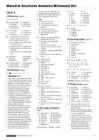
had known had been waiting singers and TV presenters 3 had enjoyed/had been enjoying 1A Talking about people 4 had thought/had been thinking page 3 3 1 F 3 F 5 T 5 had understood 2 F 4 T 6 F 1 1 unreliable 4 modest 6 had belonged 2 naive 5 thoughtless Challenge! 7 had imagined
My languages I love different languages. I mean, I really, really love different languages. I also believe and have been told that I pick them up rather easily. That might be true, although I did not pick any Greek up in Greece but that might have been because they spoke so damn fast that I could not tell if it was a word or an entire sentence. The first foreign language I learned was Russian. Considering I was ten when Estonia became a Republic, it makes sense. We began studying Russian in first grade, though it was simplified – "koška" instead of "kot", "medvešonok" instead of "medved", "saichik" etc. Did not make much
Maturita Solutions Advanced Workbook Key stand bananas and coffee! It's a bit 3 1 to 8 of Unit 1 uncanny really. Is it something she's 2 about 9 century passed on to me genetically, or is it 3 like 10 assumed / 1A Memories page 3 learned behaviour? Who knows? 4 of thought / 1 See exercise 2 2 5
1. A generalist is ignorant from the point of view of a specialist and a specialist is stupid from the point of view of a generalist. 2. All great stupidity is created by geniuses. 3. All stereotypes are true; the fact that you recognize a slur proves that it isn't. 4. Anything you're afraid is true is true. 5. Before most people get to the point of being able to tell their ass from a hole in the ground they're already assholes and it's too late. 6. Concentrating on something important can make you lose track of your soap opera. 7. Debunking the bunk is everyone's responsibility. 8. Don't ask me to pay for anyone else's mistakes. I make enough of my own. 9. Even those who possess real magic must beware of being misled by "magical thinking." 10. Everyone knows what shit tastes like. 11
likely not yet favorable for a widespread flowering to occur. One day, however, a critical threshold was reached, and suddenly there would have been an explosion of color and scent all over the planet – if a perceiving consciousness had been there to witness it. Much later, those delicate and fragrant beings we call flowers would come to play an essential part in the evolution of consciousness of another species. Humans would increasingly be drawn to and fascinated by them. As the consciousness of human beings developed, flowers were most likely the first thing they came to value that had no utilitarian purpose for them, that is to say, was not linked in some way to survival. They provided inspiration to countless artists, poets, and mystics. Jesus tells us to contemplate the flowers and learn from then how to live. The Buddha is said to have given a “silent sermon” once during which he held up a flower and gazed at it. After a
you to discuss employment opportunities. Yours faithfully, Nicole Porter Paragraph Plan for Letters · salutation · Paragraph 1 reasons for writing · Paragraphs 2, 3 development · Final paragraph closing remarks · Name · Letters are divided into two categories, formal and informal. There are various types of formal and informal letters . · It is important to think about the person who you are writing to before you begin writing a letter. If the wrong style is used, the letter will look impolite, silly or odd. For example, if you used formal language to write to a close friend, the letter would look odd, or if you used informal language to write a letter to a company, the letter would look impolite. · There are certain characteristics which allow us to distinguish between formal and informal letters. These are: ~ The salutation (e.g. Dear Sir/Madam, Dear Bill)
Alice, Tom, James, Kim, Snow White 4Use a capital letter for the names of places: National Museum, Bronx Zoo, London, Sacramento 4Use a capital letter for festivals, holidays, days of the week, months of the year: New Year's Day, Christmas, Labor Day, Mother's Day, Sunday, Monday, Friday, January, May, July, October Exercise 1 Circle the letters that should be CAPITALS. Then write the correct letter in the space above them. 1 peter and i are good friends. we are going to chicago during our summer 2 vacation. 3 there is an interesting football game on sunday. 4 jason lives on thomson avenue. 5 january is the first month of the year. Exercise 2 Look at the signs on the left. Can you find the mistakes? Write the names correctly. hopkins hotel lincoln school orchard street newton road botanic gardens national library shea stadium
spend a month every summer until I was fourteen. That was the year I finally put my foot down; these past three summers, my dad, Charlie, vacationed with me in California for two weeks instead. It was to Forks that I now exiled myself-- an action that I took with great horror. I detested Forks. I loved Phoenix. I loved the sun and the blistering heat. I loved the vigorous, sprawling city. "Bella," my mom said to me -- the last of a thousand times -- before I got on the plane. "You don't have to do this." My mom looks like me, except with short hair and laugh lines. I felt a spasm of panic as I stared at her wide, childlike eyes. How could I leave my loving, erratic, harebrained mother to fend for herself? Of course she had Phil now, so the bills would probably get paid, there would be food in the refrigerator, gas in her car, and someone to call when she got lost, but still... "I want to go," I lied
The Catcher in the Rye Despite being written in the beginning of the 1950s, for me “The Catcher in the Rye” is a novel that many youngsters to this day can relate to. The book tells the story of a troubled teenager Holden Caulfield, who sets off on a short trip to New York, after being expelled from yet another private school, to avoid facing his parents. His dark and at times depressive thoughts and emotions have been mixed with humour and brutal reality, making this book stirring to read. The novel is a fantastic example of the coming of age genre, thanks to its various themes of rebellion, emotional and mental growth and indifferent, “I couldn’t care less” attitude. The
.. H: - Oh! Would you like to cash money-order? Have you got your passport with you? J: - Yeah, certainly. H: - Then, they'll cash your money order without fail. J: - Ok, I'll go to that counter and speak to clerk. Wait for me, please! Can you go and by tickets with me after this? H: - Certainly! Discuss the functions of post office H: - There are a lot of functions of post office. Of course, we have friends in different parts of the world, but it's really expensive to call them often. J: - Yes. Some people can use Internet, but not everyone is provided with it. So, then you can send letters... H: - Oh, yeah! It's really convenient! You can send even photos, is spite of the fact that the envelope is heavy. You can just send registered letter! J: - And if you don't know the exact address of addressee, you can send post restante letters. H: - And we can send even gifts for birthdays! Of course, it's not cheep, but it's better than nothing. I mean sending parcels.
the style he used to use, to get in to a second part in which I will assess the way he presents and expresses his ideas. 1.CHAPTER I 1.1. LARKIN STUDIES POINTS OF VIEW: BIOGRAPHY AND POETRY In the collection of essays edited by Stephen Regan (Philip Larkin, 1997) we can find some underlying question as: are we discussing the poem or the poet? Or, in Larkin’s terms: are we more deceived or less deceived by the metonymy of the phrase “we are reading Larkin”? The main purpose of the volume may be discussing and assessing Larkin’s poetry, but there are at least as many references to his letters (mainly published in SL) and to his life as to the poems themselves. If we think that Larkin is known as a legend we shouldn’t be surprised about the importance his life takes as a part of his work. His work, balancing on the borderline between “Life” and “Art”, will probably always is interesting not only for critics, but
is and how it is developing, so in this essay I want to discuss A. Giddens´ text and my reflection about his theory. “It's like everyone tells a story about themselves inside their own head. Always. All the time. That story makes you what you are. We build ourselves out of that story.” Patrick Rothfuss When talking about identity, it´s creation is a very important moment. To understand it, I was always thinking practically – I created a character, like in a movie or a book. What should happen first with the character, what factors influence the creation of individual identity? I agree to Giddens – person isn´t born with identity, everyone has to build and develop it during the whole life. Many factors play their own roles in this process, and I think the first factor is a family. All mayor impressions about culture, religion, relations we carry through
ccc_tracy_fm_i-xviii.qxd 7/7/03 3:22 PM Page iii CHANGE YOUR THINKING, CHANGE YOUR LIFE How to Unlock Your Full Potential for Success and Achievement B R I A N T R AC Y JOHN WILEY & SONS, INC. ccc_tracy_fm_i-xviii.qxd 7/7/03 3:22 PM Page i CHANGE YOUR THINKING, CHANGE YOUR LIFE ccc_tracy_fm_i-xviii.qxd 7/7/03 3:22 PM Page ii ccc_tracy_fm_i-xviii.qxd 7/7/03 3:22 PM Page iii CHANGE YOUR THINKING, CHANGE YOUR LIFE How to Unlock Your Full Potential for Success and Achievement B R I A N T R AC Y JOHN WILEY & SONS, INC. ccc_tracy_fm_i-xviii.qxd 7/7/03 3:22 PM Page iv
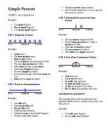
· Cats like milk. still, just, etc. · Birds do not like milk. · Do pigs like milk? Examples: · California is in America. · California is not in the United Kingdom. · You only speak English. · Windows are made of glass. · Do you only speak English? I am not reading any books right now. Present Continuous · · Are you working on any special projects at work? [am/is/are + present participle] · Aren't you teaching at the university now? Examples: USE 3 Near Future · You are watching TV. · Are you watching TV?
I look forward to seeing you. (NOT I look forward to see you.) We're looking forward to going on holiday. (NOT ... to go on holiday.) 17. Information is an uncountable noun. Can you give me some information? (NOT Can you give me an information?) I got a lot of information from the Internet. (NOT I got a lot of informations from the Internet.) 18. Use ing forms after prepositions. I drove there without stopping. (NOT I drove there without to stop.) Wash your hands before eating. (NOT Wash your hands before to eat.) 19. Use this, not that, for things that are close. Come here and look at this paper. (NOT Come here and look at that paper.) How long have you been in this country? (NOT How long have you been in that country?) 20. Use a plural noun after one and a half. We waited one and a half hours. (NOT We waited one and a half hour.) A mile is about one and a half kilometres. (NOT A mile is about one and a half kilometre.) 21
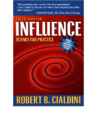
"Dr. Cialdini's ability to relate his material directly to the specifics of what we do with our customers and how we do it, enabled us to make significant changes. His work has enabled us to gain significant competitive differentiation and advantage" -LAURENCE HOF, Vice President, Relationship Consulting, Advanta Corporation "This will help executives make better decisions and use their influence wisely ... Robert Cialdini has had a greater impact on my thinking on this topic than any other scientist." -CHARLES T. MUNGER, Vice Chairman, Berkshire Hathaway, Inc. If you're wondering why of Latin America, the Far East, and Central Europe. you should buy this new edition of Influence: o More neuroscience evidence of how
· Hereditary · Naturalists tried to apply in fiction the processes of natural sciences · Writers task is to record facts, systems of behaviour, living conditions, never revealing any natural unbiased (completely natural) · Point of view: amoral-outside the category of morality, neither good or bad · Naturalist find it absurd to blame the wicked. These criminals are doing what nature, environment, their unconscious tells them to do. Naturalists do not judge their characters, they simply report. Try to describe facts like they are. Naturalists depict the lower, coarser forms of life. · Drab, squallid set of scene. Revolting, disgusting · Characters are people with strong animal desires · Neurotic characters unable to understand the forces that control them · By the end of the 18th century the naturalism depicts in europe, but stars to become
troubled and moved with the sweetness of that superexcellent delight which was ordained by Him that made all things, for the perpetuating of mankind, without which it must needs perish. (Mabbe p 63) Prose The most distinctive element of the original passage is it's sexual tone in its explanation of "true love." Celestina basically says that Calisto is suffering from being horny all the time, and that God made them that way so humans could propagate. In the same passage, "forzoso" is related to love between man and woman. Somehow men are, literally, forced to love women. I have a major in biophysics, so I'm thinking of a physical force that hypothetically pushes a man 3 to love some woman. It's also curious that he writes men are forced to love women, and not just men are forced to love
The third quite important charachter there is Lord Henry, a friend of both Dorian and Basil. He is a charming talker and a brilliant intellect. The climax occurs when Dorian kills Basil. He thinks that since Basil painted the portrait, that ruined Dorian's life, the painter should be punished for this. Evaluation I think that the writing was effective and definately the author achieved his purpose. Many people told me before reading this book, that they have never read a better book in their life. After first couple of chapters I thought we just have different tastes in books, as I usually do have, but the book was quite interesting in the end. Most of all I liked the plot, I think it was very well written and the author had good imagination. Also, the philosophy in this book was worth reading. Usually when you are in the middle of the book, you can predict what happens in the end. With this book it was different
religion. American Enlightenment a gradual but powerful awakening that established the ideals of democracy, liberty, and religious tolerance in the people of America. If there were just one development that directly caused the American Revolution and uplifted the intellectual culture of the continent while it was only a British colony, it would be the American Enlightenment. Broadly, the Enlightenment was an intellectual movement that changed the fundamental perspective of the masses, urging them to foster skepticism and apply scientific principles in matters of religion and morality. Its chief values were: Liberty, Democracy, Republicanism, Religious Tolerance. The movement gained momentum with the publication of landmark texts like Thomas Paine's The Age of Reason, and the Jefferson Bible, but the most influential thinker was undoubtedly John Locke, whose ideas spread to the colonies and across Europe
in 1910 for girls by Lord Baden-Powel. The Scout movement is to encourage a sense of adventure and of responsibility for others among young people. The programme of training is planned to develop intelligence and practical skills, to promote health and a sense of service. Scout training is complementary to the ordinary education. Scouts train in mapping, signalling, first aid and all the skills that arise from camping and similar outdoor activities. British scouts take part in international scout meetings, which are held approximately every four years. The membership in this or that youth organization is not compulsory in Great Britain. But everyone can find the activity he likes most. Climate in Great Britain The British Isles which are surrounded by the ocean have an insular climate. There are 3 things that chiefly determine the climate of the United Kingdom: the
This is Jane Smith. I'm Jane Smith. My name's John Smith. Informal introduction Hi. John. Jane. Hello. Titles: Mr Mrs Miss Ms Ms is a modern form of address for women. It replaces the traditional forms of Mrs and Miss. Greetings Good morning/afternoon/evening! 'How are you?' Very often people expect you to say something positive. Here's a breakdown of how you can express how you really are without complaining too much. · Fine, thanks. / On top of the world, thanks. · OK, thanks · Not so bad, thanks. / Can't complain, thanks. · So so, thanks. / So and so, thanks. · Not so good, actually 1 The English alphabet Spelling Work with your partner and spell out first your name and then some
Award, making Card the only author (as of 2008) to win both of science fiction's top prizes in consecutive years. Card continued the series with seven books, which divide into "Shadow" and "Speaker" series. He has also announced his plan to write two more novels: Shadows in Flight, a book that connects the "Shadow" series and "Speaker" series together, and Ender in Exile, a book that takes place after Ender's game and before Speaker for the Dead. Furthermore, Card recently announced that Ender's Game will soon be made into a movie. Though Card is best-known for "Ender's Game", he has also written in a variety of other genres, including plays, short stories, books on writing, the Homecoming series, other science fiction books, and nonfiction, such as articles on computer technology. Orson Scott Card in 2008 and when he was younger. The Setting
c) I found the Prime Minister's auto…… very interesting. d) Some of the actors still did not know their lines at the dress…… e) I won't buy the book until it comes out in paper …… f) We had very good seats in the dress …… g) There is a black cat painted in the fore …… of the picture. h) Writing film…… is rather like writing for the theatre. i) I was fined because I forgot to return my library …… j) The scene showed them on a roundabout in a children's fun…… Task 8. Replace the verbs in italics with a verb from the box. Do not change the meaning. Change the verb form where necessary. call off go over pick up take over turn up come out look up put on take up work out a) My radio doesn't receive the BBC World Service very easily. b) Our school is going to do 'The Tempest' next month.
was hard for Mabel to recover there, because there were children around all the time. In Alaska they were living a very isolated life - no neighbours, no friends. In addition, at that time there did not exist such things as food shops, so they had to hunt all their food. Life was quite hard in Alaska and I am not so sure that it had a good influence on Jack and Mable, however it changed their life in a positive way. I believe that the decision to move to Alaska brought the couple closer and made them stronger. One day they made a snow girl, they put a scarf around her neck and a pair of red mittens, which Mabel's sister had knitted. The next day the snow girl, which they had built in front of their house, was not there anymore. At first, Jack thought that some wild animals had destorey the snow sculpture, but later on, when Jack was in the forests hunting, he saw something that looked exactly like the snow girl. I turned out that the snow girl had turned into a real girl
"Do you not want to know who has taken it?" cried his wife impatiently. "You want to tell me, and I have no objection to hearing it." This was invitation enough. "Why, my dear, you must know, Mrs. Long says that Netherfield is taken by a young man of large fortune from the north of England; that he came down on Monday in a chaise and four to see the place, and was so much delighted with it, that he agreed with Mr. Morris immediately; that he is to take possession before Michaelmas, and some of his servants are to be in the house by the end of next week." "What is his name?" "Bingley." "Is he married or single?" "Oh! Single, my dear, to be sure! A single man of large fortune; four or five thousand a year. What a fine thing for our girls!" "How so? How can it affect them?" "My dear Mr. Bennet," replied his wife, "how can you be so tiresome! You must know that I am thinking of his marrying one of them." "Is that his design in settling here?"
woman at that time. The stories that we have from that time were given to one another by talking and mostly we don't know who were the authors. Education was also very expensive so only rich people could get it and Estonians, who were just farmers, mostly didn't have money for that. First I am going to talk about Marie Heiberg. She lived 1890-1942. Her first poem collection was ,,Mure-lapse laulud" in translation ,,Problem child's songs". Her talent was noticed, but she didn't have a change to really become famous. She was in a great penury that made her life really though and she had a gentle soul. Thanks to all that in 1919 she was diagnosed with schizophrenia. She isn't really famous poet in Estonia, but I chose her because when you read her poems you can really feel the pain she has been through. Her poems influenced lots of people with their fresh style and deep and painful content. These made people think about depths of life. Next writer I am going to talk about is Elisabeth Aspe
Work on taking yourself deeper into the introspection process by tackling more specific topics. Here are some questions you might want to consider: What am I like? How do my friends characterize me? What are my personality traits? Have I ever experienced a moment of epiphany? Why is (some color) my favorite color? Why is (some movie) my favorite movie? How have my favorites influenced my life? What have I done? What are my major accomplishments? Why do I consider them accomplishments? What extra curricular activities have I participated in? Have I strived hard for something and achieved it? Why did I succeed? Have I strived hard for something and failed to achieve it? Why did I fail? What was the most difficult time of my life? How did my perspective of life change due to that difficult time? Where do I want to go? What would I most like to be doing right now? Where would I like to be? Who would I most like to be with?
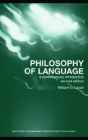
includes a detailed discussion of the problem of indirect force and surveys approaches to metaphor. Part IV, new to this edition, examines the four theories of metaphor. Features of Philosophy of Language include: · new chapters on Frege and puzzles, inferentialism, illocutionary theories of meaning, and relevance theory · chapter overviews and summaries · clear supportive examples · study questions · annotated further reading · glossary Praise for the First Edition: "This exceptional text fulfils two essential criteria of a good introduc- tory textbook in the philosophy of language: it covers a broad range of topics well, all of which are the basis of current active research, and does so in an accurate manner accessible to undergraduate students." Mike Harnish, University of Arizona ". . . an excellent textbook for teaching
 annaabi.ee