Crime In the sociological field, crime is the breach of a rule or law for which some governing authority or force may ultimately prescribe a punishment. The word crime originates from the Latin crimen. Even in society there are always black sheep and these people are called 'criminals'. Estonia is a relatively safe country, although there are some situations, where people should be more careful crime has been increased lately. We could count different type of crimes, but most common are smuggling and robberies. Many people like something, what do not belong to them. On the one hand, news are talking about shoplifting,
compulsive use of computer and video games that interferes with daily life. Instances have been reported in which users play compulsively, isolating themselves from, or from other forms of, social contact and focusing almost entirely on in-game achievements rather than broader life events. Crime addiction Societies define crime as the breach of one or more rules or laws for which some governing authority or force may ultimately prescribe a punishment. People, who are addicted to do crime are suffering in crime addiction. There are different kinds of that: stealing, killing, robbing, etc. Alcoholism Alcoholism is a term with multiple and sometimes conflicting definitions to describe the detrimental effects of alcohol intake. In common and historic usage, alcoholism refers to any condition that results in the continued consumption of alcoholic beverages despite health problems
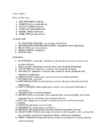
English Test 1 Parts of the body 1. JEW-MANDIBLE-alalõug 2. ARMPIT-AXILLA-kaenlaalune 3. CHEST-THORAX-rindkere 4. STOMACH-ABDOMEN-kõht 5. NAVEL-UMBILICIUS-naba 6. KNEE-PATELLA-põlvekeder Hospital staf 1. TO PRESCRIBE MEDICINE- ravimi välja kirjutamine 2. DISPENSE PRESCRIPTION MEDICATION- retseptiravimeid väljastama 3. RELIVE PAIN-valu leevendama 4. BLOOD SAMPLE- vereproov 5. SPUTUM-sülje PERSONAL 6. RECEPTIONIST- vastuvõtu sekretär-a person who welcomes visitors and answers phones. 7. RADIOLOGIST- radioloog- a person who used imaging technology 8. LAB TECHNICIAN- laborant- a person who analyzes samples 9
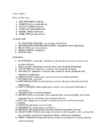
English Test 1 Parts of the body 1. JEW-MANDIBLE-alalõug 2. ARMPIT-AXILLA-kaenlaalune 3. CHEST-THORAX-rindkere 4. STOMACH-ABDOMEN-kõht 5. NAVEL-UMBILICIUS-naba 6. KNEE-PATELLA-põlvekeder Hospital staf 1. TO PRESCRIBE MEDICINE- ravimi välja kirjutamine 2. DISPENSE PRESCRIPTION MEDICATION- retseptiravimeid väljastama 3. RELIVE PAIN-valu leevendama 4. BLOOD SAMPLE- vereproov 5. SPUTUM-sülje PERSONAL 6. RECEPTIONIST- vastuvõtu sekretär-a person who welcomes visitors and answers phones. 7. RADIOLOGIST- radioloog- a person who used imaging technology 8. LAB TECHNICIAN- laborant- a person who analyzes samples 9
58. premature adj - ['premt] happening before the natural or towards you. proper time: premature ageing of the skin, enneaegne 35.geriatric adj -[,deri'ætrik] relating to the medical care 59. prescribe sb sth v - to say what medicine or treatment a sick and treatment of old people: a specialist in geriatric person should have [n prescription] If these don't work, I medicine. meditsiini haru, mis käsitleb eakate inimeste may have to prescribe you something stronger. ravimit haigusi, ravi- ja profülaktikameetodeid määrama 36
Drugs are chemicals that change the way a person's body works. You've probably heard that drugs are bad for you, but what does that mean and why are they bad? Medicines Are Legal Drugs If you've ever been sick and had to take medicine, you already know about one kind of drugs. Medicines are legal drugs, meaning doctors are allowed to prescribe them for patients, stores can sell them, and people are allowed to buy them. But it's not legal, or safe, for people to use these medicines any way they want. Cigarettes and Alcohol Cigarettes and alcohol are two other kinds of legal drugs. (In Estonia, adults 18 can buy cigarettes and alcohol.) But smoking and excessive drinking are not healthy for adults and off limits for kids. Nicotine is the drug in tobacco leaves. Whether someone smokes, chews, or sniffs tobacco, he
Medical care consists of three main elements: the diagnosis, treatment of disease and the promotion of health and prevention of disease. Diagnosis is required for every health problem. To identify the diseas or damage the doctors use tools and apparatures, ask the patients questions about their condition and past illnesses.According to that treatment is done. People usually do not need treatment in case of minor illnesses and injuries. In more serious cases a doctor may prescribe drugs, surgery or other treatment. In case of surgery, a patient must go to hospital where they recieve round-the-clock care from doctors, nurses and other skilled workers. Prevention and promotion can be done in many different ways. Doctors can vaccinate people against diseases, they can advise people to have healthy diets and to get enough rest and exercise. Also regular checkups can help to prevent diseseas in their early stages. Doctors
walled up for ever and to hide the fact he had a proper window with curtains painted on the wall. Marzipan or Mart's Bread Historians might tell you that marzipan, that sweet confection made from almonds and sugar, comes from Persia or Italy, but local legend insists the delicacy was invented right here at Tallinn's Town Hall Pharmacy. Long ago, so the story goes, a town alderman fell ill and summoned the apothecary to prescribe a cure. The expert apothecary knew an elaborate formula he was certain would work, but the alderman insisted that the apothecary test the medicine on himself. As fate would have it, the apothecary caught a nasty cold, so the preparation (and guinea pig) duty fell to his young apprentice, Mart. Being a clever lad, Mart replaced each bitter ingredient with a sweet one. Not only did the tasty remedy work,
First of all, every health problem requires a diagnosis. To identify the disease, doctors use tools and devices and ask the patients about their previous illnesses. Samples of blood and urine are sent to laboratories for analysis to determine the disease. Ultrasound scanners, X-ray machines etc. are used by doctors for necessary information for treatment. People usually recover from minor illnesses without special treatment. In serious cases a doctor may prescribe drugs, surgery or other treatment. In case of surgery a patient must go to the hospital where they receive around-the-clockcare from doctors, nurses and other skilled workers. Many hospitals have intensive care units with devices to keep constant watch over patients. Patients who do not have to be hospitalized, go to the outpatient clinic to see the doctor. Doctors can be divided into two main groups: 1) general practitioners 2) specialists
TOPICS For the PRELIM Year 1 Put down 10-12 relevant terms and retell about: 1. Prescriptive and descriptive law Prescriptive law – prescribe how people ought to behave Descriptive law – describes the way people or natural phenomena behave Break the law – do something illegal Penalty – punishment Government – system by which a state or community is controlled Law – the system of rules System of courts – all judicial institutions Enforce – to make people obey the law Authority – a group of people with official responsibility for a particular area of activity /the moral or legal right or ability to control
Social Problems Crime In the sociological field, crime is the breach of a rule or law for which some governing authority or force may ultimately prescribe a punishment. The word crime originates from the Latin crimen. When society deems informal relationships and sanctions insufficient to create and maintain a desired social order, there may result more formalized systems of social control imposed by a government, or more broadly, by a State. With the institutional and legal machinery at their disposal, agents of the State can compel individuals to conform to behavioural codes and punish those that do not
4. riskeerima tehingute tegemisega – to risk making transactions 5. õigusnõustamist otsima – to seek legal advice 6. tagama, et leping kehtiks – to ensure that the contract would be valid 7. õiguslikke vahendeid kasutama – to use legal means 8. harjuma õiguslikke vahendeid kasutama – to get accustomed to using legal means 9. omama teadmisi millestki – to have knowledge of smth 10. ette kirjutama, ettekirjutus, ettekirjutav – to prescribe, prescription, prescriptional 11. karistust kandma – to serve punishment (ka to suffer a penalty) 12. vägivaldselt käituma (kellegi suhtes) – to act violently towards smb 13. ajutine ametist/spordist kõrvaldamine (n,v) - suspension 14. väljaheitmine (n,v) - expulsion 15. seadusi jõustama – to enforce rules 16. õiguskaitseorganid - law enforcement agencies 17. seadust järgima – to obey the law 18
healed. · Sanitize linens. If you have a cut or sore, wash towels and bed linens in a washing machine set to the "hot" water setting (with added bleach, if possible) and dry them in a hot dryer. Wash gym and athletic clothes after each wearing. · Get tested. If you have a skin infection that requires treatment, ask your doctor if you should be tested for MRSA. Doctors may prescribe drugs that aren't effective against antibiotic-resistant staph, which delays treatment and creates more resistant germs. Testing specifically for MRSA may get you the specific antibiotic you need to effectively treat your infection. · Use antibiotics appropriately. When you're prescribed an antibiotic, take all of the doses, even if the infection is getting better. Don't stop until your doctor tells you to stop
as, for instance, Bronson Alcott. Emerson's position here is that it is man's responsibility to be "a brave and upright man, who must find or cut a straight path to everything excellent in the earth, and not only go honourably himself, but make it easier for all who follow him to go in honor and with benefit." In this way most of the reforms were attempts to awaken and regenerate the human spirit rather than to prescribe particular and concrete movements which were to be fostered. The transcendentalists were, for instance, among the early advocates of the enfranchisement of women. Ultimately, despite these practical manifestations, transcendentalism was an epistemology, a way of knowing, and the ultimate characteristics which tied together the frequently contradictory beliefs of the loosely formed group called "The Transcendentalists" was the belief that man can intuitively transcend the limits of the
Health To get to the roots of a thorny problem Symptoms of an arthritic labour market The company will prune some of its The company will have to slim down branches The company is slowly recovering To prescribe the right economic remedy A flourishing company Metonym is a figure of speech in which a word or expression normally or strictly used of one thing is used of something physically or otherwise associated with it: e.g. the 12 Pentagon (strictly a building) when used of the military inhabiting it. This may lead to
slander matter (suuline laim) - to say terrible things about someone verbaly sole proprietor (füüsiliselt isikust ettevõtja) - person who owns business, distinguished from a partnership or corporation 1. Prescriptive and descriptive law Some laws are descriptive: they simply describe how people, or even natural phenomena, usually behave. Some laws are prescriptive: they prescribe how people ought to behave. In all societies, relations between people are regulated by prescriptive law out of which some are customs informal rules of social and moral behaviour. Breaking these rules may lead to penalties. Governments are motivated to make and enforce laws because of various reasons: social control, implementation of justice and common sense. Although making and enforcing laws is a way for government to
There is comparatively little central control or uniformity, education is managed not by one, but three, separate government departments: the Department for Education and Employment is responsible for England and Wales alone-Scotland and Northern Ireland have their own departments. None of these central authorities exercises much control over the details of what actually happens in the country's educational institutes. Central government does not prescribe a detailed programme of learning or determine what books and materials should be used. One of the reasons for this level of independence is that the school system has been influenced by the public-school tradition that a school is its own community and develop a sense of distinctiveness. Schools usually divide their year into three `terms', all schools have a `half- term'(half-term holiday), lasting a few days or a week in the middle of each term. At the age
BASIC ENGLISH GRAMMAR Book 1 Book 1 Younger students at beginning to intermediate levels will greatly benefit from this step-by-step approach to English grammar basics. This is the ideal supplement to your language arts program whether your students are native English speakers or beginning English language learners. Skill-specific lessons make it easy to locate and prescribe instant reinforcement or intervention. · Illustrated lessons are tightly focused on core concepts of grammar · Nearly 70 practice exercises are included for ready reinforcement · A wealth of examples are provided on every topic · Concise explanations are bolstered by extra grammar tips and useful language notes Book 1 Anne Seaton · Y. H. Mew Three Watson
Movement of capital according to the Directive includes financial operations between MSs or a MS and a third country essentially concerned with investment of the funds (rather than remuneration for services and goods). The free movement of capital is not only the youngest of all Treaty freedoms, but -- because of its unique third-country dimension -- also the broadest. Initially, the Treaties did not prescribe full liberalisation of capital movements; Member States only had to remove restrictions to the extent necessary for the functioning of the common market. However, economic and political circumstances globally and in Europe changed, and thus the European Council confirmed the progressive realisation of the Economic and Monetary Union (EMU) in 1988. This included more coordination of national economic and monetary policies
2) Insurance and reinsurance companies, insurance brokers; 3) Open joint-stock companies; 84 4) Issuers of securities. Discrepancies between IFRS and the Belarusian statutory accounting principles Despite the existence of accounting standards in the banking system and in legal acts of the Finance Ministry, Belarusian statutory accounting depends on various orders and letters issued by the Finance Ministry and the NBRB that prescribe accounting methods and approaches. These and other circumstances may result in departures from the standard requirements and consequently in more inconsistencies with IFRS in addition to those outlined below. The major differences are as follows: In spite of the prescribed principle of prudence in financial statements standards, the accrual concept is not fully implemented in statutory accounting of companies when accounting for income (which may be recognized on a cash basis);
chapter entitled "The Four Horsemen." ISN'T HIGHER PROTEIN HARD ON THE KIDNEYS? WHAT IF I HAVE GOUT? ISN'T HIGHER PROTEIN HARD ON THE KIDNEYS? WHAT IF I HAVE GOUT? First, I am not a doctor, nor do I play one on the Internet. If you have medical conditions of any type, consult a physician. Now, on to my interpretation of the data: If you don't have a serious preexisting medical condition, the amount of protein I prescribe should not hurt you. There is no compelling evidence to support the protein-hurts-your-kidneys claim. This is what Michael Eades MD calls a "vampire myth" because it just refuses to die, despite a lack of evidence. Gout? Gout is usually blamed on purines and therefore protein, so those diagnosed with it, like my mother, will be put on low-protein, low-legume diets. I ascribe to Gary Taubes's interpretation
property owned. The shareholders are not personally liable for the corporate debt obligations. Charter capital The presence of charter capital is required to set up a joint stock company. The Law on Entrepre- neurs does not establish a minimum or maximum capital requirement for the joint stock company. Rights and Obligations of Shareholders The shareholder of a company is expected to make a contribution in the charter capital to get his shares. The law does not prescribe any other obligations. Currently, a monetary contribution is the most common way of paying the charter capital in a joint stock company. 7 CYAN MAGENTA YELLOW BLACK 7 The class of shares owned by the shareholder determines the rights of the shareholder in the company
missile-launch centers. Are American cryptosystems secure? Different agencies investigate this question in different ways. N.S.A. tests the theoretical limits of security of ciphers. For example, COMSEC mathematicians might calculate the maximum number of messages that could be sent with unchanged primary key (as the wiring in a set of rotors) before enough secondary- key overlaps could be expected to make solution likely. They use such information to prescribe key changes. The individual agencies probably test the practical security of their own systems by monitoring and actual cryptanalysis; the State Department, for example, employs half a dozen cryptanalysts. In addition, independent tests are made, as by the Institute for Defense Analyses. In one case, I.D.A. cryptanalysts were given 1,000,000 letters of error-free text in a top military cryptosystem. They put in the equivalent of six man-years on it—and finally gave up in defeat. The
 annaabi.ee