süstemaatikast on teaduslik kus falsifitseeritakse (või verifitseeritakse) teaduslikke hüpoteese liikide eksisteerimisest ja nende vahelisest sugulususest. Arusaam kaasaegse süstemaatika jagunemisest kaheks väga erinevaks osaks on äärmiselt oluline. Karl Popper väitis, et teaduslik hüpotees peab olema falsifitseeritav ja et teooriat ei saa nimetada teaduslikuks kui seda ei ole võimalik ümber lükata. Viis rahvusvahelist nomenklatuuri koodeksit: ·International code of botanical nomenclature ·International code of zoological nomenclature ·International code of nomenclature for cultivated plants ·International code of nomenclature of bacteria ·International code of virus classification and nomenclature Vienna Code eessõna: "Unambiguous names of organisms are essential for effective scientific communication: names can only be unambiguous if there are internationally accepted rules governing their formation and use." Taksonite tunnused
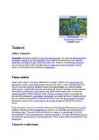
Pildi kirjeldus: Dog of medium size with strong and compact built. The length of the body, from the forechest to the buttocks, is slightly superior to the height at the withers. The head is rather big and very strong. Coat is medium long double coat with straight harsh guard hair and soft, thick woolly undercoat. Coat colors include black and white, totally uniformly black, gray, red and brown of any shade. Kasutasin neid linke ka: http://www.fci.be/Nomenclature/Standards/305g05-en.pdf http://www.dogbreedinfo.com/westsiberianlaika.htm
· Hõimkond: liitvetikad (Glaucophyta) · Hõimkond: rohevetikad (Viridiplantae ehk Chlorobionta) · Hõimkond: Sammaltaimed (Bryophyta) · Hõimkond: Sõnajalgtaimed (Pteridophyta) · Hõimkond: Õistaimed ehk katteseemnetaimed (Magnoliophyta) · Hõimkond: Paljasseemnetaimed (Pinophyta) Taimede süstemaatikat püüab soovituslikult reglementeerida Rahvusvaheline Botaanilise Nomenklatuuri Koodeks (International Code of Botanical Nomenclature, ICBN), mille viimane versioon on St.Louisi Koodeks (St.Louis Code, 1999). Taimede ökoloogiast Tänu enamikul taimedest esinevale fotosünteesivõimele on taimed (koos fotosünteesivate bakteritega) peamised õhu süsihappegaasist orgaaniliste ainete tootjad ja õhu hapnikuga rikastajad. Seega asuvad taimed toitumisahelate alguses. Kuna taimedel üldiselt puudub võime aktiivselt ühest paigast teise liikuda, moodustavad nad
Ireland is divided into four provinces: Connacht, Leinster, Munster and Ulster. Ireland's least arable land lies in the south-western and western counties. These areas are largely spectacularly mountainous and rocky, with beautiful green sights. Ireland is sometimes referred to as being part of the British Isles. However, notwithstanding the level of acceptance of the term within Northern Ireland, exception is taken by many Irish people to the extension of this nomenclature to include Ireland due to the perception that it implies an identity at odds with historical, cultural and political reality. For this reason, "Britain and Ireland" is sometimes used as a neutral way of alluding to the archipelago of which the two islands are the essential constituents. Another suggestion, although much less frequently used, is the Islands of the North Atlantic (IONA). Climate Overall, Ireland has a mild, but changeable, climate all year
Euroopa Liidus on käibel umbes 10000 keemilist ainet, mida kasutatakse kosmeetikatoodetes. Enamasti on nende kohta on olemas ainult minimaalne info, millist mõju nad avaldavad inimese tervisele ja keskkonnale. Kahjuks puuduvad paljudel neist ka andmed pikaaegse mõju kohta. Alates 1999 aastast on tootjad ja importijad kohustatud igal Euroopa Liidus käibel oleval kosmeetikatootel ära märkima, mida täpselt mingi toode sisaldab (nn. INCI- nimekiri = International Nomenclature of Cosmetic Ingredients). Nii saab igaüks teada või järele vaadata, mis aineid täpselt vastav toode sisaldab. Kahjuks ei ole tarbija elu INCI nimekirjaga sugugu kergeks tehtud, kuna see on ainult ladina ja inglise keeles ning seadus ei nõua selle tõlkimist vastavasse riigikeelde. Alates 1% toote üldkogusest aga ei ole ainete järjekord enam tähtis. Nii võib olla koostisaine, mille sisaldus on ainult 0,003% üldkogusest, koostisaine ees, mille sisaldus on näiteks tervelt 0,98%.
2.3 Flat rate of duty: Provision is made under the following Legislation for the charging of Customs Duty at a flat rate of 2.5% on gift consignments valued in excess of 45, where the value of the dutiable goods in the consignment does not exceed 700: Point D1 of Annex I, Part One, Section II of Commission Regulation (EC) No. 1214/2007 amending Annex I to Council Regulation (EEC) No. 2658/87 on the tariff and statistical nomenclature and on the Common Customs Tariff as amended by Council Regulation (EC) No. 275/2008. 3. DE MINIMUS LIMITS Where the customs duty on any consignment amounts to less than 10 it should not be collected. Similarly, VAT liability amounting to less than or equal to 6 should not be collected. No de minimus rule applies in the case of excise duty which should always be collected if the goods are liable to excise duty. 4. CONSIGNMENTS CONTAINING ITEMS OF NEGLIGIBLE VALUE
neile esineb mittekasulikke aineid veelgi). Kuid kuna ainuüksi EL-is kasutatavaid aineid on kokku umbes 10 000, on nende seas orienteeruda üpris raske. Seepärast olekski hea endale selgeks teha vähemalt kõige kahjulikumad neist. Alates 1999 aastast on tootjad ja importijad kohustatud igal Euroopa Liidus käibel oleval kosmeetikatootel ära märkima, mida täpselt mingi toode sisaldab (nn. INCI-nimekiri = International Nomenclature of Cosmetic Ingredients). Nii saab igaüks teada või järele vaadata, mis aineid täpselt vastav toode sisaldab. Kahjuks ei ole tarbija elu INCI nimekirjaga sugugu kergeks tehtud, kuna see on ainult ladina ja inglise keeles ning seadus ei nõua selle tõlkimist vastavasse riigikeelde. Alates 1% toote üldkogusest aga ei ole ainete järjekord enam tähtis. Nii võib olla koostisaine, mille sisaldus on ainult 0,003% üldkogusest, koostisaine ees, mille sisaldus on näiteks tervelt 0,98%.
3. Laeva püstuvus z M BM GM WL G Z W B B1 K N y Joon. 6. Põiki püstuvuse tunnussuurused Stability Nomenclature Kreeninurk () Angle of Heel Raskuskese G Centre of Gravity Ujuvuskese B Centre of Buoyancy Metatsenter M Transverse Metacentre Ujuvuskese kreeni puhul B1 Centre of Buoyancy Shifted Metatsentri raadius BM Metacentric Radius Metatsentri kõrgus GM Metacentric Height Püstuvuse õlg GZ Righting Arm
calculated according to weight. In the case of the importation of a car, the price of import is determined according to the age of the car and the volume of its engine. When moving goods into the economic territory of Georgia (import, export, transit, etc.), the ap- plicable liabilities with respect to importation are determined according to the integrated tariff of Georgia. The integrated tariff is approved by the Government of Georgia. This data consists of: a) National Commodity Nomenclature Code of foreign-economic activity (hereinafter Com- modity Nomenclature Code); b) Import duty rates and/or concessions (preferences) applicable to the goods included in Com- modity Nomenclature Code; c) Concessions (preferences) established by the effective international agreements ratified by the Georgian Parliament; 38 CYAN MAGENTA YELLOW BLACK 38 d) Prohibitions and restrictions, as specified by the Georgian legislation, applicable to the goods
HOL_6012 EU Internal Market/Group Work 3: Free Movement of Capital 1. How is capital defined for the purposes of free movement of capital? What difficulties does the definition present? Give examples of what capital movement may mean under EU law. The treaty on the functioning of the EU does not define the term `movements of capital'. In the absence of a definition, the Court of Justice of the European Union has held that the definitions in the nomenclature annexed to Directive 88/361/EEC can be used to define that term. According to these definitions, cross-border capital movements include: foreign direct investments (FDI) real estate investments or purchases securities investments (e.g. in shares, bonds, bills, unit trusts) granting of loans and credit other operations with financial institutions, including personal capital operations such as dowries, legacies, endowments, etc.
mainland Portugal (Portuguese: Portugal Continental) and the autonomous regions of Portugal (Azores and Madeira). The 18 districts of mainland Portugal are: Aveiro, Beja, Braga, Bragança, Castelo Branco, Coimbra, Évora, Faro, Guarda, Leiria, Lisbon, Portalegre, Porto, Santarém, Setúbal, Viana do Castelo, Vila Real and Viseu each district takes the name of the district capital. Within the European Union NUTS (Nomenclature of Territorial Units for Statistics) system, Portugal is divided into seven regions: the Azores, Alentejo, Algarve, Centro, Lisboa, Madeira and Norte, and with the exception of the Azores and Madeira, these NUTS areas are subdivided into 28 subregions. VI. Tourism Portugal is among the 20 most visited countries in the world, receiving an average of 13 million foreign tourists each year. Tourism is playing an increasingly important role in
• Etnose elutsükkel ca 1200 aastat, läbib 6 staadiumit • Passionaarne tõuge, dünaamiline kujunemisprotsess, passionaarsuse langus, etnilise inertsi faas, lagunemisfaas, mälestustefaas • Passionaarsus – looduslik nähtus • S.Huntington: tsivilisatsiooniline vaade 7-9 tsivilisatsioonilist rühmitust. Pinged nende vahel. Areng = võistlus ja konkurents The definition, nomenclature, and even the number of civilizations are somewhat ambiguous in Huntington's works. Civilizations may consist of states and social groups (such as ethnic and religious minorities). Predominant religion seems to be the main criterion of his classification, but in some cases geographical proximity and linguistic similarity are important as well. Using various studies of history, Huntington divided the world into the "major" civilizations in his thesis as such:
5-8 Handling Precautions . . . . . . . . . . . . . . . . . . . . . . . . . . . . . . . . . . . . . . . . . . . . . . . . . . . . . 136 SECTION 6 Expansion Memory Unit . . . . . . . . . . . . . . . . . . . . . . . . . . 137 6-1 Overview . . . . . . . . . . . . . . . . . . . . . . . . . . . . . . . . . . . . . . . . . . . . . . . . . . . . . . . . . . . . . . 138 6-2 Specifications and Nomenclature . . . . . . . . . . . . . . . . . . . . . . . . . . . . . . . . . . . . . . . . . . . 139 6-3 Handling . . . . . . . . . . . . . . . . . . . . . . . . . . . . . . . . . . . . . . . . . . . . . . . . . . . . . . . . . . . . . . . 140 vii TABLE OF CONTENTS
Katteseemnetaimede sugukonnad on eristatavad ainuüksi nende tunnuste põhjal: õie sümmeetria, lehtede arv üksikutes õieleheringides, sigimiku asend ning õielehtede, eriti kroonlehtede, värvus (võib olla varieeruv). Binominaalne nomenklatuur seisneb selles, et igal liigil on kaheosaline nimi, millest esimene viitab perekonnale, kuhu ta kuulub, teine aga konkreetsele liigile. Tänapäevase nomenklatuuri reeglid ja nimetused on kirjas International Code of Botanical Nomenclature. Liik on bioloogilise klassifikatsiooni põhiühik ja taksonoomiline järk. Seda defineeritakse ka kui organismide rühma, kes on võimelised omavahel paljunema ja andma viljakaid järglasi. Liigile omased tunnused avalduvad sarnases DNA-s, morfoloogias ja ökoloogilises nišis. Spetsiifiliste kohaomaste adaptatiivsete tunnuste olemasolul jaotatakse liigid alamliikideks või varieetideks. Elusloodus –domeen-riik-hõimkond-klass-selts-sugukond-perekond-liik
· võimalik riiklik või muidu iseseisev organisatsiooniline struktuur · inimeste kokkukuuluvustunne · maa-ala, mis geograafiliselt moodustab selge üksuse või ka maa-alade samalaadse kompleksi, mis kujutab endast suletud struktuuri ja mille elanikkonda iseloomustavad teatud ühised elemendid, millest tulenevaid iseärasusi ta tahab säilitada ja edasi arendada, et kiirendada kultuurilist, sotsiaalset ja majanduslikku edu. 3.1. NUTS (nomenclature of Territorial Statistical Units) I-III tasandid: regioon; IV-V tasandid: kohalikud üksused; NUTS I-II tasandid: Eesti tervikuna NUTS III: Põhja-Eesti (Harjumaa); Kesk-Eesti (Järva-, Lääne-, Viru- ja Raplamaa) Kirde-Eesti (Ida-Virumaa); Lääne-Eesti (Hiiu-, Lääne-, Pärnu- ja Saaremaa); Lõuna-Eesti (Jõgeva-, Põlva-, Tartu-, Valga-, Viljandi- ja Võrumaa) 3.2. Regionaalpoliitika
(Thus, "Pegasus took only 30 seconds and was little strain for the author" might 194 Notes be a true sentence about an actual item, not a fictional sentence at all.) One might fairly stipulate that naming events are not referents unless they are themselves the objects of further naming events; or see the reply to objection 4 below. 10 He cites Isaac Taylor's 1898 book, Names and Their History: A Handbook of Historical Geography and Topographical Nomenclature (Detroit, MI: Gale Research Co., 1969). 11 London: Sidgwick & Jackson, 1927. 12 It is contested by Searle (1983), Rosenberg (1994), and Segal (2000). 13 The alert reader will have noticed an infelicity in Putnam's example: since a very high proportion of the human body is constituted by water, the Twin-Earthlings can hardly be molecular duplicates of us. Ignore this, or if it really bothers you
and ciphers at the Signal School, then at Camp Alfred Vail, New Jersey. For this he wrote a textbook that, for the first time, imposed order upon the chaos of cipher systems and their terminology. These had sprouted in a bewildering variety, and writers treated each as individual and special cases. Friedman sorted them out on the basis of structure instead of aspect, and so logical and useful was this classification that it has become standard. He modeled his nomenclature on his categories, so that the names he minted have the great merit of making the relations between the various genera of ciphers evident on sight. An example is the complementary pair "mono-alphabet" and "polyalphabet"; the French were still calling polyalphabetic systems by the almost obfuscatory "double substitution," which tells absolutely nothing at all about the system. Friedman's most important coinage was the word
Currently, there are two species, namely, patients recover; however, death can occur in S. enterica with six subspecies and 2,356 the very old, the very young, and those with serovars, and S. bongori with 19 serovars. compromised immune systems. Each serovar is potentially pathogenic. In Since no Salmonella is allowed in cooked the literature, many scientists still use the food for interstate commerce and interna- traditional genus and species nomenclature, tional trade, the detection of Salmonella has such as S. typhimurium, S. typhosa, etc. The been a subject of much research and current accurate way to present Salmonella development. in the literature is to use, for example, Detection of Salmonella by the classical “Salmonella enterica serovar Typhimurium.” method includes pre-enrichment of culture
 annaabi.ee