Leidsid 33 sarnast õppematerjali, mis on seotud failiga "Nimetu". Need materjalid aitavad sul teemat sügavamalt mõista.
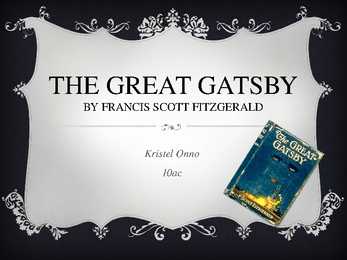
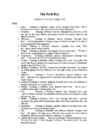
fitzgerald, nick, character, west, careless, herself, women, though, other, woman, baker, gatsby, present, thought, than, qualities, others, fact, married, without, however, there, could, personality, first, money, attitude, showed, clear, golf, varblane, analysis, path, primary, enough, ended, favourite, reason, simple, might, vain, times, fairlyTHE GREAT GATSBY BY FRANCIS SCOTT FITZGERALD Kristel Onno 10ac FRANCIS SCOTT FITZGERALD Francis Scott Key Fitzgerald was born in 1896 and raised in St. Paul, Minnesota attended three different preparatory schools before entering Princeton University in 1913. In his senior year he dropped out of school LOVE AND WAR He joined the army , as World War I neared its end He fell in love with Zelda Sayre, who didn't married him until he provided for her financially. The Fitzgeralds became part of the wealthy, extravagant society of this time. FITZGERALD'S DECLINE
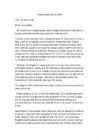
Character Sketch – Daisy The Great Gatsby by F. Scott Fitzgerald Daisy Buchanan is a beautiful young woman from Louisville. She is the cousin of the novel’s narrator Nick Carrayway and the love interest of Jay Gatsby. She is married to an extremely rich and arrogant man called Tom Buchanan. Tom and Nick are acquaintances from college. Daisy-s appearance and the long-lasting impression she left on men is described through her voice by her cousin Nick. I looked back at my cousin, who began to ask me questions in her low, thrilling voice. It was the kind of voice that the ear follows up and down, as if each speech is an arrangement of notes that will never be played again. Her face was sad and lovely with bright things in it, bright eyes and a bright passionate mouth, but there was an excitement in her voice that men who had cared for her found difficult to forget: a singing compulsion.
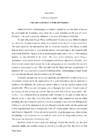
Chapter 21 Chapter 42 Chapter 1 It is a truth universally acknowledged, that a single man in possession of a good fortune, must be in want of a wife. However little known the feelings or views of such a man may be on his first entering a neighbourhood, this truth is so well fixed in the minds of the surrounding families, that he is considered the rightful property of some one or other of their daughters. "My dear Mr. Bennet," said his lady to him one day, "have you heard that Netherfield Park is let at last?" Mr. Bennet replied that he had not. "But it is," returned she; "for Mrs. Long has just been here, and she told me all about it." Mr. Bennet made no answer. "Do you not want to know who has taken it?" cried his wife impatiently. "You want to tell me, and I have no objection to hearing it." This was invitation enough. "Why, my dear, you must know, Mrs
The couple leave for Europe - leaving behind Anna's son Seryozha - without obtaining a divorce. Much more straightforward is Stiva's matchmaking with Levin: a meeting he arranges between Levin and Kitty results in their reconciliation and betrothal. Part 5 Levin and Kitty marry and immediately go to start their new life together on Levin's country estate. The couple are happy but do not have a very smooth start to their married life and take some time to get used to each other. Levin feels some dissatisfaction at the amount of time Kitty wants to spend with him and is slightly scornful of her preoccupation with domestic matters, which he feels are too prosaic and not compatible with his romantic ideas of love. A few months later, Levin learns that his brother Nikolai is dying of consumption. Levin wants to go to him, and is initially angry and put out that Kitty wishes to accompany him
Chapter1: An unknown woman was found lying in the street and brought into the workhouse. She delivered a sickly child who had trouble breathing. The woman, without a word of who she was, died and left her new born boy, Oliver, to the drunken nurse that stood by. Chapter2: The State gave Oliver to Mrs. Mann who housed a number of orphaned children. Mrs. Mann took a large portion of the money given to her by the authorities for each child's food so Oliver grew up small and malnourished. On his ninth birthday, the town beadle, Mr. Bumble, came to collect Oliver and take him to the board for an interview
Ameerika Kirjandus 30.01.13 Naturalism · France, Emile Zola · Put down his theory in 1879: Le Roman Experimental, attempt to explain the development of human society throuch biological laws · Outlook is deterministic, pessimistic, fatalistic (fate or biology) · Man as an animal-clever than other beasts, still explainable within the framework · Man is not a free agent, is govern by something · Unable to determine his own faith · Hereditary · Naturalists tried to apply in fiction the processes of natural sciences · Writers task is to record facts, systems of behaviour, living conditions, never revealing any natural unbiased (completely natural) · Point of view: amoral-outside the category of morality, neither good or bad
mostly introverted and reclusive life. After she studied at the Amherst Academy for seven years in her youth, she spent a short time at Mount Holyoke Female Seminary before returning to her family's house in Amherst. Thought of as an eccentric by the locals, she became known for her penchant for white clothing and her reluctance to greet guests or, later in life, even leave her room. Dickinson was a prolific private poet, though fewer than a dozen of her nearly eighteen hundred poems were published during her lifetime. The work that was published during her lifetime was usually altered significantly by the publishers to fit the conventional poetic rules of the time. Dickinson's poems are unique for the era in which she wrote; they contain short lines, typically lack titles, and often utilize slant rhyme as well as unconventional capitalization and punctuation
"the witches' sabbath" (performing infernal rites which often parodied the sacraments of the Church); pay Divine honour to the Prince of Darkness; and, in return, receive from him preternatural powers. It was a folkloric belief that a Devil's Mark, like the brand on cattle, was placed upon a witch's skin by the devil to signify that this pact had been made. Witches were most often characterized as women. It was believed that a witch often joined a pact with the devil to gain powers to deal with infertility, immense fear for her children's well-being, or revenge against a lover. The long-term result of amalgamation of distinct types of magic-worker into one is the considerable present-day confusion as to what witches actually did, whether they harmed or healed, what role they had in the community, whether they can be identified with the "witches" of other
The making of a new nation. The Enlightenment in America. The emergence of the notion of the American Dream. The great Enlighteners: Crèvecoeur, Jefferson, Paine, Franklin. The American Enlightenment is the intellectual thriving period in the United States in the midtolate 18th century (17151789), especially as it relates to American Revolution on the one hand and the European Enlightenment on the other. Influenced by the scientific revolution of the 17th century and the humanist period during the Renaissance, the Enlightenment took scientific reasoning and applied it to human nature, society, and religion. American Enlightenment a gradual but powerful awakening that established the ideals of democracy, liberty, and religious tolerance in the people of America.
The Moving Finger Agatha Christie Plot summary: Brother and sister Jerry and Joanna Burton bought a country house in an idyllic English town called Lymstock so that Jerry could recover from injuries received in a wartime plane crash. They had been living in London their whole life and thus were excited but intimidated to go. Lymstock was much like any other English village, no more than 300 people. Those that live there enjoy the peace of rural life and form a union to where it can be difficult for strangers to blend in. Fortunately, it wasn't much of a problem for Jerry and Joanna. They were just getting to know the town's strange members and their characters when an anonymous letter arrived, accusing the two of not being brother and sister, but lovers. The letter
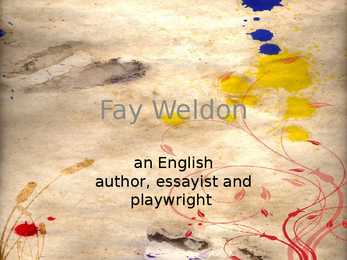
Goldschmidt's television movie "Life for Christine" which told the true story of a 15 year old girl's life imprisonment. The film was shown in prime-time on the ITV Network by Granada Television. § She also wrote the screenplay for the 1980 BBC miniseries adaptation of Jane Austen's Pride and Prejudice starring Elizabeth Garvie and David Rintoul. § In 1989, she contributed to the book for the Petula Clark West End musical Someone Like You. § Her memoir "Auto Da Fay" was published in 2002. Characteristics of her works § Main genres: Autobiography, Children, Criticism, Drama, Fiction, Non-fiction, Screenplay, Short stories § Her works has been associated with feminism. In her fiction, Weldon typically portrays contemporary women who find themselves trapped in oppressive situations caused by the patriarchal structure of western, and in particular British, society.
His modest background and upbringing are crucial to his development as a writer. Chekhov always felt that he missed out on childhood. It was a very hard lifeand it may have contributed to his poor health: he succumbed later on to the"family disease", tuberculosis, which led to his early death at the age of 44.His mother was a quiet, gentle soul who was full of stories of her early life. In later years, Chekhov would say that "we inherited our talent from our father,but mother gave us soul". The other great passion of his formative years was nature, the Russiancountryside. As a port, Taganrog was surrounded on all sides by the landscapes of the Steppe and Chekhov's earliest stories reveal how intensely aware he was of his bond with the Don Steppe. Chekhov had always claimed that medicine was his wife and literature his mistress. Chekhov had lived for much of his career as a writer under the shadow of the great literary colossus of the age, Lev Tolstoy.
possibly related to the Sepulvedas. [13] For many years it was believed Gladys' second husband Martin Edward Mortenson (18971981) was Monroe's father. His name was listed on her birth certificate. [14] Foster homes Mentally unstable and unable to care for Monroe, Gladys placed her with foster parents Albert and Ida Bolender of Hawthorne, California, where she lived until she was seven.[15] In her autobiography My Story, Monroe states she believed Albert was a woman. One day, Gladys announced she bought a house. A few months after they had moved in, Gladys suffered a breakdown. In My Story, Monroe recalls her mother "screaming and laughing" as she was forcibly removed to the State Hospital in Norwalk. According to My Sister Marilyn, Gladys's brother, Marion, hung himself upon his release from an asylum, and Della's father did the same in a fit of depression.
to relent (39) - abandon or mitigate a severe or harsh attitude, especially by finally yielding to a request. Situation: When Lipsha was talking about mother with Albertine he said he wouldn't relent on her even if she would come back, goes down on her knees and begged him for forgiveness. 2. Explain the following literary terms. Learn and use them in your discussion of the book: Protagonist - the leading character or one of the major characters in a play, film, novel, etc. Theme - an idea that recurs in or pervades a work of art or literature. 2 Motif - a dominant or recurring idea in an artistic work. Symbol - a thing that represents or stands for something else, especially a material object representing something abstract.
5 (possible answers) she was my age and apart from the 1 1 go ahead 5 come to eighties hairstyle we're the spitting 1 Well, you will go to bed late every night. 2 fall through 6 bring about image of each other! Some people 2 Well, you will refuse to wear a 3 tip off 7 go down with say that they can see a strong family coat. 4 mistake for 8 come up with resemblance between my dad and me.
Women writer's influence on our society Estonian women writer's history doesn't go far back. The reason for that is that people were slaves back then. Even if there were writers, then most weren't famous and they wrote poems and stories more for themselves. Also being a woman and a writer wasn't considered as a decent job for a woman at that time. The stories that we have from that time were given to one another by talking and mostly we don't know who were the authors. Education was also very expensive so only rich people could get it and Estonians, who were just farmers, mostly didn't have money for that. First I am going to talk about Marie Heiberg. She lived 1890-1942. Her first poem collection was ,,Mure-lapse laulud" in translation ,,Problem child's songs"
Now you know what to expect from me. Henry Tilney My name is Henry Tilney. I am actually not sure what to tell you about myself, because I am just an ordinary man and I think of myself as a rather boring person. I definitely do not want to sound self-centered, but I must say that I am always rather gentle and caring. I pay attention to others' feelings and never want to hurt anybody. I often display a humorous arrogance and ironic humour towards women. I especially like to do that to Catherine because she is just so naïve. Do not get me wrong, I love and respect women very much, but sometimes I just cannot hold back a good joke. I usually say the opposite of what I mean, in order to seem funny. Isn't that rather clever? I have to admit that I am a perceptive person because I understand people quite well. I have read many books and I work as a clergyman, I think that this explains why am I good at understanding people.
a discontinuity in its development, a leap to an entirely different level of Being and, most important, a lessening of materiality. What could be heavier and more impenetrable than a rock, the densest of all forms? And yet some rocks undergo a change in their molecular structure, turn into crystals, and so become transparent to the light. Some carbons, under inconceivable heat and pressure, turn into diamonds, and some heavy minerals into other precious stones. Most crawling reptilians, the most earthbound of all creatures, have remained unchanged for millions of years. Some, however, grew feathers and wings and turned into birds, thus defying the force of gravity that had held them for so long. They didn’t become better at crawling or walking, but transcended crawling and walking entirely. Since time immemorial, flowers, crystals, precious stones, and birds have held special significance for the human spirit
What is his passion? How was he dressed? Most monks of the Middle Ages lived in monasteries according to the Rule of Saint Benedict, which demanded that they devote their lives to "work and prayer." This Monk cares little for the Rule; his devotion is to hunting and eating. He is large, loud, and well clad in hunting boots and furs. The Friar (est: KERJUSMUNK): Describe him in terms of his personality. How does he earn his living? What gifts did he have for women? Describe his feelings towards the poor? How does the narrator describe his clothing? What is his name? Roaming priests with no ties to a monastery, friars were a great object of criticism in Chaucer's time. Always ready to befriend young women or rich men who might need his services, the friar actively administers the sacraments in his town, especially those of marriage and confession. However, Chaucer's worldly Friar has taken to accepting bribes.
Oranges Are Not The Only Fruit - Jeanette Winterson Character Sketch – Louie Louie is a mother of Jeanette, the narrator of the novel. She plays an important role in the life of the main character. She was plump and pretty. Drunkards, she used to urge to join her at the church, called her the Jesus Belle. She was loved by men and attracted attention, many of drunkards stopped in the street when Jeanette’s mother walked past and raised their hats to her. She was very religious person. Louie considered church as her family more than her own family. “My mother stood up and said she believed this was right: that women had specific circumstances
do it, enabled us to make significant changes. His work has enabled us to gain significant competitive differentiation and advantage" -LAURENCE HOF, Vice President, Relationship Consulting, Advanta Corporation "This will help executives make better decisions and use their influence wisely ... Robert Cialdini has had a greater impact on my thinking on this topic than any other scientist." -CHARLES T. MUNGER, Vice Chairman, Berkshire Hathaway, Inc. If you're wondering why of Latin America, the Far East, and Central Europe. you should buy this new edition of Influence: o More neuroscience evidence of how the influence process works is inte-
had no direct experience of World War I and because he is Jewish. He holds on to the romantic prewar ideals of love and fair play, yet, against the backdrop of the devastating legacy of World War I, these values seem tragically absurd. As a Jew and a nonveteran, Cohn is a convenient target for the cruel and petty antagonism of Jake and his friends. Read an in-depth analysis of Robert Cohn. Bill Gorton - Like Jake, a heavy-drinking war veteran, though not an expatriate. Bill uses humor to deal with the emotional and psychological fallout of World War I. He and Jake, as American veterans, share a strong bond, and their friendship is one of the few genuine emotional connections in the novel. However, Bill is not immune to the petty cruelty that characterizes Jake and Jake's circle of friends. Mike Campbell - A constantly drunk, bankrupt Scottish war veteran. Mike has a terrible temper, which most
Lamb to the Slaughter by Roald Dahl (1916-1990) The room was warm and clean, the curtains drawn, the two table lamps alight - hers and the one by the empty chair opposite. On the sideboard behind her, two tall glasses, soda water, whiskey. Fresh ice cubes in the Thermos bucket. Mary Maloney was waiting for her husband to come him (correction: home) from work. Now and again she would glance up at the clock, but without anxiety, merely to please herself with the thought that each minute gone by made it nearer the time when he would come. There was a slow smiling air about her, and about everything she did. The drop of a head as she bent over her sewing was curiously tranquil. Her skin - for this was her sixth month with child - had acquired a wonderful translucent quality, the mouth was soft, and the eyes, with their new placid look, seemed larger darker than before. When the clock said ten minutes to five, she began to listen, and a few
2 1 considerate 4 modest 2 broad-minded 5 self-confident 1D Survival at sea page 67 1F Talking about photos 3 naive 6 grumpy 1 1 horrified 4 determination page 9 2 relief 5 resigned 1 1 connected 6 say 3 1 gold 5 lamb 3 obstinate 6 misery 2 show 7 as though 2 bird 6 rake 3 imagine 8 would guess 2 1 Water was pouring into the boat. 3 the hills 7 bee 4 like 9 hard 2 We clambered onto the rocks.
Vampires -- Fiction. 2. High schools -- Fiction. 3. Schools -- Fiction. 4. Washington (State) -- Fiction.] I. Title. PZ7.M57188Tw2005 [Fic] --dc22 2004024730 Printed in the United States of America For my big sister, Emily, without whose enthusiasm this story might still be unfinished. But of the tree of the knowledge of good and evil, thou shalt not eat of it: for in the day that thou eatest thereof thou shalt surely die. Genesis 2:17 PREFACE I'd never given much thought to how I would die -- though I'd had reason enough in the last few months -- but even if I had, I would not have imagined it like this. I stared without breathing across the long room, into the dark eyes of the hunter, and he looked pleasantly back at me. Surely it was a good way to die, in the place of someone else, someone I loved. Noble, even. That ought to count for something. I knew that if I'd never gone to Forks, I wouldn't be facing death now. But, terrified as I was, I couldn't bring myself to regret the decision
Hamlet WILLIAM SHAKESPEARE Character List Hamlet - The Prince of Denmark, the title character, and the protagonist. About thirty years old at the start of the play, Hamlet is the son of Queen Gertrude and the late King Hamlet, and the nephew of the present king, Claudius. Hamlet is melancholy, bitter, and cynical, full of hatred for his uncle's scheming and disgust for his mother's sexuality. A reflective and thoughtful young man who has studied at the University of Wittenberg, Hamlet is often indecisive and hesitant, but at other times prone to rash and impulsive acts.
Character sketch – Georgie Anthony Birgess – A Clockwork Orange I am going to talk about a character from the book „A Clockwork Orange“ written by Anthony Birgess. First of all Georgie was a memember of the protagonist’s Alex’s gang. The gang had three memember who were teenage criminals: Dim, Pete and Georgie.They robbed people, beat men and raped women. Georgie was extremely ambitious, agressive, determined, earnest and energetic. But also he was quite quiet and did things as his friends did. He quite often didn’t have his own opinion in anything. But on the otherhand he was the one lead the rebellion against Alex. When Alex got out of the jail the last time all of his friends, rivals and also his victims turned against him. Georgie was interesten in violence for the sake of financial gain, unlike Alex, who was
The Rich Boy Francis Scott Key Fitzgerald Words 1. Queer. Meaning in Estonian: imelik, veider. Example from book: That is because we are all queer fish, queerer behind our faces and voices... 2. To conceal. Meaning in Estonian: varjama. Example from book: I feel pretty sure that he has some definite and perhaps terrible abnormality which he has agreed to conceal... 3. Misprision. Meaning in Estonian: kuriteo varjamine. Example from book: ..
All of Lisa's associates thought prisoners always emphasized they were innocent, so Lisa's boss just wanted her to write an article about how bad Gary was. Actually, Gary wasn't the murder; the real killer was the judgment's daughter. It's too late...Gary had been sentenced to death...... How power can do everything, even execute an innocent man. It's all our faults. We could no longer recognize the truth, and even didn't speak out. We let power to do everything. Winter in the Desert: the woman, Lee, picked up a stranger, Jed, and saved his life in the desert. But soon she discovered this stranger was a killer, who killed her unfaithful husband. It was relief that you have when you find something precious you thought you'd lost, after a long search, you find cool, sweet water in the desert. The Knowledge: A taxi driver, Ricky, picked up a man called himself "Bruce Lee", and this "Bruce Lee" taught him the true meaning of fighting. He said,"
everyone is frustrated. To sum up, some improvements in the middle school program need to be made. To conclude, I want to wish you all a very happy holiday season. There was a malfunction in the smoke machines and lights, the curtains would not open and close properly, and one of the actors was sick with no stand-in. In conclusion, the play was a disaster. Words that REPEAT information · in fact · in other words · once again · to put it another way · to repeat That area is very dangerous for you to bike in. To repeat, I warn you not to go there. Lisa decided not to go to King Islands. In fact she told me, "No, way." I feel that our last Student Council meeting did not go well. In other words, it was a fine mess. Sally has lost an oar on her boat and she is in big trouble. Well, to put it another way, Sally has to find another way to row or she will sink! Words that show COMPARISON
Jane Austen Pride and Prejudice Class and social status in Pride and Prejudice Mankind has been acknowledging one another's superiority since the dawn of time. In the novel under the discussion, social status has a great importance in the turn of events. Everyone in the novel is somehow influenced by the topic of fortune or social class. To start with, even though "Pride and Prejudice" touches on many different subjects and characters, its main events are related to or caused by the dogmas of class distinctions. The main characters are influenced by that on numerous occasions. Mr. Darcy, of noble descent, finds it hard at first to cope with the relatives and social status of the woman he falls in love with, Elizabeth. He goes as far as mentioning his superiority to her in his first marriage proposal, as was described in the novel
Like psychoanalysis, surrealistic painting and writing explores the inner depths of the unconscious mind. Freudian ideas have provided subject matter for authors and artists. Critics often analyze art and literature in Freudian terms. 2. Literary Modernism and its sub-movements. The influence of Structuralism and psychoanalysis. Main characteristic features of Modernism. Denial of conventions, traditional structure, plot and presentation of character. The stream of consciousness. Allusiveness. Virginia Woolf's Modern Fiction as a theoretical platform for Modernism. Criticism of Realist literary method. Literary modernism: end of the 19th century-1920 (reached its height) and ended 1940s. A self- conscious break with traditional aesthetic forms. Rejecting the sentiment and discursiveness typical of Romanticism and Victorian literature for poetry that instead favored precision (täppis) of imagery and clear, sharp language
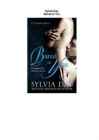
flourish. The moment I stepped outside, the smells and sounds of Manhattan embraced me and invited me to explore. I was not merely across the country from my former home in San Diego, but seemingly worlds away. Two major metropolises-one endlessly temperate and sensually lazy, the other teeming with life and frenetic energy. In my dreams, I'd imagining living in a walkup in Brooklyn, but being a dutiful daughter, I found myself on the Upper West Side instead. If not for Cary living with me, I would've been miserably lonely in the sprawling apartment that cost more per month than most people made in a year. The doorman tipped his hat to me. "Good evening, Miss Tramell. Will you need a cab this evening?" "No thanks, Paul." I rocked onto the rounded heels of my fitness shoes. "I'll be walking." He smiled. "It's cooled down from this afternoon. Should be nice."
 annaabi.ee