 50 punkti
Autor soovib selle materjali allalaadimise eest saada 50 punkti.
50 punkti
Autor soovib selle materjali allalaadimise eest saada 50 punkti.
 ~ 1 leht
Lehekülgede arv dokumendis
~ 1 leht
Lehekülgede arv dokumendis
 2009-01-30
Kuupäev, millal dokument üles laeti
2009-01-30
Kuupäev, millal dokument üles laeti
 17 laadimist
Kokku alla laetud
17 laadimist
Kokku alla laetud
 0 arvamust
Teiste kasutajate poolt lisatud kommentaarid
0 arvamust
Teiste kasutajate poolt lisatud kommentaarid
 kaspu
Õppematerjali autor
kaspu
Õppematerjali autor
During the 19 th century, a surprising number of women in the Shanghai region worked as merchants in the silk trade, being very successful businesswomen. Trying to get even more economic independence, such women preferred a ghost marriage to living husbands. There was no better way to autonomy than to be married to a respectable corpse. She had the social status as a married wife without any inconvenience of actual wifehood. Exercise 1. Find the corresponding English word from the text. Nobedasti Swiftly Hõlmama include Õed-vennad siblings Kummitusliit Ghost marriage Kaalul olema be at stake Kõrge sugu High rank Samad põhjused ditto Tihendama seal
Officials were appointed (governors, procurators to collect taxes, look after the estates and mines and se that the gold, silver, iron and lead were exported back to Rome). Introduced schools,a new language Latin, large farms (villas), baths. In AD 410 they had to leave . roman occupation lasted nearly 400 years. They left behind very little. Roman province of Britannia covered most of present-day England and Wales. 4. Latin influence on English *The influence of Latin is noticeable also in the names of European cities: the Latin noun colonia (settlement, colony) may be found in numerous place-names: Lincoln, Colchester, Cologne ; from Latin word castrum (military camp) were derived English affixes -chester and -castle: Manchester, Lancaster, Newcastle; Latin word portus (seaport) in Portsmouth *-tor - person, doer, masculine form. The suffix is attached to the stem: victor (`winner', from the
alone with someone I knew very well and with permission, ask- the family and a youngster who answered the phone called out, ing that the situation be related to me from that person's point "I'Jam3, white Carolinc's on the phone." of view. This offered a cheek against my own field notes. The To retain the flavor of daily communication, I have chosen quoted passages chosen for this book represent, to my thinking, to use first names in this book after people are initially intra· my common-sense model of the individuals I studied in The duced. Surnames are used in The Flats primarily when resi- Flats. The theoretical perspectives that helped me to order the dents deal with the whites who enter the eommunity as social data I gathered can be divided into three central concernS: workers, landlords, or teachers who assume asymmetrieal rela·
Tallinna Mustamäe Humanitargümnaasium Valeria Jefremenkova ENGLISH AS A GLOBAL LANGUAGE INGLISE KEEL KUI ÜLEMAAILMNE KEEL Research work Supervisor: Jevgenija Kozlova Tallinn 2016 1 Table of Contents СONTENT…………………………………………………………………………………...2 INTRODUCTION…………………………………………………………………………...3
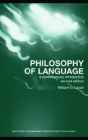
Philosophy of Language Philosophy of Language: a Contemporary Introduction introduces the student to the main issues and theories in twentieth and twenty-first-century phi- losophy of language, focusing specifically on linguistic phenomena. Topics are structured in four parts in the book. Part I, Reference and Referring, includes topics such as Russell's Theory of Descriptions, Donnellan's distinction, problems of anaphora, the description theory of proper names, Searle's cluster theory, and the causalhistorical theory. Part II, Theories of Meaning, surveys the competing theories of linguistic mean- ing and compares their various advantages and liabilities. Part III, Pragmatics and Speech Acts, introduces the basic concepts of linguistic pragmatics, includes a detailed discussion of the problem of indirect force and surveys approaches to metaphor. Part IV, new to this edition, examines the four theories of metaphor.
Métis, on the other hand, is a more general French term for mixed race, which has generally referred to a person of descent from two different major ethnic groups. Contemporary usage of Métis is also different from its historical meaning. At Red River in the 19th century there were two prominent communities of mixed-descent people. In addition to a sizeable French-speaking and nominally Catholic Métis population, there was a large group of English-speaking "Half-breeds" who were mainly Anglican agriculturists. While these interrelated communities were considered to be somewhat distinct constituencies -- the derogatory nature of the term "Half- breed" has caused it to fall largely into disuse. Thus, the contemporary meaning of "Métis" typically includes people of both French- and English-speaking heritage. 5. In which of the present provinces did the "classic" Métis culture develop? Who was the most famous leader of the Métis?
Book 1 BASIC ENGLISH BASIC ENGLISH GRAMMAR GRAMMAR BASIC ENGLISH GRAMMAR Book 1 Book 1 Younger students at beginning to intermediate levels will greatly benefit from this step-by-step approach to English grammar basics. This is the ideal supplement to your language arts program whether your students are native
Suppletion Present in languages of different families. Present in Old, Middle and Modern English, though the general tendency is towards more regularity/iconicity so the number of suppletive forms has decreased.In the text: goon to go wenden - to turn Gan was suppletive in Old English, past form: eode.Eode was supplanted by went (past form of wenden) at the end of the Middle English period.To wend has survived in Modern English in phrases such as to wend one's way, we wended homewards (ironic usage). Thus: suppletivity- suppletion different parts of one and the same paradigm come from what were originally different paradigms (different words with close meanings or words in different but close dialects).Suppletion embraces verbs, adjectives, nouns. Be was/were been (Old English beon/wesan) (am, art, is, are); in Old English some suppletive
 annaabi.ee








Kõik kommentaarid