Leidsid 33 sarnast õppematerjali, mis on seotud failiga "My homework". Need materjalid aitavad sul teemat sügavamalt mõista.
work, homework, letter, mother, there, dear, date, mostly, rooms, likes, times, garden, plants, neighbour, keep, heading, working, winter, snow, grass, father, power, doesn, scare, hoover, cours, dinner, dishes, please, wait, bestGRAMMAR 1 and 2. Helpful marginal notes throughout the books have been provided to reinforce existing skills and call attention to common problem areas. We wish you every success in your pursuit of English proficiency. 1 What is Grammar? 5 The Simple Past Tense 98 Regular and Irregular Verbs 99 Was and Were 104 2 The Capital Letter 6 The Past Progressive Tense 106 The Future Tense 108 Can and Could 112 May and Might 113 3 Nouns8 Do, Does and Did 115 Common Nouns 8 Would and Should 120 Proper Nouns 13
The basic ingredients, when fresh, are so full of flavour that British haven't had to invent sauces to disguise their natural taste. What can compare with fresh pees or new potatoes just boiled and served with butter? Why drown spring lamb in wine or cream and spices, when with just one or two herbs it is absolutely delicious? If you ask foreigners to name some typically English dishes, they will probably say "Fish and chips" then stop. It is disappointing, but true that, there is no tradition in England of eating in restaurants, because the food doesn't lend itself to such preparation. English cooking is found at home. So it is difficult to a good English restaurant with a reasonable prices. In most cities in Britain you'll find Indian, Chinese, French and Italian restaurants. In London you'll also find Indonesian, Mexican, Greek... Cynics will say that this is because English have no "cuisine" themselves, but this is not quite the true. Vocabulary:
in brackets. _ 1 She is in a band and she _________________________________ (record) a CD at the moment. _ 2 She is an actress and often _________________________________ (appear) on television. _ 3 At the moment she _________________________________ (have) a rest because she is tired. _ 4 Mike is a doctor and he _________________________________ (live) in Manchester. _ 5 I _________________________________ (start) work at 8.30 every morning. _ 6 He is a good cook but she _________________________________ (prefer) to eat out. _ 7 English tests _________________________________ (get) more and more interesting. _ 8 They _________________________________ (have) a party because it's her birthday. _ 9 I sometimes _________________________________ (ride) my bicycle to school. 10_ She usually _________________________________ (go) to the gym on Friday evenings.
Here's a breakdown of how you can express how you really are without complaining too much. · Fine, thanks. / On top of the world, thanks. · OK, thanks · Not so bad, thanks. / Can't complain, thanks. · So so, thanks. / So and so, thanks. · Not so good, actually 1 The English alphabet Spelling Work with your partner and spell out first your name and then some names of places. Write down each letter as you hear it, and then say the word. The English alphabet on the phone: You might find the following alphabet (used by international airlines) useful when trying to spell a word on the telephone. A Alpha O Oscar Ä Alpha-Echo Ö Oscar-Echo B Bravo P Papa
.. (6 smile) at my friends instead of watching where I was going. While I ... (7 wave) at my best friend, I couldn't brake, and I ... (8 hit) the steps. I ... (9 fail) off my bike and ... (10 tear) my skirt. What a great start to the new year! 4. Write the sentences. 1 fifteen the off in I'm minutes to cinema I'm off to the cinema in fifteen minutes. 2 was mum up the between tension and building me my The tention was building up between my mum and me. 3 of top the photograph chest on there of was a drawers There was a photograph on top of the chest of drawers. 4 the bike a idea she upon hiring hit of The hit upon an idea of hiring a bike 5 she with were up when filled her tears stood eyes My alarm went off alarm quarter to five. 7 exhibition his of best in ran the hall into friend he front He ranned into his friend in front of the exhibition hall. 8 have your a look take and time around Take your time and have a look around. --- 6 5. Complete the exercise with the adjectives.
The students greeted their teacher cheerfully. 5 Ma õppisin selle luuletuse pähe. I learned this poem by heart. 6 Lapsed olid enne pidu ootusärevil. The children were excited before the party. 7 osasid vahetama swap the role 8 kahe nädala pärast in two time a week 2 Complete the sentences with the correct verb form 1 Did you meet Ann at the party last night? (meet) 2 Do you think our team will win the football match tomorrow? (win) 3 I can´t go out because I haven´t done my homework yet. (not do) 4 Somebody has broken the lock. I can´t get in. (break) 5 Next year Mary will spend two weeks in Liverpool. (spend) 6 I usually have a cup of tea and sandwich before I go to school. (have; go) 7 Jane is American. (be) She comes from Huston. (come) She has lived there all her life. (live) 8 I have known my next-door neighbour for a year but I haven´t talked to his wife yet. (know; not talk) 3 Make up questions and answer them.
6 The food was neither cheap nor 4 financial 9 worthless 2 I agreed to give Jenny a lift into good. 5 costly 10 economical town. 7 There are no easy answers. 3 I had no difficulty repairing the 2 1 economical 7 priceless 8 Few of my relatives live nearby. broken vase. 2 pricey 8 economic 9 My parents have little money.
Letters Letters FORMAL, INFORMAL, TRANSACTIONAL TASK 1 Read the extracts and answer the questions. · Where are the extracts from? · What is the purpose of each letter? · How do they differ? · Which extracts are examples of formal letters? · How is the reader addressed in a formal letter? · What are the closing remarks for formal letters? · What is the salutation in a friendly letter? · How would you end extracts 1,2,3 ? · How would you begin the extracts 4 and 5? 1. Dear Mr Miller, I received your kind invitation to the reception. Unfortunately, owing to other commitments. I will be unable to attend ... 2. Dear Ralph, l just got your invitation to the company's event. l `m afraid I can't make it because I've a/ready made plans which l can "t change ... 3. Dear Sirs,
Kordamine inglise keele eksamiks A 1.1 Read the text and answer the questions below. Dear Mary-Alice, It's been ages since I last wrote to you, isn't it weird? Yes, so it is, but, I do have a certain reason. Do you remember Sir Thom of the Minquettes'? That fine young man with fascinating blue eyes... Oh, my sweet Mary, you will never guess what happened yesterday! It was about seven o'clock in the evening when Lillian called me out for a walk you know I can't say `no' to my little sis. Anyway we went to the forest near the Swan Lake and, believe it or not, got lost! Awful
.......... Mark:...................... 1.Complete the sentences with the prepositions . 1. The test consisted .................. two grammar exercises and a writing task. 2. I read a page .................. the book. 3. It is available .................. the internet. 4. Prices have risen .................. 10 percent. 5. I get a present .................. Jane. 6. Jane is standing ..................the car. 7. She likes a book .................. Mark Twain. 8. I go to school from Monday .................. Friday. 9. He was accused .................. the crime. 10. to carry somebody .................. board 11.He spent his childhood .................. the company of his brothers. 12. A man was fleeing .................. the ice. 13. He became obsessed .................. theories about human life . 14. All green plants take .................. carbon dioxide and give off oxygen. 15. .................
rakvere vocational school my speciality is a cook monday tuesday wendsday thursday friday saturday sunday my birthday is on the 27th dec my address is i was born in 1996 country city town parish cummune municipal village flat avenue street road kindergarten(nursery) to decide vocational school profession education speciality construction of cars to establish restuarant to continue to mend to repair 1.In the future 2.i have to stay in my new school do practical work 3.i entered vocational school. 4.at the age of seven 5.i was born in 23.10.1984 6.during my session 7.for almost four years 8.i want to be weiter 1. i was born in 3 nev 1984 2.i went to school at the age of seven 3.i have to studie almost four years 4.in september i went to vocational school 5.im interested in cars 6.in school we do practical work too 7.in the future im going to keep the family resourant school final certifacate 1. vocational 2.certificate 3.restaurant
say that they can see a strong family coat. 4 mistake for 8 come up with resemblance between my dad and me. I can't see it myself, not facially anyway 3 Well, she would keep driving too 2 1 bring about 5 go ahead although there are certain similarities fast in the town. 2 fall through 6 go down with in our physical build. I also seem to 4 Well, he would keep misbehaving 3 tip off 7 come to have inherited his big feet, unluckily in class. 4 come up with 8 mistake for for me. It was the first thing my parents 5 Well, you would keep eating too noticed when I was born
It rains!) 12. Use for with a period of time. Use since with the beginning of the period. for the last two hours = since 9 o'clock for three days = since Monday for five years = since I left school I've been learning English for five years. (NOT I've been learning English since three years.) We've been waiting for ages, since eight o'clock. 13. Don't separate the verb from the object. VERB OBJECT She speaks English very well . (NOT She speaks very well English.) Andy likes skiing very much. (NOT Andy likes very much skiing.) 14. Don't use the present perfect have/has seen, have/has gone etc with words that name a finished time. I saw him yesterday. (NOT I have seen him yesterday.) They went to Greece last summer. (NOT They have gone ... last summer.) 15. English (the language) normally has no article. You speak very good English. (NOT You speak a very good English.) 16. After look forward to, we use ing, not an infinitive.
The Project Gutenberg EBook of Pride and Prejudice, by Jane Austen This eBook is for the use of anyone anywhere at no cost and with almost no restrictions whatsoever. You may copy it, give it away or re-use it under the terms of the Project Gutenberg License included with this eBook or online at www.gutenberg.org Title: Pride and Prejudice Author: Jane Austen Release Date: August 26, 2008 [EBook #1342] [Last updated: August 11, 2011] Language: English Character set encoding: ASCII *** START OF THIS PROJECT GUTENBERG EBOOK PRIDE AND PREJUDICE *** Produced by Anonymous Volunteers, and David Widger PRIDE AND PREJUDICE By Jane Austen Contents Chapter 1 Chapter 22 Chapter 2 Chapter 23 Chapter 43
english-4u.de/a_an_some_ex6.htm eagles We us the • when we talk about a specific thing. • when it is clear which thing or person we mean. A – AN - THE • when there is only one of something. Examples: What is the highest building in the world? Washington is the capital of the United States.
.................................................... 7 Infinitives ............................................................................. 8 Introduction Modal Verbs are can, could, may, might, must, will, would, shall, should, ought to. They are known as modal auxiliary verbs because they ‘help’ another verb, i.e. they are always used with another verb in its base form. e.g. I can swim. Do you think I should go? Characteristics of Modal Verbs • There is no -s in the third person singular: She can ski. He must be tired. It might rain. • They are used to form questions and negatives: Shall we go for a walk? What should I do? He can’t dance. You mustn’t tell lies! • Modal auxiliary verbs don’t usually have past forms. Other expressions are used instead: I had to work hard at school. The prisoner was able to/managed to escape by climbing onto the roof of the prison
· California is not in the United Kingdom. · You only speak English. · Windows are made of glass. · Do you only speak English? I am not reading any books right now. Present Continuous · · Are you working on any special projects at work? [am/is/are + present participle] · Aren't you teaching at the university now? Examples: USE 3 Near Future · You are watching TV. · Are you watching TV? · You are not watching TV. USE 1 Now Examples: · I am meeting some friends after work.
Surely it was a good way to die, in the place of someone else, someone I loved. Noble, even. That ought to count for something. I knew that if I'd never gone to Forks, I wouldn't be facing death now. But, terrified as I was, I couldn't bring myself to regret the decision. When life offers you a dream so far beyond any of your expectations, it's not reasonable to grieve when it comes to an end. The hunter smiled in a friendly way as he sauntered forward to kill me. 1. FIRST SIGHT My mother drove me to the airport with the windows rolled down. It was seventy-five degrees in Phoenix, the sky a perfect, cloudless blue. I was wearing my favorite shirt -- sleeveless, white eyelet lace; I was wearing it as a farewell gesture. My carry-on item was a parka. In the Olympic Peninsula of northwest Washington State, a small town named Forks exists under a near-constant cover of clouds. It rains on this inconsequential town more than any other place in the United States of America
Emma was extremely lucky. Caroline want Emma to stay with them. Emma eas changes. She has a boyfriend and goes to university. Emma is very pleased with the changes in her life. Ex. 5 1. They were always very close- They had a strong relantionships. 2. I kept missing school- I was sad because i wasn't at school. 3. Emma decided to stay on at school- Emma decided to go into a higher class and take exams. 4. (Emma) worked hard for her exams- She did a lot of work Ex. 7 bring up , tell of 1. My grandmother had a difficult life. She grow up nine children! 2. I hate being the oldest because i always have to look after my younger sister. 3. They tell her off when they found her smoking. 4. My brother's really naughty. Sometimes I find it difficult to put up with him. 5. When my little brother bring up , he wants to be a doctor. 6. Everybody says I take after my uncle. We both have the same nose. Ex. 8
ALWAYS READY TO SHARE YOU JOY AND TO PROVIDE HELP IN NEED . OUR FAMILY IS NOT VERY LARGE: MY PARENTS , MY BROTHER, MY GRANDPARENTS AND I. SOMETIMES MY UNCLE AND AUNT VISIT WITH THEIR DAUGHTER AND SON, WHO ARE MY COUSINS . OUR FAMILY IS VERY FRIENDLY . ANY TIME, WE HAVE A CHANCE WE TRY TO DO SOMETHING TOGETHER , TO GO TO THE COUNTRY , PLAY SOME KIND OF GAME FOR ALL OR JUST SIT AT A TABLE AND TELL EACH OTHER FUNNY STORIES . I WILL START WITH MY PARENTS. M Y MOTHER AND FATHER MET AT THE UNIVERSITY. THEY GOT MARRIED ONE YEAR AFTER GRADUATION . THEY HAVE BEEN WIFE AND HUSBAND FOR 19 YEARS ALREADY . M Y MOTHER ' S NAME IS E MMA A USTEN . S HE IS FORTY -THREE YEARS OLD , ALTHOUGH SHE DOESN 'T LOOK HER AGE BECAUSE SHE LIKES SPORTS AND GOES SWIMMING TO A LOCAL POOL THREE TIMES A WEEK . S HE IS AN INTERIOR DESIGNER . T HIS IS A VERY CREATIVE PROFESSION . H ER JOB IS TO PLAN THE DECORATION AND FURNISHING OF THE INTERIOR OF A
TARTUFFE A COMEDY CHARACTERS MADAME PERNELLE, mother of Orgon ORGON, husband of Elmire ELMIRE, wife of Orgon DAMIS, son of Orgon MARIANE, daughter of Orgon, in love with Valere CLEANTE, brother-in-law of Orgon TARTUFFE, a hypocrite DORINE, Mariane's maid M. LOYAL, a bailiff A Police Officer FLIPOTTE, Madame Pernelle's servant The Scene is at Paris ACT I SCENE I MADAME PERNELLE and FLIPOTTE, her servant; ELMIRE, MARIANE, CLEANTE, DAMIS, DORINE MADAME PERNELLE Come, come, Flipotte, and let me get away. ELMIRE
compare sth with sth 2 Write the questions. 1 in / longest / What / Estonia / is / the / river What is the longest river in Estonia? 2 ever / smoke / Have / a / had / sauna / you Have you ever had a smoke sauna? 3 language / of / is / official / What / the / Estonia What is the official language of Estonia? 4 part / is / which / hilly / Estonia / of Which part of Estonia is hilly? 3 Write the sentences in reported speech. 1 The teacher said to the students, "You must work hard to get good results in your tests." The teacher told the students they haf to work hard to get good results in their tests. 2 Tina said, "I can help you with the washing up, Mary." Tina told Mary she could help her with the washing up. 3 Dad said to Jack, "I´ll fix the lock of the garage door in the afternoon." Dad told Jack he would fix the lock of the garage door in the afternoon. 4 Little Mary said, "I can count to ten." Little Mary said she could count to ten.
........... 3 English speaking countries ........................................................................................................................ 3 Food And Drink ......................................................................................................................................... 4 Exam House and Home I live in the center of Tallinn. In villardy street, it is near Kristiine. I have a very nice flat there with four rooms. And I live with my parants. The best thing about my room is that it is really really big and I have a lot of room for my self. If I could change anything about my room, then it would probably be the decorations. Now, one reason why I like living in the center of Tallinn is becouse I like it there . If I could choose my own home, then it would'nt be a mobile home, becouse I think that thows homes are more for traveling then just living
He/she/it has gone He/she/it has not gone Has he/she/it gone? We/you/they have made We/you/they have not made Have we/you/they made? Täismineviku väljendab: · Tegevust, mis toimus enne kõnemomenti, kuid mille tagajärg on kõnelejale tähtis. John has arrived. I have finished writing a letter. Oh God! I have cut my finger. · Tegevust, mis algas enne kõnemomenti, kestab selleni või jätkub edasi. Tegevus võib olla määratletud sõnadega since, for. They have lived here for two years. · Tegevust, mis lõpeb enne mingit tegevust või muutust tulevikus, näiteks ajamääruslausetes, kus kasutatakse sidesõnu when, until, till, before jt. Katie will go for a walk when she has finished her homework.
Shakespeare was born and raised in Stratford-upon-Avon. At the age of 18 he married Anne Hathaway, who bore him three children: Susanna, and twins Hamnet and Judith. Between 1585 and 1592 he began a successful career in London as an actor, writer, and part owner of the playing company the Lord Chamberlain's Men, later known as the King's Men. He ap- pears to have retired to Stratford around 1613, where he died three years later. Few records of Shakespeare's private life survive, and there has been considerable speculation about such matters as his sexuality, religious beliefs, and whether the works attributed to him were written by others. Shakespeare produced most of his known work between 1590 and 1613. His early plays were mainly comedies and histories, genres he raised to the peak of sophistication and artistry by the end of the sixteenth century. Next he wrote mainly tragedies until about 1608, including Hamlet, King Lear, and Macbeth, con-
Thanks to the Tartu peace treaty, liberty war, finally public achieved to their state a freedom. Republic gives to people feeling that they are free inside and outside to express their own opinion on many subjects. Anyway if I live in Republic I should have to be a chance to express my opinion. There is still a place, where I can not do this. That place is unfortunately my home, what does not makes the homely feeling in me. When I was just a little girl, my mother died and everything in my life changed. My father separated me from my sister and brother. I had to go to live in his family and accept with a stepmother and their kids. To me was verboten to say my opinion about something. I knew only that, everyday there was a paper on my desk and there were jobs, what I had to do along this day. Sometimes they were too hard to me and I had to study late at night. In my opinion every person should feel them well and free at home
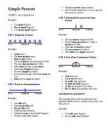
We use Simple Present for general statements about the We use Present Perfect Progressive to present and for actions taking place regularly in the present. express how long an action has been going on. · general statement, when / how often · how long already ex. I write a letter every day. ex. I have been writing for an hour. Signal words: how often, ....times Signal words: how long, since, for Present Perfect Simple Present Perfect Progressive irregular verbs: form of 'have' + 3rd column of irregular verbs form of 'have' + been + verb + ing
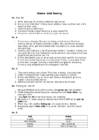
No, I won´t / Yes, I will 2. Did you sleep well last night ? No, I didn´t / Yes, I did 3. Are you sitting next to the window ? No, I aren´ t / Yes, I am 4. Is your deskamate wearing a dark T-shirt ? No, she isn´ t / Yes, she is 5. Do you sometimes come to school by bike ? No, I don´t / Yes, I do 6. Will you send any emails today ? No, I won´t / Yes, I will 7. Does your father borrow books from the library ? No, he doesn´t / Yes, she does 8. Did your mother wake you up this morning ? No, she didn´t / Yes, she did. Kirjuta küsimuste numbrid, milles tegusõna on : 9. A lihtolevikus 7, 5 C kestvas olevikus 3, 4 B lihttulevikus 1, 6 D lihtminevikus 2, 8 4. Kirjuta lünka tegusõna lihtolevikus( the present simple), lihtminevikus( the past simple) või lihttulevikus( the future simple). 1. Henry´s parents often go to other countries in summer. Last summer they visited Turkey. 2
We don't mention when it was started or finished. (at 11 o'clock I was driving home) · To describe the atmosphere, setting etc and to give background information to a story (The birds were singing, sun was shining..) TIME EXPRESSIONS USED WITH PAST CONTINUOUS: while, when, as, all morning/day etc Past Perfect · Action which happened before another past action or bf a started time in the past (Lucy had finished her homework by 6) · Action which finished in the past and whose result was visible at a later point in past (He had sprained his ankle few days ago and he was still limping) · General situation in past (Everything had seemed normal at first) TIME EXPRESSIONS USED WITH PAST PERFECT: before, after, already, just, fot, since, until, when, by the time, never etc. Past Perfect Continuous
This one is for Dr. David Allen Goodwin. My love and gratitude are boundless. Thank you, Dave. You saved my life. Acknowledgments My deepest gratitude to my editor, Hilary Sares, who really dug into this story and made me work for it. Basically, she kicked my ass. By not pulling her punches or letting me shortchange the details, she made me work harder and because of that, this story is a much, much better book. BARED TO YOU wouldn't be what it is without you, Hilary. Thank you so much! To Martha Trachtenberg, copy editor extraordinaire. This book is an important one for me and she treated it that way. Thank you, Martha! To Victoria Colotta, for all her hard work on the interior design and typesetting. She took my plain text and made it gorgeous. Thank you, Victoria!
H-Helen, J - Julia 1.Receiving a money order H: - Hello, I would like to cash a money order. J: - Hello! You should present your identity card. H: - But, you know, I'd like to receive money order for my sister. How do I go about it? J: - Your identity card and letter of attorney, please. H: - Here you are. J: - Well...Unfortunately, I can't cash your money order your signature is not witnessed. H: - Ok. Than, please, I'd like to cash my money order. J: - Take this form and fill it in. May I see your passport? H: - Yes. Please. So...Should I write my full name, my passport number and the sum of money that has been sent to me, right? J: - Certainly. How would you like the money? H: - I prefer one hundred rouble notes, if you don't mind.
3 raamatuid raamatukogust laenutama borrow books from the library 4 ühe hooga läbi lugema in one go 5 samaaegselt at a time 6 humoristlik lugu humorous story 3 Translate. 1 Ema tahab, et ma kastaksin lilli. Mother wants me to water the flowers. 2 Ma tahan, et sa mind matemaatika kodutöös aitad. I want you to help me with my maths homework. 3 Kas sa tahad, et ma aitan sul seda rasket kotti kanda? Do you want me to help you to carry this heavy bag? 4 Õpetaja tahab, et me loeksime Roald Dahl´i Matilda´t. The teacher wants us to read Matilda by Ronald Dahl. 5 Mu väike õde tahab, et ma talle laulan. My little sister wants me to sing to her. 4 Write the sentences in reported speech. 1 Susan said, "I´m waiting for the bus." Susan said that she was waiting for the bus. 2 Mary said, "I have read kadri by SIlvia Rannamaa twice
People and Behaviour 1. Underline the most suitable word or phrase. a) Please don't push. It's very bad-tempered/rude/unsympathetic. b) Jack hates spending money. He's rather frank/greedy/mean. c) Our teacher is very proud/strict/tolerant and won't let us talk in class. d) Helen never does her homework. She is rather gentle/lazy'/reliable. e) I didn't talk to anyone at the party because I felt ambitious/lonely/shy. f) When Harry saw his girlfriend dancing with Paul he felt jealous/selfish/sentimental. g) I don't like people who are noisy and aggressive/courageous/sociable. h) Thanks for bringing us a present. It was very adorable/grateful/thoughtful of you. i) Teresa never gets angry with the children. She is very brave/patient/pleasant. j) Tom always pays for everyone when we go out
 annaabi.ee