Leidsid 33 sarnast õppematerjali, mis on seotud failiga "Lühike jalg - ajalugu, müüdid(inglise keeles)". Need materjalid aitavad sul teemat sügavamalt mõista.
street, lower, foot, road, upper, munk, between, gate, sometimes, stairs, wall, nowadays, german, known, steep, houses, names, during, ages, night, toompea, legs, founded, daam, munga, first, mons, latin, rataskaevu, translated, oldest, beach, narrow, once, runs, plats, cathedral, couple, cafes, along, offer, views, caffeine, hill, dates, around, 1380Today Toompea is the seat of the Government of Estonia as well as the Riigikogu, both of which are often simply colloquially referred to as Toompea. For centuries there was only one access to Toompea - Pikk Jalg - but there is also another way leading up to Toompea - Lühike Jalg, which was made in the 14th century. At present Pikk Jalg and Lühike Jalg are used only by pedestrians. Until the 20th century there was no way down from the western side of Toompea except for a foot-path. The stairs were built in 1903 and called Patkul Stairs after Dietrich Friedrich von Patkuli who had been the deputy Governor in Tallinn during the Great Northern War. Pikk Jalg (Long Leg) - the original road leading to the ancient Estonian stronghold (therefore the oldest street in Tallinn) and the only public road connecting the upper and lower town. It was paved with cobblestones already in the 14th century and was considered quite a dangerous place in the old times. It was
Legend has it that one day, when the Danes were about to lose a bloody battle, the sky suddenly opened and a red flag with a white cross on it dropped down upon them from the heaven. This is how the Danes obtained their national flag. In 1346 the Danish king sold his Estonian lands to the Teutonic Order, who a year later resold them to the Livonian Order. The Germans renamed Tallinn and called it Reval. Toompea became the seat of the German-born gentry. A fortified wall was built between Toompea (the Upper Town) and the Lower Town, as there were conflicts between the two. The Lower Town was the home of simple people, the artisans and the merchants. The doors and gates in the wall were locked at night. Tallinn joined the German-dominated Hanseatic League in 1285 and became a junction of trade between East and West: furs, honey, leather and seal fat moved west, while salt, cloth, herring and wine moved east. Its geographical position was very favourable, with
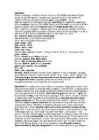
● Reval - used after 1219; comes from two german words ‘reh’ and ‘fall’, meaning the falling of the deer - as they fall down the Toompea hill, probably when escaping from the Danish occupation or just the hunters. ● Tallinn - used after Estonia gained its independence in 1918, origin is definitely estonian; meaning Taani-linn, tali- linn. Liberty Square ● The central square of Tallinn, it was renovated in 2008. There used to be Harju gate, which can now be seen through glass. ● The statue of Liberty, 2009; represents freedom, Estonia has been under many foreign powers, starting with Danes, Sweden, German and Russia. The clock of liberty, 2004. Kiek in de Kök ● The cannon tower, founded in 1475-1483. Kiika kööki, peek into the kitchen, from up there it was possible to peek into the enemy’s kitchen. The walls are 4 m thick, can see the cannons stuck in there. Tallinn City Museum.
Then it was called Reval for some time and finally Estonians started to call the town Tallinn from Taanilinn (Danish town) after the Danish conquest in the 13th century. The Knights of the Sword took Tallinn from the Danes in 1227 and made Toompea their fortress. In the middle of the 14th century Denmark sold its possessions in Estonia to the German Teutonic Order; Toompea became the seat of German-born gentry. A fortified wall was built between the Toompea (the Upper Town) and the Lower Town (inhabited by people of a lower social standing), as there were conflicts between the two. The doors and the gates of the wall were locked at night, a procedure which carried on until the end of the 19th century. Tallinn joined the German-dominated Hanseatic League in 1285 and became a junction of trade between East and West: furs, honey, leather and seal fat moved west, while salt, cloth, herring and wine moved 'in the opposite direction. As salt was an
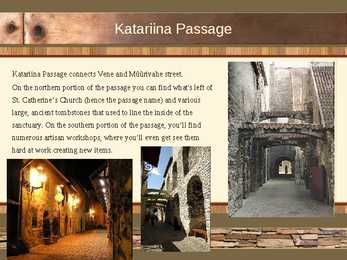
Katariina Passage Katariina Passage connects Vene and Müürivahe street. On the northern portion of the passage you can find what's left of St. Catherine's Church (hence the passage name) and various large, ancient tombstones that used to line the inside of the sanctuary. On the southern portion of the passage, you'll find numerous artisan workshops, where you'll even get see them hard at work creating new items. City wall Tallinn's medieval city wall is a sub-facility that was built
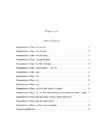
Tallinna Mustamäe College The Most Important Buildings in Lai Street in Tallinn Report Supervisor: Ingrid Teigar Tallinn 2014 Table of Contents Introduction.............................................................................. 3 Lai Street in general.................................................................. 4 The origin of the name "Lai"...................................................... 4 1 Lai Street / 4 Nunne Street...................................................... 5 17 Lai Street............................................................................. 6 23 Lai Street............................................................................. 6 27 Lai Street...................................................
2 Towns (Upper & Lower Town) Tallinn used to be divided into 2 parts - Upper Town where lived the aristocracy, gentry and the clergy; and Lower Town with traders, craftsmen and merchants. Legend says the Toompea Hill is actually the tumulus mound of the great Kalev. Linda carried rocks to his grave. It is a naturally- formed limestone hill. Lower Town was a merchantile centre, Tallinn also belonged to the Hansaetic League (1285). It is often referred to as the town of citizens. Any grown-up, married and economically independent person, born in a legal marriage between two free people and having lived in the town for at least
Legend has it that one day, when the Danes were about to lose a bloody battle, the sky suddenly opened and a red flag with a white cross on it dropped down upon them from the heavens. This is allegedly how the Danes obtained their national flag, the Dannebrog in a battle against the Estonians. In the middle of the 14th century Denmark sold its possessions in Estonia to the German Teutonic Order. Toompea became the seat of the German-born gentry. A wall was built to separate the Upper Town and the Lower Town. In 1285 Tallinn joined the Hanseatic league and became a junction of trade between East and West. Tallinn is said to be built on salt, as it was an important trading commodity. In the 16th century Tallinn had a population of about 7,000 8,000 making it one of the biggest cities in northern Europe. In 1629 Sweden took control of the whole of Estonia. Though hard times
Kunda Ühisgümnaasium Tallin Old Town Report Student: Kristin Karu Teacher: Kristi Aron Kunda 2012 The Alexander Nevsky Cathedral The Alexander Nevsky Cathedral is an orthodox cathedral in the Tallinn Old Town,Estonia. It was built to a design by Mikhail Preobrazhensky in a typical Russian Revivalstyle between 1894 and 1900, during the period when the country was part of theRussian Empire. The Alexander Nevsky Cathedral is Tallinn's largest and grandest orthodox cupola cathedral. It is dedicated to Saint Alexander Nevsky who in 1242 won the Battle of the Ice on Lake Peipus, in the territorial waters of present-day Estonia. The late Russian patriarch, Alexis II, started his priestly ministry in the church. Interior of the Cathedral.
The Historic Centre (Old Town) of Tallinn is an exceptionally complete and well-preserved medieval northern European trading city on the coast of the Baltic Sea. The city developed as a significant centre of the Hanseatic League during the major period of activity of this great trading organization in the 13th-16th centuries. The combination of the upper town on the high limestone hill and the lower town at its foot with many church spires forms an expressive skyline that is visible from a great distance both from land and sea. The upper town (Toompea) with the castle and the cathedral has always been the administrative centre of the country, whereas the lower town preserves to a remarkable extent the medieval urban fabric of narrow winding streets, many of which retain their medieval names, and fine public and burgher buildings, including town wall, Town Hall,
The first English King to convert to Christianity, King Ethelbert, founded St Paul's Cathedral in 604. The Vikings 8th and 9th century By the 9th century, London was a very prosperous trading centre, and its wealth attracted the attention of Danish Vikings. The Danes periodically sailed up the Thames and attacked London. In 851 some 350 longboats full of Danes attacked and burned London to the ground. King Alfred the Great totally defeated the Danes in 878 and they split the country between them. The Danes took eastern England including London while Alfred took the South and West. Alfred's men took London in 886 and repaired the walls of the old Roman city. In 1016 the Vikings attacked London again but the Saxons fought them off. The attacks ceased when the Danish king Cnut came to power in 1017. Cnut managed to unite the Danes with the Anglo-Saxons, and invited Danish merchants to settle in the city. London
When the navy servicemen from the submarine base in the town of Groton across the river began ordering 500 sandwiches a day, the sandwich became irrevocably associated with submarines. The third popular theory claims that the term comes from Dominic Conti, an Italian who immigrated to New York in the early 1900s. His granddaughter Angela Zuccar has stated that her grandfather started a grocery store, called Dominic Conti's Grocery Store, on Mill Street in Paterson, New Jersey, selling the traditional Italian sandwiches there. He had brought the recipe from Italy. According to Zuccar, her grandfather first used the term when she was 16 years old at the time, when he went to see the first experimental 14-foot submarine called Holland I, and said: “It looks like the sandwich I sell at my store.” As is known, there are a number of regional words for this type of sandwich. What are they, and where are they used?
much, he let to capture it alive. When roe-deer saw that he was restrained, so he started to run randomly and then he fell, because of fear and weariness, down of the seashore and broke its neck. Tallinns German name Reval is deriverd from the word Reh Fall (roe-deer falling). According to the legends, Tallinn is a city which is never ready. Indeed, once each autumn goes dark at midnight, one small gray man from the Ülemiste lake. He goes to the city gates and asks from the gate guard if the city is completed or is it still in the middle of the building process. Because of that the guard has to answer that the city is not completed jet and the constructions are still going on. Then the old man goes away. If, however, answered him by mistake, that the city is ready, then Ülemiste lake floats Tallinn with its water. Formerly, there was a cloister on the Vene street, what was burnt down. Old dungeons are preserved even nowadays
establishment of the European Powerlifting Federation in 1974. Currently, the IFP has more than 70 member countries, while something over 20 countries belong to the WPC. Bench press The bench press is a exercise in which, while lying on his back, the person performing the bench press lowers a weight to the level of the chest, then pushes it back up until the arm is straight and the elbows are locked. The exercise focuses on the development of the upper body muscles. Form There is a specific form to the bench press which reduces the chance of injury and maximally challenges the muscles of the chest. A barbell bench press starting position is to be lying on a bench, with the shoulder blades pinched together to avoid recruiting the anterior deltoid during the lift. Feet are kept flat on the ground or end of the bench, with the buttocks always in contact with the bench. The weight is gripped with hands equidistant from the center of the
80,000 people each year. Õllesummer is located in the Tallinn Song Festival grounds which is located 15 minutes walking time from the center of the city. The program includes Estonian bands and international acts as well featuring over a 100 concerts on more than 10 stages. Õllesummer is a friendly, safe and joyful event that attracts many tourists and visitors of Tallinn. Next Õllesummer festival will take place between 8-12 July 2009 in Tallinn Song Festival Grounds and offers again a huge variety of Estonian and International artists, special projects for the whole family. Beer culture plays a basic role in Õllesummer the festival has its origins in a beer festival and up to this day more than a hundred different beers from around the world can be tasted at Õllesummer.Food is offered at a number of different cuisine restaurants and cafes
were soon destroyed. The next invaders were the Anglo-Saxons. They came from nowadays Germany, Holland and Denmark. In 1066 the last successful invasion was made by French-speaking Normans. French became the language of the ruling class, Latin was the written language. By the 14th century, however, English began to replace both French and Latin, but the English language still contains numerous French and Latin borrowings. The Hundred Years War between England and France and the Black Death had a great negative influence on Britain. Over 1/3 of the population died. During the fifteenth century the throne of England was claimed by two rival groups - the House of York and the House of Lancaster. As the symbol of the House of York was a white rose and the symbol of the House of Lancaster was a red rose, the war between the groups was called the War of the Roses. It lasted from 1455 to 1485 and ended with
Tallinn's Old Town is in the list of UNESCO World Heritage Sites. It is ranked as a global city and has been listed among the top 10 digital cities in the world.The city was a European Capital of Culture for 2011, along with urku, Finland.Tallinn is the oldest capital inNorthern Europe. The city was known as Reval from the 13th century until the 1920s. http://en.wikipedia.org/wiki/Tallinn Old Tallinn The Old Town can historically be divided into two distinct areas: Toompea Hill and the Lower Old Town, which were separated by a dividing wall since medieval times. The elevated area of Toompea Hill with its castle was occupied by the residences of Tallinn's rulers and gentry. The Lower Old Town meanwhile developed as an autonomous merchantile centre, flourishing during the 13th-16th centuries, when the city enjoyed membership of the powerful Hanseatic Trading League. Generally speaking these two districts are now collectively referred as the Old Town. The Town wall and towers
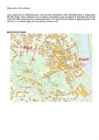
Urban trail in Tartu old town. Tartu, small town in southern-Estonia. Town was first mentioned in 1030. Nowadays there is living nearly 100 000 people. Tartu is known as city of students, and students come to improve to Tartu from all over the world. But Tartu is also known as a Hansa town, that is why one of the most attractive sightseeing place is the old town. It is a valuable place for Tartu and for Estonia as well. PHOTO HUNT MAP: Start the photo hunt on the corner of Lai and Jakobi street. Go up to the Toome hill, it's a great upturn and a great test for legs. As you move forward you will see the famous ,,Musumägi". In english it is called ,,The Kissing Hill" Take a picture with your crew members in the background of the hill. After a brief walk in the Toome Park you see the Ruins of Toome Cathedral. Is it possible to visit the ruins of the Cathedral? Now, go straight ahead until you reach the Lossi street, turn right. Soon you will see The Devils Bridge.
The UK & London The United Kingdom (or the UK) is a short way of saying the United Kingdom of Great Britain and Norther Ireland. The UK is situated north-west of the European continent between the Atlantic Ocean and the North Sea. The UK consists of England, Wales, Scotland and Northern Ireland. Its highest point is Ben Nevis in Scotland followed by Snowdon in Wales. The Severn is the longest river in the United Kingdom. Other important rivers are the Trent, the Mersey, the Tyne, etc. Lough Neagh which lies in the centre of Northern Ireland is thr UK's largest freshwater lake. The climate in the UK is variable. The weather changes so frequently that it is difficult to forecast
(limestone). There are a number of other things in Estonia which have symbolic value without any official status: the oak tree, the weather-vane and the Tower of Pikk Hermann in Tallinn, Hermann Castle in Narva, Big Egg Hill in South Estonia, and others. 6. Climate The climate in Estonia is determined by the country's location. Climatic differences are due, above all, to the vicinity of the Baltic Sea and the North Atlantic. Thus, summer temperatures are somewhat lower than the average for that latitude, but winter temperatures are considerably warmer. The coldest month is February, the warmest July. Permanent snow cover becomes established in the southeast at the beginning of December, at the earliest; and by the end of March, the snow can be more than half a metre deep. Apart from the coast and the Western Islands, the snow vover lasts for approximately 100 days: from the beginning of January to the end of March
The name was first recorded in the description of the second siege of Tallinn in 1577 as Kyck in de Kaeken, later on several forms of the same name were used, such as Kik (Kyk) in de Kok, Kiek in die Küche, Pulffer-Thurm Giecken Köck. In 1696 the present name Kiek in de Kök was also mentioned, meaning "peek into the kitchen" in Low German. And true enough, it was possible to watch what the enemy was doing in their "kitchen" i.e. on position lower down from the about 38m-high tower. Already in the late 15th century the tower was somewhat reconstructed. The outer walls were made thicker and the tower got a diameter of 17.3 m. The walls are 4 m thick but the tower was then lower than today. The waterproof upper floor made of cobblestones was open and had 22 embrasures in its parapet. The parapet must have been covered by some kind of a roof but the middle part of the floor was uncovered to get the mortars and catapults in place better.
Monument The Monument was built to commemorate the Great Fire of London which broke out at Pudding Lane bakery on the 2nd of September, 1666. It was designed by Sir Christopher Wren and erected in 1677. The column of white stone is 62 metres high. Its highest is said to be the exact distance from the place where the fire started. At the top of the Monument there is a viewing platform from where one can have a great view of the City. There are 311 stairs inside the Monument which the visitors can climb to the top. Above the viewing platform, at the very top of the Monument, there is a brass ball covered with brass flames. At the pedestal of the Monument there is a stone relief depicting Charles II dressed in Roman costume helping Londoners to rebuild their city. Barbican Centre The Barbican takes its name from the ancient fortifications that used to surround the City. (A barbican is a watchtower that hangs upon a gate
Provinces, Central Canada, the Atlantic Provinces, and the North. The Pacific Region includes Canada's westernmost province, British Columbia. The region is known for its mild coastal climate, its forests, and its spectacular mountains, including the famous Rockies. The Rocky Mountains are the youngest and highest mountains in Canada. British Columbia is in the landform region called the Western Cordillera. ('Cordillera' means a system of mountain ranges). Between the mountain ranges are areas of high plateaus and deep trenches. Since the landscape is very rugged, most people live in the south and near the coast. Vancouver and Victoria are the largest cities in British Columbia. The region includes the Queen Charlotte Islands and Vancouver Island. All these islands are peaks of a mountain range that is partly covered by the Pacific Ocean. The St Elias Mountains in the Yukon include Canada's highest peak, Mount Logan
world's most important denudations of Ordovician sedimetary rocks. Half of Estonia is covered with forests and 30 % is covered with wetlands. The areas which are higher and particularly rich in hills are the Haanja and Otepää Uplands in the southeastern part of Estonia. In Haanja Upland there is the highest top of Estonia, Big Egg Hill (318 m), which is the highest top of the Baltic states. There are over 1400 lakes in Estonia. Lake Peipsi, lying between Estonia and Russia, covers 3 555 sq km. It is the biggest in Estonia and the fourth biggest in Europe. The second largest lake is Lake Võrtsjärv (270 sq km), while the deepest id Rõuge Suurjärv (38 m). The longest rivers are the Võhandu (162 km) and Pärnu (144 km). The Emajõgi flows for 101 km and its drainage basin covers 9740 sq km. NATURE CONSERVATION AND PROTECTED AREAS In 2004 Estonia had 360 different protected areas, apart from 448
Uusikaupunki, was a relatively static period in Estonian history with few momentous events. This was the time of the crystallization and the culmination of serfdom, when various socio- political and cultural undercurrents were also active, preparing the ground for the industrial society and the national-democratic movement in the second half of the 19th century. The 1710 of the corporations of knights and towns, until Alexander II (18551881), established the relationships between Estonia, Livonia and the Russian Empire. The Baltic Landesstaat reached its full development. The freedom of action in the new provinces was naturally granted to one of the most firm ideological pillars of the tsarist empire -- the Russian orthodox church; though as the Landeskirche in the Estonian and Livonian territories, the Lutheran church long maintained a de facto predominance. The most important organ of Baltic German local government was the Diet, consisting of all
Australia's capital is Canberra, the only city with its own territory. It was built in the early 1900s just to be the capital. The official language is English and the official name of Australia is the Commonwealth of Australia. Australia is located on the Southern Hemisphere (because of that Australia is also called "A land down under"). 2 . Geographical position Australia is an island continent and it is located between the Indian and South Pacific oceans south east of Asia. From the north it is bordered by the Timor Sea and the Torres Strait. From the east by the Coral Sea and the Tasman Sea. Australia's coastline is about 37,000 km long. The Great Australian Bight washes the southern coast. The Gulf of Carpenteria and the Cape York Peninsula surround it in the south. 3. Relief Australia is the smallest continent in the world It is often called the island continent because is too big for
the site of the present cathedral. However, a serious conflict with the Order of the Brothers of the Sword broke out soon as the latter wanted to gain control of the entire Estonia. The order succeeded in subordinating Tallinn and the whole of North Estonia to its rule in 1227. The monks of the Dominican Order began the construction of a stone church in Toompea in 1229. The first written data on the cathedral date back to 1233, the date of a battle between the order and the pro-papal vassals, who attempted for the last time to turn Tallinn into the centre of the ecclesiastical state, and were defeated. According to the records, the battle had spread to the interior of the church and the bodies of the fallen knights had piled at the altar. The resettling of the Dominican monks from Toompea to downtown was one of the results of the battle. Having acquired North Estonia again in 1238, King Valdemar of Denmark appointed
Germanic *hailjan > Old English hælan TO HEAL Germanic *hailagaz > Old English halig HOLY Germanic *hailigon > Old English halgian to consecrate, to bless, halga sacred, a saint, Middle English halwe (see Prologue to the Canterbury Tales: ferne halwes distant shrines metonymic from the meaning "saint" TO HALLOW (as in "Our Father who art in heaven,hallowedbe thy name"), HALLOW meaning "saint" (the latter is a French loan (ALL HALLOWS' DAY, HALLOWEEN). The metonymic link between "being in one piece" and "being healthy" is fairly universal (cf. the two meanings of the Estonian word "terve" a Finno-Ugric, i.e. a non-Indo European word! or Russian "" (whole) and "" to heal (NB! Modern medicine uses "treat" and "cure" the latter when the result is positive, "heal" is generally used in alternative medicine as is "", cf also Healer and as names for Jesus). The use of a word denoting "health" in greetings and other ritual formulas ( as in HAIL!) is
place or space in There was no light in the room. I saw my reflection in the water. Viiralt lived in Paris for some time. Grandpa was sitting in the armchair smoking a pipe. In the morning, when he saw himself in the mirror, he noticed that his hair was going grey. The news was in all the newspapers. There are no stars in the sky tonight- it is too cloudy. In this picture the painter gives the portrait of himself. There are no traffic lights in this street. There is a terrible pain in my stomach. Prepositions of Place – at at normally implies a place + activity • the bus-stop / door / window / traffic lights • the front / back of a building / hall / cinema / group of people etc) • (a/the) reception • an event / a/the party / concert / conference / meeting / football match • home / work / school / university 5 / • a/the station / an /the airport
The White Tower, called so on account of the white Caen stone Brought from Normandy, is the original Norman stronghold. It is the central building of the Tower of London. The white tower has three small square towers and one round one. Later other buildings were added. It has served as a palace as well as a fortress, but it is as a prison that it is known best. Many people have been locked in the Tower, for religious beliefs or suspected treason. Traitors' Gate, set in the southern wall of the Tower, has steps leading down to the river Thames. Countless prisoners, including the future Queen Elisabeth I, were brought to the Tower by barge and went up the steps before being imprisoned for many it was their last moment of freedom before their death. Fortunately, Elisabeth was released from the Tower and later became Queen. Elisabeth's father, Henry VII, made the Tower the feared destination of his enemies
Edinburgh, Loch Ness, The Highlands, Snowdonia, Cardiff. 6. Name 6 islands, 5 rivers, 3 lakes, 3 mountains in UK. Isle of Man, Isle of Wight, Isle of Lewis, Island of Mull, Island of Arran, Anglesey Island Severn, Thames, Tweed, Avon, Trent, Dove Ben Nevis, Snowdon, Ben Macdui 7. Stonehenge. Stonehenge was produced by a culture that left no written records. Built on Salisbury Plain, in Wiltshire, England some time between 5,000-4,300 years ago. One of the most famous megaliths in the world, dating from prehistoric times. Stonehenge consists of circles of stone arranged in complex patterns, and their origin is still being explored. Some of the stones come from over 200 miles away in Wales. There is little or no direct evidence revealing the construction techniques used by the Stonehenge builders. It was probably associated with sun-worship and other rites of prehistoric people
Shaw offered the following possibilities: a leak of the Barrington Brown gene from one or other of the laboratory colonies into the cat fancy population; perhaps some cats or kittens had been taken home as pets and bred. a new mutation in a completely different gene location a new mutation at the same location as his Barrington Brown gene an independent recurrence of the Barrington Brown mutation. To identify the relationship, if any between the Barrington Brown cats and those with "double dilution" would require test-matings between the new "doubly diluted" cats and some known Barrington Brown cats. Since there were no known Barrington Brown cats outside of the laboratory and the lab colony had been terminated, this wasn't possible. In the 1970s, Pat Turner stated, without any supporting evidence, that caramel (the double dilution mentioned by Shaw) was the same as Barrington Brown. The dilute modifier (caramel) colours are not
Estonians themselves called it Tallinn. Tallinn is a very old town, and numerous of legends were connected with it. They spoke about Old Toomas keeping watch on the top of the tower of town hall. Toompea is the oldest part of the city. The toompea Palace was built as the seat of the local government. Today there is the residence of the Parliamnet of Estonia. The main tower is tall Herman with our national flag flying at the top . Toompea is especially rich in historical monuments. The oldest street is Pikk Jalg. Modern industrial development which began in the second half of the 19th century was oriented toward the Russian market. Large textile mills were set up in Narva and electric motor productions, plants and shipyards in Tallinn. Today Narva provides the most Estonian's electricity. Estonian porst, ice-free most of the winter, have always handled much of Russia's trade with western Europe. Deep sea fihing fleets operate from Tallinn and Pärnu.
 annaabi.ee