 10 punkti
Autor soovib selle materjali allalaadimise eest saada 10 punkti.
10 punkti
Autor soovib selle materjali allalaadimise eest saada 10 punkti.
 ~ 1 leht
Lehekülgede arv dokumendis
~ 1 leht
Lehekülgede arv dokumendis
 2009-02-07
Kuupäev, millal dokument üles laeti
2009-02-07
Kuupäev, millal dokument üles laeti
 9 laadimist
Kokku alla laetud
9 laadimist
Kokku alla laetud
 3 arvamust
Teiste kasutajate poolt lisatud kommentaarid
3 arvamust
Teiste kasutajate poolt lisatud kommentaarid
 Forell94
Õppematerjali autor
Forell94
Õppematerjali autor
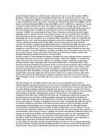
James Fenimore Cooper James Fenimore Cooper (September 15, 1789 September 14, 1851) was a prolific and popular American writer of the early 19th century. He is best remembered as a novelist who wrote numerous sea-stories and the historical novels known as the Leatherstocking Tales, featuring frontiersman Natty Bumppo. Among his most famous works is the Romantic novel The Last of the Mohicans, which many consider to be his masterpiece. Further information: List of James Fenimore Cooper writings. He anonymously published his first book, Precaution (1820). He soon issued several others under his own name. In 1823, he published The Pioneers; this was the first of the Leatherstocking series, featuring Natty Bumppo, the resourceful American woodsman at home with the Delaware Indians and especially their chief Chingachgook. Cooper's most famous novel, Last of the Mohicans (1826), became one of the most widely read American novels of the nineteenth century
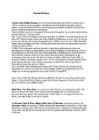
carry the ball. The ball is oval, not round. Each team contains 15 players. The oldest game of football in England is probably the football match which takes place at Ashburn on Shrove Tuesday every year. The game starts in the centre of the town, and the distance between two goals is two miles. The only rule is not to use motorcycles, cars and lorries in the game. In 1958 one team buried the ball. The other team didn't know and ran after them. Later first team took the ball and won. 3) JAMES WATT He was born in the small port of Greenock on the river Clyde in Scotland in 1736. His father was a mathematical-instrument maker and also kept a shop to supply ships with goods for their voyages. James was a delicate boy and often suffered from headaches. That is why he could not go to school at the age when other children did. His mother taught him to read and his father taught him writing and arithmetic. He had very good memory and a natural love of work. He liked mathematics and was
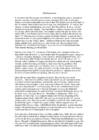
Teaduslik revolutsioon 15431600 I One of the most important developments in the western intellectual tradition was the Scientific Revolution. The Scientific Revolution was nothing less than a revolution in the way the individual perceives [ tajub ] the world. As such, this revolution was primarily an epistemological revolution it changed man's thought process. It was an intellectual revolution a revolution in human knowledge. Even more than Renaissance scholars who discovered man and Nature, the scientific revolutionaries attempted to understand and explain man and the natural world. Thinkers such as the Polish astronomer Nicholas Copernicus(14731543), the French philosopher René Descartes(15961650) and the British mathematician Isaac Newton(16421727) overturned the authority of the Middle Ages and the classical w
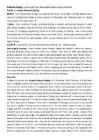
Joseph Rudyard Kipling was a British author and poet. He was born on 30 December 1865 in Bombay, in India which was part of the British Empire then. he is best known for his works of fiction The Jungle Book (1894) (a collection of stories which includes Rikki-Tikki-Tavi), Kim (1901) (a tale of adventure), many short stories, including The Man Who Would Be King (1888); and his poems, including Mandalay (1890), Gunga Din (1890), and If-- (1910).He is regarded as a major "innovator in the art of the short story"; his children's books are enduring classics of children's literature; and his best works speak to a versatile and luminous narrative gift. Kipling was one of the most popular writers in English, in both prose and verse, in the late 19th and early 20th centuries. In 1907, he was awarded the Nobel Prize in Literature, making him the first English language writer to receive the prize. Among other honours, he was sounded out for the British Poet Laureateship and on several occasions f
· Prufrock and Other Observations (1917) o The Love Song of J. Alfred Prufrock · Poems (1920) o Gerontion o Sweeney Among the Nightingales · The Waste Land (1922) · The Hollow Men (1925) · Ariel Poems (1927-1954) o The Journey of the Mai(1927) · Ash Wednesday (1930) · Coriolan (1931) · Old Possum's Book of Practical Cats (1939) · Four Quartets (1945) James Augustine Aloysius Joyce James Augustine Aloysius Joyce (2 February 1882 13 January 1941) was an Irish expatriate writer, widely considered to be one of the most influential writers of the 20th century. He is best known for his landmark novel Ulysses (1922) and its highly controversial successor Finnegans Wake (1939), as well as the short story collection Dubliners (1914) and the semi-autobiographical novel A Portrait of the Artist as a Young Man (1916).
companies were established to exploit trading possibilities with scandinavia and the far East. The East Indian company was established during her reign. She incourged the .... Of colonies abroad. 1492 Columbus found the centre of America. Elizabeth never got married, she was a virgin.In America state Virgina is named after her. Wales was united with the kingdom, Ireland became the Enlish colony. She had to choose sb to be her hier (troonipärija). James son of Mary Stuart, Elizabeths cousin, daughters James V. Mary came to the throne when she was 6 days old. In her ... she got married to her french prince Francois, she was widow at the age of 16, was sent back to Scotland. The hole life she tried to get to the throne Mary was arrested and put into a tower. Finally Elizabeth ordered Mary to be executed ( dog under skirt, red underwear, wig). James came to throne, James VI Scotland, James I England 1603. He was a chatolic,
immediately decided to return to London. Before his return, he had used the telegram to propose to and be accepted by Wolcott's sister Caroline (Carrie) Balestier, whom he had met a year earlier, and with whom he had apparently been having an intermittent romance. On 18 January 1892, Carrie Balestier (aged 29) and Rudyard Kipling (aged 26) were married in London, in the The wedding was held at All Souls Church, Langham Place. Henry James gave the bride away. Settled in the U.S, and seemed content there until four years later, when a quarrel his wife had had with her brother resulted in a messy law suit and intense media interest. Kipling was horrified by the publicity and returned the family to England, thus continuing the restlessness that had remained with him since childhood. He would always be on the move, looking for somewhere to settle down. But he never quite succeeded in finding a country that lived up to his
were removed. Benjamin Franklin was influential in America, England, Scotland, and France, for his political activism and for his advances in physics. The American Dream is a national ethos of the United States, a set of ideals in which freedom includes the opportunity for prosperity and success, and an upward social mobility achieved through hard work. In the definition of the American Dream by James Truslow Adams in 1931, "life should be better and richer and fuller for everyone, with opportunity for each according to ability or achievement" regardless of social class or circumstances of birth. The idea of the American Dream is rooted in the United States Declaration of Independence which proclaims that "all men are created equal" and that they are "endowed by their Creator with certain inalienable Rights" including "Life, Liberty and the pursuit of Happiness." (Mark Twain's The
 annaabi.ee







Kõik kommentaarid