 50 punkti
Autor soovib selle materjali allalaadimise eest saada 50 punkti.
50 punkti
Autor soovib selle materjali allalaadimise eest saada 50 punkti.
 ~ 1 leht
Lehekülgede arv dokumendis
~ 1 leht
Lehekülgede arv dokumendis
 2016-05-03
Kuupäev, millal dokument üles laeti
2016-05-03
Kuupäev, millal dokument üles laeti
 2 laadimist
Kokku alla laetud
2 laadimist
Kokku alla laetud
 0 arvamust
Teiste kasutajate poolt lisatud kommentaarid
0 arvamust
Teiste kasutajate poolt lisatud kommentaarid
 piirn
Õppematerjali autor
piirn
Õppematerjali autor
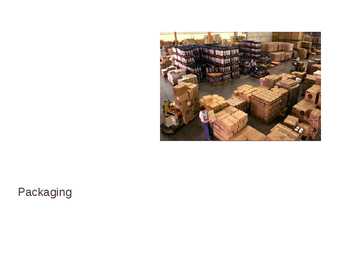
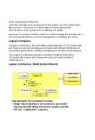
Packaging General characteristics of the packaging q Packaging tool or set of tools that protect goods from damage and loss. q Packaging is really important, as all kinds of damage may be caused to shipments : moisture, corrosion, dropping, evaporation, chemical reactions, and pilferage. Its essential to arrange for safe packing. Packing elements Ø Packing elements are containers, packaging or dressings material. Ø Package means the container for storage of goods or for their transportation. Ø Packaging materials mean any material used especially to protect something. qualification of packing Number of signs: Ø place Ø purpoce Ø the applied materials Ø form Ø frequency rate of use in a place of packing distinguish v Production - technological operation carries a manufacturer. v Trading - holding seller.
Supply chain management spans all movement and storage of raw materials, work-in-process inventory, and finished goods from point-of-origin to point-of-consumption. According to the Council of Supply Chain Management Professionals (CSCMP), a professional association that developed a definition in 2004, Supply Chain Management "encompasses the planning and management of all activities involved in sourcing and procurement, conversion, and all logistics management activities". Importantly, it also includes coordination and collaboration with channel partners, which can be suppliers, intermediaries, third-party service providers, and customers. In essence, Supply Chain Management integrates supply and demand management within and across companies. 3 According to Cohen & Lee (1988)
Pier Sandro Cocconcelli and Cecilia Fontana 11. Drying 219 Endre Zukál and Kálmán Incze v vi Contents 12. Smoking 231 Zdzisław E. Sikorski and Edward Kol ´ akowski 13. Meat Packaging 247 Maurice G. O’Sullivan and Joseph P. Kerry 14. Novel Technologies for Microbial Spoilage Prevention 263 Oleksandr Tokarskyy and Douglas L. Marshall 15. Plant Cleaning and Sanitation 287 Stefania Quintavalla PART II. Products 299 16
1990 levels between 2008 and 2012 RECYCLING: A Prime Example of German Sustainability How it began... · The "Green Movement" in Germany was ignited by damaging acid rain that was ruining their forests · Challenging the "Throwaway Society" · Space was becoming limited for landfills · NIMBY syndrome was rampant and there was an imperative need to find a solution Verpackungsverordnung The Ordinance on the Avoidance of Packaging Waste (1991) · Making the "Polluter Pay" · Goal: to give private industry incentive to consider the solid waste consequences when it designs packages · Requires industry to take back, reuse, and/or recycle packaging · Major Objectives Packaging should be made from "environmentally responsible" materials compatible with recycling Weight and volume of packaging should be minimized Packaging should be refillable, if feasible
During 2002, The Body Shop ran a global campaign with Greenpeace International on promoting renewable energy, which culminated in the presentation of over six million customer signatures at the World Summit for Sustainable Development in Johannesburg. We further our commitment to environmental sustainability through investment in renewable energy, funding of energy efficiency projects in the developing world, and incorporating post-consumer recyclate into our packaging. During 2003 The Body Shop launched a global campaign to help Stop Violence In The Home. This builds on almost a decade of campaigning on the issue in a number of our markets, including Canada, the USA, and West Malaysia. The campaign aims to highlight the issue, raise money to support the work of groups helping victims of violence, and ensure that customers and employees are provided with information on sources of advice and help.
2. Changes in production methods (process innovation): “is the implementation of a new or significantly improved production or delivery method. This includes significant changes in techniques, equipment and/or software.” Oslo Manual 2005 3. Introduction of novel design solutions and sales methods (marketing innovation). “Is the implementation of an new marketing method involving significant changes in product design or packaging, product placement, product promotion or pricing” Oslo Manual 2005 A distinctive look for a product and appeal a new market segment; Celebrity endorsements; personalized IS; New brand, etc. P.S. Seasonal, regular and routine changes. 4. Changes in the structure of the enterprise or in the ways of organizing work (organizational innovation) “is the implementation of a new organisational method in the firm’s business practices, workplace organization or external
·They are getor setfrom otherentities for customization and programmatic use. ·Beans are customized by modifying theirproperties. A user can customize a beanby: programmaticallychanging properties or editing properties within a builder tool using PropertySheets & Editorsor automatically being guided through customization bycustomizers, i.e. graphical user interfaces sometimesalso denoted as wizards. ·What about the packaging of beans ? Beans are delivered using compressed archive files (JARfiles). JAR files contain the class files of beans as well asresource files such as images, sounds, videos. ·Inaddition, a manifestfile describes the contents of thearchive. Problems: ·Security:Since beans run in the same address spaceas their container, the same security restrictionsapply. Never assume a specific trust level for yourbean.
1 2 3 , , , 4 , 5 , 9, 10- http://www.europarl.europa.eu/atyourservice/en/displayFtu.html?ftuId=FTU_3.1.2.html, by Mariusz Maciejewsk, 12/2016 6 R. Barents "Charges have an Equivalent effect on Customs Duties" (1978) 15CNL rev 415 7 - Paul Craig, Gráinne de Búrca, EU Law: Text, Cases, and Materials, p.613, 617, 618, 2015 8 - http://eur-lex.europa.eu/legal-content/EN/TXT/?uri=CELEX%3A61968CJ0024 From the four main articles (34-37), the greatest practical importance for the realization of the freedom of movement of goods and the formation of a single internal market for the EU is art. 34 on the prohibition of quantitative import restrictions and measures equivalent to quantitative restrictions. The Treaty on the functioning of the European Union does not define either key concepts or the mechanism for implementing Art. 34. This task in this case (as in all others) is carried out by the EU Court
 annaabi.ee






Kõik kommentaarid