Leidsid 33 sarnast õppematerjali, mis on seotud failiga "I Love English 7 unit 3 test.". Need materjalid aitavad sul teemat sügavamalt mõista.
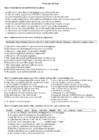
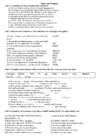
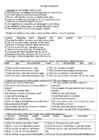
unless, talk, late, phrase, unit, listen, price, talking, complete, kuulamis, drink, fish, travel, stuff, translate, shown, interest, jimmy, little, sister, privacy, emily, wanted, impress, boys, knowledge, gets, before, include, photos, notice, went, weak, knees, yesterday, sentences, tell, foot, feel, call, jeans, haven, enough, money, seat, buysTests Superstar 1 Luke Prodromou Test 1 Name____________________ Class_______ Use your English 1 Complete these sentences using the correct form (present simple or present continuous) of the verb in brackets. _ 1 She is in a band and she _________________________________ (record) a CD at the moment. _ 2 She is an actress and often _________________________________ (appear) on television. _ 3 At the moment she _________________________________ (have) a rest because she is tired. _ 4 Mike is a doctor and he _________________________________ (live) in Manchester.
* visuaalne info on pandud kahekordsete ümarsulgude vahele. I Love English 6 töövihik sobib inglise keele õpetamiseks 8. klassis Töövihik vastab riiklikule õppekavale Retsenseerinud Piret Kärtner, Viive Latt, Ingrit Tera Toimetanud Viiu Menning, Nicola Fyfe, Tiina Helekivi Kujundanud ja küljendanud Eve Kurm Tehniliselt toimetanud Andero Kurm Illustreerinud Ülle Meister Esikaas: Boswell and Dr. Johnson (foto Scanpix). Vaata Unit 20. Autoriõigus: Mare Jõul, Ülle Kurm, 2009 Kirjastus Studium, 2009 Kõik õigused on kaitstud. Ilma autoriõiguse omaniku eelneva kirjaliku loata pole lubatud ühtki selle töövihiku osa paljundada ei elektroonilisel, mehaanilisel ega muul viisil. Töövihik on kooskõlas 2009. a uuendatud õppekomplektiga I Love English 6. Tartu, 2014 ISBN 978-9949-436-59-0 Kirjastus Studium Riia 15b, Tartu 51010 www.studium.ee Trükitud OÜ Greif trükikojas Lohkva, Luunja vald Tartumaa 62207
Golden Grammar rules 1. Don't use an with own. Sue needs her own room. (NOT Sue needs an own room.) I'd like a phone line of my own. (NOT ... an own phone line.) 2. Use or rather to correct yourself. She's German or rather, Austrian. (NOT She's German or better, Austrian.) I'll see you on Friday or rather, Saturday. 3. Use the simple present play(s), rain(s) etc to talk about habits and repeated actions. I play tennis every Saturday. (NOT I am playing tennis every Saturday.) It usually rains a lot in November. 4. Use will ..., not the present, for offers and promises. I'll cook you supper this evening. (NOT I cook you supper this evening.) I promise I'll phone you tomorrow. (NOT I promise I phone you tomorrow.) 5. Don't drop prepositions with passive verbs. I don't like to be shouted at. (NOT I don't like to be shouted.)
To read and write, to jump and run. How things are done the adverbs tell, As quickly, slowly, badly, well. ition Adverb Prepos The preposition shows relation, As in the street or at the station. Conjunctions join, in many ways, Sentences, words, or phrase and phrase. The interjection cries out, "Heed! Interjection Conjunction An exclamation point must follow me!" 2 The Capital Letter The capital letter is also called a big letter or upper- case letter, or sometimes just a capital. A B C D E F G H I J K L M
· action set by a timetable or usually schedule Present A: He is speaking. · action taking place in the at the moment, Continuous N: He is not speaking. moment of speaking just now, Q: Is he speaking? Listen!, Look!, · action taking place only for a now, right now limited period of time · action arranged for the future Past Simple A: He spoke. · Finished action in the past yesterday, 2 N: He did not speak. minutes ago, in Q: Did he speak
Exercises 1. Use the Present Simple of the verb be or have. ( 10 points ) Mary........blue eyes and blond hair, but her brother ........dark hair. He ........in his late twenties. He........married and........two sons. I........short, but my sister........tall. We........a dog and a cat. Our uncle........two dogs. They........brown. 2. Choose the correct item. ( 5 points ) e.g. The residents were made...D....their homes by the authorities. A leave B leaving C left D to leave 1) Ann is my best friend! We........each other for years A know B knew C knows D have known
The life of top sportsmen is only hard work and no fun at all. Nowadays sport is not so popular with young people as it was about ten years ago. WEATHER 1. What´s the weather like today? 2. What does the weather forecast say about tomorrow? 3. What kind of weather do you like best? Describe the weather you like best. 4. Is it good to have four seasons? Why? Why not? 5. Which season do you like best? What is your favourite season? Why? 6. Do you listen to weather forecasts? Do you read them in the newspaper? 7. What is the most terrible weather you have ever seen? 8. What will the weather be like if swallows fly very low? The sun sets into a cloud? The sunset is red? Dogs eat grass? 9. Have you ever tried to forecast the weather? What were the results? 10. What kind of things do you like doing outdoors? 11. Do you think Estonia has a good climate? What do you like about it and what not? 12
2 had known had been waiting singers and TV presenters 3 had enjoyed/had been enjoying 1A Talking about people 4 had thought/had been thinking page 3 3 1 F 3 F 5 T 5 had understood 2 F 4 T 6 F 1 1 unreliable 4 modest 6 had belonged 2 naive 5 thoughtless Challenge
· You are learning English now. "Always" · You are not swimming now. · Are you sleeping? · I am sitting. · I am not standing. · Is he sitting or standing? · They are reading their books. Examples: · They are not watching television. · What are you doing? · She is always coming to class late. · Why aren't you doing your homework? · He is constantly talking. I wish he would shut up. USE 2 Longer Actions in Progress Now · I don't like them because they are always complaining. REMEMBER Non-Continuous Verbs/ Mixed Verbs Examples: (All of these sentences can be said while Examples:
forehead. I've seen photos of her when 1E Phrasal verbs page 8 5 (possible answers) she was my age and apart from the 1 1 go ahead 5 come to eighties hairstyle we're the spitting 1 Well, you will go to bed late every night. 2 fall through 6 bring about image of each other! Some people 2 Well, you will refuse to wear a 3 tip off 7 go down with say that they can see a strong family coat. 4 mistake for 8 come up with
"I'm sure drinking the night before starting a new job is a bad idea." "Come on, Eva." Cary sat on our new living room floor amid a half-dozen moving boxes and flashed his winning smile. We'd been unpacking for days, yet he still looked amazing. Leanly built, dark-haired, and green-eyed, Cary was a man who rarely looked anything less than absolutely gorgeous on any day of his life. I might have resented that if he hadn't been the dearest person on earth to me. "I'm not talking about a bender," he insisted. "Just a glass of wine or two. We can hit a happy hour and be in by eight." "I don't know if I'll make it back in time." I gestured at my yoga pants and fitted workout tank. "After I time the walk to work, I'm going to hit the gym." "Walk fast, work out faster." Cary's perfectly executed arched brow made me laugh. I fully expected his million-dollar face to appear on billboards and fashion magazines all over the world one day
1. A generalist is ignorant from the point of view of a specialist and a specialist is stupid from the point of view of a generalist. 2. All great stupidity is created by geniuses. 3. All stereotypes are true; the fact that you recognize a slur proves that it isn't. 4. Anything you're afraid is true is true. 5. Before most people get to the point of being able to tell their ass from a hole in the ground they're already assholes and it's too late. 6. Concentrating on something important can make you lose track of your soap opera. 7. Debunking the bunk is everyone's responsibility. 8. Don't ask me to pay for anyone else's mistakes. I make enough of my own. 9. Even those who possess real magic must beware of being misled by "magical thinking." 10. Everyone knows what shit tastes like. 11. Exclusive occupancy of a private room is a basic human right. 12. Fair compensation for genius is wealth. 13
8 Looking forward to seeing you and catching up on all your news. 9 Your thoughtful gift was greatly appreciated. Once again. , thank you for your generosity. 10 I am very sorry but unfortunately you won't be able to use my summer house during the first week of August. 11 I'm so happy for you! Write back soon and tell me all about your new job. 12 Hope this advice helps. Informal (friendly) letters Giving News TASK 6 Read the following questions then listen to the dialogue and answer them. a) Why hasn't Steve written earlier? b) What does he think of Hong Kong? c) What is the weather like? d) What happened to him recently? e) What does he say about his new colleagues? f) Is his new job easier than the one he had in London? g) How does the writer feel about his new situation? Informal (friendly) letters are normally written to relatives, friends or other people we know very well
4 Isa nõudis, et me tõtt räägiksime. Father insisted us telling the truth. 5 Kui ma karbi avasin, leidsin, et äratuskell oli viga saanud. When I opened the box, I found that the alarm clock was damaged. 6 See pole aus! See on pettus! It´s not fair! That´s cheating! 7 Vanaema tavaliselt küpsetab mu sünnipäevaks metspähkikooki. My grandmother usually bakes hazelnut cake for my birthday. 8 Meie meeskonnal läheb sellel hooajal hästi. Our team is doing well this season. 2 Complete the sentences with prepositions. 1 According to a survey people think that climate change is a serious problem. 2 I need to save up a lot of money for my new laptop. 3 Instead of going out alone I decided to call Chris and wait for him to pick me up. 4 Can´t you undestand! I don´t want to waste time arguing with you! 5 Ian decided to leave from(?) work earlier and on his way to the bus stop he met his old friend by accident. 6 He provided me with the information I needed.
when is used to refer to something the speaker knows will happen at some point in time: When I finish cooking, I will call you. if is used to refer to something that we think might happen or for something impossible or imaginary: If you see Ann, tell her to call me. If I were you, I wouldn’t do that. unless, if … not, except if refer to things which have not happened or did not happen or probably will not happen: Come over tomorrow around five, unless my secretary contacts you. Come over tomorrow around five, except if my secretary contacts you. 4 otherwise expresses an outcome which is likely if a condition is not met: Take the umbrella, otherwise you’ll get soaked. in case refers to situations involving a risk which has to be avoided: I’ll take these shoes with me in case it rains. in case of
and he offered to sell me his truck cheap." "What year is it?" I could see from his change of expression that this was the question he was hoping I wouldn't ask. "Well, Billy's done a lot of work on the engine -- it's only a few years old, really." I hoped he didn't think so little of me as to believe I would give up that easily. "When did he buy it?" "He bought it in 1984, I think." "Did he buy it new?" "Well, no. I think it was new in the early sixties -- or late fifties at the earliest," he admitted sheepishly. "Ch -- Dad, I don't really know anything about cars. I wouldn't be able to fix it if anything went wrong, and I couldn't afford a mechanic..." "Really, Bella, the thing runs great. They don't build them like that anymore." The thing, I thought to myself... it had possibilities -- as a nickname, at the very least. "How cheap is cheap?" After all, that was the part I couldn't compromise on. "Well, honey, I kind of already bought it for you
Phonology: the subfield of linguistics that studies the structure and systematic patterning of sounds in human language. Phonetics: of the acoustic detail of speech sounds and how they are articulated. Phone: [p] A phone is actual pronunciation of a phoneme. A phone is represented between brackets Allophone: e.g. pin spin Phoneme: /p/ - /iz/ `houses' /s/ voicless `cats' /z/ `boys' /t/ `learned' /id/ `wanted' A phoneme is the smallest unit of the sound system of a language. If two sounds have the same phoneme, they are treated equally. A phoneme is represented between slashes. Morphology: is the study of word formations and the internal structure of words Morphemes: the smallest units of language that have their own meaning or grammatical function. cat, cat/s, laugh/ed, un/able, sheep Free morphemes: cat, laugh, eat, red Bound morphemes: prefixes: pre- prejudge dis- dislike suffixes: -ist typist
All registered trademarks in this book are property of their respective owners. Library of Congress Cataloging-in-Publication Data Ferriss, Timothy. The 4-hour body / Timothy Ferriss. -- 1st ed. Includes bibliographical references and index. 1. Health. 2. Physical fitness. 3. Weight loss. I. Title. II. Title: Four-hour body. RA775.F47 2010 613.7--dc22 2010018533 eISBN: 978-0-307-46365-4 All illustrations by Fred Haynes/Hadel Studio, unless otherwise noted in the Photo and Illustration Credits section Jacket front-flap photos: (top) (c) Mark Reifkind; (bottom) (c) Photos taken by Inge Cook, provided courtesy of Ellington Darden, PhD v3.1 For my parents, who taught a little hellion that marching to a different drummer was a good thing. I love you both and owe you everything. Mom, sorry about all the crazy experiments. Support good science-- 10% of all author royalties are donated
My friend had attempted a couple of standard sales tricks to get them moving. She tried call- ing attention to them by shifting their location to a more central display area; no luck. She even told her sales staff to "push" the items hard-again without success. Finally, the night before leaving on an out-of-town buying trip, she scribbled an exasperated note to her head saleswoman, "Everything in this display case, price x '/2 ," hoping just to be rid of the offending pieces, even if at a loss. When she re- turned a few days later, she was not surprised to find that every article had been sold. She was shocked, though, to discover that, because the employee had read the '''/2'' in her scrawled message as a "2," the entire allotment had sold at twice the original price! That's when she called me. I thought I knew what had happened but told her
3 frightening scary 7 nervous worried 4 intelligent bright 8 friendly kind 3 Write in reported speech. 1 The teacher asks, "What is the capital of Latvia?" The teacher asks what the capital of Latvia is. 2 Mary asks me, "How many sisters have you got?" Mary asks me how many sisters I have got. 3 Ben asks Brian, "Why were you late yesterday?" Ben asks Brian why he was late yesterday. 4 The secretary asks me, "What is your address?" The secretary asks me what my address is. 5 My little sistar asks, "Where is my teddy bear?" My little sister asks where her teddy bear is. 6 The man asks, "What time is the next train for Leeds?" The man asks what time the next train for leeds is.
the thought that each minute gone by made it nearer the time when he would come. There was a slow smiling air about her, and about everything she did. The drop of a head as she bent over her sewing was curiously tranquil. Her skin - for this was her sixth month with child - had acquired a wonderful translucent quality, the mouth was soft, and the eyes, with their new placid look, seemed larger darker than before. When the clock said ten minutes to five, she began to listen, and a few moments later, punctually as always, she heard the tires on the gravel outside, and the car door slamming, the footsteps passing the window, the key turning in the lock. She laid aside her sewing, stood up, and went forward to kiss him as he came in. "Hullo darling," she said. "Hullo darling," he answered. She took his coat and hung it in the closer. Then she walked over and made the drinks, a strongish
He/she/it has been going He/she/it has not been going Has he/she/it been going? We/you/they have been making We/you/they have not been making Have we/you/they been making? Kestev täisminevik väljendab: · Tegevust, mis on hiljuti või alles lõppenud, kuid mille algust ega lõppu pole teada. You are wet. Have you been running in the rain? They have been talking to Mary and they have decided... · Tegevust, mis algas enne kõnemomenti, kestab selleni või peale seda. Sel juhul rõhutakse tegevuse kestvusele (how long, for, since etc). How long have you been learning Italian? I have been drawing for almost two hours now. Past Continuous Kestva mineviku moodustamine Jaatav vorm Eitav vorm Küsiv vorm
to be in the house by the end of next week." "What is his name?" "Bingley." "Is he married or single?" "Oh! Single, my dear, to be sure! A single man of large fortune; four or five thousand a year. What a fine thing for our girls!" "How so? How can it affect them?" "My dear Mr. Bennet," replied his wife, "how can you be so tiresome! You must know that I am thinking of his marrying one of them." "Is that his design in settling here?" "Design! Nonsense, how can you talk so! But it is very likely that he may fall in love with one of them, and therefore you must visit him as soon as he comes." "I see no occasion for that. You and the girls may go, or you may send them by themselves, which perhaps will be still better, for as you are as handsome as any of them, Mr. Bingley may like you the best of the party." "My dear, you flatter me. I certainly have had my share of beauty, but I do not pretend to be anything extraordinary now
3 arrived 5 bravely 4 walked 6 patiently 5 met 6 took 8 7 decided 2 badly 8 wanted 3 clearly 4 fast 2 5 late 2 Why did he leave England? 6 hard 3 When did you arrive at the camp? 7 completely 4 How far did you walk? 8 honestly 5 Where did she meet her companion? 9 well 6 What did she do before going to bed? 10 slowly 7 What did you decide to take on the trip? 8 Who did they want to meet? 9
DORINE Besides, 'tis downright scandalous to see This unknown upstart master of the house-- This vagabond, who hadn't, when he came, Shoes to his feet, or clothing worth six farthings, And who so far forgets his place, as now To censure everything, and rule the roost! MADAME PERNELLE Eh! Mercy sakes alive! Things would go better If all were governed by his pious orders. DORINE He passes for a saint in your opinion. In fact, he's nothing but a hypocrite. MADAME PERNELLE Just listen to her tongue! DORINE I wouldn't trust him, Nor yet his Lawrence, without bonds and surety. MADAME PERNELLE I don't know what the servant's character May be; but I can guarantee the master A holy man. You hate him and reject him Because he tells home truths to all of you. 'Tis sin alone that moves his heart to anger, And heaven's interest is his only motive. DORINE Of course. But why, especially of late, Can he let nobody come near the house? Is heaven offended at a civil call
the Russian peasant. Stiva stays with Levin on his country estate when he makes a sale of a plot of land, to provide funds for his expensive city lifestyle. Levin is upset at the poor deal he makes with the buyer and his lack of understanding of the rural lifestyle. Levin pays Dolly a visit, and she attempts understand what happened between him and Kitty and to explain Kitty's behaviour to him. Levin is very agitated by Dolly's talk about Kitty, and he begins to feel distant from her as he perceives her behaviour towards her children as false. Levin resolves to forget Kitty and contemplates the possibility of marriage to a peasant woman. However, a chance sighting of Kitty in her carriage as she travels to Dolly's house makes Levin realise he still loves her. In St. Petersburg, Karenin exasperates Anna by refusing to separate from her. He
Yesterday was her brother's birthday, so she took him out to dinner. 2. Use commas after introductory a) clauses, b) phrases, or c) words that come before the main clause. a. Common starter words for introductory clauses that should be followed by a comma include after, although, as, because, if, since, when, while. While I was eating, the cat scratched at the door. Because her alarm clock was broken, she was late for class. If you are ill, you ought to see a doctor. When the snow stops falling, we'll shovel the driveway. However, don't put a comma after the main clause when a dependent (subordinate) clause follows it (except for cases of extreme contrast). Incorrect: She was late for class, because her alarm clock was broken. Incorrect: The cat scratched at the door, while I was eating. Correct: She was still quite upset, although she had won the Oscar. (This comma use is
Crime and the Law Task 1. Underline the most suitable word or phrase. a) Sally didn't realise that she had broken/countered/denied the law. b) The police have banned/cancelled/refused parking in this street. c) I must remember to get a/an agreement/licence/permission for my television. d) The president admitted that there had been a breakdown of law and crime/government/order. e) Jim's parents wouldn't agree/allow/let him go to the demonstration. f) Jake was arrested because he had entered the country falsely/illegally/wrongly.
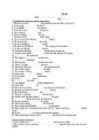
21. The woman's bag is .................. the table. 22. The woman is sitting .................. a table. 23. Some kinds .................. plants 24.To be caused .................. something 25.To last .................. years 26. .................. the stairs 27.I can depend .................. my best friend Paul. 28. Stop! Wait .................. me 29.The letter was written ..................my pen friend in Scotland. 30. Benjamin is really interested ..................history. 31.We were talking ..................you. 32. The girl is standing ..................the two boys. 33. The boy with the green shirt is ..................the right. 34. ..................the picture, there are three kids. 35. He has a gamboy ..................his hands. 36. What are you doing ..................the weekend? 37. We could go there together ..................the afternoon. 38. That's right. But I must hurry home after the film. I have to be home ..................eleven o'clock. 39. It lasts ..........
The most important piece of information to support this aim is the fact that AMC have broken their contractual obligations. By reversing the order in which the two problems are described, the secretary ensures that this piece of information receives the maximum amount of emphasis, or focus, and thus leads logically into the recommendation. We will be looking again at the idea of linguistic focus in Unit 6. 3 Grammar, Spelling and Sentence Construction As well as reorganizing the information in the report the secretary also made a number of changes to the language which the writer had used. You probably noticed that Text 1 contained a number of grammatical and spelling mistakes. If not, look for them now before continuing with this Discussion section. Grammar `AMC's works have gone down' AMC's work has really gone down.
People and Behaviour 1. Underline the most suitable word or phrase. a) Please don't push. It's very bad-tempered/rude/unsympathetic. b) Jack hates spending money. He's rather frank/greedy/mean. c) Our teacher is very proud/strict/tolerant and won't let us talk in class. d) Helen never does her homework. She is rather gentle/lazy'/reliable. e) I didn't talk to anyone at the party because I felt ambitious/lonely/shy. f) When Harry saw his girlfriend dancing with Paul he felt jealous/selfish/sentimental. g) I don't like people who are noisy and aggressive/courageous/sociable. h) Thanks for bringing us a present. It was very adorable/grateful/thoughtful of you. i) Teresa never gets angry with the children. She is very brave/patient/pleasant. j) Tom always pays for everyone when we go out. He's so cheerful/generous/honest. 2
Shops and Shopping Task 1. Underline the most suitable word or phrase. a) That new clothes shop has a lot of very good bargains/sales. b) On Saturday morning the High Street is full of customers/shoppers. c) It costs £9, so give her £10, and she'll give you £1 change/rest. d) I don't go to that supermarket because it's a bit priced/pricey. e) You cannot return goods without the original recipe/receipt. f) Supasoft Soaps are for sale/on sale here. g) A carrier bag is free with each buyer/purchase over £10.
Feelings and Opinions 1. Underline the most suitable word or phrase. a) When Dick saw his neighbour kick his dog he became angry/nervous. b) Sue wasn't really interested/interesting in the film. c) We were both afraid/anxious that we would miss the plane. d) I wish you wouldn't snap your fingers. It's very annoying/worrying. e) You're not scared/thrilled of spiders, are you? f) If we forget to do our homework, our teacher gets cross/terrifying. g) Tim completely lost his temper! He was absolutely furious/upset.
 annaabi.ee