Leidsid 33 sarnast õppematerjali, mis on seotud failiga "Fight Club". Need materjalid aitavad sul teemat sügavamalt mõista.
fight, club, author, novel, first, narrator, without, plot, chuck, palahniuk, find, real, works, tyler, character, night, wanna, ways, look, talk, ideas, reject, things, film, julia, authors, terry, pratchett, stephen, baxter, philosophical, parallel, similar, device, stepper, travelling, through, fantasy, science, laade, released, seven, cultural, impactFight Club Chuck Palahniuk Fight Club o Author Chuck Palahniuk o Year 1996 o Genre Satirical novel o Country United States Characters o The Narrator Main character, name never mentioned throughout the novel, founder of Fight Club o Tyler Durden founder of Fight Club o Marla Singer A woman whom the narrator met at a support group, Tyler's lover, extremely grungy, uncaring and suicidal Characters o Angel Face joined Fight Club, very loyal, very beautiful (hence his name), suffers a brutal beating by the narrator because he "wanted to destroy something beautiful" o Robert "Bob" Paulson main character meets him at a support group, later meets him again in Fight Club, former bodybuilder, increased estrogen
BOOK REPORT Title of the book: Fight Club Author (name and some general information): Chuck Palahniuk is an American novelist born February 21, 1962 in Washington, USA. He is best known as the author for the novel Fight Club (1996), which was made into a movie in 1999. Palahniuk began writing fiction in his mid-thirties. When he attempted to publish his novel, Invisible Monsters, publishers rejected it for its disturbing content. This led him to work on Fight Club which he wrote as an attempt to disturb the publisher even more for rejecting him. After initially publishing it as a short story in the 1995 compilation, Pursuit of Happiness, Palahniuk expanded it into a full novel, which --contrary to his expectations--the publisher was willing to publish. Some other well-known novels: Rant, Choke, Diary. Analysis of the book 1. Setting The story takes place in somewhere between 1980s and 1990s in the United States. 2. Characters
Review of "Fight Club" by Chuck Palahniuk Fight Club is an amazing book. Initially it was published as a short story in the compilation of Pursuit of Happiness. Later on in August 1996 Palahniuk expanded it to a full length novel and the books was published by W. W. Norton & Company. The genre of the book has been stated to be satirical novel. The novel tells a story about an miserable specialist of a car company. From day to day, he traveled from city to city, inspecting car crashes and deciding whether it was the car producers fault or not. He spent all his free time in cheap motels with insomnia and on daily basis watching corps, blood and human flesh mixed with oil and scrap metal has its own effect on his mind. Since there really isn't a support group for people with similar faith, the
Ole mu kõrval, kui kumab kuu, kui su nime hüüab mu suu, ära tõota mulle, et armastad mind, kui ei ole valmis ohverdama end. Luba, et printsess jääb printsiga, kuni nad veel siin ilmas elavad. Unustame hetkeks kõik muu me, tunnetame üksteise kiireid südamelööke, kas tunned, kuidas süda jätab lööke vahele, see kõik on midagi uut, meile kahele. · Women are stronger than men, because they can walk in a 12 cm stilettos without showing the pain. · Men would kill to protect women they love. Men were born because of women. Women.. We're special · It doesn't matter where, when, or how did we met. What matters is the fact that we did. · Loving someone so much doesn't always mean they're right one for us. · Wishes are for lazy people who can't get up and make their dreams come true on their own. Make it happen! · It's easy to say something, but it's harder to mean it.
do the right thing. 19. If you odn't give a certain amount of attention to filtering distractions, every distraction is a catastrophe. 20. If you don't know what your duty is, your duty is to find out. 21. If you're not an animal, then you must be a vegetable. 22. If you want to get along you have to get along with those who don't want to get along. 23. If you whine whenever anybody messes with your crutches you can't claim not to be crippled. 24. I hate an unfair fight, so I need to be ganged up on. 25. Inattention is not O.K. 26. Injustice in your vicinity is your business--particularly your own. 27. It is not enough to refrain from bearing false witness against your neighbor. When he is falsely accused it is your duty to bear witness to the truth, no matter what your opinion of him generally may be. 28. It isn't stupidity that bothers me; it's the reign of stupidity. 29. I want to separate the sheep from the goats; I have no use for sheep. 30
............................................................................................ Orson Scott Card He was born on the 24th of August, 1951 in Richland, Washington. Card's writing career began primarily as a poet, studying at Brigham Young University. During his studies as a theatre major, he began "doctoring" scripts, adapting fiction for theatre production, and finally writing his own one-act and full-length plays. Later he has worked both as a freelancer and a contracted writer. He first wrote the short story "Ender's Game" while working at the BYU press. Ender's Game and its sequel Speaker for the Dead were both awarded the Hugo Award and the Nebula Award, making Card the only author (as of 2008) to win both of science fiction's top prizes in consecutive years. Card continued the series with seven books, which divide into "Shadow" and "Speaker" series. He has also announced his plan to write two more novels: Shadows in
but shy aristocratic landowner who, unlike his Moscow friends, chooses to live in the country on his large estate. He discovers that Kitty is also being pursued by Count Alexei Kirillovich Vronsky, an army officer. At the railway station to meet Anna, Stiva bumps into Vronsky. Vronsky is there to meet his mother. It surmises that Anna and the Countess Vronskaya have travelled together in the same carriage and talked together. As the family members are reunited, and Vronsky sees Anna for the first time, a railway worker accidentally falls in front of a train and is killed. Anna interprets this as an "evil omen." Vronsky is infatuated with Anna. Anna, who is uneasy about leaving her young son, Seryozha, alone for the first time, talks openly and emotionally to Dolly about Stiva's affair and convinces Dolly that her husband still loves her, despite his infidelity. Dolly is moved by Anna's speeches and decides to forgive Stiva
...........................................................................66 The Pathological Ego................................................................................68 The Background Unhappiness...................................................................70 The Secret of Happiness............................................................................71 Pathological Forms of Ego........................................................................73 Work – with and Without Ego...................................................................75 The Ego in Illness......................................................................................77 The Collective Ego....................................................................................77 Incontrovertible Proof of Immortality.......................................................79 Chapter Five The Pain-Body - 80
American literature The literary history of this nation when the first humanbeing living in what has since become the U.S used language creatively. · Mid to late 18 century put down · Words are powerful, magical · Words must be remembered · Native Americans stories creation of the world · Attidude thought their land/language · Similar stories Dates and names · America was discovered in 1492 by Columbus · 1497 John Cabot went to Canada · 1579 San Fransisco/St
different now. Children have more freedom to make their own decisions. For example, children aged 13 may be employed part time in Great Britain. Age 15 is legally a "young person" not a "child". Age 16 is a school leaving age. They can leave home, drive a moped, marry with "parents' consent" buy beer. Age 17 can drive a car. Age 18 can vote, get married, drink in pubs. Education is a very important part in the life of British youth. One can't become an independent person without it. When time comes to enter a college a young Englishman chooses one far away from home. It is a necessary part of becoming adult. During the last 30 years there were a lot of different trends in youth movements. All of them were characterized by their own philosophy, way of life, style of dressing. Each tendency was born by the influence of economic and political changes in the society. Those trends are known as the "hippies" the "punks" the "rockers".
you, but you mean nothing to him. 24. If kisses were raindrops, I'd send you shower. If hugs were seconds, I'd send you hours. If smiles were water, I'd send you the sea. If love was a person, I'd send you me. 25. If I could give you one thing in my life, I would give you the ability to see yourself through my eyes. Only then would you realize how special you are to me. 26. We live in world of opposite, when there is no hot without cold, no happiness without sadness, no light without dark. We may be opposite, but I just want you to know that there is no me without you. 27. Your love is the best gift I've ever got, I'll always keep it close to my heart. 28. I am the life I have, You are the life I'm missing. 29. Meeting you was a fate, becoming your friend was a choice, but falling in love with you I had no control over. 30. The best thing in the life is finding someone who knows your flaws
Zooey. The Catcher in the Rye is by far the most famous and most critiqued book of his, selling over 250,000 copies every year. In total the book has sold over 65 million copies worldwide. The success of The Catcher in the Rye led to public attention: Salinger became reclusive, publishing new work less frequently. Analysis of the book 1. Setting The story starts in the year 1950 when the novel's protagonist and narrator Holden starts telling a story from a hospital about the events of last year's winter. Most of the story takes place in winter of 1949 just over a couple of days in Pennsylvania and New York. 2. Characters · Holden Caulfield The main character of the book. He has been expelled from many schools due to his failure in fixing his grades and is expelled from his current school, Pencey Prep, right in the beginning of the story
the literature method no 1 in america · Naturalism appealed American authors because they found it very right to describe what was going on in the turn of century in America · They wanted something fresh, new · They were disgusted by romantics · Showed the harsh tone in moral life · Refleced the development of science · Period of intense urbanisation, the city is in the center of the novel, often · New characters were businessmen, salesman, immigants, poor farmers · These characters were in new settings, skyscrapers, departments store, apartment building, ghetto, stockyard (cattle, cows were slaughtered), commercial trust · Their world is not one of culture or high moral standards · For these new writers controlling new american social experience · Naturalists offered a view that questioned the belief that now was a conscious and
Color-- -1- -2- -3- -4- -5- -6- -7- -8- -9- Text Size-- 10-- 11-- 12-- 13-- 14-- 15-- 16-- 17-- 18-- 19-- 20-- 21-- 22-- 23-- 24 TWILIGHT By Stephenie Meyer Contents PREFACE 1. FIRST SIGHT 2. OPEN BOOK 3. PHENOMENON 4. INVITATIONS 5. BLOOD TYPE 6. SCARY STORIES 7. NIGHTMARE 8. PORT ANGELES 9. THEORY 10. INTERROGATIONS 11. COMPLICATIONS 12. BALANCING 13. CONFESSIONS 14. MIND OVER MATTER 15. THE CULLENS 16. CARLISLE 17. THE GAME 18. THE HUNT 19. GOODBYES 20. IMPATIENCE 21. PHONE CALL 22. HIDE-AND-SEEK 23. THE ANGEL 24. AN IMPASSE EPILOGUE: AN OCCASION twilight STEPHENIE MEYER LITTLE, BROWN AND COMPANY New York Boston Text copyright © 2005 by Stephenie Meyer
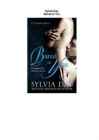
Sylvia Day Bared to You Sylvia Day Bared to You The first book in the Crossfire series, 2012 This one is for Dr. David Allen Goodwin. My love and gratitude are boundless. Thank you, Dave. You saved my life. Acknowledgments My deepest gratitude to my editor, Hilary Sares, who really dug into this story and made me work for it. Basically, she kicked my ass. By not pulling her punches or letting me shortchange the
the English up to his own day Old English Cædmon ,,The Father of English Hymn" Cædmon's Hymn is the oldest recorded Old English poem, and also one of the oldest surviving samples of Germanic alliterative verse The Hymn itself was composed between 658 and 680, recorded in the earlier part of the 8th century Middle English Geoffrey Chaucer 13431400 Known as the ,,Father of English literature", the greatest English poet of the Middle Ages An author, philosopher, alchemist and astronomer, diplomat Wrote The Book of the Duchess, the House of Fame, the Legend of Good Women and Troilus and Criseyde Best known today for "The Canterbury Tales" Crucial figure in developing the legitimacy of the vernacular, Middle English, at a time when the dominant literary languages in England were French Modern English William Shakespeare 26 April 1564 23 April 1616 The Elizabethan Era
although there are certain similarities fast in the town. 2 fall through 6 go down with in our physical build. I also seem to 4 Well, he would keep misbehaving 3 tip off 7 come to have inherited his big feet, unluckily in class. 4 come up with 8 mistake for for me. It was the first thing my parents 5 Well, you would keep eating too noticed when I was born! 3 1 Laura was offered a place at much. Personality-wise, I've got a lot of my Manchester University but she dad's traits in me. We're both quite bubbly and friendly (or so people
seem tragically absurd. As a Jew and a nonveteran, Cohn is a convenient target for the cruel and petty antagonism of Jake and his friends. Read an in-depth analysis of Robert Cohn. Bill Gorton - Like Jake, a heavy-drinking war veteran, though not an expatriate. Bill uses humor to deal with the emotional and psychological fallout of World War I. He and Jake, as American veterans, share a strong bond, and their friendship is one of the few genuine emotional connections in the novel. However, Bill is not immune to the petty cruelty that characterizes Jake and Jake's circle of friends. Mike Campbell - A constantly drunk, bankrupt Scottish war veteran. Mike has a terrible temper, which most often manifests itself during his extremely frequent bouts of drunkenness. He has a great deal of trouble coping with Brett's sexual promiscuity, which provokes outbreaks of self-pity and anger in him, and seems insecure about her infidelity as well as his lack of money.
million years ago. Fossil evidence points to the ways which we have gradually changed. We left the trees, started walking and began to live in larger groups. And then our brains got bigger. Physically we are another primate, but our bigger brains are unusual. We don't know exactly what led to our brains becoming the size they are today, but we seem to owe our complex reasoning abilities to it. It is likely that we have our big brain to thank that we exist at all. When we Homo sapiens first appeared about 200,000 years ago we weren't alone. We shared the planet at least four other upright cousins; Neanderthals, Denisovans, the "hobbit" Homo floresiensis and a mysterious fourth group. The human brain is advantageously big (Credit: Thinkstock) The human brain is advantageously big (Credit: Thinkstock) Evidence in the form of stone tools suggests that for about 100,000 years our technology was very similar to the Neanderthals. But 80,000 years ago something changed.
This vagabond, who hadn't, when he came, Shoes to his feet, or clothing worth six farthings, And who so far forgets his place, as now To censure everything, and rule the roost! MADAME PERNELLE Eh! Mercy sakes alive! Things would go better If all were governed by his pious orders. DORINE He passes for a saint in your opinion. In fact, he's nothing but a hypocrite. MADAME PERNELLE Just listen to her tongue! DORINE I wouldn't trust him, Nor yet his Lawrence, without bonds and surety. MADAME PERNELLE I don't know what the servant's character May be; but I can guarantee the master A holy man. You hate him and reject him Because he tells home truths to all of you. 'Tis sin alone that moves his heart to anger, And heaven's interest is his only motive. DORINE Of course. But why, especially of late, Can he let nobody come near the house? Is heaven offended at a civil call That he should make so great a fuss about it?
door that we do not see the one which has opened for us. * I don't know how to not love you, I only know how to not let you go. I don't wish to be everything to everyone, but I would like to be something to someone. Without friendship life has no sweetness. Life is a journey and love is what makes the journey worthwhile. One loyal friend is worth ten thousand relatives. Good friends are angels on earth. If you see someone without smile,give them one of yours. True friends fill your life with joy,your soul with sunshine and your heart with love. You have to kiss a lot of frogs before you meet your prince. Many people walk in and out of our lives,only true friends will leave footprints in our hearts. Tears are words from heart that cant be spoken. Life is not measured by the number of breaths we take, but by the moments that takes our breath away! La vita e bella - elu on ilus :D Never say never.
did not exist. Only some paintings that were meant for decor in Pompeii were preserved. That is why he went to Pompeii for an expedition, in order to best represent the classicism requirements. David painted carefully all the contours and forms of the human body, because he started to imitate Antique sculptures. Moreover, David and Classicism in general were not limited to only mimicking the external form of the Antique, but also the plot was often borrowed from the Antique literature or mythology. Best suited were the subjects that glorified bravery, loyalty, love for the fatherland and other virtues. Paintings were supposed to be instructive and fight against vices. (Leesi, 2003, p.115) As a matter of fact, the whole life of Jacques-Louis David was somehow connected to political change and therefore David was left with no other choice than to be a part of the French Revolution
5 The thief grabbed my bag and ran The photos are connected with the 1B Past and perfect tenses off. topic of school. Both photos show page 4 6 He dropped a leaf into the water students in class. In the first photo I imagine that 1 1 ate and watched it drift under the they're about 13 years old. 2 have/'ve met bridge. It looks like a science lesson 3 have/'ve caught 7 As she got older, her health
1 belief that we spend more time and money on visible luxurious and ultimately worthless items, than in maintaining our property, which to everyone but us is a major part of their investment and retirement and retirement portfolio. The blame game has become a permanent part of our lives to the exclusion of any other solution that could be more viable in solving our problems. It has become the most productive part of our lives, because without it the African cannot really point to much that they are in charge of producing. It is better to blame others than to confront the truth of our being responsible for whatever has happened to us as an African race. I decided to write ‘Capitalist Nigger’ to open a debate on the state of the African race. But in doing so, my intention was not to treat my own contribution to the debate with kid gloves. It is to tell it like it is, the truth and nothing but the truth
screen(1895-max skladanowsky, lumiere brothers) The lumiere brothers and cinematographe Father was a wealthy factory owner. Thomas edison-worked with moving images. They thaught they can do that also: called it cinematograph-the recording of movement. Started to film on the streets, how they are coming from factorys and called this actuality. They thaught that they are filming the world the way it is. Why do u need to show people things they see every day? The first ,,cinema": cafe. Le grand cafe, paris. 28th of december 1895. Watched the lumiere brothers film. ,,Arrival of the train at le ciotat" the first horror film ever made? People were scared that the train will hit them. That category didnt exist in their brains. Whats wrong? The fact that noone minds the camera. Noone bothers to look into the camera, why didnt nobody looked in the camera. The machine maded noise, but people didnt mind that. The film was staged. It wasn't documentary, like they said
) 16. After look forward to, we use ing, not an infinitive. I look forward to seeing you. (NOT I look forward to see you.) We're looking forward to going on holiday. (NOT ... to go on holiday.) 17. Information is an uncountable noun. Can you give me some information? (NOT Can you give me an information?) I got a lot of information from the Internet. (NOT I got a lot of informations from the Internet.) 18. Use ing forms after prepositions. I drove there without stopping. (NOT I drove there without to stop.) Wash your hands before eating. (NOT Wash your hands before to eat.) 19. Use this, not that, for things that are close. Come here and look at this paper. (NOT Come here and look at that paper.) How long have you been in this country? (NOT How long have you been in that country?) 20. Use a plural noun after one and a half. We waited one and a half hours. (NOT We waited one and a half hour.) A mile is about one and a half kilometres
i this book required reading for movie executives, screenwriters, playwrights, fiction and non-fiction writers, scholars, and fans of pop culture all over the world. Discover a set of useful myth-inspired storytelling paradigms like "The Hero's Journey," and step-by-step guidelines to plot and • character development. Based on the work of Joseph Campbell, The Writers Journey is a must for all writers interested in further developing their craft. This updated and revised Third Edition provides new insights and observations from Vogler's ongoing work on mythology's influence on stories, movies, and man himself. In revealing new material, he explores key principles like polarity and catharsis, plus:
Ender's Game By Orson Scott Card Compiled by Taavo Allik The Author · born on the 24th of August in 1951 · began as a poet · studied theatre · only author to win both science fiction top prizes in consecutive years (Hugo & Nebula Awards) for Ender's Game and it's sequel · Has written in a variety of genres Setting · occasionally on Earth · mostly in Battle School: on orbit near Earth most important there: battlerooms · in Command School very far from Earth on a small planet Eros · on a bugger colony named after Ender Ender's World Main Characters
Lamb to the Slaughter by Roald Dahl (1916-1990) The room was warm and clean, the curtains drawn, the two table lamps alight - hers and the one by the empty chair opposite. On the sideboard behind her, two tall glasses, soda water, whiskey. Fresh ice cubes in the Thermos bucket. Mary Maloney was waiting for her husband to come him (correction: home) from work. Now and again she would glance up at the clock, but without anxiety, merely to please herself with the thought that each minute gone by made it nearer the time when he would come. There was a slow smiling air about her, and about everything she did. The drop of a head as she bent over her sewing was curiously tranquil. Her skin - for this was her sixth month with child - had acquired a wonderful translucent quality, the mouth was soft, and the eyes, with their new placid look, seemed larger darker than before
to relent (39) - abandon or mitigate a severe or harsh attitude, especially by finally yielding to a request. Situation: When Lipsha was talking about mother with Albertine he said he wouldn't relent on her even if she would come back, goes down on her knees and begged him for forgiveness. 2. Explain the following literary terms. Learn and use them in your discussion of the book: Protagonist - the leading character or one of the major characters in a play, film, novel, etc. Theme - an idea that recurs in or pervades a work of art or literature. 2 Motif - a dominant or recurring idea in an artistic work. Symbol - a thing that represents or stands for something else, especially a material object representing something abstract. Allusion - an expression designed to call something to mind without mentioning it
as Loveless' s team. Then you'd still be one of us!" But the little girl grinned and said proudly, "I prefer keeping my honor rather than stealing from the old and sick like all your puppets do!" 1 The man got irritated and shouted her out of his house. The girl turned and walked out as if nothing had happened, the other children staring enviously at her. Just before the door she stopped and asked them without turning, "And for how long are you planning to be the Devil's dolls?" Loveless smiled and replied quietly, "Sooner or later we'll join your forces and defeat them once and for all!" The other two exchanged a scared look, yet said nothing. The man was too angry to follow the conversation. Heartless left the "Devil's" orphanage and went to see the Royal Church, where all homeless people could stay for the night. At least she had heard so
Like psychoanalysis, surrealistic painting and writing explores the inner depths of the unconscious mind. Freudian ideas have provided subject matter for authors and artists. Critics often analyze art and literature in Freudian terms. 2. Literary Modernism and its sub-movements. The influence of Structuralism and psychoanalysis. Main characteristic features of Modernism. Denial of conventions, traditional structure, plot and presentation of character. The stream of consciousness. Allusiveness. Virginia Woolf's Modern Fiction as a theoretical platform for Modernism. Criticism of Realist literary method. Literary modernism: end of the 19th century-1920 (reached its height) and ended 1940s. A self- conscious break with traditional aesthetic forms. Rejecting the sentiment and discursiveness typical of Romanticism and Victorian literature for poetry that instead favored precision (täppis) of imagery
process. Consequently, they were attracted to the idea of democracy, where the government is "of the people, by the people, for the people," as Lincoln later expressed in his Gettysburg Address. Religious Tolerance: Much impetus for the ideas of religious tolerance came from the rule of King George II, who was a staunch Catholic and did not allow freedom of religion to Protestants in New England. Voltaire was among the first to denounce Christianity and other organized religions as mere ploys to support monarchy. What emerged was Deism, which was more or less a new religion that considered reason its foundation. In Deism, there is no interference by a deity, and man controls his own destiny. These ideas stirred the masses into action, as the people dreamed of carving their own futures. Adopted by the Founding Fathers, Enlightenment
 annaabi.ee