Leidsid 33 sarnast õppematerjali, mis on seotud failiga "Fight Club - Book review". Need materjalid aitavad sul teemat sügavamalt mõista.
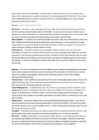
fight, tyler, club, character, narrator, support, recall, project, real, join, novel, work, later, other, place, part, groups, cost, himself, meets, person, cancer, could, sleep, there, author, palahniuk, publisher, works, times, insomnia, having, soap, goes, angel, order, body, doctor, asking, started, different, fake, while, back, talk, thinking, lookFight Club Chuck Palahniuk Fight Club o Author Chuck Palahniuk o Year 1996 o Genre Satirical novel o Country United States Characters o The Narrator Main character, name never mentioned throughout the novel, founder of Fight Club o Tyler Durden founder of Fight Club o Marla Singer A woman whom the narrator met at a support group, Tyler's lover, extremely grungy, uncaring and suicidal Characters o Angel Face joined Fight Club, very loyal, very beautiful (hence his name), suffers a brutal beating by the narrator because he "wanted to destroy something beautiful" o Robert "Bob" Paulson main character meets him at a support group, later meets him again in Fight Club, former bodybuilder, increased estrogen
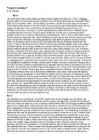
The long earth & Fight club Julia Shashkina, 11D The Long Earth Authors: Terry Pratchett and Stephen Baxter A sophisticated plot Philosophical Parallel worlds that are similar to Earth Device called a "Stepper" Travelling through all the worlds New discoveries A lot of fantasy Science Fight club Chuck Palahniuk Muutke teksti laade Teine tase The book Kolmas tase Neljas tase
Review of "Fight Club" by Chuck Palahniuk Fight Club is an amazing book. Initially it was published as a short story in the compilation of Pursuit of Happiness. Later on in August 1996 Palahniuk expanded it to a full length novel and the books was published by W. W. Norton & Company. The genre of the book has been stated to be satirical novel. The novel tells a story about an miserable specialist of a car company. From day to day, he traveled from city to city, inspecting car crashes and deciding whether it was the car
Zooey. The Catcher in the Rye is by far the most famous and most critiqued book of his, selling over 250,000 copies every year. In total the book has sold over 65 million copies worldwide. The success of The Catcher in the Rye led to public attention: Salinger became reclusive, publishing new work less frequently. Analysis of the book 1. Setting The story starts in the year 1950 when the novel's protagonist and narrator Holden starts telling a story from a hospital about the events of last year's winter. Most of the story takes place in winter of 1949 just over a couple of days in Pennsylvania and New York. 2. Characters · Holden Caulfield The main character of the book. He has been expelled from many schools due to his failure in fixing his grades and is expelled from his current school, Pencey Prep, right in the beginning of the story
· Naturalists show man as a small figure in deterministic system which ignores him · Man is a huge machine · Lot of these novels end in tragedy · For 20 years naturalism remained dominant method. The beginning of the 1910 (modernism starts ) · American naturalists: frank Norris ,,The Octopus", Stephan Crane ,,Red badge of courage" · Jack London (1876-1916) · Grew up in extreme poverty. From early age had to support himself with dangerous manual jobs. Experienced the trouble of survival. Outlooks were eclectic (combination of various philosophies). Was influenced by socialism by Karl Marx, on the other hand the dark views of Nietzche. Believed in the trimph of working man (marx), but at the same the in the necessity of of the survival of the strongest. Was attracted to the Nietzches theory of the superman- the true aristocrats. The rest are the slaves.
something about orientation in zero gravity and that knowledge helped him a lot later. Most of the time passes in Battle School, which is composed of army barracks with rows of bunk beds; dining halls one for soldiers and one for commanders, with scoreboards decorating both; the game room, with various video games for the children to play; battlerooms, where the children have practice and battles in zero gravity; and a gym with shower rooms, where Ender and Bonzo fight. There is also an area for teachers' quarters, which the children never go to, but it is presumably in this vicinity where the conversations between Graff and other adults takes place. After Battle School he returns to Earth before going to Command School. There in the wilderness is a large house, overlooking lakes on either side. Although there are wasps that Ender says will sting without provocation, the setting is peaceful, allowing Ender the mental recovery and relaxation he needs.
to relent (39) - abandon or mitigate a severe or harsh attitude, especially by finally yielding to a request. Situation: When Lipsha was talking about mother with Albertine he said he wouldn't relent on her even if she would come back, goes down on her knees and begged him for forgiveness. 2. Explain the following literary terms. Learn and use them in your discussion of the book: Protagonist - the leading character or one of the major characters in a play, film, novel, etc. Theme - an idea that recurs in or pervades a work of art or literature. 2 Motif - a dominant or recurring idea in an artistic work. Symbol - a thing that represents or stands for something else, especially a material object representing something abstract.
Mike has a terrible temper, which most often manifests itself during his extremely frequent bouts of drunkenness. He has a great deal of trouble coping with Brett's sexual promiscuity, which provokes outbreaks of self-pity and anger in him, and seems insecure about her infidelity as well as his lack of money. Pedro Romero - A beautiful, nineteen-year-old bullfighter. Romero's talents in the ring charm both aficionados and newcomers to the sport alike. He serves as a foil (a character whose attitudes or emotions contrast with, and thereby accentuate, those of another character) for Jake and his friends in that he carries himself with dignity and confidence at all times. Moreover, his passion for bullfighting gives his life meaning and purpose. In a world of amorality and corrupted masculinity, Romero remains a figure of honesty, purity, and strength. Montoya - The owner of a Pamplona inn and a bullfighting expert. Montoya sees bullfighting as something
provincial elections, a combination of boredom and suspicion convinces Anna she must marry him in order to prevent him from leaving her. She writes to Karenin, and she and Vronsky leave the countryside for Moscow. Part 7 The Levins are in Moscow for Kitty's confinement. Despite initial reservations, Levin quickly gets used to the fast-paced, expensive and frivolous Moscow society life. He starts to accompany Stiva to his Moscow gentlemans' club, where drinking and gambling are popular pastimes. At the club, Levin meets Vronsky and Stiva introduces them. Levin and Stiva pay a visit to Anna, who is occupying her empty days by being a patroness to an orphaned English girl. Levin is uneasy about the visit and not sure it is the proper thing to do. However Anna easily makes Levin fall in love with her. When he confesses to Kitty where he has been, she accuses him of falling in love with Anna. The couple are reconciled after realising
Consequently, they were attracted to the idea of democracy, where the government is "of the people, by the people, for the people," as Lincoln later expressed in his Gettysburg Address. Religious Tolerance: Much impetus for the ideas of religious tolerance came from the rule of King George II, who was a staunch Catholic and did not allow freedom of religion to Protestants in New England. Voltaire was among the first to denounce Christianity and other organized religions as mere ploys to support monarchy. What emerged was Deism, which was more or less a new religion that considered reason its foundation. In Deism, there is no interference by a deity, and man controls his own destiny. These ideas stirred the masses into action, as the people dreamed of carving their own futures. Adopted by the Founding Fathers, Enlightenment ideals became the vision for modernday America, where these ideologies are deeply rooted in the nation. The Enlightenment was important
All Quiet on the Western Front Erich Maria Remarque Character List Paul Bäumer - A young German soldier fighting in the trenches during World War I. Paul is the protagonist and narrator of the novel. He is, at heart, a kind, compas-sionate, and sensitive young man, but the brutal expe-rience of warfare teaches him to detach himself from his feelings. His account of the war is a bitter invective against sentimental, romantic ideals of warfare. Read an in-depth analysis of Paul Bäumer. Stanislaus Katczinsky - A soldier belonging to Paul's company and Paul's best friend in the army. Kat, as he is known, is forty years old at the beginning of the novel and has a family at home
national anthem of the country. Other poems and songs of Burns that remain wellknown across the world today, include A Red, Red Rose, A Man's A Man for A' That, Ae Fond Kiss and Tam o' Shanter. Lord Byron 1788 1824 One of the greatest British poets and a leading figure in the romantic movement, he remains widely read and influential His bestknown works are the lengthy narrative poems ,,Don Juan" and ,,Childe Harold's Pilgrimage "and the short lyric "She Walks in Beauty". He travelled to fight the Ottomans in the Greek War of Independence, for which Greeks revere him as a national hero died at 36 years in Greece Lived as a true aristrocrat, had huge debts, numerous love affairs, there were rumors of a scandalous incestuous romance with his halfsister and selfimposed exile It has been speculated that he suffered from bipolar disorder and was bisexual The Byronic hero The Byronic hero is a variant of the Romantic hero as a type of character, named after Lord Byron
4. Anything you're afraid is true is true. 5. Before most people get to the point of being able to tell their ass from a hole in the ground they're already assholes and it's too late. 6. Concentrating on something important can make you lose track of your soap opera. 7. Debunking the bunk is everyone's responsibility. 8. Don't ask me to pay for anyone else's mistakes. I make enough of my own. 9. Even those who possess real magic must beware of being misled by "magical thinking." 10. Everyone knows what shit tastes like. 11. Exclusive occupancy of a private room is a basic human right. 12. Fair compensation for genius is wealth. 13. God's not perfect, so it's a pretty good bet that you're not, either. 14. Good institutions help to overcome human moral inertia. 15. I am not one of your little friends. 16. If a dimension is anywhere it's everywhere. 17. If God's not crazy, why are you? 18
19. GOODBYES 20. IMPATIENCE 21. PHONE CALL 22. HIDE-AND-SEEK 23. THE ANGEL 24. AN IMPASSE EPILOGUE: AN OCCASION twilight STEPHENIE MEYER LITTLE, BROWN AND COMPANY New York Boston Text copyright © 2005 by Stephenie Meyer All rights reserved. Little, Brown and Company Time Warner Book Group 1271 Avenue of the Americas, New York, NY 10020 Visit our Web site at www.lb-teens.com First Edition: September 2005 The characters and events portrayed in this book are fictitious. Any similarity to real persons, living or dead, is coincidental and not intended by the author. Library of Congress Cataloging-in-Publication Data Meyer, Stephanie, 1973-- Twilight : a novel / by Stephanie Meyer. -- 1st ed. p. cm. Summary: When seventeen-year-old Bella leaves Phoenix to live with her father in Forks, Washington, she meets an exquisitely handsome boy at school for whom she feels an overwhelming attraction and who she comes to realize is not wholly human. ISBN 0-316-16017-2 [1. Vampires -- Fiction. 2
Wodehouse's aristocrats, however, embody many of the comic attributes that characterize buffoons created by a genius. In many cases the classic eccentricities of Wodehouse's upperclass give rise to plot complications. Relatives, especially aunts and uncles, are commonly depicted with an exaggerated power to help or impede marriage or financial prospects, or simply to make life miserable. Friends are often more a trouble than a comfort in Wodehouse stories: the main character is typically being placed in a most painful situation just to please a friend. Antagonists (particularly rivals in love) are frequently terrifying, and just as often get their come-uppance in a delicious fashion. Although his plots are on the surface formulaic, Wodehouse's genius lies in the tangled layers of comedic complications that the characters must endure to reach the invariable happy ending. Typically, a relative or friend makes some demand that
Portrait of a Lady (1881). James's works, many of which were first serialised in the magazine The Atlantic Monthly include narrative romances with highly developed characters set amongst illuminating social commentary on politics, class, and status, as well as explorations of the themes of personal freedom, feminism, and morality. In his short stories and novels he employs techniques of interior monologue and point of view to expand the readers' enjoyment of character perception and insight. Often comparing the Old World with the New, and influenced by Honore de Balzac, Henrik Ibsen, Charles Dickens, and Nathaniel Hawthorne of whose work he wrote "too original and exquisite to pass away" James would become widely respected in North America and Europe, earning honorary degrees from Harvard and Oxford Universities, in 1911 and 1912 respectively. He was acquainted with many notable literary figures of the day including Robert Browning, Ivan S
Hong Kong • Singapore • Tokyo • Cape Town • Sydney Acquisitions Editor: Michelle Limoges Editorial Assistant: Christina Manfroni Executive Marketing Manager: Wendy Gordon Production Supervisor: Liz Napolitano Editorial Production Service: Modern Graphics, Inc. Manufacturing Buyer: JoAnne Sweeney Electronic Composition: Modern Graphics, Inc. Interior Design: Modern Graphics, Inc. Photo Researcher: Rachel Lucas Cover Design: Joel Gendron For related titles and support materials, visit our online catalog at www.pearsonhighered.com Copyright © 2009, 2001 Pearson Education, Inc. All rights reserved. No part of the material protected by this copyright notice may be reproduced or utilized in any form or by any means, electronic or mechanical, including photocopying, recording, or by any information storage and retrieval system, without written permiSSion from the copyright owner.
two. Later on, Lucy starts to act very strange and dr. Seward decides to call his teacher, Abraham Van Helsing. He quickly finds out the problem, but the results are no good. The story continues when Van Helsing tries to enlighten others, what had happened and they all are trying to resolve the problem. One key to find the solution is dr Seward’s patient Renfield, who is under a spell of Dracula. Jonathan and Mina join them in their hunt for Dracula but discover later, that only Mina and Van Helsing are able to find him so they travel back to Transylvania. The story ends with a note from Jonathan, written seven years after. The novel has 27 chapters. All the chapters are journals of characters. Also the book has ten pages of notes which are explanations of different places, names and expressions. ‘’Dracula’’ has cathegorised under many different genres of literature – vampire literature,
more, with crazier names) prove us that stories can become more than entertainment. Of course, a story can change people without making them go to all sorts of conventions. Even the small ideas make a change. The main part in a story, the one that seemingly makes the impact, who guides the consumer through its change, is the protagonist. The development in the reader or the watcher happens through the transformation of the hero. Usually the main character starts off as an outcast, somebody the society sees as unimportant or too strange. Then something happens that sends the hero on an adventure. The breaking point on his road is meeting a teacher an encounter that gives him the ability to face the adversary of the story. In the end the hero faces his villain, emerges a winner, detaches himself from his outcast status and becomes a significant part of the society.
Blandings " "I know, guv'nor, but the fact is " 10) Lord Emsworth laid a trembling hand upon his shoulder. "McAllister, I will raise your salary." The beard twitched. "Dash it, I'll double it!" The eyebrows flickered. "McAllister ... Angus ... " said Lord Emsworth in a low voice. "Come back! The pumpkin needs you." Lord Emsworth is the protagonist in the book. His full title is Clarence Threepwood, 9th Earl of Emsworth, and Viscount Bosham. His character is kind, but a bit absent- minded. Throughout the book many of the actions and situations are related with him, some more, some less. He most likes being alone and either walking in the garden or reading a book in the library. Also, he does not stand one bit his son Freddie staying at the castle and is willing to do much to get rid of him. Throughout the book, he often gets into funny situations (Quotes 1,2). Also, he often drifts away from the topic on
Christmas Annual for 1887 and featured the first appearance of Sherlock Holmes, who was partially modelled after his former university professor, Joseph Bell. Future short stories featuring Sherlock Holmes were published in the English Strand Magazine. Interestingly, Rudyard Kipling congratulated Conan Doyle on his success, asking "Could this be my old friend, Dr. Joe?" Sherlock Holmes, however, was even more closely modelled after the famous Edgar Allan Poe character, C. Auguste Dupin. While living in Southsea he played football for an amateur side (that disbanded in 1894), Portsmouth Association Football Club. (This club had no connection with the Portsmouth F.C. of today.) In 1885, he married Louisa (or Louise) Hawkins, known as "Touie", who suffered from tuberculosis and died on 4 July 1906. He married Jean Leckie in 1907, whom he had first met and fallen in love with in 1897 but had maintained a platonic relationship with her
The Project Gutenberg EBook of Pride and Prejudice, by Jane Austen This eBook is for the use of anyone anywhere at no cost and with almost no restrictions whatsoever. You may copy it, give it away or re-use it under the terms of the Project Gutenberg License included with this eBook or online at www.gutenberg.org Title: Pride and Prejudice Author: Jane Austen Release Date: August 26, 2008 [EBook #1342] [Last updated: August 11, 2011] Language: English Character set encoding: ASCII *** START OF THIS PROJECT GUTENBERG EBOOK PRIDE AND PREJUDICE *** Produced by Anonymous Volunteers, and David Widger PRIDE AND PREJUDICE By Jane Austen Contents
3 bewildered 7 circumspect between 4 overwhelmed 5 1 ignore 4 lot of my dad's traits 3 1 f hindsight 4 c evocative 5 comes to, more in common 2 broadened out 2 a recall 5 b recollection 6 she's passed on to me 3 a shred 3 d reminisce 6 e ingrained genetically 4 plausible 5 obsolete 4 1 I've asked you time and time 3 1 There's a strong resemblance again to keep the noise down. between Paul and Joe
the window with his back to her, and she stopped. "For God's sake," he said, hearing her, but not turning round. "Don't make supper for me. I'm going out." At that point, Mary Maloney simply walked up behind him and without any pause she swung the big frozen leg of lamb high in the air and brought it down as hard as she could on the back of his head. She might just as well have hit him with a steel club. She stepped back a pace, waiting, and the funny thing was that he remained standing there for at least four or five seconds, gently swaying. Then he crashed to the carpet. The violence of the crash, the noise, the small table overturning, helped bring her out of he shock. She came out slowly, feeling cold and surprised, and she stood for a while blinking at the body, still holding the ridiculous piece of meat tight with both hands. All right, she told herself. So I've killed him.
What is the mode of narration in these stories? Are the narrators always reliable? The first chapter setting is in convent, 2 the second is outside near the convent (road), and the third one is reservation and the island, in every chapters there is a 1st pr.narration. Reliable. `Saint Marie' 4. Introduce the narrator of `Saint Marie'. Why does she consider herself ignorant? What is the purpose of her wanting to join the convent? Interpret the quotation: `I had the mail- order Catholic soul . . .' (44). Marie, 14-year-old girl. Maybe since she isn't pure blood Indian. She want to enter the white community (to belong there). Her wish is not to 5. go to church but to come in to town where the shops and people are. 6. Describe the Sacred Heart Convent
playwrights, fiction and non-fiction writers, scholars, and fans of pop culture all over the world. Discover a set of useful myth-inspired storytelling paradigms like "The Hero's Journey," and step-by-step guidelines to plot and • character development. Based on the work of Joseph Campbell, The Writers Journey is a must for all writers interested in further developing their craft. This updated and revised Third Edition provides new insights and observations from Vogler's ongoing work on mythology's influence on stories, movies, and man himself. In revealing new material, he explores key principles like polarity and catharsis, plus:
Every time the voices of his children doing their homework reached him in his study in the stillness of the evening, every time he heard a popular song or some music in a restaurant, every time the wind howled in the chimney -it all came back to him: their walks on the pier, early morning with the mist on the mountains, the Theodosia boat, and the kisses. (p. 273) The story is written in the form of a third-person narration, which allows Chekhov to move from the point of view of the narrator to that of the protagonist. This movement is established as carly as the first paragraph of the story: The appearance The techniques that Chekhov employs (associative thinking, displacement, and projection) are all processes which govern the unconscious. In other words, the unconscious processes taking place in Gurov are communicated to the reader's unconscious by means of their common language Petersbourgh in QOS I'm also doing queen of spades, thought that was a hard question
I The Birth of Batman The creation of the fictional superhero Batman is credited to artist Bob Kane, even though in reality he was cocreated with writer Bill Finger. Batman first appeared in 1939 in Detective Comics #27. Since then Batman has been an important and influential character in the comic book universe. Publisher of DC Comics, Vin Sullivan was looking for something new for Detective Comics, which would be as intriguing as Superman had been in Action Comics, but it had to be something completely new. Sullivan's ideas inspired Kane, and he credits the creation of Batman as much to Sullivan as to himself. Kane's first image was very much a hero
live there from different social standings. And Miss Marple knows them all very well, like it's usual for a small village. The story takes place in the 1940's I think. The date is not mentioned in the book but I assume it is around 40's because of the description and the book was published in 1942. There is a murder in St Mary Mead and it's a hard one to solve but Miss Marple has the ability to overcome any problem and this time is no exception. The main character in the book was Miss Marple, the old amateur detective. She had been solving many crimes over the years in her home village and near it. So she is hired to help the policemen again. She is an old lady probably in her early 70's. At first she seems like a usual older lady, she likes gossip talk and knitting. But in reality she is a real genius at solving crimes. She is calm and does not like to make premature conclusions and to tell everybody about them. Her style for solving crimes
..And the cars. Jesus Christ. The frenetic flow of tightly packed cars was unlike anything I'd ever seen anywhere. There was always an ambulance, patrol car, or fire engine trying to part the flood of yellow taxis with the electronic wail of ear-splitting sirens. I was in awe of the lumbering garbage trucks that navigated tiny one-way streets and the package delivery drivers who braved the bumper-to-bumper traffic while facing rigid deadlines. Real New Yorkers cruised right through it all, their love for the city as comfortable and familiar as a favorite pair of shoes. They didn't view the steam billowing from potholes and vents in the sidewalks with romantic delight and they didn't blink an eye when the ground vibrated beneath their feet as the subway roared by below, while I grinned like an idiot and flexed my toes. New York was a brand new love affair for me. I was starry-eyed and it showed.
The epic deploys many metaphors - e.g. the sea = the swan's road, body = a house for bones and alliteration. It is structured as two parts. In the first part King Hroghtgar, king of Danes built a palace Hereot near a lake. He disturbed the lake monsters sleep with his racuous parties. Grendel then goes to the castle every night and kidnaps a man. This went on for 12 years. Beowulf, a young viking, decides to put an end to it. He chooses 14 men to join him and sails across the strait with no weapns, mind you, because Grendel fought unarmed and Beowulf was an idiot however according to the rules of fiction he defeats Grendel. To reward him the king gave Beowulf armour of precious metals. At night Grendel's mother come for revenge at night, Beowulf defeats her as well with a magic sword. At the beginning of part II 50 years have passed. Beowulf is a wise king of Jutland when a
nobody else. You want your children to have good grades in school? Then practice Capitalist Niggerism because then you will not blame the teachers for failing your children or blame the nationwide testing services for using non-black questions in their testing. You will be in control because you will totally understand that everything that happens to your child at school is a result of the learning environment you have provided him or her at home. You want to succeed in creating wealth, join Wall Street. Don’t make excuses that Blacks don’t know how to invest their money. Go after the Caucasians. Use their guilt to your advantage. Another important point which I raised in this book concern the long study I have conducted regarding the economic behaviour of East Indians and Pakistanis. It is an economic doctrine I have christened the “Spider Web Doctrine,” because I believe we all understand how spiders behave. They build a web, and
Tests Superstar 1 Luke Prodromou Test 1 Name____________________ Class_______ Use your English 1 Complete these sentences using the correct form (present simple or present continuous) of the verb in brackets. _ 1 She is in a band and she _________________________________ (record) a CD at the moment. _ 2 She is an actress and often _________________________________ (appear) on television. _ 3 At the moment she _________________________________ (have) a rest because she is tired. _ 4 Mike is a doctor and he _________________________________ (live) in Manchester. _ 5 I _________________________________ (start) work at 8.30 every morning. _ 6 He is a good cook but she _________________________________ (prefer) to eat out. _ 7 English tests _________________________________ (get) more and more interesting. _ 8 They _________________________________ (have) a party because it's her birthday. _ 9 I sometimes ____________
 annaabi.ee