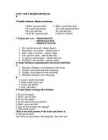
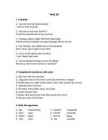
UNIT 7 THE FARMERS PROBLEM B 1.Kirjelda inimeste välimust ja iseloomu 1.What's your aunt like? 2. What's your brother like? She's quite slim and tall. He's quite plump and short. She's got short hair. He's got dark hair. I think she's good-hearted. I think he's cheerful. 2. Kirjuta, kas 's on ->lühend sõnast IS ->lühend sõnast HAS ->OMASTAV KÄÄNE 1. He's not like me at all.- lühend sõnast is 2. My brother's not at home. - lühend sõnast is 3. Bob's uncle is a teacher. - omastav kääne 4. She's got two sisters. - lühend sõnast has 5. It's got one small window. - lühend sõnast has 6. My father's eyes are blue. omastav kääne 3.Võrdle. Moodusta omadussõnadest nii kesk-kui ülivõrdeid. A 1. Mountain climbing is more dangerous than diving. 2. Diving is more interesting than swimming...
relationships · The creation and/or maintainance of effective producer or worker organizations · Improved social goods and community development · Use of environmentally friendly production processes Requirements for certification: 1. Prices - produsers are guarateed a minimum price for the good, and a fare trade premium 2. Workers - safe working conditions, wages at least equal to the legal minimum, child labor is prohibited 3. Institutional structure - farmers must work as cooperatives, where decisions are made democratically 4. Environment certain harmful chemicals are forbidden 5. Stability and access to credit - buyers agree to long- term contracts (at least one year) Does fair trade work? UPSIDES · Fare Trade farmers received an average price of $0.56 per pound, while conventional farmers received an average price of $0.40 per pound · Fair trade is associated with higher yields, incomes and sales
where the vegetation period is short (3-4 months) and thus the water temperature is a limiting factor of fish farming. Therefore the heated effluent waters of the electric power plants were successfully used to prolong the growth period. Collapse of the socialist system caused decline in fish farming production, mainly because of cease of fish rearing in heated waters of electric power stations. During postsocialist period all the remaining fish farms have been privatised. The trout farmers are now using only formulated dry feeds, while the carp farmers applied lower stocking densities in order to make use of the natural food production of the ponds. The main trend has been rise of interest to the production of juveniles of commercially important native species (salmon, sea trout, brown trout, whitefish (Coregonus), pike, pike-perch, tench) for stocking into the natural waters. The fish farmers hoped that
In 2050, according to estimates, there will be nine billion mouths to feed around the world who will demand high quality, nutritious food. On nowdays, we already have problem with lack of food, despite we have only 6 billion mouths to feed. So scientists had to do something. They started to develop GM food. Farmers thought, that GM food is not good enough but when they tested it, they were satisfied. GM food is more resistant to diseases, drought, and other forces of nature and it tastes good. Already, there are a lot of farmers, mostly in developing countries who are using genetically enhanced plants. However, there are still problems with productivity, because it is too low. There is also a chance that there are people who don't want to eat GM food. The EU is standing for their rights
Pennsylvania Melissa Hein 8.b What? Where? *the 33rd largest *6th most populous *9th most densely populated of the 50 US states *capital is Harrisburgh *Biggest cities are Philadelphia, Pittsburgh,Allentown, Erie, and Reading *Area 119 283 km² Someone famous Actors: Kevin Hart(Philadelphia) Andrew Lawrence (Abington) Will Smith(Philadelphia) Kerr Smith(Exton) joey lawrence(Philadelphia) Something you should know *Amish population *Farmers *Wine *The Drive In cinema Amish population *Pennsylvania Dutch *in the early 18th century, many Amish immigrated to Pennsylvania for a variety of reasons * Christian church fellowships *Total population 290 100 Farmers Roadside stands and indoor and outdoor farmer’s markets are a common sight throughout every county in Pennsylvania.These are the places you will get the most freshest and sweetest fruits and vegetables you’ve ever tasted. Wine
There may have some text beaten in from thousands years ago. Here is a tree which has old bicycle in it. 6.slaid Scientist may strive and work out ,,safe" genetical plant modificating but do we investigate these trees enough, before we start using in forestry? We will never know what could happen. It may not happen today or tomorrow but it can happen in next century. Essentially are GMO trees used by fruit-farmers. Here is a picture of genetically changed tree leaf. (pappel) poplar (Fruit-tree farmers are using it essentially) 7.slaid We have found law-like behaviours in ecosystems. For example when the forest is overflooded, there will be swamp. Our knowledge is getting wider every day. 8.slaid Conclusion We need to be careful before we start developing and taking risks. We need to make difference between trees with meaning and usual trees
.............. were found in the area. (saastatus, reostatus) 4. The office staff has been sadly ......................... by redundancies. (kahandama,vähendama) 5. Over............................ is an ........................... problem nowadays. (tarbimine, kohutav/hirmutekitav) 6. ............ is a deep feeling of guilt for something wrong or bad that you have done. (süümepiin/kibe kahetsus) 7. The new car is ................................ (tarbib vähem kütust). 8. A great number of farmers take up ...................... nowadays. (orgaaniline põllumajandus) 9. ....................... and .............. are used less and less on farms. (kunstväetised, taimekaitsevahendid) 10. Industrial and agricultural waste mustn't be .................... into rivers and lakes. (maha laadima) 11. Waste destroys .................... land and ........................ water bodies.(viljakas, ummistama) 12. Calgon ................ your washing machine. (kaitsma) 13. Only ..............
than the minimum amount of calories essential for sound health and growth. Socially, the lack of food erodes relationships and feeds shame so that those most in need of support are often least able to call on it. What causes hunger? Crops don't grow if there is no rain and families can't feed themselves. People who are poor can't buy food when their crops fail. They have nothing to fall back on. Conflict is another major cause of hunger. Wars destroy farms and fields. Farmers may be killed. People have to leave their homes and farms and live somewhere else. Less food is produced in times of war. The HIV/AIDS pandemic has left many farmers sick and unable to grow food. How many children die of hunger each day? A. 12,000 B. 18,500 C. 29,000 D. 37,600 In developing countries, how many children die before they are five? A. 1 in 10 B. 1 in 45 C. 1 in 60 D. 1 in 80 How many people have died of hunger in the past 50 years? A. 300,000,000 B. 400,000,000 C
Vietnam.Agroterrorism involves the act of any person knowingly or maliciously using biological or other agents as weapons against the agricultural industry and the food supply-- plants and especially animals. Outbreaks caused by the deliberate spread of animal diseases by terrorists are likely to have much higher costs than natural occurrences or epidemics. Agricultural education and extension services inform farmers and livestock operators of the threats and work with farmers, veterinarians, and crop consultants to prevent and control plant and animal diseases Sum up : Terrorists often use violence and threats to create fear among the public, to try to convince people that their government is powerless to prevent acts of terrorism, and to get immediate publicity for their causes
6 The Alps are the highest mountains in - Europe. 7 My uncle lives in - Pine Street. 8 I´m leaving for - Finland on - Monday. 3 Make up sentences. 1 is the Australia kangaroo of symbol the The Kangaroo is the symbol of Australia. 2 of sheep Australian breed lot farmers a Australian farmers breed a lot of sheep. 3 popular a Australia sport surfing in is Surfing is a popular sport in Australia. 4 large of is island Australia a Tasmania south the to Tasmania is a large island to the south of Australia. 5 southeast Zealand the Australia of new to lies
Cow Domesticated cow vas first found by the primitive man.The first cow vas bred in time from the tarvas. These were our ancestors.Humans were begining to hunt and catch the calfs of tarvas and keep them in orchards to raise the tarvas calfs.At first they were used to because of their strength for plowing. And thats the way tarvas was the helper for farmers,later dairy cow. The first cows did not give much milk because they had milk for their calfs and it were an expensive sweet and health medisine. They were using it mixed with water. Today, there are cows who give little milk, but a lot of soft and tasty meat, the cows whose milk is very rich in fat and cows, whose milk is not quite as rich in fat,but theres a lot of it. In our country we have the famous estonian red,estonian native and estonian black and white ox.But in the world
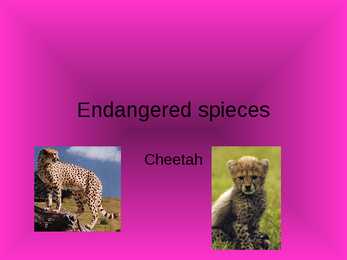
Endangered spieces Cheetah General description: · member of the cat family · speeds between 112 and 120 km/h · body length is 150 cm · weight ~70 kg · mostly in africa · The largest population of cheetahs is in Namibia History Problems : · hunted by farmers · The cheetah needs large expanses of land to survive, but with changes in land use this area is becoming smaller and smaller. Now: · The wild population has fallen to half its numbers since the 1970's. · Now less than 5000-12000 are left.
The local cultural heritage offers as much variety as the nature. Many rare work and mythological motives are retained in folk songs. The flax-growing that spread rapidly in the beginning of the 19th century was the basis of the prosperous Mulgi family farms in Southern Viljandimaa. 19. The second half of the 19th century and the beginning of the 20th century constituted the golden age for many local families. The mulgi inhabitants were actually the first farmers in Estonia who bought the farms for their families after being released from the servitude. The farming was developed rapidly thanks to flax-growing. The wealthiest farmers gained even so much money that for the first time in history Estonian farmers became owners of mansions. The wealthy mulk were the first of Estonian farmers to build manses, until then the farmers all over Estonia lived in farmhouses that included a barn so that people and animals lived under one roof
ABRAHAM LINCOLN Janeli Uuesoo 12 B Personal life Born 12 February 1809, Kentucky Poor farmers Tall, Thin, Black hair, dark skin Cutting wood, ploughing, growing wood 1842 married Mary Todd 4 sons, 1 survived Politics Successful lawyer November 6 1860 – 16th president of the US Time of crisis • Slavery • 1861 the American Civil War January 1 1863 – abolition of slavery Assasination April 14 1865 – Death of Lincoln Ford’s Theatre
city of Durham. machinery and pottery, manufacturing and engineering industries, producer of salt. Yorkshire York, Leeds, Sheffield, Engineering , Cows, sheep. and the Grimsby, Kingston upon textiles Farmers make Humber Hull, Bradford, cheese. Scarbrough. London
But Pocahontas, the daughter of an Indian chief, became their friend and helped them. They started growing tobacco in Virginia, using African slaves in the fields. In 1620 a new group of British settlers reached Plymouth, Massachusetts, with a ship called Mayflower and they were called 'Pilgrim Fathers' due to their strong belief in religion. They left England because they didn't agree with the Church of England. They became farmers and businessmen who thought that all men were equal and they didn't have slaves. Many of the Pilgrims died in the first year in America, but they were helped by the Indians, who showed them how to grow corn. In the autumn of 1621, the Pilgrims had a big dinner to thank the Indians who had helped them to survive the hard winter. That day is now known as Thanksgiving and is celebrated on the fourth Thursday in November in America. More and more people arrived
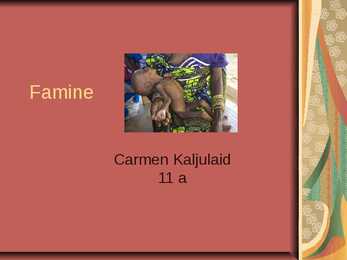
PROBLEMS OF THE PLANET Problems Cause - Effect 1. Destruction of the rainforests Trees are cut down to make room for cattle or to get paper and land Less clean air, Loss of natural habitat = die 2. Water pollution Factories, oil tankers, farmers use pesticities that get into our drinking water Sea life close to extinction, No clean drinking water, Beaches polluted 3. Air pollution Cars and factories give off fumes Cities will become impossible to live in, Breathing problems, Allergies 4. Famine Crops failing (saak ikaldub), Overpopulation = lack of food People die of hunger 5. Flooding Climate changes cause excessive raining, Polar icecaps
Scotland Scotland is the northern part of Great Britain. It consist of the Lowlands, the Highlands and the islands. The landscape of Scotland is spectacular. There are wild mountains, heather moors and deep lochs. People belive that there is a strange, huge monster one of the lochs in the Highland. Some people say that they have seen it. Few people live in the north of Scotland nowadays. Most of people live in the lowlands. Farmers raise sheep and you can see hundreds or even thousands of them on the hillsides. Glasgow, Aberdeen and Edinburg are the biggest cities in Scotland. Aberdeen is an old university town. Glasgow is the biggest city. It is a famous industrial centre. There are many theatres and art galleries too. All true Scots belong to the clan. Each clan has its own tartan. This is a traditional woollen cloth that has squares and stripes in different colours. The men wear kilts
were the game of choice. Corn, beans, squash, berries, nuts, and melons were the fruits and vegetables that were consumed. Berries were also often used as a natural dye for fabrics. For the Indians of the Northeast area, the trees of the forest were the primary material for shelter, tools and fuel, and the animals of the forest were the primary food source. But the Northeast Woodland Native Americans were not solely hunters and gatherers, but also fishermen and farmers. The people of the Southeast were farmers first and hunters, gatherers, and fishermen second. Legend of Pocahontas Pocahontas is most famous for saving the life of John Smith, a leader among the English colonists. In 1607, Smith was captured by Powhatan warriors and held captive for four days. When two large rocks were brought in, the legend goes, Smith had a hunch his beheading was imminent. But Pocahontas
Columbus who thought that he had reached to India. COLONIAL AMERICA As far as people know were the Vikings first European settlers to visit America. but in 1492, an Italian sailor called Christopher Columbus reached southern America when he was looking for a sea route from Europe to India. He is called to be the man who discovered America. In 1607 two very different groups of English people came to America. a group of farmers began a colony in Jamestown, Virginia. They had to fought with indians and most of them died because there were many diseases and the didn't have enough to eat. But the daughter of an Indian chief, Pocahontas, helped them. The farmers discovered that it was easy to grow tobacco in Virginia, so they bought black people as slaves to work on the fields. They found a big market for their tobacco in Europe. In 1620 another group of English people landed in America. They
overconsumption. Although, in recent years peoples knowledge about recycling and using eco-friendly products have improved, there are more landfills in Estonia than ever before. The government should take some actions and instead of talking about recession, improve recycling programs. Last but not least, abuse of the natural resources is also a big problem in Estonia. Big fatories let their waste run into the rivers without cleaning it and farmers use man-made fertilizers. Their actions spoil groundwater. We must not take water for granted but we should conserve it. To sum up, we all should help the environment. We need to change our attitude, behaviour and habits and inform the public with the help of the media and the problems will eventually improve. Merit Vislapu 11R
19th centuries, was a period during which predominantly agrarian, rural societies in Europe and America became industrial and urban. By mid-century, many people worked for small businesses or on farms, laboring in fields that would yield barely enough food to feed the family. New inventions and technology began to change that, however. Larger factories opened and produced new farm equipment, such as the steel plow and the tractor, which allowed farmers to cultivate bigger fields and produce more food that cost much less. Developments in the iron industry also played a central role in the Industrial Revolution. In the early 18th century, Englishman Abraham Darby (1678-1717) discovered a cheaper, easier method to produce cast iron, using a coke-fueled (as opposed to charcoal-fired) furnace. In the 1850s, British engineer Henry Bessemer (1813-1898) developed the first inexpensive process for mass-producing steel
These things show that the destruction is not just a superficial consenquence of tourism, but is often an indication of much more deep-rooted cultural changes. But a quiet cultural revolution is happening. Communities are standing up and asking for something different. Over the last decade there has been a rapid growth in local ,,alternative tourism" initiatives. This means that buildings are built by locals with sustainable local materials, food is bought from local farmers and a limit on development has been set so that local communities aren't being overrun and the the destination isn't overly dependent on tourism.
Over 600 000 km² destroyed The problems that comes with deforestation New plants can't grow Global warming Life for animal Greenhouse gases Why they are cutting rainforest? More place for new homes To build new roads Selling the lumber to Japan To generate electricity Trees are used in flooring, furniture and other items Make more space for grazing lands Solution To enforce their anti-logging laws Provide alternatives to poor farmers Use less firewood and paper products Recycle old furniture and wood Educate yourself Ari Pollution Second largest environmental problem Industrial activities are the major causes Urbanisation Vehicular gas emissions dropped by 94% Burning trees Solution of air pollution Use more public transport To limit emissions of carbon dioxie Recycle different products Need to stop or low burning trees Clear the rainforests Use of wind power
In 1492 Christopher Columbus discovered it while trying to reach India. He didn't stay and in the sixteenth century the first Europeans to settle in America were the Spanish, the English and the French. The first village founded by the English settlers was in Virginia in 1607. It was called Jamestown. In 1620 a new group of British settlers reached Plymouth, Massachusetts, called 'Pilgrims' due to their strong belief in religion. They became farmers and businessmen who coped with the Indians and in 1621 had a big dinner to thank the Indians as they had helped them to survive the hard winter. That day is now known as Thanksgiving and is celebrated on the fourth Thursday in November in America. More and more people arrived. Over a time settlers from many other countries joined the English in America the French, the Spaniards , the Dutch. Africans were first brought to Virginia in 1619.
keeps growing. It is not shown on the graph, but the number of occupational diseases in the year 2013 can be risen to thousands considering the growth that has been shown on the first graph. Occupations: On the second graph is shown different occupations, which exhibit the most diseases. The most alarming occupation is proven to be driving with a tractor. The percent of the diseases among the tractor drivers is shockingly 69%. Next come the car drivers and farmers. The percent of the occupational diseases among their area of work is 33%. Less alarming, but still worth mentioning, are the sewerage workers (8%), the excavator drivers (7%) and the welders (5%). Conclusion: In conclusion, the most concerning occupations are the ones that are dangerous, because of the chemicals or the machinery. Also the occupations, where the worker has to do one thing repetitively or for a long time; like sitting or lifting and/or holding something for a long time
15. In summer water never .................. (freeze). 16. Where is John? He .................... (plant) flowers in the garden. Yesterday when we passed their house, he ........................(dig) the ground. 17. The clock is in order now. Henry .....................(repair) it. 18. We ...................... (have) dinner when father entered the kitchen. 19. Daddy .................. (build) a new fence around the garden yesterday. 20. Farmers .................. (grow) grain every year. 21. I ........................ (not hear) your answer properly. 22. Evelyn ....................................(work) in this school for 5 years. 23. Harries .................. (not lie) on the sofa, he always .................. (go) to bed. 24. Our mother is not at home but she .................. (come) in an hour. 25. We .................. (feed) our dog only once a day. 26. .................. you .................
Hogan-Traditional Navajo home. Made of wood and covered in mud and the doorway is opened to the east that they could welcome the Sun. The Dines went to the southwest with their own weaving traditions Family Children liked to run footraces, play archery games and ride horses.. Navajo mother carried a young child in a cradleboard on her back. Navajo mens were hunters, warriors and political leaders. Navajo womens were farmers, they tended livestock, cooked and did most of the child care. Clothing and looks Men wore Breechcloths. Women wore skirts made of woven yucca fiber. Shirts were not necessary in Navajo culture Navajos did not traditinally wear feather warbonnets Women and men wore both moccasins on their feet Both wore their hair gathered into a figure-eight shaped bun called tsiyeel. In the past Before cars- they walked, there were no horses and
Some people believe that there is a big strange monster in Loch Ness. It's called the Loch Ness monster. Some people say that they have seen it. Tourists come there to see the monster every year but the monster doesn't show itself. On the edge of the lake, there is a special Loch Ness Monster Exhibition centre that people can visit. Few people live in the north of Scotland. Some of them speak the Scottish Gaelic language. Most of the people live in the Lowlands. Farmers in Scotland keep a lot of sheep on the hillsides. All true Scots belong to a clan or a tribe. Each of them has their own tartan. Its a traditional woollen cloth over the shoulder. Men in Scotland wear kilts. Nowadays there are a lot of tartan shops in Scotland, which sell cloth, kilts, scarves, bags, travelling rugs, and dresses in tartan patterns. Sometimes they offer people the service of finding out which part of Scotland their great-grand parents came from.
of Europe, Asia and the North Atlantic islands from the late 8th to the mid11th century. The Vikings came from three countries of Scandinavia: Denmark, Norway and Sweden. The Viking age in European history was about AD 700 to 1100. During this period many Vikings left Scandinavia and travelled to other countries, such as Britain and Ireland. Some went to fight and steal treasure. Others settled in new lands as farmers, craftsmen or traders. ships There were two distinct classes of Viking ships: the longship and the knarr. The longship is characterized as a graceful, long, narrow, light, wooden boat with a shallow draft hull designed for speed. Typically, a longship is narrower, longer, and shallower than a knarr, and is powered by oars. It is completely open and is built for
has still to be organized Nepal case study • Two grazing systems were studied both in raising chauris for milk • First system is highly commercialized and based around a milk purchasing organization • The second has no outlet of fresh milk, only ghee and local dry cheese is sold • During passage between seasonal grazing lands they use the transitional pastures for about four months Future directions • Conflict of instrests between settled farmers and herders is rising with rising population pressure and intensification of agriculture • Poor pasture figures highly among technical constraints. There is serious need of monituring the pasture condition and trends as a management tool to to measure enviromental impacts • Main technical problems are socio-economic Was it boring?
it is all because of overconsumption. Although, in recent years peoples knowledge about recycling and using eco-friendly products have improved, there are more landfills in Estonia than ever before. The government should take some actions and instead of talking about recession, they should improve recycling programs or take into use some new ways. Environment problem in Estonia is also water pollution. Big factories let their waste run into the rivers without cleaning it and farmers use man-made fertilizers. Their action is spoiling groundwater. Garbage wrong recycling also affects groundwater quality, because when it rains then bacteria from landfills will be washed to the groundwater. Before Tallinn citizens can drink their water, it has to pervade 15- hour cleaning process. Environmental problems don't affect our lives yet, but we have to think about it. People think that they can't make a difference, but it is wrong. Every person has to save our environment,
The reason for that is that people were slaves back then. Even if there were writers, then most weren't famous and they wrote poems and stories more for themselves. Also being a woman and a writer wasn't considered as a decent job for a woman at that time. The stories that we have from that time were given to one another by talking and mostly we don't know who were the authors. Education was also very expensive so only rich people could get it and Estonians, who were just farmers, mostly didn't have money for that. First I am going to talk about Marie Heiberg. She lived 1890-1942. Her first poem collection was ,,Mure-lapse laulud" in translation ,,Problem child's songs". Her talent was noticed, but she didn't have a change to really become famous. She was in a great penury that made her life really though and she had a gentle soul. Thanks to all that in 1919 she was diagnosed with schizophrenia. She isn't
8. If________, then_______. 8. LOGICAL ARGUMENT 8.1 Questions or conclusions based on conditions with "if". If farmers really need to kill foxes, why don't they just shoot them? What if there isn't enough work to go round? What if the employers decide to introduce new working practices? And what happens if the two sides can't agree? What would happen then if state benefits were cut completely? If this also makes Britain more attractive for overseas visitors, so well and good. You'd only use capital punishment if you were absolutely sure that you'd
onto Castle Square - the building of the Riigikogu, which originates from the time of the First Republic of Estonia and is hidden behind the walls of the castle. Beginning Old legend - the hill of Toompea was heaped up, stone by stone, by Linda The earliest buildings confirmed by historical data originate from the 9th century A settlement of tradesmen and artisans began to develop at the foot of Toompea hill Farmers from the neighbouring counties, were the masters In 1219 King Valdemar II of Denmark conquered the stronghold From that time on the stronghold of Toompea belonged to foreign rulers After the subjugation, the Danes immediately set out to fortify it In the following years, the Danish stronghold was repeatedly besieged All attempts ended in failure Timeline Occupied in 1227 by the Order of the Brethren of the Sword
According to an old legend, the hill of Toompea was heaped up, stone by stone, by Linda, in mourning for her husband Kalev. The earliest buildings confirmed by historical data originate from the 9th century when ancient Estonians took advantage of the steep escarpment of Toompea and erected here their ancient stronghold of Lindanisa, one of the best-protected strongholds in Estonia. A settlement of tradesmen and artisans began to develop at the foot of Toompea hill. Farmers from the neighbouring counties, mainly from Rävala County, were the masters of Toompea stronghold and used it only in the event of danger. This also explains how in 1219 King Valdemar II of Denmark conquered the stronghold with ease. From that time on the stronghold of Toompea, and about ten years later the whole of Estonia, belonged to foreign rulers until the Republic of Estonia established its centre of power on Toompea in 1918.
As with the issue of animal treatment, these trends in arable agriculture have provoked public concern. Combined, these concerns have helped encourage the rapid growth of vegetarianism in Britain since the early 1980s and the expansion of organic farming, although this is still on a very small scale. However, partly in reaction to these concerns, and partly because of costs, the trend is now towards lower chemical use in farming. Agricultural policy includes schemes to encourage farmers to take land out of agricultural production to adopt more environmentally kind, but less productive methods of farming to impose production quotas on certain products, like milk, and to reduce subsidies on others. EXERCISE. Complete the table with suitable words from the column on the right. Comparison of farming in the north-west and south-west of Britain. to the North-west to the South-east
In Estonia there is quite hard to find or get a job, you need to have experience. But experience is exactly what young people don't have. Last summer I didn't get a job because every where they asked if I have experience. Also in Estonia we have cousin policy, if your relative works somewhere, then it's easier for you to get a job. If you're working in Estonia you don't make a lot of money. But in Australia you can get a job easier, because there are a lot of farms that need seasonal workers. Farmers take young people to work very easily and some even give them living space. Salary in Australia is many times bigger than in Estonia. Big salary is the most important thing for young people to start their own life. They you can quickly work themselves up, and can start thinking about family and their own home. They can improve their skills in their hobby or just enjoy their hobby. There are a lot of training-camps and different schools for people with different interests
England. However, there are uplands in the north, for example there are the Pennines, which is a region of rounded uplands. West of the Pennines there is the Lake District where are quiet lakes and low mountains. Also there are uplands in the south west (for example, Dartmoor and the Cotswolds) 6. what are the possibilites of land use in england? In the southwest, people get their living by fishing, also the mild climate helps ma ke agriculture important. Farmers grow vegetables and raise cattle. Most important today is the region's white china clay. Most of England is lowland, so these regions have much farmable land and many industriest. In the Midlands a lot of heavy industry is produced. The Wash has country's richest farmland. 7. Characterise the relief in different parts of wales (northern, central, southern) Central part is mostly covered by the Cambrian Mountains, they are especially rugged and
whose most important life goal was to get more money. It can't be said that he was happy, because the process of gaining money hindered his relationships with others. He had no positive emotions or feelings and even his daughter did not love him because of his greediness. The second type of people were the peasants. In spite of they poverty, they were caring and cheerful. They sang and danced a lot and enjoyed their life without huge amounts of money. They could take the Farmers' money, but they did not, because it was not earned fairly. Compering to the Farmer, the peasants had right life morals and principies. In conclusion, I would like to say that it was one of the most powerful and interesting performances that I have seen in my life. The Estonian folclore was succesfully combined with contemporary dance, lighting effects and symphonic music.
In 1492 Christopher Columbus discovered it while trying to reach India. He didn't stay and in the sixteenth century the first Europeans to settle in America were the Spanish, the English and the French. The first village founded by the English settlers was in Virginia in 1607. It was called Jamestown. In 1620 a new group of British settlers reached Plymouth, Massachusetts, called 'Pilgrims' due to their strong belief in religion. They became farmers and businessmen who coped with the Indians and in 1621 had a big dinner to thank the Indians as they had helped them to survive the hard winter. That day is now known as Thanksgiving and is celebrated on the fourth Thursday in November in America. More and more people arrived. Over a time settlers from many other countries joined the English in America the French, the Spaniards , the Dutch. Africans were first brought to Virginia in 1619
how to do. After 3 years you got diploma and your own business. THIRD: The market for the industrial sector which interests me is agriculture, more specifically the milk industry. Right now the situation is quite hard because the milk price has gone low which sets many smaller farms in difficult situation which often leads to shutting down the farm business. Also if there are a lot of bacteria in the milk, then the dairy industry (piimatööstus) do not take milk. A lot of help for the farmers comes from the financial support of the European Union. In a conclusion I would like to say that economy is changing all the time so we should develope ourselves all the time.
Anglo-Saxon period Celts-came from Germany,2000-1200BC began to migrate to Britain,spoke Celtic language,were known as Britons,lived in small villages,round wooden huts-mainly farmers-no towns,organised in tribes with a king/queen as a leader,intertribal wars were very common,the Ancient Britons:one of the Celtic tribes living in Britain 4thBC,believed in different gods,governed by a class of priests-druids who had great power. Romans in Britain:55BC came to conquer Britain(Julius Caesar),brought their own civilization,taught Britons to build roads,bridges,houses,baths,temples,protected Britain for several hundred years,4thBC Romans left Britain,43AD Queen
This clearing has destroyed critical habitat for many endangered species—including rhinos, elephants, tigers and orang-utans – the biggest victims • Burning forests to make room for the crop is a major source of greenhouse gas emissions. Intensive cultivation methods result in soil pollution and erosion and water contamination Impact on inhabitants • Oil palm plantations are a threat to people living in rainforests, destroying their livelihoods and culture • Small farmers and indigenous people are being forced off their ancestral land • The palm oil industry is linked to major human rights violations, including child labour in remote areas of Indonesia and Malaysia. Children are made to carry large loads of heavy fruit, weed fields and spend hours every day bent over collecting fruit from the plantation floor Sustainable palm oil • Certified sustainable palm oil has been grown on a plantation that has been
✔ Many opine that organic food can be afforded only by the elite strata of the society. Apart from that, large farming spaces are required to cultivate organic crops using natural manure. However, with the introduction of intensive farming, the space, equipment, and other requirements for farming are less and more economical. ✔ The EPA (Environment Protection Agency) has set certain rules and regulations on how livestock, pesticides, and animal manure are to be maintained. The farmers, who follow these set rules help to provide an affordable, safe, and healthy produce to all alike. ✔ Another advantage is that large productivity of food is possible with less amount of land. This leads to economies of scale and directly contributes towards meeting the ever-growing demand for food supplies. Disadvantages ✘ Intensive farming involves the use of various kinds of chemical fertilizers, pesticides, and insecticides
from intercropping and multiple cropping trials. Also offers a means for risk assessments. I chose this book because my family also is engaged to farm business and agriculture. This book has 293 pages which includes 16 chapters, it was first published in 2008, so it is quite new book. It was very interesting to read about because there were lots of themes and tips about how to cultivate our soil. I think that a lots of farmers could get help from this book. I want to emphasize this book topic about non-polluting agricultural alternatives to chemicals, because it is a big problem nowadays. About the author Birth Date: 1947 Wojtkowski, with over 25 years of experience in many corners of the world, is uniquely qualified to deal with landscape agroecology. Having observed agriculture in six continents and over 70 countries, Dr. Wojtkowski has seen what works and what doesn't. His six
Also, being an architect, engineer would be difficult without technology usage. Technologies can be found in education, too. All materials are now available in internet or can be found in university sites. Now there is no need to go to lectures – students can see it online or watch recording. It is more easier to combine studies and work. Technologies are used in banking – for transferring money or getting financial information; in agriculture –genetically engineered crops make farmers out puts bigger, because they can stand harsh conditions as well has survive pests and diseases. Technology like automobiles, airplanes, speed boats, electronic trains have made movement so easy and cheap. Tickets are not so pricy, because there is variety of choices. On the other hand, there are instances which show the problems with improved and advanced technologies. In older days we attended events and took care personal; now we are sending sms or giving a call on important occasion.
I can´t stand loud music. 6 Kas sa tahaksid töötada ruumis või väljas? Would you like to work indoors or outdoors? 2 Complete the sentences with a job. 1 Vets look after sick animals. 2 Lifeguards work on the beach and help swimmers in danger. 3 Childminders look after small children when their parents are at work. 4 Teachers work at school. 5 Plumbers mend baths, sinks, and leaks. 6 Cooks prepare food. 7 Nurses help doctors and look after people who are ill. 8 Farmers work in the fields. 3 Write the opposites. 1 lazy hardworking 5 possible impossible 2 quiet noisy 6 friendly unfriendly 3 stupid bright 7 worried happy 4 calm noisy 8 shy sociable 4 Complete the sentences with the correct form of the adjective. 1 Our new hoise is bigger than the one we used to live in. (big)
Today Narva provides the most Estonian's electricity. Estonian porst, ice-free most of the winter, have always handled much of Russia's trade with western Europe. Deep sea fihing fleets operate from Tallinn and Pärnu. Estonian agriculture mus also find its place in the European aconomy. Agricultural researchers have also detarnimated the best breeds of pigs, sheep and horses suited to Estonian conditions. Pre-War was known in Europe as a potato exporting country. At the moment Estonians Farmers export daily products and timber. Estonia have always had the greatest respect for education. There are 7 colleges and universities in Estonia. The oldest of them is Tartu University founded in 1632. Topic Tallinn, Estonia Suzanne Kulbach 9B klass Tallinn 2009
oriented toward the Russian market. Large textile mills were set up in Narva and electric motor production plants and shipyard in Tallinn. Today Narva provides most of Estonian's electricity. Developments in the Estonian agriculture have been influenced by the changes in the economical environment. Estonian agriculture must also find place in the European economy. The national conditions are best suited breeding daily cattle. At the moment the Estonian farmers predominantly export daily products and timber. Currently 8500 farms have been restored to their pre-war owners. Many of them would like to open their homes to bed and breakfast guests. Estonians have always had the greatest respect for education. Estonia has seven colleges and universities. The oldest is Tartu University founded in 1632. Culturally Estonia belongs to the West. Perhaps the best known in the world is Estonian music
 annaabi.ee