Leidsid 33 sarnast õppematerjali, mis on seotud failiga "Exercises 5-6 page 18-19". Need materjalid aitavad sul teemat sügavamalt mõista.
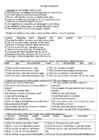
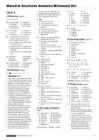
clown, doctor, tell, cheer, hospital, friend, children, wear, feel, looloo, theodora, jokes, person, work, change, night, friends, finally, fall, crash, exercises, magic, balloon, animals, stories, them, fact, father, started, eight, years, became, likes, thinks, fancy, coat, yellow, shirt, stripes, rubber, nose, hair, crazy, tiring, both, feelingsUse your English 1 Complete these sentences using the correct form (present simple or present continuous) of the verb in brackets. _ 1 She is in a band and she _________________________________ (record) a CD at the moment. _ 2 She is an actress and often _________________________________ (appear) on television. _ 3 At the moment she _________________________________ (have) a rest because she is tired. _ 4 Mike is a doctor and he _________________________________ (live) in Manchester. _ 5 I _________________________________ (start) work at 8.30 every morning. _ 6 He is a good cook but she _________________________________ (prefer) to eat out. _ 7 English tests _________________________________ (get) more and more interesting. _ 8 They _________________________________ (have) a party because it's her birthday. _ 9 I sometimes _________________________________ (ride) my bicycle to school.
) 7. Use was/were born to give dates of birth. I was born in 1975. (NOT I am born in 1975.) Shakespeare was born in 1564. 8. Police is a plural noun. The police are looking for him. (NOT The police is looking for him.) I called the police, but they were too busy to come. 9. Don't use the to talk about things in general. Books are expensive. (NOT The books are expensive.) I love music. (NOT I love the music.) 10. Use had better, not have better. I think you'd better see the doctor. (NOT I think you have better see the doctor.) We'd better ask John to help us. 11. Use the present progressive am playing, is raining etc to talk about things that are continuing at the time of speaking. I'm playing very badly today. (NOT I play very badly today.) Look! It's raining! (NOT Look! It rains!) 12. Use for with a period of time. Use since with the beginning of the period. for the last two hours = since 9 o'clock for three days = since Monday
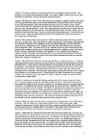
he in the other, opposite, holding the tall glass with both hands, rocking it so the ice cubes tinkled against the side. For her, this was always a blissful time of day. She knew he didn't want to speak much until the first drink was finished, and she, on her side, was content to sit quietly, enjoying his company after the long hours alone in the house. She loved to luxuriate in the presence of this man, and to feel - almost as a sunbather feels the sun - that warm male glow that came out of him to her when they were alone together. She loved him for the way he sat loosely in a chair, for the way he came in a door, or moved slowly across the room with long strides. She loved intent, far look in his eyes when they rested in her, the funny shape of the mouth, and especially the way he remained silent about his tiredness, sitting still with himself until the whiskey had taken some of it away. "Tired darling
didn't matter. All that mattered was the effect. And tomorrow would be just the beginning. I didn't sleep well that night, even after I was done crying. The constant whooshing of the rain and wind across the roof wouldn't fade into the background. I pulled the faded old quilt over my head, and later added the pillow, too. But I couldn't fall asleep until after midnight, when the rain finally settled into a quieter drizzle. Thick fog was all I could see out my window in the morning, and I could feel the claustrophobia creeping up on me. You could never see the sky here; it was like a cage. Breakfast with Charlie was a quiet event. He wished me good luck at school. I thanked him, knowing his hope was wasted. Good luck tended to avoid me. Charlie left first, off to the police station that was his wife and family. After he left, I sat at the old square oak table in one of the three unmatching chairs and examined his small kitchen, with its dark paneled walls, bright yellow cabinets, and white
Noun In place of noun the pronoun stands, As he and she can clap their hands. The adjective describes a thing, As magic wand or bridal ring. Adjective Most verbs mean action, something done, Verb To read and write, to jump and run. How things are done the adverbs tell, As quickly, slowly, badly, well. ition Adverb Prepos The preposition shows relation, As in the street or at the station. Conjunctions join, in many ways, Sentences, words, or phrase and phrase. The interjection cries out, "Heed!
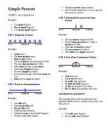
know, like). You cannot use continuous tenses with the following verbs: like love hate want need prefer know realise suppose mean understand believe remember belong contain consist depend seem 4 The following verbs are usually only used in Simple Present (not in the continuous form). state: be, cost, fit, mean, suit Example: We are on holiday. possession: belong, have Example: Sam has a cat. senses: feel, hear, see, smell, taste, touch Example: He feels the cold. feelings: hate, hope, like, love, prefer, regret, want, wish Example: Jane loves pizza. brain work: believe, know, think, understand Example: I believe you. 1. Exercise: make the sentences positive, negative and interrogative: 1 Christine (get up) at seven o'clock. 2 She (go) downstairs. 3 She (have) breakfast early.
d) Helen never does her homework. She is rather gentle/lazy'/reliable. e) I didn't talk to anyone at the party because I felt ambitious/lonely/shy. f) When Harry saw his girlfriend dancing with Paul he felt jealous/selfish/sentimental. g) I don't like people who are noisy and aggressive/courageous/sociable. h) Thanks for bringing us a present. It was very adorable/grateful/thoughtful of you. i) Teresa never gets angry with the children. She is very brave/patient/pleasant. j) Tom always pays for everyone when we go out. He's so cheerful/generous/honest. 2. Match the words in the box with the descriptions (a-l). Use each word once only. bad-tempered determined lazy reliable cheerful frank mean selfish considerate honest punctual sympathetic
pre-eminent dramatist. He is often called England's national poet and the "Bard of Avon" (or simply "The Bard"). His surviv- ing works consist of 38 plays, 154 sonnets, two long narrative poems, and several other poems. His plays have been trans- lated into every major living language, and are performed more often than those of any other playwright. Shakespeare was born and raised in Stratford-upon-Avon. At the age of 18 he married Anne Hathaway, who bore him three children: Susanna, and twins Hamnet and Judith. Between 1585 and 1592 he began a successful career in London as an actor, writer, and part owner of the playing company the Lord Chamberlain's Men, later known as the King's Men. He ap- pears to have retired to Stratford around 1613, where he died three years later. Few records of Shakespeare's private life survive, and there has been considerable speculation about such matters as his sexuality, religious beliefs, and whether the
She has a narrow nose, everything about her is slim. She is very thin and looks sometimes younger than she is, she's in her mid twenties. She has one of the most peculiar personalities I know. She is sometimes very quiet and completely shuts me out and then she can be very chatty. Her views of the world could be categorized as pessimistic, but I know she secretly harbours a lot of positivity. She often second guesses herself and that makes her kind of a perfectionist. I sometimes feel as if she is slow on purpose, but I know it's just the way she's made. She is an avid reader, you have to literally tear books away from her. She likes fantasy novels best, but also enjoys serious classics. When she starts with a book, it's really hard for her to stop. She also loves listening to rock music, which is what we bonded over. Also, she is a great artist if she has the time and patience. Her over analyzing makes her a slow drawer. I love Kati with all my heart
Dolly has discovered his affair - with the family's governess - and the house and family are in turmoil. Stiva's affair and his reaction to his wife's distress shows an amorous personality that he cannot seem to suppress. In the midst of the turmoil, Stiva reminds the household that his married sister, Anna Arkadyevna Karenina is coming to visit from Saint Petersburg. Meanwhile, Stiva's childhood friend Konstantin Dmitrievich Levin ("Kostya") arrives in Moscow with the aim of proposing to Dolly's youngest sister Princess Ekaterina Alexandrovna Shcherbatskaya, "Kitty". Levin is a passionate, restless but shy aristocratic landowner who, unlike his Moscow friends, chooses to live in the country on his large estate. He discovers that Kitty is also being pursued by Count Alexei Kirillovich Vronsky, an army officer. At the railway station to meet Anna, Stiva bumps into Vronsky
.. (make) her speech when the girls rushed in. --- 4 2. Write the verbs in the past simple, the future simple, or the present perfect tense. Do you remember? I started I'll start I've started / she's started I'm not interested in sport, but lots of my classmates are. Some of them ... (1 do) great things in sport. Lisa ... (2 win) nine swimming competitions since she was 13. John ... (3 be) the school's top runner for the last two years. Next spring he ... (4 run) the London Marathon. But my friend Kelly is the best. She ... (5 start) skating when she was four. She ... (6 have) the best results and she ... (7 win) lots of prizes. She ... even ... (8 be) on TV. Kelly ... (9 break) her arm twice while doing a jump on the ice, but she's OK now. Last year she ... (10 travel) to Canada to practise in a training camp. I'm sure sometime in the future she ... (11 win) an Olympic medal. By that time, I ... (12 be) a famous author and she ... (13 ask) me to write a book about her way to the top
It's very annoying/worrying. e) You're not scared/thrilled of spiders, are you? f) If we forget to do our homework, our teacher gets cross/terrifying. g) Tim completely lost his temper! He was absolutely furious/upset. h) Your written work is full of careless/naughty mistakes. 2. Replace the word(s) in italics with a suitable word from the box. Use each word once. confused fascinating scared depressed dull glad naughty upset a) I'm afraid the children have been very badly-behaved today. b) I felt a bit frightened when I went into the dark room. c) Jean was very unhappy when her kitten was run over. d) This film we saw last night was rather boring. e) This is a really interesting book. You must read it. f) I'm so happy that Helen has got the job she wanted. g) Sometimes when I hear the news I feel very miserable. h) Sorry I gave you the wrong tickets. I got a bit mixed up. 3. Complete each sentence with a word or phrase from the box
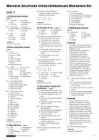
old. 3 1 was getting, arrived Challenge! 2 It's a mixed class of girls and boys. 2 was preparing, cut Students' own answers 3 It's difficult to tell what kind of 3 discovered, were building 1E Past perfect simple and lesson their in. 4 started, was talking 4 It could be that they're in a maths 5 found, was living continuous page 8 lesson.
Chapter1: An unknown woman was found lying in the street and brought into the workhouse. She delivered a sickly child who had trouble breathing. The woman, without a word of who she was, died and left her new born boy, Oliver, to the drunken nurse that stood by. Chapter2: The State gave Oliver to Mrs. Mann who housed a number of orphaned children. Mrs. Mann took a large portion of the money given to her by the authorities for each child's food so Oliver grew up small and malnourished. On his ninth birthday, the town beadle, Mr. Bumble, came to collect Oliver and take him to the board for an interview. They told him he was to live with other wards of the state to become educated and learn a trade. Oliver did not mind this, but soon after he arrived, the state
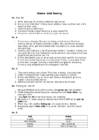
Home and family Ex. 3 p. 31 a. When she was 15. Emma's behavior got worse. b. It's very hard for them it they have suddely leave and live out in the world on their own. c. Caroline was a real friend. d. She has friends, a boyfriend and a busy social life. e. I have to treat her like an adult and give her space. Ex. 4 1. Emma was unhappy. She was smoking and drinking. She kept missing school and getting terrible fights. She stayed out at night, wen clubs, often got into trouble with the police and even started taking drugs. 2. Caroline was fostered a lot of teenagers before. Caroline is kind and caring for Emma
she was my age and apart from the 1 1 go ahead 5 come to eighties hairstyle we're the spitting 1 Well, you will go to bed late every night. 2 fall through 6 bring about image of each other! Some people 2 Well, you will refuse to wear a 3 tip off 7 go down with say that they can see a strong family coat. 4 mistake for 8 come up with resemblance between my dad and me. I can't see it myself, not facially anyway 3 Well, she would keep driving too 2 1 bring about 5 go ahead although there are certain similarities fast in the town
would be working. As far as my job went, at least, I'd gotten my way. I wanted to make a living based on my own merits and that meant an entry-level position. Starting the next morning, I would be the assistant to Mark Garrity at Waters Field & Leaman, one of the preeminent advertising agencies in the US. My stepfather, mega-financier Richard Stanton, had been annoyed when I took the job, pointing out that if I'd been less prideful I could've worked for a friend of his instead and reaped the benefits of that connection. "You're as stubborn as your father," he'd said. "It'll take him forever to pay off your student loans on a cop's salary." That had been a major fight, with my dad unwilling to back down. "Hell if another man's gonna pay for my daughter's education," Victor Reyes had said when Stanton made the offer. I respected that. I suspected Stanton did, too, although he would never admit it. I understood both
Catherine Morland My name is Catherine Morland. I would like to tell you a bit about myself. To begin with, I am seventeen years old and grew up in a countryside in a small town named Fullerton with my parents and nine siblings. As a child I was interested in many things like drawing, sports and music. I was very lively and cheerful, enjoyed cricket, horse riding and just hated cleanliness and restriction. As I grew up, I chose reading over sports and all of the wild games I used to like. Undoubtedly, I would now describe myself with the word naivety
Paul is the protagonist and narrator of the novel. He is, at heart, a kind, compas-sionate, and sensitive young man, but the brutal expe-rience of warfare teaches him to detach himself from his feelings. His account of the war is a bitter invective against sentimental, romantic ideals of warfare. Read an in-depth analysis of Paul Bäumer. Stanislaus Katczinsky - A soldier belonging to Paul's company and Paul's best friend in the army. Kat, as he is known, is forty years old at the beginning of the novel and has a family at home. He is a resourceful, inventive man and always finds food, clothing, and blankets whenever he and his friends need them. Albert Kropp - One of Paul's classmates who serves with Paul in the Second Company. An intelligent, speculative young man, Kropp is one of Paul's closest friends during the war. His interest in analyzing the causes of the war leads to many of the most critical antiwar
Some of the ways to bully other people are by: calling you names, making things up to get you into trouble, hitting, pinching, biting and pushing, taking things away from you, damaging your belongings, stealing your money, taking your friends away from you. Now, to talk about why people bully someone there are many aspects. Some bullies do it to get attention or to make other people afraid of them. Others might be jealous of the person they are bullying. It makes bully feel, stronger, smarter, or better than the person he or she is bullying. Some people think that it's one of the best ways to keep others from bullying himself. What is even worse, some bullies may not even understand how wrong their behaviour is and how it makes the person being bullied feel. Some young people are bullied for no particular reason, but sometimes it's because they are different in some way. It could be the colour of their skin, their financial condition, the
complaining. REMEMBER Non-Continuous Verbs/ Mixed Verbs Examples: (All of these sentences can be said while Examples: eating dinner in a restaurant.) · She is loving this chocolate ice cream. Not · I am studying to become a doctor. Correct · I am not studying to become a dentist. · She loves this chocolate ice cream. Correct · I am reading the book Tom Sawyer. Simple Past [VERB+ed] or irregular verbs Examples: Examples: · I lived in Brazil for two years. · You called Debbie. · Shauna studied Japanese for five years.
The novel begins with Jake Barnes, the novel's narrator and protagonist, describing Robert Cohn. Cohn was born to a wealthy Jewish family in New York. At Princeton, Cohn faced rampant anti-Semitism. To minimize his feelings of inferiority and to combat his shyness, he threw himself into boxing, becoming the university's middleweight champion. He married very soon after his graduation, on the rebound from his unhappy college experience. He and his wife had three children. Cohn lost most of his fifty-thousand-dollar inheritance, and, after five years, his wife left him, just when he had made up his mind to walk out on her. After the divorce, Cohn moved to California. There, he began spending time with a literary crowd, and he soon began backing a magazine. While in California, Cohn became involved with Frances Clyne, a manipulative status-seeker. When Cohn's magazine failed, Frances persuaded Cohn to take her to Paris to join the postwar crowd of expatriates.
In London you'll also find Indonesian, Mexican, Greek... Cynics will say that this is because English have no "cuisine" themselves, but this is not quite the true. Vocabulary: to criticize - tasteless overcooked - ingredient - to invent - sauces - to disguise - spice herb - delicious - disappointing - to lend cuisine British Youth (2) Most 18 and 19 year-olds in Britain are quite independent people. English people say that children grow up more quickly now. Relationships within the British family are different now. Children have more freedom to make their own decisions. For example, children aged 13 may be employed part time in Great Britain. Age 15 is legally a "young person" not a "child". Age 16 is a school leaving age. They can leave home, drive a moped, marry with "parents' consent" buy beer. Age 17 can drive a car. Age 18 can vote, get married, drink in pubs.
considered the rightful property of some one or other of their daughters. "My dear Mr. Bennet," said his lady to him one day, "have you heard that Netherfield Park is let at last?" Mr. Bennet replied that he had not. "But it is," returned she; "for Mrs. Long has just been here, and she told me all about it." Mr. Bennet made no answer. "Do you not want to know who has taken it?" cried his wife impatiently. "You want to tell me, and I have no objection to hearing it." This was invitation enough. "Why, my dear, you must know, Mrs. Long says that Netherfield is taken by a young man of large fortune from the north of England; that he came down on Monday in a chaise and four to see the place, and was so much delighted with it, that he agreed with Mr. Morris immediately; that he is to take possession before Michaelmas, and some of his servants are to be in the house by the end of next week." "What is his name?"
..... them moved, they were just staring ..... each other. 13) You must go, Susan, or else I won't go ..... there as well. 14) He laughed ..... her, not feeling any pity at all. 15) Mother listened ..... the radio while Jim was catching ..... butterflies. 16) She was soon bored, so he decided ..... finish his speech earlier. 17) Marta was hungry; she went ..... the kitchen .... order to grab ..... sandwich and ..... bottle ..... milk. 1.4 Write a postcard to your friend from America who will be visiting you next week. Note: do not write more than 30-50 words Also, the postcard should include: o That you'll be meeting him/her at the airport at five p.m. o His/hers clothes should be warm and comfortable o You can organize a picnic if he/she wants Do not be too formal! Rough notes: ...................................................................................................... ................................
13.Decipher- dešifreerima, lahti mõtestama, tavalisse kirja üle kandma It was like deciphering a foreign language.(page 109) 14.Derive- tuletama,tuleneb The word derives from the Greek nekros ‘’dead’’ and manteia ‘’divination.’’(page 47) 15.Stockpile- tagavara, varud I’d really rather not use it, but if I squirmed at the thought of stockpiling urine, it would only prove I was the flighty girlie girl he expected.(page 211) 16.Proportion- suhe, propotsioon, osa You’ll tell Dr. Gill that I apologized and maybe you blew the whole thing out of proportion.(page 248) 17.Evaporate- ära kaduma, haistuma Any notion I’d had of confessing the truth to Aunt Lauren evaporated.(page 249) 18.Culminate- haripunkti saamine, tippu saamine Never an outgoing or cheerful child, he became increasingly sullen, his withdrawal punctuated by bouts of misplaced anger, often culminating in violent outbursts.(page 130) 19.Séance- seanss We were going to do a séance.(page 173) 20
to say anything because someone is talking so much or so quickly amiable and genially voluble Pygmalion act 4-5 Why is Eliza angry? Explain. Eliza won the bet for Higgins. She thinks that she is not important to him. Mr. Higgins thanks God it's all over, and Eliza thinks that now he can throw her back again to the gutter. What does Higgins say to make a point that Eliza has no right to be angry? Higgins says that she is overreacting. He tells her that after she sleeps she will feel better. "It's only imagination. Low spirits and nothing else. Nobody's hurting you. Nothing's wrong. You go to bed like a good girl and sleep it off. Have a little cry and say your prayers: that will make you comfortable." Why does Eliza wish that she was dead? Why does she say that she wished Higgins had left her where he found her? She does not know what to do with herself, now that she has won the bet. She sold flowers. Now she is a lady. She is not fit to sell anything else.
A FAMILY CONSISTS OF THE CLOSEST AND DEAREST PEOPLE IN THE WORLD , ALWAYS READY TO LISTEN TO YOU , ALWAYS READY TO SHARE YOU JOY AND TO PROVIDE HELP IN NEED . OUR FAMILY IS NOT VERY LARGE: MY PARENTS , MY BROTHER, MY GRANDPARENTS AND I. SOMETIMES MY UNCLE AND AUNT VISIT WITH THEIR DAUGHTER AND SON, WHO ARE MY COUSINS . OUR FAMILY IS VERY FRIENDLY . ANY TIME, WE HAVE A CHANCE WE TRY TO DO SOMETHING TOGETHER , TO GO TO THE COUNTRY , PLAY SOME KIND OF GAME FOR ALL OR JUST SIT AT A TABLE AND TELL EACH OTHER FUNNY STORIES . I WILL START WITH MY PARENTS. M Y MOTHER AND FATHER MET AT THE UNIVERSITY. THEY GOT MARRIED ONE YEAR AFTER GRADUATION . THEY HAVE BEEN WIFE AND HUSBAND FOR 19 YEARS ALREADY . M Y MOTHER ' S NAME IS E MMA A USTEN . S HE IS FORTY -THREE YEARS OLD , ALTHOUGH SHE DOESN 'T LOOK HER AGE BECAUSE SHE LIKES SPORTS AND GOES SWIMMING TO A LOCAL POOL THREE TIMES A WEEK . S HE IS AN INTERIOR DESIGNER . T HIS IS A VERY CREATIVE PROFESSION
DAMIS, DORINE MADAME PERNELLE Come, come, Flipotte, and let me get away. ELMIRE You hurry so, I hardly can attend you. MADAME PERNELLE Then don't, my daughter-in law. Stay where you are. I can dispense with your polite attentions. ELMIRE We're only paying what is due you, mother. Why must you go away in such a hurry? MADAME PERNELLE Because I can't endure your carryings-on, And no one takes the slightest pains to please me. I leave your house, I tell you, quite disgusted; You do the opposite of my instructions; You've no respect for anything; each one Must have his say; it's perfect pandemonium. DORINE If . . . MADAME PERNELLE You're a servant wench, my girl, and much Too full of gab, and too impertinent And free with your advice on all occasions. DAMIS But . . . MADAME PERNELLE You're a fool, my boy--f, o, o, l Just spells your name. Let grandma tell you that I've said a hundred times to my poor son,
· Paragraph 1 reasons for writing · Paragraphs 2, 3 development · Final paragraph closing remarks · Name · Letters are divided into two categories, formal and informal. There are various types of formal and informal letters . · It is important to think about the person who you are writing to before you begin writing a letter. If the wrong style is used, the letter will look impolite, silly or odd. For example, if you used formal language to write to a close friend, the letter would look odd, or if you used informal language to write a letter to a company, the letter would look impolite. · There are certain characteristics which allow us to distinguish between formal and informal letters. These are: ~ The salutation (e.g. Dear Sir/Madam, Dear Bill) ~ The style or language (e.g. use of formal language for formal letters, or the use of slang and idioms for informal letters) ~ The closing remarks (e.g
cough v - [kf] to suddenly push air out of your throat treatment that is not based on the usual western with a short sound, often repeatedly: Matthew methods: Acupuncture is widely used by practitioners coughed and cleared his throat. köhima of alternative medicine. 19.discharge v - to officially allow someone to leave 2. anonymous ['nnims] adj - unknown by name: Our somewhere, especially the hospital or the army, navy client prefers to remain anonymous. etc, or to tell them that they must leave: Hospitals now 3. antagonise v - to annoy someone very much by doing tend to discharge patients earlier than in the past. something that they do not like: Matt wasn't the sort of välja laskma man to antagonize people. vastuollu sattuma, vastu 20.disheartened adj - [dis'h:t()n] disappointed, so that
wealthy. Amy Squirrel (Lucy Punch), a dedicated teacher and colleague of Elizabeth, also pursues Scott while the school's gym teacher, Russell Gettis (Jason Segel), makes advances on Elizabeth which she rejects.[3] Elizabeth plans to get surgery to enlarge her breasts, believing she is being overlooked for women with larger chests. However, she cannot afford the $10,000 procedure. To make matters worse, Scott admits that he has a crush on Amy, only viewing Elizabeth as a friend. Elizabeth attempts to raise money for the surgery by participating in her 7th grade class car wash in provocative clothing and by manipulating parents to give her money for more school supplies and tutoring, but her efforts are not enough. Amy, acting on the growing resentment between them due to her pursuit of Scott and ignoring of school rules, attempts to warn the principal about Elizabeth's embezzlement scheme, but he dismisses her claims as groundless.
2.3 Later years 3 Marriages and relationships 3.1 James Dougherty 3.2 Joe DiMaggio 3.3 Arthur Miller 4 The Kennedys 5 Death and aftermath 5.1 Administration of estate 6 Trivia 6.1 Pornographic film claims 7 Quotes 7.1 Quotes about Monroe 8 Filmography 9 Awards and nominations 10 Art (selection) 11 See also 12 Notes 13 References 14 External links Childhood Family and early life Main article: Childhood of Marilyn Monroe Marilyn Monroe was born in the charity ward of the Los Angeles County Hospital.[1][10] According to biographer Fred Lawrence Guiles, her grandmother, Della Monroe Grainger, had her baptized Norma Jeane Baker by Aimee Semple McPherson.[1] Although she took a stagename of Marilyn Monroe in 1946, she did not legally change her name until February 23, 1956.[11] Her mother was Gladys Pearl (Monroe) Baker.[12] Her family is believed to have been Anglo-Spanish originally; and possibly related to the Sepulvedas. [13] For many years it was believed Gladys' second husband Martin
 annaabi.ee