 50 punkti
Autor soovib selle materjali allalaadimise eest saada 50 punkti.
50 punkti
Autor soovib selle materjali allalaadimise eest saada 50 punkti.
 ~ 3 lehte
Lehekülgede arv dokumendis
~ 3 lehte
Lehekülgede arv dokumendis
 2018-11-30
Kuupäev, millal dokument üles laeti
2018-11-30
Kuupäev, millal dokument üles laeti
 2 laadimist
Kokku alla laetud
2 laadimist
Kokku alla laetud
 0 arvamust
Teiste kasutajate poolt lisatud kommentaarid
0 arvamust
Teiste kasutajate poolt lisatud kommentaarid
 julia Vassina
Õppematerjali autor
julia Vassina
Õppematerjali autor
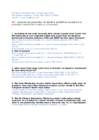
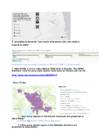
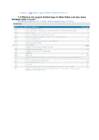
European Environmental Databases 2018 1. According to Corine Land Cover, has the total area of natural grasslands increased or decreased in Estonia between 1990 and 2006? By how many hectares? According to CLC the total area of natural grassland in Estonia has increased by 39 779ha. 2. And in Europe? In Europe it has also increased, by 19 007 228ha. 3. What about "Broad-leaved forest" (Corine Land Cover code 311) in Estonia? Increased or decreased? By how many hectares? Broad-leaved forests have increased by 43 8834ha. 4. What was the water exploitation index for Emajõgi sub-basin in the summer of 2012? 0.03% 5. When did Estonia emmitted more Ktons of CO2, in 2015 or in 1990? What is the difference between both years in ktons? Estonia emmitted more Ktons of CO2 in 1990
FACTFILE Area: 45 228 sq km Poplulation: under 1.4 million Capital: Tallinn Language: Estonian Currency: Eesti kroon (EEK) Main religion: Lutheran National holiday: 24 February (anniversary of the republic) National flower: Cornflower National bird: Barn Swallow National stone: Limestone LOCATION The Republic of Estonia is the northernmost and smallest of the three Baltic States. It is located on the eastern shores of the Baltic Sea in the north east of Europe. To the east the country borders Russia. Latvia is the countries neighbour to the south. From the west the coast of Estonia is washed by the Baltic Sea and from the north by the Gulf of Finland. The length of the coastline is approximately 3 800 km. The longest distance from east to west is 350 km, while north to south Estonia stretches 240 km. THE NAME The name EESTI was apparently derived from the word AISTI, the
and an autonomous grand duchy of Russia after 1809. It won its complete independence in 1917. During World War II, it was able to successfully defend its freedom and resist invasions by the Soviet Union albeit with some loss of territory. In the subsequent half century, the Finns made a remarkable transformation from a farm/forest economy to a diversified modern industrial economy; per capita income is now among the highest in Western Europe. A member of the European Union since 1995, Finland was the only Nordic state to join the euro system at its initiation in January 1999. In the 21st century, the key features of Finland's modern welfare state are a high standard of education, equality promotion, and national social security system currently challenged by an aging population and the fluctuations of an exportdriven economy (Central Intelligence Agency, 2012, ISSN 15538133). 2.1.2 Geography
Climate Overall, Ireland has a mild, but changeable, climate all year. The island is not noted for its extremes. The warmest recorded air temperature was 33.3°C. The coldest air temperature was -19.1°C Average temperatures in the island vary from -4°C (min) to 11°C (max) in January, and 9°C (min) to 23°C (max) in July. Flora and fauna Ireland has fewer animal and plant species than either Britain or mainland Europe because it became an island very soon after the end of the last Ice Age, about 8,000 years ago. Nevertheless, it is home to hundreds of plant species, some of them unique to the island. Many different habitat types are found in Ireland, including farmland, open woodland, temperate forests, conifer plantations, peat bogs, and various coastal habitats. Fauna Only 31 mammal species are native to Ireland, again because it was isolated from Europe by rising sea levels after the Ice Age
The same melody with different words is also Finland's national anthem. The current coat of arms of Estonia is a golden shield which includes three slim, blue leopards (or lions) in the middle, with oak branches along the side of the shield. It originates from Denmark. It was officially adopted in 1925. Geography Estonia is the northernmost of the three Baltic States. It is located on the northern hemisphere on the eastern shores of the Baltic Sea in the north-east of Europe. It has land contact with Russia from the east and Latvia from the south. In the north The Gulf of Finland separates Estonia from Finland. The Gulf of Riga is situated to the south-west. Estonia has more than 1500 islands. The biggest ones are located to the west. The four biggest islands are Saaremaa, Hiiumaa, Vormsi and Muhu. The highest point in Estonia and also in the Baltic region is Suur Munamägi. It is 318. above sea level. Estonia is a country of a thousand lakes
..................................................................................................10 Introduction I chose finland because there are friendly people and beautiful nature. Finland is bigger than Estonia. There lives over 5 milj. people. Finland capital is Helsingi and there lives about 2 milj. people. Highest top is 1328m. Finland is bordersed with Sweden to the west, Russia to the east and Norway to the north. It is the eight largest city in Europe. Most Finns speak Finnish. The second language is Swedish. Finland is rated the sixth most peaceful country in the World. In Finland there are more than 60000 lakes. Capital: Helsinki Area: 338145km2 Population: 5200000 Language: Finnish, Swedish Currency: Euro (EUR) Goverment: Parliamentary republic
Topic Estonia Tallinn 2008 1. Introduction Estonia is a small country about the size of Switzerland, or New Hampshire and Massachussetts combined. Estonia is named after the people called "Ests" who lived in the region in the 1 st century AD. The Republic of Estonia is one of the three countries commonly known as the "Baltic States". The other Baltic States are Latvia and Lithuania. 2. Geographical position Estonia is situated in northeastern Europe. Estonia is bounded on the north by the Gulf of Finland, on the east by Russia, on the south by Latvia and on the west by the Baltic Sea. In the north it borders on Finland. The coastline of the Baltic Sea in Estonia is characterized by numerous gulfs and bays, the biggest of them being the Gulf of Finland, the Gulf of Riga and the Gulf of Pärnu. Bays include the Narva Bay, Matsalu Bay, Kolga Bay, Kunda Bay, Tallinn Bay etc. Estonia has over
Introduction Estonia, officially the Republic of Estonia (Estonian: Eesti or Eesti Vabariik) is a country in the Baltic region of Northern Europe. It is bordered to the north by Finland across the Gulf of Finland, to the west by Sweden across the Baltic Sea, to the south by Latvia (343 km), and to the east by the Russian Federation (338,6 km). The territory of Estonia covers 45,227 km² and is influenced by a temperate seasonal climate. The Estonians are a Finnic people closely related to the Finns, with the Estonian language sharing many similarities to Finnish. The modern name of Estonia is
 annaabi.ee







Kõik kommentaarid