Leidsid 33 sarnast õppematerjali, mis on seotud failiga "Estonian holidays". Need materjalid aitavad sul teemat sügavamalt mõista.
year, christmas, celebration, days, night, holiday, usually, part, gift, display, 24th, work, families, other, final, before, jaanipäev, summer, special, june, traditional, holidays, allan, referred, january, birth, jesus, customs, include, giving, church, straw, glass, leave, early, gather, santa, comes, everybody, gives, gifts, calm, support, aroundEstonian national holidays Christmas Christmas , also referred to as Christmas Day, is an annual holiday celebrated on December 25 or January 7 that commemorates the birth of Jesus of Nazareth. Modern customs of the holiday include gift-giving, Church celebrations, and the display of various decorations--including the Christmas tree, lights, mistletoe, nativity scenes, and holly. In many countries there are many different types of decorations used depending on the traditions and available resources. However , in Estonia people bring Christmas tree in and decorate it with straw ,glass balls and candles. Estonians eat sauerkraut and black pudding. On the 24th December people leave work early, families gather, Santa Clouse comes , everybody gives gifts
Estonian Public holidays New Year's Day January 1 New Year is the time at which a new calendar year begins and the calendar's year count is incremented. In many cultures, the event is celebrated in some manner. The New Year of the Gregorian calendar, today in worldwide use, falls on 1 January, as was the case with theRoman calendar. There are numerous calendars that remain in regional use that calculate the New Year differently Independence Day Independence from the Russian Empire in 1918. Independence re-declared from the Soviet Union in 1991 An Independence Day is an annual event commemorating the anniversary of a nation's assumption of independent statehood, usually after ceasing to be a group or part of another nation or state; more rarely after the end of a military occupation. Most countries observe their respective independence days as a national holiday, and in some
Independence day 24 February. Estonian people often have a day-off from school and work, to celebrate this day. People often make big dinners and sit around in the circle of family. They often light a few candles on the window and all houses have an Estonian flag out. This is by law the most important holiday, commemorating the declaration of independence in 1918. New Year's Eve 31December The New Year's Eve is an event that happens when Estonians celebrates the end of one year and the beginning of the next year. Estonians launch a big amount of fireworks up to the sky at midnight. It's a celebration with family and friends. After launcing the fireworks people watch and toast and wich a happy new year to each other. Christmas Eve 24 December Most of the traditions, such as Christmas dinner and gift giving are observed in Estonia on this day. Santa Claus visits homes in person, played by an older family member or a rent-a-Santa
Mari-Liisa Reigo Jaanipäev Jaaniõhtu, also called Jaanilaupäev and Jaanipäev are the most important days in the Estonian calendar, apart from Christmas. The short summer seasons with long days and brief nights hold special significance for the people of Estonia. Jaanipäev is celebrated in the night between 23rd and 24th of June, a few days after the summer solstice, when night seems to be non-existent. For Estonians, Jaanipäev celebrations were merged with the celebration of Võidupüha during the War of Independence when Estonian forces defeated the German troops on 23 June 1919. After this battle against Estonia's traditional oppressors, Jaaniõhtu and the lighting of the traditional bonfires became linked with the ideals of independence and freedom.
Holidays, Festivals, Cultural events TALLINN - If you're looking for entertainment in Estonia this summer, you are really spoiled for choice. Festivals and events dedicated to the consumption of beer are a lot of fun, but if you want to get the true feel of the country, you need something a little more ethnic. Like a town fair. Just as July becomes August, the seaside town of Haapsalu will host a grand spectacle of rural Estonian entertainment. The White Lady Days is a summer celebration filled with amusement for all the family. Held in and around the remains of the Teutonic-knights-era castles, the fair combines enchanting medieval legends with modern countryside charm to create a comprehensive experience of Estonia beyond the big cities. But the legend of the White Lady of Haapsalu, which is at the heart of the festival, is perhaps the most famous tall tale of the many that are so abundant in Estonia's folklore.
Estonia Estonia is a small country in Northern Europe with an area of about 45 000 sq km. As a part of the East-European Plain, the country has a rather flat surface. The highest and most diverse region in Estonia is in the south-eastern part of the country. At 318 metres, Suur Munamägi is not only the highest point in Estonia, but of all the Baltic countries. There are about 1500 islands in Estonia, the biggest of which being Saaremaa and Hiiumaa. Sixty-four species of mammals have been recorded in Estonia, three of them have been introduced: the racoon dog, the American mink and the muskrat. A couple of species have been re-introduced The European beaver, who was hunted to extinction by the end of the 19th century
Christmas in Australia Christmas in Australia is often very hot. Whereas the northern hemisphere is in the middle of winter, Australians are baking in summer heat. It is not unusual to have Christmas Day well into the mid 30 degrees Celsius, or near 100 degrees Fahrenheit. A traditional meal includes a turkey dinner, with ham, and pork. A flaming Christmas plum pudding is added for dessert. In the Australian gold rushes, Christmas puddings often contained a gold nugget. Today a small favor is baked inside. Whoever finds this knows s/he will enjoy good luck. Another treat is Mince Pies. Some Australians and particularly tourists often have their Christmas dinner at midday on a local beach, Bondi Beach in Sydney's Eastern Suburbs attracts thousands of people on Christmas Day. Other families enjoy their day by having a picnic. If they are at home, the day
and of NATO since 29 March 2004 Estonia has also signed the Kyoto protocol. Economy Estonian economy was one of the fastest growing in the world until 2006 with growth rates even exceeding 10% annually. Despite some concerns both in and outside of the country, the Estonian economy and its currency remained highly resilient and solvent. Until recent years the Estonian economy continued to grow with admirable rates. Estonian GDP grew by 6.4% in the year 2000 and with double speeds after accession to the EU in 2004. The GDP grew by 7.9% in 2007 alone. Increases in labor costs, rise of taxation on tobacco, alcohol, electricity, fuel, and gas, and also external pressures (growing prices of oil and food on the global market) are expected to raise inflation just above the 10% mark in the first months of 2009. In the first quarter 2008 GDP grew only 0,1%. The government made a supplementary negative budget, which was passed by Riigikogu
Some festivals have their roots in Chinese festivals but have undergone dramatic changes as they mixed with local customs. Some are so different that they do not even remotely resemble the original festival despite sharing the same name and date. There are also various local festivals (e.g. Tobata Gion) that are mostly unknown outside a given prefecture. It is commonly said that you will always find a festival somewhere in Japan. Matsuri is the Japanese word for a festival or holiday. In Japan, festivals are usually sponsored by a local shrine or temple, though they can be secular. There is no specific matsuri days for all of Japan; dates vary from area to area, and even within a specific area, but festival days do tend to cluster around traditional holidays such as Setsubun or Obon. Almost every locale has at least one matsuri in late summer/early autumn, usually related to the rice harvest. Notable matsuri often feature processions which may include elaborate floats
The highest point in Estonia and also in the Baltic region is Suur Munamägi. It is 318. above sea level. Estonia is a country of a thousand lakes. The Largest one is Lake Peipsi which is also the fourth biggest freshwater lake in Europe. Lake Peipsi and Lake Võrtsjärv are rich in fish. Estonia has many rivers but only nine of them are longer than 100km. The most important ones are Pärnu River and Emajõgi River Climate Estonia lies in the northern part of the temperate climate zone and in the transition zone between maritime and continental climate. Because Estonia is continuously warmed by the Gulf Stream it has a milder climate despite its northern latitude. Northern latitude means long summer daylight hours (the longest summer day stretches to 19 hours), and dark winters when daylight lasts sometimes only six hours. Being on the Baltic Sea the country is subjected to sea breezes and humidity.
When they grow up, they play as members of important amateur teams or as a professional in teams competing in football ,,leagues". Professional football is as much a business as a sport. Rugby football was first played in 1823. In rugby every player is allowed to carry the ball. The ball is oval, not round. Each team contains 15 players. The oldest game of football in England is probably the football match which takes place at Ashburn on Shrove Tuesday every year. The game starts in the centre of the town, and the distance between two goals is two miles. The only rule is not to use motorcycles, cars and lorries in the game. In 1958 one team buried the ball. The other team didn't know and ran after them. Later first team took the ball and won. 3) JAMES WATT He was born in the small port of Greenock on the river Clyde in Scotland in 1736. His father was a mathematical-instrument maker and also kept a shop to supply ships with goods for their voyages
come to see them. Some of them are even like symbols of England. The most famous ones are: Stonehenge is one of the greatest national icons of Britain. That prehistoric monument is located in the plain of Salisbury, in the county of Wiltshire in the south-west of England. It is built of 150 enormous stones which are set in a purposive circular pattern. Stonehenge was probably built to mark the longest and shortest day of the year because it lies on the line of the midsummer sunrise and the midsummer sunset. That would have enabled people to keep a record of changing of seasons. Although it is still unclear who built it. Hadrian’s Wall is an ancient wall which was built in 2nd century by Hadrian, the emperor of Rome from AD 117 to 138, and it marked the northern border of the Roman Empire in Britain. The wall was 80 Roman miles (117 kilometres) long and it is situated in northern
Christmas in Ireland lasts from Christmas Eve to the feast of the Epiphany on January 6, which is referred to as Little Christmas. Ireland's Christmas is more religious than a time of fun. Lighted candles are placed in windows on Christmas Eve, as a guide that Joseph and Mary might be looking for shelter. The candles are usually red in color, and decorated with sprigs of holly. Irish women bake a seed cake for each person in the house. They also make three puddings, one for each day of the Epiphany such as Christmas, New Year's Day and the Twelfth Night. After the Christmas evening meal, bread and milk are left out and the door unlatched as a symbol of hospitality. St Stephen's Day, the day after Christmas, is almost as important, with football matches and meetings going on. For children, the
1. How many public holidays or Red-Letter Days are there in Britain? Name them. 8 public holidays in Britain: two at Christmas, one for the New Year(which was only introduced in the late 1970s) two at Easter and three Bank Holidays. 2. What is the same and what is different about the way Christmas is celebrated in England and Estonia? In England, there's common to sing Carol's and for children, Christmas means pantomimes plays based on fairy tales which combine comedy, dance and song. A traditional Christmas dinner includes roast turkey with roast potatoes, a range of vegetables, cranberry sauce etc., followed by Christmas pudding and Christmas cake. The pulling of crackers(and the wearing of paper hats) before the meal is quite popular. Afterwards many watch the Queen's traditional Christmas address on TV at 3 pm
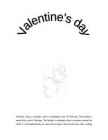
Valentine's Day is a holiday, which is celebrated on the 14 th February. This holiday is named after a priest Valentine. The holiday is celebrated almost everywhere around the world. It is the traditional day on which lovers express their love for each other, sending cards. On this day people show how much they care about their friends. Usually on this day people gift hand-made cards and roses. Nowadays people can also send e-cards. Modern Valentine symbols include the heart-shaped outline and the figure of the winged Cupid. The traditional Valentine's colours are pink and red. On that day people should were pink and red clothes. In different countries there are different traditions on Valentine's Day. History There are many versions of the history of Valentine's Day.
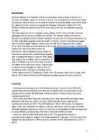
and tgeir descendants Public holidays: Some national holidays: 23 June: Victory Day the Battle of Võnnu in the Estonian War of independence; 24 June St. John's Day; 2 February anniversary of the Tartu Peace Treaty; 14 March Mother Tongue Day; May second Sunday Mothers' Day; 2 November All Souls' Day; 14 February Valentine's Day. Some annual events: The Tartu Ski Marathon, Jazzkaar, Old Town Festival; Grandma-Granpa Days, Tallinn Rock Summer, Viru Säru, The Visual Anthropology; The International Organ Music Festival; The White Lady Festival National customs: The first all-Estonian Song Festival took place in Tartu ib 1869 and sice then the Song Festivals have become a national tradition, being held every 4-5 years; the Singing Revolution is a commonly used name for events between 1987 and 1990. Emblems: THE FLAG was originally the flag of the Estonian Students' Society, consecrated in
being the Gulf of Finland, the Gulf of Riga and the Gulf of Pärnu. Bays include the Narva Bay, Matsalu Bay, Kolga Bay, Kunda Bay, Tallinn Bay etc. Estonia has over 1500 islands, the largest being Saaremaa and Hiiumaa, Muhu and Vormsi. Saaremaa and Muhumaa are connected to each other with a bridge. The best- known smalles islands are Naissaar, Aegna, Ruhnu, Kihnu, Väike-Pakri, Suur-Pakri etc. 3. Relief Lying in the north-western part of the East-European Plain, Estonia is mostly flat with an average elevation of about 50 metres above sea level. South-eastern and eastern parts of Estonia are higher than the western parts. The relief of the present-day landscape was shaped during the Ice Age. Ice sheet has carried large boulders and limestone blocks here, not to mention that the hilly terrain in Estonia was also shaped by the continental ice and the melting water. The land is rising 25 cm every one hundred years
The Most Interesting Historical Events in Estonia Liana Põldver · The nationwide Song Festival tradition began with the first Song Festival in Tartu, June 18 20, 1869. · 1860 marks the beginning of the period of the National Awakening. A singing society led by Johann Voldemar Jannsen started and carried through the nationwide idea of Song Festival. · During 1879 1910 six Song Festivals were held that played an important part in the nation's cultural and economical awakening and growth. In the independent Estonian Republic the Song Festivals were held in every five years (1923 1938). After World War II, the Song Festival tradition began again in 1947. Since 1950 General Song Festivals were held in every five years again. 1969 was an exception though when 100th anniversary of the Song Festival was celebrated. · The foreign authorities have tried to use the Song
Acted like prophets. 2. Stonehenge From prehistoric period. Was built on Salisbury plain between 2500 and 1500 bc. One of the most famous and mysterious archaeological sites in the world. One of the mysteries is how it was built at all with the technology of the time. Another is its purpose. It appears to function as a kind on astronomical clock and we know it was used by the Druids for ceremonies marking the passing of the seasons. It appears in number of novels. These days it is not only the interest of tourists but is also a gathering point of certain minority groups. It is now fenced off to protect it from damage. 3. The Roman conquest Julius Caesar's first raid was in 55 BC but the romans left. Ad 43- the Romans came to stay. The army established Roman rule in the south and SW of the country. The Romans started to introduce their laws to a new province of the Roman Empire and started to build good roads.
Traditions Australia doesn't have many traditions. Attempts to get Halloween off the ground have stalled due to one too many homeowners telling little kids to get off their property or they will see a scary sight. Australia celebrates many of the same holidays as do people of the Western world, such as Easter and Christmas. However, Australians also celebrate some holidays unique to their country and culture. Australia Day Australia Day, 26 January, is the anniversary of the arrival of the First Fleet of 11 convict ships from Great Britain, and the raising of the Union Jack at Sydney Cove by its commander Captain Arthur Phillip, in 1788. On Australia Day, over half of the nation's population of 21 million attend either an organised
occasional "Chinook", a warm dry wind from the Rocky Mountains that gusts through and melts the snow. Winters are mild and wet on the west coast, in cities such as Vancouver and Victoria. Territories and provinces Canada consists of 3 territories and 10 provinces. Very few people live in the territories, but it has more power on deciding important questions. Newest territoy is Nunawut, it became a territory in 1999. It was created from the eastern part od North- West territories. Quebec and Ontario are the biggest provinces. In the central part of Canada there are prairies and agriculture is very common. Alberta is rich in natural resources such as oil and natural gas. In Quebec and Ontario are many manufactories and industries. In the west there is maritime climate and so they fish and ship there. Toronto is the biggest city in Canada, with a population of 5,1 million people. It is
Kunda Ühisgümnaasium Tallin Old Town Report Student: Kristin Karu Teacher: Kristi Aron Kunda 2012 The Alexander Nevsky Cathedral The Alexander Nevsky Cathedral is an orthodox cathedral in the Tallinn Old Town,Estonia. It was built to a design by Mikhail Preobrazhensky in a typical Russian Revivalstyle between 1894 and 1900, during the period when the country was part of theRussian Empire. The Alexander Nevsky Cathedral is Tallinn's largest and grandest orthodox cupola cathedral. It is dedicated to Saint Alexander Nevsky who in 1242 won the Battle of the Ice on Lake Peipus, in the territorial waters of present-day Estonia. The late Russian patriarch, Alexis II, started his priestly ministry in the church. Interior of the Cathedral. The Alexander Nevsky Cathedral crowns the hill of Toompea where the Estonian folk hero
11. The Norman Conquest. The successful Norman invasion of England in 1066 brought Britain into the mainstream of western European culture. Unlike the German invasions, the Norman invasion was small-scale. On 14 October 1066, an invading army from Normandy defeated the English at the Battle of Hastings. The battle was close and extremely bloody. At the end of it, most of the best warriors in England were dead, including their leader, King Harold. On Christmas Day that year, the Norman leader, Duke William of Normandy, was crowned king of England. He is known in popular history as “William the Conqueror” and the date is remembered as the last time that England was successfully invaded. There was no such thing as a Norman area of settlement. Instead, the Norman soldiers who had invaded were given the ownership of land and of the people living on it. A strict feudal system was imposed. 12. Magna Carta.
road signs All speed limit signs in the Republic changed to the metric system in 2005. Some direction signs still show distance in miles so tourists often mix them up. There are usually about 10 signs or more on one post , and its really hard to see them when driving, so tourists disturb traffic quite often when slowing down to read the signs All the signs are multilingual ,due to high percentage of English speakers Forests Ireland has only about 8 % of his whole land covered with forests. Centuries ago people cut the forests and didn't think about the future so nowadays there is mostly peat ( turvas) which Ireland uses to produce energy. Economy
In 1890, 40 % of Irish people were living abroad "Exodus in reverse" has been used to describe Irish people returning to Ireland, especially from the US. Immigration from many countries, but mostly from Poland, the UK, Lithuania, Latvia, Nigeria and Romania. Is Ireland still an emigration country? No 7. What is the difference between the Irish Free State and the Republic of Ireland? All three names refer to the same country (Northern Ireland was part of the Irish Free State for one day, if you want to be really pedantic). The Irish Free State was established in 1922. It was part of the British Commonwealth, and a dominion of the UK, with which it shared a monarchy. Before this, all of Ireland was a part of the UK. In 1937, Irish voters backed a plebiscite which voided the Anglo-Irish Agreement (which created the Irish Free State), changed the country's name to Ireland, and set in motion the formal
at home on the radio in the park at work on television in the car at the university on page 5 in the drawer at the lecture on both sides of the street in a chair at an office on top in the picture at a party on leave in the water at the top of the page on holiday in the sky at the bottom of the page on my right in a coffee bar at the end of the street on my way to college in the middle of the room at my left side in the corner of the room 1 KUHU? WHERE TO? KUS? WHERE? KUST? WHERE FROM? When do you go to work? Father is at work now
Then began a long chain of occupation and control by foreign powers. In the 1200s the German crusaders converted Estonia into a Christianity by force and took control over South Estonia. In 1219 Denmark conquered Northern Estonia. About a century later, in 1346 Denmark sold its territory to Germany. By the 1500s German nobles owned much of Estonia's land. After the Livonian War (1558-1583) the northern part of Estonia went under Swedish control, the southern part belonged to Poland and the islands to Denmark. Only in1629 the whole mainland Estonia became subject to Sweden. Under Swedish rule the University of Tartu was founded in 1632 and also the oldest school working on the same premises was founded in Tallinn (GAG).After the Northern War (1700-1721) Estonia became a province of Russia. During that period the gentry of Baltic-German origin prevailed in Estonia. They kept estates in Estonia until 1919.
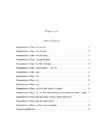
......................................................... 7 Prepositions of Place – in & on with travelling ..................................................... 8 Prepositional Phrases ......................................................................................... 8 Prepositions of Time – in, on & at • in is used with centuries, decades, years, seasons and months, parts of the day, periods of time • on is used with dates, special days, days of week, day of week + part of day, day + of ... • at is used with holidays, exact time, meals and with night in on at • the 20th century • the 29th of November • Christmas / Easter • the Middle ages /August the first • six o’clock / 7.30 • the 1980s • Christmas Day / New • midday / noon / • 2006 Year’s Eve / Easter midnight
Project ESTONIA MAP OF ESTONIA Southern Viljandimaa The southern part of Viljandi county catches the eye with its sublime scenery. The area today lies in the very heart of the historical Mulgimaa the home of hills, deep valleys and lakes brought together by a beauty spot Halliste primeval valley. According to several folk tales, it is also in these valleys, woods and bogs that Old Nick found refuge.The great variety displayed in the nature is also reflected in the local cultural heritage
Tallinna Inglise Kolledz Estonia Topic Alice Tärk, 9b Tallinn 2007 FACTFILE Area: 45 228 sq km Poplulation: under 1.4 million Capital: Tallinn Language: Estonian Currency: Eesti kroon (EEK) Main religion: Lutheran National holiday: 24 February (anniversary of the republic) National flower: Cornflower National bird: Barn Swallow National stone: Limestone LOCATION The Republic of Estonia is the northernmost and smallest of the three Baltic States. It is located on the eastern shores of the Baltic Sea in the north east of Europe. To the east the country borders Russia. Latvia is the countries neighbour to the south. From the west the coast of Estonia is washed by the
3 I read one girl blog and she described Prague so beautifuly. She talked about her adventures. When i was reading that it seemed so real, that i was there to. The city's charms can occasionally be obscured by too many tourists, congested traffic and tacky commercialism. Packed in among thousands of other visitors, trying like crazy to see the city in three days and worrying about getting ripped off, it's not surprising, may think the city is overrated. Just relax, take a deep breath. While the city centre is a mélange of stunning architecture, from Gothic, Renaissance and baroque to neoclassical, art nouveau and cubist, beyond the medieval lanes of the Old Town and the Castle District, there's an entire other cosmopolitan city to explore. Search out the
from England contributed largely to the outcome of the war between Estonia and Soviet Union. After the war the military cooperation developed into cultural and economic relations. For instance during the time between the wars, approximately 30% of Estonia's exports went to the UK. The other big English speaking country, United States recognised the Republic of Estonia on 28 July 1922. The first Estonian diplomatic mission in the United States was opened in the same year. The Second World War and the occupation of Estonia resulted in loss of contacts. Most English speaking countries never recognized Estonia's annexation in 1940. During the years of Soviet occupation the embassy in the United States continued its activities from 1940 to 1991. The US government recognised Estonia's diplomatic mission as the legal representative of the Republic of Estonia. This recognition of the legal continuity of the Republic of Estonia is nowadays seen as one of the
Vocabulary: to criticize - tasteless overcooked - ingredient - to invent - sauces - to disguise - spice herb - delicious - disappointing - to lend cuisine British Youth (2) Most 18 and 19 year-olds in Britain are quite independent people. English people say that children grow up more quickly now. Relationships within the British family are different now. Children have more freedom to make their own decisions. For example, children aged 13 may be employed part time in Great Britain. Age 15 is legally a "young person" not a "child". Age 16 is a school leaving age. They can leave home, drive a moped, marry with "parents' consent" buy beer. Age 17 can drive a car. Age 18 can vote, get married, drink in pubs. Education is a very important part in the life of British youth. One can't become an independent person without it. When time comes to enter a college a young Englishman chooses one far away from home. It is a necessary part of becoming adult.
 annaabi.ee