 50 punkti
Autor soovib selle materjali allalaadimise eest saada 50 punkti.
50 punkti
Autor soovib selle materjali allalaadimise eest saada 50 punkti.
 ~ 9 lehte
Lehekülgede arv dokumendis
~ 9 lehte
Lehekülgede arv dokumendis
 2013-03-26
Kuupäev, millal dokument üles laeti
2013-03-26
Kuupäev, millal dokument üles laeti
 11 laadimist
Kokku alla laetud
11 laadimist
Kokku alla laetud
 0 arvamust
Teiste kasutajate poolt lisatud kommentaarid
0 arvamust
Teiste kasutajate poolt lisatud kommentaarid
 Visual
Õppematerjali autor
Visual
Õppematerjali autor
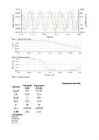
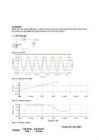
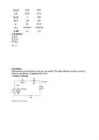
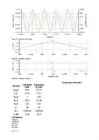
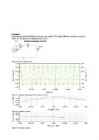
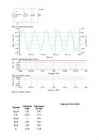
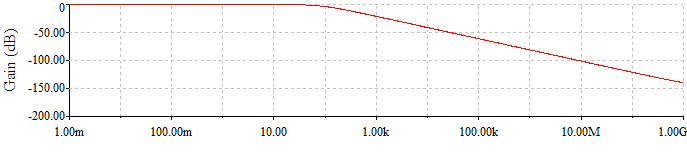
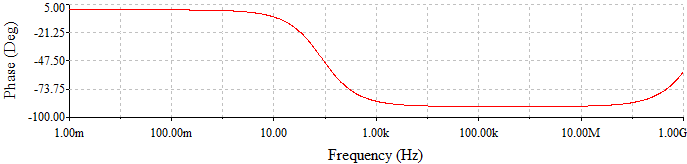
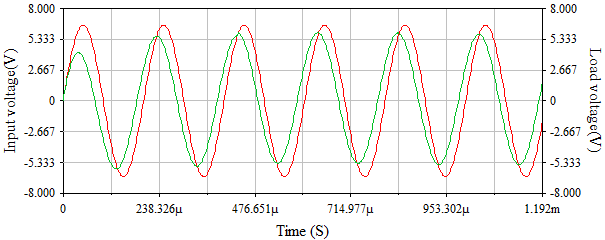
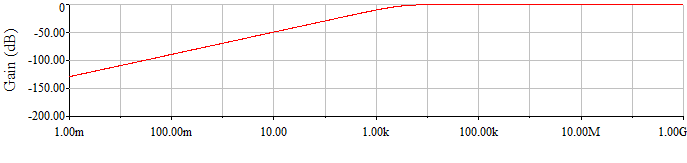
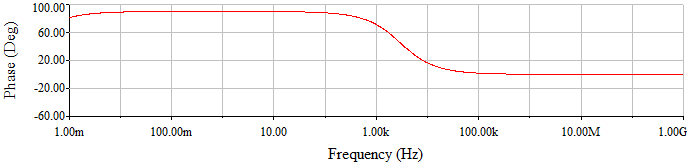
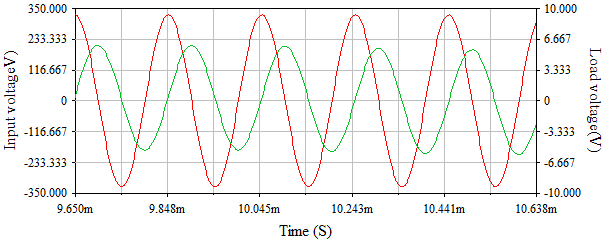
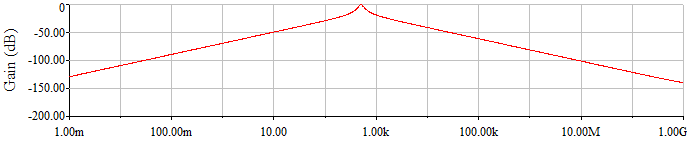
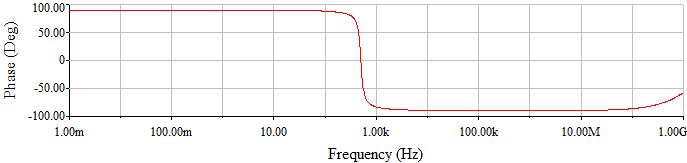
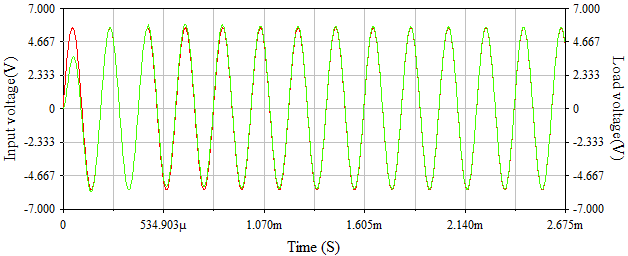
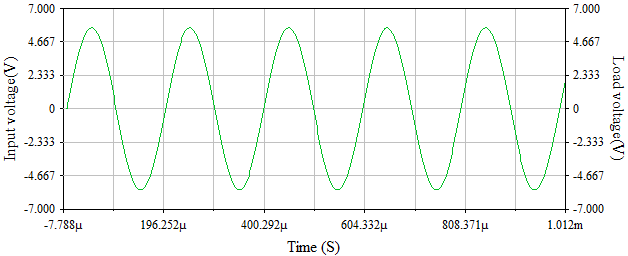
Tallinn University of Technology Department of Electrical Engineering Filters Report on Exercise 5 in AAR3320 Electronics and Semiconductor Engineering Student: Student Code: Study Group: Instructor: Prof. Valery Vodovozov Tallinn 1. RC filter R Vnoise 1000Ω 15 Vrms 11kHz
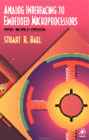
I hope it proves useful. ix Introduction Modern electronic systems are increasingly digital: digital microprocessors, digital logic, digital interfaces. Digital logic is easier to design and understand, and it is much more flexible than the equivalent analog circuitry would be. As an example, imagine trying to implement any kind of sophisticated micro- processor with analog parts. Digital electronics lets the PC on your desk execute different programs at different times, perform complex calculations, and communicate via the World Wide Web. While the electronic world is nearly all digital, the real world is not. The temperature in your office is not just hot or cold, but varies over a wide range. You can use a thermometer to determine what the temperature is, but how do you convert the temperature to a digital value for use in a microprocessor- controlled thermostat
junction. The incoming light produces free electrons and holes. The stronger the light, the greater the number of minority carriers and the larger the reverse current. Optocoupler: LED on the input side and photodiode on the output side. Light from the led hits the photodiode and this sets up a reverse current in the output circuit. 8) How many valence electrons a germanium atom has? 1 2 4 8 How is it called the n-type semiconductor? donor recipient acceptor dipol Ticket No3 ´ 1,2)Collector characteristic(output characteristics) and input characteristic of Bipolar Junction Transistor(BJT) 3)A junction transistor has three doped regions. The bottom is the emitter, middle is base and top is collector.A transistor has two junctions on opposite sides of a thin slaf of semiconductor
Tallinn University of Technology Department of Electrical Drives and Power Electronics Report on Exercises 2 Diodes Student ******* Code ****96 Group AAVB41 Tallinn 2012 2.1. Diode rectifier VD f = 9 kHz U=6V U = 19.7 V
INSTITUTO POLITECNICO DO PORTO INSTITUTO SUPERIOR DE ENGENHARIA DO PORTO CHEMICAL ENGINEERING DEPARTMENT PORTUGAL Marvin Üürike Tallinn University of Technology Faculty of Chemical and Materials Technology Department of Chemical Engineering Estonia ERASMUS PROJECT STUDY OF THE HEAT TRANSFER COEFFICIENT IN A HELICAL COIL Supervisor: Albina Ribeiro Porto 2015 2 Abstract The following work investigates overall heat transfer coefficient of a helical coil and how it changes in different situations. The variables investigated were flow rate inside a submerged helical coil and agitation of the bath.
Thesis “How is it possible to calculate IT security effectiveness?” Kristjan Kivimaa August 2022 1 Abstract In IT Security world, there is lack of available, reliable systems for measuring security levels/posture. They lack the range of quantitative measurements and easy and fast deployment, and potentially affects companies of all sizes. Readily available security standards provide qualitative security levels, but not quantitative results – that would be easily comparable. This deficiency makes it hard for companies to evaluate their security posture accurately. Absence of security metrics makes it complicated for customers to select the appropriate measures for particular security level needed. The research question for this research project is – “How is it possible to calculate IT security effectiveness?”. The aim of this research is to use this reference m
Cat. No. W317-E1-11 SYSMAC CPM1A Programmable Controllers OPERATION MANUAL CPM1A Programmable Controllers Operation Manual Revised October 2007 iv Notice: OMRON products are manufactured for use according to proper procedures by a qualified operator and only for the purposes described in this manual. The following conventions are used to indicate and classify precautions in this manual. Always heed the information provided with them. Failure to heed precautions can result in injury to people or dam- age to property. ! DANGER Indicates an imminently hazardous situation which, if not avoided, will result in death or serious injury. Additionally, there may be severe property damage. ! WARNING Indicates a potentially hazardous situation which, if not avoided, could result in death or serious inju
Intragenomic Profiling Using Multicopy Genes: The rDNA Internal Transcribed Spacer Sequences of the Freshwater Sponge Ephydatia fluviatilis Liisi Karlep, To~nu Reintamm, Merike Kelve* Department of Gene Technology, Tallinn University of Technology, Tallinn, Estonia Abstract Multicopy genes, like ribosomal RNA genes (rDNA), are widely used to describe and distinguish individuals. Despite concerted evolution that homogenizes a large number of rDNA gene copies, the presence of different gene variants within a genome has been reported. Characterization of an organism by defining every single variant of tens to thousands of rDNA repeat units present in a eukaryotic genome would be quite unreasonable. Here we provide an alternative approach for the characterization of a set of internal transcribed spacer sequences found within every rDNA repeat unit by implementing direct sequencing methodology. The prominent allelic variants and their relative amounts c
 annaabi.ee
















Kõik kommentaarid