Leidsid 33 sarnast õppematerjali, mis on seotud failiga "County of saaremaa". Need materjalid aitavad sul teemat sügavamalt mõista.
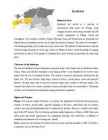
beer, bread, island, unique, crater, nature, sight, known, sights, rich, visit, century, castle, church, pagar, tradition, county, biggest, place, location, symbols, them, protection, hundred, trees, cliff, built, object, sides, shop, baked, consider, taste, come, other, siiri, tabri, kaia, exciting, good, retained, insulation, famous, local, consideredSaaremaa Saaremaa biggest island in Estonia located in the Baltic Sea 2673 km2 populatin over 35000 ihabitants density 13 inhabitants/km2 16 municipalities- next year 14 The capital of Saaremaa is Kuressaare Saaremaa - an exciting island Saaremaa - the biggest island of Estonia is known as a good recreation place with unique nature and a lot of sights Saaremaa has retained its uniqueness due to its location and insulation Junipers, dolomite, windmills and the famous local home-brewed beer are considered the symbols of Saaremaa A lot of sights Among the numerous sights of Saaremaa, several are worth calling special attention to, e.g. Angla windmill hill, Mustjala cliff, manor house at Loona, ruins of Maasi castle of order, and Mihkli Farm Museum at Viki.
tenfold. Its beach, seaside parks, squirrels hopping in the trees, sanatoriums and rest homes, curative sea-mud and holidaymakers are its characteristic features. Pärnu as a summer resort dates back to the 19th century. The first bathing institution started operations in Pärnu in 1838. Pärnu also offers great year-round opportunities for organizing meetings and conferences in addition to relaxation and treatments for restoring one's health. Tori is known for the Estonian Tori Horse, bred at a local stud farm founded in 1856. Tori Hell is a sandstone cave on the Pärnu River. Kurgja is the location of the Farm Museum of Carl Robert Jakobson, a leader of the national movement at the end of the 19th century. The Nigula Nature Reserve preserves the peat-bog ecosystem within its territory of 2771 hectares. Häädemeeste is one of the most important yacht-building centers in Estonia and also famous for its mineral water.
· Kuressaare Bishop Stronghold is probably the bestpreserved medieval stronghold in all the Baltic States, being erected in the second half of the 13th century. In the center of the building from tooled dolomite bricks is a square courtyard, which is on the second and third floors surrounded by a closed cloister. There is an exposition of the Saaremaa Museum in the Stronghold that introduces the history and local nature of Saaremaa and Kuressaare. · Vilsandi National Park of international importance, belonging to the highest category of the birds' reserves, has been derived from one of the first nature reserves of the Eastern Europe in the Islands of Vaika, established in 1910. In Vilsandi and the islets tens of thousands sea birds halt, feed and nest. · Karja Katariina (Catherine) Church is the smallest medieval church in Saaremaa
In the present day it includes a variety of international foods and dishes, with a number of contributions from the traditions of nearby countries. German, Scandinavian, Russian and other influences have played their part. The most typical foods in Estonia have been rye bread, pork, potatoes and dairy products. Estonian eating habits have historically been closely linked to the seasons. In terms of staples, Estonia belongs firmly to the beer, vodka, rye bread and pork "belt" of Europe. The Cold Table Flounder The first course in traditional Estonian cuisine is based on cold dishes - a selection of meats and sausages served with potato salad or Rosolje, an Estonian signature dishes based on beetroot, meat and herring . Small pastries called pirukad ("pirukas" in the singular) - a relative of the pirozhki - filled with meat, cabbage, carrots, rice and other fillings or mixtures are also popular, and are often served with bouillon
Hiiumaa and Saaremaa Hiiumaa is the second biggest island belonging to Estonia. Its largest town is kärdla. Hiiumaa arose from the water about 455 million years ago as a result of a meteorite impact. It is one of the oldest islands in the world. Around the island there are more than 200 islands and islets that have just risen from the water. Hiiumaa is a very beautiful place with kind and friendly people. The landscape on one end of the island is completely different from the landscape the other. In many languages the island is called ,,Day island". The best known sight on Hiiumaa is the Kõpu lighthouse. It's located on the Kõpu peninsula. It is the oldest lighthouse in the Baltics and the second or third oldest lighthouse in the world that has had the light continuously burning. The other big island that belongs to Estonia is Saaremaa. Saaremaa is approximately as big as Tenerife in Spain
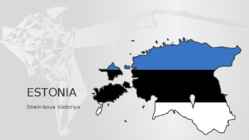
The longest distance from east to west is 350 km, while north to south Estonia stretches 240 km. THE NAME The name EESTI was apparently derived from the word AISTI, the name given by ancient Germans to the peoples living northeast of the Vistula River. Tacitius, the Roman historian, was the first one to mention it (AESTI), while the Arab scholar alIdrisi was the first one to mark it on a map (as ASTLANDA). To the ancient Scandinavians the land was known as EISTLAND; to modern Scandinavians it is known as ESTLAND. Most contemporary languages use the Latin name ESTONIA. FLAG The Estonian blueblackandwhite national flag was originally the flag of the Estonian Student's Society, consecrated in Otepää Church in 1884. today there is a memorial plaque on the church wall commemorating the event. The Flag Museum attracts tourists who take an interest in the history of the flag.
town. 6. Jägala Waterfall The Jägala Waterfall is a natural waterfall in Northern Estonia on Jägala River. A wonderful 7,8 m high waterfall running down the limestone edge is the highest in 4 Estonia. Water has smoothed the limestone edge for centuries. As a result a 12-14 m deep and 300 m long valley has been created. The oldest known written record of a water mill in Estonia (from the early 13th century) dates from here. 7. Lahemaa National Park The Lahemaa National Park was created in 1971 to protect the characteristic North- Estonian landscapes and the national heritage of the area. This was the first national park in Estonia. It is located on Northern Estonia, 70 kilometers east from capital Tallinn. Its area covers 725 km², including 250.9 km² of sea. The name Lahemaa
is one that reflects the country's sad colonial and apartheid past, but also shines with the potential and expectation of the modern wine world. From that long history comes a wine tradition of tastes and styles with its roots in the classic "Old World" of France, Germany and Italy, but also an acute awareness of the contemporary consumer, as has been defined by wine-making in the "New World" of California and Australia. It has often been said that South African wine is in the unique position of both those wonderful worlds. It offers marketing possibilities that can be harnessed for the challenges of the new global economy. It can offer the wine-drinking world all kinds of new flavour experiences. It can also show the way to handle such sensitive issues as labour relations in the reality of the beautiful Cape winelands. Wine for the modern market In the post-apartheid era since 1994, South African wine has returned to the world
that can be quite confusing for a foreigner The capital city , Dublin was founded by the Vikings in 841 Worth to mention The Titanic was built in Harland and Wolff yards in Belfast , which is nowadays part of the Northern Ireland , but back then in 1909 - 1912 (which is the time when Titanic was built ) it was still part of the Ireland. So the worlds most famous ship was built in Ireland. Also Guinness beer originated in Arthur Guinness' brewery at St. James's Gate in Dublin. Nowadays it is one of the most successful beer brands in the world, being exported worldwide. sports : First I'm going to talk about Gaelic football so , teams of 15 players, kick or hand pass a ball around a grass pitch towards each others goals to either score a point over the bar or goal. The ball used in Gaelic football is round, slightly smaller than a soccer ball. The action is fast and furious, and play is rough.
Holidays, Festivals, Cultural events TALLINN - If you're looking for entertainment in Estonia this summer, you are really spoiled for choice. Festivals and events dedicated to the consumption of beer are a lot of fun, but if you want to get the true feel of the country, you need something a little more ethnic. Like a town fair. Just as July becomes August, the seaside town of Haapsalu will host a grand spectacle of rural Estonian entertainment. The White Lady Days is a summer celebration filled with amusement for all the family. Held in and around the remains of the Teutonic-knights-era castles, the fair combines enchanting medieval legends with modern
Estonia lies on the eastern shores of the Baltic Sea on the level northwestern part of the rising east European platform. Estonia is a flat country covering 46 226 square kilometers.Estonian's neighbours are Finland, Sweden, Latvia and Russia. Estonia is rich in islands. The two largest are Saaremaa and Hiiumaa . Saaremaa is famous for its big meteorite crater called Kaali and Hiiumaa is famous for its nature and plants. The countries highest point Big Egg hill ( Suur- Munamägi) reaches 318 meters above sea level. Estonia has many uplands too. The uplands are: Pandivere upland, Otepää upland, Vooremaa upland, Karula upland Haanja upland, Sakala upland. Estonia is covered by about 18 000 square kilometers of forest. Estonia is also rich in lakes and rivers The largest lake is Peipsi and the second-largest lake is Võrtsjärv. The largest river is Võhandu whinch is 162 meters long
Estonia, along the Gulf of Finland. There are 33 cities and several town-parish towns in the country. In total, there are 47 linna, with "linn" in English meaning both "cities" and "towns". More than 70% of the population lives in towns. History • Estonia was settled near the end of the last glacial era, beginning from around 8500 BC. Before the German invasions in the 13th century proto-Estonians of the Ancient Estonia worshipped the spirits of nature. Since the Northern Crusades Estonia became a battleground for centuries where Denmark, Germany, Russia, Sweden and Poland fought their many wars over controlling the important geographical position of the country as a gateway between East and West. Being conquered by Danes and Germans in 1227, Estonia was ruled initially by Denmark in the north, by the Livonian Order, an autonomous part of the Monastic state of the Teutonic Knights and Baltic
Project ESTONIA MAP OF ESTONIA Southern Viljandimaa The southern part of Viljandi county catches the eye with its sublime scenery. The area today lies in the very heart of the historical Mulgimaa the home of hills, deep valleys and lakes brought together by a beauty spot Halliste primeval valley. According to several folk tales, it is also in these valleys, woods and bogs that Old Nick found refuge.The great variety displayed in the nature is also reflected in the local cultural heritage. At the beginning of the 19th century growing linen spread and became the basis of the legendary wealth of Mulgi farms. The ancient barn-dwellings and decaying manor houses are the mute witnesses of those times. The riches and cultural heritage of Mulgimaa owe to the diligence and tenacity of the local people. Village handicraftsmen and masters have always been honoured. Mulgikapsad (stewed sauerkraut with barley
Tourists also love to visit Greenwich, which is best known for giving its name to the Greenwich Meridian (0° longitude) and Greenwich Mean Time. Foods and drinks English cuisine is formed by country’s history, its temperate climate and geography. The food of England has historically been characterised by its simplicity of approach and a reliance on the high quality of natural produce. The traditional English breakfast is a hot cooked meal of bacon, eggs, sausages, fried bread, mushrooms and baked beans. Now-a-days a typical English breakfast is more likely a bowl of cereals, a slice of toast, orange juice and a cup of coffee. They have Afternoon Tea (the traditional 4 o’clock tea). This is a small meal, not a drink. Traditionally it consists of tea (or coffee) served with either of the following: freshly baked scones served with cream and jam (known as a cream tea), afternoon tea
Tartu - 103 300 Narva - 65 900 Kohtla-Järve - 44 500 Pärnu - 44 000 PAIDE TOWN IS THE HEART OF ESTONIA Paide town is located right in the centre of Estonia, earning it the nickname of “the Heart of Estonia”. A long historic background, beautiful surroundings, a colourful fair and festival life and an unique relationship with the limestone – come and experience the cosy feel of Paide. Paide town was named after the limestone (“paekivi” and “paas” in the Estonian language) and the town celebrates its special relationship with limestone through unique lime stone sculptures: • The best known limestone sculptures in Paide are “hitchhiker” (“hääletaja”) located in the town
of forested land. Forest management and wood production are particularly important for the Estonian economy. One third of Estonian forests are protected areas. In these protected forests you can come across types of primeval forest cover, which have long ago disappeared from other parts of Europe. Examples of such primeval forests are the Järvselja forest in Tartumaa County and Poruni in Ida- Virumaa County. Meadows in Estonia are rich in different species much more so than in Western Europe. Estonia is a country of thousand of lakes. In the Estonian territory there are about 1200 natural lakes. The largest of these is Lake Peipsi, which is the fourth largest freshwater lake in Europe. Most of Estonia's lakes are small and are found in the south of the country. Larger lakes such as Lake Peipsi and Lake Võrtsjärv are rich in fish. One can find rare species of fish such as the lake whitefish and the Peipsi smelt in Lake Peipsi
Great Coastal Gate ·The first Great Coastal Gate was builded in place where city wall and long street came together. In that time it was only 100 meters to the sea. The first gate has not survived. It was 4-storey and height of 14,4m. Great Coastal Gate that we can see today, was built in 1518-1529. Nunna, Sauna and Kuldjala Towers Nunna, Sauna and Kuldjala Towers (Town Wall) Nunna, Sauna, and Kuldjala are three unique towers, all considered part of the Town Wall. The towers date back to the 16th century and are among the oldest in Tallinn. They also offer impressive views of the city. NunnaTower Nunna tower was built in 1311 until 1320. It has diameter of 9,65 and height of 24,5 meters. Sauna Tower Sauna tower is konsol tower (kaitseehitistel väike konsoolidele toetuv kahele poole müüri ärklina
There are also many things that make Canada attractive for tourists. Many visitors to the country come for activity holidays. Outdoor sports like skiing, hiking, riding, swimming, boating, rafting, tennis, golf and fishing are encouraged across Canada. A half- or full-day fishing trip with a guide, which end up with cooking a meal from the catch, has recently become popular. In one word Canada is a vast country with many diversities and tourist attractions. With its spectacular nature Canada is wonderful. Location. Canada is a huge country in the continent of North America. It is bordered with the Atlantic Ocean in the east, the Pacific Ocean in the west, the United States of America in the south and the Arctic Ocean in the north. Canada is a vast country, with a territory of 3.8 million square miles of land and fresh water it is the second biggest country in the world after Russia.
Jõgeva maakond Endla nature reserve It is located on the borderline of Järva, Jõgeva and West-Viru counties. It is mostly known for various marshes, fens, quaking bogs, lakes, canebrakes, wellsprings, rivers, fen forests, fens and mesotrophic mires, marsh forests, meadows, diverse flora and fauna. Jõgeva town The small town of Jõgeva town is located on the eastern side of Middle-Estonia. You won't find large buildings or breathtaking architecture here, but an overwhelming sense of togetherness and plenty of cultural events, the majority of them geared towards younger people.
Newfoundland in the east and those of the Arctic Archipelago in the north. In longitude Canada extends from approximately 52° to 141° W, a distance that spans six time zones. In latitude it extends from approximately 42° to 83° N. With its vast Arctic and subarctic territories, Canada is often considered a country only of the far north; however, the peninsula of southern Ontario juts deeply south into the heartland of the United States, and its southernmost point, Middle Island in Lake Erie, is at the same latitude as northern California. The country also includes several major islands, including Baffin, Ellesmere, Victoria, Newfoundland, and Melville, and many small ones. Its border with the U.S., the longest border in the world not patrolled by military forces, extends 8,890 km. 3. Mountains, lowlands Canada's vast area means it has many varying types of terrain, much of which is mountainous. The Cordillera in the west, the Appalachians in the southeast, the
Tallinn English College Topic Estonia Tallinn 2008 1. Introduction Estonia is a small country about the size of Switzerland, or New Hampshire and Massachussetts combined. Estonia is named after the people called "Ests" who lived in the region in the 1 st century AD. The Republic of Estonia is one of the three countries commonly known as the "Baltic States". The other Baltic States are Latvia and Lithuania. 2. Geographical position Estonia is situated in northeastern Europe. Estonia is bounded on the north by the Gulf of Finland, on the east by Russia, on the south by Latvia and on the west by the Baltic Sea. In the north it borders on Finland. The coastline of the Baltic Sea in Estonia is characterized by numerous gulfs and bays, the biggest of them being the Gulf of Finland, the Gulf of Riga and the Gulf of Pärnu
Estonia from Finland. The Gulf of Riga is situated to the south-west. Estonia has more than 1500 islands. The biggest ones are located to the west. The four biggest islands are Saaremaa, Hiiumaa, Vormsi and Muhu. The highest point in Estonia and also in the Baltic region is Suur Munamägi. It is 318. above sea level. Estonia is a country of a thousand lakes. The Largest one is Lake Peipsi which is also the fourth biggest freshwater lake in Europe. Lake Peipsi and Lake Võrtsjärv are rich in fish. Estonia has many rivers but only nine of them are longer than 100km. The most important ones are Pärnu River and Emajõgi River Climate Estonia lies in the northern part of the temperate climate zone and in the transition zone between maritime and continental climate. Because Estonia is continuously warmed by the Gulf Stream it has a milder climate despite its northern latitude. Northern latitude means long
The area of Estonia is about 45000 square kilometres and the population is about 1.4 million people. The capital of Estonia is Tallinn and the official language is Estonian. The currency is Eesti kroon. The main religion is Lutheran. Anniversary of the republic is celebrated on February 20. The national flower is cornflower, national bird is barn swallow and national stone is limestone. It is a land of great natural beauty with a long and varied history and rich culture. It has served as a junction of international trade routes for centuries. History. The oldest marks of habitation on the territory of Estonia date from the 8th millennium BC. Fortified settlements were established in the 1 st century BC. The ancestors of Estonians formed several independent states headed by elected elders. Until the beginning of the 13th century Estonia was politically independent. Then began a long chain of occupation and control by foreign powers
Town Hall Built in 13th century The management of the city worked in the Town Hall until the year 1970 The only gothic town hall on Northern Europe Weathervane Old Thomas The height of the towe is 64 metres Town Hall pharmacy Is one of the oldest working pharmacies in Europe and the oldest company in Tallinn Was first mentioned in 1422 There were also sold other goods like: ground bats, dried frog feet etc You can try spiced wine claret which was known and valued during the middle ages Bread passage Smallest square in Tallinn Name earned by the numerous bakeries that made delicious bread during the Middle Ages Cute miniature shop where the bakery was belonged to a former whose family coat of arms are still decorating the door. The Holy Spirit church It was built in 1360.This church plays an important role in Estonian cultural history.
A wall was built to separate the Upper Town and the Lower Town. In 1285 Tallinn joined the Hanseatic league and became a junction of trade between East and West. Tallinn is said to be built on salt, as it was an important trading commodity. In the 16th century Tallinn had a population of about 7,000 8,000 making it one of the biggest cities in northern Europe. In 1629 Sweden took control of the whole of Estonia. Though hard times continued, the period that followed is known as the "good old Swedish era": foundations were laid for the Estonian school system, the privileges of the nobility were curtailed, local peasants were granted the right to own property, and so on. Peter the Great wanted to open a window onto Europe for Russia so he started the Northern War in 1700. Estonia remained under Russian rule and the Baltic-German nobility vowed allegiance to the Tsar; the barons were restored their former privileges. In 1870 a railway line was opened from St
Most of Canada's human population lives along its southern border. 3. Relief Canada's geography is very diverse. It has huge lakes, evergreen forests, prairies, meadows and beautiful mountains. There are thousands of miles of coastline with beaches, fjords and wild rivers flowing to the oceans. Canada is a country of wide open spaces and beautiful landscape where traveling visitors can unexpectedly bump into wild animals like bears or be struck by unusual sight like the scarecrows on the Cabot Trail. Canada is rich in natural wonders, one of them, the Niagara Falls between lakes Erie and Ontario, which is the second biggest waterfall in the world is one of the greatest attractions in the world. About twelve million tourists come to see the beauty of the falling waters on the border between the United States of America and Canada. The Horseshoe Falls, which lie in the
before each service. http://www.tourism.tallinn.ee/eng/fpage/explore/churches#!p_307 Old Town Twisting cobblestone lanes and iron street lamps. Gothic spires and medieval markets. Cappuccino and Wi-Fi. This is the city's famous Old Town. If you're looking for that mix of historic ambience and cutting-edge culture that defines Tallinn, you'll find it here. Built up from the 13th to 16th centuries, when Tallinn or Reval as it was known then was a thriving member of the Hanseatic trade league, this enclosed neighbourhood of colourful, gabled houses, half-hidden courtyards and grandiose churches is, quite rightly, the city's biggest tourist draw. And the fact that it's all neatly packaged within a mostly-intact city wall and dotted with guard towers gives it an extra dose of fairytale charm. http://www.tourism.tallinn.ee/eng/fpage/explore/attractions/old_town Kiek in de Kök
magnificent and dizzying views of Old Town, Toompea hill and the port. 5.Kumu Art Museum A must-see for culture creatures, Kumu, the main building of Art Museum of Estonia, serves both as Estonia's national gallery and as a centre for contemporary art. The complex itself is a work of art - it was opened in 2006 after nearly a decade of planning and construction, and is considered a modern architectural masterpiece. Tallinn Old Town Tallinn's medieval Old Town is known around the world for its well- preserved completeness and authentic Hanseatic architecture. Enchanting atmosphere, rich cultural scene, beautiful surroundings and plenty of galleries, cafes and restaurants to choose from: there is something for everyone in Tallinn. Whether you have only few hours to spare or few days to walk around: Tallinn's Old Town is beautiful and enchanting during all seasons. Be sure to enjoy the outdoor cafés during summer and
Gümnaasium Prague referaat Autor: Klass: Juhendaja: 2010 CONTENTS 1. Contents 2. Introduction 3. Compendium about Prague 4. Important about Czech Republic and Prague 5.-7. History 8. Independence 9. Main sights 10. the Czech Republic 11. List of famous people from Prague 12. Geography 13. Weather and climate 14. Population 15. Culture 2 INTRODUCTION The Czech Republic lies at the heart of Central Europe and at its center is the beautiful and historic city of Prague. With a population of some 1.3 million residents, the city lies on either side of the
Germany, Norway and Great Britain. Estonian cellulose and paper industries have a long history, some factories have been in operation since the mid-19th century. Today the raw material comes from local forests as well as from Russia, Latvia and Lithuania. The most important branch among processing industries in Estonia is timber, paper and furniture industry. Second comes the food processing industry, mostly in the form of meat and milk producing, but the production of drinks, bread and confectioneries is also substantial. Estonians love locally produced food, considering it to be purer, of a higher quality and more tasty. Several producers hope to soon enter the EU market with their production. Estonians' favourite sweets are made by Kalev. The larger producers of beer are Saku and A'le Coq -- companies with traditions more than a hundred years long. Light industry yields a highly varied output from cotton fabrics to clothing and footwear
whales, penguins and dolphins. Mt Cook National Park Mt Cook and surrounding area is an alpine park within the South Westland World Heritage area. Mt Cook, Mt Tasman and Mt Sefton. This glacier is New Zealand's longest and it has one of longest ski runs in the world. Top ten places to visit in New Zealand Westland National Park Famous for its two glaciers, Franz Josef and Fox glaciers. They are unique as they are the closest glaciers to the coastline of any in the world outside of the polar regions. Mountain range bigger in area than the European Alps. Tongariro National Park The park contains 3 active volcanos that are situated in a desert like landscape. Mt Ruapehu is the largest volcano and last erupted in 1995 and 1996. A conical volcano called Mt Ngauruhoe is located next to Ruapehu and is the location for the Tongariro Crossing.
At the moment the Estonian farmers predominantly export daily products and timber. Currently 8500 farms have been restored to their pre-war owners. Many of them would like to open their homes to bed and breakfast guests. Estonians have always had the greatest respect for education. Estonia has seven colleges and universities. The oldest is Tartu University founded in 1632. Culturally Estonia belongs to the West. Perhaps the best known in the world is Estonian music. Works by the Estonian famous composers are often played by the world's leading performers. Estonia is also famous for its national song festivals, begun in Tartu in 1869. nowadays they take place every four years. Tallinn, the capital of the Republic of Estonia and of the Harju county, is a town in north Estonia on the coast of the Gulf of Finland. It has nearly half a million inhabitants and today Tallinn is home for almost a third of Estonian's population.
People go to the church with family, then come back to a family gathering. At midnight after eating they toast, then the adults' dance while younger people go out to see the fireworks. After this they go to sleep, but before opening the presents under the Christmas tree. That day is very special for because they are Christian and celebrate Jesus' birth on the 24th of December. The dinner food is pork, turkey, and a great variety of meals. Then the table is covered with sweet things, cider, beer, and juice for consuming while waiting for the time of the toast. After the toast all the family chat, others play. Houses are decorated with red and white garlands; on the door Father Christmas's Boots are placed. The Christmas tree is decorated with colored lights, ornaments and Father Christmas placed on top of it. Mothers make different kinds of meals such as roasted turkey, roasted pork, stuffed tomatoes, mince pies, Christmas's bread and puddings. The toast: drink
 annaabi.ee