Leidsid 33 sarnast õppematerjali, mis on seotud failiga "Buckingham Palace". Need materjalid aitavad sul teemat sügavamalt mõista.
palace, king, buckingham, royal, room, rooms, queen, known, part, there, foot, guards, changing, visit, several, castles, owned, british, best, tourist, built, originally, 1826, started, expand, first, still, official, other, work, look, clocks, including, cinema, swimming, police, station, tennis, court, garden, monument, near, flying, five, wear, furryBuckingham Palace The history of the original building dates back to the early 1700's and finally became the official residence of the British monarch in 1837 after Queen Victoria came to the throne. George III bought Buckingham House in 1761 for his wife Queen Charlotte to use as a comfortable family home close to St James's Palace, where many court functions were held. Buckingham House became known as the Queen's House, and 14 of George III's 15 children were born there. Buckingham Palace is not only the home of the Queen and Prince Philip but also the London residence of the Duke of York (Prince Andrew) and the Earl and Countess of Wessex (Prince Edward and his wife) and their daughter. The 19 State Rooms at the palace are regularly used by the Royal family to entertain guests on their State, ceremonial and official visits to the United Kingdom
Buckingham Palace About Buckingham Palace Buckingham Palace serves as both the office and London residence of Her Majesty The Queen. It is one of the few working royal palaces remaining in the world today. During the summer, visitors can tour the nineteen State Rooms, which form the heart of the Palace. These magnificent rooms are decorated with some of the greatest treasures from the Royal Collection, including paintings by Rembrandt, Rubens and Canaletto and sculpture by Canova. History Buckingham Palace history is going back to the time of Queen Victoria in 1837 . Then, the Palace has been serving as the London Royal residence. In 1703, the Duke of Buckingham had created the Buckingham House. In 1761, George III (1738 1820) buy it. However, in 1825, the House was reconstructed for George IVs order with the help of John Nash
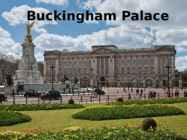
BUCKINGHAM PALACE Buckingham palace is the official residence of the British monarch. The Palace is located in the city of Westminster. It is a setting for state occasions and royal hospitality. It has been a rallying point for the British people at times of national rejoicing and crisis. The Buckingham palace is originally known as the Buckingham House. The building which forms the core of today's palace was a large townhouse. It was built for the Duke of Buckingham in 1703 on a site which had been in private ownership for at least 150 years. It was subsequently acquired by George the third in 1761 as a private residence for Queen Charlotte and known as The Queen's House. During the 19th century it was enlarged, principally by architects John Nash and Edward Blore, forming three wings around a central courtyard. Buckingham Palace finally became the official royal palace of the British monarch on the accession of Queen Victoria in 1837. The last major
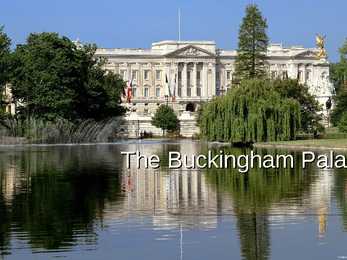
The Buckingham Pala Table of contents Introduction General information History Today Interior Visiting Conclusion References The end Introduction I chose the Buckingham Palace for my topic, because i have always been eager to know more about the house where the British Monarch lives in. The Buckingham Palace Located in the City of Westminster The official London residence of the Queen State occasions and royal entertaining Tourist attraction History Built in 1702 Originally called as the Buckingham House In 1761, King George III bought the house and the building became known as the Queen's House George IV, decided to double the size of the house and transform it into a palace History In 1837 Queen Victoria became the first monarch to use Buckingham Palace as their official residence Many parts of the house have been demolished and rebuilt in time
London History The Romans AD 43- AD 410 The Romans finally invaded Britain in AD 43 from Kent. The Romans lead by Julius Caesar attempted to invade Britain twice before that in 55 and 54 BC but the invasions were unsuccessful. They made their way to the river Thames and sailed up it. The Romans knew it was important to control a crossing point at the river Thames, so they decided to build a settlement on the north bank. Although small settlements had been built on the banks of the Thames, the Romans were the ones who built the first city. They called their city Londinium.
Buckingham Palace By Eliise Sau · Buckingham palace is the London residence and administrative headquarters* of the reigning monarch of the United Kingdom. · The palace is often at the centre of state occasions and royal hospitality. · It has been a focal point for the British people at times of national rejoicing and mourning. Peakontor* Buckingham Palace History · Buckingham House was designed by William Winde and this facade* evolved into today´s Grand Entrance. · Goring House was possibly the first house erected within the site around 1624. · The Queen's House was intended as a private retreat for King George III`s wife, Queen Charlotte and 14 of their 15 cildren were born there. The Queen's House Goring house Fassaad* Home of the monarch
Buckingham Palace • Buckingham Palace is the official London residence and principal workplace of the British monarch. Located in the City of Westminster, the palace is a setting for state occasions and royal hospitality. Buckingham Palace: • was built in 1705 for Duke of Buckingham and is originally known as Buckingham House. • George III bought Buckingham House in 1761 for his wife Queen Charlotte to use as a comfortable family home close to St James's Palace, where many court functions were held. Buckingham House became known as The Queen's House. • During the 19th century it was enlarged, principally by architects John Nash and Edward Blore, forming three wings around a central courtyard. Before reconstruction Nowadays • Buckingham Palace has 775 rooms. These include 19 State rooms, 52 Royal and guest bedrooms, 188 staff bedrooms, 92 offices and 78 bathrooms. In measurements, the building
Westminster Today For centuries, Westminster was the political and religious center, but today Westminster is the center of government. Westminster Hall was built in 1099 by the son of William the Conqueror and is one of the largest medieval halls. It was part of the Westminster Palace, which was destroyed by a fire in 1834. The Houses of Parliament that we see today were rebuilt in the 19th century after the fire. The Big Ben clock tower is the largest four-sided ringing clock in the world and it is also one of the London's most famous symbols. Some think that Big Ben is the name of the clock on the tower, but actually it is the name of the big 13-ton bell that rings every fifteen minutes. The most historic religious building in Britain is Westminster Abbey, a beautiful
London important sights guide Roman period 20th century · Big Ben is the nickname for the great bell of the clock at the north end of the Palace of Westminster in London and is often extended to refer to the clock or the clock tower as well. It is the largest four-faced chiming clock and the third-tallest free-standing clock tower in the world. The clock first ticked on 31 May 1859. The pendulum is installed within an enclosed windproof box sunk beneath the clockroom. It is 3.9m long,
It is one of the best preserved medieval cities in Europe. London is the capital of England and also the capital of the United Kingdom. It is situated on the river Thames, in southeast England. London is made up of two ancient cities which are now joined together: the City of London, known simply as ´the City` which is the business and financial heart of the United Kingdom, and the City of Westminister, where the Parlament and most of the government offices are located. Also the Buckingham Palace, the official London residence of Queen and the Royal family are located there too. London was founded by the Romans in AD 43 and was called Londinium. In AD 61 the town was burnt down and when it was rebuilt by the Romans it was surrounded by a wall. When William the Conqueror conquered England in 1066 he made London his base. He built the Tower of London and was crowned in Westminster Abbey. During the Tudor period London became an important economic and financial centre
Changing the Guard · Perhaps the epitome of London's surviving pageantry can be found in the ceremonial Changing of the Guard. · A hugely popular spectacle, the Changing of the Guard takes place at a range of royal locations in and around · London daily during the summer and on alternate days for the rest of the year. · There is no ticketing, so make sure you get there early. · Ever since 1660 Household Troops have guarded the Sovereign Palaces. · The Palace of Whitehall was the main residence until 1689 and was guarded by the Household Cavalry. · The court moved to St James's Palace in 1689 and when Queen Victoria moved into
The Regents Park is known, because there is the London zoo. The London zoo, opened in 1828 as a scientific zoo, is the oldest one in the whole world. In 1848, it was opened for people. The London zoo covers 36 acres and there are about 5000 animals in the zoo. The zoo is open every day except Christmas Day. The ticket costs 14 pounds for and adult and 10.75 pounds for a child. St. James's park is famous for its water birds, for example ducks and pelicans. Buckingham palace is near St James's park. The building of the Buckingham palace started in 1703. It was built for the Duke of Buckingham. The house was later bought by King George III for himself and Queen Charlotte. In 1820, King George IV commissioned John Nash to build a State Palace, much of the structure and decoration of which is seen today. Queen Victoria was the first monarch to live in the Palace, from 1837, and it has been the London home of the Royal Family ever since
Just pick up a dictionary to see. 13. Magna Carta The Magna Carta is an English legal document written in 1215 CE which had a huge influence on the developing legal system of England. The proper name for the Magna Carta is the Magna Carta Libertatum, the Great Charter of Freedoms. By establishing Magna Carta the King was not above the law. 14. 100 year war - a series of separate wars lasting from 1337 to 1453 between two royal houses for the French throne, which was vacant with the extinction of the senior Capetian line of French kings. The two primary contenders were the House of Valois and the House of Plantagenet, also known as the House of Anjou. The House of Valois claimed the title of King of France, while the Plantagenets from England claimed to be Kings of France and England. Plantagenet Kings were the 12th century
London Eye 1. When was London Eye first opened to the public?- It was first opened to the public on 9March 2000. 2. In example, what was it called before?- In example, it was called The Merlin Entertainments London Eye/ The British Airways London Eye. 3. Does it attracts people to visit or not? Why?- Yes it does, because it’s an entertaining and easy way to have a great view of London. Big Ben 1. How big anniversary it had on 31 May 2009?- It had 150th anniversary. 2. How many steps are there inside?- There are 334 steps inside. 3. After who was the bell inside called?- It was called in honour of Sir Benjamin Hall. Tower of London 1. What is the oldest tower?- The oldest tower is White tower. 2. How many years was it in use as a prison?- it was 852 years in use as a prison. 3. Who initiated the construction of the Tower?- William the Conqueror initiated the construction of the Tower. Hyde Park 1. Who opened the park to the general public?- Charles I opened the
including St Paul`s Cathedral. The fire began in the kitchen of the King`s baker Thomas Farriner in Pudding Lane and lasted for five days. London is the capital of England and the United Kingdom. By now London has swallowed up many of the small towns and villages that once surrounded it. London is on the same latitude as Warsaw. London is a city were more than 7 million inhabitants live. In London there are famous Telephone booths and taxis. Also there are red double- decker buses. The quick and easy way is use the underground trains. The cheapest is to buy a Travelcard. London hosted the 1908 and 1948 Summer Olympic Games and will host the 2012 Summer Olympic Games. Many visitors come to see the famous sights, museums and galleries; others come for the shopping. The famous sopping street is Oxford Street. It is the most famous street in London where you can buy souvenirs, clothes, and so on
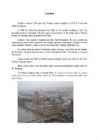
London March 28th Parliament of the United Kingdom The Parliament of the United Kingdom, commonly known as the UK Parliament or British Parliament, is the supreme legislative body in the United Kingdom, British Crown dependencies and British overseas territories. It alone possesses legislative supremacy and thereby ultimate power over all other political bodies in the UK and its territories. Its head is the Sovereign of the United Kingdom (currently Queen Elizabeth II) and its seat is the Palace of Westminster in the City of Westminster, one of the Boroughs of the British capital - London. Tower of London The Tower of London, officially Her Majesty's Royal Palace and Fortress of the Tower of London, is a historic castle located on the north bank of the River Thames in central London. It lies within the London Borough of Tower Hamlets, separated from the eastern
boundaries, but the name "London" has long applied more to the whole metropolis that has grown up around it. London has been an important settlement for over two millenniums. It is also one of the world's leading business, financial and cultural centres and its influence in politics, education, entertainment and even fashion contribute to its status as a major global city. London is a major tourist attraction with four world heritage sites, several royal parks and numerous iconic landmarks such as the Houses of Parliament, Towe Bridge, the Tower of London, Westminster Abbey and the London Eye. 2. History Although there is some evidence of a permanent settlement before the Romans came in 43 A.D., it is more accepted by historians that the Romans were the first. The settlement was called Londinium. The first London lasted for just seventeen years, for around AD 61, a tribe of Celts led by Queen Boudica stormed London, burning it to the ground
4. How many people approximately speak English? Approximately 600 million 5. Who (which tribes) gave the base of the English language?Germanic tribes- Anglo-Saxons. 6. Describe Wales.- Wales is a mountainous country on the western side of Great Britain. The national game of Wales is Rugby. Flag- Red dragon on a green and white field. They have their own language Cymraeg ( Welsh) . Anthem- Land Of My Fathers. Official animal- Dragon. There used to be a lot of coalmines. 7. What are the symbols of the 4 constituent countries? England- The three national symbols of England are St.George's cross; The red Rose and the Three Lions Crest; The oak is national tree; Northen Ireland- Shamrock; St.Patrick ;Scotland-thistle, St.Andrew 's cross . ; Wales-daffodil, leek, Prince of Wales's feathers; St.David, red dragon 8. How did the Romans influence Britain? The Romans built the first bridge(in London), the capital(London) is a
While on the way, follow the map so that you would not get lost and so that you could eventually get streetwise in London. Take the following questions with you, find answers to them and put them down for yourself in this MSWord document. Don’t forget to “take” photos - you are supposed to recognise the landmarks later on! At the end of the tour send the worksheet to yourself so that you could use it again. Good luck with exploring the city! DAY 1. The route: The Buckingham Palace – Trafalgar Square – National Gallery – Piccadilly Circus – The British Museum – Madame Tussauds – Oxford Street – Hyde Park – Harrods Destination 1: The Buckingham Palace What is its function? - Buckingham Palace has served as the official London residence of Britain's sovereigns since 1837 and today is the administrative headquarters of the Monarch. When was it built? 1703 Who was the first monarch to live there? Queen Victoria
1. The Queen’s official title. Elizabeth the Second, by the Grace of God, of the United Kingdom of Great Britain and Northern Ireland and of Her other Realms and Territories Queen, Head of the Commonwealth, Defender of the Faith. 2. The Queen’s working day. Starts after breakfast. Reads the newspapers which are prepared by the Press Secretary, and a report on the previous day’s proceedings in the Parliament and the letters she receives. Also phone calls. Once a month she attends the Privy Council in order to give Royal Assent to various items of government legislation. Discusses domestic matters with the Master of the Household.
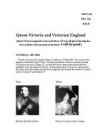
Kadri Laur PRG 11B. 26.05.07 Queen Victoria and Victorian England (Queen Victoria is supposed to have said this as a 10-year-old girl on learning that she was likely to become queen in the future: I will be good.) VICTORIA (r. 1837-1901) Victoria was born at Kensington Palace, London, on 24 May 1819. She was the only daughter of Edward, Duke of Kent. The Duke and Duchess of Kent selected the name Victoria but her uncle, George IV, insisted that she be named Alexandrina after her godfather, Tsar Alexander II of Russia. Edward died when Victoria was eight months old, upon which her mother enacted a strict regimen that shunned the courts of Victoria's
and Harry. EARLY LIFE She was born at Park House, Sandringham in Norfolk, England. Her parents were John Spencer and Frances Burke Roche. She had two older sisters Sarah and Jane and a younger brother Charles. When Diana's parents divorced in 1969, her mother took her and her younger brother live in an apartment in London's Knightsbridge, where Diana attended a local day school. Every Christmas, the children returned to Norfolk with their mother to visit their father, but he subsequently refused to allow them to return to London. Diana's mother sued for custody but she didn't get it and the custody went to the father. After that her father married to Raine Spencer. Diana and her siblings didn't get along with her. DESCENDANCE On her father's side, she was a descendant of King Charles II of England and she was also a descendant of King James II of England through an illegitimate daughter. On her mother's side, Diana was Irish and Scottish
Kadrina Secondary School Princess Diana Report Mattias Suurkivi 8.a Class Instructor: Katrin Mägi Kadrina 2009Contents Introduction I chose Princess Diana, because I wanted to know about her and I like the British royal family and she was a part of the family, too. She is dead and if somebody reads it, he or she can learn about her and will know what she was like. The purpose of the work is to introduce Diana and get to know her better. Diana Facts about Diana Main Facts Her full name is Diana Frances Spencer and she was the Princess of Wales. Diana was called people's Princess. She was born on 1. July 1961 in Park house, Sandringham, Norfolk. She was
THE U.K Different Parts The United Kingdom is a short way of saying the United Kingdom of Great Britain and Northern Ireland. The UK is the political name for those countries which share a parliament in London. All of them were at one time independent kingdoms with their own monarch. Now they are all part of the same kingdom and share the same monarch. The UK consists of Northern Ireland, Scotland, England and Wales. The peoples of these countries are British subjects; they hold British passports and therefore their nationality is British. The british Isles is the geographical name for all the islands off the west coast of Europe. These islands also include The Republic of Ireland, which is politically independent of the Britsh government
the east. It was built to keep the Caledonians of Scotland out of England. Windsor Castle, which is one of the official residents of British monarch, is located in the English country of Berkshire. It is the largest in habited castle in the world and the oldest in continuous occupation, since it dates back to the time of William the Conqueror. The castle’s area is approximately 484,000 square feet (44, 955 square metres). The castle has been garrison fortress, home, official palace and sometimes prison for most of the Kings and Queens of England/Great Britain. During the war, the castle has been heavily fortified but when country has been in peace, it has been expanded with large and grand apartments and this pattern has continued nowadays. The White Cliffs of Dover is one of England’s most famous natural landmarks. The cliffs were formed over 80 million years ago. They are a part of British coastline facing France and the Strait of Dover
THE CITY OF LONDON History The City of London occupies one square mile in the middle of the capital. It once made up entire town of London, surrounded by the wall first built by Romans. The Romans also built a bridge over the Thames and there has been one in the same area ever since. The Roman Londinium grew up on the northern side of the bridge. In AD 61 the native Celtic tribe, led by Queen Boudicca, rose up against the Romans. They burnt down Londinium to the ground and killed most of its inhabitants. Roman armies eventually defeated Boudicca and Londinium was rebuilt. At the end of the fourth century AD the Roman Empire began to crumble and the Roman armies were recalled from Britain to defend Rome itself. Once they had left, tribes such as Angles, Saxons and Jutes invaded and settled in from Holland, Germany and Denmark. Together they are known as Anglo-Saxons
Rainfall is regular, but most often in the form of drizzle occurring throughout the year. Snow occurs sometimes in winter but rarely settles more than a few millimetres deep. History The origin of London may be dated around the beginning of the 1st century AD, when a Celtic tribe settled near a fordable point of the Thames. L achieved real importance following the Roman conquest under Claudius (43AD). The Romans build a bridge, somewhat east of the present city. This bridge soon was part of a trade road and attracted more and more traders. Soon the flourishing city Londinium came into existence. The Romans rebuilt the town into a centre of great importance. After the Romans withdrew from Britain in the Picts, Scots, Jutes, Angles and Saxons invaded London. It started to expand again under the Saxon kings. London was described as a commercial centre into which goods from all parts of the world flew by land and sea. King Alfred the Great repopulated and fortified the city
Great coat of arms - three lions, a knight, and Danish queen; leaves around Old Thomas - quardian of Tallinn, put on top of the spire of Tallinn Town Hall in 1530; boy that excelled springtime contests thrown by Baltic German elite, because of his low-born status was unable to receive a prize, therefore was granted the position of town guard. Right now there’s third Old Thomas, first one can be seen at Tallinn City Museum. Toompea as a symbol of power Toompea palace - wooden fortification was originally built in the 9th century, Danes made the castle the centre of secular power; Toompea palace hosts the parliament of the Republic of Estonia, designed by Eugen Habermann and Herbert Johanson. The parliament has 101 members and is chosen for 4 years. Stenbock House - the official seat of the Estonian Government since 2000; the building started in 1787, originally meant to be a courthouse. After russians ran out of fund, house went into
Famous sights and people of England Kaspar Rätsep G1a Famous persons Kings & Queens: Queen Elizabeth I, Queen Victoria, Queen Elizabeth II, Henry VIII Politicians: Winston Churchil, Baroness Margaret Thatcher Writers & Poets: William Shakespeare, Daniel Defoe, Charles Dickens, Rudyard Kipling, Dame Agatha Christie Philosophers &Economists: Francis Bacon, John Locke Inventors & Scientists: Isaac Newton, Charles Darwin Actors,Actresses & Filmmakers: Sir Charlie Chaplin, Dame Elizabethe Taylor, AlfredHitchock, Hugh Grant, Orlando Bloom, KeiraKnightley, Daniel Radcliffe
At the end of the tour send the worksheet to yourself so that you could use it again. Good luck with exploring the city! DAY 2. The route: Westminster Abbey The Houses of Parliament London Eye 10 Downing Street St Paul's Cathedral The Tower of London Tower Bridge Globe Theatre Greenwich Observatory Destination 1: Westminster Abbey When was Westminster Abbey founded? (see its homepage: http://www.westminster-abbey.org/home ) 960 When was the last royal wedding held in Westminster Abbey? Whose was it? 29 April 2011 Prince William and MissCatherine Middleton How many monarchs have been buried in Westminster Abbey? 17 Destination 2: The Houses of Parliament What is the other name for the Houses of Parliament? Palace of Westminster How many Houses are located in the Houses of Parliament? What are they called both in English and Estonian? House of Commons riigikogu and House of Lords suurbritannia parlament
someone/something that has been mentioned before. We passed a beautiful house on our way to Birmingham. – Was the house for sale? I saw a man standing near the house. The man was well-dressed and looked like a businessman. In case of plural countable nouns and uncountable nouns, in ordinary situations, when something is mentioned for the first time, some is used. We passed some beautiful houses on our way to the beach. There were some people at the station. There was some sand on the building site. In extraordinary situations or when we want to emphasize something no article is used. Poor people cannot afford to live in beautiful houses. There were people inside the house on fire! There was sand on my plate! The Indefinite Article is used when referring to an indefinite object (just any of the kind). Could you lend me a pen
History The City of London occupies one square mile in the middle of the capital. It once made up the entire town of London, surrounded by the wall first built by the Romans. The Roman Londinium grew up on the northern side of the "London Bridge" in the past. Products such as olive oil, wines and fruit were brought by ships from different parts of the Roman Empire and unloaded onto wooden quays along the river. In AD 61 the native Celtic Iceni tribe, led by Queen Boudicca, rose up against The Romans. They burnt Londinium to the ground but Roman armies eventually defeated Boudicca. The city was rebuilt and was gradually surrounded with a wall of stone and brick which lasted for many centuries. During the archeological excavations in 1954 the Roman Temple of Mithras was revealed. It was a pagan temple dedicated to the Persian Sun-god. The Temple was later reconstructed only a short way from its original site and the relics are
national flags of Great Britain, Scotland, Northern Ireland and Wales. As can be seen, quite a lot of children also know the name of the Great Britain flag. However, almost all of the students have no idea about other names of the British flags, as well as about the patron saints. In addition, almost 90 percent of students are also unaware about the national holidays..........23 All things considered, we see that there is a need for students to pay more attention to Scotland, Northern Ireland and Wales and to learn more information concerning those parts of the United Kigdom.....................................................................................................................23 2.4 The questionnaire 2...............................................................................................................23 2.5 Analysis of the questionnaire 2......................................
 annaabi.ee