Leidsid 33 sarnast õppematerjali, mis on seotud failiga "„People can live one hundred years without really living a minute.“". Need materjalid aitavad sul teemat sügavamalt mõista.
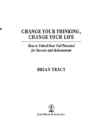
really, years, live, without, minute, hundred, living, possible, them, happy, those, hand, agree, often, decisions, other, compared, claim, wrap, count, completely, wasting, activities, choices, unhappy, statement, lives, doing, anything, useful, something, makes, forces, therefore, given, things, others, disagreeCopyright © 2003 by Brian Tracy. All rights reserved. Published by John Wiley & Sons, Inc., Hoboken, New Jersey. Published simultaneously in Canada. No part of this publication may be reproduced, stored in a retrieval system, or transmitted in any form or by any means, electronic, mechanical, photocopying, recording, scanning, or otherwise, except as permitted under Section 107 or 108 of the 1976 United States Copyright Act, without either the prior written permission of the Publisher, or authorization through payment of the appropriate per-copy fee to the Copyright Clearance Center, Inc., 222 Rosewood Drive, Danvers, MA 01923, (978) 750-8400, fax (978) 750-4470, or on the web at www.copyright.com. Requests to the Publisher for permission should be addressed to the Permissions Department, John Wiley & Sons, Inc.,
"People can live one hundred years without really living a minute" Some people live a very long life but living a long life doesn't always mean a great life. Actions in your life are what will make your life truly amazing. First of all, when you live so many years without really doing something memorable, then what's the point. Life is all about challenges and adventures. They will make you wiser and you will have more things to remember. I think when you're finally old, it's great to look back and see what a wonderful life you've lived. On the other hand, some people are okay with just being and not doing something wonderful. They like their lifes just the way they are. They are happy with that comfortable position. Sometimes it's risky to take challenges. You'll
When there's a problem I want a solution. Don't offer me any half measures. 31. Literal-mindedness is good. 32. One of the biggest energy-wasting manifestations is the compulsion to begrudge energy. 33. One need not have a better theory to object to a theory's defects. 34. One needs more energy, higher frequencies, more bandwidth, and less interference in order to sustain a finer quality of attention. 35. One who has authority over others is responsible for deterring them from behaving unustly toward one another and for effecting the redress of injustices when they occur. 36. One who is not still looking for answers is either a buddha or a damn fool. 37. People say that they want to be "loved for themselves" but I find that insulting. I want to do things that are worthwhile and be admired because my actions are admirable, not for foolish subjective reasons. 1 38
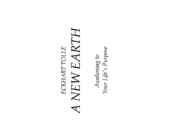
...........................................................................66 The Pathological Ego................................................................................68 The Background Unhappiness...................................................................70 The Secret of Happiness............................................................................71 Pathological Forms of Ego........................................................................73 Work – with and Without Ego...................................................................75 The Ego in Illness......................................................................................77 The Collective Ego....................................................................................77 Incontrovertible Proof of Immortality.......................................................79 Chapter Five The Pain-Body - 80
How do I go about it? J: - Your identity card and letter of attorney, please. H: - Here you are. J: - Well...Unfortunately, I can't cash your money order your signature is not witnessed. H: - Ok. Than, please, I'd like to cash my money order. J: - Take this form and fill it in. May I see your passport? H: - Yes. Please. So...Should I write my full name, my passport number and the sum of money that has been sent to me, right? J: - Certainly. How would you like the money? H: - I prefer one hundred rouble notes, if you don't mind. J: - Here is your money. H: - Thank you Getting a post-restante. H: - Hi, Julia! What are you doing here? J: - I'm getting post restante letter from Boris... H: -Ah, yeah, remember him. What is he saying? J: - Oh, well...He is asking to come to him, and, besides, here is the money-order... H: - Oh! Would you like to cash money-order? Have you got your passport with you? J: - Yeah, certainly. H: - Then, they'll cash your money order without fail.
We, as ordinary people, can acquire knowledge either from our first hand experiences (personal knowledge) or from education and research (shared knowledge). Difficulty depends on how much effort or skill must be implemented for the information to be acquired, and the value of something lies in it's importance, usefulness or worth. We all value different things in our life, we are more likely to value things that benefit us and, thus, not really value the things that are of no benefit to us. If it’s only knowledge produced with difficulty that we truly value then how do we value knowledge that is easily produced? How could knowledge that is produced with difficulty be of little value to us? These knowledge questions will be addressed using examples from the different areas of knowledge to help show the differential between knowledge value and the difficulty required to obtain it.
topic of school. Both photos show page 4 6 He dropped a leaf into the water students in class. In the first photo I imagine that 1 1 ate and watched it drift under the they're about 13 years old. 2 have/'ve met bridge. It looks like a science lesson 3 have/'ve caught 7 As she got older, her health and judging by the students' 4 lived deteriorated
Maturita Solutions Advanced Workbook Key stand bananas and coffee! It's a bit 3 1 to 8 of Unit 1 uncanny really. Is it something she's 2 about 9 century passed on to me genetically, or is it 3 like 10 assumed / 1A Memories page 3 learned behaviour? Who knows? 4 of thought / 1 See exercise 2 2 5
lives so far. We are going to start a completely new and different life after graduation. The emphasis therefore should be on the word "life". The real thing, it's coming, it's going to hit us and it's going to hit us hard. Nothing is going to be the same. Life will never ever be as simple, carefree and easygoing again. To me, the expression "life is hard" has never meant anything. I have always been more of a "life is beautiful"-type. I have never really thought that it actually is hard. Mostly because I have never thought what the real life is like. Ofcourse I have seen it, it's all around me, but only seeing and seeing plus thinking through what you see are two really different things. An example: have you ever been to a funeral of a collateral relative as a child? Do you remember what you felt? I remember I felt almost nothing and I never cried. When someone
Edulugude võistlus Success-story competition „Small Town Inhabitants – Educated or Uneducated People“ To begin with, my childhood was quite ordinary, I spent a lot of time in my country home, spending most of my time playing. I have been raised by my mother. As I grew older, I got more and more interested in different things. At one point it occured to me that when I want to be successful in some field, then I really have to educate myself in that filed.When my friends have characterised me then they have mainly mentioned that I am an active person, who has been successful in different fields. I still do not think I am succesful because it is a really complicated definition, but I know that I have succeeded in doing several things. For me the key is my so called success has been that when dealing with a particular thing I have tried to delve into the subject as deep as possible.
Silicon Valley Could you reproduce Silicon Valley elsewhere, or is there something unique about it? It wouldn't be surprising if it were hard to reproduce in other countries, because you couldn't reproduce it in most of the US either. What does it take to make a silicon valley even here? What it takes is the right people. If you could get the right ten thousand people to move from Silicon Valley to Buffalo, Buffalo would become Silicon Valley. That's a striking departure from the past. Up till a couple decades ago, geography was destiny for cities
· And when you begin to miss me, dont forget it was you who let me go. · There is an end to things no matter how much we want to hold into them. · Otsisin keset seda pimedust, sind ja loodetud vabadust,kui mu käed su poole, tegid alguse loole, printsessist ja printsist, ühest kaunist kandist, kus oleme meie kaks, kus lõbutseme, kuni otsas jaks. Sa ei pea muinasmaad looma, sa ei pea tähti taevast tooma. Ole vaid minu kõrval, kui tõuseb päike. Ole vaid mu kõrval kui mind piinab meeleheide. Ole mu kõrval, kui kumab kuu, kui su nime
" --Phil Town, New York Times bestselling author of Rule #1 "The 4-Hour Workweek is a new way of solving a very old problem: just how can we work to live and prevent our lives from being all about work? A world of in nite options awaits those who would read this book and be inspired by it!" --Michael E. Gerber, founder and chairman of E-Myth Worldwide and the world's #1 small business guru "Timothy has packed more lives into his 29 years than Steve Jobs has in his 51." --Tom Foremski, journalist and publisher of SiliconValleyWatcher.com "If you want to live life on your own terms, this is your blueprint." --Mike Maples, cofounder of Motive Communications (IPO to $260M market cap) and founding executive of Tivoli (sold to IBM for $750M) "Thanks to Tim Ferriss, I have more time in my life to travel, spend time with family, and write book blurbs. This is a dazzling and highly useful work." --A. J
New Media Economy Social media information and data collection and security In this brief essay, i would like to focus on the social media platforms in our moren society. How people use them, what kind of information we give away, what companies will do with this. Information sharing and data protection has become very popular theme in the recent few years. People care more about their privacy and avoid „big brother“ foreshadowing. It is important to know what social media platforms promise and are they really going to keep it. Users should think about what they share and what kind of information they generate. Because it is all recorded and some info can be traced back to real people. Privacy and data protecion topics are becoming more and more important and the amouts of data generated is becoming larger
Good afternoon! My name is Egert and... ...Today I'm here to talk about advantages and disadvantages of fast development of modern technology. I think we all have noticed that almost every day there are new technology achievements at the stores. Whether we like it or not, it improves in every second, in every minute. New Apple iPhones, iPads and other i-devices are everywhere. Even tractors have a built-in computer in them. So, is it a blessing or a curse? I'm sure that most of you think it's a blessing. Do you? We like our comfortable lives, we like it when everything has been done for us already. We want to have the newest mobile phones and best cars to show off and be better than our friends. However, it can make people selfish and egoistic. They want more and more and more. In the past 10 years modern technology has improved so fast that it is clearly visible
disadvantageous. I expect no argument in asserting that a normal sensitivity is a healthy, indispensable ingredient for optimal education. Sensitivity can be heightened or blunted by education. It is intertwined with curiosity. An ideal education affords numerous and varied opportunities for students to touch, see, smell, listen, hear; to spark their curiosity. When I was a child the things that pleased me were largely other than the plants which have earned me a living as an adult. For example, I collected postage stamps, played basketball, was fond of listening to music, played all manner of games, but dealt only in a neutral, uninspired fashion with plants. The one thing that was constant and of supreme importance was my love of reading. I don't recall why, but by an early age, say age 9, I was a phenomenal reader of books, a habit that persisted all the way until college. Reading expands one's mind immensely
all I'm scared of walking out of this room and never feeling the rest of my life the way I feel when I'm with you. I wish you could hear all the words I'm too afraid to say. A relationship is only made for two, but some bitches don't know how to count - all those moments will be lost in time , like tears in the rain . - people always tell me to follow my dreams , so thats why i follow u . - life is too short to be anything , but happy . - Don't fall in love . Fall off a bridge , it hurts less . - I'm like a butterfly ; pretty to look at , hard to catch . - Happily ever after is so once upon a time . - The best things in life aren't things . - I'm a good girl with bad habits . - I lost my number , can i get yours ? What we learned as children, that one plus one equals two. We know to be false, one plus one equals one
Chapter 21 Chapter 42 Chapter 1 It is a truth universally acknowledged, that a single man in possession of a good fortune, must be in want of a wife. However little known the feelings or views of such a man may be on his first entering a neighbourhood, this truth is so well fixed in the minds of the surrounding families, that he is considered the rightful property of some one or other of their daughters. "My dear Mr. Bennet," said his lady to him one day, "have you heard that Netherfield Park is let at last?" Mr. Bennet replied that he had not. "But it is," returned she; "for Mrs. Long has just been here, and she told me all about it." Mr. Bennet made no answer. "Do you not want to know who has taken it?" cried his wife impatiently. "You want to tell me, and I have no objection to hearing it." This was invitation enough. "Why, my dear, you must know, Mrs
The picture is taken somewhere outside as the man is wearing a coat. In picture 2 I can see numerous students sitting their exam in a big hall. The photos are connected with the topic of university There are a few similarities between these two pictures. First, they both show young people making an effort. Second, picture 1 as well as picture 2 tell us about typical aspects of student life. However, the pictures clearly differ from each other in several aspects. To start with, while the young man in p1 is obviously relaxing after winning a competition, the students in p2 are in the middle of writing their papers. Moreover, all people in picture 1 look over the moon, but people in picture 2 look rather preoccupied with their work. It could be the young man in p1 is the leader of the team or he has succeeded in some sort of individual field. Anyway, judging by his
More praise for Influence: Science and Practice! "We've known for years that people buy based on emotions and justify their buying decision based on logic. Dr. Cialdini was able, in a lucid and cogent manner, to tell us why this happens." --MARK BLACKBURN, Sr. Vice President, Director of Insurance Operations, State Auto Insurance Companies "Dr. Cialdini's ability to relate his material directly to the specifics of what we do with our customers and how we do it, enabled us to make significant changes. His work has enabled us to gain significant competitive
20. IMPATIENCE 21. PHONE CALL 22. HIDE-AND-SEEK 23. THE ANGEL 24. AN IMPASSE EPILOGUE: AN OCCASION twilight STEPHENIE MEYER LITTLE, BROWN AND COMPANY New York Boston Text copyright © 2005 by Stephenie Meyer All rights reserved. Little, Brown and Company Time Warner Book Group 1271 Avenue of the Americas, New York, NY 10020 Visit our Web site at www.lb-teens.com First Edition: September 2005 The characters and events portrayed in this book are fictitious. Any similarity to real persons, living or dead, is coincidental and not intended by the author. Library of Congress Cataloging-in-Publication Data Meyer, Stephanie, 1973-- Twilight : a novel / by Stephanie Meyer. -- 1st ed. p. cm. Summary: When seventeen-year-old Bella leaves Phoenix to live with her father in Forks, Washington, she meets an exquisitely handsome boy at school for whom she feels an overwhelming attraction and who she comes to realize is not wholly human. ISBN 0-316-16017-2 [1. Vampires -- Fiction. 2
Work on taking yourself deeper into the introspection process by tackling more specific topics. Here are some questions you might want to consider: What am I like? How do my friends characterize me? What are my personality traits? Have I ever experienced a moment of epiphany? Why is (some color) my favorite color? Why is (some movie) my favorite movie? How have my favorites influenced my life? What have I done? What are my major accomplishments? Why do I consider them accomplishments? What extra curricular activities have I participated in? Have I strived hard for something and achieved it? Why did I succeed? Have I strived hard for something and failed to achieve it? Why did I fail? What was the most difficult time of my life? How did my perspective of life change due to that difficult time? Where do I want to go? What would I most like to be doing right now? Where would I like to be? Who would I most like to be with?
Computers help hospitals keep laboratory and medical records. Hospitals use many disposable items for safety such as plastic thermometers, and hypodermic syringes and steel needles. They are used only once, so they cannot spread infection. Scientists have also discovered all kinds of important drugs, such as antibiotics, and certain diseases, including tuberculosis and smallpox, have been almost wiped out. Antibiotics are substances, produced by living things, that are poisonous to harmful bacteria, but no the patient. The most important antibiotic is penicillin. Doctors can now also transplant organs such as the heart and the kidneys. 3. The National Health Service The National Health Service was established in Britain after World War II. The government funds it. All taxpayers contribute to its support through insurance payment. NHS made it possible that the benefits once available only for insured
in the reality, the supply chain is a complex and dynamic network of facilities and organizations with different, conflicting objectives. Supply chains exist in both service and manufacturing organizations, although the complexity of the chain may vary greatly from industry to industry and firm to firm. Unlike commercial manufacturing supplies, services such as clinical supplies planning are very dynamic and can often have last minute changes. Availability of patient kit when patient arrives at investigator site is very important for clinical trial success. This results in overproduction of drug products to take care of last minute change in demand. R&D manufacturing is very expensive and overproduction of patient kits adds significant cost to the total cost of clinical trials. An integrated supply chain can reduce the overproduction of drug products by efficient demand management, planning, and inventory management.
THE CAPITALIST NIGER Chika Onyeani ………………………Every African must internalise this book - period….DAA INTRODUCTION In October 1960, Nigeria received its independence from Britain. By then, Ghana the former Gold Coast had been independent for three years under the great Osagyefo Kwame Nkumah. It was a time for celebrating Africa’s coming of age, as more and more African countries received their independence either from Britain or France. It was especially a poignant time for Africa, as then British Prime Minister Harold McMillan articulated his now famous “winds of change” sweeping Africa. We had high hopes for Africa, for the Black race, that the insidious imposition of foreign rule on us, the looting of Africa’s
His youthful hose, well saved, a world too wide For his shrunk shank, and his big manly voice, Turning again toward childish treble, pipes And whistles in his sound. Last scene of all, That ends this strange eventful history, Is second childishness and mere oblivion, Sans teeth, sans eyes, sans taste, sans everything. (W. Shakespeare) There lie more answers beneath these poetical phrases than one could ever give when describing a textbook just like the actors, we seek for knowledge without really finding it until we've finished the play. Every written piece of paper is something precious it contains information that can either make our day or totally ruin the mood; that's the secret of all books. They have the power to change the world up-side down. The English textbook given to us this year is something we must carefully treasure after all, there are going to be more people next year either to praise or suffer from it. But not the
My languages I love different languages. I mean, I really, really love different languages. I also believe and have been told that I pick them up rather easily. That might be true, although I did not pick any Greek up in Greece but that might have been because they spoke so damn fast that I could not tell if it was a word or an entire sentence. The first foreign language I learned was Russian. Considering I was ten when Estonia became a Republic, it makes sense. We began studying Russian in first grade, though it was simplified – "koška" instead of "kot", "medvešonok" instead of "medved", "saichik" etc. Did not make much
Schools kill creativity Kristiina Moosel N-14 Ken Robinson had a greate speech in TedX 2006. He was discussing about creativity and how we help ourselves and others to develope it. Mostly I agreed with him but still there were some points, where I could argue with him. Ken Robinson says noone knows how’ll the future be like. The future where our kid’s are going to have to live in. Still our education system wants us to prepare them for that. Prepare them for the mystery, for something we have no idea about how it’s going to be. If I had no younger relatives, I’d have to dissagree with him - I mean, when I was in secondary school I had to study mostly only those subjects I’d really need in the future. But I have some relatives younger than I am. The youngest is 9 right now. And when I look at what she must
I leave your house, I tell you, quite disgusted; You do the opposite of my instructions; You've no respect for anything; each one Must have his say; it's perfect pandemonium. DORINE If . . . MADAME PERNELLE You're a servant wench, my girl, and much Too full of gab, and too impertinent And free with your advice on all occasions. DAMIS But . . . MADAME PERNELLE You're a fool, my boy--f, o, o, l Just spells your name. Let grandma tell you that I've said a hundred times to my poor son, Your father, that you'd never come to good Or give him anything but plague and torment. MARIANE I think . . . MADAME PERNELLE O dearie me, his little sister! You're all demureness, butter wouldn't melt In your mouth, one would think to look at you. Still waters, though, they say . . . you know the proverb; And I don't like your doings on the sly. ELMIRE But, mother . . . MADAME PERNELLE Daughter, by your leave, your conduct In everything is altogether wrong;
______________________________ 5 They watched/were watching TV when they heard a crash. ______________________________ 6 Last year we went/were going camping and we had a great time. ______________________________ 7 My mum was taking/took a picture when she dropped the camera. ______________________________ 8 Hippies lived/were living in the 1960s and 1970s. ______________________________ 9 The plane arrived/was arriving in Madrid on time. ______________________________ 10 I played/was playing football when I broke my leg. ______________________________ Marks: /10
The free rider problem is also one justification for the existence of governments which provide public goods. Some ideologies, such as libertarian capitalism, are often rebuked, because in such a system all property in a society would be privately owned, away from any state involvement or regulation. Libertarians counter that potential free riders within their system could face social ostracism, which may deter those who accept services without donating any payment for them. Libertarians stress that the need to healthily co- operate and interact with others in society would lessen the risk and likelihood of free riders. 3 The Example The free rider problem has deep roots in more general bargaining, and issues to do with incentive compatibility. That is to say that, when involved in bargaining problems,
Drugs are chemicals that change the way a person's body works. You've probably heard that drugs are bad for you, but what does that mean and why are they bad? Medicines Are Legal Drugs If you've ever been sick and had to take medicine, you already know about one kind of drugs. Medicines are legal drugs, meaning doctors are allowed to prescribe them for patients, stores can sell them, and people are allowed to buy them. But it's not legal, or safe, for people to use these medicines any way they want. Cigarettes and Alcohol Cigarettes and alcohol are two other kinds of legal drugs. (In Estonia, adults 18 can buy cigarettes and alcohol.) But smoking and excessive drinking are not healthy for adults and off limits for kids. Nicotine is the drug in tobacco leaves. Whether someone smokes, chews, or sniffs tobacco, he or she is delivering nicotine to the brain. Each cigarette contains about 10 milligrams of nicotine
Finally, the Cadle Primary School in Swansea has been used as a case study to investigate the potential change in attitudes in children after the school placed the UNCRC at the heart of its ethos and curriculum across all areas of the school. The primary goal is to critically analyse the commitment of the Cadle towards children`s participation within school and explore the possible spaces created for children that allow them to actively engage with meaningful discussions on the matters that concern them. 3 Introduction Children have `somewhat tenuous relationship to citizenship` as a number of authors interested in children`s citizenship have noted.1 Historically, they have not been considered as subjects of rights, but rather as objects of social concern or citizens-in-making. Children have
 annaabi.ee