Leidsid 33 sarnast õppematerjali, mis on seotud failiga "A weekend in London". Need materjalid aitavad sul teemat sügavamalt mõista.
palace, british, church, there, east, buckingham, visit, walk, abbey, famous, rooms, cross, mall, gallery, weekend, green, first, nearby, thames, situated, westminster, building, kings, rich, photo, square, wheel, miles, royal, place, years, sunday, churchill, bridge, across, works, museum, owns, stay, fabulous, star, hotel, close, creative, friendlyWest. Alfred's men took London in 886 and repaired the walls of the old Roman city. In 1016 the Vikings attacked London again but the Saxons fought them off. The attacks ceased when the Danish king Cnut came to power in 1017. Cnut managed to unite the Danes with the Anglo-Saxons, and invited Danish merchants to settle in the city. London prospered under Cnut, but on his death the city reverted to Anglo-Saxon control under Edward the Confessor. He built a wooden palace at Westminster, were the parliament met later. This is why Westminster became the seat of government not the city of London itself. Edward the Confessor also built Westminster Abbey. He ruled until his death in 1065, after which King Harold was crowned. Norman period( Medieval London) 1066 In 1066 in the Battle of Hastings the Normans were victorious and William was crowned King. William granted the citizens of London special privileges, but he also built a castle in the
grown up around it. London has been an important settlement for over two millenniums. It is also one of the world's leading business, financial and cultural centres and its influence in politics, education, entertainment and even fashion contribute to its status as a major global city. London is a major tourist attraction with four world heritage sites, several royal parks and numerous iconic landmarks such as the Houses of Parliament, Towe Bridge, the Tower of London, Westminster Abbey and the London Eye. 2. History Although there is some evidence of a permanent settlement before the Romans came in 43 A.D., it is more accepted by historians that the Romans were the first. The settlement was called Londinium. The first London lasted for just seventeen years, for around AD 61, a tribe of Celts led by Queen Boudica stormed London, burning it to the ground. The next heavily-planned London
It is situated on the river Thames. The Thames is a river flowing through southern England and connecting London with the sea. The Thames has a length of 346 kilometres (215 miles). The first bridge was the tower bridge, built in the 12th century. The second bridge was built in the year 1750. .The river Thames divides London into the northern and the southern part. The port of London is one of the greatest trade centres in the world. The river Thames is certainly the most famous water body in London. London is also the seat of the government of Great Britain. It is one of the largest cities in the world with its population of about seven million. Before the great fire in 1666 there were many wooden houses and narrow crooked streets in the town but after the fire it became a well-planned city with wide streets, beautiful squares and parks. It started on the second of September, from a bakery shop in Pudding lane and lasted for about 5 days. It destroyed 89
London important sights guide Roman period 20th century · Big Ben is the nickname for the great bell of the clock at the north end of the Palace of Westminster in London and is often extended to refer to the clock or the clock tower as well. It is the largest four-faced chiming clock and the third-tallest free-standing clock tower in the world. The clock first ticked on 31 May 1859. The pendulum is installed within an enclosed windproof box sunk beneath the clockroom. It is 3.9m long,
LANDMARCS HYDE PARK: Hyde Park is one of the largest parks in central London, England and one of the Royal Parks of London, famous for its Speakers' Corner. The park is divided in two by the Serpentine. The park is contiguous with Kensington Gardens; although often still assumed to be part of Hyde Park, Kensington Gardens has been technically separate since 1728, when Queen Caroline made a division between the two. THE TOWER OF LONDON: Her Majesty's Royal Palace and Fortress, more commonly known as the Tower of London (and historically as The Tower), is a historic fortress and scheduled monument in central London, England, on the north bank of the River Thames. It is located within the London Borough of Tower Hamlets and is separated from the eastern edge of the City of London by the open space known as Tower Hill. It is the oldest building used by the British government. [1]
someone/something that has been mentioned before. We passed a beautiful house on our way to Birmingham. – Was the house for sale? I saw a man standing near the house. The man was well-dressed and looked like a businessman. In case of plural countable nouns and uncountable nouns, in ordinary situations, when something is mentioned for the first time, some is used. We passed some beautiful houses on our way to the beach. There were some people at the station. There was some sand on the building site. In extraordinary situations or when we want to emphasize something no article is used. Poor people cannot afford to live in beautiful houses. There were people inside the house on fire! There was sand on my plate! The Indefinite Article is used when referring to an indefinite object (just any of the kind). Could you lend me a pen
1. Ancient Britain: the Celtic tribes. 2000 years ago there was an Iron Age Celtic culture throughout the Br Isles. It seems that the Celts, who had been arriving from Europe from the 8th cent BC onward, intermingled with the peoples who were already there. The Celts were extremely talented people, creative and artistic. More than 1 Celtic tribe invaded Br. The descendants of ancient Celts live in Wales, Scotland, Cornwall and Ireland. They lived in primitive society. Druids priests, more powerful than chiefs. Acted like prophets. 2. Stonehenge From prehistoric period. Was built on Salisbury plain between 2500 and 1500 bc. One of the most famous and mysterious archaeological sites in the world
Westminster Today For centuries, Westminster was the political and religious center, but today Westminster is the center of government. Westminster Hall was built in 1099 by the son of William the Conqueror and is one of the largest medieval halls. It was part of the Westminster Palace, which was destroyed by a fire in 1834. The Houses of Parliament that we see today were rebuilt in the 19th century after the fire. The Big Ben clock tower is the largest four-sided ringing clock in the world and it is also one of the London's most famous symbols. Some think that Big Ben is the name of the clock on the tower, but actually it is the name of the big 13-ton bell that rings every fifteen minutes. The most historic religious building in Britain is Westminster Abbey, a beautiful
London March 28th Parliament of the United Kingdom The Parliament of the United Kingdom, commonly known as the UK Parliament or British Parliament, is the supreme legislative body in the United Kingdom, British Crown dependencies and British overseas territories. It alone possesses legislative supremacy and thereby ultimate power over all other political bodies in the UK and its territories. Its head is the Sovereign of the United Kingdom (currently Queen Elizabeth II) and its seat is the Palace of Westminster in the City of Westminster, one of the Boroughs of the British capital - London. Tower of London The Tower of London, officially Her Majesty's Royal Palace and Fortress of the
The United Kingdom and London United Kingdom is a political name of the United Kingdom of Great Britain and Northern Ireland. These political names include the countries of England, Scotland and Wales. Every country has its own capital and language. The capital of England is London, the people there are english and the language spoken is English. In scotland live the scots, capital is Edingburg and the languages spoken are English and Scottish. The capital of Wales is Cardiff, the people tehre are welsh and the languages spoken are welsh and English. N. Ireland is the home for the Irish, the capital is Belfast and the language is Irish. The first inhabitants were Iberians and Celts who settled on the land and were often at war with each other
Main Sights England is known for its many world-famous sightseeings and people all around the world come to see them. Some of them are even like symbols of England. The most famous ones are: Stonehenge is one of the greatest national icons of Britain. That prehistoric monument is located in the plain of Salisbury, in the county of Wiltshire in the south-west of England. It is built of 150 enormous stones which are set in a purposive circular pattern. Stonehenge was probably built to mark the longest and shortest day of the year because it lies on the line of the midsummer sunrise and the midsummer sunset. That would have enabled people to keep a
one million inhabitants. Cultural life London is the worldclass centre. It has more than40 theatres, where audiences enjoy everything from musicals to William Shakespeare's plays. The city also contain many cinemas, concert halls, museums and art galleries. Royal residence English (later British) kings and queens have lived in London for almost 1,000 years. There are several royal palaces in the capital. St James's Palace was built by King Henry VIII in the 16th century. Since 1837 the monarch has lived in Buckingham Palace LONDON'S EARLY HISTORY The Romans invaded England in 43 AD. They landed in Kent, made their way to the River Thames and sailed up it. Then they settled in a place on the north bank, where the river was not to wide. This settlement was called Londinium
Its highest point is Ben Nevis in Scotland followed by Snowdon in Wales. The Severn is the longest river in the United Kingdom. Other important rivers are the Trent, the Mersey, the Tyne, etc. Lough Neagh which lies in the centre of Northern Ireland is thr UK's largest freshwater lake. The climate in the UK is variable. The weather changes so frequently that it is difficult to forecast. It is not unusual for people to complain that the weathermen were wrong. Fortunately there is no extreme weather conditions, it is never very cold or very hot. The first inhabitants were Iberians and Celts who settled on the land and were often at war with each other. In AD 43 the Roman Emperor Claudius invaded, and made Britain a Roman province. They stayed for three hundred years, and built villas, roads and towns. Many Roman remains can be visited in Britain today. The Romans finally abandoned Britain in AD 410 and a long period of invasion by Nordic peoples
How well do you know London? Form 10, Welcome to the tour of London! You will spend two days (lessons) exploring the famous landmarks of the city. While on the way, follow the map so that you would not get lost and so that you could eventually get streetwise in London. Take the following questions with you, find answers to them and put them down for yourself in this MSWord document. Don’t forget to “take” photos - you are supposed to recognise the landmarks later on! At the end of the tour send the worksheet to yourself so that you could use it again. Good luck with exploring the city! DAY 1
including St Paul`s Cathedral. The fire began in the kitchen of the King`s baker Thomas Farriner in Pudding Lane and lasted for five days. London is the capital of England and the United Kingdom. By now London has swallowed up many of the small towns and villages that once surrounded it. London is on the same latitude as Warsaw. London is a city were more than 7 million inhabitants live. In London there are famous Telephone booths and taxis. Also there are red double- decker buses. The quick and easy way is use the underground trains. The cheapest is to buy a Travelcard. London hosted the 1908 and 1948 Summer Olympic Games and will host the 2012 Summer Olympic Games. Many visitors come to see the famous sights, museums and galleries; others come for the shopping. The famous sopping street is Oxford Street. It is the most famous street in London where you can buy souvenirs, clothes, and so on
automobiles, trains and airplanes. Etymology The term "travel" originates from the Old French word travail. The term also covers all the activites performed during a travel (movement). A person who travels is spelled "traveler" in the United states, and "traveller" in the United Kingdom. Purpose and motivation Reason for traveling include recreation, tourism or vacationing, research travel for gathering information, for holiday to visit people, volunteer travel for charity, migration to begin life somewhere else, religious pilgrimages and mission trips, business travel, trade, commuting, and other reason, such as to obtain health care or fleeing war or for the enjoyment of traveling. World's best places to visit: Paris and Barcelona Why go: Year after year, the Why go: Known around the world magnetic City of Lights draws new for its legendary football team,
displayed in the Museum of London in the Barbican. At the end of the fourth century AD the Roman Empire began to crumble and the Roman armies were recalled from Britain to defend Rome itself. Once they had left Anglo-Saxons invaded and settled in Britain. They were farming people who preffered to live outside towns. For a while London probably lay in ruins, but it eventually developed again, partly because of its position on the river was good for trading. The Tower of London There is more of London's history in the Tower than anywhere else in London. It is the oldest surviving building in the capital. The Tower of London was begun by William the Conqueror in 1078 as a castle and a palace but even before the site had been used by the Romans and Anglo-Saxons. The tower comprises not one, but 20 towers, the oldest, the White Tower, dates back to the 11 th Century. The Roman stone wall, parts of which can still be seen on the territory of the
Londonds council has 25 seatings. The mayor of London is Ken Livingstone. The mayors main assignment is represeting the city. Local self-governments handle strategical planning, education, transport, consumer protection, fire department, social service, police and libraries. Londons center is Trafalgar square, where stand admiral Nelsons memorialstatue. The city core consist of historical building and government district Westminster. Around Great-London there is a 8km wide verdant zone, side of them are 8 newcitys, wich were built after the war to decrease the load from the Great-London. London was world tourism capital in the year 2002. 11.6 milion tourist when there, who mostly were americans and french. Most popular sights in London are : British Museum, National Gallery, Tate's Gallery, Saint-Paul's cathredal, Westminster Abbey, Tower of London, Big Ben, Buckingham palace, London zoo, Kew Garden, Harrod's Mall
Changing the Guard · Perhaps the epitome of London's surviving pageantry can be found in the ceremonial Changing of the Guard. · A hugely popular spectacle, the Changing of the Guard takes place at a range of royal locations in and around · London daily during the summer and on alternate days for the rest of the year. · There is no ticketing, so make sure you get there early. · Ever since 1660 Household Troops have guarded the Sovereign Palaces. · The Palace of Whitehall was the main residence until 1689 and was guarded by the Household Cavalry. · The court moved to St James's Palace in 1689 and when Queen Victoria moved into Buckingham Palace the Queen's Guard remained at St James's Palace and a detachment guarded Buckingham Place, as it does today. Trooping the Colour
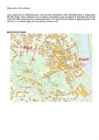
Urban trail in Tartu old town. Tartu, small town in southern-Estonia. Town was first mentioned in 1030. Nowadays there is living nearly 100 000 people. Tartu is known as city of students, and students come to improve to Tartu from all over the world. But Tartu is also known as a Hansa town, that is why one of the most attractive sightseeing place is the old town. It is a valuable place for Tartu and for Estonia as well. PHOTO HUNT MAP: Start the photo hunt on the corner of Lai and Jakobi street. Go up to the Toome hill, it's a great upturn and a great test for legs
largest companies. The city is a major tourist destination for both domestic and overseas visitors, with annual expenditure by tourists of around £15 billion. London hosted the 1908 and 1948 Summer Olympic Games and will host the 2012 Summer Olympic Games. Samuel Johnson, author of the first complete dictionary, famously wrote about the city, citing "You find no man, at all intellectual, who is willing to leave London. No, Sir, when a man is tired of London, he is tired of life; for there is in London all that life can afford." Greater London contains four World Heritage Sites: the Tower of London; the historic settlement of Greenwich; the Royal Botanic Gardens, Kew; and the site comprising the Palace of Westminster, Westminster Abbey and St. Margaret's Church. London's population draws from a wide range of peoples, cultures, and religions, and over 300 languages are spoken within the city. As of July 2007, it had an official population of 7,556,900
"Poetry can be beautiful"- poetry in general. "The poetry of Hopkins is beautiful" - I'm only talking about the poetry Hopkins wrote. 4. Rule:Rivers, mountain ranges, seas, oceans and geographic areas all use 'the'. For example, "The Thames", "The Alps", "The Atlantic Ocean", "The Middle East". Unique things have 'the'. For example, "the sun", "the moon". Some institutional buildings don't have an article if you visit them for the reason these buildings exist. But if you go to the building for another reason, you must use 'the'. "Her husband is in prison." (He's a prisoner.) "She goes to the prison to see him once a month." "My son is in school." (He's a student.) "I'm going to the school to see the head master. "She's in hospital at the moment." (She's ill.) "Her husband goes to the hospital to see her every afternoon." Musical instruments use 'the'. "She plays the piano." Sports don't have an article.
London Topic Tallinn 2008 2 General information London is the capital of the United Kingdom. It covers the area of about 1000 square kilometres and its population is about 7 million. London is located on the river Thames. It is divided into 32 boroughs and the City. Currency used in London is British Pound. London is one of the most popular tourist destination in the world. It is also world's leading business, financial and cultural centre. Subway is commonly used to move around in London. Climate London has a temperate marine climate. It has daily high temperatures during summer. The warmest month is July. The coolest month is January. Winders are seldom below freezing. Rainfall is regular, but most often in the form of drizzle occurring throughout the year. Snow
2. The Queen’s working day. Starts after breakfast. Reads the newspapers which are prepared by the Press Secretary, and a report on the previous day’s proceedings in the Parliament and the letters she receives. Also phone calls. Once a month she attends the Privy Council in order to give Royal Assent to various items of government legislation. Discusses domestic matters with the Master of the Household. Towards the end of the day, there is always another pile of official papers and reports waiting to be read or acted upon. The business on constitutional monarchy never ends. 3. Who is the present heir to the throne? Speak about his education. Who are the 2nd and 3rd in line? Present heir is Prince Charles, The Prince of Wales. Has been an exchange student in Australia. Graduated from the university of Cambridge with BA (honors).
The city is a major tourist destination for both domestic and overseas visitors, with annual expenditure by tourists of around £15 billion. London hosted the 1908 and 1948 Summer Olympic Games and will host the 2012 Summer Olympic Games. Samuel Johnson, author of the first complete dictionary, famously wrote about the city, citing "You find no man, at all intellectual, who is willing to leave London. No, Sir, when a man is tired of London, he is tired of life; for there is in London all that life can afford." Greater London contains four World Heritage Sites: the Tower of London; the historic settlement of Greenwich; the Royal Botanic Gardens, Kew; and the site comprising the Palace of Westminster, Westminster Abbey and St. Margaret's Church. London's population draws from a wide range of peoples, cultures, and religions, and over 300 languages are spoken within the city. As of July 2007, it had an
island situated to the northwest of Continental Europe. It is the ninth largest island in the world, the largest European island, and the largest of the British Isles. With a population of about 60.0 million people in mid-2009, it is the third most populous island in the world, after Java and Honsh. Great Britain is surrounded by over 1,000 smaller islands and islets. The island of Ireland lies to its west. Politically, Great Britain may also refer to the island itself together with a number of
Chika Onyeani ………………………Every African must internalise this book - period….DAA INTRODUCTION In October 1960, Nigeria received its independence from Britain. By then, Ghana the former Gold Coast had been independent for three years under the great Osagyefo Kwame Nkumah. It was a time for celebrating Africa’s coming of age, as more and more African countries received their independence either from Britain or France. It was especially a poignant time for Africa, as then British Prime Minister Harold McMillan articulated his now famous “winds of change” sweeping Africa. We had high hopes for Africa, for the Black race, that the insidious imposition of foreign rule on us, the looting of Africa’s natural resources by our colonial masters accorded us would be things of history. That is more than forty years ago. Unfortunately, the promise of independence has not been fulfilled.
Art Museum of Estonia Art Museum of Estonia was founded on November 17th, 1919, but it was not until 1921 that it got its first permanent building the Kadriorg Palace, built in the 18th century. In 1929 the palace was expropriated from the Art Museum in order to rebuild it as the residence of the President of Estonia. The Art Museum of Estonia was housed in several different temporary spaces, until it moved back to the palace in 1946. In September, 1991 the Kadriorg Palace was closed, because it had totally deteriorated by then. At the end of the year the Supreme Council of the Republic of Estonia decided to guarantee the construction of a new building for the Art Museum of Estonia in Kadriorg. Untill then the Knighthood House at Toompea Hill served as the temporary main building of the Art Museum of Estonia. The exhibition there was opened on April 1, 1993. Art Museum of Estonia premanently closed down the exhibitions in that building in October 2005.
THE CITY OF LONDON History The City of London occupies one square mile in the middle of the capital. It once made up entire town of London, surrounded by the wall first built by Romans. The Romans also built a bridge over the Thames and there has been one in the same area ever since. The Roman Londinium grew up on the northern side of the bridge. In AD 61 the native Celtic tribe, led by Queen Boudicca, rose up against the Romans. They burnt down Londinium to the ground and killed most of its inhabitants. Roman armies eventually defeated Boudicca and Londinium was rebuilt. At the end of the fourth century AD the Roman Empire began to crumble and the Roman armies were recalled from Britain to defend Rome itself
Buckingham Palace About Buckingham Palace Buckingham Palace serves as both the office and London residence of Her Majesty The Queen. It is one of the few working royal palaces remaining in the world today. During the summer, visitors can tour the nineteen State Rooms, which form the heart of the Palace. These magnificent rooms are decorated with some of the greatest treasures from the Royal Collection, including paintings by Rembrandt, Rubens and Canaletto and sculpture by Canova. History Buckingham Palace history is going back to the time of Queen Victoria in 1837 . Then, the Palace has been serving as the London Royal residence. In 1703, the Duke of Buckingham had created the Buckingham House. In 1761, George III (1738 1820) buy it
..................................................................26 4 Foreword "I think that the Great Marquee had a sense of excitement: visitors would enter it expectantly, as if they were unwrapping a Christmas present." Head of Shows Development Bob Sweet Chelsea is, definitely, an event most gardeners love to visit and remember long afterwards. But why it is so? I have read lot about that Show. Everybody seems to be like this, even if there are lots of not so good things. First I thought it could be very nice way to spend day with family but Chelsea is not a family day out and they take care in targeting the garnering market. There is no discount for children, no family tickets, no children's play areas. Exhibitions want customers and our job is to manage the balance between the needs of exhibitors and
British Cuisine Some people criticize English food. They say it's unimaginable, boring, tasteless, it's chips with everything and totally overcooked vegetables. The basic ingredients, when fresh, are so full of flavour that British haven't had to invent sauces to disguise their natural taste. What can compare with fresh pees or new potatoes just boiled and served with butter? Why drown spring lamb in wine or cream and spices, when with just one or two herbs it is absolutely delicious? If you ask foreigners to name some typically English dishes, they will probably say "Fish and chips" then stop. It is disappointing, but true that, there is no tradition in England
south. Charles II opened the park to the public, as well as using the area to entertain guests. On his desire had the park redesigned in a more formal style, probably by the French landscaper André Mollet. At the end of the 17th century and early 18th century were the cows in the park and could to buy fresh milk in "Lactarian". Location: The park is located in central London. This is 23 hectare large. St. James's Park is surrounded by Buckingham Palace to the west, The Mall and St. James's Palace to the North, Horse Guards to the east, and Birdcage Walk to the south. The park has a small lake, St. James's Park Lake, with two islands, West Island, and Duck Island, which is named for the lake's collection of aquatic birds. What to see and do in the park: Pelicans The first pelicans were given by a Russian ambassador in 1684. Living near Duck Island are the Park's famous resident Pelicans. Regular visitors can see the Pelicans basking on their
 annaabi.ee