Leidsid 33 sarnast õppematerjali, mis on seotud failiga "10 Most Amazing Buildings of the World". Need materjalid aitavad sul teemat sügavamalt mõista.
build, building, designed, round, museum, real, located, basket, stone, look, kansas, here, palace, shape, stones, housing, partve, idea, contain, looks, poland, claimed, spread, forest, hundertwasser, heinz, complex, torre, galatea, spain, first, ohio, states, wide, ideal, roundsght, habitat, montreal, canada, apartment, create, around, abstractIt was not until the 18th century that the name Lai also started to appear. In 1872, when the street names were being fixed, Lai remained the sole name of the street. 4 1 Lai Street / 4 Nunne Street A good example of Neo-Renaissance and early Art Nouveau styles combined is Lai Street 1, the present Youth and Puppet Theatre, erected at the beginning of the 20th century as the Nobility Club. The three-storey building replaces two medieval properties. In 1784 an amateur theatre began playing in a house situated in the same place and soon became a professional German City Theatre. The famous German writer August von Kotzebue (1761-1819), the life and soul of the theatre, lived in Tallinn for several long periods. (Otto von Kotzebue, the son of August von Kotzebue, accompanied explorer Adam Johann von Krusenstern on his Journey around the World of 18031806.) Estonian was heard
one of the nation's most widely recognized symbols. Within the U.S. it is frequently displayed, not only on public buildings, but on private residences. It is also used as a motif on decals for car windows, and clothing ornaments such as badges and lapel pins. Throughout the world it is used in public discourse to refer to the U.S., not only as a nation, state, government, and set of policies, but also as an ideology and set of ideals. The Statue of Liberty is a huge sculpture that is located on Liberty Island in New York Harbor. This monument was a gift to the USA from the people of France in recognition of the French-American alliance during the American Revolution. The formal name of the statue is "Liberty Enlightening the World." It pictures a woman who has escaping the chains of tyranny. Liberty's right hand holds a torch that is a symbol of liberty. Liberty was designed by the French sculptor Frederic Auguste Bartholdi. The hollow copper
01.2010 Juhendaja: Roode Liias ……………………….. Ülesande vastu võtnud: Tanel Friedenthal ………………………. Abstract How are 3D and BIM Changing the Design, Fabrication and Construction of Complex Steel Structures? The adoption of three-dimensional (3D) design and construction tools have created a remarkable shift in the building industry. Intelligent 3D technology in the form of Building Information Modeling (BIM) not only promises to improve the notoriously inefficient construction process, but also opens the door for designing new geometric shapes, which until recently have been considered unbuildable. Steel has been extensively used to build some of the most challenging architectural icons of the 21st century, due to its low weight and high strength in both compression and tension. Therefore, the steel
London History The Romans AD 43- AD 410 The Romans finally invaded Britain in AD 43 from Kent. The Romans lead by Julius Caesar attempted to invade Britain twice before that in 55 and 54 BC but the invasions were unsuccessful. They made their way to the river Thames and sailed up it. The Romans knew it was important to control a crossing point at the river Thames, so they decided to build a settlement on the north bank. Although small settlements had been built on the banks of the Thames, the Romans were the ones who built the first city. They called their city Londinium. The Roman engineers noticed that the point where the swampy river narrowed would make an ideal crossing point, they built London Bridge. Less than 20 years later the native Iceni tribe, led by Queen Boudicca, rose up against the Romans in revenge for mistreatment and burnt Londinium to the ground
and the third-tallest free-standing clock tower in the world. The clock first ticked on 31 May 1859. The pendulum is installed within an enclosed windproof box sunk beneath the clockroom. It is 3.9m long, weighs 300 kg and beats every 2 seconds. The clockwork mechanism in a room below weighs 5 tons. · Buckingham Palace is the official London residence of the British monarch. Originally known as, the building which forms the core of today's palace was a large townhouse built for the Duke of Buckingham in 1703 on a site which had been in private ownership for at least 150 years. During the 19th century it was enlarged, principally by architects John Nash and Edward Blore, forming three wings around a central courtyard. Buckingham Palace finally became the official royal palace of the British monarch on the accession of Queen Victoria in 1837.
................................................................................................................................10 2 Introduction I choose this topic because I want to get know more about local Theatres I hoped to get more information about their location, for whom each theatre is designed and a little overview about their history. The history of Estonian theatre does not differ much from that of the neighbor countries. The first play was performed in the 16th century at the Tallinn Town Hall. The town school children, who were Germans, staged Terence's The Andria in Latin. The first theatre house in Tallinn was mentioned in written materials which date from the late 17th century; the house was used by travelling theatre groups. Tallinn was already known then as a theatre-loving
Art Museum of Estonia Art Museum of Estonia was founded on November 17th, 1919, but it was not until 1921 that it got its first permanent building the Kadriorg Palace, built in the 18th century. In 1929 the palace was expropriated from the Art Museum in order to rebuild it as the residence of the President of Estonia. The Art Museum of Estonia was housed in several different temporary spaces, until it moved back to the palace in 1946. In September, 1991 the Kadriorg Palace was closed, because it had totally deteriorated by then. At the end of the year the Supreme Council of the Republic of Estonia decided to guarantee the construction of a new building for the Art Museum of Estonia in Kadriorg. Untill then the Knighthood House at Toompea Hill served as the temporary main building of the Art Museum of Estonia
restaurants, sport and cultural centres. Every five years national song and folk dance festivals take place in Tallinn. The yachting regatta of the 1980 Moscow Olympic Games was held at Pirita. History Tallinn means in English "Danish town". The place is believed to have been settled by Finno-Ugric people about 2500 BC. It was first marked on a map of the world by the Arab geographer al-Idrisi in 1154. The Estonians were the first to build a stronghold on the spot of the Toompea Hill, but the real Tallinn was built by the Danes who conquered the north of Estonia in 1219. Legend has it that one day, when the Danes were about to lose a bloody battle, the sky suddenly opened and a red flag with a white cross on it dropped down upon them from the heaven. This is how the Danes obtained their national flag. In 1346 the Danish king sold his Estonian lands to the Teutonic Order, who a year later resold them to the Livonian Order. The Germans renamed Tallinn and called it Reval.
1. The National Mall is a large, open park area in the center of the city. Located in the center of the Mall is the Washington Monument. Also located on the mall are the Lincoln Memorial, the National World War II Memorial at the east end of the reflecting pool, the Korean War Veterans Memorial, the Vietnam Veterans Memorial, and the Albert Einstein Memorial. The National Archives houses thousands of documents important to American history including the Declaration of Independence, the United States Constitution, and the Bill of Rights. Located directly south of the mall, the Tidal
Among other functions, the church served as a burial ground for the rich and the noble. The church also features grave slabs, an oaken Baroque altar by Christian Ackermann and a number of monuments to famous people (e.g. Pontus de la Gardie, Karl Horn and Otto Uexküll, all Swedish military leaders; Admiral Samuel Greigh, a hero of Russo-Turkish sea battles; and Admiral Adam Johann Krusenstern, a Baltic German who was the first Russian citizen to sail round the world. The church organ, built in Germany in the 19th century, is one of few in Europe today with a specific romantic sound. Nowadays, the church has an Estonian Lutheran congregation and also serves as a concert hall. 3. Lower Town The Town Wall encircling the Lower Town is one of the greatest medieval treasures of Tallinn. It was begun in the 13th century, completed in the 14th and constantly improved and strengthened thereafter.
Foreword Bridging rivers, gorges, narrows, straits, and valleys always has played an important role in the history of human settlement. Since ancient times, bridges have been the most visible testimony of the noble craft of engineers. A bridge can be defined in many ways, but Andrea Palladio, the great 16th century Italian architect and engineer, hit on the essence of bridge building when he said "...bridges should befit the spirit of the community by exhibiting commodiousness, firmness, and delight." In more practical terms, he went on to explain that the way to avoid having the bridge carried away by the violence of water was to make the bridge without fixing any posts in the water. Since the beginning of time, the goal of bridge builders has been to create as wide a span as possible which is commodious, firm, and occasionally delightful
Sydney Opera House Introduction The Sydney Opera House is a multi-venue performing arts centre in Sydney. It was conceived and largely built by Danish architect Jorn Utzon, opening in 1973. The Sydney Opera House was made a UNESCO World Heritage Site on 28 June 2007. It is one of the 20th century's most distinctive buildings and one of the most famous performing arts centres in the world. Contrary to its name, the building houses multiple performance venues. The Sydney Opera House is among the busiest performing arts centres in the world, hosting over 1,500 performances each year attended by some 1.2 million people. It provides a venue for many performing-arts companies. It is also one of the most popular visitor attractions in Australia, with more than seven million people visiting the site each year, 300,000 of whom take a guided tour. Desing Design and construction were closely intertwined
conductor, one of the most recognized symphonists throughout history. He served as concert master and conductor at the Vanemuise Theatre. In 1944, when the theatre was destroyed, he left Estonia to Sweden. Monument to Gustav II Adolf In 1632, King Gustav II Adolf of Sweden, then at the war camp near Nürnburg, signed the charter to found Tartu University, which was also named Academia Gustaviana in his honour. The memorial statue to King Gustav II Adolf (1594-1632) stood next to the main building of the university from 1928, until 1950, when it was removed by the Soviet occupation forces. With Swedish assistance, it was repaired and re-mounted 42 years later, in 1992. The King of Sweden was present both at the original and the re-opening of the monument. Elisabeth Tebelius-Myren authored the restored work. Karl Ernst von Baer monument Karl Ernst von Baer was a naturalist, the founder of comparative embryology and
the Great Fire of London. London Bridge The home of the London Bridge is the Thames River, and a bridge has existed on the spot for at least the last 2000 years. The first bridge on record was constructed by the Romans, and since then many bridges have risen at the hands of various empires. London Bridge today remains one of the most popular tourist attractions in Britain as well as an icon for the City of London. London Bridge history records the building of a wooden bridge by the Romans about 2000 years ago. Historians suspect that the location was chosen for its relatively convenient access to the deeper ocean waters, as well as the excellent land conditions available for bridge building. The home of the London Bridge as it appeared in Roman times was in virtually the same spot as the home of the London Bridge today, suspended over the Thames River. The Romans were not the only people in London Bridge history to construct a wooden bridge
But, under the control of various English kings, London once again prospered as an international trading centre. However, Viking raids began in the late 10 th century and reached a head when they took the city under Danish king Canute and forced the then-English king to flee. Years later, following a victory at the Battle of Hastings, William the Conqueror was crowned King of England in the newly-finished Westminster Abbey in 1066. William granted the citizens of London special privileges while building a castle in the corner of the city to keep them under control. This castle was expanded by later kings and is now known as the Tower of London. The city grew in wealth and population during the Middle Ages. In 1100 its population was around 18,000 but after 200 years it had grown to nearly 100,000. However disaster struck during the Black Death, when London lost nearly a third of its population. After the defeat of the Spanish Armada, stability in politics allowed the city to grow even more
Today, I want to pay your attention to a house called Forest Spiral (or Waldspirale in German), which is situated in Darmstadt, Germany, Frankfurterstrasse street. This city with a population of 141 thousand citizens is known to be a «city of science», so there is no surprise that such an eccentric and creative house was built there in 2000. Many of us reading fairytales have dreamt about living in magic houses and this twelve-storey building twisted in a shell is a dream come true. This eye-catching house, built without any rectangular forms, has a green roof with a garden, for what it was actually called a Forest spiral. There are 105 apartments, garage (), grocery store and a café inside the house as well as the patio () with an artificial pond and playground for kids. But why this house really stands out is that windows in it are situated unusually, going not in one line, but chaotically set in a façade
The capital city is Washington D.C. Although the United States has no official language at the federal level, English is the de facto national language. English is the most common language for daily interaction among both native and non-native speakers. Spanish is the second language. The largest city is the New York City. The Government is Federal constitutional republic and the president is George W. Bush. 2. Geographical position The United States of America is located on the continent of North America. It has borders with two countries Mexico and Canada. There are also the Atlantic Ocean, the Pacific Ocean and the Gulf of Mexico surrounding the big country. There are 50 states in America. Most of the people live in towns. The biggest state is Alaska; next by size are California, Alaska and Montana. Six states - Maine, Vermont, New Hampshire, Connecticut, Rhode Island and Massachusetts are called New England
Romans. The Roman Londinium grew up on the northern side of the "London Bridge" in the past. Products such as olive oil, wines and fruit were brought by ships from different parts of the Roman Empire and unloaded onto wooden quays along the river. In AD 61 the native Celtic Iceni tribe, led by Queen Boudicca, rose up against The Romans. They burnt Londinium to the ground but Roman armies eventually defeated Boudicca. The city was rebuilt and was gradually surrounded with a wall of stone and brick which lasted for many centuries. During the archeological excavations in 1954 the Roman Temple of Mithras was revealed. It was a pagan temple dedicated to the Persian Sun-god. The Temple was later reconstructed only a short way from its original site and the relics are displayed in the Museum of London in the Barbican. At the end of the fourth century AD the Roman Empire began to crumble and the Roman armies were recalled from Britain to defend Rome itself. Once they had
It is also set into the small coat of arms of Tallinn. Great coat of arms - three lions, a knight, and Danish queen; leaves around Old Thomas - quardian of Tallinn, put on top of the spire of Tallinn Town Hall in 1530; boy that excelled springtime contests thrown by Baltic German elite, because of his low-born status was unable to receive a prize, therefore was granted the position of town guard. Right now there’s third Old Thomas, first one can be seen at Tallinn City Museum. Toompea as a symbol of power Toompea palace - wooden fortification was originally built in the 9th century, Danes made the castle the centre of secular power; Toompea palace hosts the parliament of the Republic of Estonia, designed by Eugen Habermann and Herbert Johanson. The parliament has 101 members and is chosen for 4 years. Stenbock House - the official seat of the Estonian Government since 2000; the building started in 1787, originally meant to be a courthouse
leading to the National Gallery on the other. The roads which cross the square form part of the A4 road, and prior to 2003, the square was surrounded by a one-way traffic system. Underpasses attached to Charing Cross tube station allow pedestrians to avoid traffic. Recent works have reduced the width of the roads and closed the northern side of the square to traffic. Nelson's Column is in the centre of the square,surrounded by fountains designed by Sir Edwin Lutyens in 1939 (replacing two earlier fountains of Peterhead granite, now at the Wascana Centre and Confederation Park in Canada) and four huge bronze lions sculpted by Sir Edwin Landseer; the metal used is said to have been recycled from the cannon of the French fleet. The column is topped by a statue of Horatio Nelson, the admiral who commanded the British Fleet at Trafalgar. The fountains are memorials to Lord Jellicoe (western side) and Lord Beatty (eastern side),
seasons. It appears in number of novels. These days it is not only the interest of tourists but is also a gathering point of certain minority groups. It is now fenced off to protect it from damage. 3. The Roman conquest Julius Caesar's first raid was in 55 BC but the romans left. Ad 43- the Romans came to stay. The army established Roman rule in the south and SW of the country. The Romans started to introduce their laws to a new province of the Roman Empire and started to build good roads. Officials were appointed (governors, procurators to collect taxes, look after the estates and mines and se that the gold, silver, iron and lead were exported back to Rome). Introduced schools,a new language Latin, large farms (villas), baths. In AD 410 they had to leave . roman occupation lasted nearly 400 years. They left behind very little. Roman province of Britannia covered most of present-day England and Wales. 4. Latin influence on English
Vltava River in the middle of Bohemia that is one of the three historic Czech territories; the others being Moravia and Silesia. The city has seven "Chapter Divisions" or districts. 3 I read one girl blog and she described Prague so beautifuly. She talked about her adventures. When i was reading that it seemed so real, that i was there to. The city's charms can occasionally be obscured by too many tourists, congested traffic and tacky commercialism. Packed in among thousands of other visitors, trying like crazy to see the city in three days and worrying about getting ripped off, it's not surprising, may think the city is overrated. Just relax, take a deep breath. While the city centre is a mélange of stunning architecture, from Gothic, Renaissance and baroque to
Burj al-Arab Hotel - The tourist magnet of Dubai The Burj Al Arab : literally, Tower of the Arabs is a luxury hotel located in Dubai, United Arab Emirates. Construction Construction of Burj Al Arab began in 1994. In 1999 the tower that resembles the sail of a dhow, became the world's tallest hotel with the height of 321 m. The architect Tom Wright has said that the client wanted a building that would become an iconic or symbolic statement for Dubai. This is very similar to Sydney with its Opera House, or Paris with the Eiffel Tower. It had to be a building that would become synonymous with the name of the country. The world's tallest hotel is also popularly described as the world's only 7-Star hotel - although its formal rating is 5 Star Deluxe, the highest the international rating system offers.
In 1834 there was a huge fire that destroyed much of the old palace. All that remained was the chapel crypt, The Jewel Tower and Westminster Hall. It was Lord Melbourne, the Prime Minister, who saved the great hall by arranging for the fire engines to be brought right into the hall and personally supervising the fire fighting operation. The magnificent Gothic Revival masterpiece you see today was built between 1840 and 1888, this was the work of Charles Barry who designed the buildings to blend with nearby Westminster Abbey. The two imposing towers, well known landmarks in London, are the clock tower, named after it's bell called Big Ben, and Victoria tower, on whose flag pole the Union Jack flies when parliament is sitting. Most of the tourists think that Big Ben is the tower, but Big Ben is only a clock, which was built in 1858 to 1859. It is probably named, after Sir Benjamin Hall, the first Commissioner of Works. Big Ben is very heavy
It alone possesses legislative supremacy and thereby ultimate power over all other political bodies in the UK and its territories. Its head is the Sovereign of the United Kingdom (currently Queen Elizabeth II) and its seat is the Palace of Westminster in the City of Westminster, one of the Boroughs of the British capital - London. Tower of London The Tower of London, officially Her Majesty's Royal Palace and Fortress of the Tower of London, is a historic castle located on the north bank of the River Thames in central London. It lies within the London Borough of Tower Hamlets, separated from the eastern edge of the square mile of the City of London by the open space known as Tower Hill. It was founded towards the end of 1066 as part of the Norman Conquest of England. St. Paul`s Cathedral St Paul's Cathedral, London, is an Anglican cathedral, the seat of the Bishop of London and the mother church of the Diocese of London.
Christ The Redeemer Or the Statue of Christ Redeemer (Portuguese: Cristo Redentor) is a statue of Jesus Christ with the largest Art Deco architectural style and located in Rio de Janeiro, Brazil. The statue has a height 38 meters and is located at the top of Corcovado Mountain is 710 m high in the Tijuca Forest National Park, overlooking the city. Chichen Itza It is a Mayan archaeological heritage in Mexico is the most complete and still well maintained. According to the Mayan culture of Chilam Balam, the temple complex was built between the years 502-522 AD. Mayans occupy just over 200 years, then they migrate to coastal areas in Campeche. Itza is the central point of the complex and other buildings such as the Pyramids of
production. The US is third, after Russia and Saudi Arabia, in the production of petroleum. Mining has been the key of development of the USA. The US has large deposits of coal, iron ore, natural gas, and petroleum, which are vital to the country's industrial strength. Its many other important minerals include copper, gold, lead, silver and zinc. To meet its needs the US must import additional amounts of iron ore, petroleum, and other minerals. Most American industry is located in the eastern and mid-western parts, around the Great Lakes and also on the Pacific coast. The US engineering products are known all over the world. The US produces planes, rockets, cars, agricultural machinery, ships, etc. Electronics has become a major industry. The role of service and leisure industries has also grown. Canned fish and timber are the chief products of the state of Alaska, while Hawaii's are sugar, nuts and canned pineapple.
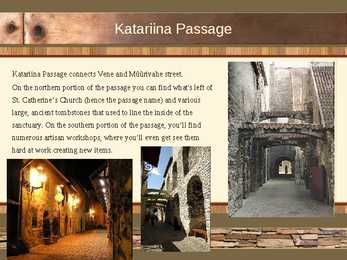
St. Catherine's Church (hence the passage name) and various large, ancient tombstones that used to line the inside of the sanctuary. On the southern portion of the passage, you'll find numerous artisan workshops, where you'll even get see them hard at work creating new items. City wall Tallinn's medieval city wall is a sub-facility that was built to protect the lower Tallinn and upper Tallinn (Toompea). The building of the city wall began in 1310th years, and by improving over time it formed the city wall with defensive buildings (towers). It was finished by the end of the 1561. Then it was 2.35-kilometer-long circular wall, which had 27 wall gate, 8 tower gate and 21 other stone fortifications. Many parts of the town wall have survived until today Great Coastal Gate (Suur Rannavärav) and Fat Margaret's Tower (Paks Margareeta)
Fiji covers a total area of some 194,000 square kilometres (75,000 sq mi) of which around 10% is land. Fiji is the hub of the South West Pacific, midway between Vanuatu and the Kingdom of Tonga. The archipelago is located between 176° 53 east and 178° 12 west. The 180° meridian runs through Taveuni but the International Dateline is bent to give uniform time to all of the Fiji group. With the exception of Rotuma, the Fiji group lies between 15° 42 and 20° 02 south. Rotuma is located 400 kilometres north of the group, 670 km from Suva, 12° 30 south of the equator. Fiji consists of 322 islands (of which 106 are inhabited) and 522 smaller islets. The two most important islands are Viti Levu and Vanua Levu
The oak is the national tree of England. Interesting plases: Royal Opera House The Royal Opera House is the third theatre on the Covent Garden site, the previous two being destroyed by fire. The new building opened in May 1858 becoming known as the Royal Opera House in 1892. Restoration work began again in 1996 and was completed in December 1999. Thousands of visitors each year are welcomed through the doors not only for performances but to marvel at the views from the
Minimalist design has been highly influenced by Japanese traditional design and architecture. In addition, the work of De Stijl artists is a major source of reference for this kind of work. De Stijl expanded the ideas that could be expressed by using basic elements such as lines and planes organized in very particular manners. Architect Ludwig Mies van der Rohe adopted the motto "Less is more" to describe his aesthetic tactic of arranging the numerous necessary components of a building to create an impression of extreme simplicity, by enlisting every element and detail to serve multiple visual and functional purposes (such as designing a floor to also serve as the radiator, or a massive fireplace to also house the bathroom). Designer Buckminster Fuller adopted the engineer's goal of "Doing more with less", but his concerns were oriented towards technology and engineering rather than aesthetics. A similar sentiment was industrial designer Dieter Rams' motto, "Less but better"
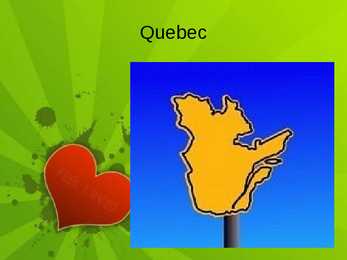
features omelette, ham, oreilles de crisse, baked beans and maple syrup. In 1939, the government of Quebec unilaterally ratified its coat of arms to reflect Quebec's political history: French rule (gold lily on blue background), British rule (lion on red background) and Canadian rule (maple leaves) and with Quebec's motto below "Je me souviens" ("I remember"). The Flag . In 1900, Quebec finally sought to have its own uniquely designed flag. By 1903, the parent of today's flag had taken shape, known as the "Fleurdelisé". The flag in its present form with its 4 white "fleur-de-lis" lilies on a blue background with a white cross replaced the Union Jack on Quebec's Parliament Building on January 21, 1948. Other official symbols The floral emblem of Quebec is the Iris versicolor. Since 1987 the avian emblem of Quebec has been the snowy owl. An official tree, the
TOOMPEA Toompea (from German Domberg – Cathedral Hill ) is a limestone hill with an area of about 7 hectares in the central part of Tallinn. It towers about 30-40 m above the surrounding areas. According to the legend it´s the tumulus mound over the grave of the national hero Kalev, erected stone by stone in his memory by his grieving wife Linda. It is the birthplace of Tallinn - a place where in 1229 the Knights of the Sword built a fortress instead of the wooden Estonian stronghold. Toompea Castle is also one of the most potent symbols of the reigning power. Today Toompea is the seat of the Government of Estonia as well as the Riigikogu, both of which are often simply colloquially referred to as Toompea. For centuries there was only one access to Toompea - Pikk Jalg - but there is also
 annaabi.ee