Leidsid 33 sarnast õppematerjali, mis on seotud failiga "Why does Marx elevate proletariat? Do you see Wright doing the same? What do you think why?". Need materjalid aitavad sul teemat sügavamalt mõista.
class, marx, other, differ, same, upper, than, revolution, classes, lower, different, thought, there, work, could, power, them, bigger, makes, rather, comes, doing, eyes, divided, considered, known, working, hand, named, powerful, production, allow, develop, claimed, pressure, arise, interest, economics, among, fight, carry, finally, secondly, whileinvasion of others Locke (1821, p. 295) Locke asserts that once a man combines his own labour with material from a state of nature, he has a natural right to it as he has removed it from its original state. Lock gives an account of man tacitly consenting to gold and silver pertaining value and even though this opinion has not been expressly voiced, acceptance of an ... unequal possession of the earth... was established and now ...man may fairly possess more land than he himself can use the product of... Locke (1821, p.229). It can be argued this claim is indeed false as it could only be the case that the minority which first had gold and silver consented to this commodification, leaving many with little alternative but to acquiesce. It should be noted here that Locke was part of a cohort of privilege, belonging to the Royal Society, and throughout his career he held prominent Governmental positions. It could be said that Locke's work is an attempt
The making of a new nation. The Enlightenment in America. The emergence of the notion of the American Dream. The great Enlighteners: Crèvecoeur, Jefferson, Paine, Franklin. The American Enlightenment is the intellectual thriving period in the United States in the midtolate 18th century (17151789), especially as it relates to American Revolution on the one hand and the European Enlightenment on the other. Influenced by the scientific revolution of the 17th century and the humanist period during the Renaissance, the Enlightenment took scientific reasoning and applied it to human nature, society, and religion. American Enlightenment a gradual but powerful awakening that established the ideals of democracy, liberty, and religious tolerance in the people of America. If there were just one development that directly caused the American Revolution and uplifted the intellectual culture of the continent while it was only
Chapter 21 Chapter 42 Chapter 1 It is a truth universally acknowledged, that a single man in possession of a good fortune, must be in want of a wife. However little known the feelings or views of such a man may be on his first entering a neighbourhood, this truth is so well fixed in the minds of the surrounding families, that he is considered the rightful property of some one or other of their daughters. "My dear Mr. Bennet," said his lady to him one day, "have you heard that Netherfield Park is let at last?" Mr. Bennet replied that he had not. "But it is," returned she; "for Mrs. Long has just been here, and she told me all about it." Mr. Bennet made no answer. "Do you not want to know who has taken it?" cried his wife impatiently. "You want to tell me, and I have no objection to hearing it." This was invitation enough. "Why, my dear, you must know, Mrs
new markets and endless supply of raw materials; 1845- potato famine in Ireland, 1846- Corn Laws (import of cheap corn to feed hungry people); Social life: religious doubts (Darwin's The Origin of Species 1859)- question raised: is there a God at all?; sexual liberation- changed people thoughts about sex (before men & women had different bedrooms); problems: alcoholism, prostitution, child workforce, primitive technology. · How did the class structure change? Highest class was aristocracy (the Church and the nobility); the middle class/the bourgeoisie (shopkeepers, merchants, lawyers, businessmen etc.) was the biggest class; and the lowest class "the working class" and "the poor"; new change was the upward mobility people could become richer and move upward in social classes (to higher class); huge boost of the middle and working class; after industrial revolution there was
Hmm. That's a very interesting question 11 didn't / didn't use to 4 subterfuge 8 surge ... Well, physically, I take after my mum, 12 say 13 don't / won't Challenge! Students' own answers I suppose. Our facial features are pretty similar same eyes, same-shaped 14 borrowed forehead. I've seen photos of her when 1E Phrasal verbs page 8 5 (possible answers) she was my age and apart from the 1 1 go ahead 5 come to
Students' own answers pointing to his sister's ice cream. 5 The thief grabbed my bag and ran The photos are connected with the 1B Past and perfect tenses off. topic of school. Both photos show page 4 6 He dropped a leaf into the water students in class. In the first photo I imagine that 1 1 ate and watched it drift under the they're about 13 years old. 2 have/'ve met bridge.
It is also possible to be so ultra-sensitive that the result is disadvantageous. I expect no argument in asserting that a normal sensitivity is a healthy, indispensable ingredient for optimal education. Sensitivity can be heightened or blunted by education. It is intertwined with curiosity. An ideal education affords numerous and varied opportunities for students to touch, see, smell, listen, hear; to spark their curiosity. When I was a child the things that pleased me were largely other than the plants which have earned me a living as an adult. For example, I collected postage stamps, played basketball, was fond of listening to music, played all manner of games, but dealt only in a neutral, uninspired fashion with plants. The one thing that was constant and of supreme importance was my love of reading. I don't recall why, but by an early age, say age 9, I was a phenomenal reader of books, a habit that persisted all the way until college. Reading expands one's mind immensely
the latter often involving healing. Human misfortune was often blamed on a supernatural entity or a known person in the community. Reasons for accusations of witchcraft fall into four general categories: · A person was caught in the act of positive or negative sorcery · A well-meaning sorcerer or healer lost their clients' or the authorities' trust · A person did nothing more than gain the enmity of their neighbours · A person was reputed to be a witch and surrounded with an aura of witch-beliefs Éva Pócs in turn identifies three varieties of witch in popular belief: · The "neighbourhood witch" or "social witch": a witch who curses a neighbour following some conflict. · The "magical" or "sorcerer" witch: either a professional healer, sorcerer, seer or midwife, or a
1. FIRST SIGHT My mother drove me to the airport with the windows rolled down. It was seventy-five degrees in Phoenix, the sky a perfect, cloudless blue. I was wearing my favorite shirt -- sleeveless, white eyelet lace; I was wearing it as a farewell gesture. My carry-on item was a parka. In the Olympic Peninsula of northwest Washington State, a small town named Forks exists under a near-constant cover of clouds. It rains on this inconsequential town more than any other place in the United States of America. It was from this town and its gloomy, omnipresent shade that my mother escaped with me when I was only a few months old. It was in this town that I'd been compelled to spend a month every summer until I was fourteen. That was the year I finally put my foot down; these past three summers, my dad, Charlie, vacationed with me in California for two weeks instead. It was to Forks that I now exiled myself-- an action that I took with great horror. I detested
youngest sister Princess Ekaterina Alexandrovna Shcherbatskaya, "Kitty". Levin is a passionate, restless but shy aristocratic landowner who, unlike his Moscow friends, chooses to live in the country on his large estate. He discovers that Kitty is also being pursued by Count Alexei Kirillovich Vronsky, an army officer. At the railway station to meet Anna, Stiva bumps into Vronsky. Vronsky is there to meet his mother. It surmises that Anna and the Countess Vronskaya have travelled together in the same carriage and talked together. As the family members are reunited, and Vronsky sees Anna for the first time, a railway worker accidentally falls in front of a train and is killed. Anna interprets this as an "evil omen." Vronsky is infatuated with Anna. Anna, who is uneasy about leaving her young son, Seryozha, alone for the first time, talks openly and emotionally to Dolly about Stiva's affair and convinces Dolly that her husband still loves her, despite his infidelity
the beauty that is an essential part of their own innermost being, their true nature. The first recognition of beauty was one of the most significant events in the evolution of human consciousness. The feelings of joy and love are intrinsically connected to that recognition. Without our fully realizing it, flowers would become for us an expression in form of that which is most high, most sacred, and ultimately formless within ourselves. Flowers, more fleeting, more ethereal and more delicate than the plants out of which they emerged, would become like messengers from another realm, like a bridge between the world of physical forms and the formless. They not only had a scent that was delicate and pleasing to humans, but also brought a fragrance from the realm of spirit. Using the word “enlightenment” in a wider sense than the conventionally accepted one, we could look upon flowers as the enlightenment of plants.
expounds the problems and positions introduced. An orientating chapter briefly introduces its topic and reminds readers of any crucial material they need to have retained from a typical introductory course. Considerable attention is given to explaining the central philosophical problems of a subject and the main competing solutions and arguments for those solutions. The primary aim is to educate students in the main problems, positions and arguments of contemporary philosophy rather than to convince students of a single position. Classical Philosophy Philosophy of Mind Christopher Shields Second Edition John Heil Epistemology Second Edition Philosophy of Religion Robert Audi Keith E. Yandell Ethics Philosophy of Science Harry Gensler Alex Rosenberg
Ameerika Kirjandus 30.01.13 Naturalism · France, Emile Zola · Put down his theory in 1879: Le Roman Experimental, attempt to explain the development of human society throuch biological laws · Outlook is deterministic, pessimistic, fatalistic (fate or biology) · Man as an animal-clever than other beasts, still explainable within the framework · Man is not a free agent, is govern by something · Unable to determine his own faith · Hereditary · Naturalists tried to apply in fiction the processes of natural sciences · Writers task is to record facts, systems of behaviour, living conditions, never revealing any natural unbiased (completely natural) · Point of view: amoral-outside the category of morality, neither good or bad
either from Britain or France. It was especially a poignant time for Africa, as then British Prime Minister Harold McMillan articulated his now famous “winds of change” sweeping Africa. We had high hopes for Africa, for the Black race, that the insidious imposition of foreign rule on us, the looting of Africa’s natural resources by our colonial masters accorded us would be things of history. That is more than forty years ago. Unfortunately, the promise of independence has not been fulfilled. Today, Africa has become more desolate; there is more starvation, diseases and non-provision of essential services than when we got our independence. There are all kinds of wars in Africa than the rest of world put together. The majority of so-called Africans leaders want to stay in power until the day their bodies are put in the grave
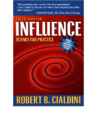
do it, enabled us to make significant changes. His work has enabled us to gain significant competitive differentiation and advantage" -LAURENCE HOF, Vice President, Relationship Consulting, Advanta Corporation "This will help executives make better decisions and use their influence wisely ... Robert Cialdini has had a greater impact on my thinking on this topic than any other scientist." -CHARLES T. MUNGER, Vice Chairman, Berkshire Hathaway, Inc. If you're wondering why of Latin America, the Far East, and Central Europe. you should buy this new edition of Influence: o More neuroscience evidence of how the influence process works is inte-
• Martin Luther – his role in the history of translation studies. Lived during the 15th century. He was a priest, theologian & translator. During that time, the Bible’s were only available in either Latin or Hebrew, which made it very difficult for common people to understand. He came out with a radical plan to translate the Bible into local languages (the first language was German – translated by Martin Luther). This inspired many other translators during that period. • What happened in the 19th and 20th century in translation studies? When and who created the term ‘translation studies’? Translation Studies – James S. Holmes - 1972 Ferdinand de Saussure – Lived during the 19th and 20th century. He was a Swiss linguist and a semiotician. He is widely considered one of the fathers of 20th-century linguistics and one of two major fathers (together with Charles Sanders Peirce) of semiotics/semiology
The Rise and Demise of the New Public Management Wolfgang Drechsler (University of Tartu and Tallinn University of Technology, Estonia) © Copyright: Wolfgang Drechsler 2005 Within the public sphere, the most important reform movement of the last quarter of a century has been the New Public Management (NPM). It is of particular interest in the post-autistic economics (pae) context because NPM largely rests on the same ideology and epistemology as standard textbook economics (STE) is based (for my take on this, see Drechsler 2000), and it has had, and still has, similar results. Already more on the defensive within public administration (PA) than STE is within economics, NPM also shows that such major paradigm shifts in theory and policy may actually happen. In addition, it occasionally appears that pae-oriented scholars have overlooked the fact that some features in public management reform, state
sense. Teachers kept changing all the time, teaching methods kept changing as well and learning Pushkin by heart does not work wonders with one's speaking skills, really. (Although I still can recite one of his poems...) The point is, I actually really like Russian. I've never been good at it, but I like the language and I really wish I knew it better. I can speak some, but not read much. As soon as the characters stop talking to each other, I'm stuck and can barely understand anything. Most of my Russian skills my ten years younger mates envy come from my year of living in Narva (literally starve or learn!) and talking to a variety of Estonian-Russian roleplayers I know. (But since they are also fluent in English and most in Estonian as well, it turns into a stew of languages very soon.) Chronologically the second language I started to learn was French. That was because of the Descartes Lyceum
Cary Taylor found excuses to celebrate, no matter how small and inconsequential. I'd always considered it part of his charm. "I'm sure drinking the night before starting a new job is a bad idea." "Come on, Eva." Cary sat on our new living room floor amid a half-dozen moving boxes and flashed his winning smile. We'd been unpacking for days, yet he still looked amazing. Leanly built, dark-haired, and green-eyed, Cary was a man who rarely looked anything less than absolutely gorgeous on any day of his life. I might have resented that if he hadn't been the dearest person on earth to me. "I'm not talking about a bender," he insisted. "Just a glass of wine or two. We can hit a happy hour and be in by eight." "I don't know if I'll make it back in time." I gestured at my yoga pants and fitted workout tank. "After I time the walk to work, I'm going to hit the gym." "Walk fast, work out faster
rocket throwers. They used very large bamboo rockets which had a range of hundreds of metres. The British were determined to learn from their mistakes and a British officer, William Congrieve, began work on developing even bigger and better rockets. Within a few years Congrieve had developed 14 kg iron rockets that could be fired over 3200 m. These rockets were successfully used against Napoleon in the battle of Waterloo and during the US War of Independence. By the 1889s other applications for rockets were being developed. They were used for signalling, for whaling, and even for rescuing people from sinking ships. If a boat got into trouble near to the shore, a rocket with a thin rope tied to it would be fired out over the boat; survivors in lifeboats could use the ropes to pull themselves ashore. These traditional rockets are still used as distress signals on boats and planes.
Teaduslik revolutsioon 15431600 I One of the most important developments in the western intellectual tradition was the Scientific Revolution. The Scientific Revolution was nothing less than a revolution in the way the individual perceives [ tajub ] the world. As such, this revolution was primarily an epistemological revolution it changed man's thought process. It was an intellectual revolution a revolution in human knowledge. Even more than Renaissance scholars who discovered man and Nature, the scientific revolutionaries attempted to understand and explain man and the natural world. Thinkers such as the Polish astronomer Nicholas Copernicus(14731543), the French philosopher René Descartes(15961650) and the British mathematician Isaac Newton(16421727)
. MADAME PERNELLE Daughter, by your leave, your conduct In everything is altogether wrong; You ought to set a good example for 'em; Their dear departed mother did much better. You are extravagant; and it offends me, To see you always decked out like a princess. A woman who would please her husband's eyes Alone, wants no such wealth of fineries. CLEANTE But, madam, after all . . . MADAME PERNELLE Sir, as for you, The lady's brother, I esteem you highly, Love and respect you. But, sir, all the same, If I were in my son's, her husband's, place, I'd urgently entreat you not to come Within our doors. You preach a way of living That decent people cannot tolerate. I'm rather frank with you; but that's my way-- I don't mince matters, when I mean a thing. DAMIS Mr. Tartuffe, your friend, is mighty lucky . . . MADAME PERNELLE He is a holy man, and must be heeded; I can't endure, with any show of patience, To hear a scatterbrains like you attack him. DAMIS What! Shall I let a bigot criticaster
whether the right thing has been done in supposedly-analogous cases. It's simply irrelevant. You should do the right thing no matter what the rest of the world does. 52. The sincerity of a man's remorse is measured by whether he can refrain from taking potshots along with expressing it. 53. To one destined for purgatory, God says, "You try again." To one destined for hell, He says, "I'll try again." 54. Unless he's more intelligent than himself, there's no hope for a man. 55. Wants should subsidize needs. 56. We need to expand our sense of the possible and contract our sense of the probable. 57. What good is it to be able to read someone else's mind if you can't read your own? 58. When a moron meets a lesson, they annihilate one another. 59. While there is only one human race, there are lots of human losers. 60. Willingness to volunteer and suitability for the job to be done are two completely different things. 61
for a particular purpose. No warranty may be created or extended by sales representatives or written sales materials. The advice and strategies contained herein may not be suitable for your situation. The publisher is not engaged in rendering professional sevices, and you should consult with a professional where appropriate. Neither the publisher nor author shall be liable for any loss of profit or any other commercial damages, including but not limited to special, incidental, consequential, or other damages. For general information on our other products and services, please contact our Customer Care Department within the United States at (800) 762-2974, outside the United States at (317) 572-3993 or fax (317) 572-4002. Wiley also publishes its books in a variety of electronic formats. Some content that
His modest background and upbringing are crucial to his development as a writer. Chekhov always felt that he missed out on childhood. It was a very hard lifeand it may have contributed to his poor health: he succumbed later on to the"family disease", tuberculosis, which led to his early death at the age of 44.His mother was a quiet, gentle soul who was full of stories of her early life. In later years, Chekhov would say that "we inherited our talent from our father,but mother gave us soul". The other great passion of his formative years was nature, the Russiancountryside. As a port, Taganrog was surrounded on all sides by the landscapes of the Steppe and Chekhov's earliest stories reveal how intensely aware he was of his bond with the Don Steppe. Chekhov had always claimed that medicine was his wife and literature his mistress. Chekhov had lived for much of his career as a writer under the shadow of the great literary colossus of the age, Lev Tolstoy.
" --Phil Town, New York Times bestselling author of Rule #1 "The 4-Hour Workweek is a new way of solving a very old problem: just how can we work to live and prevent our lives from being all about work? A world of in nite options awaits those who would read this book and be inspired by it!" --Michael E. Gerber, founder and chairman of E-Myth Worldwide and the world's #1 small business guru "Timothy has packed more lives into his 29 years than Steve Jobs has in his 51." --Tom Foremski, journalist and publisher of SiliconValleyWatcher.com "If you want to live life on your own terms, this is your blueprint." --Mike Maples, cofounder of Motive Communications (IPO to $260M market cap) and founding executive of Tivoli (sold to IBM for $750M) "Thanks to Tim Ferriss, I have more time in my life to travel, spend time with family, and write book blurbs. This is a dazzling and highly useful work." --A. J. Jacobs, editor-at-large of Esquire
Some of the things you will learn in THE CODEBREAKERS • How secret Japanese messages were decoded in Washington hours before Pearl Harbor. • How German codebreakers helped usher in the Russian Revolution. • How John F. Kennedy escaped capture in the Pacific because the Japanese failed to solve a simple cipher. • How codebreaking determined a presidential election, convicted an underworld syndicate head, won the battle of Midway, led to cruel Allied defeats in North Africa, and broke up a vast Nazi spy ring. • How one American became the world's most famous codebreaker, and another became the world's greatest. • How codes and codebreakers operate today within the secret agencies of the U
Source: Feedbooks 1 About Shakespeare: William Shakespeare (baptised 26 April 1564 – died 23 April 1616) was an English poet and playwright, widely regarded as the greatest writer in the English language and the world's pre-eminent dramatist. He is often called England's national poet and the "Bard of Avon" (or simply "The Bard"). His surviv- ing works consist of 38 plays, 154 sonnets, two long narrative poems, and several other poems. His plays have been trans- lated into every major living language, and are performed more often than those of any other playwright. Shakespeare was born and raised in Stratford-upon-Avon. At the age of 18 he married Anne Hathaway, who bore him three children: Susanna, and twins Hamnet and Judith. Between 1585 and 1592 he began a successful career in London as an actor, writer, and part owner of the playing company the Lord Chamberlain's Men, later known as the King's Men. He ap-
of scale or pace or pattern that it introduces into human affairs. The railway did not introduce movement or transportation or wheel or road into human society, but it accelerated and enlarged the scale of previous human functions, creating totally new kinds of cities and new kinds of work and leisure. This happened whether the railway functioned in a tropical or a northern environment, and is quite independent of the freight or content of the railway medium. The airplane, on the other hand, by accelerating the rate of transportation, tends to dissolve the railway form of city, politics, and association, quite independently of what the airplane is used for. Let us return to the electric light. Whether the light is being used for brain surgery or night baseball is a matter of indifference. It could be argued that these activities are in some way the "content" of the electric light, since they could not exist without the electric light. This fact
and "Speaker" series. He has also announced his plan to write two more novels: Shadows in Flight, a book that connects the "Shadow" series and "Speaker" series together, and Ender in Exile, a book that takes place after Ender's game and before Speaker for the Dead. Furthermore, Card recently announced that Ender's Game will soon be made into a movie. Though Card is best-known for "Ender's Game", he has also written in a variety of other genres, including plays, short stories, books on writing, the Homecoming series, other science fiction books, and nonfiction, such as articles on computer technology. Orson Scott Card in 2008 and when he was younger. The Setting The novel starts off on Earth, with scenes at the school and the Wiggin home. Little attention is given to the details of this setting, not even the name of the city, and so it comes across as a standard American neighborhood.
here" "Yes, my dear," replied Mrs. Allen, with perfect serenity, "it is very uncomfortable indeed." In Bath, Catherine met a young clergyman Henry Tilney. "Have you been long in Bath, madam?" "About a week," replied Catherine, trying not to laugh. "Really!" with affected astonishment. "Why should you be surprised, sir?" "Why, indeed?" said he, in his natural tone "but some emotion must appear to be raised by your reply, and surprise is more easily assumed, and not less reasonable than any other." Mr Tilney was very charming, he left a good impression on Catherine and she quickly fall for him. Catherine also met Isabella Thrope, they became best friends. Isabella introduced her the social world of Bath with its balls, shows, fashion, dances and gossip. Soon Catherine's brother James Morland and Isabella's older brother James Thrope arrived in Bath. Isabella fell in love with James and John liked Catherine very much. "I will drive you up Landsdown Hill tomorrow
speech or language, but the balance between his intellectual abilities and emotional control had been destroyed. He became highly agitated and irrelevant, often impatient and rude. Study to his frontal lobe provided evidence that the brain affects personality and social behaviors. Discuss ethical considerations related to research studies at the biological level of analysis. In case studies for example, the researcher often obtains deeply personal information, which is not usually shared with other people. Any researcher conducting a case study must be very protective of the identities of the participants. The researcher should also have the professional competence to deal with the focus of the case study. Animal rights!! Explain one study related to localization of function of the brain. Gazzaniga & Sperry held experiments with monkeys, whose brains were `'split `' by cutting off the connection, the corpus colossum, between the two hemispheres of the brain
No, he isn't learning to play a musical instrument. 6 ____________________________________________________________________________________________ My birthday is on 8 August. 7 ___________________________________________________________________________________________ They usually go to bed at about midnight. 2 Macmillan Publishers Limited 2001. This sheet may be photocopied for use in class. 8 ____________________________________________________________________________________________ Yes, we own a BMW. 9 ____________________________________________________________________________________________ I don't know what the word means. Look it up in a dictionary. 10 ____________________________________________________________________________________________ No, I don't like the Spice Girls.
 annaabi.ee