Leidsid 33 sarnast õppematerjali, mis on seotud failiga "Viljandi". Need materjalid aitavad sul teemat sügavamalt mõista.
castle, festival, year, round, order, place, here, bridge, ruins, came, started, years, there, ugala, museum, concert, church, summer, europe, hill, popular, enjoy, sports, path, around, first, boat, snow, coat, light, blue, know, built, during, century, between, good, became, residence, open, siege, economic, political, basic, kõiv, supervisor, kirssincluding the largest in Tallinn, weighing 15 tonnes. You can hear the entire ensemble playing before each service. http://www.tourism.tallinn.ee/eng/fpage/explore/churches#!p_307 Old Town Twisting cobblestone lanes and iron street lamps. Gothic spires and medieval markets. Cappuccino and Wi-Fi. This is the city's famous Old Town. If you're looking for that mix of historic ambience and cutting-edge culture that defines Tallinn, you'll find it here. Built up from the 13th to 16th centuries, when Tallinn or Reval as it was known then was a thriving member of the Hanseatic trade league, this enclosed neighbourhood of colourful, gabled houses, half-hidden courtyards and grandiose churches is, quite rightly, the city's biggest tourist draw. And the fact that it's all neatly packaged within a mostly-intact city wall and dotted with guard towers gives it an extra dose of fairytale charm. http://www.tourism.tallinn
international trade routes for Vikings. Long struggle of power with foreign intruders has left ancient strongholds in Valjala, Lihula and Soontagana. The churches in Muhu, Valjala, Mustjala, Karja and Kihelkonna are honorable and elderly because Straitland was the one to bring Christianity to Estonia. The castle of Kuressaare is still standing proudly, but in Lihula only ruins can be seen. The patterns of national dresses and the churches bring memories of secret sign cultures of Medieval Times. Good knowledge of singing and facility of speech of the people of Straitland have given Estonia a big number of writers and poets. Character of the landscape The area of Straitland contains Pärnumaa county and some of the islands such as Saaremaa, Muhu, Kihnu, Ruhnu and Abruka
Just as July becomes August, the seaside town of Haapsalu will host a grand spectacle of rural Estonian entertainment. The White Lady Days is a summer celebration filled with amusement for all the family. Held in and around the remains of the Teutonic-knights-era castles, the fair combines enchanting medieval legends with modern countryside charm to create a comprehensive experience of Estonia beyond the big cities. But the legend of the White Lady of Haapsalu, which is at the heart of the festival, is perhaps the most famous tall tale of the many that are so abundant in Estonia's folklore. It is the story of a poor girl who falls in love with the son of the village elder, and disguises herself as a choirboy in order to sneak into the castle. But, alas, the lord of the manor's son discovers the deception. He is overcome by jealous rage and orders his men to seal the girl inside the thick stone walls while still alive. Turned into an incarnation
durin the Soviet years; tears were rolling down their cheeks. On 24 February 1989, Estonia, still part of the Soviet Union, hoisted its tricolour on the tower of Pikk Hermann in Tallinn. Since then the flag has always been hoisted with ceremony on that day, which is the national holiday the anniversary of the Republic. According to Estonian tradition the national flag is hoisted at sunrise and lowered at sunset exept on June 23 when it is left out for the shortest night of the year. NATIONAL ANTHEM The Estonian national anthem, entitled "My Native Land, My Pride and Joy", was composed in 1848 by Friedrich Pacius, a Finn of German descent. The Estonianlanguage words were written by Johann Voldemar Jannsen. In 1869 it was performed at the first allEstonian Song Festival in Tartu and gained popularity during the period of the national movement. Estonians carried the melody in their hearts and souls during Soviet occupation, when it was banned
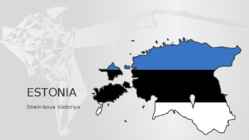
by the Baltic Sea. In the north it borders on Finland. The coastline of the Baltic Sea in Estonia is characterized by numerous gulfs and bays, the biggest of them being the Gulf of Finland, the Gulf of Riga and the Gulf of Pärnu. Bays include the Narva Bay, Matsalu Bay, Kolga Bay, Kunda Bay, Tallinn Bay etc. Estonia has over 1500 islands, the largest being Saaremaa and Hiiumaa, Muhu and Vormsi. Saaremaa and Muhumaa are connected to each other with a bridge. The best- known smalles islands are Naissaar, Aegna, Ruhnu, Kihnu, Väike-Pakri, Suur-Pakri etc. 3. Relief Lying in the north-western part of the East-European Plain, Estonia is mostly flat with an average elevation of about 50 metres above sea level. South-eastern and eastern parts of Estonia are higher than the western parts. The relief of the present-day landscape was shaped during the Ice Age. Ice sheet has carried large
1. Introduction Tallinn, the capital of Estonia, lies on the Baltic Sea. It is on almost the same latitude east St. Petersburg in Russia, Stockholm in Sweden and Stavanger in Norway, and covers 158 sq km. Tallinn was first marked on a map of the world by the Arab geographer al-Idrisi in 1154, its name then being Kolyvan (probably derived from the name Kalev). In the 13th-century Chronicle of Henricus de Lettis the town was called Lyndanise. Later came Reval (presumably after the old county of Rävala), the name used by the Germans who ruled the country for seven centuries. Russians then modified Reval to Revel. For Estonians, the town came to be called Tallinn from Taanilinn (Danish town) after Danish conquest in the 13th century. Over the course of time, Taanilinn was shortened to Tallinn The place is believed to have been settled by Finno-Ugric peoples about 2500 BC. The Danes, led by King Valdemar II, conquered northern Estonia in 1219
Jõgeva maakond Endla nature reserve It is located on the borderline of Järva, Jõgeva and West-Viru counties. It is mostly known for various marshes, fens, quaking bogs, lakes, canebrakes, wellsprings, rivers, fen forests, fens and mesotrophic mires, marsh forests, meadows, diverse flora and fauna. Jõgeva town The small town of Jõgeva town is located on the eastern side of Middle-Estonia. You won't find large buildings or breathtaking architecture here, but an overwhelming sense of togetherness and plenty of cultural events, the majority of them geared towards younger people. Jõgeva town was born 130 years ago, thanks to the Tapa-Tartu railway: this is where the first train stopped and a village formed around the railway station. Just half a century later, Jõgeva earned its town rights. There are about 6500 people living in Jõgeva. Jõgeva events
Other large cities and population (thousands): Tartu - 103 300 Narva - 65 900 Kohtla-Järve - 44 500 Pärnu - 44 000 PAIDE TOWN IS THE HEART OF ESTONIA Paide town is located right in the centre of Estonia, earning it the nickname of “the Heart of Estonia”. A long historic background, beautiful surroundings, a colourful fair and festival life and an unique relationship with the limestone – come and experience the cosy feel of Paide. Paide town was named after the limestone (“paekivi” and “paas” in the Estonian language) and the town celebrates its special relationship with limestone through unique lime stone sculptures: • The best known limestone sculptures in Paide are “hitchhiker” (“hääletaja”) located in the town
The riches and cultural heritage of Mulgimaa owe to the diligence and tenacity of the local people. Village handicraftsmen and masters have always been honoured. Mulgikapsad (stewed sauerkraut with barley groats), Estonian cheesecakes and kama (a roasted meal-mixture) have not lost their popularity. However, linen growers have now been replaced by cereal grains growers and many farms have specialised on raising sheep or horses. And as the song goes: "Mulgimaa it's a place where life is good. It's a land of vast woods, fertile fields and nature's charms, the home of prosperous Estonian farms..." Tourism and handicraft in Lõuna-Viljandimaa Lõuna- Viljandimaa captivates senses with its beautiful landscapes. Lõuna- Viljandimaa as we know it today stays in the heart of the historic Mulgimaa. Mulgimaa is the home of mountains, deep valleys and lakes, its natural axis is the beautiful old valley of Halliste.
It is a naturally- formed limestone hill. Lower Town was a merchantile centre, Tallinn also belonged to the Hansaetic League (1285). It is often referred to as the town of citizens. Any grown-up, married and economically independent person, born in a legal marriage between two free people and having lived in the town for at least 3 months, could apply to the Magistracy for citizenship. Serfs could escape from serdom after having successfully hidden in town for a year and a day. Two parts remained separated until the end of the 19th century. Four Names Lyndanise - mentioned by Henricus de Lettis in his Chronicle; derives from the name Linda - the wife of Kalev and mother of Kalevipoeg Koluvan - mentioned in Russian chronicles; derives from the hero Kalev from our national epic Reval - comes from the German words “REH” and “FALL”, meaning the falling of the deer; could be deers trying to escape from the Danes, running down the Toompea hill
and covers an area of almost 160 sqkm. It is also an important economic and cultural centre and one of the main ports in the Baltic States. Tallinn is one of the oldest cities on the Baltic Sea. It is unique for its well-preserved architecture from the 13-15 centuries. In contrast to the ancient town-walls and towers, Tallinn of today offers modern hotels, restaurants, sport and cultural centres. Every five years national song and folk dance festivals take place in Tallinn. The yachting regatta of the 1980 Moscow Olympic Games was held at Pirita. History Tallinn means in English "Danish town". The place is believed to have been settled by Finno-Ugric people about 2500 BC. It was first marked on a map of the world by the Arab geographer al-Idrisi in 1154. The Estonians were the first to build a stronghold on the spot of the Toompea Hill, but the real Tallinn was built by the Danes who conquered the north of Estonia in 1219
TOOMPEA Toompea (from German Domberg – Cathedral Hill ) is a limestone hill with an area of about 7 hectares in the central part of Tallinn. It towers about 30-40 m above the surrounding areas. According to the legend it´s the tumulus mound over the grave of the national hero Kalev, erected stone by stone in his memory by his grieving wife Linda. It is the birthplace of Tallinn - a place where in 1229 the Knights of the Sword built a fortress instead of the wooden Estonian stronghold. Toompea Castle is also one of the most potent symbols of the reigning power. Today Toompea is the seat of the Government of Estonia as well as the Riigikogu, both of which are often simply colloquially referred to as Toompea. For centuries there was only one access to Toompea - Pikk Jalg - but there is also another way leading up to Toompea - Lühike Jalg, which was made in the 14th century
unsuccessful. They made their way to the river Thames and sailed up it. The Romans knew it was important to control a crossing point at the river Thames, so they decided to build a settlement on the north bank. Although small settlements had been built on the banks of the Thames, the Romans were the ones who built the first city. They called their city Londinium. The Roman engineers noticed that the point where the swampy river narrowed would make an ideal crossing point, they built London Bridge. Less than 20 years later the native Iceni tribe, led by Queen Boudicca, rose up against the Romans in revenge for mistreatment and burnt Londinium to the ground. The well disciplined Roman army defeated her forces and Londinium was rebuilt. By AD 100 it had also become the capital of the Roman province. A massive wall was built to protect the city from further attacks. The Roman Empire came under increasing attack across Europe and in AD 410 they retreated.
National symbols Flag- Coat of arms- Anthem-"My Fatherland, My Happiness and Joy,, Plant-cornflower Bird-chimney swallow Stone-slate Tree- Oak History DATES Independence Day (Iseseisvuspäev) - February 24 May Day (kevadpüha) - May 1 National Flag Day (Eesti lipu päev) - June 4 Victory Day (võidupüha) - June 23 St. John's Day (Jaanipaev) - June 24 Day of Restoration of Independence (taasiseseisvumispäev) - August 20 history EVENTS Viljandi Folk Music Festival - July Ollesummer (Beer Summer) July The All-Estonian Song Festival (Laulupidu) takes place every five years in TallinnIn Estonia Mother's Day is celebrated on the second Sunday in May and Father's Day on the second Sunday in November. Main sights Dome Church (Toomkirik) Estonia's oldest church, Dome Church (Toomkirik) was founded in the early 13th century by the earliest Danish conquerors of the region. It stands on Toompea hill which, with
located on the north end of Pikk Street. The Great Coastal Gate and Fat Margaret's Tower are two of Tallinn's most remarkable and outstanding defensive constructions. The gate and tower were built to protect the city from the sea side and are very impressive when viewed from the harbor. Fat Margaret's Tower is now home to the Estonian Maritime Museum. Fat Margaret The round tower, Fat Margaret, has 155 loopholes, a diameter of 25 meters, and a height of about 20 meters, it was built to protect the harbour. It got it's name from the cannon stored there. Through history, the cannon tower has also served as a storehouse for gunpowder and weapons, and as a prison. Great Coastal Gate ·The first Great Coastal Gate was builded in place where city wall and long street came together. In that time it was only 100 meters to the sea
The county of Saaremaa Siiri Tabri Kaia Vask Saaremaa - an exciting island Saaremaa - the biggest island of Estonia is known as a good recreation place with unique nature and a lot of sights. Saaremaa has retained its uniqueness due to its location and insulation. Junipers, dolomite, windmills and the famous local home- brewed beer are considered the symbols of Saaremaa. Rich nature. Because of its mild maritime climate and soil rich in lime, Saaremaa has very rich flora and fauna. In Saaremaa a great number of Roman snails, rare butterflies and beautiful orchids can be found.
My Town I live in Tallinn. It's the capital and main seaport of Estonia. Tallinn is a very beautiful city that lies on the Baltic Sea. It covers 158 square kilometres. The Mayor of Tallinn is Jüri Ratas. The population of our capital is about 400000 people. About 55% of them are Estonian, 37% Russians and the other 8% are from different nations. The people here are mostly engaged in industry- mainly the food industry (23%), trade (16%) and transport and communication (14%). History. Tallinn has a great history. It was first marked on a map of the world by the Arab geographer al-Idrisi in 1154, its name then being Kolyvan. In the 13 th- century chronicle of Henricus de Lettis the town was called Lyndanise. Then it was called Reval for some time and finally Estonians started to call the town Tallinn from
1993), the Estonian Historical Archives and Estonian national theatre Vanemuine. Historical names of the town include Tarbatu,an Estonian fortress founded in the 5th century,Yuryev named c. 1030 by Yaroslav I the Wise, and Dorpat as first known by the German crusaders in the 13th century. Since Estonia regained its independence in 1991, the old town centre is being renovated. Notably, St. John's church, in ruins since World War II, has been restored. Pärnu Pärnu is a city in southwestern Estonia on the coast of Pärnu Bay, an inlet of the Gulf of Riga in the Baltic Sea. It is a popular summer vacation resort with many hotels, restaurants, and large beaches. The Pärnu River flows through the city and drains into the Gulf of Riga. The city is served by Pärnu Airport. Pärnu is a health resort of international stature. In addition to guests arriving from
Facts and figures 3 Geography 3 Climate 3 Nature 4 History 5 Economy 6 Culture 6 Biggest towns 7 Language 8 3 Facts and figures The Republic of Estonia is a small country. Covering only 45, 228 sq km it is slightly bigger than Denmark, Belgium or Switzerland. Estonia's population is under 1.4 million. The official language is Estonian but since very many Russians live here Russian is also wide spread. The capital of Estonia is Tallinn. The currency used in Estonia is Eesti kroon. The Estonian national flag is blue-black-white. It was originally the flag of the Estonian Students' Society. The flag was first consecrated in Otepää Church in 1884. For a while, during the Soviet occupation, the flag was banned but it was again seen in public in Tartu in May 1988. The national flower is cornflower, the national bird is barn swallow and the national stone is limestone
Tallinn is a small port town in which the population is 371 000 people, and the area is only 159,2 km².( square kilometers). Tallinn, the capital of Estonia, is named after taani linnus, which means Danish castle. The Castle in question was built by King Waldemar of Denmark in the 13th century. The settlement quickly developed itself into a busy port. -The Old Town In medieval age Tallinn was called Reval and it was as big as the Tallinns Old Town is now. Uniqueness of Tallinn is that it is one of very few European cities, where the historical lay-out is kept in it's original form , and has a lot of monuments of that time. Thanks to that in 1997 Old
top 10 digital cities in the world.The city was a European Capital of Culture for 2011, along with urku, Finland.Tallinn is the oldest capital inNorthern Europe. The city was known as Reval from the 13th century until the 1920s. http://en.wikipedia.org/wiki/Tallinn Old Tallinn The Old Town can historically be divided into two distinct areas: Toompea Hill and the Lower Old Town, which were separated by a dividing wall since medieval times. The elevated area of Toompea Hill with its castle was occupied by the residences of Tallinn's rulers and gentry. The Lower Old Town meanwhile developed as an autonomous merchantile centre, flourishing during the 13th-16th centuries, when the city enjoyed membership of the powerful Hanseatic Trading League. Generally speaking these two districts are now collectively referred as the Old Town. The Town wall and towers Medieval fortresses, which emerged during the development of the medieval town at the end of the
It towers about 30-40 metres above the surrounding areas. According to the legend, its the tumulus moundn over the grave of the national hero Kalev, erected stone by stone by his grieving wife Linda. While we don’t want to question this wonderful theory, there is an alternative version which says that Toompea is just a naturally formed limestone hill. ● It’s the birthplace of Tallinn - in 1229, the Knights of the Sword built a fortress - Toompea castle. It’s the most potent symbols of the reigning power. Today it’s the seat of the Government of Estonia as well as the Riigikogu. ● Tall Hermann is one of the towers around the Toompea Castle. It’s 49-metres high watch-tower from the year 1371. Viewing platform, to get on top you must take 215 steps. Whoever’s flag is on top of this tower is the ruler of Estonia. (There have been German and Soviet flags)
"Oh jääks see igavesti nii", sosistas tüdruk. "Armas taevas, jäägu see nii alatiseks" ja sulges silmad uueks suudluseks. ... Samal hetkel müristas kõu ja välgusähvatuses muutusid noored armastajad kivikujuks. Sculpture: Oscar Wilde and Eduard Vilde The statue of the two writers. The imaginary conversation between the Irish writer Oscar Wilde (1854-1900) and Estonian writer Eduard Vilde (1865-1933), depicted in the statue, might have taken place in the year 1892, but actually, the two men never did meet. A copy of the sculpture was given as a gift from the town of Tartu to the Irish city of Galway in 2004. Father and Son The bronze sculpture, "Father and Son", created by sculptor Ülo Õuna (1944-1988), was placed on Küüni Street, on Children's Day ('childrens protection day'), 1 June 2004. Bridges Tartu Stone Bridge
heads the operations of the government. Modern industrial development, which began in the second half of the 19 th century was oriented toward the Russian market. Large textile mills were set up in Narva and electric motor production plants and shipyard in Tallinn. Today Narva provides most of Estonian's electricity. Developments in the Estonian agriculture have been influenced by the changes in the economical environment. Estonian agriculture must also find place in the European economy. The national conditions are best suited breeding daily cattle. At the moment the Estonian farmers predominantly export daily products and timber. Currently 8500 farms have been restored to their pre-war owners. Many of them would like to open their homes to bed and breakfast guests. Estonians have always had the greatest respect for education. Estonia has seven colleges and universities. The oldest is Tartu University founded in 1632.
The Temple was later reconstructed only a short way from its original site and the relics are displayed in the Museum of London in the Barbican. At the end of the fourth century AD the Roman Empire began to crumble and the Roman armies were recalled from Britain to defend Rome itself. Once they had left Anglo-Saxons invaded and settled in Britain. They were farming people who preffered to live outside towns. For a while London probably lay in ruins, but it eventually developed again, partly because of its position on the river was good for trading. The Tower of London There is more of London's history in the Tower than anywhere else in London. It is the oldest surviving building in the capital. The Tower of London was begun by William the Conqueror in 1078 as a castle and a palace but even before the site had been used by the Romans and Anglo-Saxons. The tower comprises not one,
and tacky commercialism. Packed in among thousands of other visitors, trying like crazy to see the city in three days and worrying about getting ripped off, it's not surprising, may think the city is overrated. Just relax, take a deep breath. While the city centre is a mélange of stunning architecture, from Gothic, Renaissance and baroque to neoclassical, art nouveau and cubist, beyond the medieval lanes of the Old Town and the Castle District, there's an entire other cosmopolitan city to explore. Search out the riverside parks, lively bars and beer gardens, music clubs, museums and art galleries. Harness Prague's excellent public-transport system to explore emerging suburbs such as Zizkov, Vinohrady, Smíchov and Holesovice. You'll be guaranteed cheaper prices, a more local ambience, and an assured escape from any more feelings of doubt..
forest. Estonia is also rich in lakes and rivers The largest lake is Peipsi and the second-largest lake is Võrtsjärv. The largest river is Võhandu whinch is 162 meters long. Estonia has many national parks. A national park is a protected area. They are good to protect animals, birds, insects and other natural resources. The most famous national parks are: Lahemaa, Karula, Soomaa, Vilsandi, Matsalu. On the 8th millenium BC first people began to settle here in Estonia. On the 13th century Germans and Danish tried to conquer our country. On the 16th century the first book in Estonian language was publicated. Then the Livonian War began. Northern part of Estonia was occupied by Sweden and the southern part of Estonia was occupied by Poland. On the 17th century Estonia was under Sweden occupation. In 1632 Tartu University was founded. On the 18th century there was a Norhern War and Estonia was occupied by Russia. On the 19th century
Modern industrial development, which began in the second half of the 19 th century was oriented toward the Russian market. Large textile mills were set up in Narva and electric motor production plants and shipyard in Tallinn. Today Narva provides most of Estonian’s electricity. Developments in the Estonian agriculture have been influenced by the changes in the economical environment. Estonian agriculture must also find place in the European economy. The national conditions are best suited breeding daily cattle. At the moment the Estonian farmers predominantly export daily products and timber. Currently 8500 farms have been restored to their pre-war owners. Many of them would like to open their homes to bed and breakfast guests. Estonians have always had the greatest respect for education. Estonia has seven colleges and universities. The oldest is Tartu University founded in 1632.
THE CITY OF LONDON History The City of London occupies one square mile in the middle of the capital. It once made up entire town of London, surrounded by the wall first built by Romans. The Romans also built a bridge over the Thames and there has been one in the same area ever since. The Roman Londinium grew up on the northern side of the bridge. In AD 61 the native Celtic tribe, led by Queen Boudicca, rose up against the Romans. They burnt down Londinium to the ground and killed most of its inhabitants. Roman armies eventually defeated Boudicca and Londinium was rebuilt. At the end of the fourth century AD the Roman Empire began to crumble and the Roman armies were recalled from Britain to defend Rome itself. Once they had left, tribes such as Angles, Saxons and Jutes invaded and settled in from Holland, Germany and Denmark
Japanese festivals Japanese festivals are traditional festive occasions. Some festivals have their roots in Chinese festivals but have undergone dramatic changes as they mixed with local customs. Some are so different that they do not even remotely resemble the original festival despite sharing the same name and date. There are also various local festivals (e.g. Tobata Gion) that are mostly unknown outside a given prefecture. It is commonly said that you will always find a festival somewhere in Japan. Matsuri is the Japanese word for a festival or holiday. In Japan, festivals are usually sponsored by a local shrine or temple, though they can be secular. There is no specific matsuri days for all of Japan; dates vary from area to area, and even
Australia Australia is a country and also a continent. If someone wants to make clear, that he is speaking of the country, he may call it by its full name of Commonwealth of Australia. Australia's name means "southland."It is south of the equator. Sometimes it is also called the island continent because it is an island. There are about twenty million people in Australia.It is 1,800 miles from the mainland of Asia and almost half way round the world from Europe. More than 600 miles of ocean separate it from Americas. Since Australia is south of the equator, its seasons are just the opposite of ours. It has summer while we have winter, and the other way round. States and Territories. Australia consists of six states, two territories and eight external territories. The six states are: Western Australia (capital Perth), South Australia (capital Adelaide),
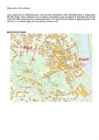
Urban trail in Tartu old town. Tartu, small town in southern-Estonia. Town was first mentioned in 1030. Nowadays there is living nearly 100 000 people. Tartu is known as city of students, and students come to improve to Tartu from all over the world. But Tartu is also known as a Hansa town, that is why one of the most attractive sightseeing place is the old town. It is a valuable place for Tartu and for Estonia as well. PHOTO HUNT MAP: Start the photo hunt on the corner of Lai and Jakobi street. Go up to the Toome hill, it's a great upturn and a great test for legs. As you move forward you will see the famous ,,Musumägi". In english it is called ,,The Kissing Hill" Take a picture with your crew members in the background of the hill. After a brief walk in the Toome Park you see the Ruins of Toome Cathedral. Is it possible to visit the ruins of the Cathedral?
The seas and oceans that wash the coasts of Australia are warm. The Coral Sea is the warmest that is why many corals live in the seas. The skeletons of these tiny organisms have formed a great belt of coral- called the Great Barrier Reef. Its is 2000 km long and 2-150 km wide. There are five distinguishable natural zones in Australia. In the very east there are wet forests that occupy the space between the Great Dividing Range and the eastern coast. The wet forests give place to beautiful grasslands with some trees called the savannas. Farther west the trees disappear and the bushlands begin. The real desert occupies the centre of the Western Plateau. In the very southwest there are thin forests of evergreen trees. Most of Australian trees are kinds of eucalyptus (or gum tree to Australians) and acacia (wattle of Australians). Eucalyptuses give the people timber and eucalyptus oil.
 annaabi.ee