 50 punkti
Autor soovib selle materjali allalaadimise eest saada 50 punkti.
50 punkti
Autor soovib selle materjali allalaadimise eest saada 50 punkti.
 ~ 1 leht
Lehekülgede arv dokumendis
~ 1 leht
Lehekülgede arv dokumendis
 2015-06-24
Kuupäev, millal dokument üles laeti
2015-06-24
Kuupäev, millal dokument üles laeti
 1 laadimist
Kokku alla laetud
1 laadimist
Kokku alla laetud
 0 arvamust
Teiste kasutajate poolt lisatud kommentaarid
0 arvamust
Teiste kasutajate poolt lisatud kommentaarid
 Kairit Siilak
Õppematerjali autor
Kairit Siilak
Õppematerjali autor
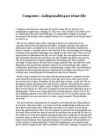
School should provide computers for students to use for all their school subjects Nowadays we are moving into a IT era. This is an inevitable because everything is becoming computerized. Students use computers to make homework. I strongly believe that schools should have computers but there is no need for all the subjects. Firstly, sitting a long time in front of the computer screen is unhealthy. Students' eyes will be dry and they may have headache. It can also have a negative effect on students' moods. In addition, computer labs' maintenance is expensive. One which can be need to writing and using Internet only, costs not much, but if we need to buy about twenty computers for one class - it is huge amount. Only schools that have a lot of money can afford more machines.
Schools should provide computers for students to use for all their school subjets Nowadays we are making a step up into the era of IT. Everything is becoming computerized. Is there a way to not overuse technics? Now the question is: "Should schools provide computers for students to use for all their school subjects?" I strongly believe that schools should have modern computers but there is no need in using them for all the subjects. Firstly, sitting in front of a computer screen all day can be damaging for students' health, especially sight. As a result, children can feel more exhausted after school than they do now. It can also have a negative effect on students' moods. In addition, providing computers for students to use for all the subjects in Estonia is unreasonable. I am trying to say that many schools have more urgent problems than low level of computerizing
sauces - to disguise - spice herb - delicious - disappointing - to lend cuisine British Youth (2) Most 18 and 19 year-olds in Britain are quite independent people. English people say that children grow up more quickly now. Relationships within the British family are different now. Children have more freedom to make their own decisions. For example, children aged 13 may be employed part time in Great Britain. Age 15 is legally a "young person" not a "child". Age 16 is a school leaving age. They can leave home, drive a moped, marry with "parents' consent" buy beer. Age 17 can drive a car. Age 18 can vote, get married, drink in pubs. Education is a very important part in the life of British youth. One can't become an independent person without it. When time comes to enter a college a young Englishman chooses one far away from home. It is a necessary part of becoming adult. During the last 30 years there were a lot of different trends in youth movements. All of
Computers - indispensable part of our life Computers have become a major part of our lives today. We use them for tests, entertainment, organization, studying, etc. They are a vital essential in the world we live in. Without them the world would fall apart. It is impossible to imagine how people functioned in the old days when computers did not exist. Computers have become almost as smart as us. We use our computers daily. After a long day in school, we usually turn on our computers and use them for learning and studies. Computers provide a big variety of information which is available for us to search. And all the information is gathered in Internet. Internet is everyone's door to the world and to the vast knowledge of everything. Computers have significant advantages over people in a few select areas. They can store huge amounts of information that they will never forget, they can organize and retrieve
Schools should provide computers for every student In recent times, captious opinion has appeared referring the use of computers by adolescents and children in education at the primary and high school levels. Internet has become an essential tool for many students. A lot of students like doing researches on their own computers at home, while doing homework or discovering something new for themselves. High school students are often asked to write different essays, letters of reviews on topics they have been studying at school. In addition not all of them have time to deal with homework at home. So if school gave them computers, they could use their free time during breaks to do essential things for their education. Or if school allowed to take computers with them, some people could study even while travelling home.
Schools should provide computers for students to use for all their school subjects Nowadays, people have started to use computers for almost everything. Computers have also become popular in schools. The question is, should schools provide computers and should it be provided for all subjects? While I believe that computers are necessary for many subjects, I do not believe that students should use computers in all subjects. Firstly, in some lessons, students have to write very many pages and computers would definitely speed up the writing and it would not be as tiring as writing in a notebook. Furthermore, if students could get all their learning materials and notes from computers, they would not have to carry heavy textbooks. This would be very convenient for students. On the other hand, students can easily get distracted by all the computers. They might start
Challenge! 4 The little boy was sobbing and Transcript Students' own answers pointing to his sister's ice cream. 5 The thief grabbed my bag and ran The photos are connected with the 1B Past and perfect tenses off. topic of school. Both photos show page 4 6 He dropped a leaf into the water students in class. In the first photo I imagine that 1 1 ate and watched it drift under the they're about 13 years old.
It is likely some of those traits depend on genetic brain makeup. In any case, for purposes of an essay on education, I propose to say no more about common sense. Similarly, where do concentration, reflection, analysis and criticism enter? Are they best taught individually, or learned wholly as byproducts of studying mathematics, geography, history, etc? It is obvious that such skills are more valuable than any single subject which might be used as the vehicle to develop them. Inequality. Some students, subjected to identical classwork, learn rapidly and progress, while others fail. How can we predict success or failure, and compensate the at-risk children? Few practical options may be available to teachers. It is inevitable in universal public schooling that the extreme students, either dull or bright, will be hurt by our emphasis on the average
 annaabi.ee







Kõik kommentaarid