There should be no compulsory school subjects. Students should be allowed to choose subjects they want to study. In school students do not want to learn some subjects, still they have to do it. Some lessons may not like for pupils. For example, students have to learn foreign languages, be in a choir or do psychical educaion even if they do not like it at all. However, should there be compulsory subjects or should there be not? On the one hand, students do not work hard if they are not interested in the subject. Then they just waste their time doing nothing important. Also, if there are the subjects the student wants then there is no more undone homework, distracting or undiscipline. Furthermore, there are many students together wanting to learn the same thing and the associate of them is better. On the other hand some students might only choose easy and few subjects. Despite to that students can not choose very few lessons.Moreov...
Using computers for school subjects Nowadays everything is becoming computerized. Many schools let students use computers for their school subjects. I believe that it is a good thing to have such an opportunity, but I don't think they should use computers for every school subject. Firstly, it is not necessary to have computers in every class. It is normal to have computers in Information Technology classroom, where students learn to use computers for their own good. Sitting in front of a computer screen all day, every day, is bad for students' health, it can damage their eyesight. Also, it will be too expensive. It would be difficult to buy computers for every student. Setting up and updating the software will create additional costs. If schools buy too many computers, there may not be left money to pay salaries for the teachers. Will it ensure the high quality of teaching? On the...
There should be compulsory school subjects. Students should be allowed to choose the subjects they want to study. Do you agree? Essay There are many different subjects in school. Most of them are compulsory. Students have to learn them, even if they are not interested. Perhaps they should be allowed to choose subjects that they want to study. On one hand I think that subjects shoudn't be compulsory in high school because peolple should concentrate on the subjects that will be useful for them in the future. For example: for a person who wants to study Polish philology, maths and physics may not be important. Students should be given the opportunity to take their future into their own hands. So choosing a subject for student who hae had first hand decisions on what to do in high schools will be determinated for them and their career. ...
MY SCHOOL & SPECIALITY Kuressaare Regional Training Centre is an educational institute that provides initial vocational training and in wide area of specialties. The school was established on the 6th of november 1922, named the Kuressaare Ehitusinstruktorite school. First accepted 19 students to the new school. This marks the beginning of the continuous training on Saaremaa. Nowdays, over 1000 of students enrolled in school. As tourism is an important industry in our region, training specialists in catering, cooking, tourism management and hotel service has a very important role. Construction and related fields like carpentry have also quite a number of students. My school is located on an island which has a strong seamanship traditions and small vessel building companies, Kuressaare Reginal Traingin Centre is the only vocational school in Estonia training boat builders. Other specialties are car repairing, business management, social w...
School should provide computers for students to use for all their school subjects Nowadays we are moving into a IT era. This is an inevitable because everything is becoming computerized. Students use computers to make homework. I strongly believe that schools should have computers but there is no need for all the subjects. Firstly, sitting a long time in front of the computer screen is unhealthy. Students' eyes will be dry and they may have headache. It can also have a negative effect on students' moods. In addition, computer labs' maintenance is expensive. One which can be need to writing and using Internet only, costs not much, but if we need to buy about twenty computers for one class - it is huge amount. Only schools that have a lot of money can afford more machines. On the other hand,notebook can be useful and it doesn't damage your senses and health, but living in 21st century means using computers a lot. Moreover, a computer ...
Schools should provide computers for students to use for all their school subjects Nowadays, people have started to use computers for almost everything. Computers have also become popular in schools. The question is, should schools provide computers and should it be provided for all subjects? While I believe that computers are necessary for many subjects, I do not believe that students should use computers in all subjects. Firstly, in some lessons, students have to write very many pages and computers would definitely speed up the writing and it would not be as tiring as writing in a notebook. Furthermore, if students could get all their learning materials and notes from computers, they would not have to carry heavy textbooks. This would be very convenient for students. On the other hand, students can easily get distracted by all the computers. They might start playing games on the computers or something else inapprop...
Schools should provide computers for students to use for all their school subjets Nowadays we are making a step up into the era of IT. Everything is becoming computerized. Is there a way to not overuse technics? Now the question is: "Should schools provide computers for students to use for all their school subjects?" I strongly believe that schools should have modern computers but there is no need in using them for all the subjects. Firstly, sitting in front of a computer screen all day can be damaging for students' health, especially sight. As a result, children can feel more exhausted after school than they do now. It can also have a negative effect on students' moods. In addition, providing computers for students to use for all the subjects in Estonia is unreasonable. I am trying to say that many schools have more urgent problems than low level of computerizing. Only some prestigeous schools can afford themsel...
Comparison of Education in Britain and Estonia When looking into the educational systems of Britain and Estonia, several differences appear. In this essay I am going to point out some of the most distinguish features in the education of both countries. Firstly, there are dissimilarities in the age at which children go to school. In Estonia the age is 7 whereas in Britain children start their educational journey already as young as 5 years old. Primary school lasts 6 years just like in Estonia but the pupils in Britain are 2 years younger when they finish primary school than the pupils in Estonia. However, students in Britain and Estonia finish secondary school at the same age because secondary school lasts 5 years in Britain instead of 3 like it is in Estonia. Altogether, compulsory school in Britain lasts 11 years which is 2 years more than in Estonia. Moreover, there are slight differences as for the compulsory ...
In England and Wales most school were established by private benefactors and operated as educational carities. Compulsory education was introduced in 1888. Maintained schools follow National Curriculum. National Curriculum core subjects are English, matematics and science. Foundation subjects are design and technology, history, music, art. Children in Englan begin with primary education and it may be divided into Infant and Junior school. After primary school they move secondary school. Nearly 88 pre cent of secondary school pupils in England go to comperhensive schools. After five years of secondary education students take examination in a range of subjects at the level of GCSI (general certificate of secondary edcation) and that marked by independent examination board. Following two years of study, students may take A-level examinationa, which are required for university entrance in the UK. 6-7 % of the children in England go t...
Schools kill creativity Kristiina Moosel N-14 Ken Robinson had a greate speech in TedX 2006. He was discussing about creativity and how we help ourselves and others to develope it. Mostly I agreed with him but still there were some points, where I could argue with him. Ken Robinson says noone knows how’ll the future be like. The future where our kid’s are going to have to live in. Still our education system wants us to prepare them for that. Prepare them for the mystery, for something we have no idea about how it’s going to be. If I had no younger relatives, I’d have to dissagree with him - I mean, when I was in secondary school I had to study mostly only those subjects I’d really need in the future. But I have some relatives younger than I am. The youngest is 9 right now. And when I look at what she must study, well, I studied it in 4th or 5th...
2 Educational system in Croatia divided into: 1. Early childhood education 2. Primary education 3. Secondary education 4. Higher education 3 Early childhood education There are three stages of early childhood education: • from when the child is 6 months old to when they're one • from the ages of one to three • from the age of three until the child stars attending primary school Even though these three stages are not compulsory, every child must attend kindergarten for a year prior to primary school. 4 Primary education (Children begin school at the age of 6 or 7.) There are two stages: • 1st through 4th grade, being taught by one teacher per class t...
The Integration of subjects The present-day school system revolves around traditional education, in which students learn each subject individually. This structure means that pupils don’t have the capability or know-how to connect math, biology or even art into their daily life. Even though the tutors of this conventional education have faith in the arrangement of subjects it is still entirely about high test scores, grades and graduation.The essence of progressive, alternative education like the integration of subjects is learning and the accumulation of valuable knowledge & skill. First of all, the courses that should be combined need to be challenging to the students. It would be wise to assimilate math, physics and chemistry because these classes are very similar. For instance, in order to complete a physics equation you need to know math, the same applies to chemistry. If...
Education The education system is a little bit different in the UK than ours. For example they have go to school 2 years earlier than us. Primary school is for pupils aged 5-11. Though schooling is only compulsory from age 5 in the UK, children most commonly enter Reception Class aged 4 in the academic year in which they will reach their 5th birthday. When pupils are aged 7 they sit Key Stage 1 [SATs]. Key Stage 2 SATs are taken when pupils are aged 11. Secondary school is for pupils aged 11-16. 11-13 years old pupils study a broad range of 10–15 subjects. No public examinations are taken during this time. Traditionally, at the age of 14 students start a programme that lasts for 2 years and during which time they study up to 11 subjects of their choice. After this students take GCSE state examinations After 16 attending at school isn't compulsory but pupils can stay at school, go to coll...
If I were the Minister of Education in Estonia If I were the minister of education in Estonia, I would change many things. Firstly, I would rather spend our money on building schools and purchasing new equipment for teaching, than wasting it on our tough national examinations, because there are a lot of schools that would need a new building. Secondly, English would be taught as a second language at schools. It must be a compulsory subject, because most of the world's population is talking English. I would have all the textbooks revised so that they would be updated with latest happenings and etc. Especially history, because we are learning from textbooks that are missing a lot of information that has been discovered after the book was printed. Also I would change most of the subjects for optional, that students can choose the best subjects for them. I think that the absences wouldn't be so punishable by the sc...
Estonian climate in winter-time. In Estonia, winter climate is very variable. Some year, it could be very cold outside, but some year it could be so warm you may wear your autumn clothes in winter. Some year it could snow so much, that you can't even get out of the house, because there's too much snow in front of your door and some year it may not snow for at least half of the winter-time. But no worries, mostly the temperature may go below -30 and because of the cold, students are absent from schools. The absent students mess up the whole classes program, because then it takes more time to study some subjects and teachers have a lot more work to do. I think, that when students skip school because of the bad weather, teachers should put homework and the work that should have been done in classes, on ekool, but not as concise as it would be if stundents have been at school. Then, students can study subjects on their own and if they ca...
Education: Some people say that students should study only those subjects they are interested in Im going to discuss if students should study only those subjects they are interested in or not. Nowadays students are quite lazy and do not want to study or go to school. They think it is boring and parents work really hard to make them study. Also, a lot of students think that the majority of the subjects they are learning are pointless. But actually none of those are pointless and every thing has a reason. In addition to that, if students could choose the subjects themselves, then some classes would be really empty. For example, a lot of students do not like maths or reading. Math develops logic and then we could imagine how many people would be without logical thinking. And reading books enriches vocabulary, so if people do not read books at all, their vocabulary would be quite small. On the ot...
Internet has many uses in my life - I use it for studying, tracking weather, playing games, watching movies and listening to music. I mostly use internet in my smartphone. It's more convenient to carry around rather than a computer. At home i prefer my computer it makes studying alot easier as I can type words much faster than with a smartphone or a pen. It's also bigger so it's nice to watch movies with as well. I use my computer a lot less than my phone maybe 2 or three hours a day, whereas I use my phone at all times. - , , , . . , . - , , . , . , - , 2 3 , . At school you learn different subjects every day. Subjects that teach you about different sciences, physical education, art and languages. Science teaching subjects are mathematics, chemistry, physics, biology and geography. Math teaches you how to multiply for example. Chemistry teaches about molec...
Truancy in school individual responsibility Hello ladies and gentlemen, today I am here to talk to you about truancy in school and why is it an individual responsibility. Truancy in school is a very serious problem nowadays. Unfortunately many students have lost their motivation to study. According to the BBC 400,000 children were persistently absent from England's schools in the past year and missed about one month of school each. The effect that poor attendance at school can have on a child's education can be permanent and damaging but skipping should be child's own responsibility and it is not right to punish the parents for it. Students have many reasons why they are skipping school, mostly they do not like the teachers or the subjects that they are taught. They tend think that they won't need those subjects in their future life. Some children are just lazy and irresponsible. Also one serious reason is bull...
Assessment-hinnang, määramine A child is innately wise and realistic-laps on sisemiselt tark Graduate from university-ÜK lõpetama (sünnipäraselt) Grammar school- akadeeiline 11-18 A/S Level exams-kergemad eksamid, edasijõudnutele täiendavad Hindered-takistama eksamid Infant school- eelkool 5-7 A level-riigieksam Involvement-kaasalöömine A graduate- kraad Independent schools-iseseisvad koolid A special seremony-lõpuaktus Influence-mõjutama All abilities- kõik oskused Junior school-noorem kool 7-11 Advantage when applying for job- eelis kui taotled tööd Limited-limiteeritud,piiratud Account for-selgitama Neglet-hoo...
Compulsory education in Britain starts at the age of 3-5. Primary (infancy) School and move to a secondary school at 11 or 12. Primary (infant) Years 1-2 Age 5-7 Primary(junior) 3-6 5-7 secondary 7-9 11-14 Secondary 10-11 14-16 Sixth form Lower sixth form 1 year 16-18 Upper sixth form 1 year A-level advanced level. Higher level academic exams that are taken mostly by people around the ae of 18 who wish to go on to higher education. GCSE general certifcate of Secondary Education. The exams taken by 15 to 16 year olds in England, Wales and Northern Ireland. Marks are iven for each subject separately. Grades are A-G. A, B and C are regarded as good Grandes. Private school ...
Dear Sir/Madam, My name is (your name) I am writing this letter to explain my purpose in applying to The Green School in Bali, Indonesia. My wish is to start studying in your school for a year. I am currently studying at (your school) in Estonia. Our school is steeped in nature subjects, like biology, chemistry and geography and we often take lessons outdoors. Our teachers also plan different trips to nature preservs, national parks and to the woods. So I think it would be very useful to me to study in your greenest school on earth and I can share my experiences and knowledge with your school and students. I am applying to the Green School for several reasons. I am usually dealing with music, but I have taken part of chemistry workshops for a two years. My wish is to improve my English skills about green thinking and ecology. I also want to learn more about this holistic vision what you are practising on your students. I have never h...
VOCABULARY EXERCISES UNIT 5 II Exercise Learning to operate a computer is not as difficult as many people think. Computers can be expensive to buy, but you can often get comprehensive packages containing all the equipment you need at a discount from big companies. Some companies will even install the system for you. Your system will also include various kinds of software such as word- processing and game programmes, all stored on disks. When you put the disk into the computer, the programme or information can be displayed on the screen. Many computer users go on the Internet. This is a system that links computers, making it possible to transmit information from one system to another in a different place via the telephone. This can cause problems, because addicts who use their computers all the time can overload the phone circuits meaning that other people cannot make ordinary phone calls. III Exercise 1. Joh...
Essay United States and Estonian education systems USA and Estonian school systems are very similar. But still there are some differences. How children attend school and when? How chlidren are divided by age in USA and Estonia? The American school year traditionally begins in August or September, after the traditional summer recess, which is three months long. As well in Estonia. School year usually ends in may or june. First difference between Estonian school system and USA's is that children attend school at the age of 5-6, but in Estonia children go to school at the age of 7-8. Before going to school american children attend preschool (selectively). Years 5-6 american children attend kindergarden, which is a preparation for the first grade. Most children enter the public education system around ages five or six. Children are assigned into year groups known as grades, beg...
Education in Russia Table of contents Compulsory school years School stages Grading system PISA results GDP investment Literacy rate in the country Interesting facts about rules and regulations Compulsory school years Eleven-year secondary education in Russia is compulsory A student of 15 to 18 years of age may drop out of school with approval of his/her parent and local authorities Students with multiple violations may be kicked out of school at starting age of 15 School stages kindergarten (age 3 to 7) elementary (years 1-4) middle (years 5-9) senior (years 10-11) Grading system In Russia, most educational institutions use a five-point grading scale, where 5 is the highest and 1 is the lowest 5 "Excellent" 4 "Good" 3 "Satisfactory" 2 "Unsatisfactory" 1 "Very Poor" In higher education, most subjects are graded `Pass/No pass' PISA resul...
My ideal school I've often wondered, what my ideal school would be like, but I haven't quite figured it out yet. I'm almost sure, that my ideal school would be near the forest. Students could go there and sit on benches to gather their energy. In the schoolyard, there would be big maple and oak trees and a lovely pond- what a nice place for a picnic on your break time! The lessons would take place in an old manor, where doors opening and closing by themselves wouldn't be anything unique. The classes would be small, but cosy and warm. We'd have a huge library with hundreds of old books. There would be a huge section only for romantic novels and books about love stories. The lessons would start at 9am. In my ideal school I'd have to study the average level of general subjects. There would also be certain amount of specialty studies, which I could be able to choose for myself. There wouldn't be to...
http://www.abiks.pri.ee There is big different between home school and state school. The way how there are taught is different too. There are arguments both for an advantage and disadvantage. Firstly in home school parents have the freedom to decide what to teach. Furthermore they have the freedom to decide how to teach. Secondly parents can teach their children more than just facts and when children learning what interests them, it motivates them to learn even more. But on the other hand home schooling isn't the best way. In state schools are more children and they can speak between each other and it is helping in future. Moreover children learn how to judgement with others. In state schools child can do teamwork and it is very usefull. To sum up there are some good things and bad things in home schooling. But it seems to me that state school is b...
About Myself From the very start I should say that it is not an easy thing to speak about myself as it is hard to have a look at yourself from aside, but at the same time who knows you better than you yourself do? I am a girl of sixteen. When I look at myself in the mirror I see a blond girl with short straight hair, dark eyes and slander figure. As to my appearance I'm rather tall and slim. I have never thought I'm a beauty I whish I were more beautiful. I think that I'm even tempered, rather reserved, calm and modest. But sometimes I can lose my tempo and become either angry or sad. I like staying alone and sometimes I retire into my shell. But at the same time I like my friends, I like to laugh and joke. I have got a sense of humour. It means I understand humour and appreciate it. There are many things in our life I like and some I dislike. I like when everything is OK. Being happy is one way of b...
My day . Monday . I wake up at 7 a.m . Usually I have to get up soon but sometimes I lie in bed. My mum wakes me up . She comes into my room and turns on the TV . Then I brush my theet and put clothes on . About 7.15 7.50 I go to school . I choose time myself . Sometimes I go with my friends ( if I want) and sometimes alone . I don't eat breakfast . On Monday I have at school six subjects . They are : Maths , Health Education , History , Geography , PE , Art . I eat at the school after Geography lesson . My favorite subject is Maths . I think . After 12.35 when the lessons end I go home and always with somebody . At home I eat something light like apple or yoghurt . Then I do my homework , watch TV , sing or play the flute . At 4.30 p.m I start to go to Music school . There the Solfedzo startsat 5.15 p.m. After this is flute lesson . I have a Russian teacher so I have quite a lot of fun, because...
Lessons for the future Education seems to be in government's, media's and people's spotlight all the time. Times change and education, as one of the most important areas of our society, needs constant reforming. Nowadays, the main focus seems to be on subjects like maths, physics, chemistry etc. because of current IT-era demands more knowledge in those regions than in humanities. I agree that Estonia's government's steps towards making maths and physics our school- system's top priority is quite right, but I think that there can be a lot more done to improve our educational structure. I find that Estonian schools should pay more attention to teaching our children current state in our political landscape. Kids, who go to school, are our future and soon-to-be full- right voters in national elections. They will become old and independent enough to be a part of deciding process over their coun...
Freedom of speech Freedom of speech is a wide speared conception. I can understand it in many different ways. For example in my state, Estonia, the freedom is a very important for every human. At least to me it is seemed to be like that. But at school is a little bit sad story with freedom of speech. Some teachers are not used that student expresses her own strong opinion. When another way some teachers are just waitening it. As well as people can not speak along with state public topics and express their opinion. Therefore freedom of speech is debateable. Already from the old times Estonians have been fighting for their own freedom, because they do not like to allow to another country or state, foreign public and foreign language. Estonian public have been fighting with German, Russian and a lot of other states. Estonians has strongly tried to keep a...
Dear Sir/Madam I am writing to apply for the writer job which was advertised last week in the Financial Times. I would like to apply for the job because the conditions are excellent and the job perfectly matches my personal and professional interests. I think I would be the perfect candidate for the job because I like writing and humanities have always been my favourite studying subjects in school. I have also been blogging since two years and reading books and watching movies have always been my two favourite hobbies. I have also taken part in various writing competitions and in my free time I write reviews for the movies. If given the job I would do it part-time as I am still attending school. I am looking forward to hearing from you. Yours faithfully
1) Eduactional charities - Hariduslikud heategevusasutused 2) Universal education - Üldkättesaadav haridus 3) Compulsory education - Kohustuslik haridus 4) Full-time education - Päevane õpe 5) Home schooling - Koduõpe 6) Maintained schools - Riigikoolid 7) National Curriculum - Rahvuslik õppekava 8) Independent schools - Erakoolid 9) Foundation subjects - Alusained 10) School hours - Koolitunnid 11) Terms - Semestrid 12) State schools - Riigikool 13) Primary (education) - Algharidus/algkool 14) Infant - Väikelastele 15) Junior - Algaste 16) Secondary - Põhikool 17) Single-sex - Ühesoolised 18) Co-educational - Segakoolid 19) Comprehensive schools - Üldhariduskool 20) Selective - Valiv 21) General certificate of secondary education - Põhikooli lõpueksam 22) Independent examination boards - Sõltumatud eksamikomisjonid 23) Vocational college - Kutsekool 24) Technical college - Tehnikumid 25) A-Level - Riigieksamid 26) Further eduaction col...
If I were an English teacher Being a teacher is not an easy task. Teachers have many problems with students who does not know how to behave. Some of them even make fun of teachers and I find this kind of behaviour disturbing, because it is not fair that urchins have more fun in school than decent students have. Yes, teachers can throw the rebels out or punish them in other ways, but that usually agitates the students against the teacher. Firstly, I would like to say that if I were an English teacher I would variegate the classes with subjects, which students would actually find interesting. I would find it exciting to let them think and explore more about politics, social issues, world news and of course other subjects that they really find interesting to speak about. I believe these subjects need also considering because the majority of youth actually has no idea or interest who represents...
501 S Sapodilla Ave West Palm Beach FL 33401 Dear Sir/Madam, 14 May 2012 I am writing to ask you more about your school in America because I would like to become an exchange student there for a year. I am a 17-year-old girl from Estonia, cheerful, kind and hard-working. I love literature and arts; however, learning new ideas and cultures has always been my secret passion. There are many places I have been to and even more yet awaiting to be explored. I would like to know more about the location of your school, strengths and major subjects. Are there any accommodation possibilities such as staying with host families? It would be interesting to try it at least once in a lifetime. And one more question about the fees is there any extra pay for studies, books, uniform, etc? I look forward to your letter. Sincerely, [eesnimi perekonnanimi]
My day I wake up at half past six. First i go to kitchen and have a cup of cofee and toast for breakfast. After that i go to the bathroom and clean my teeth. Then i get dressed and go school by bus. Our classes always starts at 8.15, but students are usually much earlier in the bulding doing their homework if they didn't have time day before, and chating with friends. First subject is English. First lesson finish at 9.45 and we have short, ten-minutes break. Then we start another lesson - Art - which is one of my favourites subjects. The third lesson which starts at 12.20. Is Physicist. After that we have a maths. After this classes we have 60-minutes lunch for first and second class students. Not everyone is eating dinner at the school. The third lesson which starts at 12.20. Is Physicist. I hate it a little bit because i dont understood it. After that we have a PE. Then we play a short match. Someti...
Why I came to study English Why I came to study English? Seems like a simple question, but it certainly made me think about it. Some of my friends have even said that majoring in English seems so boring and they constantly bombard me with questions about my future. That made me think about how exactly did I end up studying English? First of all, as a kid, I was so sure I would be a hairdresser or a teacher or a cook in the future. I am sure that almost every kid thinks the same, when all they have for inspiration are cartoons and toys to play with. When I started school, I was very interested in mathematics and other subjects that required logical thinking, because apparently I was smart in that area at the time. Up until 6th grade I was the best student in our class, winning mathematic competitions left and right and not only that. By that time I had also found out that I loved to write, specially po...
Enquiry for joining The Gifted an Talented Development Centre 20 October 2009-10-20 Dear Sir or Madam I am writing to enquire information about GTDC. I am 17-year-old school student and I have always been interested in joining with The Gifted and Talented Development Centre. I would be grateful if you could answer some questions, as the curriculum of the school was rather brief. First of all, I would like to know what are the requirements to perform entrance tests and what subjects they are. I also wonder what are the facilities of e-learing and how much they cost. If there are e-learing facilities then I would like to know how can i register myself. Finally, I would like to know what are the benefits of graduation. I have heard that all the students who graduate will get guaranteed jobs unfortunately I think that this is just a rumor due to economic crisis. I am looking forward to receivin...
The French education system is split into three stages: primary school (école), secondary school (collège) and high school (lycée). Primary and secondary education is free, neutral, secular and compulsory between the ages of 6 and 16. However, there are some private schools that are not subject to these obligations and particularities of the French education system. Nursery school classes accept toddlers at 2 or 3 years of age, starting in September. The children develop their basic faculties, improve their speaking skills and are introduced to the world of reading and writing, numbers and other key areas of learning. From age 6 to 11, the children attend elementary school which is mixed and freein the case of public (state) schools. The 'collège' accepts all pupils after elementary school without the need to pass an entrance exam. The teaching is structured by subject: French, mathematics, history-geography, 'civics' or civil education...
http://www.abiks.pri.ee FREE TIME 1. Is music popular in your family? What music do you like? 2. What musical instruments have you got in your home? 3. Can you play any musical instruments? 4. Do you sing? 5. Have you sung at a song festival? 6. Has your school got a choir? 7. When do you last go to a concert? What concert was it? 8. Have you ever been to an openair concert? What was it like? 9. Do you sing at family parties? Where else Estonians like to sing? 10. Have you got a collection of cassettes, CD´s or LP´s at home? 11. Have you watched a ballet on TV? 12. Which do you prefer ballet, drama or musical? 13. How often do you go to the theatre? 14. Do you prefer going to the theatre or watching TV? Why? 15. Do you prefer buying a cheap ticket and getting a seat at the back or spending more money and sitting in the...
An Essay There are many different education systems in the world. Basics are pretty much the same, but ofcourse depending of the culture, the differences and interests of educating people, are big. Children go to school at age five in Great Britain, which is too early in my opinion. Most children in Estonia start school at age seven, only some of them at age six. I think starting with school and competition, rivalry, witch always associates with schooling, too young, shortens the childhood and may affect negatively self-esteem, success and coping in the future. Children´s job is to play, it develops child the best, so I think anyone shouldn't forbit humans inherent needs. Children don´t have to become too fast to an adult. The high school in Great Britain starts at age eleven, but in Estonia at about age fifteen. Biggest difference is that in Great Britain they prepare young people to get a job ...
07 October 2009 Work interview 1) Tell me about yourself? Let me introduce myself. My name is .... I am 25 years old, Estonian citizen. I learned in ... Secondary School, where was the direction all ready to the economy . After high school I studied at Estonian University of Life Sciences bookkeeping. I am active in sports and my hobbies are climbing and skiing. I have an optimistic feel of life and a good sense of humour. 2) Why I should hire you? I am very interested to work in your company. I have worked in several places and have some experience in different kind of works that needs an open mind and even "out of the box" thinking. I m not afraid of difficulties and stress filled work. I have recommendations from Sampo Pank and Elion, were I worked during summer holidays. 3) How did you hear about us? Aft...
Positive sides of outdoor learning Essay "Tell me and I forget. Teach me and I remember. Involve me and I learn." Benjamin Franklin In the last few years outdoor education has become more and more popular worldwide and in Estonia too. While there are many definitions for outdoor education, I think the best way to describe it would be outdoor education is a form of education, when learning takes place somewhere else than a classroom and the subjects are not only about the environment and nature but also linked to the national curriculum. Outdoor education often takes place on a walk around the block, a visit to the cemetery or a local post office. It can happen at a city zoo, on a forest trail, or in a national park. These kinds of locations are conducive to first- hand experien...
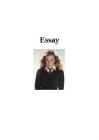
Essay Full Name: Emma Charlotte Duerre Watson Nicknames: Em, OneTakeWatson Age: 17 Birthdate: April 15th 1990 Place of Birth: Paris, France Hometown: Oxfordshire, England Hair: Dark Blonde Eyes: Brown Parents: Jacqueline Luesby & Chris Watson Siblings: brother Alex Pets: 1 Cat About Emma Watson: Emma Watson was born in Paris, France to Jacqueline Luesby and Chris Watson, English lawyers who lived in France at the time; she has a younger brother named Alex. She lived in Paris until age five, then moved with her mother and brother to Oxford, England. Watson attended The Dragon School, a private preparatory school, until June 2003, when she moved to Headington School, a private allgirls school in Oxford. In June 2006, Watson sat GCSE examinations in 10 subjects, achieving eight A+ and two A grades. She is studying for her Advanced Subsidiary (AS) levels in Dance, Art and English literature. Watson is an ...
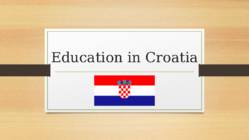
Education in Croatia Educational system in Croatia divided into: 1.Early childhood education 2.Primary education 3.Secondary education 4.Higher education Early childhood education There are three stages of early childhood education: · from when the child is 6 months old to when they're one · from the ages of one to three · from the age of three until the child stars attending primary school Even though these three stages are not compulsory, every child must attend kindergarten for a year prior to primary school. Primary education (Children begin school at the age of 6 or 7.) There are two stages: · 1st through 4th grade, being taught by one teacher per class that teaches every subject with the exception of foreign languages and Religion. The students stay in one classroom for the 4 years. · 5th through 8th grades, where different teachers teach different subj...
Curriculum Vitae PERSONAL INFORMATION Kairi Teder Lume 1, Röa village, 72806 Paide (Estonia) +37256617850 [email protected] Skype Kairi Teder Sex Naine | Date of birth 04 March 1995 | Nationality Estonian JOB APPLIED FOR WORK EXPERIENCE 16 June 201322 August 2013 Cook Tõru Hotel, Paide (Estonia) accommodation cooking customer service trade reception harvesting Chatting with people on the phone. EDUCATION AND TRAINING 01 Septembe...
18.09.2012 Mari-Liis Eha 120876KAKB My interest in chemical engineering I studied for 3 years in an english-science biased class in secondary school. My favourite subjects were chemistry and biology. We had many field trips. For instance, we had field trip to Kohtla-Järve to see the oil shale industry and also tours to see the wind generators. This is where my attraction to environment and chemistry grew together and I wanted to know more about further job and education opportunities in this field. I had a chance to be a job shadower at a company called ,,Orto", which is a chemical industry. One of the employees who I was shadowing had learned food chemistry and the other employee chemistry and environment. The job was truly fascinating and base...
Should class attendance be mandatory for university students? It has been heavily debated, whether class attendance in general should be compulsory or optional. While most people can agree on the necessity of class attendance in elementary, as well as secondary school being obligatory, then opinions on required class attendance at university are quite divided. Both two alternatives have their respective up- and downsides but all aspects considered, which is more beneficial? To start off, the students’ chosen specialty usually reflects their interests which means that said students, in fact, want to attend classes. In this case, it seems unnecessary to make classes mandatory as it will be more time consuming and virtually even pointless for them to explain their reason for absence. After all, it is relatively common that when students take interest in a subject, it is highly unlikely they will deliberately miss a class. Regardless of c...
For and against studying abroad At first it will definitely seem exciting, scary and overwhelming to study and live in another country and far away from all your friends and family back home. This experience will expanded your horizons and make you more independent. Obviously there are both pros and cons to studying abroad, and here is what I think they might be. I believe that there are many advantages that the time abroad will provide you. For instance you will make a lot of friends from all over the world. It is always nice to have a place to stay when you accidentally end up in Japan or Australia for a few days. Being an exchange student is also a fabulous chance for travelling. Getting to know a new country so well is definitely not possible during a holiday or a short visit. Besides living in a new culture for a long period of time will teach you more about the culture than reading any boo...
Me and languages Nowdays it is very common that one person can speak more than one language. There are people who have to learn different languages at school and people who do it , beacause they want to educate themselves. I think that every person should speak at least 3 languages. My mother tongue is Estonian. I can speak and write it very fluently. I like to read books in estonian and listen songs in Estonian. I know some people who prefer to do it in English. But for me it is more enjoyable to do it in my mother tounge. English is one of the most common languages in the world. Therefore it is very important to speak it. I started learning English in the third grade like most of the students. Before the lessons at school I had already learned the basic of English. My sister is older than me and I was really interested in studying with her. Also very helpful things were cartoons and hollywood films. In...
3. There are three points I'd like to make... 3. PRESENTING A NUMBER OF ARGUMENTS First of all, Britain is unique in its transport history. Firstly, what do you do about miscarriages of justice? Well, firstly I'm an agnostic - I don't know whether or not God exists.... Well, firstly we need to take an interest in developing countries instead of just competing with rich countries. To begin with, most women and men want the right to work. I'd start by rationing petrol to cut out unnecessary car journeys. For a start, it would have to be a mixed school and not a boarding establishment. There're two points here. Firstly, the cost to the environment. Think of all the rain forests. Secondly, the advertiser may pay, but the costs are passed on to the consumer. There are two problems here. Some of these homes are a long way from bus routes. Moreover, bus services ...
 annaabi.ee