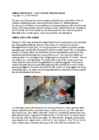
map in hand. That is rather common amongst tourists, wearing what’s comfortable and they’d wear at home and not putting much effort into blending in. Their trips are usually planned to the T, leaving no room for any spontaneous adventures that might come up along the way. They tend to only see the ‘must see’ tourist attractions, stay in a good hotels overall sticking to all the amenities that are similar to home. A traveller however is different. Generally speaking, a person who considers themselves a traveller, will try to immerse in the local culture as much as possible. They make an effort to learn some of the language and speak to locals to find out about the history, traditions and customs of the country. They do this not because they feel like they have to, but because they care and want to. For them, it’s not just about taking a break from everyday life, but learning and
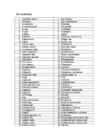
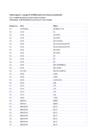
15.Au honour honor 16.Naaber neighbour neighbor 17.Teater theatre theater 18.Keskus centre center 19.Dialoog Dialogue dialog 20.Epiloog Epilogue Epilog 21.Reisinud Travalled Travaled 22.Reisija Traveller Traveler 23.Kino cinema movie theater 24.Kinno minema go to the cinema go to the movie 25.Järjekord queue line
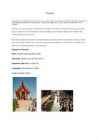
The Kingdom of Thailand draws more visitors than any other country in southeast Asia with its irresistible combination of breathtaking natural beauty, inspiring temples, renowned hospitality, robust cuisine and ruins of fabulous ancient kingdoms. From the stupa-studded mountains of Mae Hong Son and the verdant limestone islands of the Andaman Sea, to the pulse-pounding dance clubs of Bangkok and the tranquil villages moored along the Mekong River, Thailand offers something for every type of traveller. By far the best time to visit is between November and February when the weather is kind and the beaches are at their finest. This period is Thailand's main season for national and regional festivals. The peak season is November to late March, with secondary peak months in July and August. Kingdom of Thailand Ruler: King Bhumibol Adulyadej (1946) Land area: 198,455 sq mi (514,000 sq km) Population (2007 est.): 65,068,149 Languages: Thai (Siamese), English Capital: Bangkok, 6,320,1
He lived 4 years at the London Charterhouse sharing the life of monks. In 1504 he became a Member of Parliament, where he persuaded the members not to vote to the king the huge sum of money he demanded. In 1505 he married Jane Colt whom he had 4 children. His 3 daughters and 1 son were educated by the best scholars available. Jane died in 1511, and then Thomas married with a widow, Alice Middleton. Utopia It was written in 1515. The description of Utopia is put in the mouth of a traveller, Raphael Hythloday. This name is Greek for a teller of lies. Raphael argues that communism is the cure against egoism in life. Raphael is said to have been a former travelling companion of the famous navigator. For this book, a famous Dutch scholar called More the one genius of England. Utopia was originally written in Latin and printed in 1516. It was translated into German, French, English, Spanish and Italian. Utopia means fictions, fantasies of the future.
kutsumine, vajadusel massööri kutsumine, lapsehoidja, giidide organiseerimine, limusiin. -Põhiteenuseks on luksuslik ning paljude lisateenustega majutamine(ka toitlustamine ning konverentsipidamis teenust võib pidada selle hotelli juures põhiteenuseks). 3. Hotell Kolm Õde kuulub prestiizsesse Design Hotels gruppi ainukesena kõikidest Balti riikide hotellidest. 4. Tunnustused: Mai 2004 - Tunnustatud reisiajakiri Conde Nast Traveller valis Hotelli Kolm Õde "maailma 50 lahedaima hotelli" hulka. - September 2007 - Kolme Õe restoran võidab esimesena Baltikumist juhtiva gurmee- ja veiniajakirja "Wine Spectator Magazine" auhinna. - September 2008 - Kolme Õe restorani tunnustatakse taaskord "Wine Spectator Magazine" auhinnaga. 5.Hotell ei kuulu ühtegi organisatsiooni. 6. Paketid: Hotell Kolm Õde pakup paketti Veinidegustatsioon Jennifer Mitchelli'ga, Golf Kolme Õega: - green fee - transport väljakule ja tagasi
Pärnu City Themes 1. History 2. Attractions 3. About Pärnu 4. Notable Residents 5. Citizens of Honuor 6. Pictures of Pärnu 1. History The people who chose to live at the river mouth thousands of years ago stayed here permanently. It is known that in 1154 the Arabian traveller and geographer Abu Abdallah Muhammed al-Idrisi serving the King of Sicily mentioned a river named Bernu. Embecke ("Emajõgi" in Estonian) is the same River Bernu referred to by al- Idrisi and later renamed as the River Pärnu. Pärnu's first period of prosperity was the time from the beginning of the 14th century up to the end of the 15th century while it was a port on the route to the Hanseatic City of Novgorod. 2. Attractions Places to visit: ● Rannapark (Beach Park) & Vallikäär
When he himself might his quietus make Kui ta ise võib ennast lõpetada With a bare bodkin? Who would fardels bear, Vaid pistodaga ? kes kannataks koormaid, To grunt and sweat under a weary life, Pahuralt kurdaks ja higistaks tüütava elu all But that the dread of something after death, Kuid et kartus millegi ees pärast surma The undiscovered country, from whose bourn Avastamata maa, mille piirilt No traveller returns, puzzles the will, Ükski rändur ei naase, hämmeldab tahet, And makes us rather bear those ills we have Ja paneb meid pigem kannatama neid meie hädasid Than fly to others that we know not of? Kui lennata teiste juurde, mida me ei tunne ? Thus conscience does make cowards of us all, Seega teeb mõistus meist kõigist argpüksid : And thus the native hue of resolution Ja seega kindluse sünnipärane toon
migrate in search of a ‘better’ way of life (Benson & O'Reilly, 2009). These lines of research transverse the intersections of mobility, lifestyle, and social meanings. Distinguishing lifestyle migrants from tourists, Benson and O’Reilly (2009, p. 614) observe that ‘there has yet to be an adequate explanation of why people might want to turn their experiences from tourism into a way of life’. Consequently, I suggest that the term lifestyle traveller affords a rich conceptual tool with which to interrogate the proposition of backpacker tourism as a way of life, providing a means of both identifying this lifestyle group from within a broader social mix and understanding how backpacker consumption practices can be assembled into a meaningful personal identity. With regards to my semantic use of ‘traveller’ instead of ‘tourist’, debate over a distinction in
15. quintessential- representing the most perfect or typical example of a quality or class Sources ★ https://www.commisceo-global.com/resources/country-guides/usa-guide ★ https://www.interexchange.org/articles/career-training-abroad/10-things-to-know-about-u-s-culture/ ★ http://www.bbc.com/storyworks/specials/moving-to-america/americas-culture-and-customs.html ★ https://www.livescience.com/28945-american-culture.html ★ https://www.traveller.com.au/the-traveller-10-musttry-american-food-gqbjjm ★ https://theculturetrip.com/north-america/usa/articles/10-traditional-american-dishes-you-need-to-try/ ★ https://en.wikipedia.org/wiki/United_States_at_the_Olympics#:~:text=American%20athletes%20have%20won%20a,the%20history %20of%20the%20Olympics ★ https://family.lovetoknow.com/cultural-heritage-symbols/30-american-traditions-from-famous-unusual ★ https://en.wikipedia.org/wiki/Cinema_of_the_United_States#Modern_cinema Kahoot
humanist. * He was an important councillor to Henry VIII of England and was Lord Chancellor from October 1529 to 16 May 1532 * He was canonized by Pope Pius XI in 1935 * He was an opponent of the Protestant Reformation and in particular of Martin Luther and William Tyndale. ´´Utopia´´ * "Utopia" a name he gave to the ideal and imaginary island nation, the political system of which he described in Utopia, published in 1516. * Written in Latvin * In it a traveller, Raphael Hythlodeaus describes the political arrangements of the imaginary island country of Utopia to himself and to Pieter Gillis. This novel describes the city of Amaurote by saying, "Of them all this is the worthiest and of most dignity". * Utopia contrasts the contentious social life of European states with the perfectly orderly, reasonable social arrangements of Utopia and its environs (Tallstoria, Nolandia, and Aircastle)
[1] E. coli on seedetrakti normaalsemikrofloora üks tuntumaid esindajaid, kelle kontsentratsioon jämesooles on 107108 mikroobirakku/g. [2] Enamik Escherichia coli tüvesid on ohutud, kuid leidub ka haigust tekitavaid serotüüpe. [2] 2. MILLIST OHTU VÕIVAD ESILE KUTSUDA COLI-LAADSED BAKTERID? ETEC enterotoksikogeenne E. coli Põhjustab suurt osa ägedatest diarröadest, mida nimetatakse ka rändurite kõhu- lahtisuseks (traveller diarrhea). Kliiniline pilt. Inkubatsiooniperiood kestab 2472 tundi. Haiguse kulg on väga erinev, varieerudes ägedast koolerataolisest haigusest kergekujulise vesise diar- röani. Mõnikord kaasneb väike palavik ning oksendamine esineb 50% juhtudest. EPEC enteropatogeenne E. coli Esineb sageli vastsündinutel ja rinnalastel rinnapiimalt kunstlikule toidule üleminekul. Kliiniline pilt. Lastel äge, vahel raskekujuline diarröa, palavik
3. Renaissance or Modern period (13-14 century present) Anglo-Saxon period · All of the literature had its roots in folklore · Texts were orally transmitted, the anglosaxons had no written language · Two types of singers: 1) scop (attached to the royal court, wrote poetry and songs, performed them); 2) gleeman (travelled, mostly sang other peoples' songs, not their own songs; performers of scop songs) · The oldest known song Widsith (The Far Traveller/Wonderer); tells of a gleeman who travels in Europe, of his love of noble deeds, speaks of the shortness of life http://en.wikipedia.org/wiki/Widsith · The other known song Deor's Lament. Can be called the first English lyrics, about 40 lines. Talks about a scop who is not happy with his life. · A-S poetry was fatalistic in its nature (fate controls you, not you it) · The greatest known A-S song, the epic Beowulf. The oldest epic poem in Europe.
AQVA hotel spa Kalev spa Georg Ots spa Spas AQVA hotel spa Kalev spa Georg Ots spa Grand Rose spa Conclusion ● Different services ● E-country ● Good place for spa treatments ● Different health services ● Help in finding a career Used material ● http://www.visitestonia.com/en/about- estonia/traveller-information/medical- information ● http://www.innove.ee/en/career-services ● http://www.post.ee/index.php ● https://www.eesti.ee/eng/topics/riigikaitse/eesti _kaitsejoud/ajateenistus ● http://estonia.eu/about-estonia/economy-a-it/e- estonia.html Thank you for listening!
Anthropology of Tourism Madli Tuvike need permission for travel, education or even healthcare (Reuters, 2013). This makes women more constrained in their travel than men (Jackson & Henderson, 1995). On the contrary, in the USA it is estimated that 32 million single American women have travelled at least once in 2012 (The Gutsy Traveler, 2013). Moreover, America sees a growing trend in adventure travel: the average adventure traveller is not a 28-year old male anymore, but a 47-year-old female (The Gutsy Traveler, 2013). When relying on these examples, then female adventure tourism is clearly influenced by cultural trends. As a result, the western society is afraid to travel to Middle East, and female in Middle East cannot travel abroad, creating a cultural wall between the two worlds. Despite being a growing trend, both female/adventure travellers have some problems. Many
objects (conveyances) between relatively distant geographical locations. Travel may occur by human-powered transport such as walking or bycycling, or with vehicles, such as public transport, automobiles, trains and airplanes. Etymology The term "travel" originates from the Old French word travail. The term also covers all the activites performed during a travel (movement). A person who travels is spelled "traveler" in the United states, and "traveller" in the United Kingdom. Purpose and motivation Reason for traveling include recreation, tourism or vacationing, research travel for gathering information, for holiday to visit people, volunteer travel for charity, migration to begin life somewhere else, religious pilgrimages and mission trips, business travel, trade, commuting, and other reason, such as to obtain health care or fleeing war or for the enjoyment of traveling. World's best places to visit:
Two cultural translations of Romania as instances of intercultural communication As Beaven shows, `[t]ravel writing might be considered the intercultural narrative par excellence, as it is about the interplay between observer and observed, between a traveller's own philosophical biases and preconceptions and the test those ideas and prejudices endure as a result of the journey' (2007, p. 191). The travel genre addresses, of course, the readers of the author's home: Ireland and Britain in Murphy's case, the USA and Britain in Hoffman's
Refused to obey the king as the head of the English church due to that he was sent to the tower and beheaded as a traitor. Lateer decleared as a saint. Literature: Wrote many books "Utopia" 1516 a bit fiction. Political essay that consists of two parts. Written in Latin, after his death translated into many European languages, especially popular in 19th century. The book is authors imiginary conversation with Raphael Hythody who was a traveller. I part describes what R.H. thought of England and points to vices that he had seen. Enclosure and after effects. II part H. visits an unknown land called Utopia and he states that Utopia is an ideal republic because: 1. The Government is elected 2. No private property- everybody gets as much they need 3. Everybody works 4. After work people enjoy music, art and sport. 5. The most difficult vwork is done by slaves 6. All schooling is free 7
Total weight Kogukaal 11. Towed grader Järelveetav greider 12. Tractor and trailer Veoauto täishaagisega 13. Tractor shovel Frontaallaadur, eestripplaadur 14. Traffic circle Ringliiklusega ristmik 15. Traffic code Liikluseeskiri 16. Traffic concentration Liiklustihedus 17. Traffic barrier Tõkkepuu 18. Transport costs Veokulud, transpodrikulud 19. Traveller, Travelling crane Sildkraana 20. Trencher Kraaviekskavaator 21. Tubed tyre Sisekummiga rehv 22. Twin-roll Kahevaltsiline 23. Underdrain Suletud dreen 24. Unidirectional Ühesuunaline 25. Unlevelled Tasandamata 26. Vacuum-pressure pump Survepump 27. Vegetable soil Kasvupinnas 28
· Tehnoloogia areng · Rahvusvahelistumine (uued turud, multikultuursus ja toode, globaalne maailma ja kohalikud väärtused ning elustiil) · Jätkusuutlikkus (roheline elulaad, roheline puhkus ja lähipuhkused, roheline energia) · Digitaalne elustiil Internetikogukonnad, individuaalsed paketid ja hinnad, Internet kui reisikorraldaja (=uued ootused sihtkohas!) 38 · Vananev ühiskond (silver traveller, `parem' vananemine spa, kepikõnd jms, aga meeldiv hoolitsus, tähelepanelikkus erinõuete osas jne) · Uus globaalne keskklass ostujõu nihkumine nn BRIC riikidesse. Aga mida arvata tänases olukorras??? (= multikultuursed huvid? Kellele oma toode teenus suunata?) 59. Turismi mõju ühiskonnale · Integratsioon rahvusvaheline · Tööhõive turismis ja seotud harudes · Ühiskonna moderniserimine
Council of Fort Marlborough wrote in "The History of Sumatra" of the Malay Cat: "All their tails imperfect and knobbed at the end." In 'The Variation of Animals and Plants under Domestication", Darwin wrote "throughout an immense area, namely, the Malayan Archipelago, Siam, Pequan, and Burmah, all the cats have truncated tails about half the proper length, often with a sort of knob at the end. […] The Madagascar cat is said to have a twisted tail." Another writer and traveller, Mivart, had corroborated the statement regarding the Malay cat, of which he said the tail "is only half the ordinary length, and often contorted into a sort of knot, so that it cannot be straightened […] Its contortion is due to deformity of the bones of the tail". Joseph Train had also mentioned th Malayan cats, comparing them with the Manx: "The Manks rumpy resembles some what in appearance the cats said by Sir Stamford Raffles to be peculiar to the Malayan Archipelago
N1 PEUGEOT EXPERT N1 PEUGEOT EXPERT N1 PEUGEOT EXPERT N1 PEUGEOT EXPERT N1 PEUGEOT EXPERT N1 PEUGEOT EXPERT N1 PEUGEOT EXPERT N1 PEUGEOT EXPERT N1 PEUGEOT EXPERT N1 PEUGEOT EXPERT N1 PEUGEOT EXPERT N1 PEUGEOT EXPERT N1 PEUGEOT EXPERT N1 PEUGEOT EXPERT N1 PEUGEOT EXPERT N1 PEUGEOT EXPERT N1 PEUGEOT EXPERT N1 PEUGEOT EXPERT N1 PEUGEOT EXPERT N1 PEUGEOT EXPERT 4X4 N1 PEUGEOT EXPERT TRAVELLER N1 PEUGEOT EXPERT TRAVELLER N1 PEUGEOT EXPERT TRAVELLER N1 PEUGEOT EXPERT TRAVELLER N1 PEUGEOT EXPERT TRAVELLER N1 PEUGEOT EXPERT TRAVELLER N1 PEUGEOT EXPERT TRAVELLER N1 PEUGEOT EXPERT TRAVELLER N1 PEUGEOT EXPERT TRAVELLER N1 PEUGEOT EXPERT TRAVELLER N1 PEUGEOT EXPERT TRAVELLER N1 PEUGEOT EXPERT TRAVELLER N1 PEUGEOT EXPERT TRAVELLER N1 PEUGEOT EXPERT TRAVELLER N1 PEUGEOT EXPERT TRAVELLER N1 PEUGEOT EXPERT TRAVELLER
Travel Broadens t he M ind holidays; festivals hol i dayresorts; hol i dayequi pment; holidaytroubles;traveller'stips; S oectaculN arature' I (pp.38-s1) festivals WhiteCliffsof Dover- r TheRockies = pl anetE arth;envi ronmental TheA nsw eri s B l ow i ngin UNI T4
Travel Broadens t he M ind holidays; festivals hol i dayresorts; hol i dayequi pment; holidaytroubles;traveller'stips; S oectaculN arature' I (pp.38-s1) festivals WhiteCliffsof Dover- r TheRockies = pl anetE arth;envi ronmental TheA nsw eri s B l ow i ngin UNI T4
Travel Broadens t he M ind holidays; festivals hol i dayresorts; hol i dayequi pment; holidaytroubles;traveller'stips; S oectaculN arature' I (pp.38-s1) festivals WhiteCliffsof Dover- r TheRockies = pl anetE arth;envi ronmental TheA nsw eri s B l ow i ngin UNI T4
Travel Broadens t he M ind holidays; festivals hol i dayresorts; hol i dayequi pment; holidaytroubles;traveller'stips; S oectaculN arature' I (pp.38-s1) festivals WhiteCliffsof Dover- r TheRockies = pl anetE arth;envi ronmental TheA nsw eri s B l ow i ngin UNI T4
That makes calamity of so long life; For who would bear the whips and scorns of time, The oppressor's wrong, the proud man's contumely, The pangs of despised love, the law's delay, The insolence of office and the spurns That patient merit of the unworthy takes, When he himself might his quietus make With a bare bodkin? who would fardels bear, To grunt and sweat under a weary life, But that the dread of something after death, The undiscover'd country from whose bourn No traveller returns, puzzles the will And makes us rather bear those ills we have Than fly to others that we know not of? Thus conscience does make cowards of us all; And thus the native hue of resolution Is sicklied o'er with the pale cast of thought, And enterprises of great pith and moment With this regard their currents turn awry, And lose the name of action.—Soft you now! 86 The fair Ophelia! Nymph, in thy orisons Be all my sins remember'd.
 annaabi.ee