Leidsid 33 sarnast õppematerjali, mis on seotud failiga "Time Prepositions table". Need materjalid aitavad sul teemat sügavamalt mõista.
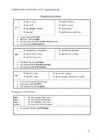
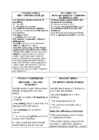
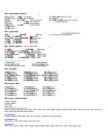
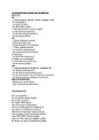
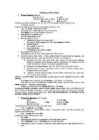
night, noon, part, morning, friday, evening, sunday, afternoon, particular, clock, weekend, monday, hommikul, first, christmas, year, easter, festival, winter, spring, prepositions, kellaaeg, in1989, nädalavahetusel, late, january, april, keskööl, palm, season, breakfast, lunch, dinner, summer, aastaajad, early, class, four, hours, minute, dawn, middayInglise keele harjutused, testid: www.ilearn.ee Prepositions of time at 8 o'clock at the weekend at 10.30. at the moment AT at midnight / midday at the end of ... at night at Christmas / at Easter I start work at 8 o'clock. She can't sleep at night. We are going on holiday at the end of October. Are you busy at the moment? on Sunday(s) / Monday(s) on Monday morning ON on 25 April / 6 June on Saturday evening on New Year Day Goodbye! See you on Friday.
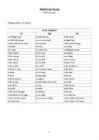
......................................................... 7 Prepositions of Place – in & on with travelling ..................................................... 8 Prepositional Phrases ......................................................................................... 8 Prepositions of Time – in, on & at • in is used with centuries, decades, years, seasons and months, parts of the day, periods of time • on is used with dates, special days, days of week, day of week + part of day, day + of ... • at is used with holidays, exact time, meals and with night in on at • the 20th century • the 29th of November • Christmas / Easter • the Middle ages /August the first • six o’clock / 7.30 • the 1980s • Christmas Day / New • midday / noon / • 2006 Year’s Eve / Easter midnight
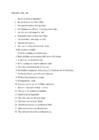
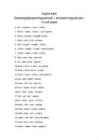
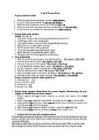
Fill in IN, ON, AT: 1. Dave was born in September. 2. He was born on the 16th of May 3. We agreed to meet at half past four. 4. On Christmas we all went to see our grandmother. 5. Jennifer came to England in 1992. 6. It started to snow on New Year's Day. 7. The First World War ended in 1918. 8. She arrived in spring. 9. We met on Sunday afternoon last week. 10. Do you drive at night? 11. It's Bruce's birthday next Wednesday. 12. Dick and Mary got married in 1993 on the 10th of July. 13. At midnight we heard footsteps. 14. In the morning we went to school as usual. 15. This castle was built in the 15th century. 16. My brother is taking his driving test at 2 o'clock on the 4th of October. 17. Mr Froster doesn't go to office on Saturdays. 18. We'll see Ken tomorrow evening. 19. It happened last week. 20. Can you come to see me on Friday morning?
1.IndefiniteTenses (üldajad) 2.Continious Tenses (kestvad ajad) 3.Perfect Tenses (perfekti ajad) 4.Perfect Continious Tenses (perfekti kestvad ajad) Indefinite Tenses (üldajad) used to describe actions but do not state whether the action is completed or on- going märgivad tegevuse sooritamise fakti Peter visits us every day. Peter visited us yesterday. Peter will visit us tomorrow. Continuous Tenses (kestvad ajad) are used when talking about a particular point in time · We were sleeping when the storm began. What were you doing at five o'clock? When I came, the children were sleeping. Perfect Tenses are used when an action or situation in the present is linked to a moment in the past often used to show things that have happened up to now but aren't finished yet to emphasize that something happened but is not true anymore Mary was tired. She had worked hard all day. Perfect Continuous Tenses
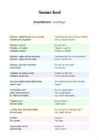
vaille kaksi. Kello on puoli kolme. It is half past two. Kello on puoli viisi. It is half past four. Mitä kello on? What is the time? Paljonko kello on? What time is it? Ajanilmaisut - Milloin? When? aamu morning aamulla in the morning aamupäivällä in the morning päivä day päivällä in the daytime ilta evening illalla in the evening iltapäivällä in the afternoon yö night yöllä at night eilen yesterday tänään today huomenna tomorrow ylihuomenna the day after tomorrow the day before toissapäivänä
Tower, the Simpsons A – AN - THE Time Expressions • we don't use an article: at night, at noon, every We don't usually use an article week, every day, every night, last morning, last • to talk about things in general. • before the names of countries, cities, towns and villages. week, all night, all day, tomorrow, yesterday,... • with plural nouns and uncountable nouns when talking about them • use the with in the morning, in the afternoon, generally
at the beach in the morning/evening/afternoon in the desert in time in the mountains - last Saturday/week/month etc at a ski resort on Friday/Thursday etc in Telluride/Tallinn/London etc in the middle in southwest Colorado in the post office by the time (selleks ajaks, kui...) on Delancy Street at night on the corner in a minute (minuti pärast) in the street haven’t talked to them for over a on Ridgeback Mountain month in the woods/forest - next weekend/month/day a small house on a lake on the first day in the countryside at the end of the semester
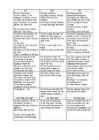
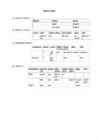
AT ON IN For the time of day For days and dates For longer periods At five o'clock, 11.45, On Friday/ Fridays, 16 May (months/years/seasons) midnight, lunchtime, sunset. 1999, Christmas Day, In October, the 1990s, the At night, the weekend, week- birthday. past, Middle ages, the winter. ends, Christmas, the moment, On Friday/ Sunday/ Monday In the morning/ afternoon/ present, the same time. evening/ morning/ afternoon. evening. In a few minutes/ a week/ Do not use at/ on/ in before moment. last/ next / this/ every
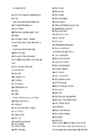
42.Lay laid laid panema, asetama 43.Light lit lit süütama 44.Mean meant meant tähendama 45.Ride rode ridden ratsutama 46.Upset - upset upset ärritama 47.Swing swung swung kiikuma, õõtsutades liikuma 48.Send sent - sent saatma 49. Run ran run jooksma 50.Ring rang rung helistama, helisema 51. Strike struck struck lööma Eessõnad ajamäärustes In: In the morning In the evening In the afternoon In 1998 In february In winter In the 1980s On: On Sunday morning On Monday evening On Saturday afternoon On Friday night reede õhtul On the first of february On a cold winter morning On christmas day At: At ten o'clock At half past eight At noon lõuna At night - õhtul At midnight keskööl At midnight on Tuesday At the beginning of the year Nimetav I mina You sina He - tema (mees)
in a paper ajalehest to rise in the east tõusma idast to hear sth. on the radio midagi raadiost kuulma to see sth. on (the) television midagi telerist nägema Prepositions of movement: 1)We use TO in order to express movement toward a place. They were driving to work together. She's going to the dentist's office this morning. 2)TOWARD and TOWARDS are also helpful prepositions to express movement. These are simply variant spellings of the same word; use whichever sounds better to you. We're moving toward the light. This is a big step towards the project's completion. 3)With the words HOME, DOWNTOWN, UPTOWN, INSIDE, OUTSIDE, DOWNSTAIRS, 3 UPSTAIRS, we use no preposition. Grandma went upstairs Grandpa went home. They both went outside.
limited period of time · action arranged for the future Past Simple A: He spoke. · Finished action in the past yesterday, 2 N: He did not speak. minutes ago, in Q: Did he speak? · actions taking place one after 1990, last Friday another Past A: He was speaking. · action going on at a certain when, while Continuous N: He was not time in the past yesterday at 5 speaking. Q: Was he speaking? · actions taking place at the same time · action in the past that is
•Where shall we go tonight? (=what's your opinion?). PRESENT CONTINUOUS PRESENT SIMPLE AM/IS/ARE + ING (AM INFINITIVE (WORK;WORKS) WORKING) We talk about things that we have We talk about events in the future already arranged to do in the which are 'timetabled'. future. •My plane leaves at 6 in the •I've got my ticket. I'm leaving on morning. Thursday. •The shop opens at 9.30. •I'm seeing Julie at 5 and then I'm •The sun rises a minute earlier having dinner with Simon. tomorrow. •He's picking me up at the Note the difference between: airport. *The plane leaves in ten minutes •The company is giving everyone
Independence from the Russian Empire in 1918. Independence re-declared from the Soviet Union in 1991 An Independence Day is an annual event commemorating the anniversary of a nation's assumption of independent statehood, usually after ceasing to be a group or part of another nation or state; more rarely after the end of a military occupation. Most countries observe their respective independence days as a national holiday, and in some cases the observance date is controversial or contested. Good Friday Moveable Friday Good Friday is a religious holiday observed primarily by Christians commemorating the crucifixion of Jesus Christ and his death at Calvary. The holiday is observed during Holy Week as part of the Paschal Triduum on the Friday preceding Easter Sunday, and may coincide with the Jewish observance of Passover. It is also known as Holy Friday, Great Friday, Black Friday, or Easter Friday, though the latter properly refers to the Friday in Easter week. Easter Sunday Moveable Sunday
it its it it I don't like it we our ours we us can you help us? they their theirs you you see you tomorrow they them phone them this evening Prepositions of time IN ON AT - the morning -Monday(morning) - three o'clock - afternoon -the 12th of July -midday/midnight - the evening - my birthday -lunchtime - December -Christmas Eve -night
AJAMÄÄRUSES ESINEVAD EESSÕNAD MILLAL? IN 1. Pikad ajajärgud (sajandid, aastad, aastaajad, kuud) *in June (juunis) *in spring (kevadel) *in 1991 (1991. aastal) 2. Päevaperioodid (v.a. öösel- at night) *in the morning (hommikul) *in the afternoon (pärastlõunal) *in the evening (õhtul) AT 1. Täpsed kellaajad, vanused *at 5 o'clock (kell viis) *at (the age of) 17 (17-aastaselt) 2. Pühad, nädalavahetused *at Christmas (jõulude ajal) *at weekends (nädalavahetustel) 3. Söögiajad *at lunch (lõunasöögi ajal) 4. Sõnad, mis viitavad ajale *at the same time (samal ajal) *at the moment (hetkel) ON 1. Lühemad ajajärgud (tähtpäevad, nädalapäevad) *on Monday (esmaspäeval) *on the first of June (esimesel juunil)
Ermo Altmäe 011PK Time Prepositions Multiple Choice Exercise Correct! Well done. Your score is 60%. 1. Jane is arriving on January 26 at 2 o'clock in the afternoon. 2. It snows here every year in December. We always go outside and play in the snow on Christmas day. 3. Michael is leaving on Friday at noon. 4. Frankie started working for her law firm in 1995. 5. Franklin began working on the project NO PREP yesterday. 6. Normally, on New Year's Eve, it's tradition to kiss the one you love at midnight. 7 Don't be ridiculous; there were no telephones in the seventeenth century! The telephone was invented in the 1870s. 8. The plane leaves NO PREP tomorrow morning at 8:00 AM. 9. The hills here are covered with wildflowers in early spring. 10
were clearly horrified by the timetable. It would be impossible to put up the tents in 14 days; they needed 28. Considering that Chelsea Flower Show now takes at least 18 months to organize, the RHS was running a tight schedule if it was to be ready in time. At the end of April, a Press luncheon was arranged for Monday, 19 May (a tradition that continues to this day). With only a fortnight to go until the Show opened, the committee agreed that bath chairs should be allowed in, from 9am to 12 noon on the second day, for five shilling extra. Finally Chelsea successfully opened on Tuesday 20 May 1913, for three days. Curiously there is no Council report on how this Show actually went. The Gardner's Chronicle, which provided the best written records of the early Shows, was more forthcoming. The first Chelsea "had exceeded all expectations". The tent, it reported, were 300ft (100m) long and 275ft (80m) wide, taking up six spans and over 2 acres (0,8hectares)
of the many that are so abundant in Estonia's folklore. It is the story of a poor girl who falls in love with the son of the village elder, and disguises herself as a choirboy in order to sneak into the castle. But, alas, the lord of the manor's son discovers the deception. He is overcome by jealous rage and orders his men to seal the girl inside the thick stone walls while still alive. Turned into an incarnation of undying love, the White Lady now appears every August, on the night of the full moon, in the Dome Church chapel window. Haapsalu is seven-and-a- quarter centuries old this year, and the townsfolk intend to make it a celebration to remember. The annual dance and light show dedicated to the Lady alone involves over 100 performers - and you'll have several chances to catch it over the four days of the event. Musical shows, dances and contests of strength and skill will be held all over town.
in brackets. _ 1 She is in a band and she _________________________________ (record) a CD at the moment. _ 2 She is an actress and often _________________________________ (appear) on television. _ 3 At the moment she _________________________________ (have) a rest because she is tired. _ 4 Mike is a doctor and he _________________________________ (live) in Manchester. _ 5 I _________________________________ (start) work at 8.30 every morning. _ 6 He is a good cook but she _________________________________ (prefer) to eat out. _ 7 English tests _________________________________ (get) more and more interesting. _ 8 They _________________________________ (have) a party because it's her birthday. _ 9 I sometimes _________________________________ (ride) my bicycle to school. 10_ She usually _________________________________ (go) to the gym on Friday evenings.
· Rivers, groups of islands, mountain ranges, deserts, oceans, countries (with States, Republic, Kingdom), names/nouns with of, geographical terms (the North) · Musical instruments, dances (the piano) · Families, nationalities (The Chinese) · Titles (the President) NB! NOT with real names (Prince Charles) · With adjectives/adverbs in superlative form (Most mustn't be followed by a noun!) · With words day, afternoon, morning, evening NB! At night, at noon etc · Historical periods/events · With Only, last, first · Words station, cinema, theatre, library, coast, shop, sea, beach, country, city, jungle, world, ground, weather We don't use ,,The": · Uncountable an plural nouns when talking about sth general (Coffee is a popular drink) · Proper nouns (Harry works in a bookshop) · Names of sports, games, activities, days, months, elebrations, colours, drinks, meals.
Vocabulary: to criticize - tasteless overcooked - ingredient - to invent - sauces - to disguise - spice herb - delicious - disappointing - to lend cuisine British Youth (2) Most 18 and 19 year-olds in Britain are quite independent people. English people say that children grow up more quickly now. Relationships within the British family are different now. Children have more freedom to make their own decisions. For example, children aged 13 may be employed part time in Great Britain. Age 15 is legally a "young person" not a "child". Age 16 is a school leaving age. They can leave home, drive a moped, marry with "parents' consent" buy beer. Age 17 can drive a car. Age 18 can vote, get married, drink in pubs. Education is a very important part in the life of British youth. One can't become an independent person without it. When time comes to enter a college a young Englishman chooses one far away from home. It is a necessary part of becoming adult.
The castle has been garrison fortress, home, official palace and sometimes prison for most of the Kings and Queens of England/Great Britain. During the war, the castle has been heavily fortified but when country has been in peace, it has been expanded with large and grand apartments and this pattern has continued nowadays. The White Cliffs of Dover is one of England’s most famous natural landmarks. The cliffs were formed over 80 million years ago. They are a part of British coastline facing France and the Strait of Dover. The cliffs owe its impressive façade to its composition of chalk accentuated by streaks of black flint and they spread east and west from the town of Dover in the county of Kent. There are miles of hidden tunnels behind the cliff face which were created during the Middle Ages and had an important role in the defence of Britain during the Napoleonic wars. London, the capital of England, has a lot of famous sightseeings itself
Christmas Day. Other families enjoy their day by having a picnic. If they are at home, the day is punctuated by swimming in a pool, playing Cricket out the backyard, and other outdoor activities. The warm weather allows Australians to enjoy a tradition which commenced in 1937. Carols by Candlelight is held every year on Christmas Eve, where tens of thousands of people gather in the city of Melbourne to sing their favorite Christmas songs. The evening is lit by as many candles singing under a clean cut night sky. The sky with its Southern Cross stars is like a mirror. Sydney and the other capital cities also enjoy Carols in the weeks leading up to Christmas. Australians surround themselves with Christmas Bush, a native plant which has little red flowered leaves. Christmas shopping is often done in shorts and t-shirts. At many beaches Santa Claus arrives on a surfboard, or even on a surf lifesaving boat.
vegetables, cranberry sauce etc., followed by Christmas pudding and Christmas cake. The pulling of crackers(and the wearing of paper hats) before the meal is quite popular. Afterwards many watch the Queen's traditional Christmas address on TV at 3 pm. Christmas actually contains of 3 days: Christmas Eve, Christmas Day and Boxing Day. The latter is the first day after Christmas or the first Monday after Christmas if Christmas is on Friday or Saturday. 3. What is the same and what is different about the way Easter is celebrated in England and Estonia? Easter lasts for 4 days in Britain: from Good Friday to Eas-ter Monday. Schools close for two weeks. On Good Friday people usually eat small sweet rolls toasted with butter and containing currants with a cross on top representing the wooden cross Jesus died on. On Easter Sunday Christians celebrate the resurrection of Christ
For example, "the sun", "the moon". Some institutional buildings don't have an article if you visit them for the reason these buildings exist. But if you go to the building for another reason, you must use 'the'. "Her husband is in prison." (He's a prisoner.) "She goes to the prison to see him once a month." "My son is in school." (He's a student.) "I'm going to the school to see the head master. "She's in hospital at the moment." (She's ill.) "Her husband goes to the hospital to see her every afternoon." Musical instruments use 'the'. "She plays the piano." Sports don't have an article. "He plays football." Illnesses don't have an article. "He's got appendicitis." But we say "a cold" and "a headache". Jobs use 'a'. "I'm a teacher." Countries We don't use 'a' if the country is singular. "He lives in England." But if the country's name has a "plural" meaning, we use 'the'. "The People's Republic of China", "The Netherlands", "The United States of America".
1. Kirjuta puuduvad tähed. 1. When you enjoy doing something, you do it whip pleasure . 2. On your birthdayyours friends can give you the bumps . 3. When you give somebody a present, you need to wrap it up. 4. When you put bowls,cups, forks and knives on the table, you lay the table . 5. Of you want to say something to many people, you make a speech. 2. Kirjuta lünka sobiv eessõna. Vali siit : in / on / at 1. Why didn´t we go to the swimming pool on Tuesday afternoon ? 2. Little Peggy didn´t sleep well at night. 3. The pupils of class 6 went on a class trip on Monday morning. 4. Please come to my place in the evening. 5. All the animals had a meeting at noon. 6. They had a big garden party on Saturday night . 7. In the afternoon the headmaster made a speech. 8. My parents left for Helsinki on Thursday afternoon . 3. Vasta küsimustele. 1. Will you invite all your friends to yuor birthday party ? No, I won´t / Yes, I will 2
tips and useful language notes Book 1 Anne Seaton · Y. H. Mew Three Watson Irvine, CA 92618-2767 Web site: www.sdlback.com First published in the United States by Saddleback Educational Publishing, 3 Watson, Irvine, CA 92618 by arrangement with Learners Publishing Pte Ltd, Singapore Copyright ©2007 by Saddleback Educational Publishing. All rights reserved. No part of this book may be reproduced in any form or by any means, electronic or mechanical, including photocopying, recording, or by any information storage and retrieval system, without the written permission of the publisher. ISBN 1-59905-201-6 Printed in the United States of America 13 12 11 10 09 08 07 9 8 7 6 5 4 3 2 1 Introduction Grammar is a very old field of study. Did you know that the sentence was first divided into subject and verb by Plato,
· I live at 10 Kase street · I´m on holiday · On the ground floor · I live in the country · In the field · On a farm · On a menu · At the door · On foot · By bus · At the bottom of page · On an island · I sleep in bed · On the wall · At contsert Prepositions of time Ajamäärused In sajandil in the 2nd century - aastaajad in summer - aastad in 1975 - päevaajad in the morning , in midday - in a minute hetkepärast - in an hour - tunni pärast - ajaperioodid in the middle ages On nädalapäevad on Friday - järgarvud ajamäärustes on 1.June - omadus + päev on a cold day - kindlal päevaajal - on Friday morning - puhkus on vacation At kellaajad at 6 o´clock - öösel at night - At noon - At weekend - At midnight
There were people inside the house on fire! There was sand on my plate! The Indefinite Article is used when referring to an indefinite object (just any of the kind). Could you lend me a pen? (Any pen would do, I just need something to write with.) I'll take a sandwich. (Any of those on the plate.) 3 The Definite Article is used when the context specifies which particular one(s) is (are) meant. Could you turn off the light, please? (the light in this room) I took a taxi to the airport. (the only airport in our town) The woman who is crossing the street is our new neighbour. (“who is crossing the street” makes it clear which woman is referred to) Could you give me the book on the top shelf, next to the Estonian- English dictionary? (the description where to find the book
daily routines, habits or repeated actions Every hour/day/week etc , I always play football in -? do/does not+I pv 2. permanent states usually, always, in the the evenings morning/evening/night, at night Present Am/is/are+Iing 1. actions happening now, at the moment of speaking Now, at the moment, these I am writing a lettesat Continuous 2.actions happening around the time of speaking days, at present, tonight etc. the moment. 3. fixed arrangements in the near future Past Simple + II / -ed 1
eelnevalt teada 3. tegevus, mis algas ja lõppes minevikus Mr Clark taught math for 20 years (now he´s retired) 4. tegevus, mis lõppes minevikus ja mida ei saa korrata Mike won more than 20 medals when he was an athlete (he´s no longer an athlete and cannot win another medal) 5. tegevus, mis toimus kindlal ajaperioodil mis nüüdseks on lõppenud I wrote 3 letters this morning. (now is evening) 6. tegevus, mille teostajad on nüüdseks surnud Charles Dickens wrote "Oliver Twist" Present Perfect 1. tegevus, mis toimus minevikus ja millel on seos olevikuga 2. tegevus, mis toimus mingil määratlemata momendil. Täpne aeg on kas teadmata või ebaoluline. 3. tegevus, mis algas minevikus ja kestab praeguseni - Mr Clark has taught math for 20 years (and is still teaching) 4
Tallinn information: Train operators in Internal trains run by Edelarautee: www.edel.ee, Estonia: www.elektriraudtee.ee Sleeper train Tallinn to Moscow: www.gorail.ee Ferry operators to www.Tallink.ee (Stockholm-Tallinn, Helsinki-Tallinn) Estonia: www.tallinksilja.com/en/ (Rostock-Helsinki-Tallinn) Time: GMT+2 (GMT+3 from last Sunday in March to last Saturday in October) Currency: £1 = approx 16.5 Kroons. Tourist information: www.inyourpocket.com/Estonia/ & http://tourism.tallinn.ee. Hotels in Tallinn: www.hostelbookers.com Visas: UK citizens do not need a visa for Estonia for stays of up to 6 months. London information: Area: 659 sq mi = 1,706 km2
you will study you’ll study he will come he’ll come Negative I/you/he/we/they will not write I/you/he/we/they won’t write Question Will you/he/she/we/they come? 1. We often use will as a neutral way of expressing the future. We use will to say what we know or think about the future. It is known as the predictive future, and describes known facts, or what we suppose is true. I’ll be late home this evening. The company will make a profit next year. This can also take the form of an assumption: That'll be Jim at the door. (This means that I suppose it is Jim.) 2. Will is also used to express an immediate decision, when we decide on something or agree to do it more or less at the moment of speaking. I’ll take this one. Decisions expressed with going to refer to a more distant point in the future. 3. Will does not express an intention. For that we use be going to.
 annaabi.ee