 Tasuta
Faili alla laadimine on tasuta
Tasuta
Faili alla laadimine on tasuta
 ~ 9 lehte
Lehekülgede arv dokumendis
~ 9 lehte
Lehekülgede arv dokumendis
 2015-07-28
Kuupäev, millal dokument üles laeti
2015-07-28
Kuupäev, millal dokument üles laeti
 2 laadimist
Kokku alla laetud
2 laadimist
Kokku alla laetud
 0 arvamust
Teiste kasutajate poolt lisatud kommentaarid
0 arvamust
Teiste kasutajate poolt lisatud kommentaarid
 energiajook1
Õppematerjali autor
energiajook1
Õppematerjali autor
· Individual differences are useful for explaining and predicting behaviour and performance Differential psychology reading Human Human · General Personality Intelligence Schacter, D. et al. (2012). Psychology. Chapters 13 (personality) and 9 (intelligence). READ these Chapters!
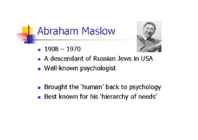
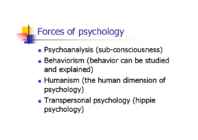
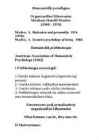
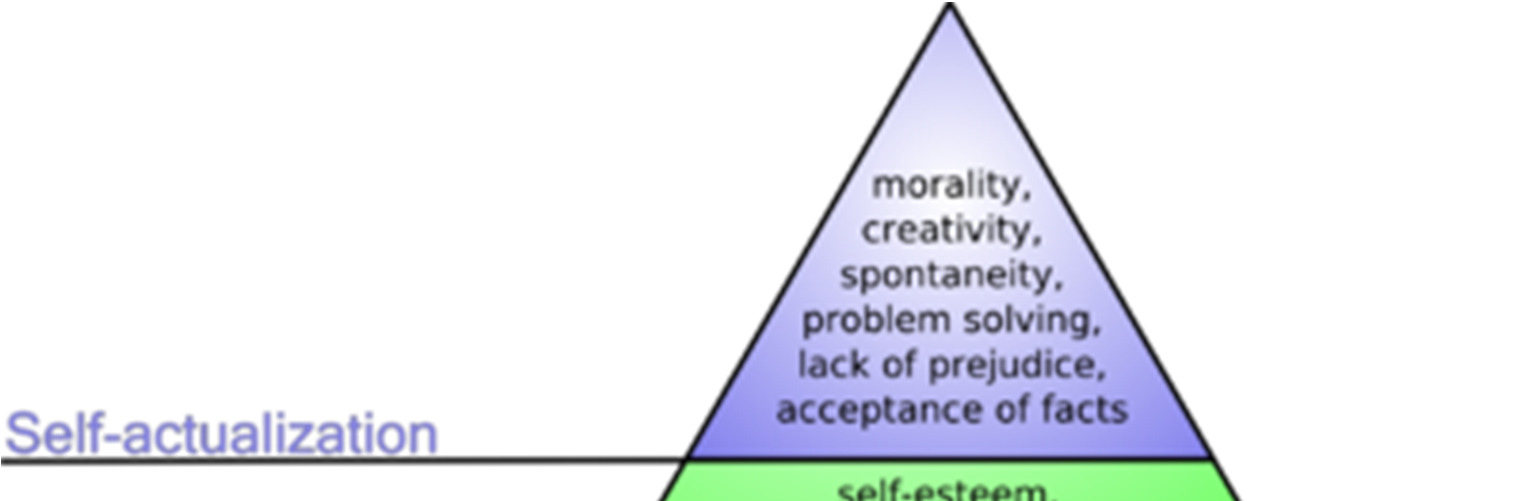
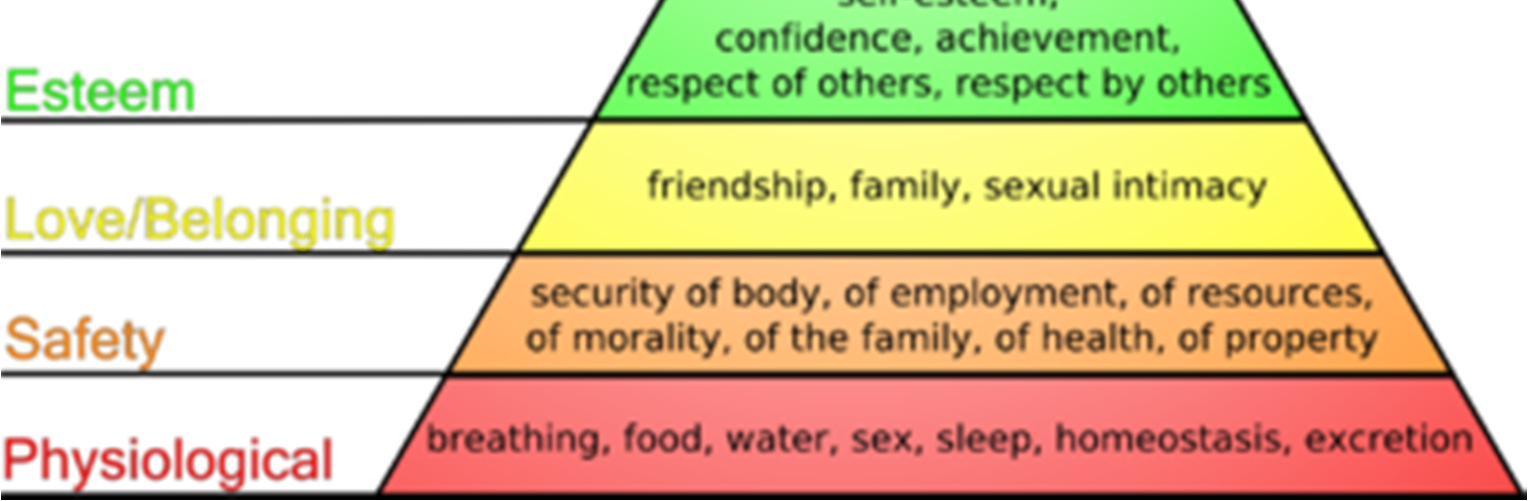
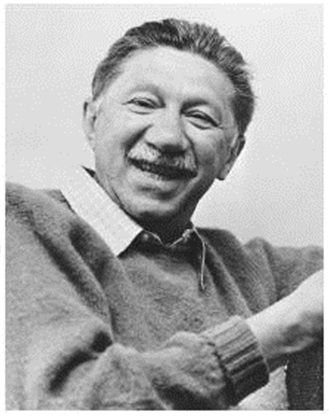
Humanistlik paradigma Organismiline lähenemine Abraham Harold Maslow (1908 - 1970) Maslow, A. Motivation and personality. 1954 (1970). Maslow, A. Toward a psychology of being. 1968. Humanistlik psühholoogia American Association of Humanistic Psychology (1962) I Psühholoogia eesmärgid: 1.Uurida inimese kogemust (experiencing person) 2. Uurida loovust, valikuid ja eneseteostust. 3. Uurida isiksuse jaoks olulisi sündmusi. 4. Psühholoogia eesmärk on aidata inimestel oma eneseväärikust tõsta. Eneseteostus (self-actualization) organismiline lähenemine
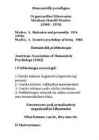
Humanistlik paradigma Organismiline lähenemine Abraham Harold Maslow (1908 - 1970) Maslow, A. Motivation and personality. 1954 (1970). Maslow, A. Toward a psychology of being. 1968. Humanistlik psühholoogia American Association of Humanistic Psychology (1962) I Psühholoogia eesmärgid: 1.Uurida inimese kogemust (experiencing person) 2. Uurida loovust, valikuid ja eneseteostust. 3. Uurida isiksuse jaoks olulisi sündmusi. 4. Psühholoogia eesmärk on aidata inimestel oma eneseväärikust tõsta. Eneseteostus (self-actualization) organismiline lähenemine
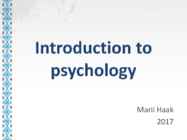
Marii Haak 2017 To start with... · Two main concepts to understand - Psychology - Psyche How do you define them? What is psychology? · The study of the soul and mind (psyche & logos) · Psychology is the scientific study of the behavior of the individuals (what we do) and their mental processes (inner thoughts and feelings) · Studies human behavior, inner experiences and circumstances under they occur · Is psychology a study of differences between people or rather a study of similarities? - General tendencies Primary goal · The primary goal of psychology is to improve the understanding of behavior and cognition of our self and other people Why do we do what we do? Why do we think what we think? Why do we feel what we feel? · The aim is to...
building. False 3. As open systems, organizations transform material resources to produce goods. True 4. Organizational behavior is characterized by its emphasis on rigorous inquiry. True 5. Organizational behavior is the study of individuals and groups in profit- making organizations. False 6. Organizational behavior is the subject of psychology applied to the world of work. False 7. Quality of work life refers to the overall quality of human experience in the workplace. True 8. Synergy is the creation of a whole that is greater than the sum of its parts. True 9. The purpose of any organization is to make a profit. False 10.Work-life balance refers to workers who seek balance between their paid work and unpaid work. False 11.Workforce diversity refers to differences in people’s aptitude for various jobs. False 12.A felt negative equity exists when an individual feels he or she has received
Adults cry "educate our children!" Everyone has opinions about the best way to do the job. It is of urgent importance, and all the numerous factors are much studied, debated, and new (or old) ideas continually tested or retested. Some people say "it's as simple as . . . " and then name their pet peeve or passion. My view is not of an education specialist, but of one who loves sharing what I learn, and owes much to educators. Since I don't have an educational theory neatly worked-out, nor an outline of my perceptions, my intent is to address each educational ingredient that comes to my mind. After I've said what I think about each topic, readers may have a fair comprehension of my philosophy. First comes sensitivity. If a person be insensitive, be it from numbing cold, exhaustion, drugs, genetic makeup, or upbringing, then the process of education is bogged down, and results come only after great efforts
Locke claims that one of the major reasons people enter into society is to avoid the state of war. One has the right to kill a thief who is trying to rob one one has right to kill someone who is trying to make one his slave While one may kill a thief who is tring to rob one, after the robbery is over, one must submit one's case to judge who must decide between the two parties One is obligated to preserve ones life V Locke explains that the best theory of right to ownership is rooted in the fact that each person owns his or her own body and all the labor that he or she performs with that body. So, when an individual adds his own physical labor, which is his own property, to a foreign object or material, that object and any resulting products become his property as well. One converts a ting into one's property by adding labor to it (e.g. If there is a publick forst and one collects wood from it, the wood becomes your property)
PSYCHOLOGY PART 1: CORE Biological level of analysis Outline principles that define the biological level of analysis. 1) Behavior can be innate, because it is genetically based. Evolution may play a key role in behavior. 2) Animals may be studied as a means of understanding human behavior. 3) There are biological correlates of behavior. Cognitions, emotions and behaviors are products of the anatomy and physiology of our nervous and endocrine system. Explain how principles of the biological level of analysis may be demonstrated in research. 1) Correlational studies: Study by Buss, who hypothesized that across cultures, men will prefer to marry younger women because of greater reproductive
 annaabi.ee















Kõik kommentaarid