Leidsid 33 sarnast õppematerjali, mis on seotud failiga "The Republic of Poland". Need materjalid aitavad sul teemat sügavamalt mõista.
poland, salt, republic, location, emblem, eagle, crown, brief, warsaw, language, currency, political, democracy, president, premier, tusk, important, copper, zinc, lead, silver, sulphur, building, stone, poll, countryFrom November to April heavy rain fills the rivers and makes enormous lakes where thousands of birds come for the summer. From May to October it is often sunny and dry for weeks, and it is a popular place for winter holidays in the sun. In the hot, flat centre of Australia, there is an area called the `outback'. It covers more than two-thirds of Australia, but its population is less than 100,000. In some places, it doesn't rain for years. There are hills and big dry salt lakes, and it is very difficult to grow anything there. Many people live on sheep or cattle stations, a few of which are as large as the country of England. The nearest neighbour can be a hundred kilometres away and the nearest city 1,500 kilometres away. Australia has a population of about 23 million people, most of whom live in the south and east of the country, where the summers are warm and the winters not too cold. The highest mountain in Australia is Mount Kosciuszko, at 2,228 metres
democracy Independence: 1 January 1901 National holiday: Australia Day Monarch Queen Elizabeth II Prime Minister Julia Gillard Governor-General Quentin Bryce Economy Currency: Australian Dollar The main industry: agriculture Low rate of poverty Natural resources Coal Tin Gold Silver Nickel Zinc Diamonds People Population: 21,5 million National language: English National symbols National animal: Red Kangaroo National bird National bird: Emu Flag Flag of Australia Coat of arms Coat of arms of Australia National anthem ''Advance Australia Fair'' Thank you for listening
occupation of Britain, they left very little behind. Most of the villas and temples the impressive network of roads and the cities they founded, including Londinium, 4 were soon destroyed. The next invaders were the Anglo-Saxons. They came from nowadays Germany, Holland and Denmark. In 1066 the last successful invasion was made by French-speaking Normans. French became the language of the ruling class, Latin was the written language. By the 14th century, however, English began to replace both French and Latin, but the English language still contains numerous French and Latin borrowings. The Hundred Years War between England and France and the Black Death had a great negative influence on Britain. Over 1/3 of the population died. During the fifteenth century the throne of England was claimed by two rival groups - the House of York and the House of Lancaster. As the
whisky and textiles, notably tweed and linen respectively. Today Scotland is also a major producer of computers. The leading manufacturing regions are Greater London, Greater Manchester, West Midlands (Birmingham), Yorkshire, Newcastle, Glasgow, Bristol. Britain has relatively few mineral resources. Zinc, tin, iron ore and copper are all produced in small quantities, together with tiny amounts of gold and silver. Non- metallic minerals include limestone, chalk, clay, sandstone, salt and gypsum. Britain has the richest energy resources in EU including oil and natural gas, both primarily found in the North Sea, off eastern Scotland and eastern England respectively. About 77% of the land area of Britain is under agricultural use of some sort. Agriculture employs 2 per cent of the population. However, it achieves high levels of efficiency and productivity. Large parts of Britain, notably in Scotland and Wales, are suitable only for grazing
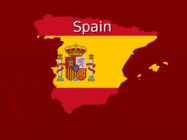
Spain General Data ► Area: 504 782 km ² ► Population: 46.12 million ► Capital: Madrid ► Capital Population: 4 million ► Language: Spanish ► Currency: EUR ► Symbols: Anthem - La Marcha Real, flag, coat of arms, the national flower-the red carnation, animal-ox, national bird-Short-toed Eagle ► The King : Juan Carlos I Symbols ► Anthem http://www.youtube.com/watch?v=0 S19dt7JWQs Geographical position ► In Southwestern Europe on the Iberian Peninsula ► Neighboring countries: France, Andorra and Portugal (in the west) ► Between Spain and Morocco is narrow Strait of Gibraltar ► Territory of the country includes the Balearic Islands in the Mediterranean, and 13 Canary Island (the largest of which is Tenerife and
Estonia. Estonia, officially the Republic of Estonia is a country in Northern Europe. It is the smallest of the three Baltic countries. Estonia has land borders with Latvia (339 km) to the south and Russia (229 km) to the east. It is separated from Finland in the north by the narrow Gulf of Finland and from Sweden in the west by the Baltic Sea. Estonia has been a member of the European Union since May 1, 2004 and of the NATO since March 29, 2004. The area of Estonia is about 45000 square kilometres and the population is
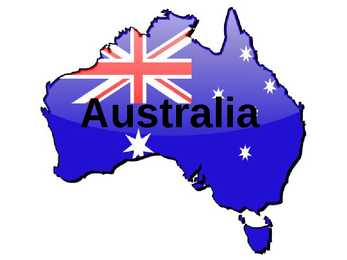
speaking about the country you may call it by its official name: Commonwealth of Australia. Australia is the smallest continent, but one of the largest countries in the world. Its area is about 7,6 million sq kilometers. Its population is about 20,0 million and most of the people live in bigger cities: Sydney (4.2 million), Melbourne (3.7 million), Brisbane (2 million) and in Canberra, Which is also the capital of Australia. National language in Australia is english and the monetary unit is Australian dollar. Australia is divided into 6 states and 2 territories. Symbols Australia has a British Union flag. It is red, white and blue. Five small stars represent the constellation Southern cross. The big star represents country's states and territories. In 1901 the flag was chosen from about 30000 entries in a public contest. It was officially adopted as Australian flag in 1953.
CANADA GENERAL STATISTICS Capital - Ottawa Population - 33,390,141 (July 2007 est.) Population density 3.5 inhabitats per km2 Among the lowest in the world Currency Canadian Dollar (CAD) 2 Official Languages English and French Government system constitutional monarchy and federal parliamentary diplomacy POLITICAL SYSTEM Constitutional monarchy Elizabeth II, Queen of Canada, head of state Governor General appointed by the monarch Parliamentary democracy Similar parliamentary system to other Commonwealth realms Federation "One Dominion under the name of Canada" with the Constitution Act of 1867 GEOGRAPHY Located in North America, north of USA Territory - 9,984,670 km2 World's second largest country CLIMATE Due to large territory, climate varies in greatly ECONOMY One of world's wealthiest nations 1,406,000 GDP 9th in the world About ¾ of Canadians employed in service industry Unusually high importance of
Besides natural resources, fishing and hunting are very popular hobbies there, as many people earn their living by doing these things. System of government and politics Queen Elizabeth II is still the head of state in Canada. She is represented by a Governor General. There is a two-chamber parliament, and a system of provincial government with substantial autonomy. Parliament is made up of the Crown, an elected House of Commons and an appointed Senate. Each Member of Parliament in the House of Commons is elected by simple plurality in an electoral district or riding. Members of the Senate, whose seats are apportioned on a regional basis, are chosen by the Prime Minister and formally appointed by the Governor General, and serve until age 75. In conclusion Canada has a parliamentary government with strong democratic traditions and also a constitutional monarchy.
CANADA Canada is a vast country, second largest country of the world after Russia. It stretches from the Atlantic Ocean in the east to the Pacific Ocean in the west and to the Arctic Ocean in the North. Canada Covers most of the northern part of North America and its geography is very diverse. Canada's area is about 10 million square kilometers and its population is 31 000 000. Its capital is Ottowa and other main cities are Toronto, Montreal and Vancouver. Almost 75 % of canadians lives within 300 kilometer of the USA border, because the climate is softer in the South. 89 % of Canada is almost unhabited. Its official languages are English and French, but many other languages are spoken too. Like Italian, Chinese, German, Polish, Ukrainian, Dutch and Creek. There are also many native languages such as Algonquian. Most of the canadian's speak English (67 %), but French is very largely spoken too (26 % of the canadians).
Estonia Topic Tallinn 2007 2 List of Contents page Facts and figures 3 Geography 3 Climate 3 Nature 4 History 5 Economy 6 Culture 6 Biggest towns 7 Language 8 3 Facts and figures The Republic of Estonia is a small country. Covering only 45, 228 sq km it is slightly bigger than Denmark, Belgium or Switzerland. Estonia's population is under 1.4 million. The official language is Estonian but since very many Russians live here Russian is also wide spread. The capital of Estonia is Tallinn. The currency used in Estonia is Eesti kroon. The Estonian national flag is blue-black-white. It was originally the flag of the Estonian Students' Society
Sea, the Timor Sea, the Indian Ocean, the Southern Ocean and the Tasman Sea. As a result, its seasons are the opposite of ours. Australia consists of six states, two major mainland territories, and other minor territories. The states are New South Wales, Queensland, South Australia, Tasmania, Victoria and Western Australia. The two major mainland territories are the Northern Territory and the Australian Capital Territory. English is the offical language, and is spoken and written in a distinct variety known as Australian English. It is the only language in the home for around 80% of the population. The next most common languages spoken at home are Chinese, Italian and Greek. An Aboriginal language remains the main language for about 50,000 people. Population Its population is around 20 351 000 people and is a rich blend of various ethnic groups, with substantial populations from Italy, Greece, former Yugoslavia, the Far East and Africa
The political system is a federation of six states (Queensland, New South Wales, Tasmania, Western Australia, South Australia and Victoria). The capital city is Canberra in New South Wales. Australia is a parliamentary democracy. Queen Elizabeth II is formally head of state, but she is represented in Australia by a Governor General. There are two houses of Parliament: the Senate and the House of Representatives. Prince Charles has said that Australians should be able to have a Republic if they want one. Animals and plants. Sixty million years ago Australia and its nearby islands were separated from the other world by a great upheaval. They were cut off from Asia by the ocean. Almost no animals visited Australia before English colonists began to settle there. Now a strange thing happened when the ocean blocked off this island continent. The ancestors of cats and tigers, of dogs and wolves, of elephant and sheep just were not there
Tallinn English College Topic Estonia Tallinn 2008 1. Introduction Estonia is a small country about the size of Switzerland, or New Hampshire and Massachussetts combined. Estonia is named after the people called "Ests" who lived in the region in the 1 st century AD. The Republic of Estonia is one of the three countries commonly known as the "Baltic States". The other Baltic States are Latvia and Lithuania. 2. Geographical position Estonia is situated in northeastern Europe. Estonia is bounded on the north by the Gulf of Finland, on the east by Russia, on the south by Latvia and on the west by the Baltic Sea. In the north it borders on Finland. The coastline of the Baltic Sea in Estonia is characterized by numerous gulfs and bays, the biggest of them
information, contacts and project management support to potential investors. IBA services: Macroeconomic data on Bulgaria Data on operational costs Regional information Personalized administrative servicing Legal advice Liaison with central and local governments Liaison with branch chambers and NGOs www.investbg.government.bg GENERAL INFORMATION Official name: Republic of Bulgaria Area: 110 994 sq.m. Population: 7.4 million Capital: Sofia Time zone: EET (UTC+2) Official language: Bulgarian Currency: Lev (BGN) Fixed exchange rate: 1 = BGN 1.95583 Type of government: Parliamentary Member of: EU, NATO, WTO www.investbg.government.bg DID YOU KNOW THAT BULGARIA
1 . Introduction The name Australia is derived from the Latin Australis, meaning of the south. In land area, Australia is the sixth largest nation, its territory is 7,686,850 sq km and its population reaches today over 20,5 million people. It is the only nation to govern an entire continent and its outlying islands. Australia's capital is Canberra, the only city with its own territory. It was built in the early 1900s just to be the capital. The official language is English and the official name of Australia is the Commonwealth of Australia. Australia is located on the Southern Hemisphere (because of that Australia is also called "A land down under"). 2 . Geographical position Australia is an island continent and it is located between the Indian and South Pacific oceans south east of Asia. From the north it is bordered by the Timor Sea and the Torres Strait
in the northern part of the country, where agriculture is difficult, exist because of a nearby mine or source of timber. 7. Climate Because of its great latitudinal extent, Canada has a wide variety of climates. Ocean currents play an important role, with both the warm waters of the Gulf Stream in the Atlantic and the Alaska Current in the Pacific affecting climate. Average winter and summer high temperatures across Canada range depending on the location. Winters can be harsh in many regions of the country, particularly in the Prairie provinces, where daily average temperatures are near -15 °, but can drop below -40 °C with severe wind chills. Coastal British Columbia is an exception and enjoys a temperate climate with a mild and rainy winter. Average summer high temperatures across Canada range depending on the location. On the east and west coast average high temperatures are generally in the low 20s °C ,
Inuvik, in the Mackenzie delta, can be reached by road, and every community is served by air. Most have electricity, stores and health services. North of the mainland is a maze of islands separated by convoluted straits and sounds, the most famous of which link together to form the fabled Northwest Passage, the route to the Orient sought by so many early explorers. Reflecting a growing autonomy, the Inuit (formerly known as Eskimos) are gradually changing place names into their language, Inuktitut. For example, the people of Frobisher Bay on Baffin Island, Nunavut, decided to rename their community Iqualuit, which means "place of fish." Used materials: http://www.nationsencyclopedia.com/economies/Americas/Canada.html http://www.google.ee/#hl=et&q=Canada+relief&lr=&aq=f&oq=Canada+relief&fp=9d88 a292ff611cf4 http://www.members.shaw.ca/kcic1/geographic.html http://www.nationsencyclopedia.com/economies/Americas/Canada.html (I also used the
Many visitors to the country come for activity holidays. Outdoor sports like skiing, hiking, riding, swimming, boating, rafting, tennis, golf and fishing are encouraged across Canada. A half- or full-day fishing trip with a guide, which end up with cooking a meal from the catch, has recently become popular. In one word Canada is a vast country with many diversities and tourist attractions. With its spectacular nature Canada is wonderful. Location. Canada is a huge country in the continent of North America. It is bordered with the Atlantic Ocean in the east, the Pacific Ocean in the west, the United States of America in the south and the Arctic Ocean in the north. Canada is a vast country, with a territory of 3.8 million square miles of land and fresh water it is the second biggest country in the world after Russia. Canada covers most of the northern part of North America. Canada has over 151,480 miles of coastline
Tallinn English College Topic The United States of America Tallinn 2007 1. Introduction The United States of America's territory is over 3.7 million square miles (over 9.6 million km²) and population more than 300 million people. The capital city is Washington D.C. Although the United States has no official language at the federal level, English is the de facto national language. English is the most common language for daily interaction among both native and non-native speakers. Spanish is the second language. The largest city is the New York City. The Government is Federal constitutional republic and the president is George W. Bush. 2. Geographical position The United States of America is located on the continent of North America. It has borders with two countries Mexico and Canada. There are also the Atlantic Ocean, the Pacific Ocean and the Gulf of Mexico surrounding the big country
Society and culture of english-sspeaking countries Introduction 1. The countries of the world where the English language is spoken. 2. Approximate number of mother tongue speakers of English approximately 350-400 million native speakers. Which place does English occupy in the world by its number of speakers?After which language? English occupies second place by its number of speakers after Mandarin Chinese. 3. What is the difference between English as a Second Language, English as a Foreign Language and English for Specific Purposes? Give examples of situations where they are used. English as a Second Language (ESL or TESL) is a traditional term for the use or study of the English language by non-native speakers in an English-speaking environment. That environment may be a country in which English is the mother tongue (e.g., Australia, the U.S.) or one in which English has an established role (e.g., India, Nigeria)
Waterbodies. There are very few rivers in Australia. Australian temporary rivers are called creeks they are full of water only after rains. The biggest rivers are in the east. Most of them are short. The Murray River with its tributary the Darling gives water for irrigation (vilja kastmiseks). Most of the lakes also have water only after the rains. Lake Eyre, the biggest, is one of the many salt lakes in Central Australia. Australia has much underground water. The Great Artesian Basin under the Central Lowlands makes cattle-breeding possible there. The network of artesian wells provides cattle with water. Natural zones. The wet forests occupy the narrow coastal region in the east. In the west they give place to grasslands with some trees called savannas. Farther west the trees disappear and the savannas give place to the bushlands. The real desert
S.A. The biggest cities are New York, Washington, Chicago, Los Angeles, San Francisco, etc. The flag of America was adopted on 14 th June 1777. It is called the "Stars and Stripes". It is said that Betsy Ross sewed the first flag. It features 13 horizontal red and white stripes (for the first colonies which formed the U.S.A.) and 50 stars on the blue background. Red means courage, blue justice and white innocence. There is a star for every state of the USA. The official language of the USA is English; Spanish is also widely spoken. The currency of the USA is the United States Dollar. The government of the USA is composed of three coordinate branches: the executive, legislative and the judicial. All the three branches are equal. The executive power is vested in the president, who holds office for a term of four year. At the moment George W. Bush is the president. The president is elected together with a vice-president
with the Sierra Nevada in the south and the Rocky mountains continuing into Canada and Alaska in the north. Their highest point in the U.S.A. is 4540 metres in Sierra Nevada. The five Great lakes, between U.S.A. and Canada, are joined together by short rivers or canals. They are connected with the Atlantic Ocean by the St. Lawrence River, and with the Hudson river by a canal. In the west of the U.S.A. there is another big lake called the Great Salt Lake. The biggest rivers of the U.S.A. are the Mississippi, the second largest river in the world (6420 km), which flows into the Gulf of Mexico, the Colorado and the Columbia, which flow into the Pacific Ocean, and the Hudson River, which flows into the Atlantic Ocean. History The first people who arrived in the Americas were the Native Americans. Many of them lived in small groups of about 20-50 people. Most of them were very peaceful people, who lived
Queen Victoria was Queen for so long that her birthday has become a holiday! Canadians also honor Queen Elizabeth II on this day, but her birthday isn't until April 12th. Symbols Canada's "official" flag is still technically the Union Jack, which is also the flag of Great Britain. Even though Canada is an independent country, the Jack still has official status because our government still operates under the British monarchy, and the flag is a symbol of the Crown. In the old days the Union Jack was a very common symbol of Canada, but these days you'll only occasionally see it flown at certain government buildings, such as court houses or city halls. The national flag is far more common, and except in certain circumstances, takes precedence over the official one. On the flag is a 11 pointed red maple leaf. The Arms of Canada consists of the shield, 3 royal lions and three maple leaves. The Beaver is Canada's official national animal
They also make diffrent cupcakes and buns Irish are very proud about their soda bread Irish soda bread and irish coffee Fauna Only 26 land mammal species are native to Ireland There are no snakes in Ireland and only 1 reptile Common animals are red fox , badger and hedgehog About 400 species of birds have been recorded in Ireland. The red deer The pine marten Music and dance · The Republic of Ireland has done well in the Eurovision Song Contest · There are many famous musicans and bands from Ireland · Irish dances can broadly be divided into social dance and performance dances. Irish step dancers One of most famous Irishband U2 Thank you for paying attention
The Australian Outback is one of a kind in the world. It is actually a vast arid plateau stretching across most of the continent. There are the Gibson, the Great Victoria, the Great Sandy Deserts and many smaller deserts Australia is known for its temporary rivers or creeks, which are full only after rains. The longest river is the Murray-Darling, which is 2700 km long. Most of the lakes are also full after rain. The biggest, Lake Eyre, is a salt lake in Central Australia and it occupies an area of 9000km². Nature Australia is the second driest continent in the world and 70% of the country is arid or semi- arid. More that one-third of the mainland is occupied by desert. The rain is distributed unevenly around the continent. The driest area is Lake Eyre, but the tropical northeast is the wettest. Savannas have also obsessed a big chunk of land and are located in the northern and eastern parts of Australia.
Canada and the U.S. state of New York. Lake Champlain and the Ottawa, Richelieu and Saguenay rivers drain into the St. Lawrence. 5. Climate Northern Canadian vegetation tapers from coniferous forests to tundra and finally to Arctic barrens in the far north. The northern Canadian mainland is ringed with a vast archipelago containing some of the world's largest islands. Average winter and summer high temperatures across the country vary depending on the location. Winters can be harsh in many regions of the country, particularly in the Prairie provinces, where daily average temperatures are near -15°C (5°F), but can drop below 40°C (40°F) with severe wind chills. Coastal British Columbia is an exception and enjoys a temperate climate with a mild and rainy winter. On the east and west coast average high temperatures are generally in the low 20°C, while between the coasts the average summer high temperature range between
Gümnaasium Prague referaat Autor: Klass: Juhendaja: 2010 CONTENTS 1. Contents 2. Introduction 3. Compendium about Prague 4. Important about Czech Republic and Prague 5.-7. History 8. Independence 9. Main sights 10. the Czech Republic 11. List of famous people from Prague 12. Geography 13. Weather and climate 14. Population 15. Culture 2 INTRODUCTION The Czech Republic lies at the heart of Central Europe and at its center is the beautiful and historic city of Prague. With a population of some 1.3 million residents, the city lies on either side of the Vltava River in the middle of Bohemia that is one of the three
Tallinn English College Topic Great Britain 2007 1. Introduction The official name of Great Britain is `the United Kingdom of Great Britain and Northern Ireland (or short United Kingdom)' The population is about 60.4 million. The capital is London. Other biggest cities include Birmingham, Bristol, Portsmouth, Glasgow and Swansea. English is the main language of Great Britain, but Welsh is officially recognized in Wales and Gaelic in Scotland. 2. Geographical position The British Isles is the geographical term for a group of about 5000 islands off the coast of mainland Europe. The largest island is Great Britain, which is also the largest island in Europe. It consists of England, Wales and Scotland. The next largest island is Ireland, which is made up of Northern Ireland and the Irish Republic. Britain and
Australia. It’s located in the middle of the country. The monolith is 348 m high. The flat hot centre of Australia is called the outback. The Outback is more then two thirds of Australia, but less than 100 000 people live there. Between the Western Australian Shield and the Great Dividing Range is the Great Artesian Basin region. It is an area of vast plains. It includes three major basins: The Carpentaria, the Eyre and the Murray basins. Lake Eyre is one of the largest salt lakes and also the lowest point of the country (15 m below seal level). The permanent rivers can be found in eastern Australia, in southwestern Australia and in Tasmania .The biggest river is the Murray River. Approximately 3,370 km in length. It is fed by melting snows. Other rivers are seasonal. The coastline of Australia is generally regular – with few bays and capes. The largest inlets are the Gulf of Carpentaria and the Great Australian Bight.
SISUKORD ENERGY STORY................................................................................................................4 USES OF ENERGY............................................................................................................. 4 2.1 Uses of energy in homes...............................................................................................5 2.2 Types of energy used in homes.................................................................................... 6 2.3 Energy use in different types of homes........................................................................ 6 2.4 Commercial Energy Use...............................................................................................9 2.5 Industrial and Manufacturing Energy Use..................................................................11 2.6 Transportation Energy Use.........................................................................................12 RENE
both countries were interested in creating settlements there. France and Britain, however, didn't have good relations. They fought over colonies and fur trade. Their different religions also caused tension. In 1756, a 7-year war broke out between the two countries. The British were victorious, and renamed the French-speaking region in their territory Quebec. The French influence continues to be felt in Canada. The French there were allowed to keep their religion, law system and language. Quebec was then divided into the English and French-speaking colony. Eventually, those colonies became the provinces of Ontario and Quebec. Today, more than five million French-speaking descendants of those settlers live in Quebec. In 1867, four colonies (Ontario, Quebec, New Brunswick, Nova Scotia) were united into the Dominion of Canada. In the following years, the others followed. Only Newfoundland, discovered first by the British, remained independent until 1949.
 annaabi.ee