 Tasuta
Faili alla laadimine on tasuta
Tasuta
Faili alla laadimine on tasuta
 ~ 8 lehte
Lehekülgede arv dokumendis
~ 8 lehte
Lehekülgede arv dokumendis
 2018-12-19
Kuupäev, millal dokument üles laeti
2018-12-19
Kuupäev, millal dokument üles laeti
 1 laadimist
Kokku alla laetud
1 laadimist
Kokku alla laetud
 0 arvamust
Teiste kasutajate poolt lisatud kommentaarid
0 arvamust
Teiste kasutajate poolt lisatud kommentaarid
 rjdney
Õppematerjali autor
rjdney
Õppematerjali autor
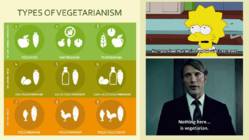
valves or rhythm, but most conditions are caused by the hardening or clogging of arteries. Coronary artery disease is associated with the hardening of arteries that supply blood to heart muscle and is, in most cases, preventable and even treatable as it’s often found to be caused by poor lifestyle choices.1 These lifestyle choices include unhealthy dietary choices, lack of exercise and cigarette smoking. Other risk factors appear to be diabetes, high blood pressure, stress and history of heart disease running in the family. 2 A plant based diet is solely based on foods that are derived from plants. Individuals who follow a plant based diet exclude all animal products from their diet. They don’t consume any meat, dairy products or eggs, as well as other products that are either derived from animal sources, or are processed and contain traces of those products. A plant-based diet is also known as the vegan diet, which is a more restrictive form of a vegetarian diet
History: · Indian society is predominantly agrarian. Diet consists mainly of fruits and vegetables, meat, cereals, dairy products and honey. Also, drinks containing different types of spices. · During the Gupta empire influenced by diet buduism and jainism. Many religious people were vegetarians. Most of the people consumed the chickens, sheep and goat meat. · Muslims also put emphasis on the development of food. Indians brought to the diet of dried fruit and flat bread. India introduced the dietary habits of the Portuguese and Chinese. · Indian diet is mixed with a variety of cultures. Etiquette: · Traditionally, meals were eaten while seated either on the floor or on very low stools or cushions. · Food is most often eaten without cutlery, instead using the right hand. Among the middle class throughout India, spoons and forks are commonplace. · Hot food is served on banana leaves, the leaves a
Pavel Tsatsouline Pete Egoscue Phil Libin Ramit Sethi Ray Cronise Scott Jurek Sean Bonner Tallulah Sulis Terry Laughlin The Dexcom Team (especially Keri Weindel) The OneTaste Team The Kiwi The Kiwi Thomas Billings Tracy Reifkind Trevor Claiborne Violet Blue William Llewellyn Yuri V. Griko PhD Zack Even-Esh START HERE THINNER, BIGGER, FASTER, STRONGER? How to Use This Book How to Use This Book Does history record any case in which the majority was right? --Robert Heinlein I love fools' experiments. I'm always making them. --Charles Darwin MOUNTAIN VIEW, CALIFORNIA, 10 P.M., FRIDAY horeline Amphitheater was rocking.
those of the old wine countries, that the continent's finest wines are produced. Today the best of South African wine is up there with the rest, while in the "easy-drinking" category no one beats us. History has a way with wine and the Cape's wine culture, which goes back 350 years, is one that reflects the country's sad colonial and apartheid past, but also shines with the potential and expectation of the modern wine world. From that long history comes a wine tradition of tastes and styles with its roots in the classic "Old World" of France, Germany and Italy, but also an acute awareness of the contemporary consumer, as has been defined by wine-making in the "New World" of California and Australia. It has often been said that South African wine is in the unique position of both those wonderful worlds. It offers marketing possibilities that can be harnessed for the challenges of the new global economy
.........................................................................................7 Economy.........................................................................................................................8 Sports..............................................................................................................................9 Culture.............................................................................................................................9 History.............................................................................................................................9 Government...................................................................................................................10 Conclusion....................................................................................................................11 Materials...................................................................................................
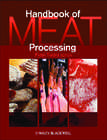
Handbook of Meat Processing Handbook of Meat Processing Fidel Toldrá EDITOR A John Wiley & Sons, Inc., Publication Edition first published 2010 © 2010 Blackwell Publishing Blackwell Publishing was acquired by John Wiley & Sons in February 2007. Blackwell’s publishing program has been merged with Wiley’s global Scientific, Technical, and Medical business to form Wiley-Blackwell. Editorial Office 2121 State Avenue, Ames, Iowa 50014-8300, USA For details of our global editorial offices, for customer services, and for information about how to apply for permission to reuse the copyright material in this book, please see our website at www.wiley.com/ wiley-blackwell. Authorization to photocopy items for internal or personal use, or the internal or personal use of specific clients, is granted by Blackwell Publishing, provided that the base fee is paid directly to the Copyright Clearance Center, 222 Rosewood Drive, Danvers, MA 01923. F
and over the surrounding vegetation. There are eleven species of sunflower recorded from Kansas. Most of them are perennials. Only the common sunflower and H. petiolaris, the Prairie Sunflower, are annuals. Identification of sunflowers can be very complicated because they frequently hybridize and even within species there is a high degree of variability. With a little practice, however, the most common species can be readily recognized. The Common Sunflower has a long history of association with people. Nearly 3,000 years ago it was domesticated for food production by the Native Americans. The seeds of the wild type of sunflower are only about 5 mm. long. It was only through careful selection for the largest size seeds over hundreds of years that the cultivated sunflower was produced. Lewis and Clark made mention in their journals of its usage by the plains Indians. It was brought back to the Old World by the early European explorers and widely cultivated there also
Australia, the Victorian gold rush in the 1850s transformed the small pastoral settlement into a growing metropolis. By 1865, "Marvellous Melbourne" was Australia's most populous and important city and served as the national capital from the Federation of Australia until the construction of Canberra in 1927. Melbourne today is a major centre of commerce, industry and the arts. Often referred to as the "sporting capital of Australia" the city has a rich sporting history and is home to most of Australia's major annual sporting events. Melbourne is located in the southeastern corner of mainland Australia, and is the southernmost mainland capital city. Melbourne is typical of Australian capital cities in that it was built with the underlying notion of a "quarter acre home and garden" for every family, often referred to locally as the Australian Dream. The phrase "four seasons in a day" is part of popular culture and observed by
 annaabi.ee

























Kõik kommentaarid