 10 punkti
Autor soovib selle materjali allalaadimise eest saada 10 punkti.
10 punkti
Autor soovib selle materjali allalaadimise eest saada 10 punkti.
 ~ 1 leht
Lehekülgede arv dokumendis
~ 1 leht
Lehekülgede arv dokumendis
 2010-02-03
Kuupäev, millal dokument üles laeti
2010-02-03
Kuupäev, millal dokument üles laeti
 4 laadimist
Kokku alla laetud
4 laadimist
Kokku alla laetud
 0 arvamust
Teiste kasutajate poolt lisatud kommentaarid
0 arvamust
Teiste kasutajate poolt lisatud kommentaarid
 Aadu Tamm
Õppematerjali autor
Aadu Tamm
Õppematerjali autor
Holidays, Festivals, Cultural events TALLINN - If you're looking for entertainment in Estonia this summer, you are really spoiled for choice. Festivals and events dedicated to the consumption of beer are a lot of fun, but if you want to get the true feel of the country, you need something a little more ethnic. Like a town fair. Just as July becomes August, the seaside town of Haapsalu will host a grand spectacle of rural Estonian entertainment. The White Lady Days is a summer celebration filled with amusement for all the family. Held in and around the remains of the Teutonic-knights-era castles, the fair combines enchanting medieval legends with modern countryside charm to create a comprehensive experience of Estonia beyond the big cities. But the legend of the White Lady of Haapsalu, which is at the heart of the festival, is perhaps the most famous tall tale of the many that are so abundant in Estonia's folklore.
resold them to the Livonian Order. The Germans renamed Tallinn and called it Reval. Toompea became the seat of the German-born gentry. A fortified wall was built between Toompea (the Upper Town) and the Lower Town, as there were conflicts between the two. The Lower Town was the home of simple people, the artisans and the merchants. The doors and gates in the wall were locked at night. Tallinn joined the German-dominated Hanseatic League in 1285 and became a junction of trade between East and West: furs, honey, leather and seal fat moved west, while salt, cloth, herring and wine moved east. Its geographical position was very favourable, with its wide bay protected by the two outlying islands of Aegna and Naissaar for a large port. Tallinn developed along three lines: fortress, port and market town. Tallinn grew rapidly and had developed into a well-known trading centre by the 15th century. Unfortunately,
In the middle of the 14th century Denmark sold its possessions in Estonia to the German Teutonic Order; Toompea became the seat of German-born gentry. A fortified wall was built between the Toompea (the Upper Town) and the Lower Town (inhabited by people of a lower social standing), as there were conflicts between the two. The doors and the gates of the wall were locked at night, a procedure which carried on until the end of the 19th century. Tallinn joined the German-dominated Hanseatic League in 1285 and became a junction of trade between East and West: furs, honey, leather and seal fat moved west, while salt, cloth, herring and wine moved 'in the opposite direction. As salt was an important trading commodity, Tallinn is said to have been built on it. Its geographical position was very favourable, with its wide bay protected by the two outlying islands of Aegna and Naissaar; it proved a suitable place for a large port. By the 12th century
white cross on it dropped down upon them from the heavens. This is allegedly how the Danes obtained their national flag, the Dannebrog in a battle against the Estonians. In the middle of the 14th century Denmark sold its possessions in Estonia to the German Teutonic Order. Toompea became the seat of the German-born gentry. A wall was built to separate the Upper Town and the Lower Town. In 1285 Tallinn joined the Hanseatic league and became a junction of trade between East and West. Tallinn is said to be built on salt, as it was an important trading commodity. In the 16th century Tallinn had a population of about 7,000 8,000 making it one of the biggest cities in northern Europe. In 1629 Sweden took control of the whole of Estonia. Though hard times continued, the period that followed is known as the "good old Swedish era": foundations were laid for
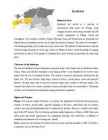
TALLINN History Tallinn is one of the oldest cities in the Baltic Sea region. Tallinn was first mentioned in written sources of the 1154th, when the Arabian geographer Al Idris took a world map the city 'Kaleveny "/ Kolõvan. Through the years, the city of Tallinn had several names: Lindanisa, Kolõvan, Reval and eventually Tallinn. Tallinn was granted the Lübeck law in 1248 and became the member of the Hanseatic League in 1285. General Data l Country - Estonia l County - Harju County l First appeared on map - 1154 l Town rights - 1248 l Mayor - Edgar Savisaar l Aera - Total 159.2 km2 (61.5 sq mi) l Population - (1 Mar 2012) Total - 416,470 Denisty - 2,614.0/km2(6,766.6/sq mi) Tallinn Coat of arms Flag Top 5 Attractions 1. Kiek in de Kök Visitors to the museum will see examples of Medieval firepower,
tourism.tallinn.ee/eng/fpage/explore/churches#!p_307 Old Town Twisting cobblestone lanes and iron street lamps. Gothic spires and medieval markets. Cappuccino and Wi-Fi. This is the city's famous Old Town. If you're looking for that mix of historic ambience and cutting-edge culture that defines Tallinn, you'll find it here. Built up from the 13th to 16th centuries, when Tallinn or Reval as it was known then was a thriving member of the Hanseatic trade league, this enclosed neighbourhood of colourful, gabled houses, half-hidden courtyards and grandiose churches is, quite rightly, the city's biggest tourist draw. And the fact that it's all neatly packaged within a mostly-intact city wall and dotted with guard towers gives it an extra dose of fairytale charm. http://www.tourism.tallinn.ee/eng/fpage/explore/attractions/old_town Kiek in de Kök
Some are so different that they do not even remotely resemble the original festival despite sharing the same name and date. There are also various local festivals (e.g. Tobata Gion) that are mostly unknown outside a given prefecture. It is commonly said that you will always find a festival somewhere in Japan. Matsuri is the Japanese word for a festival or holiday. In Japan, festivals are usually sponsored by a local shrine or temple, though they can be secular. There is no specific matsuri days for all of Japan; dates vary from area to area, and even within a specific area, but festival days do tend to cluster around traditional holidays such as Setsubun or Obon. Almost every locale has at least one matsuri in late summer/early autumn, usually related to the rice harvest. Notable matsuri often feature processions which may include elaborate floats. Preparation for these processions is usually organized at the level of neighborhoods, or machi. Prior to these,
tastes and also accommodation with food in reasonable prices. There is no need to travel long distances abroad, because one can enjoy hiking, cycling, canoeing and swimming just in the area of Straitland. All the main sightseeings can be easily reached by buses, electric trains and ferries. Culture Life The identity of every city is created by its symbols, which are made up of historical buildings, monuments, holy places, people and traditions. And so it is with Pärnu. The Hansa Days, which have become a tradition and will be crowned by the International Hansa Days to be organized by Pärnu in 2010, brings artists onto the streets. The main centers for cultural activities are Enda Theatre, built in the 1960s, which greets visitors riding in from Tallinn and the Pärnu Concert Hall, located on the riverbank next to the bridge, which has a grand hall with an organ and extraordinary acoustics. Of the Pärnu festivals, many are related to music
 annaabi.ee









Kõik kommentaarid