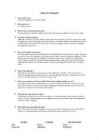
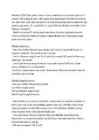
· Touching other person Showing worry · Head lowered · Hand touching the forehead · Eyes closed or narrowed · Body crooked · Steady gaze Showing regret · Sad look · Head leaned on hands · Sight pointed down · Crooked pose Showing annoyance · Mouth straight or open · Rolling eyes or eyes wide open · Wrinkled eyebrows Showing sorrow · Red eyes - tears · Eyes pointed to one place · Face cowered with hands · Head lowered · Twisted pose · Legs steadily side by side
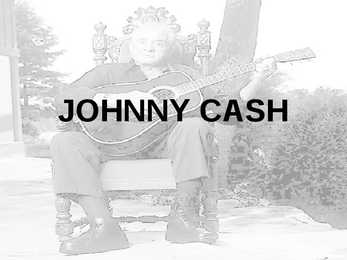
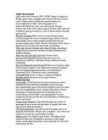
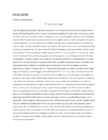
JOHNNY CASH General information · 26. 02.1932 12.09.2003 · American country singer-songwriter · Deep, distinctive voice · Sorrow, moral, moral tribulation, redemption · 90 million albums Early life · Kingsland, Arkansas · 7 children · Death of brother Jack First marriage · Vivien Liberto · August 7, 1954 · 4 daughters · Divorce 1966 Early career · Memphis, Tennessee · "Hey Porter" · "Cry, cry, cry" · Sun -> Colombia Records · "Don't Take Your Guns to Town" Outlaw image · Drinking, amphetamines, barbiturates
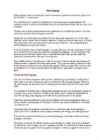
Nobody can win a war. People started to make a war thousands years ago. During this time they had different purposes, but the final was the same a war caused a great deal of sorrow. But is it worth fighting? Are there any winners or losers in war? Firstly, both sides get bored with a feud. It makes much money, physical and moral strength. Not only soldiers civilian population gets tired of being in a danger and worrying about relatives and friends. Secondly, the consequences of a war are horrible. Terrible memories would not leave people. Every time they recall those events, they suffer again because no one is able to make somebody happy fighting.
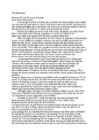
Sellise suure veetee muudab ebastabiilseks jõe äärmiselt suur settesisaldus. Kuna setteid on kohati 60 protsenti jõe mahust, muudab nende sadestumine pidevalt Kollase jõe sängi. Samuti võivad need luua takistusi, mille tulemuseks on vee tõusmine üle kallaste. Juba kolmandast sajandist alates on sellega tegelenud veeinsenerid, kuid ka tänalpäeval nurjab jõgi paemaidki püüdluseid. Kasutatud lingid: http://www.damninteresting.com/chinas-sorrow/ Andrea Ani 8.a http://www.hkhk.edu.ee/vanker/looduskatastroofid/hiina_leujutus.html http://kes-kus.ee/looduskatastroofide-aabits-geoloogist-akadeemik-anto-raukas-haarab- kirkale-sarnaneva-sule-inimene-on-looduse-ees-pilbas-vaidab-raukas-ning-kui-emake- loodus-astub-ei-jaa-meist-midagi-jarele-nii-e/ Andrea Ani 8.a
The sentences was quite long. 7. Who is main character? What is he like? How does he change during the story? The main character is Jacob Jankowski. He is an emotional and extremely kindhearted person, who loves animals and can't see them suffer. In the beginning he is modest and quite shy, but as the story progresses, he becomes bolder and mentally stronger. 8. What did you enjoy about the book? I loved how the book was a mix of varied emotions joy, sorrow,suffering, which made the book less tedious. The other thing that made the book enjoyable was the need to know what would happen next, which was really compelling. 9. What didn't you enjoy about the book? Since the book was in a foreign language, it was sometimes hard to understand some words and that tired me. A somewhat negative thing was not being able to tune myself out of the story.
adventures in order to win the heart of his heroine. Courtly love-lover idealised and idolised his beloved. Romances are divided:1)the matter of Britain:stories that centre on the pseudo-historical King Arthur2)the matter of Troy:tales of the classical world3)English Breton lays:short poems or songs that tell stories of otherwordly magic. .Humorous beast epics,the lyric .Lyrics were short songs.Expressed thoughts of feelings of a speaker.Religious lyrics expressed sorrow for the Christ on the cross and for Mary. Ballads about the supernatural:stories of ghosts and demons,Romantic trgedies-separation of lovers,ballads about crime and its punishment Mystery palys:were based on the stories from the Bible.Each play was a single episode,example:the Fall of Lucifer,Noah`s Flood.Together they formed the mystery cycle which told the story of Christianity.Miracle plays:were dramatasations of the saints and were performed during Christmas and Easter
.. (I wish you)... Inside of your hand (Never had met me) G#(hold) A# And you played it... (Tears are gonna fall)... To the beat (Rolling in the deep) G# A# We could have had it all Cm A# Rolling in the Deep G# Your had my heart Inside of your hand A# And you played it To the beat Cm (hold) Throw yourself through ever open door (Whoa) Count your blessings to find what look for (Whoa-uh) Turn my sorrow into treasured gold (Whoa) And pay me back in kind- You reap just what you sow. Cm A# (I wish you... Never had met me) G# A# We could have had it all (Tears are gonna fall... Rolling in the deep) Cm A# We could have had it all yeah ( I wish you... never had met me) G#(Hold) It all. (Tears are gonna fall)
yet soon Night closes round, and they are lost for ever: Or like forgotten lyres, whose dissonant strings Give various response to each varying blast, To whose frail frame no second motion brings One mood or modulation like the last. We rest. A dream has power to poison sleep; We rise. One wandering though pollutes the day; We feel, conceive or reason, laugh or weep; Embrace fond woe, or cast our cares away: It is the same! for, be it joy or sorrow, The path of its departure still is free: Man's yesterday may ne'er be like his tomorrow; Nought may endure but Mutability.
Hukkunud bassisti mälestuseks avaldasid metallistid 1988 videokogumik "Cliff `Em All", mis oli kokku pandud kontsertesinemistest. Seejärel osales Metallica tuuril "Monster Of Rock", kus tegid kaasa ka Van Halen, Scorpions ja Kingdom Come. Sama aastas septembris ilmus neljas LP "... And Justice For All", mis kadus lettidelt nagu soe sai. Plaadiga kaasnes maailmaturnee; ainuüksi USA-s esines Metallica 120 korda suurel laval. Esimest korda avaldas bänd oma plaadilt singlit "Harvester Of Sorrow" ja "One" -, millele veidi hiljem tehti ka videod. Kaunis ja lihtne plaat "Metallica" (The Black Album) ilmus 1991.aastal. Selle plaadiga kaasnes Metallica hüüdlause "no Rules But Metallica Rues". Singlina ilmusid "Enter Sandman", "Sad But True", "Nohting Else Matters" ja "Wherever I May Roam". Alates 1991. aasta juulist kuni 1993. aasta augustini andis Metallica 300 kontsertit. Ühel 1992. aasta esinemisel juhtus laval tuleõnnetus, milles James Hetfield sai põletushaavu.
Lear and Cordelia are captured. In the climactic scene, Edgar duels with and kills Edmund; we learn of the death of Gloucester; Goneril poisons Regan out of jealousy over Edmund and then kills herself when her treachery is revealed to Albany; Edmund’s betrayal of Cordelia leads to her needless execution in prison; and Lear finally dies out of grief at Cordelia’s passing. Albany, Edgar, and the elderly Kent are left to take care of the country under a cloud of sorrow and regret. King Lear - The aging king of Britain and the protagonist of the play. Lear is used to enjoying absolute power and to being flattered, and he does not respond well to being contradicted or challenged. At the beginning of the play, his values are notably hollow—he prioritizes the appearance of love over actual devotion and wishes to maintain the power of a king while unburdening himself of the responsibility. Nevertheless, he inspires loyalty in subjects such as
If you raise your eyebrows and keep them raised for a while it signals surprise and astonishment - perhaps even indignation. When the raised eyebrows are used along with a wink you are flirting. This can cause problems. For example, in Japan where it is considered very inappropriate, practically improper, to use eyebrow raising at all. Tears and laughter are forms of expression that we think are fairly easy to interpret. However, tears are used to express many different things - sorrow, joy, and anger. Laughter can be a sign of happiness and friendliness, but also of contempt and sarcasm. Sometimes we also laugh if we are scared, or if we experience something very horrifying. Occasionally, people who work with other people in the welfare or health sectors can happen to laugh if they learn of something particularly tragic - maltreatment, violence, or death. This is likely to be a response to protect their own sanity from the horror of many incidents they face in
That way, more people could learn to read and write. The oral tradition began to loose power both in literature and in the Church affairs. Thomas More(1480-1535) One of the gratest of all English humanists mainly for the book Utopia, written in Latin, in which were about an imaginary island where everything was perfect. Utopia means "nowhere" in Greek. Thomas new clearly that such an island could never exist. This dream of a place where happiness reigns and sorrow is banished is the most persistent of human fantasies and became a recurrent theme in many other british literature works. He was beheaded in 1535 for refusing to support his king's (henry viii) decision to break away from the catholic church. William Shakespeare(1564-1616) is considered the greatest of all English authors; his texts and plays are known worldwide and are updated constantly. Though few is known about his
The ancestors of the aborigines come in all shapes and sizes, in some ways they are very similar to Greek Gods and Goddess', in that they usually represent a certain theme. Such as the sky, or water. During the Dreaming the ancestors criss-crossed Australia shaping the land into its current state as the went. The Aborigines also consider certain constellations to be ancestors . Death was always a time of sorrow and supernatural fear among traditional ATSI people(Aboriginal and Torres Strait Islander people.) . Wailing or crying was a common occurrence among the mourners who often painted their bodies with pipe clay, red ochre, or charcoal when a relative or friend died. In some districts people wore a head covering made of feathers. Others beat their bodies with sticks or clubs, or cut themselves with shells or stone knives to cause bleeding. In
Compassion-in taking the role of the other, I act in order to bring change that may relieve pain. What is the difference between sympathy, empathy and compassion? These three concepts tend to be confused in the minds of many as similar or even the same, but they are not. They are vastly different and elicit from the respondent three different types of behavior. These three behaviors can best be illustrated with the following graphics. 1. In Sympathy there is sorrow for the other in need. But with sorrow there is also a sense of distance, separation from the other, an "I'm not like you" type of response. Even though there is an emotional response, the "bridge of identification" with the other has not been crossed. 2. In Empathy there is not only sorrow, but also an identification with the other in need. Here the person crosses the "bridge of identification" and enters into the emotional sphere of the other and identifies with the pain
Shakespeares ideal beauty differed greatly from the traditional beauty of the time. The Earl of Southampton was his friend. Comedies The Taming of the Shrew, A Mid-Summer Night's Dream, The Twelth Night, Much Ado About Nothing, The Merchant of Venice, The Merry Wives of Windsor, The Two Gentlemen of Verona, As You Like It. Although the comedies take place in Italy, they reflect Renaissance England and the characters are men and women whose raison d'etre is enjoying life. There is sorrow and heartbreak in the comedies, but the ending is always relatively happy. The aim of the autho is to take the reader away from everyday troubles. The comic effect comes through comic characters and situations. Shakespeare believed in man's virtues. He hoped that man would achieve his happiness. Love of life. The problems ae serious. Comedies often contain deep philosophical thoughts and problems. Light and playful manner, smooth language.
author is aware of fact that his beloved Lady is not true to him and he can't trust his friend either. This makes the author suffer twice. So one can find traditional triangle of love in the sonnets. Comedy Bright in I period and dark in the II. Characterstic features are: 1. Although the comedies take the reader to Italy they reflect England in the Renaissance period 2. The characters are Renaissance men and women whose aim in life is to enjoy life. 3. Sometimes the comediesare full of sorrow and heartbreak but they always have a happy end. 4. The Author's aim is to take the spectator away from everyday troubles. 5. Used funny situations and funny characters for comic effect. 6. Belives in man's virtues. 7. The language is smooth and flowing. 8. The problems of comedies are serious at core (olemuselt, tuumalt) and they contain deep philosophical thoughts. "A Midsummer Nights Dream" "The Merchant of Venice" "Much Ado About Nothing" "The Marry Wives of Windsor"
(Poe, 1850). A less obvious symbol, might be the use of "midnight" in the first verse, and "December" in the second verse. Both midnight and December, symbolize an end of something, and also the anticipation of something new, a change, to happen. The midnight in December, might very well be New Year's eve, a date most of us connect with change. The chamber in which the narrator is positioned, is used to signify the loneliness of the man, and the sorrow he feels for the loss of Lenore. The room is richly furnished, and reminds the narrator of his lost love, which helps to create an effect of beauty in the poem. The tempest outside, is used to even more signify the isolation of this man, to show a sharp contrast between the calmness in the chamber and the tempestuous - tormiline - night. 4. IBSENI JA STRINDBERGI OLULISEMATE NÄIDENTIE PROBLEEMISTIK
15 Kristel Lepik SOSE.01.139 27.01.2006 Lisa 1 Immortal Aphrodite, beautiful-throned, wiles-weaving child of Zeus, I beg you, Queen, do not torment my heart with sorrow and pain but come and help me again as you did before when having heard my pleadings from far away you left your father's golden palace and yoked to your shining chariot swift, lovely sparrows that brought you over the dark earth, moving their thick-feathered wings through the sky's bright ether. Quickly they arrived; and then you, Goddess, with a smile on your unaging face you asked me what is wrong with me this time and why I am calling you again and what my wild heart wishes again
150. He that wrestles with us strengthens our nerves and sharpens our skill. Our antagonist is our helper. 151. The ultimate goodness is not to be afraid. 152. The root of beauty is courage. 153. Courage is not simply one of the virtues, but the form of every virtue at the testing point. 154. Without courage, all other virtues lose their meaning. 155. Courage is resistance to fear, mastery of fear - not absence of fear. 156. Have courage for the greatest sorrow of life, and patience for the small one; and when you have laboriously accomplished your daily task, go to sleep in peace. God is awake. 157. The true test of character is not how much we know how to do, but how we behave when we don't know what to do. 158. Reputation is what you are in the light; Character is what you are in the dark. 1. Do not be deluded. 2. If you can't help being deluded, do not judge others, and do not feel guilty. 3
superseded style. They painted more in the spirit of good-natured reporting, not social protest. The attitude towards life was altered. Their unifier was the opposition to the feeble academic art of the time. Vibrant and life-oriented paintings impressed the public and their realism was endowed with the name "The Ashcan School". They revived a protestant mood in art by attacking urban ugliness and breaking from academia. Among the themes are urban life, physical action, manly virtue, human sorrow, solitude, common man and landscapes. Pendergast is considered the first true American modernist. Exemplary artist. Robert Henri (early-C20). He is considered the leader of "The Eight". He preferred older European masters over the moderns like Monet, Cézanne and Renoir. His style has been called "dark Impressionism". His paintings are sharply observant. Subsidiary artists: John Sloan, George Luks, William Glackens, Everett Shinn, Maurice Pendergast, Ernest Lawson, Arthur B. Davies.
superseded style. They painted more in the spirit of good-natured reporting, not social protest. The attitude towards life was altered. Their unifier was the opposition to the feeble academic art of the time. Vibrant and life-oriented paintings impressed the public and their realism was endowed with the name "The Ashcan School". They revived a protestant mood in art by attacking urban ugliness and breaking from academia. Among the themes are urban life, physical action, manly virtue, human sorrow, solitude, common man and landscapes. Pendergast is considered the first true American modernist. Exemplary artist. Robert Henri (early-C20). He is considered the leader of "The Eight". He preferred older European masters over the moderns like Monet, Cézanne and Renoir. His style has been called "dark Impressionism". His paintings are sharply observant. Subsidiary artists: John Sloan, George Luks, William Glackens, Everett Shinn, Maurice Pendergast, Ernest Lawson, Arthur B. Davies.
Exeunt 13 SCENE II. A room of state in the castle. Enter KING CLAUDIUS, QUEEN GERTRUDE, HAMLET, POLONIUS, LAERTES, VOLTIMAND, CORNELIUS, Lords, and Attendants KING CLAUDIUS Though yet of Hamlet our dear brother's death The memory be green, and that it us befitted To bear our hearts in grief and our whole kingdom To be contracted in one brow of woe, Yet so far hath discretion fought with nature That we with wisest sorrow think on him, Together with remembrance of ourselves. Therefore our sometime sister, now our queen, The imperial jointress to this warlike state, Have we, as 'twere with a defeated joy,— With an auspicious and a dropping eye, With mirth in funeral and with dirge in marriage, In equal scale weighing delight and dole,— Taken to wife: nor have we herein barr'd Your better wisdoms, which have freely gone With this affair along. For all, our thanks.
helplessly in the dark while the bombs fell above them. The Germans repel the attack and reach the enemy lines. They wreak havoc and destruction before grabbing all of the provisions they can carry. They run back to their position to rest for an hour. They devour the tins of food they have gathered, noting that the enemy has far better provisions than they do. Later, Paul stands watch. Memories of the past come to him. The calm and quiet memories bring sorrow rather than desire. He muses that desires "belong to another world that is gone from us." He is sure that his youth is lost and that he has become permanently numb and indifferent. Days pass while dead men accumulate on both sides. Paul and his comrades listen to one man's death throes for three days. They are unable to locate him despite their best efforts. The new recruits figure heavily in the dead and wounded; these reinforcements have had little
Kalli-kalli kohtumine armsa Velli rühmaga, kes parasiteeris seal juba teist päeva. Oh seda kohtumisrõõmu ja muljetamist! Karges hommikus tõusis rahvas üksteise järel siksak-rada pidi üles mäkke, vastu päikesekiirtele, mis minu objektiivi kinni jäid. Kuna mul jäi põlv ,,teipimata", siis kasutasin kingitud tunnid vaikuse, kõrtes sahistava tuule ja pisikeste mägiõite mällu ja objektiivi fikseerimiseks. SORROW, SO TRUE! Päikesest ja tuulest õhetavate rändurite kohtumispaik restoran sumises lõbusalt. Tellitud friikartulite saabumise aegluse tõttu järeldasime, et nad lähevad iga tellimue jaoks eraldi alla kartulite järgi. Enne jõuti kaks õlut juurde tellida kui esmatellimeuse friikartulid toodi. Aga meil
secondary education in the native language of Estonians. In Estonian literature critical realism came to the fore, exemplified in the works of Eduard Vilde, many of which have a strong social background; Külmale maale (To the Frozen North, 1896), for example, depicted the poverty and decline in village life. At the same time the mature works of the poet Juhan Liiv (1864-1912) had a great impact reflecting both the sorrow he felt about the problems of Estonian society and the adoration he had for his country. In the visual arts realism was adopting modern trends. Many artists took their subject matter from rural life. Kristjan Raud (1865-1943) became the first whose charcoal drawings and paintings reflected national symbolic backgrounds. As the opportunities for artists to work in Estonia improved, Kristjan Raud and Ants Laikmaa 1
should be mentioned, and the request made. The communication excited many professions of concern; and enough was said of wishing them to stay at least till the following day to work on Jane; and till the morrow their going was deferred. Miss Bingley was then sorry that she had proposed the delay, for her jealousy and dislike of one sister much exceeded her affection for the other. The master of the house heard with real sorrow that they were to go so soon, and repeatedly tried to persuade Miss Bennet that it would not be safe for her--that she was not enough recovered; but Jane was firm where she felt herself to be right. To Mr. Darcy it was welcome intelligence--Elizabeth had been at Netherfield long enough. She attracted him more than he liked--and Miss Bingley was uncivil to her, and more teasing than usual to himself. He wisely resolved to be particularly careful that no sign
T h e absence of things that were normally taken for granted created a renewed appreciation for them. It also focused the minds of the people and reminded them o f the possibility o f death that was always near. Lamentation was an important part of the ritual at this point. People were supposed to meditate sympathetically on the death of the hero-god-king until the tears ran down their faces. Special songs were composed with the aim of triggering the emotions of grief and sorrow. T h e dramatic form of tragedy was developed from the rituals, chants, and dances of mourning that tried to evoke sympathy for the suffering god or king. Tragedy comes from the word "tragos" or goat, because goats were often used as sacrificial stand-ins for the yearly sacrifice of the king. T h e Purgation phase of seasonal rituals was marked by cleansing the body and the environment as much as possible. People would bathe and anoint themselves
Barber, meanwhile, exploded the other Mitsubishi. Lanphier shook his pursuers in a speedy climb to 20,000 feet, and he and all the other members of the mission except one returned safely to Henderson. Deep in the Bougainville jungle, Yamamoto's devoted aide found his admiral's charred corpse still in its seat, its chin on a samurai sword. The body was extricated with care and solemnly burned. On May 21 a Japanese newscaster announced, in tones heavy with sorrow, that Yamamoto, "while directing general strategy on the front line in April of this year, engaged in combat with the enemy and met gallant death in a war plane." Toward the end of the communique his voice became choked, as if through tears. As Layton and Nimitz had foreseen, Yamamoto's death stunned the entire nation. On June 5, his ashes were interred with great pomp in Tokyo's Hibiya Park in the presence of the government and an immense and silent crowd. The death of the great popular hero
 annaabi.ee