Estonians and their habits There are hundreds of different countries and nationalities in the world and each one is peculiar in its own way. For example, Italians are very impulsive. French people don't like the British. Germans are pedantic. Russians are generous, but lazy. What about Estonians? In Estonia when a stranger on a street smiles at you, you can assume that: he is either drunk, insane, from another country or all of the above. Estonians don't smile too often. Estonians are not very talkative either. In Estonian schools teachers have stopped asking their students "Are there any questions?" It is especially hard to keep a conversation flowing with an Estonian when you don't know each other very well.
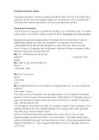
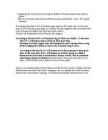
Comparing the two pie charts showing the hobbies of estonian and russian youth in tallinn. What can the reasons behind these differences and similatities be. source: 56 "puzzle" textbook According to the data 21.0% of Estonians play sports in their spare time. At the same time 31.5% of Russians play Sports as a hobby. Russians appear to care more about their body. Russians are athletic and they have good coaches. Russians are temperamental but Estonians are sluggish. According to the data 14.4% of Estonians sing in Choirs as a hobby . At the same time 3.1% of Russians sing in Choirs in their spare time. Estonians are better singers than the Russians because Estonians have a song festival. Singing Revolution is reason why Estonians sing so much. According to the data 10.7% of Estonians are in dance groups in their spare time. At the same time 19.1% of Russians are in dance group as a hobby.
Estonian youth attending hobbies. The report is based on the Estonian Human Development Report. This report describes the ratios regarding to the Estonian and Russian youth living in Tallinn doing sports, learning languages, dancing and singing folk music. The first hobby I am going to compare is sport. 21.0% of Estonian youngsters said that their favorite hobby is sport and 31.5% of Russian young people said that it is their favorite hobby too. So we can say that Russians are more active than Estonians. We can also say that Russian youngsters take more care about their bodies and health than Estonians. The second hobby I questioned them about was dancing. Dancing can actually be considered as a sport too, so it is also good for the human body. 10.7% of Estonians told me that they love dancing and that they go to dance classes regularly. 19.1% of the Russians said that dancing is a part of their lives. So I can say it again: the young Estonians do not have as
people aren't as intelligent as they are and call them violent and dumb. Some even are, but that doesn't mean that all white people in America are good intelligent. In my opinion white people aren't more intelligent than black people. Mostly black people live in poor South countries, wich can't give a good education to their people. There aren't any racism in Estonia with skin color. People don't discriminate black people. But there is racism between russians and estonians. Russia has declared war many times on Estonia and has ruled Estonia for many centuries. And now, when Estonia is an independent country, estonians don't like that there are so many russians living here. Big part of russians can't speak estonian language properly, so that makes things worse. I think that if estonian russians would learn estonian language and speak it properly, then estonians would accept them
biases colored his writing, likely distorting the truth as to how things actually were and how events actually happened.1 The same can be said of chronicles written by German B. Russow, who praised Swedish rule, and D. Fabricius, a Catholic Pole who favored Polish rule and rendered a Polish perspective of history. Russian history during the imperial period also shows such an ideological influence. Juri Fiodorovitsch Samanarin, for example, strove to explain to the Russians its mission and identity as the ruling people, not merely a minority, 1 Johann Renner, "Liivimaa ajalugu 1556-1561" (Tallinn: Olion, 2006), 2-13. and to show to the native peoples that they were second rate citizens. Jefgraf Vassilievitsch Tscheshikhin also displayed such partiality when he wrote, "There can be no place in Russia . . . for any patriotism other than Russian patriotism."2 Their and other histories raised the place of Russians to that of
Tolerance and diversity. People from different nationalities living in our country, they are obviously already a quarter of our population. Therefore our country´s population has several diversities. Firstly, I am going to discuss about how a minority in the population of our country. almost 20 percent of all the people in Estonia are Russians. Many of them live on the east side of our country near the Estonian-Russian border. It often happens that they do not speak our language. This creates tensions between people our country. Secondly, since there are differences in the population inside our country, there are differences in the language, aswell. For example, there are regions on bigger towns where in the streets I can hear only Russian. most older and middle aged people can speak in russian. Since there
out all those things. Just like all valuable things are uncommon, tolerance is rare too. It is caused by the fact that comparing to the previous centuries people have changed more self-centered and envious, forgetting others around. Tolerance as a characteristic feature is an acknowledged ideal in today`s modern society. The democratic state is based on tolerance. Over the last few years the attitude against ethnic monorities has been a frequently discussed topic in Estonia. Russians, who settled in Estonia during the USSR occupation are causing economical, racial and religious conflicts between them and Estonians. Although Estonians don't have any particular reason why we don't accept Russians as equals, we are used to just unaccept them. Religous percecution is a serious side of intolerance. Jew-baiting has been the bitterest case in history. Their percecution was caused by their antichristian beliefs and holding on to their own religion
Tallinn Jane Jaakson, Kärt Aulik Leisi Secondary School Form 9 2015 Tallinn Location: Estonia ● Harju County ● ● near The Gulf of Finland South of Helsinki ● East of Stocholm ● West of St. Petersburg ● Tallinn Population: ● about 440,000 (1January 2014) ● 53,2% Estonians ● 38,1% Russians ● 0,6% Finns ● 6,3% others Tallinn Tourism: 58 museums ● 10 cinemas ● 247 hobby schools ● 40 art galleries ● Tallinn Symbols: Flag ● Coat of arms ● Old Toomas ● ● Toompea tower Tallinn References: www.Google.com ● Www.Tallinn.ee ● Www.Wikipeedia.ee ●
KURESSAARE C.K 2017 Kuressaare ◦ First appeared on map - 1154 ◦ Mayor - Madis Kallas ◦ Area - 14.95 km2 ◦ Population - 13,166 Ethnicity: • Estonians 97.6% • Russians 1.2% • Finns 0.3% • other 2,4% Sights ◦Kuressaare Castle (Saaremaa Regional Museum) ◦Kuressaare St. Lawrence Church ◦Statue of mythological hero Suur Tõll and his wife Piret ◦Town theater ◦Famous for annual Saaremaa Opera Days, which are held every summer TOKYO Tokyo ◦Country - Japan ◦Governor - Yuriko Koike ◦Metropolis - 2,187.66 km2 ◦Population - 13,617,445 ◦Flower - Somei-Yoshino cherry blossom ◦Tree -Ginkgo tree ◦Bird - Black-headed gull Sights
Barclay de Tolly karjäär nooremohvitserist väejuhiks oli suhteliselt aeglane, kuid kulges sealt edasi peadpööritava kiirusega. Kolme aastaga sai tavalisest kindralmajorist Venemaa sõjaminister. Michael Andreas Barclay de Tolly on läinud ajalikku süsteemse, ja distsiplineeritud sõjamehena. Tuntakse teda, kui vaprat ja ääretult ettenägelikku juhti. Kasutatud kirjandus: Rein Helme, Kindralfeldmarssall Barclay de Tolly, Eesti Entsüklopeediakirjastus, 2006. Russiapedia, Prominent Russians: Mikhail Barklay de Tolly (Michael Andreas Barclay de Tolly) (2005) http://russiapedia.rt.com/prominent- russians/military/mikhail-barklay-de-tolly-michael-andreas-barclay-de-tolly/ (21.11.2012) The Foundation Napoleon, Barclay de Tolly, Michael Andreas, Prince, (2008) http://www.napoleon.org/en/reading_room/biographies/files/barclay_tolly.asp (21.11.2012)
• The highest point is Suur Munamägi. • Forest cover over one half of Estonia. • Has more than 1 500 islands. National symbols of Estonia • Flag. • Coat of arms. • Toompea Castle and Tall Herman. • The Cornflower. • The Barnswallow. Culture • Music. • Visual arts. • Literature. • Theatre. • Film. • Sport. Ethnic groups • 68.7% Estonians. • 24.8% Russians. • 1.7% Ukrainians. • 1.0% Belarusians. • 0.6% Finns. • 3.2% others. • http://en.wikipedia.org/wiki/Estonia • http://www.google.ee/search? hl=et&site=imghp&tbm=isch&source=hp&biw=1024&bih=64 9&q=estonia&oq=estonia&gs_l=img.3..0l10.446.2227.0.2352. 7.4.0.3.3.0.104.328.3j1.4.0...0.0...1ac.1.8.img.1k3PuM463u4 • http://estonia.eu/
5 million visitors annually, and it has been growing steadily since the past decade. Tallinn’s old town is a major tourist attraction There’s the Seaplane Harbour, the Zoo and the Open Air Museum. Most of the tourists are from Europe, but the sum of of tourists from Russia and Asia-Pacific region is growing Ethnicity There are around 226000 Estonians, which is close to 55% of the nationality Then there’s about 152000 Russians, which takes 37% of the nationality Aaaand then there’s around 12000 Ukrainians, which is 3% of the nationality And then there are other nationalities, which I won’t mention
for ''slave work'' . Germanys only concern was to keep themselves happy and powerful. They wanted to make themselves the superior race. Hitlers idea of the perfect race, the Aryan race also didn't help, because the Aryan race should have people with light eyes,hair and skin, they should be tall and powerful. He didn't care for people who didn't meet his expectations of the perfect race. In his eyes all other groups of people like the Russians, Jews and just crazy, crippled or diseased people were worthless and didn't have any other use than for slave work or just killing. b) After the war twenty-four major political and military leaders of Nazi Germany, indicted for aggressive war, war crimes, and crimes against humanity, were brought to trial before the British, French, Russian and American judges. More than 100 additional defendants, representing many sectors of German society, were tried in a series of 12 trials
about 4500-5500 years old Click to edit Master text styles The Estonians established a Second level settlement in Toompea Third level The Estonians have been in Fourth level Fifth level a battle with Danes, Russians and Swedes Sightseeing Many interesting museums: Click to edit Master text styles KUMU, Ahha Second level the Old Town Third level double-deckers with a tour Fourth level guide Fifth level old architecture objects:
and Sweden. Estonia has got 15 counties. Estonia has been an independent country since 1991. Tallinn is the capital city of Estonia. Estonia is a member of European Union nad NATO. Estonia is a democratic republic and it's president is Toomas Hendrik Ilves. The official language of Estonia is Estonian, which is Finno-Ugric language and has many similarities with Finnish. The population of Estonia contains mainly Estonians but some Russians and other ethnicities too. Many foreign people think of Estonia as an old-timed soviet union country, but in my opinion Estonia is quite far-advanced country. Estonian national symbols are cornflower, slate, swallow and it's blue-black-white flag. There is very high level of education in Estonia, mainly because Tartu University, which makes Tartu the education capital of Estonia. The main sights of estonia are the streets of Old Tallinn and South-Estonian landscape
with almost 40,000,000 residents, more than Canada as of 2008. One of eight United States residents live here. California is a "minority majority" state, with 58% of its population Asian, Hispanic, Native American or other groups. 26% of its people were born outside the U.S. Famous music "HOTEL CALIFORNIA"- made by "THE EAGLES". WHY DID I CHOOSE IT? I picked California because it is a big state and has a big population. It also has a lot of russians. LITERATURE http://en.wikipedia.org/wiki/California#Geo graphy http://gocalifornia.about.com/od/topcalifor nia/ig/California-Facts/Cool-Fun-Facts.htm
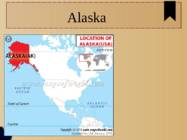
Alaska General information Area 1,717,854 km² (1st) Capital Juneau Population - 731,449 (47th) Native people Numerous tribes The Inuit people (eskimos) The Aleut people The Alutiiq people Colonisation Russians - 17th century Name origin Alaska (Russian) Alakshak (Aleutan) Peninsula Nicknames The Last Frontier Land of the Midnight Sun State of Alaska 1959 Symbols Flag - Seal - Symbols 2 Bird - Willow Ptarmigan Dog - Alaskan Malamute Sport Dog Mushing Head of state Governor Sean Parnell (2009..) Republican Geography Coastline 800km
English in my life People in Estonia basically use two languages. The main language and also our mother tongue is Estonian. Also Russian is a commonly spoken language because almost one-third of the population in Estonia is formed by Russians. Besides those two languages many Estonians are quite good at English. We are visited by many tourists from Finland, Sweden, Latvia and many other countries. Tourists from the Scandinavian countries and from other places of Europe don't speak in Estonian. So it is quite important for us to speak itEnglish an international language. It also goes the other way around when we go traveling somewhere in Europe or even further - then we mainly use English to communicate with people.
3. The Bible put humans to believe that we all are Childs of Adam and Eve but in fact humans evolved from apes and the truth helped the science to find the real origin of people. 4. Many people say that they have seen UFO-s but most of us do not believe them and the truth of alien existence may hide behind area 51 who have hidden many facts and proofs of UFO-s. 5. The war in Afghanistan is pointless but Americans don't want to see the truth that Russians lost the war against them after 9 years of fighting and it would be hard to win the war if Afghanistan belief is so strong for their god that they won't surrender before every single Afghanistan is dead. The Truth has Helped to make the world like we know it, Science has invented a lot of different things for example the phone was invented by Alexander Graham Bell and who could imagine the life without phones.
1860-1885 the era of national awakening, the foundation for Estonian journalism was laid, collection of folklore 1869 First all-Estonian Song Festival in Tartu 1884 The blue-black-and-white flag of Estonian Students' Society was consecrated 24 February 1918 the birth of the Republic of Estonia 23 June 1919 victory over Landeswehr in the Battle of Võnnu 2 February 1920 Tartu Peace Treaty with Russians 1920-1940 independent Republic of Estonia 23 August 1939 Molotov and Ribbentrop sign secret protocols according to which Estonia is annexed to Soviet sphere of influence 1945-1991 Soviet occupation 1988 Activities of Popular Front and the Singing Revolution 19-21 August 1991 coup d'état in Soviet Union 20 August 1991 Estonia declares independence and is recognised by about 40 countries.
Estonia is a member of European Union and NATO. Estonia is a democratic republic and it's president is Toomas Hendrik Ilves. The territory of Estonia covers 45,227 km² and is influenced by a temperate seasonal climate. The surface there is mainly flat, but in the southern parts of Estonia it gets little bumpy. The official language of Estonia is Estonian, which is Finno-Ugric language and has many similarities with Finnish. The population of Estonia contains mainly Estonians but some Russians and other ethnicities too. Many foreign people think of Estonia as an old-timed soviet union country, but it isn't anymore, Estonia is quite far-advanced country. Estonian national symbols are cornflower, slate, swallow and it's blue- black-white flag. There is very high level of education in Estonia, mainly because Tartu University, which makes Tartu the education capital of Estonia. The main sights of Estonia are the streets of Old Tallinn and South-
Tartu Tartu is the capital of Tartumaa. At first Tartu is associated with knowledge and studing. There`s about 103,284 peoples live in Tartu. Area of Tartu is about 38.8 km2. Mayor of Tartu is Urmas Kruuse. There`s 80% estonians, 15% russians and 5% other nationals live in Tartu. The city is best known for being home to the University of Tartu. It was founded in 1632 by the king of SwedenGustavus Adolphus. Kallaste caves · Kallaste caves greatest height is 8 meters. · They are located in Devonian sandstone, which is the
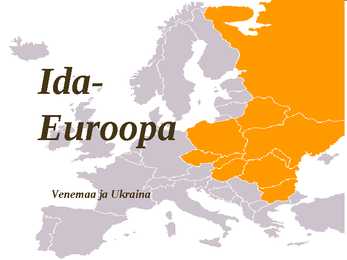
keelt Ukraina murded · Ukrainas on 3 põhilist murret: · Edela rühma (punane kaardil) murre · Kagu rühma (kollane kaardil) murre · Põhja rühma (sinine kaardil) murre Ukraina rahvastikupüramiid Ukrainas elab ligi 46011300 inimest (2009 seisuga) Venemaa ja Ukraina rahvastiku võrdlus Kasutatud kirjandus · http://et.wikipedia.org/wiki/Venemaa · http://en.wikipedia.org/wiki/Russia · http://en.wikipedia.org/wiki/Russians · http://images.google.com/ · http://en.wikipedia.org/wiki/Ukrainian_culture · http://en.wikipedia.org/wiki/Ukraine · http://www.ukraine.org · http://images.google.com/images? gbv=2&hl=en&q=ukraine&um=1&ie=UTF- 8&sa=N&tab=wi
Young Japanese are like old Brits. They always carry a camera with them and take pictures of everything. And one weird thing is that only younger Japanese get lost here at least I haven't seen any middle-age Japanese. The Yanks Americans are here usually with their familys, they are huge and very loud. They visit all the sightseeings only because everybody does that. They get here with cruise ships and a lot of them even won't come out of the ship. The Turks Turks looks like Russians but they are here for girls. Some richer young Turks can afford to travel and they are here in Estonia. Turks don't do anything beside watching Estonian teenagers. That is a little bit sick but this is also tourism. I'm not a girl so I don't have anything to do with Turks. But sometimes in summer they are here.
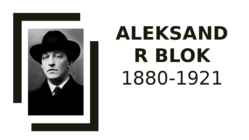
ajal ■ Väga vastumeelne, purustas paljusid suhteid ■ https://youtu.be/Y_BNQ0-PX2c Kasutatud Allikad ■ http://max.mmlc.northwestern.edu/mdenner/Demo/poetpage/blok.htm l ■ https://en.wikipedia.org/wiki/Alexander_Blok ■ https://www.youtube.com/watch?v=Y_BNQ0-PX2c ■ http://russiasgreatwar.org/media/culture/twelve.shtml ■ https://www.britannica.com/biography/Aleksandr-Aleksandrovich-Blok ■ https://russiapedia.rt.com/prominent-russians/literature/aleksandr-blok / ■ https://en.wikipedia.org/wiki/The_Twelve_(poem) СПАСИБО ЗА ВНИМАНИЕ!
their appearance, orign, religion, attitude or skin coulor, even if their beliefs and thoughts are not just the same as mine. I think that every one of us should pay respect to other people. I find it interesting to learn about other cultures and how they live. Estonia is a culturally diverse society. It is home to approximately 1,4 million people and not all of them are Estonians. Beside us consider Estonia as their home: Russians, Ukranians, Belorussian, Jews, Tatars, Germans and Poles - among of many others. They all have chosen to live here and they want to be taken as a part of our nationality. They want to be accepted and esposed. I can't understand people who can't be tolerate. I think it would be absolutely dreadful if all the people were just the same. We wouldn't have anything to learn or we couldn't widen our world-view. We would be monolingual and look all the same. We would just be one dreary crowd
I work full-time so my work schedule is rather busy. In a typical month I work around 160 to 170 hours. Usually I work four days in a row and then I have two days off. I love my timesheet because it allows me to go to school. Every day I serve and advise customers and also handle payments. At work, I have to behave responsibly, smile a lot, and listen to the customers. My colleagues are very nice. They are different ages, different genders, and different nationalities. Russians are the friendliest, happiest and they smile all the time. Tallinna Teeninduskool MK13-TE2 An advantage of my work is communicating with different people. The work is very straightforward and it is easy to learn. At work I do not like long workdays. I have to stand or sit all day and I can’t move anywhere. Some customers are rude, but I still have to be polite and smile. This is not my dream job, but that's why I went to school.
Latvia Capital city: Riga Total area: 65 000 km² Population: 2.3 million Language: Latvian Latvia, officially The Republic of Latvia, is a country in the Baltic region of the Nothen Europe. The country has a temperate seasonal climate. Latvia and Estonia share a long common history. As a consequence of the Soviet occupation both countries are home to a large number of ethnic Russians (26.9% in Latvia and 25.5% in Estonia). Latvia was found on 18th November 1918. However, its independence was interrupted at the outset of World War II. In 1940, the country was forcibly incorporated into the Soviet Union, invaded and occupied by Nazi Germany in 1941, and re-occupied by the Soviets in 1944 to form the Latvian for the next fifty years. The peaceful Singing Revolution, started in 1987. Lithuania Capital city: Vilnius Total area: 65 200 km² Population: 3.5 milion
to Estonia's oldest and most renowned university.Situated 186 km southeast of Tallinn, the city is the centre of southern Estonia. The Emajõgi river, which connects the two largest lakes of Estonia, crosses Tartu. The city is served by Tartu Airport. Tartu was the place where the northsouth road going above the major waterwaysriver.Thought to be the sixth8.Here is the hill fortress built centuries. In Tartu live 82268 Estonians, 15998 Russians, 1214 Finns, 491 Belorussians, 141 Jews, 140 Poles, 124 Germans, 109 Latvians, 91 Lithuanians, 81 Tatars and 673 other nationality people. Mostly known as a university town, Tartu is also a site of heavy industry. In the beginning of the 21st century, many IT enterprises and other hightech companies have taken a foothold in Tartu. Notable examples include Playtech Estonia, Webmedia, Tarkon, Regio and Raintree Estonia. Skype has an office in Tartu
Official name: Republic of Estonia Territory: 45 227 km Population: 1 342 000 Official languafe: Estonian Largest ethnic groups: Estonians 68%, Russians 26%, Ukrainians 25, Belarussians 1%, Finns 1% Capital of Estonia: Tallinn Number of islands: 1 521 Highest point: Suur-Munamagi (Great Egg Hill) 318 m Religion: Lutheran Currency: Estonian Kroon (EEK),1 EUR = 15,65 EEK Estonia has two Independence Days - Estonia first achieved independence from the Soviet Union on the 24th February 1918 and again on the 20th August 1991 after 51 years of occupation. The second date is known as the Restoration of Independence Day
language will help you to communicate and integrate with the local community. Even if many of the locals speak your language, for example if your first language is Estonian and you move to the France, it's still worth your while learning the local language. Doing so will demonstrate your interest in and commitment to the new country. It is quite weird if you cant speak this language after 20 years leaving in the country. It makes me think that people do not respect our language. I mean some Russians. I understand that they do not need it but they should speak Estonian too. Many companies in modern world are international and most communicating is in English. And if you wanna be successful you need to speak language perfectly. If your work involves regular contact with speakers of foreign languages, being able to talk to them in their own languages will help you to communicate with them. Knowledge of foreign languages may also increase your
Why was life better /worse in Estonia 50 years ago? If we go back in time 50 years, then we will find ourselves in the year 1958. Certainly it was not one the brightest periods in our lives, because all the Estonians were occupied by Russians and the governing power was also held by them. It was a time where we never even dreamed about life we are having nowadays. The way of life was very complicated, people had limited rights and all the things we nowadays have done by machines were all handmade. These are the major reasons, which made me think that life was worse 50 years ago than now. Why was it so? Firstly, nowadays we can speak about many comforts, which 50 years ago was not so.
Also very helpful things were cartoons and hollywood films. In everyday life I use English very often, because I read news in English and write letters in English and also at work. I have lots of friends who are English-speaking. And thats really great, because communicating is the best way, how to learn the language. At sixth grade I started learning Russian. Many people accentuate that every estonian should speak Russian, because we have lots of denizens who are russians and thats why you need to speak Russian almost every day. I have studied russian six years but still I can´t speak it fluently. I hope that someday I can have the oppurtunity to learn more Russian. Because I think it is very useful to speak Russian. Most of the jobs in Estonia are demand for Russian. I started my studies in Tallinn University of Technology a few weeks ago. I had the oppurtunity to choose my subjects and one of them was French. I was really exited,
In 1238 the rights of the Danes in North Estonia were restored and Toompea was once again ruled by Danes In 1346 Denmark sold its possessions to the Teutonic Order Until 1561 Toompea belonged to the Livonian Order According to the Altmark peace treaty of 1629, Estonian territories went to the king of Sweden Already earlier (1561), new rulers had come to Toompea In 1710 the knighthood of North Estonia signed the Harju capitulation treaty At first Russians could not initiate any changes in the country they had conquered. For half a century Toompea fell into oblivion Situation changed during the reign of Catherine II Second decade of the last century Estonians had the opportunity to build up a state of their own Construction of the Riigikogu building (1920 1922) First public building in Tallinn to have electric lighting built into its design The Estonian seat of power was perpetuated on
Estonia Administrative centre of Lääne County Population - 11,618 Tallinn 100 km away White Lady Western Region Administrative Centre Area - 10,59 km2 HISTORY The German Knights of the Sword conquered this region in 1224, and Haapsalu became the bishop's residence, with a fortress and cathedral built soon afterwards. The Danes took control during the Livonian War then the Swedish had their turn in the 17th century, but they lost it to the Russians during SYMBOLS Flag-blue and white, the flag is confirmed on 27 September 1994 Coat of arms- of the 27th confirmed September 1994 NATURE A few rivers and lakes A lot of deciduous trees and coniferous trees Lakes- Vaikeviik lake Rivers- Asuküla Main Ditch Haapsalu Bay FAMOUS PEOPLE Kaia Kanepi - tennis player Eda-Ines Etti - singer Eia Uus - writer Ly Seppel - poet and translator ATTRACTIONS City hall Independence monument Castle park St. John's Church
shoulders, long black wisps, a little stoutish, keen eyes, a red nose. • French Joe aka Josep de Paoli – 93Y, Corsican, a lietutenant of artillery, French army in 1851, later communist, started new life many times, black shining eyes, really thin and old. • Boswell Johnson – really famous author, the ancestor of Joe. • Napoleon Bonaparte – a relative of French Joe, lietutenant of artillery • Russians + Prussians – Joe fougth against them in French army • Hospital Nurse PLACES: • Thursday Island in Torres Straits – where he went + Joe's final destination • Sydney – where he came from • Shika Maru – last stop before Thursday Island • New Caledonia – prison, where Joe was. • Melbourne – where he fleed the boat • New Guinea – where he went to live after Melbourne STORY: Thursday Island is the last place God ever made
Why should tourists visit Estonia? I have always though of my country as a huge ,,multicultural city". We have so many different cultures from different places put into a little place all together that you could almost say we are a huge city not a country. And that has influenced us in a very remarcable way. Since the time we can remember we have been under Danes, Swedes, Germans, Russians, Polans and other. We have taken their traditions into our daily lives and forgotten ours. But still despite the fact that we bearly know our own language structure or our old traditions,we try to awake them once again. Estonia is one of the worlds wealthiest countries when it comes to forests. Almost half of the country is covered with the divercity of trees.Also we have many big rivers. Nowadays there are many possibilities to hike in the forests or to go for a ride on the river
(as of 1 Dec 2010). According to Eurostat, in 2004 Tallinn had the largest number of non-EU nationals of all EU member states' capital cities.As of 2009 around 22% of its population are not EU citizens. In addition to the native Estonian language , English, Finnish and Russian are widely understood in Tallinn. Russian is also widely spoken as a native language. Ethnic composition (2009) Nationality Percentage Estonians 52.2% Russians 38.6% Ukrainians 3.8% Belarusians 2.1% Finns 0.6% Others 2.7% Coat of arms and flag of Tallinn Tourism Since independence, improving air and sea transport links with Western Europe and Estonia's accession to the European Union have made Tallinn easily accessible to tourists. The main attractions are in the two old towns (Lower Town and Toompea) which are both easily explored on foot.
Description The eastern border of Livonia was mainly formed already in the first half of the 13th century and the first belt of fortresses here was probably ready by the end of the 13th century. The first fortresses were not built on the border but further inland. The first decades of the 14th century brought no changes in the situation. Early in 1340 the relationship with Russians deteriorated again. Provincial master Burchard von Dreileben planned a campaign against Pskov and demanded the help of Tartu bishopric. The provincial master began to build another belt of border fortresses. On the Annunciation Day, March 25, 1342, the building of fortresses in Marienburg and Vastseliina began. The latter was called the fortress of the Virgin Mary, but it soon acquired the name of New (vastse) Town (Castrum Novum, Neuhausen, Nyhusen, Nowogrodek)
were damaged. Estonia's population decreased by one-fifth (about 200,000 people).More than 30,000 soldiers were killed in battles. In 1944 Russian air raids destroyed Narva, and one-third of the residential area in Tallinn was destroyed. By late September 1944, Soviet forces expelled the last German troops from Estonia, ushering in a second phase of Soviet rule. That year, Moscow also transferred the Estonian Narva and Petseri border districts, which held a large percentage of ethnic Russians, to Russian control. In 1944, there were massive arrests of people who had actively supported the German occupation or been disloyal to Soviet order. In May 8, 1990, the Supreme Council of the Republic of Estonia (created the previous day) restored the Republic of Estonia. Through a strict, non-confrontational policy in pursuing independence, Estonia managed to avoid the violence which Latvia and Lithuania incurred in the bloody January 1991 crackdowns and in the border customs-post
Sometimes during a day i use more english language than estonian. Another language that I have learned in school is Russian. I started with it in the sixth grade. Some people say that Russian is Estonian second official language because you can hear russian in every part of estonia. Owing to the fact that I have studied Russian six years in school and I have had quite a lot of practise too, I still could not speak it very well. In Pärnu i trained in gym whrere most of the people were russians so i had some practice but still i am not very good at speaking russian. I have to admit that i do not like russian. Ido not know why but when i really need to speak in russian I do it quite reluctantly. A few weeks ago I started to continue my studies in Tallinn University of Technology and languages are one of the main part of the learning process in TUT. I had to choose besides english one more mandatory language. I chose German. Since the beginning there has been
English Grammar - The most common tenses in English Tense Signal words Use Estonian Form Examples · something happens repeatedly *korduv tegevus every day · how often something happens *püsiv olukord sometimes, *tulevikus · one action follows another I work Present twice a week toimuv, seotud · things in general infinitive he works Simple always, often sõiduplaanidega · after the following verbs (to love, ...
Discuss the representation of the generation of fathers in Turgenev's novel "Fathers and Sons" Turgenev always had two tasks before him to depict the body and pressure of time, and to depict the rapidly changing face of cultured Russian society (Freeborn 1960:48). Kluchevsky (1993:40) defined one case of the generation gap in the beginning of the XIX century as "merry cosmopolitan sentimentality of the fathers now transformed in a patriotic grief of their children. The Fathers were Russians, who passionately wanted to become French; the sons were raised as French and passionately wanted to become Russians. Fathers and Sons situates this generational conflict within family relations. In this essay, the ways how Turgenev represents the generation of Fathers in Fathers and Sons is discussed. Fathers and Sons is set in between Russia's defeat in the Crimean War and the Emancipation of the Serfs a socially challenging area. Mid-19 th century Russian intellectual life was
History In 1211 the hill-fort of the estonians in viljandi was besieged by a joint army of germans, latvians, and livs. In 1283 the town received a charter from villekinus de endorpe, the master of the order. In 1470, johann woltus von herse, then master of the order, took up residence in the castle. In 1481, ivan iia of runnian laid siege to the castle but could not take it. After the great northern war the russians revoked local autonomy until 1783, when in the course of the regency reforms of the empress catherine the great viljandi became a district town. This involved the re-establishment of town bylaws. The economic and political importance of viljandi started to increase. the population, after decreasing in population and wealth, started to rise again, as handicraft, trading, and cultural life were revived. The popular Estonian newspaper was founded in Viljandi in 1878.
Estonia is a country with the population of just a little over 1.3 million people. It has been estimated though, that by the year of 2040 the number will have decreased by 125,000 people. It means that the population of Estonia is decreasing. As young Estonians often like to go study or live abroad, the population is aging as well – young people move away, while older stay there. Many different nationalities live there: besides Estonians there are Russians, Ukrainians, Belarussians, Finnish, Tatars, Latvians, Poles, Lithuanians, Jews, Germans and others. Due to this fact, the most popular languages spoken as a mother language are Estonian, Russian and Ukrainian. Nevertheless, there is still just one official language of Estonia, which is Estonian. Most of the people, approximately 900,000 live in the cities, such as Tallinn, Tartu, Narva. The most common sector that people work in is the service sector.
length) was his tool and boys were not allowed to touch it. Herding boys had smaller trumpets and horns. They signalled information to each other and warded off wild beasts=animals STRINGED INSTRUMENTS Kannel Kannel is the oldest known instrument in Estonia. It is believed to have been around for about two thousand years. Such an instrument is common to cultures of the Baltic Finns, the Balts and the northwestern Russians. Fiddle(viiul) Violin reached Estonian towns in the 17th century. In the 18th century fiddle music spread also among peasants. (talupoegade keskel) Psalmodikon(moldpill) This is a relatively new instrument, dating from 1829 in Sweden. The instrument spread widely in Lutheran regions to accompany spiritual music, including also Estonian peasants Bumbass(põispill) Bumbass (bladderandstring) is a primitive stringed instrument that was used at wedding festivities as a joke.
Pärnu is a popular summer vacation resort with many hotels ,restaurants, and large beaches. Otepää is the winter capital of Estonia. Tartu is a city of good thoughts. Pärnu has been known as the Estonia's Summer Capital. 68.7% Estoniansb Ethnic groups (2011 ) 24.8% Russians 1.7% Ukrainians 1.0% Belarusians 0.6% Finns 3.2% others
maintained consulates in the United States · About 15,000 Estonians came to the United States · This group was strongly anti-Communist and nationalistic 3. Russian colonization of America. What has preserved from this period to the present? The Russian colonization of the Americas covers the period, from 1732 to 1867, when the Tsarist Imperial Russian Empire laid claim to northern Pacific Coast territories in the Americas. The Russians were primarily interested in the abundance of fur-bearing mammals on Alaska's coast, as stocks had been depleted by overhunting in Siberia. By the middle of the 19th century, profits from Russia's American colonies were in steep decline. Faced with the reality of periodic Indian revolts, the political ramifications of the Crimean War, and unable to fully colonize the Americas to their satisfaction, the Russians concluded that their American colonies were too expensive to retain. after less
The population numbered between 100000 and 200000, but this figure changed as a result of wars, epidemics, migration and famine during the centuries followed; in the mid-1800s many estonians emigrated to Russia, North-America etc. to find a farmland better living conditions, estonians made 88.2% of the total population of their native land; WW II caused war casualties, deportations and mass emigration of refugees, in 1945 there were 854000 people in Estonia; Estonians, Russians, Ukrainians, Belorussians, Finns and others were the communities; citizenship was given to the poplke who had held it before 16 June 1940 and tgeir descendants Public holidays: Some national holidays: 23 June: Victory Day the Battle of Võnnu in the Estonian War of independence; 24 June St. John's Day; 2 February anniversary of the Tartu Peace Treaty; 14 March Mother Tongue Day; May second Sunday Mothers' Day; 2 November All Souls' Day; 14 February Valentine's Day
I hope, this is not hard subject for me and I can do this report finely. 3 Beginning of 20th century Estonian literates participated in the fight for local power mainly with the help of the newspaper "Teataja" created in 1901. The 1904 elections were won by an Estonian-Russian block of 5 Russians and 38 Estonians. The first Estonian mayor was Voldemar Lender and assistant major Konstantin Päts. In 1905 was bloody Sunday in St. Petersburg and this influenced estonian workers: mass meeting, had conflicts with police. 17.10.1905 was made first estonian party Eesti Rahvameelne Eduerankond created by newspaper ,,Postimees" supporters. In 1906 was created estonian proffesional theatre ,,Estonia". Theathre ,,Estonia"
 annaabi.ee