Leidsid 33 sarnast õppematerjali, mis on seotud failiga "Report for Pride and Prejudice". Need materjalid aitavad sul teemat sügavamalt mõista.
jane, bennet, character, characters, real, elizabeth, good, person, really, pride, prejudice, women, sisters, darcy, other, friend, while, austen, romantic, novel, setting, vivid, marriage, oldest, five, charlotte, plot, thought, goes, look, making, found, nature, class, moving, conclusion, report, author, genre, 19th, century, place, england, toneJane Austen "Pride & Prejudice" Pride and Prejudice, first published on 28 January 1813, has consistently been Jane Austen's most popular novel. Austen sold the copyright for Pride and Prejudice to Thomas Egerton. Egerton published the first edition of Pride and Prejudice in three hardcover volumes in January. The tone is light and a little humoristic. Pride and Prejudice is a humorous story of love and life among English gentility. At first the book was called "First impressions" and this gives a better expression to the requests of the author, than the later heading. People meet, do not understand each other and communication does not offer joy either. So this is contrary to love at first sight. It is a tale of love and values in the class-conscious England of the late 18th century. It is a story of five sisters and their lives
,,Pride and Prejudice" by Jane Austen Book Report Introduction: The book was written between 1796 and 1797 and it was first published on 28 January 1813. The setting takes place in England, mostly in places called Hertfordshire, Derbyshire and Kent. The genre of the book is the novel of manners: it shows the conflicts between two individuals and also the love growing between them. The main themes are love, and it shows very precisely the development of young people's character and morality.
Pride and Prejudice by Jane Austen. Jane Austens one of the best novels is ,,Pride and Prejudice" it was released in year 1813. Book starts with that sentence : "It is a truth universally acknowledged, that a single man, in possession of a good fortune, must be in want of a wife" this already tells us what is ,,Pride and Prejudice" about. The book begins by introducing Bennets family, Mr and Mrs Bennet and their five unmarried daughters. In their family they had no boys to give the Bennets legacy over to a male member, so Mr Collins their cousin is getting the Bennets family legacy. Because of that Mrs. Bennet had a mission to put all her daughters to rich men. At the same time appears into neighborhood Mr Bingley a rich and handsome single man who had plans to move nearby to Netherfields manor. When Mrs. Bennet hears about that she sends her husband to talk with Mr. Bingley and after that he
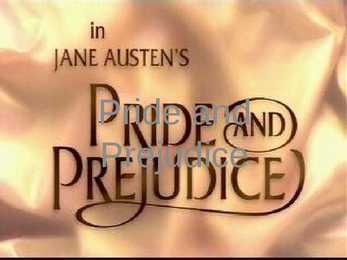
Pride and Prejudice Table of contents Introduction Pride and prejudice The main characters The Bennets family The beginning of the film A turn in the life of the young Greaf in the Bennets family The film end Conclusion Pictures References Introduction I have chosen this film because I like it very much. Pride and Prejudice tells us about a big family in England from the town called Meriton. In the film we can perfectly see the life in England at the end of the 18th century. Pride and prejudice This movie was made after Jane Austen novel
The Project Gutenberg EBook of Pride and Prejudice, by Jane Austen This eBook is for the use of anyone anywhere at no cost and with almost no restrictions whatsoever. You may copy it, give it away or re-use it under the terms of the Project Gutenberg License included with this eBook or online at www.gutenberg.org Title: Pride and Prejudice Author: Jane Austen Release Date: August 26, 2008 [EBook #1342] [Last updated: August 11, 2011] Language: English Character set encoding: ASCII *** START OF THIS PROJECT GUTENBERG EBOOK PRIDE AND PREJUDICE *** Produced by Anonymous Volunteers, and David Widger PRIDE AND PREJUDICE By Jane Austen Contents Chapter 1 Chapter 22 Chapter 2 Chapter 23 Chapter 43
distance. Even though he so tended to escape from those worthy of his sympathy, too. Still, everything wonderful fascinated him deeply, as a pure soul he didn't lie about his feelings. · Mr. Wickham hid an irresponsible, ungrateful and advantage-taking persona under the mask of a gentleman. A pretty face with a rotten heart, but nothing extraordinary... · Mr. Bingley was one positive character all the way. Nobody could've believed bad things of him. As an extremely good-hearted and quite a romantic soul, he was kind of naive and that bought up a lot of misunderstandings. A person everyone seemed easy to sympathize with. · The Bennet sisters Two of the eldest were close to the heart from the beginning and this feeling grew stronger the more you understood their characters
Jane Austen Pride and Prejudice Class and social status in Pride and Prejudice Mankind has been acknowledging one another's superiority since the dawn of time. In the novel under the discussion, social status has a great importance in the turn of events. Everyone in the novel is somehow influenced by the topic of fortune or social class. To start with, even though "Pride and Prejudice" touches on many different subjects and characters, its main events are related to or caused by the dogmas of class distinctions.
They had been living in London their whole life and thus were excited but intimidated to go. Lymstock was much like any other English village, no more than 300 people. Those that live there enjoy the peace of rural life and form a union to where it can be difficult for strangers to blend in. Fortunately, it wasn't much of a problem for Jerry and Joanna. They were just getting to know the town's strange members and their characters when an anonymous letter arrived, accusing the two of not being brother and sister, but lovers. The letter started a series of poison pen letters all over the village, which destroyed the safety the villagers took for granted. Right away, they knew it wasn't true and thought somebody was doing it just for laughs. The second letter went to Mrs Symmington, the local solicitor Mr Symmington's wife. It turned
Cædmon's Hymn is the oldest recorded Old English poem, and also one of the oldest surviving samples of Germanic alliterative verse The Hymn itself was composed between 658 and 680, recorded in the earlier part of the 8th century Middle English Geoffrey Chaucer 13431400 Known as the ,,Father of English literature", the greatest English poet of the Middle Ages An author, philosopher, alchemist and astronomer, diplomat Wrote The Book of the Duchess, the House of Fame, the Legend of Good Women and Troilus and Criseyde Best known today for "The Canterbury Tales" Crucial figure in developing the legitimacy of the vernacular, Middle English, at a time when the dominant literary languages in England were French Modern English William Shakespeare 26 April 1564 23 April 1616 The Elizabethan Era English poet and playwright, widely regarded as the greatest writer in the English language and the world's most important dramatist ,,England's national poet"
Plot introduction Jane Eyre is a first-person narrative of the title character. The novel goes through five distinct stages: Jane's childhood at Gateshead, where she is emotionally abused by her aunt and cousins; her education at Lowood School, where she acquires friends and role models but also suffers privations; her time as the governess of Thornfield Manor, where she falls in love with her Byronic employer, Edward Rochester; her time with the Rivers family at Marsh's End (or Moor House) and Morton, where her cold clergyman-cousin St John Rivers proposes to her;
English literature is one of the oldest literatures in Europe; dates back to the 6th century AD. Oral literature, i.e. not written down, spread from person to person. In 449 AD Anglo-‐Saxon tribes invaded England – beginning of the Anglo-‐Saxon period in English literature. The first form of literature was folklore, carried by scops and gleemen, who sang in alliterative verse (a kind of simple poetry). Prose developed much later.
· Man as an animal-clever than other beasts, still explainable within the framework · Man is not a free agent, is govern by something · Unable to determine his own faith · Hereditary · Naturalists tried to apply in fiction the processes of natural sciences · Writers task is to record facts, systems of behaviour, living conditions, never revealing any natural unbiased (completely natural) · Point of view: amoral-outside the category of morality, neither good or bad · Naturalist find it absurd to blame the wicked. These criminals are doing what nature, environment, their unconscious tells them to do. Naturalists do not judge their characters, they simply report. Try to describe facts like they are. Naturalists depict the lower, coarser forms of life. · Drab, squallid set of scene. Revolting, disgusting · Characters are people with strong animal desires
creator. The monster wants Victor to make him a female companion but Victor refuses and due to that, the monster kills Victor's wife. He then escapes and Victor starts to look for him. The reach to the North Pole where Victor meets Robert Walton. He tells the story to Walton and asks him if he could kill the monster for him. Victor dies and soon Walton manages to talk to the monster. The story ends with the monster sailing away on an ice shelf. I really enjoyed reading this book because I adore horror movies and ghost books. It was deep, touching, sad and exciting. I believe that Mary Shelley tried to show that we should not judge people by their appearance and that we should look in the person's character deeper. The society should be more tolerant and kind. Luckily nowadays this is not such a big problem as it used to be. I liked the eloquent writing style and the authors' ability to put real emotions into the story
14KS1 Maarja Tobreluts Jane Eyre Analysis of book and movie “Jane Eyre'' Juhendaja: Kai Hermann Vana-Vigala 2014 Overview ''Jane Eyre'' was published in 1847 and brought fame to its author, Charlotte Bronte. The book incorporates many themes: the relations between men and women, gender equality, the treatment of children and of women, religious faith and religious life and the notion of true love
worldwide. The success of The Catcher in the Rye led to public attention: Salinger became reclusive, publishing new work less frequently. Analysis of the book 1. Setting The story starts in the year 1950 when the novel's protagonist and narrator Holden starts telling a story from a hospital about the events of last year's winter. Most of the story takes place in winter of 1949 just over a couple of days in Pennsylvania and New York. 2. Characters · Holden Caulfield The main character of the book. He has been expelled from many schools due to his failure in fixing his grades and is expelled from his current school, Pencey Prep, right in the beginning of the story. Although he is intelligent, he fails almost every class, all except for English. He feels alone and sad, trying to find his place in the world, only finding support from his little sister
He had traveled throughout New England and its coastal region before claiming his new identity, however, and before seriously embarking upon his life as a farmer in Orange County, New York, in 1778, Crevecoeur traveled extensively inland through the Ohio Valley and on to the banks of the Mississippi. Drawing upon his travel experiences and his life as a farmer, Crevecoeur was the first to seriously attempt a definition of American character with his Letters. The key word for Crevecoeur was "new," which separated and distinguished Americans from things European. In Letters, Crevecoeur thus blended his collection of facts and observations into a fictional portrait of an industrious farmer, one whose natural response to the land became identified with the general character of a new American people. Yet while Crevecoeur echoed Jefferson, Thomas's agrarian ideals, his letters also acknowledged
Nicholas, who is ill. He begins to realize, after seeing his brother, that Nicholas has always been a victim of ills, including both sickness and poverty. Levin begins to regret getting caught up in his own passions, because he realizes he should be more concerned with his brother's problems. He finds his brother living with Masha, who is not a legitimate wife, but who acts as one. Levin instantly rejects this lifestyle, but he knows that Masha takes good care of Nicholas. He decides to ask Nicholas and Masha to come stay with him, promising himself that he'll forget his mindless passions and devote himself to more important things. Levin returns to the country and begins to get his life in order. He tidies up his farm, tries to forget about Kitty, and spends some time with his brother. Levin seems different when he is at home in the country--more at peace with himself and his decisions. Chapters 28-34
ordinary economic concerns will play in Austen's novel. Unlike the authors of Gothic and sentimental novels fashionable in her day, Austen refuses to romanticize; she recognizes that material realities constrain love and marriage. Nonetheless, she allows some of this sentimentality to seep into the novel, and the tension between reasonable economic concerns and overly romantic dreaming will constitute an important theme in the novel. Indeed, this tension is already apparent in the characters of Elinor and Marianne, between the older sister's "sense" and the younger sister's "sensibility," the duality which the novel's title refers to. Elinor, age nineteen, is described as having a "strength of understanding" and "coolness of judgment", as well as the ability to govern and control her feelings. She modestly states that she "greatly esteems" Edward Ferrars, a remark typical of her rational, sensible attitude. In contrast, her
Jane Eyre Dark Characters The famous novel by Charlotte Bronte is a classic that in my opinion all people should be familiar with. I personally have seen even several movies based on it and also enjoyed reading the book. The novel mainly talks about a girl named Jane and her life as a guverness in Thornfield. When Jane reaches adulthood, she decides to work for the wealthy Mr.Rochester and teach his child who he himself is not that fond of. Jane as a person is shy but doesn't let people take advantage of her and after some time manages to charm the other wise cold hearted Mr.Rochester with her out spoken mind. Despite catching Mr.Rochesters eye their love story developes slowly because besides being both from a completely different class, Mr.Rochester
There may be specials sections also for children. Almost every library has a special reading room with comfortable furniture for the readers and the students can work on independent study projects. School libraries. School libraries are part of the education system. It supports the curriculum as it helps the teachers and pupils to prepare for the lesson. Pupils can read extra materials there about the subjects they like. Everyone doesn't have a computer neither good encyclopedias at home so they can get the required information needed for their homework from the books or from the Internet. It is needed because it teaches how to find your books on your own from other libraries too because usually the same system is used for the book location. School libraries are definitely very good places to study for a test before the lesson because it is quiet there and one can use books as a helping hand. Our school library is very nice in my opinion
Namely, she believed that Sam is killing her older sister. They found them in the garden of Big House, where the witch suppose to live. When Tracey tries to attack Sam to defend Anita, the boy throws the girl into the pound. She would have been nearly drowned, if she hadn't been saved by a mysterious man. It turns out that the man is from India and also the owner of land, where the closed mine is. Meena's family decide to move out of Tollington. Characterize and analyze the main characters (what motivates them, are they round or flat characters, do they develop, if so, in what way) Meena Kumar is 9 years old and lives in the village of Tollington `the jewel of the Black Country', the daughter of Indian parents who have come to England to give her a better life. Meena is, much to her parents' chagrin, no angel: She lies, commits minor thefts, and has the bad habit of making vulgar remarks when her prim and proper aunties are around
Like psychoanalysis, surrealistic painting and writing explores the inner depths of the unconscious mind. Freudian ideas have provided subject matter for authors and artists. Critics often analyze art and literature in Freudian terms. 2. Literary Modernism and its sub-movements. The influence of Structuralism and psychoanalysis. Main characteristic features of Modernism. Denial of conventions, traditional structure, plot and presentation of character. The stream of consciousness. Allusiveness. Virginia Woolf's Modern Fiction as a theoretical platform for Modernism. Criticism of Realist literary method. Literary modernism: end of the 19th century-1920 (reached its height) and ended 1940s. A self- conscious break with traditional aesthetic forms. Rejecting the sentiment and discursiveness typical of Romanticism and Victorian literature for poetry that instead favored precision (täppis) of imagery and clear, sharp language
By Taavo Allik March 23, 2009 Book Report on "Ender's Game".................................................................................................. Orson Scott Card....................................................................................................................... The Setting................................................................................................................................ Main Characters........................................................................................................................ Ender..................................................................................................................................... Valentine............................................................................................................................... Peter.......................................................................................
Charles Dickens Charles John Huffam Dickens was the foremost English novelist of the Victorian era, as well as a vigorous social campaigner. Considered one of the English language's greatest writers, he was acclaimed for his rich storytelling and memorable characters, and achieved massive worldwide popularity in his lifetime. Charles Dickens was born in Landport, Portsmouth in Hampshire, the second of eight children to John Dickens n 7 February 1812. The 12-year-old Dickens began working ten hour days in a Warren's boot-blacking factory. In May 1827, Dickens began work in the office of Ellis and Blackmore as a law clerk. At the age of seventeen, he became a court stenographer and, in 1830, met his first love, Maria Beadnell.
Dracula Bram Stoker An Irish novellist Bram Stoker’s Gothic horror novel ‘’Dracula’’ was first published in 1897. The story is about vampire that tries to find new blood for himself and the hunt for him. Also you can find a little romance in the book. It takes place in Transylvania, Romania and in England. The novel is written in diary-form and several characters are telling their story by keeping a journal. Entries are written in six months by four persons. In the novel there are nine main characters: Jonathan Harker, whose writings are seen first; Count Dracula, of whom all the story is about, but he does not keep a diary; Wilhelmina ‘’Mina’’ Harker, early Murray, wife of Jonathan Harker; Lucy Westerna, a friend of Wilhelmina; Arthur Holmwood, Lucy’s fiancee, who also doesn’t write; John Seward, a
The main themes: dreams and reality, love and magic. The setting: The play features three interlocking plots, connected by a celebration of the wedding of Duke Theseus of Athens and the Amazonian queen Hippolyta, and set simultaneously in the woodland, and in the realm of Fairyland, under the light of the moon. Climax :The play reaches its climax near the end of Act IV, after all of the lovers overcome their obstacles and leave for the temple to be united in marriage. Some of the characters: *Theseus: Kind and generous. He must enforce the law, but talks privately with Egeus and Demetrius to get them to relent. He appreciates the effort that goes into the play-within-a- play, and the sincerity of the ordinary people. He lets his imagination turn good people's sincere effort into a good performance. *Hippolyta: More literal-minded than Theseus. She cannot bring her imagination to consider a bad play good. But she notes that the lovers' tale of paranormal experience in the woods
every one of them has been a bestseller in the United States and various European countries. Clark began to write at an early age but it was at the year of 1970 she started to write mystery and suspense novels. Her daughter, Carol Higgins Clark, is also a suspense writer and they have wrote some works together. Setting Most of the events of the book take place in New York and during one week time. It is in the middle of October and the timeline is about ten years back. The main characters · Susan Chandler is a phycologist in New York who has a radio pragram that she runs on work days and has been previously worked as an attorney. · Donald Richards is a psycologist who wrote a book about vanishing women and has an intrest in Susan Chandler. · Alex Wright is a wealthy businessman who likes Susan Chandler and owns a foundation that supports people in need.
At the time she agreed, it just began her betrayal and she didn't know how to stop it. Remembering her childhood, she was very frighten about her mom's betrayal and ran away in a long distance from home. And now, she was going home, she was beginning to believe that only her journey home would help her to bring her betrayal to an end...... Betrayal could happen so easily, that's why more and more people have extramarital relations recently. But, it's really hard to find something that good, and really easy to lose it. Just consider pro and con, and then keep what you really love. However, distance makes everything clearer; you can only see the whole when you are far enough. Take Alex for an example, as she had travelled ever further outwards, she found the answer. The Nature of Truth: Annie was a successful author and she met an old friend, Jane, on the train. Things change a lot, even if you had settled down. Jane had the boyfriend in
You do the opposite of my instructions; You've no respect for anything; each one Must have his say; it's perfect pandemonium. DORINE If . . . MADAME PERNELLE You're a servant wench, my girl, and much Too full of gab, and too impertinent And free with your advice on all occasions. DAMIS But . . . MADAME PERNELLE You're a fool, my boy--f, o, o, l Just spells your name. Let grandma tell you that I've said a hundred times to my poor son, Your father, that you'd never come to good Or give him anything but plague and torment. MARIANE I think . . . MADAME PERNELLE O dearie me, his little sister! You're all demureness, butter wouldn't melt In your mouth, one would think to look at you. Still waters, though, they say . . . you know the proverb; And I don't like your doings on the sly. ELMIRE But, mother . . . MADAME PERNELLE Daughter, by your leave, your conduct In everything is altogether wrong; You ought to set a good example for 'em;
to relent (39) - abandon or mitigate a severe or harsh attitude, especially by finally yielding to a request. Situation: When Lipsha was talking about mother with Albertine he said he wouldn't relent on her even if she would come back, goes down on her knees and begged him for forgiveness. 2. Explain the following literary terms. Learn and use them in your discussion of the book: Protagonist - the leading character or one of the major characters in a play, film, novel, etc. Theme - an idea that recurs in or pervades a work of art or literature. 2 Motif - a dominant or recurring idea in an artistic work. Symbol - a thing that represents or stands for something else, especially a material object representing something abstract. Allusion - an expression designed to call something to mind without mentioning it
Adams Middle School who curses at her students, consumes lots of alcohol, smokes marijuana, and only shows movies while she sleeps through class. She plans to quit teaching and marry her wealthy fiancé, but when he dumps her, she must resume her job as a teacher. She tries to win over substitute teacher Scott Delacorte (Justin Timberlake), who is also wealthy. Amy Squirrel (Lucy Punch), a dedicated teacher and colleague of Elizabeth, also pursues Scott while the school's gym teacher, Russell Gettis (Jason Segel), makes advances on Elizabeth which she rejects.[3] Elizabeth plans to get surgery to enlarge her breasts, believing she is being overlooked for women with larger chests. However, she cannot afford the $10,000 procedure. To make matters worse, Scott admits that he has a crush on Amy, only viewing Elizabeth as a friend. Elizabeth attempts to raise money for the surgery by participating in her 7th grade class car
Lord Emsworth: Quotes: 1) "Beach," said Lord Emsworth. "M'lord?" "I've been swindled. This dashed thing doesn't work." "Your lordship cannot see clearly?" "I can't see at all, dash it. It's all black." The butler was an observant man. "Perhaps if I were to remove the cap at the extremity of the instrument, m'lord, more satisfactory results might be obtained." "Eh? Cap? Is there a cap? So there is. Take it off, Beach." "Very good, m'lord." "Ah!" 2) "It's Aggie. My wife, you know." "Well?" "She's left me." "Left you!" "Absolutely flat." 3) "Why did you let him go? You must have known I would want to see him." "What good would that have done?" "I could at least have assured him of my sympathy," said Lady Constance stiffly. "Yes, I suppose you could," said Lord Emsworth, having considered the point. "Not that he deserves any sympathy. The man's an ass
Writers who speak about industrialism and its effects: Elizabet Barrett Browning(The Cry of the Chuldren), Friendrich Engels(The Condition of the Working Class), Karl Marx(The Communist Manifesto 1848), Elizabeth Gaskell(Mary Barton), Charles Dickens, Thomas Hardy, William Makepeace Thackeray. ``The Woman Question" women wanted more rights, the role of women changed, women did efforts to move beyond the home, women forced into new kinds of labour, Jane Eyre tyoe of women versus feminists(two types). Representatives: The Brontë sisters Emily, Anne, Charlotte, George Elliot. Great Britain's identity as an imperial power Joseph Chamberlain British had the moral obligation to expand its influence around the globe("great governing race"). Benjamin Kidd social evolutionist, supported the British dominion, Europeans had a greater capacity for ruling justification of British actions overseas
 annaabi.ee