6 knife knives 12 mink mink 18 theif thieves 4 Read the story and decide if the statements are true or false. Write T (true) or F (false) next to the statements. Tweety Tweety´s mother, Fiona, was rescued from a rabbit breeder who kept her animals in dirty cages in her back yard. As they were not regularly given food and water, the rabbits were hungry and thirsty most of the time. A worried neighbour saw how the rabbits were threated and was able to talk theid owner into giving them to the Farm Sanctuary. Just hours after they arrived, Fiona gave birth to Tweety and four other beautiful bunnies. Tweety´s life was difficult for him from the very beginning. He was the weakest of the litter, and his mother refused to nurse him. Seeing how small and
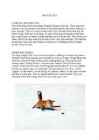
Ferret Compilator: MariaEva Maasik Introduction Domesticated mammal Sexually dimorphic prederators Males substantially larger Typically brown,black,white or mixed fur Avarage length 20 inches Weigh 1.54 pounds Lifespan 710 years Hunting rabbits, pets Behavior Crepuscular (1418, dawn and dusk) Social groups Marking territory Scared> emanate a smell Weasel war dance (not agressive,clucking noise) Upset> hissing noise Diet Obligate carnivores Small prey Uses of ferrets Pets Experimental animal model
in 19th century many new newspapers started to appear. magazines books house of commons-> rich bankers and rich people *kasvatati Kensingtoni süsteemi järgi *abiellus Albertiga *valitses 63 aastat ja 7 kuud *tal oli 9 last 42 lapselast. they brought rabbits to australia. What was the function of the Sunday school? need for reforms in education-resulted in new syllabules
THE RED FOX GENERAL INFORMATION One of the most cleverest animals found in Estonia is the fox. These attractive creatures can live almost everywhere. Fox habitat may be the forest, brushes or even swamps. They eat mainly small rodents like rats and rabbits but also all kind of bugs, fruits and birds eggs. As well as being good escapers, they have also a good sense of smell, hearing and they can see in the dark. Their homes are holes, which they dig under the ground or take over other animals. The hole has always more than one exit. Foxes are having rat in February and the female animal calves in April. OBSERVING FOXES Catching a sight of an fox in the wild is quite a challenge, because they have a
although the fence helped to reduce losses of sheep. The fence is 2 meters high and it extends about 30 cm underground to keep the dingoes from digging under it. There is a gate approximately every 19 km s. It’s called different names in different states: South Australia – The Dog Fence, New South Wales – the Border Fence, Queensland – the Barrier Fence, Wild Dog Barrier Fence At first it was unsuccessfully used to try and keep out rabbits, with the fence built originally as a rabbit proof fence in 1884. It was more successful at keeping out pigs, kangaroos, emus. In 1914 it was converted into a dog-proof fence. The dog fence guards the world’s second largest sheep flock, after China’s. Without the barrier the sheep industry couldn’t exist. But more and more people – politicians, taxpayers, and animal lovers say that such a barrier would never be allowed today. With
the Donegual moutintains is very popular for a photographers. Lakes of Killarney They consist of three lakes - Lough Leane, Muckross Lake (also called Middle Lake) and Upper Lake. The lakes lie in a mountain-ringed valley starting in the Black Valley. Animals Ireland is known for not having any snakes and the only reptiles in Ireland are lizards. Some animals and sea life found in Ireland are: grey seals, pine martens, otters, red fox, rabbits, rodents, deer, badgers and goats. There are also many species of birds in Ireland, especially on the west coast where birds stop en route to other places. References http://www.lahinchhouse.com/things.htm http://www.irelandseye.com/aarticles/travel/nature/ http://en.wikipedia.org/wiki/Republic_of_Ireland#La http://karavanserai.bluemoon.ee/Euroopa/iirimaa.h http://www.earthyfamily.com/IR-geog.htm
There are at least 1500 different species of wildflower in the UK The national flower of England is the rose. The most common trees are alders, apple trees, beeches, birches, chestnuts, limes, oaks, pines and willows Fauna Today there are 24 native land mammal species living in England Some mammals like the wolf, lynx, buffalo and wildcat have become extinct in this country The most common animals are deers, foxes, hedgehogs, mice, otters, polecats, rabbits, rats, squirrels and weasels Landscapes Low hills, mostly flat Less than 1000m above sea level The highest point in England is Scafell Pike, 978m England's best known river is the Thames which flows through London, 346 km England has a long coastline of 3,200 km The Lake District, famous for its lakes and scenic beauty, is one of England's most popular recreation areas. Sources of information http://www.nhm.ac.uk http://www.wildaboutbritain.co.uk http://www.britishnature.co.uk http://www
Canada has a very large and diverse range of geographic features Much of Canada is still wilderness, cover by forests The Rocky Mountains cover a major part of western Canada Canada has a lot of lakes and rivers that makes it even more beautiful It also has many caves many rare animals and species protection areas ANIMALS Currently, Canada has more than 7100 species of plants and animals Some of these animals are: moose, deer, bison, beaver, raccoon, opossum, groundhog, prairie dogs, rabbits, wolverine, squirrels, skunks, porcupines, bobcat, mountain lion, fox, coyotes, wolf But the most important are: BEAVER MOOSE BEAR NIAGARA FALLS Niagara Falls is a set of massive waterfalls located on the Niagara River in eastern North America, on the border between Canada and the United States Niagara Falls is the largest waterfall in the DELLA FALLS The Canada's highest waterfall is Della Falls which is 440 metres high CANADA FACTS Canada's coastline is the longest in
carnivores. The dominant animals are burrowers and kangaroo rats. There are also insects, arachnids, reptiles and birds. The animals stay inactive in protected hideaways during the hot day and come out to forage at dusk, dawn or at night, when the desert is cooler. In semiarid deserts many animals find protection in underground burrows where they are insulated from both heat and aridity. These animals include mammals such as the kangaroo rats, rabbits, and skunks; insects like grasshoppers and ants; reptiles are represented by lizards and snakes; and birds such as burrowing owls and the California thrasher. The animals living in coastal deserts are: insects, mammals (coyote and badger), amphibians (toads), birds (great horned owl, golden eagle and the bald eagle), and reptiles (lizards and snakes). Widely distributed animals in cold deserts are jack rabbits, kangaroo rats, kangaroo
A kind of treatment designed to stimulate people who are withdrawn or uncommunicative has recently been given a new name: pet therapy. It has given difficult children, lonely old people and even anti-social prisoners a completely new outlook on life Even though pet therapy is only now being widely used, it is not a new idea. In the eighteenth century an English doctor, William Tuke, filled the grounds of a hospital for mentally disturbed people with chickens, rabbits and goats. At a time when people were usually punished for strange behavior rather than helped, this was a radical new approach to treating the mentally disturbed. Tuke's idea was that patients could learn self-control by caring for creatures weaker than themselves. This is an idea which has persisted. In New York, horses, cows, cats and dogs were recruited to heal soldiers who had been wounded during World War II. These animals
throughout the country. Most of the people speak English with a New Zealand accent. Nearly a fifth of New Zealand's people live in rural areas, small settlements are linked by good roads. But in rugged country, the nearest neighbours may be many kilometres away. As a result, some farmers live almost in isolation. Animals Due to its isolation New Zealand has unique wildlife. Most of New Zealands land animals have been introduced from other countries. Deer and rabbits as well as cattle, sheep and pigs were all brought by the European settlers. Two species of bats ar the only native mammals. There are no snakes in New Zealand. New Zealand has many native birds including the kakao parrot, the kea, the weta and the kiwi. A kiwi is a flightless nocturnal native bird, and the national bird of New Zealand. It has nostrils at the end of its beak and a good sense of smell. It is now endangered, and difficult to see in the wild
forests o Temperate coniferous forest o Temperate rainforest They have all four seasons - summer, spring, winter and fall. Soil of these forests is fertile and enrich. Canopy in tropical forests is multilayered and continuous, allowing little light penetration. Temperature is on average 20-25° C and varies little throughout the year. Animal species found in these forests are for example rabbits, squirrels, wolf, black bear, mountain lion and bob cat. Human uses of temperate forests: o Habitation - Population density very closely corresponds to the distribution of Temperate Forests. Many forests have been cleared to build communities. o Wood products - We use the wood of these trees for construction, firewood and art. o Farming Many areas of temperate forests have been cleared for farms. Seasonal/Monsoon Forests
Many bright coloured parrots, birds of paradise and other colourful birds live in Australian forests. Ordinary mammals are few in Australia.The dingo is a wolflike dog that is believed to have come to Australia with some of the groups of Aboriginal people sometime between 3,500 and 4000 years ago.The dingo is a menace to the local cattle-breeders.The dingo is a very social animal and they live in large family groups.They also form packs while hunting. The Englishmen brought rabbits to Australia.Soon they became wild and very numerous.They are the real menace to the fields and pastures.
Of many birds the emu, the Australian ostrich, is the biggest. The lyrebird has got its name from he lyre-like tail of the he-bird. He can imitate all kinds of noises. The black swan is also found in Australia only. Many bright coloured parrots, cockatoos and birds of paradise live in the forests. There are few ordinary mammals in Australia. The dingo is a wolflike wild dog. He is a menace to all the Australian cattle-breeders. The Englishmen brought rabbits to Australia. Soon they became wild and very numerous. They are the real pests of the fields and pastures. In 1930 the Australians started to build the rabbit proof fence. They built it because the rabbits spread too rapidly and they were bad for the cattle-breeders. The fence was built until 1940 but it did not help. The rabbits still spread quickly all over Australia. Rabbit proof fence is 3000 km long. Climate. Australia is the driest continent on earth. The climate has no
Two of the strangest animals in the world the spiny anteater and the platypus, only live in Australia. They are reptile-mammals. Another group of Australian mammals are the marsupials. These are the kangaroo and the wombat, for example. They do not lay eggs, but their young are born before they are fully developed. A little kangaroo crawls into its mother's pouch and stays there for almost three months. Dogs, cats, and rabbits brought to Australia by men are rapidly destroying the gentler marsupials. There is only one marsupial still alive in the United States today it is the opossum. Many of the plants of Australia aren't found anywhere else. Agriculture. Australia's farms are highly mechanized and therefore require the minimum of human labour. Only about 5 per cent of the country's workers are farmers. Farmland covers about 65 per cent of Australia. However, most of this land is dry grazing land
Most females don't breed until they are 28 months old, and will give birth every year. Newborns can walk within an hour and in a few days can run with the herd. Still, wolves, grizzly bears, and golden eagles kill a large number of newborn calves. Although some people are moving into their habitat, they seem to have adapted. Reindeer is not endangered, thanks to its ability to tolerate climates people would rather not deal with. Snowshoe rabbit It is larger than other rabbits. It has large rear feet and the toes can spread out to act like snowshoes. Their feet also have fur on the bottom, which protects them from the cold and gives them traction in the snow. In the summer its fur is rusty, greyish brown but is turns pure white in the winter, except for its eyelids and the tips of their ears. They have three to four litters a year with one to eight in each litter. The snowshoe rabbit can run up to 27 mph and jump 10 feet in one hop.
They mostly concentrate their attention on factory farms, clothing trade, animal testing and entertainment industry. When going to PETA webpage first thing to see was pop up window about stopping seal hunt in Canada. They are especially concerned about killing animals because they are considered pests. Such animals would be beavers, bats, geese, deer, pigeons, mice, raccoons, snakes, chipmunks, squirrels, bears, coyotes, ducks, foxes, mountain lions, prairie dogs, rabbits, and even wolves. So their view on hunting is negative. [9] Animal Aid is animal rights organization in United Kingdom, founded in 1977. They do campaigns against all forms of cruelty against animals. They lobby politicians, make undercover investigations into slaughterhouses, factory farms and horse racing industry. If they find anything it is given to media or used in campaigns. Animal Aid considers all hunting to be more cruel than necessary; they have been and are especially against fox
Plants and animal life: For millions of years New Zealand has been isolated and unique birds, animals and plants have developed here. Best known are flightless birds such as the Kiwi. Because there were no ground based enemies for ancient birds many lost there ability to fly with the passage of time. Lizards, frogs, and bats are the only indigenous land animals in New Zealand. Dogs (kiri) and rats were introduced by the Maori, and red and fallow deer, trout, salmon, Australian opossum, rabbits, and domestic animals have been introduced over the last 150 years by European settlers. There are now strict regulations with very heavy penalties against the importing of plants, fruit and animals unless approved by the Ministry of Agriculture and Fisheries to protect the New Zealand environment. Agriculture: Agriculture has been and continues to be the main export industry in New Zealand. The largest
Although there isn't a lot of biodiversity, only 48 species of land mammals are found on the tundra, there are a lot of each species. These consist of slightly modified shrews, hares, rodents, wolves, foxes, bears and deer. There are huge herds of reindeer in North America that feed on lichens and plants. There are also smaller herds of musk oxen. Wolves, wolverines, arctic foxes, and polar bears are the predators of the tundra. Smaller mammals are snowshoe rabbits and lemmings. There aren't many different species of insects in the tundra, but black flies, deer flies, mosquitoes and "no-see-ums" (tiny biting midges) can make the tundra a miserable place to be in the summer. Mosquitoes can keep themselves from freezing by replacing the water in their bodies with a chemical called glycerol. It works like an antifreeze and allows them to survive under the snow during the winter. The marshy tundra is a great place for migratory birds like the
AUSTRALIA Tallinn 2008 Only one country in the world fills a whole continent. That country is Australia. The continent it fills is Australia, too. Australia, then, is both a country and a continent. Australia is one only continent except Antartctica that is all south of the equator. Since it is south of the equator, its seasons are just the opposite of ours. It has summer while we have winter, and the other way round. Sometimes Australia is called the island continent. There is a good reason why. It is an island. It is 1800 miles from the mainland of Asia and almost half way round the world from Europe. More than 6000 miles of ocean separate it from the America. Australia is the world's smallest, flattest and driest continent. It is also the oldest some of the rocks are more than 3,000 million years old. It is the 6th largest country. Its territory is 7 700 000 km2. Australia is...
of the 19th century no convicts were brought from Britain to Australia. Wildlife Australia is the only continent on earth where marsupials live; they are also known as pouched mammals and egg-lying mammals. Ordinary mammals live also in Australia and these mammals are mostly imported there. Marsupials are kangaroos, wombats, koalas, Tasmanian wolves and Tasmanian devils. Their cubs are born before they are fully developed. Today marsupials are dying out, cause cats and dogs and rabbits, who were exported to Australia many, many years ago, are destroying the gentler marsupials. There is only one marsupial still alive in the USA today- the opossum. But there are also very strange kind of animals, they have hair, like dogs and cats but they also lay eggs- these are the spiny anteater and the platypus. They are only found in Australia and nowhere else in the world and they are called reptile-mammals.
Creole customs can be divided into two kinds: religious and non-religious. Religious customs focus on holidays: All Saints Day, Mardi gras and Easter, for example. On All Saints Day Creoles bring flowers made of white, black, or purple tissue paper to place on graves in the cemetery. The week before this holiday shops display crowns and crosses with black beads. Mardi Gras or Fat Tuesday is celebrated on the Tuesday before Ash Wednesday, which is the beginning of Lent. At Easter, rabbits come out at night. The children try to stay up as late as possible, but they don't see the rabbits. The rabbit's nests are found filled with colored eggs both outside and inside the house. When the children find all the eggs, they have a contest of egg breaking. The child who breaks the egg takes it. The child with the most eggs at the end of the game is the winner. Non-religious customs of the Creoles can be illustrated by two activities: 1) lagniappe,
source of oxygen. The climate is cold and harsh. The soil is acidic so only deciduous trees can grow there: like hemlocks, pines, larches, spruces and firs. Typical animals are brown bears, foxes, geese, lynxes and moose. Prairies are temperate grasslands. The consist of plains of grass that are hot in summer and cold in the winter. They are made by fires. The soil is rich so prairies are used for agriculture. Some animals that live there are: bobcats, antelopes, snakes, rodents, rabbits, badgers and bisons. Deciduous forests are cool, rainy areas. There are four distinct seasons. Well before coming of the first European settlers, Canada's aboriginal peoples had discovered the food properties of maple sap, which they gathered every spring. According to many historians, the maple leaf began to serve as a canadian symbol as early as 1700. The maple leaf today appears on the Canada's flag and on the penny. Canada's flag is with colours red and
coastal habitats. Fauna Only 31 mammal species are native to Ireland, again because it was isolated from Europe by rising sea levels after the Ice Age. Some species, such as the red fox, hedgehog, stoat, and badger are very common, whereas others, like the Irish hare, red deer and pine marten are less common and generally seen only in certain national parks and nature reserves around the island. Some introduced species have become thoroughly naturalised, e.g. rabbits and the brown rat. About 400 species of birds have been recorded in Ireland. Many of these species are migratory. There are arctic birds, which come in the winter, and birds such as the swallow, which come from Africa in the summer to breed. Ireland has a very rich marine avifauna, with many large seabird colonies dotted around its coastline such as those on the Saltee Islands and Skellig Michael. Also of note are golden eagles, only recently reintroduced after decades of extinction.
The oral LD50 was 600-800 mg/kg b.w. in rats. In humans, no reports of deaths following acute inhalation exposure to formaldehyde were located. In humans, serious ulceration and damage of the gastrointestinal tract have been found after ingestion of formaldehyde (45 ml of a 37 % v/v solution ) or a gulp of a 40 % v/v solution. No reports on deaths following acute inhalation exposure were located. Irritation Skin irritation Studies in Animals Formaldehyde was irritating to the eyes of rabbits. 0.005 ml of a 5% and a 15% aqueous solution was applied to the eyes of rabbits. The scores were read 18 - 20 hours post application. The irritation score was 8 (on a scale of 0 -10). Studies in Humans Formaldehyde causes skin irritation in humans. Transient and reversible sensory irritation of the eyes and respiratory tract has been observed in clinical studies and epidemiological surveys. Airborne concentrations associated with sensory irritation are above 0.3 to 0.5 ppm, eye irritation
animals are brown bears, foxes, geese, lynxes and moose. Prairies are temperate grasslands which consist of grass plains that are hot in summer and cold in winter. Prairies are made by fires. The soil is rich and precipitation is medium and because of that prairies are used for agriculture. Common agriculture plants are oats, rye, barley and wheat. The area has very few trees or shrubs so it's very windy. Some typical animals that live there are: bobcats, antelopes, snakes, rodents, rabbits, badgers and bisons. Prairies are also called the "Bread-basket of Canada". The Deciduous Forests are cool and rainy areas. There are four distinct seasons. Annual precipitation is 0.5-1.5 meters. The summer average is 24-30'C. There are such plants as: white oak, white birch, pecan, lady fern, common lime and carpet moss. Typical animals are: eagles, black bears, coyotes, deers and chipmunks. Land.
comes to coronary artery disease. 15 The cholesterol debate In spite of these findings there are, and have always been, suspicions when it comes to animal derived foods and how they raise blood cholesterol levels. There’s a widespread perception that cholesterol isn’t to blame. However in 1913 a Russian pathologist, Nikolai N. Anitschkow, tested hypercholesterolemia on rabbits. He isolated cholesterol from an egg yolk then dissolved it in sunflower oil and fed it to rabbits. It took a couple of weeks for him to notice how their arteries developed raised yellow lesions that were rich in ‘’lipoids’’. It was very close to what human atherosclerosis looks like. 29 A controlled trial in 1981 studied 21 strict vegetarians for eight weeks. First they followed their regular diet for two weeks and then they were fed 250 grams of beef daily in
Precipitation is low. The growing season is short. Only deciduous trees can grow there since the soil is acidic. Some typical animals are brown bears, foxes, geese, lynxes and moose. Prairies are temperate grassland. They consist of plains of grass that are hot in the summer and cold in the winter. Prairies are made by fires. The soil is rich and the precipitation is medium. The area has very few trees or shrubs so it is very windy. Typical animals are bobcats, antelopes, snakes, rodents, rabbits, badgers, bisons. Prairies are located in Alberta, Saskatchewan and Manitoba. Those regions are called the ,,Bread-basket of Canada" because of the wheat and other grains they get from there. 9. Population Although Canada's population is growing slowly, their growth rate is higher than that in most industrialized countries. Their population growth is concentrated in areas with considerable environmental stresses, particularly around Toronto and Vancouver.
Here the Rio Grande makes a great U-shape bend, which has given the park its name. The landscape here is very varied. And the nature is varied too. After rains desert plants with beautiful flowers of all sizes grow everywhere. The park is also rich in different kinds of birds. The king of the animals in the Big Bend is the mountain lion or the Texas "panther". He lives off the deer and wild donkeys that come to the springs for water. There are also rabbits, coyotes, foxes and other small animals there. Other important national parks are the Grand Canyon, the Rocky Mountain National Park, the Olympic NP and the Kings Canyon NP. Washington, D. C. When the settlers of America broke away from Britain in 1776 and founded the United States, they decided to build a new capital city. It was George Washington who selected a patch of land for the capital at the mouth of the Potomac River.
They have snouts which have the functions of both the mouth and nose. They have very short, strong limbs with large claws and are powerful diggers. Echidnas have a tiny mouth and a toothless jaw. They eat termites, which they catch which their long tongues. There are only few ordinary mammals in Australia: dingoes, which are wild grown dogs and brumbies, which are wild grown horses. The Englishmen brought rabbits to Australia and soon they became wild and numerous being the real pests of the fields and pastures today. That's why Rabbit Proof fences were built. There are three fences; the original No. 1 Fence, which crosses the Western Australia from north to south, the No. 2 Fence, which is smaller and further west, and the smaller east-west running No. 3 fence. The fences took six years to build. When completed in 1907, the Rabbit-Proof Fence (including all three fences) stretched 2021 miles.
long. It crawls into its mother's pouch and attaches itself to a nipple there. There it stays for almost three months, when it begins to stick its head out. It is six months old before it is big and strong enough to leave the pouch. Some of the marsupials in Australia look very much like higher animals. The koala, which looks like a live teddy bear, is not really a bear at all but a marsupial. Today Australian marsupials are dying out. Dogs, cats, and rabbits brought to Australia by men are rapidly destroying the gentler marsupials. Some day there may be nothing left of the ancient animals. Australia has around 800 species of birds, 400 of which are unique to this country. There are 55 species of parrots in Australia, and the birds are as numerous as they are colourful. Two types of crocodile, the saltwater and the freshwater crocodile are found in the north. The dingo, or native dog is not really an Australian native
Prairies are temperate grasslands which consist of grass plains that are hot in summer and cold in winter. Prairies are made by fires. The soil is rich and precipitation is medium and because of that prairies are used for agriculture. Common agriculture plants are oats, rye, barley and wheat. The area has very few trees or shrubs so it's very windy. Some typical animals that live there are: bobcats, antelopes, snakes, rodents, rabbits, badgers and bison. Prairies are also called the "Breadbasket of Canada". The Deciduous Forests are cool and rainy areas. There are four distinct seasons. Annual precipitation is 0.51.5 meters. The summer average is 2430'C. There are such plants as: white oak, white birch, pecan, lady fern, common lime and carpet moss. Typical animals are: eagles, black bears, coyotes, deer and chipmunks. 7. Population The population of Canada is about 31 million people
cracking. There are not enough melanocytes available to fill the white areas as their surface expands. This means that the black domains can end up pushed together to form a single tuxedo style black area (albeit there may be some small white markings in this single black area). The white belly area might be a ventral (belly) seam from a ventral crack earlier on - it is suspected that the belly area expands greatly during embryo growth. Megacolon in cats and exposed gut conditions in some rabbits upholds this theory. Black feet could indicate a black domain that has been pushed to the foot extremity by the expansion of the ventral region at the same time that the limbs are being formed. Where the white spotting occurs over the eyes, it may affect the eye colour. Thus a few bicolour cats have blue eyes. Another interesting effect of white spotting is in tortoiseshell cats. Tortie cats with little or no white tend to have brindled coats with intermingled black and orange hairs
Definite descriptions 29 appeared in the yard, and--notice--(19) itself does not entail that, but (since its opening phrase is only "A rabbit") is logically consistent with more than one rabbit's having appeared in the yard. True, a speaker who utters (19) does somehow suggest that there was just one. But notice that it would not be contradictory to utter (19) and then add, "In fact, there were several rabbits, and none of them looked very worried." Neale (1990) has tried to accommodate anaphora within a conservative Russellian theory; Heim (1990), Kamp and Reyle (1993) and others have argued that a broader semantic format is required. But I shall leave the topic at this point. A few further issues have arisen in recent years. For example, it has been questioned whether the use of a definite description does really entail even contextual uniqueness (see Szabó 2000, 2003; Abbott 2003).
Loki is sometimes a comical sidekick character in stories featuring the gods Odin o r T h o r as heroes. In other stories he is a hero of sorts, a Trickster Hero who survives by his wits against physically stronger gods or giants. At last he turns into a deadly adversary or Shadow, leading the hosts of the dead in a final war against the gods. T R I C K S T E R HEROES Trickster H e r o e s have bred like rabbits in the folktales and fairy tales o f the world. Indeed, some o f the m o s t p o p u l a r Tricksters are rabbit heroes: the Br'er R a b b i t o f the American South, the H a r e of African tales, the many rabbit heroes from S o u t h e a s t Asia, Persia, India, etc. T h e s e stories pit the defenseless but q u i c k - t h i n k i n g rabbit against m u c h larger and more dangerous enemies: folktale S h a d o w figures like wolves, hunters, tigers, a n d bears. Somehow the tiny rabbit
thin filament actin (Hattori and Takahashi sure through alteration of proteins to which 1988; Takahashi et al. 1995; Fei et al. 1999). ions (mainly Na+, K+, Ca2+, and Mg2+) are All these ultrastructural changes were dem- normally bound (Ouali et al. 1991). In onstrated specifically by 0.1 mM Ca2+ ion general, salt concentrations above physiolog- treatments in vitro, in muscles from beef, ical values (∼0.15 M) raise myofibrillar pork, chicken, and rabbits. With regard to the protein solubility; consequently, it was pos- different speeds of meat tenderization among tulated the ionic strength attained at the com- Aging/Tenderization Mechanisms 97 pletion of rigor (0.24–0.30 M) could be high logical advances during that time frame have enough to induce partial dissociation of the helped uncover new pieces to the puzzle.
 annaabi.ee