Leidsid 33 sarnast õppematerjali, mis on seotud failiga " Pride and prejudice". Need materjalid aitavad sul teemat sügavamalt mõista.
darcy, bennet, elizabeth, other, pride, good, ones, jane, prejudice, between, sons, once, nature, even, those, heart, character, feeling, lucas, such, words, ment, look, deep, task, tube, relationship, seemed, know, honest, deeply, soul, feelings, pretty, nothing, positive, could, person, sisters, characters, plain, these, reasons, collins, wantedThe Project Gutenberg EBook of Pride and Prejudice, by Jane Austen This eBook is for the use of anyone anywhere at no cost and with almost no restrictions whatsoever. You may copy it, give it away or re-use it under the terms of the Project Gutenberg License included with this eBook or online at www.gutenberg.org Title: Pride and Prejudice Author: Jane Austen Release Date: August 26, 2008 [EBook #1342] [Last updated: August 11, 2011] Language: English Character set encoding: ASCII *** START OF THIS PROJECT GUTENBERG EBOOK PRIDE AND PREJUDICE *** Produced by Anonymous Volunteers, and David Widger PRIDE AND PREJUDICE By Jane Austen Contents Chapter 1 Chapter 22 Chapter 2 Chapter 23 Chapter 43
Jane Austen "Pride & Prejudice" Pride and Prejudice, first published on 28 January 1813, has consistently been Jane Austen's most popular novel. Austen sold the copyright for Pride and Prejudice to Thomas Egerton. Egerton published the first edition of Pride and Prejudice in three hardcover volumes in January. The tone is light and a little humoristic. Pride and Prejudice is a humorous story of love and life among English gentility. At first the book was called "First impressions" and this gives a better expression to the requests of the author, than the later heading. People meet, do not understand each other and communication does not offer joy either. So this is contrary to love at first sight. It is a tale of love and values in the class-conscious England of the late 18th century. It is a story of five sisters and their lives
Jane Austen Pride and Prejudice Class and social status in Pride and Prejudice Mankind has been acknowledging one another's superiority since the dawn of time. In the novel under the discussion, social status has a great importance in the turn of events. Everyone in the novel is somehow influenced by the topic of fortune or social class. To start with, even though "Pride and Prejudice" touches on many different subjects and characters, its main events are related to or caused by the dogmas of class distinctions.
Pride and Prejudice by Jane Austen. Jane Austens one of the best novels is ,,Pride and Prejudice" it was released in year 1813. Book starts with that sentence : "It is a truth universally acknowledged, that a single man, in possession of a good fortune, must be in want of a wife" this already tells us what is ,,Pride and Prejudice" about. The book begins by introducing Bennets family, Mr and Mrs Bennet and their five unmarried daughters. In their family they had no boys to give the Bennets legacy over to a male member, so Mr Collins their cousin is getting the Bennets family legacy. Because of that Mrs. Bennet had a mission to put all her daughters to rich men. At the same time appears into neighborhood Mr Bingley a rich and handsome single man who had plans to move nearby to Netherfields manor. When Mrs. Bennet hears about that she sends her husband to talk with Mr. Bingley and after that he
,,Pride and Prejudice" by Jane Austen Book Report Introduction: The book was written between 1796 and 1797 and it was first published on 28 January 1813. The setting takes place in England, mostly in places called Hertfordshire, Derbyshire and Kent. The genre of the book is the novel of manners: it shows the conflicts between two individuals and also the love growing between them. The main themes are love, and it shows very precisely the development of young people's character and morality. The main characters are Elizabeth Bennet- main female protagonist. Mr. Fitzwilliam Darcy- main male protagonist. Mr. Bennet - Elizabeth's father. Mrs. Bennet - wife of Mr.Bennet and mother of Elizabeth and her sisters. Mr. Bingley- Darcy's friend, who becomes fond of Jane
Report Title: ,,Pride and Prejudice'' Author: Jane Austen Genre: Romantic novel Setting (time): 19th century Setting (place): England Tone: a bit depressed, satirical, vivid Themes: love, pride, prejudice, family, women and marriage Introduction Pride and Prejudice was first published on 28 January 1813 and it talks about love and marriage, personalities and misunderstanding, pride and prejudice. The book concentrates on the characters search of love, bafflements and feelings. The story is told from a third point of view. Characters · Elizabeth Bennet: The protagonist of the novel and the second oldest of five sisters, Elizabeth is lively, sharp-tongued, intelligent and good-looking · Mr. Darcy: An extremely wealthy aristocrat. He is proud, egotistic and extremely conscious. · Jane Bennet: Jane is the oldest in the family
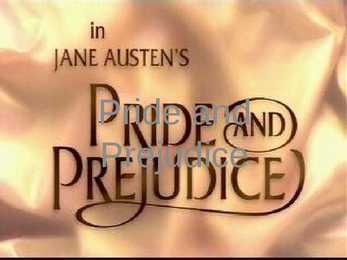
Pride and Prejudice Table of contents Introduction Pride and prejudice The main characters The Bennets family The beginning of the film A turn in the life of the young Greaf in the Bennets family The film end Conclusion Pictures References Introduction I have chosen this film because I like it very much. Pride and Prejudice tells us about a big family in England from the town called Meriton. In the film we can perfectly see the life in England at the end of the 18th century. Pride and prejudice This movie was made after Jane Austen novel Directed by Simon Langton Composer: Care Davis Producer: Sue Birtwistle Country of origin: United Kingdom Genre: drama Tear of release: 1995 Duration of a film: 3 hours The main characters
You do the opposite of my instructions; You've no respect for anything; each one Must have his say; it's perfect pandemonium. DORINE If . . . MADAME PERNELLE You're a servant wench, my girl, and much Too full of gab, and too impertinent And free with your advice on all occasions. DAMIS But . . . MADAME PERNELLE You're a fool, my boy--f, o, o, l Just spells your name. Let grandma tell you that I've said a hundred times to my poor son, Your father, that you'd never come to good Or give him anything but plague and torment. MARIANE I think . . . MADAME PERNELLE O dearie me, his little sister! You're all demureness, butter wouldn't melt In your mouth, one would think to look at you. Still waters, though, they say . . . you know the proverb; And I don't like your doings on the sly. ELMIRE But, mother . . . MADAME PERNELLE Daughter, by your leave, your conduct In everything is altogether wrong; You ought to set a good example for 'em;
............................................................................................. ...................................................................................................... ............................................................................. 1.2 Read the text and strike though words that don't suit. She stood and watched on/the darkening autumn sky. It was cold. So cold, that the little girl could/might not even cry. She was/is scared, but having no other choice, she stood/stands still until it started to rain. Then, finally, a/an older woman spotted the shaking creature, and called her in for/due to a cup of hot chocolate. The little girl had been/was really happy and followed the kind woman. They became good friends and in/at the evening the woman said that/if the girl could stay as long as she wanted/had wanted. And so it was decided that the girl would/will/is going to/was going to stay with her new stepmother. Happy end 1
The Moving Finger Agatha Christie Plot summary: Brother and sister Jerry and Joanna Burton bought a country house in an idyllic English town called Lymstock so that Jerry could recover from injuries received in a wartime plane crash. They had been living in London their whole life and thus were excited but intimidated to go. Lymstock was much like any other English village, no more than 300 people. Those that live there enjoy the peace of rural life and form a union to where it can be difficult for strangers to blend in. Fortunately, it wasn't much of a problem for Jerry and Joanna. They were just getting to know the town's strange members and their characters when an anonymous letter arrived, accusing the two of not being brother and sister, but lovers. The letter
per month than most people made in a year. The doorman tipped his hat to me. "Good evening, Miss Tramell. Will you need a cab this evening?" "No thanks, Paul." I rocked onto the rounded heels of my fitness shoes. "I'll be walking." He smiled. "It's cooled down from this afternoon. Should be nice." "I've been told I should enjoy the June weather before it gets wicked hot." "Very good advice, Miss Tramell." Stepping out from under the modern glass entrance overhang that somehow meshed with the age of the building and its neighbors, I enjoyed the relative quiet of my tree-lined street before I reached the bustle and flow of traffic on Broadway. One day soon, I hoped to blend right in, but for now I still felt like a fraudulent New Yorker. I had the address and the job, but I was still wary of the subway and had trouble hailing cabs
and where they originated, and what should be considered the first book in the world. Ancient document, written on parchment, papyri and vellum can hardly be qualified as books the way we understand the word today. Centuries went before paper replaced parchment and papyri. In the 15 th century Johann Gutenberg invented a mechanical process of duplicating texts, which we today call book printing. The first book was printed between 1444 and 1446, so these years can be considered as the beginning years of book printing. His most important preserved printings are the 40 copies of the Bible. By the end of the 15 th century there were about 1000 print-shops in Europe already. The oldest Estonian book dates back to 1535. Libraries form a vital part of education. They make available-through books, films, recordings and other media- knowledge that has been accumulated through the ages
Undoubtedly, I would now describe myself with the word naivety. I am very naïve and do not notice the most obvious things happening around me. I really hope that it is caused by the lack of experience and will eventually pass. In addition, I find myself a kind and caring person because I always want and agree to help people when needed. Furthermore, I really like reading. Sometimes I think that I read too much because I often mix fiction up with reality and in some cases it does not do me any good. As novels have such a great influence on me, I often misunderstand people in reality. Also, I quite often jump into conclusions. For example there was this awfully embarrassing situation that happened to me when I thought that General Tilney killed his wife. I was very ashamed of myself. To sum up, I lack of experience and am too keen on reading novels. This is what makes me so naïve and sometimes causes trouble. Even when I think I should read less I just cannot help it
she meets an exquisitely handsome boy at school for whom she feels an overwhelming attraction and who she comes to realize is not wholly human. ISBN 0-316-16017-2 [1. Vampires -- Fiction. 2. High schools -- Fiction. 3. Schools -- Fiction. 4. Washington (State) -- Fiction.] I. Title. PZ7.M57188Tw2005 [Fic] --dc22 2004024730 Printed in the United States of America For my big sister, Emily, without whose enthusiasm this story might still be unfinished. But of the tree of the knowledge of good and evil, thou shalt not eat of it: for in the day that thou eatest thereof thou shalt surely die. Genesis 2:17 PREFACE I'd never given much thought to how I would die -- though I'd had reason enough in the last few months -- but even if I had, I would not have imagined it like this. I stared without breathing across the long room, into the dark eyes of the hunter, and he looked pleasantly back at me. Surely it was a good way to die, in the place of someone else, someone I loved. Noble, even
Source: Feedbooks 1 About Shakespeare: William Shakespeare (baptised 26 April 1564 – died 23 April 1616) was an English poet and playwright, widely regarded as the greatest writer in the English language and the world's pre-eminent dramatist. He is often called England's national poet and the "Bard of Avon" (or simply "The Bard"). His surviv- ing works consist of 38 plays, 154 sonnets, two long narrative poems, and several other poems. His plays have been trans- lated into every major living language, and are performed more often than those of any other playwright. Shakespeare was born and raised in Stratford-upon-Avon. At the age of 18 he married Anne Hathaway, who bore him three children: Susanna, and twins Hamnet and Judith. Between 1585 and 1592 he began a successful career in London as an actor, writer, and part owner of the playing company the Lord Chamberlain's Men, later known as the King's Men. He ap-
The making of a new nation. The Enlightenment in America. The emergence of the notion of the American Dream. The great Enlighteners: Crèvecoeur, Jefferson, Paine, Franklin. The American Enlightenment is the intellectual thriving period in the United States in the midtolate 18th century (17151789), especially as it relates to American Revolution on the one hand and the European Enlightenment on the other. Influenced by the scientific revolution of the 17th century and the humanist period during the Renaissance, the Enlightenment took scientific reasoning and applied it to human nature, society, and religion. American Enlightenment a gradual but powerful awakening that established the ideals of democracy, liberty, and religious tolerance in the people of America.
do it, enabled us to make significant changes. His work has enabled us to gain significant competitive differentiation and advantage" -LAURENCE HOF, Vice President, Relationship Consulting, Advanta Corporation "This will help executives make better decisions and use their influence wisely ... Robert Cialdini has had a greater impact on my thinking on this topic than any other scientist." -CHARLES T. MUNGER, Vice Chairman, Berkshire Hathaway, Inc. If you're wondering why of Latin America, the Far East, and Central Europe. you should buy this new edition of Influence: o More neuroscience evidence of how the influence process works is inte-
any fought believed 11 between 1 I take after my mum 2 1 disorientated 5 withdrawn 7 granted 12 Although 2 the spitting image 2 distraught 6 preoccupied 3 a strong family resemblance 4 1 F 2 T 3 F 4 F 5 T 3 bewildered 7 circumspect
Influenced by Varenka, Kitty becomes extremely pious, but is disillusioned by her father`s criticism. She then returns to Moscow. Part 3 Levin continues his work on his large country estate, a setting closely tied to his spiritual thoughts and struggles. Levin wrestles with the idea of falseness, wondering how he should go about ridding himself of it, and criticising what he feels is falseness in others. He develops ideas relating to agriculture and the unique relationship between the agricultural labourer and his native land and culture. He believes that the agricultural reforms of Europe will not work in Russia because of the unique culture and personality of the Russian peasant. Stiva stays with Levin on his country estate when he makes a sale of a plot of land, to provide funds for his expensive city lifestyle. Levin is upset at the poor deal he makes with the buyer and his lack of understanding of the rural lifestyle
When the lights went off, Alice and Sheila went to the performers hall. If was full of people, students mostly, but some grown-ups were at present as well. "Oh, there's Mat! My brother! I must go now" said Alice and ran off. Sheila waved and went to her band the Space Dolls. Matrix was standing, not even noticing Alice. When she was close enough, she jumped and climbed onto Mat's neck, so he automatically hugged her. When he realized what he was doing he laughed. So did the other Ravens, Daemon even clapping his hands. "Well, you two sure are close!" commented Faith, the drummer and the second vocalist. Alice let go of her brother and hugged one by one every band member, finishing with Daemon. Yet, his hug was the warmest, since she considered him her brother as well. Daemon, however, didn't feel the same...His feelings were deeper that is the reason why he hadn't chosen a girlfriend, even thought he was 22 and quite handsome: light-
The lavish Technicolor comedy films established Monroe's "dumb blonde" on-screen persona.[15] In Gentlemen Prefer Blondes, Monroe's turn as gold-digging showgirl Lorelei Lee won her rave reviews,[25] and the scene where she sang "Diamonds Are a Girl's Best Friend" has inspired the likes of Anna Nicole Smith, Madonna,[26] Kylie Minogue,[27] and Geri Halliwell. In the Los Angeles premiere of the film, Monroe and co-star Jane Russell pressed their foot- and handprints in the cement in the forecourt of Grauman's Chinese Theatre. In How to Marry a Millionaire, Monroe was teamed up with Lauren Bacall and Betty Grable. She played a short-sighted dumb blonde, and though the role was stereotypical, critics took note of her comedic timing.[28] Her next two films, the western River of No Return and the musical There's No Business Like Show Business, were not successful
a discontinuity in its development, a leap to an entirely different level of Being and, most important, a lessening of materiality. What could be heavier and more impenetrable than a rock, the densest of all forms? And yet some rocks undergo a change in their molecular structure, turn into crystals, and so become transparent to the light. Some carbons, under inconceivable heat and pressure, turn into diamonds, and some heavy minerals into other precious stones. Most crawling reptilians, the most earthbound of all creatures, have remained unchanged for millions of years. Some, however, grew feathers and wings and turned into birds, thus defying the force of gravity that had held them for so long. They didn’t become better at crawling or walking, but transcended crawling and walking entirely. Since time immemorial, flowers, crystals, precious stones, and birds have held special significance for the human spirit
The woman, without a word of who she was, died and left her new born boy, Oliver, to the drunken nurse that stood by. Chapter2: The State gave Oliver to Mrs. Mann who housed a number of orphaned children. Mrs. Mann took a large portion of the money given to her by the authorities for each child's food so Oliver grew up small and malnourished. On his ninth birthday, the town beadle, Mr. Bumble, came to collect Oliver and take him to the board for an interview. They told him he was to live with other wards of the state to become educated and learn a trade. Oliver did not mind this, but soon after he arrived, the state decided to implement a plan that would save money by feeding the people very little. After a time on this diet, the boys at the table chose Oliver to go ask the head cook for more gruel. Oliver did this, and was taken away. A flyer was then posted that said the state would give five pounds for someone to take young Oliver off their hands.
I mean it wouldn't be decent." and ,,What the dickens has happened to you?" He uses the word instead of a swearing word. Comment on Eliza's behaviour at the meeting.(Do it in about 4 sentences) Eliza is speaking very properly and is polite. She is answering the questions that are asked from her with very long sentences. But she is also saying things that are not necessary. What is Freddy's attitude towards Liza? Freddy is giggling at her. How does Liza leave? She says good by to everyone but before she leaves Freddy stops her and asks if she is walking but Eliza says that not bloody likely and leaves. What does Higgins suggest Clara to do after she said that they had to leave? Why does he give such a suggestion? He suggests to try the new small talk at the three at-homes. He says to pitch it in strong. Higgins said to his mother that Liza was useful. Useful in which way? He said that she knows where all his things are and remembers his meetings.
Adams Middle School who curses at her students, consumes lots of alcohol, smokes marijuana, and only shows movies while she sleeps through class. She plans to quit teaching and marry her wealthy fiancé, but when he dumps her, she must resume her job as a teacher. She tries to win over substitute teacher Scott Delacorte (Justin Timberlake), who is also wealthy. Amy Squirrel (Lucy Punch), a dedicated teacher and colleague of Elizabeth, also pursues Scott while the school's gym teacher, Russell Gettis (Jason Segel), makes advances on Elizabeth which she rejects.[3] Elizabeth plans to get surgery to enlarge her breasts, believing she is being overlooked for women with larger chests. However, she cannot afford the $10,000 procedure. To make matters worse, Scott admits that he has a crush on Amy, only viewing Elizabeth as a friend. Elizabeth attempts to raise money for the surgery by participating in her 7th grade class car
· How do they differ? · Which extracts are examples of formal letters? · How is the reader addressed in a formal letter? · What are the closing remarks for formal letters? · What is the salutation in a friendly letter? · How would you end extracts 1,2,3 ? · How would you begin the extracts 4 and 5? 1. Dear Mr Miller, I received your kind invitation to the reception. Unfortunately, owing to other commitments. I will be unable to attend ... 2. Dear Ralph, l just got your invitation to the company's event. l `m afraid I can't make it because I've a/ready made plans which l can "t change ... 3. Dear Sirs, I am writing to complain about the poor quality of the items which I received from your company. I have no other alternative but to cancel the order which 1 placed earlier this week ... 4. ... thus, I recommend that you accept this advice on the matter
for a particular purpose. No warranty may be created or extended by sales representatives or written sales materials. The advice and strategies contained herein may not be suitable for your situation. The publisher is not engaged in rendering professional sevices, and you should consult with a professional where appropriate. Neither the publisher nor author shall be liable for any loss of profit or any other commercial damages, including but not limited to special, incidental, consequential, or other damages. For general information on our other products and services, please contact our Customer Care Department within the United States at (800) 762-2974, outside the United States at (317) 572-3993 or fax (317) 572-4002. Wiley also publishes its books in a variety of electronic formats. Some content that
slamming, the footsteps passing the window, the key turning in the lock. She laid aside her sewing, stood up, and went forward to kiss him as he came in. "Hullo darling," she said. "Hullo darling," he answered. She took his coat and hung it in the closer. Then she walked over and made the drinks, a strongish one for him, a weak one for herself; and soon she was back again in her chair with the sewing, and he in the other, opposite, holding the tall glass with both hands, rocking it so the ice cubes tinkled against the side. For her, this was always a blissful time of day. She knew he didn't want to speak much until the first drink was finished, and she, on her side, was content to sit quietly, enjoying his company after the long hours alone in the house. She loved to luxuriate in the presence of this man, and to feel -
The capital letter is also called a big letter or upper- case letter, or sometimes just a capital. A B C D E F G H I J K L M N O P Q R S T U V W X Y Z When do you use a capital letter? 4Use a capital letter for the first letter in a sentence: The dog is barking. Come here! 4Always use a capital letter for the word I : I am eight years old. Tom and I are good friends. 4Use a capital letter for the names of people: Alice, Tom, James, Kim, Snow White 4Use a capital letter for the names of places: National Museum, Bronx Zoo, London, Sacramento 4Use a capital letter for festivals, holidays, days of the week, months of the year: New Year's Day, Christmas, Labor Day, Mother's Day, Sunday, Monday, Friday, January, May, July, October Exercise 1 Circle the letters that should be CAPITALS. Then write
Lord Emsworth: Quotes: 1) "Beach," said Lord Emsworth. "M'lord?" "I've been swindled. This dashed thing doesn't work." "Your lordship cannot see clearly?" "I can't see at all, dash it. It's all black." The butler was an observant man. "Perhaps if I were to remove the cap at the extremity of the instrument, m'lord, more satisfactory results might be obtained." "Eh? Cap? Is there a cap? So there is. Take it off, Beach." "Very good, m'lord." "Ah!" 2) "It's Aggie. My wife, you know." "Well?" "She's left me." "Left you!" "Absolutely flat." 3) "Why did you let him go? You must have known I would want to see him." "What good would that have done?" "I could at least have assured him of my sympathy," said Lady Constance stiffly. "Yes, I suppose you could," said Lord Emsworth, having considered the point. "Not that he deserves any sympathy. The man's an ass
(BrE `polo neck') (Oxford Advanced Learner's Dictionary. 6th edition.) Situation: When Andy, the engineer that June meets in the bar, peels a pink egg for her, saying that it matches her turtleneck, she corrects him, explaining that the item of clothing is called a shell, to which the man jokingly replies that he could peel that for her, too. dormancy (7) - the state of being dormant. Situation: Albertine explained that between her and her mother was an abuse, which required periods of dormancy. fallow (11) - a piece of fallow land. Situation: tattered grey windbreaks bounded flat, plowed fields that the government had paid to lie fallow. to founder (13) (of a plan or undertaking) fail or break down as a result of a particular problem. Situation: Aurelia foundered when talking about June but then her voice got stronger and she asked explained that June had nothing to come home to.
Ameerika Kirjandus 30.01.13 Naturalism · France, Emile Zola · Put down his theory in 1879: Le Roman Experimental, attempt to explain the development of human society throuch biological laws · Outlook is deterministic, pessimistic, fatalistic (fate or biology) · Man as an animal-clever than other beasts, still explainable within the framework · Man is not a free agent, is govern by something · Unable to determine his own faith · Hereditary · Naturalists tried to apply in fiction the processes of natural sciences · Writers task is to record facts, systems of behaviour, living conditions, never revealing any natural unbiased (completely natural) · Point of view: amoral-outside the category of morality, neither good or bad
histories give it but passing mention. Churchill's great history of World War II has been cleaned of every single reference to Allied communications intelligence except one (and that based on the American Pearl Harbor investigation), although Britain thought it vital enough to assign 30,000 people to the work. The intelligence history of World War II has never been written. All this gives a distorted view of why things happened. Furthermore, cryptology itself can benefit, like other spheres of human endeavor, from knowing its major trends, its great men, its errors made and lessons learned. I have tried in this book to write a serious history of cryptology. It is primarily a report to the public on the important role that cryptology has played, but it may also orient cryptology with regard to its past and alert historians to the sub rosa influence of cryptanalysis. The book seeks to cover the entire history of cryptology
 annaabi.ee